
Yisus

2.1K posts

Yisus banner
Yisus

Yisus

@jebushdd

People Analytics, a veces hago streaming para nadie Amo los michis, recibir amigos en casa y conocer gente en el parque

Argentina شامل ہوئے Ekim 2020
303 فالونگ75 فالوورز
Yisus ری ٹویٹ کیا
Charlie L ⚡️
Charlie L ⚡️@charliesbot·
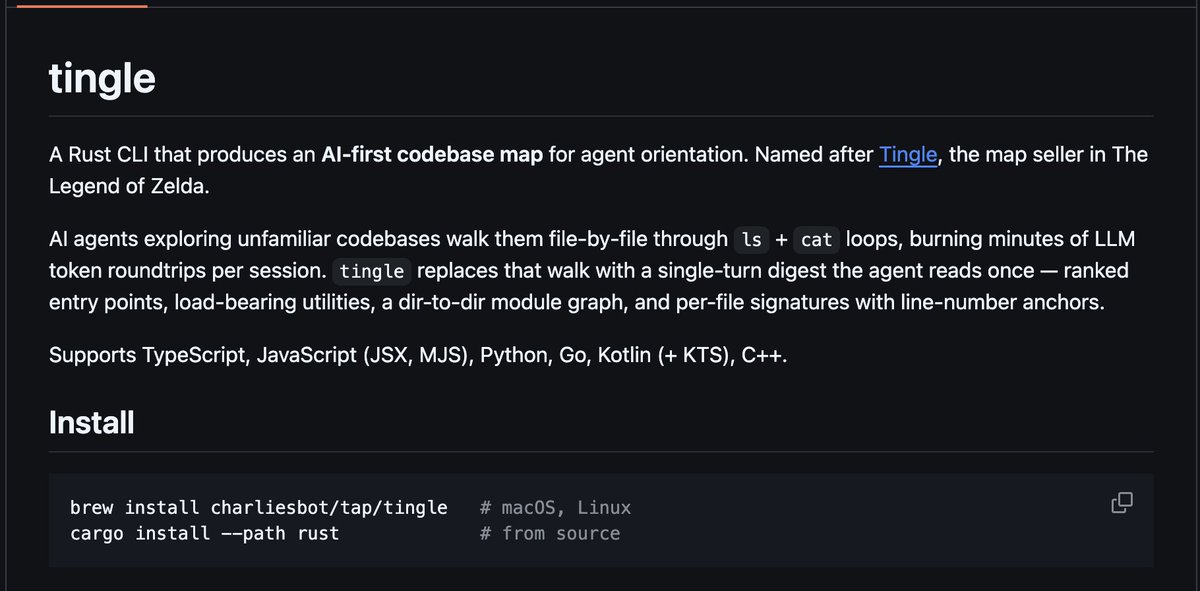
Les presento Tingle: un CLI que crea un mapa de un proyecto de forma eficiente en cuanto a tokens para que la AI pueda tener una idea rápida de tu repo sin tener que estar haciendo greps o ls una y otra vez Puede generar un mapa de un proyecto mediano - grande en menos de un segundo, con una estructura lista enfocada que la AI no devore tokens y a la vez entienda como navegar el repo github.com/charliesbot/ti…
Charlie L ⚡️ tweet media
Español
9
31
374
18.8K
Yisus ری ٹویٹ کیا
Simon Späti 🏔️
Simon Späti 🏔️@sspaeti·
Adding a column seems trivial. Until you realize 47 downstream consumers break. Schema evolution is a pivotal feature of data lake table formats. It enables seamless addition of new columns without disrupting existing structures. ssp.sh/brain/schema-e…
Simon Späti 🏔️ tweet media
English
1
3
15
688
Yisus ری ٹویٹ کیا
Charlie L ⚡️
Charlie L ⚡️@charliesbot·
Esta imagen me hizo mucho click La barrera de los tutoriales y la preparación infinita, en lugar de llevar mano a mano el aprendizaje junto a la acción y afrontar las equivocaciones en el camino
Charlie L ⚡️ tweet media
Español
7
104
874
19.6K
Yisus ری ٹویٹ کیا
Lauti
Lauti@lautirshaid·
Actualización de comunidad de Data -- Arme un slack para que nos podamos ir sumando y dandole forma entre todos X me va a penalizar el post por tener un link, denle like para que llegue a toda la gente que queria sumarse! Link en el primer comentario
Lauti@lautirshaid

En Buenos Aires la comunidad de coding está re armada, pero la de data no existe — o no se habla, no sé Alguien tiene recomendaciones para meterse en esa burbuja? Si no hay, estoy para armarla

Español
1
5
28
1.3K
Yisus ری ٹویٹ کیا
Simon Späti 🏔️
Simon Späti 🏔️@sspaeti·
90% of the world's data was generated in just the past two years. Discoverability is critical. A data catalog is Google Search for your internal metadata. ssp.sh/brain/data-cat…
Simon Späti 🏔️ tweet media
English
1
3
19
766
Yisus ری ٹویٹ کیا
santi
santi@santtiagom_·
El problema de CLAUDE.md es que es contexto en el prompt, no una regla. El modelo puede ignorarlo. Los Hooks resuelven exactamente eso: son código que corre siempre, sin importar lo que Claude decida. Hay 2 tipos principales: -> PreToolUse: corre antes de que Claude ejecute algo, puede bloquearlo con exit. -> PostToolUse: corre después, para formatear, testear o loguear Los 8 hooks que menciona el artículo: 1) Auto-format con Prettier después de cada edición 2) Bloquear comandos destructivos como rm -rf o DROP TABLE antes de que corran 3) Proteger archivos sensibles como .env o *.pem de ser modificados 4) Correr los tests automáticamente para que Claude vea si rompió algo y lo corrija solo 5) Bloquear la creación de PRs si los tests no pasan 6) Auto-lint con ESLint en cada cambio 7) Loguear cada comando con timestamp para tener un historial de auditoría 8) Auto-commit al terminar cada tarea con el hook Stop Todo se configura en .claude/settings.json. Lo commiteás una vez y todo el equipo puede usar la misma configuración. El artículo está muy bueno. Pd: tiene los 8 hooks listos para copiar y pegar en tu setup.
darkzodchi@zodchiii

x.com/i/article/2039…

Español
5
37
388
42.5K
Yisus ری ٹویٹ کیا
Julio Ernesto Lopez
Julio Ernesto Lopez@julitolopez·
🟥APRENDAN A USAR CLAUDE: DIFERENCIA ENTRE PROYECTO Y SKILLS Proyecto : Para no repetir el contexto cada vez. Es una carpeta de trabajo. Por ejemplo una tesis, un trabajo. Lo que metes ahí (archivos, instrucciones) está disponible en todas las conversaciones dentro de ese proyecto. Skill Instructions : Esto afecta a todas tus conversaciones, no solo a una. - (En la interfaz de Claude.ai la ves como "instrucciones personalizadas" o "user preferences") es donde le dices a Claude cómo queres que se comporte siempre. Cosas como "respóndeme en español", "sé conciso", "soy ingeniero de software, no me expliques conceptos básicos".  Skill creado con Claude : es una guía técnica que Claude lee antes de hacer una tarea difícil. Por ejemplo, el skill de .docx le dice exactamente qué librería usar, cómo instalarla y cómo estructurar el código. Claude lo lee al principio de la tarea y lo sigue paso a paso. Como usuario normalmente no los creas, ya vienen incluidos o los añade quien configura el entorno. La diferencia más confusa suele ser entre el skill técnico y las instrucciones: el skill técnico es un manual de procedimiento para una tarea específica (cómo hacer X), mientras que las instrucciones son preferencias de personalidad y estilo (cómo debe ser Claude con vos en general).
Julio Ernesto Lopez tweet media
Español
11
137
1K
57.2K
Yisus ری ٹویٹ کیا
Kurt Buhler
Kurt Buhler@kurtbuhler·
We're releasing the PBIR CLI shortly in the next days (some late issues with the distribution). We already published the pbir-cli skill a few days ago to help testers and get it integrated with the plugins. github.com/data-goblin/po… But someone already capitalized on this - it strongly seems they pointed their agent at the skill and told it "make this" to slap together a CLI that works as the skill describes. They didn't even change the commands, flags, and even took the skills. They just shuffled skill content around in the markdowns, then published it on their own repo. Of course they didn't have the source code so what's behind it isn't comparable... we have a full schema-driven object model, for instance. We knew this would likely happen when I started sharing the plugins. We anticipated it; it's obvious - it's why we never bothered trying to commercialize this. It seemed almost inevitable. We didn't anticipate it would happen so quickly, though! The commit trail is literally 1-2 days apart. Better than hours I guess. This is just the way it is now. Anyone can just point their slopcannon at something shared and then copy it, make some noise, and benefit... in a matter of days or less. The work speaks for itself, but still - it's clear that whatever new era we're entering plays by some different rules.
Kurt Buhler tweet media
English
3
10
47
2.8K
Yisus ری ٹویٹ کیا
santi
santi@santtiagom_·
Cuando tu aplicación recibe miles de usuarios, un solo servidor no te alcanza. Podes crecer de 2 formas: 1) verticalmente: más CPU o RAM al servidor (es caro y tiene un límite). 2) horizontalmente: agregar más servidores. La segunda te da escala, pero trae un nuevo problema: ¿a qué servidor debería ir cada request? Ahí aparece un Load Balancer: un componente que reparte el tráfico entre tus servidores usando distintos algoritmos. Si "A" se cae, lo detecta y deja de enviarle tráfico. Ahora, cada servidor corre una copia de tu app. Y como el tráfico está repartido, podes atender más usuarios sin saturar uno solo. Pero ahora el cuello de botella se mueve: si todos los servidores consultan la misma base de datos, esa base se satura. La solución: agregar réplicas para lectura y un cache para reducir carga. Pero si agregas réplicas: ¿cómo te aseguras de que la data siempre esté sincronizada? Y así es como evoluciona la arquitectura: resolviendo un problema a la vez. Diseñar sistemas es justamente eso: entender dónde están los cuellos de botella y qué necesitas para que tu aplicación siga creciendo.
santi tweet media
Español
10
87
721
81.6K
Yisus ری ٹویٹ کیا
Google Cloud Tech
Google Cloud Tech@GoogleCloudTech·
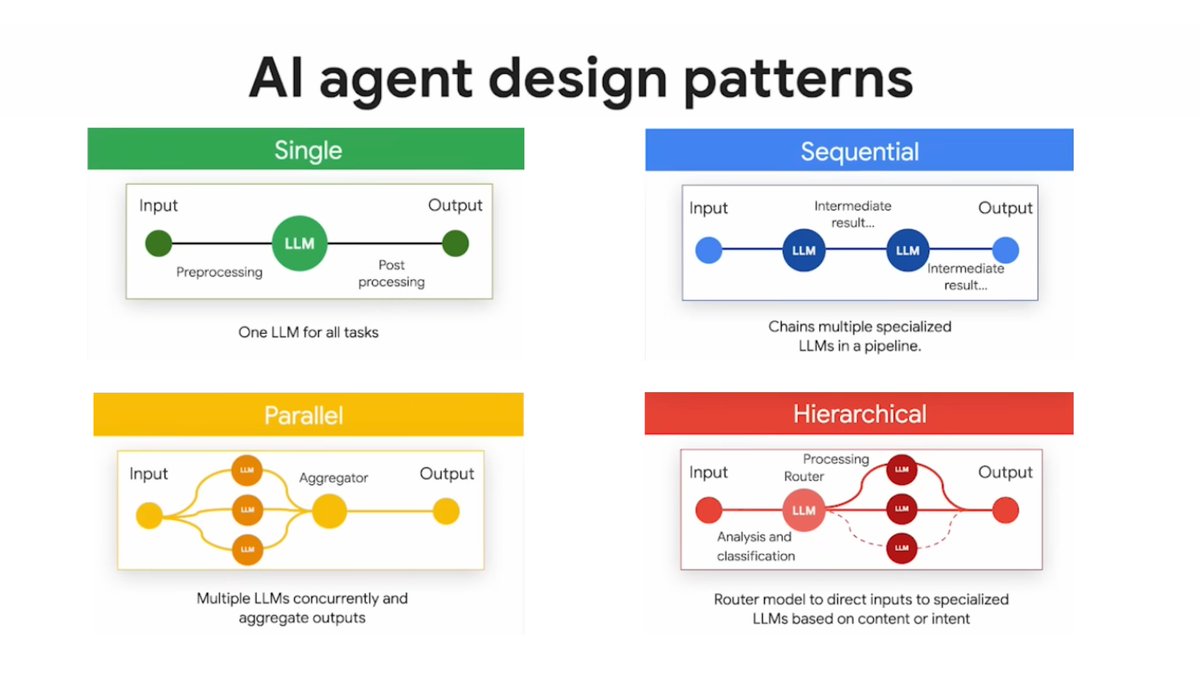
In part 1 of this video series, we use ADK to walk through code and live demos for the 3 foundational AI agent architectures: 1. The Single Agent 2. The Sequential Agent 3. The Parallel Agent Watch to learn how to design and build AI agentic systems → goo.gle/4bKNxeN
Google Cloud Tech tweet media
English
5
62
338
16K
Yisus ری ٹویٹ کیا
Zach Wilson
Zach Wilson@EcZachly·
Building Data Pipelines has levels to it: - level 0 Understand the basic flow: Extract → Transform → Load (ETL) or ELT This is the foundation. - Extract: Pull data from sources (APIs, DBs, files) - Transform: Clean, filter, join, or enrich the data - Load: Store into a warehouse or lake for analysis You’re not a data engineer until you’ve scheduled a job to pull CSVs off an SFTP server at 3AM! level 1 Master the tools: - Airflow for orchestration - dbt for transformations - Spark or PySpark for big data - Snowflake, BigQuery, Redshift for warehouses - Kafka or Kinesis for streaming Understand when to batch vs stream. Most companies think they need real-time data. They usually don’t. level 2 Handle complexity with modular design: - DAGs should be atomic, idempotent, and parameterized - Use task dependencies and sensors wisely - Break transformations into layers (staging → clean → marts) - Design for failure recovery. If a step fails, how do you re-run it? From scratch or just that part? Learn how to backfill without breaking the world. level 3 Data quality and observability: - Add tests for nulls, duplicates, and business logic - Use tools like Great Expectations, Monte Carlo, or built-in dbt tests - Track lineage so you know what downstream will break if upstream changes Know the difference between: - a late-arriving dimension - a broken SCD2 - and a pipeline silently dropping rows At this level, you understand that reliability > cleverness. level 4 Build for scale and maintainability: - Version control your pipeline configs - Use feature flags to toggle behavior in prod - Push vs pull architecture - Decouple compute and storage (e.g. Iceberg and Delta Lake) - Data mesh, data contracts, streaming joins, and CDC are words you throw around because you know how and when to use them. What else belongs in the journey to mastering data pipelines?
English
9
65
355
16K
Yisus ری ٹویٹ کیا
Simon Späti 🏔️
Simon Späti 🏔️@sspaeti·
30+ years of proven patterns. Both still relevant. Inmon (1990): "A subject-oriented, integrated, time-variant, non-volatile collection for management decision-making." ssp.sh/brain/data-war…
Simon Späti 🏔️ tweet media
English
1
3
26
1.2K
Yisus ری ٹویٹ کیا
Maximiliano Firtman
Maximiliano Firtman@maxifirtman·
🔴 OPENAI CODEX MEETUP 🇦🇷 Estoy organizando el primer meetup de la comunidad del programa OpenAI Codex Ambassador en Buenos Aires. Si ya estás usando herramientas como Claude Code, Codex, OpenCode, Antigravity o cualquier entorno agéntico, y tenés algo real para mostrar (no humo), estamos buscando speakers para mini charlas. No es un evento para publicitar un producto. La idea es compartir experiencias concretas sobre cómo usar agentes en el trabajo, qué funciona y qué no. Arrancamos con una edición online abierta a todos y después seguimos con encuentros presenciales en Buenos Aires (se aceptan sugerencias de lugares). Si te interesa participar, dejá tu propuesta en comentarios o mandame DM 👇
Maximiliano Firtman tweet media
Español
26
30
270
27.9K
Yisus ری ٹویٹ کیا
Katyayani Shukla
Katyayani Shukla@aibytekat·
My manager stopped asking me for updates on my biggest project. I told myself I had finally earned absolute trust. Six months later, I understood what they were actually telling me:
English
63
419
6.2K
2.2M
Yisus ری ٹویٹ کیا
Daily Dose of Data Science
Daily Dose of Data Science@DailyDoseOfDS_·
Google open-sourced a time series foundation model. it works with any data without training. unlike traditional models, no dataset-specific training needed. TimesFM forecasts out of the box. trained on 100B real-world time-points across traffic, weather & demand forecasting.
Daily Dose of Data Science tweet media
English
22
305
2.1K
209.9K
Yisus ری ٹویٹ کیا
santi
santi@santtiagom_·
En Claude Code podés construir skills, hooks, subagents y MCP servers. Pero, ¿cómo compartís todo eso con tu equipo o con la comunidad? Con plugins. Un plugin es una forma de empaquetar esas capacidades para que otra persona las instale y las use directamente. ¿Cómo se arma? Es una carpeta con una estructura definida. Tiene un archivo obligatorio: .claude-plugin/plugin.json → define el plugin (nombre, versión y configuración) A eso le sumás lo que quieras compartir: - skills//SKILL.md - agents/ → agentes (.md) - hooks/hooks.json - .mcp.json → MCP servers Lo publicás en un marketplace (un lugar donde se distribuyen plugins). Hay uno oficial de Anthropic. Otra persona lo instala desde Claude Code: /plugin install Y Claude Code lee la estructura, registra las skills, activa los agentes y conecta los MCP. Así, quien instala tu plugin pasa a tener tus skills, agentes y automatizaciones listas para usar.
santi tweet media
Español
11
26
396
34K
Yisus ری ٹویٹ کیا
Charlie L ⚡️
Charlie L ⚡️@charliesbot·
Plan de fin de semana: adaptar mi workshop para uso general 🤓 El curso usa en su mayoría estándares (skills / MCP / agents) pero hay cosas exclusivas para mí team Pero algo que se queda es que hay una sección acerca de como crear tu propio skill! Tons no es acerca de: "instala Claude Code / Gemini e instala todo plugin que encuentres", sino de crear un setup portable entre AIs y que primero entiendas tu propia forma de trabajo, que patrones se repiten y que puedes delegar para administrar mejor tu atención
Charlie L ⚡️@charliesbot

Slides listos para el workshop de mañana 🤓 "Setting Up your AI Workflow with Gemini CLI" ✨

Español
1
1
105
4.7K