In the middle of Mass, a grandfather received the news that his grandson had committed suicide. With no one to comfort him, he went up to the altar and embraced the priest.
It was as if God comforted him through him. 🥺
In November of 1177, Saladin rode into the Kingdom of Jerusalem with somewhere between twenty-five and thirty thousand men and every reason to believe the campaign would be a short one.
The king who opposed him was sixteen years old, partially disabled by leprosy, and had fewer than five hundred knights at his disposal. The rest of the Crusader military strength was committed elsewhere, following a disastrous strategic miscalculation that had left the kingdom's southern approaches almost entirely undefended.
Saladin knew this. His army moved with the confidence of a force that had already won, spreading across the coastal plain toward Ascalon, foraging and raiding as it went, not particularly concerned about what a sick teenage king with a handful of knights might do about it. What Baldwin did about it would be studied and argued over for centuries.
He was at Ascalon when Saladin's army passed. The fortress city held him and his small force effectively trapped, the Muslim army too large to engage directly in open battle and too widely dispersed to pin down. The standard military logic of the situation said to wait, to hold the city, to avoid the catastrophic loss that an open engagement would almost certainly produce.
Baldwin had fewer knights than Saladin had senior commanders. He came out anyway. What happened next required both tactical intelligence and a quality of personal courage that becomes more extraordinary the more closely you examine what Baldwin's body was doing to him by this point.
Leprosy in its progressive form attacks the nerve endings, the skin, the extremities, and eventually the face and eyes. By 1177 Baldwin had been living with the disease for the better part of a decade, and the physical toll was already visible.
He rode out of Ascalon at the head of roughly five hundred knights, having sent word to the Knights Templar at Gaza to join him, and moved to intercept an army that outnumbered his force by a factor of perhaps fifty to one.
Saladin had made a mistake that good intelligence and justified confidence had obscured. He had allowed his army to disperse too widely across the landscape in the manner of a force on a raiding march rather than one prepared for battle. When Baldwin's cavalry struck, they hit the core of the Muslim army while it was strung out and unable to concentrate quickly.
The Templars from Gaza arrived and hit simultaneously. The attack was sudden, focused, and delivered with the kind of committed violence that a small force can sometimes achieve against a larger one precisely because it has no option but to drive all the way through. Saladin's army broke.
The rout at Montgisard was not a minor skirmish or a local setback. It was a full collapse. The Muslim forces scattered across the plain and were pursued for miles. Saladin himself escaped on a camel, the organised withdrawal of a senior commander rather than a fighting retreat, and the army he had brought into the kingdom essentially ceased to exist as a coherent force for the remainder of that campaign season. One of the most capable commanders in the medieval world had been handed a defeat so complete that it temporarily halted his entire strategic programme against the Crusader states.
The Crusaders attributed the victory to divine intervention, which is what Crusaders tended to do when things went unexpectedly well. The True Cross had been carried into battle, and the scale of the triumph against such odds made a natural explanation feel insufficient.
What the victory actually demonstrated, stripped of the theology, was that Saladin was not invincible, that a small force with better situational awareness and a commander willing to commit completely at the right moment could defeat a much larger army that had grown careless, and that the sick sixteen-year-old king of Jerusalem was not the symbolic figurehead his enemies had assumed.
#archaeohiatories
🇯🇵👑 Princess Princess Kako of Akishino looks stunning in her (十二単, "twelve layers") ancient court dress.
This dress dates back to a thousand years ago to the Heian period.
Israel did NOT put 60 Palestinians in a garbage truck.
The reality is that 60 Palestinians hid in a garbage truck and tried to sneak into Israel to murder Jews.
This lie is going viral — please share this so people know the truth.
Never forget that 33 years ago we learned the government will kill your dog, shoot your 14 year old son in the back and snipe your wife in the doorway while she holds your infant child.
*RubyRidge
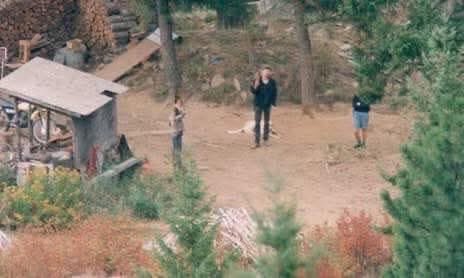
Imagine being 14 years old, living off the grid in the Idaho woods in 1993. You’re walking your dog when suddenly he growls and *bang*, the dog is shot and killed. You look up and see a man in a Ghillie suit with a rifle pointed at you. Fear grips you. You pull your gun and fire. You’re just defending yourself. This is your home.
You run back toward your parents, only to be shot in the back and killed before you can reach them. You never understand what went wrong or why.
The next day, a sniper fires again. Your mother, standing in the doorway holding your baby sister, is hit in the head and killed instantly.
All of this started because your father Randy Weaver, sold two sawed-off shotguns to an undercover agent and refused to become a government informant. They gave him a false court date and set up armed surveillance at your home, waiting for the moment they could escalate.
Randy Weaver was a former U.S. Army Green Beret. He served in the military before moving off the grid with his family in northern Idaho. His military background added to the tension for federal authorities, because he was trained in weapons and survival, but it didn’t make him violent or a threat to anyone outside his property.
After an 11 day stand off with Randy and the baby inside with two dead bodies, the government was ordered to pay millions in settlements to Randy.
They were proven to be in the wrong for this deadly power trip.
But that doesn’t bring back a 14 year old boy or his mother.
Stay educated. Some of our history isnt taught in school for a reason. 💯
Very famous Russian YouTubers caught a Muslim guy in China trying to force a kiss on her—she shut him down hard.
When she asked where he was from, he said Egypt.
Time to deport Islamists and ban Islamic immigration?
A. Yes
B. No
In an Asian family, after the father suffered a stroke, they reported their only son to the police for constantly beating his mother and father, as they had raised a cruel demon instead of a child.
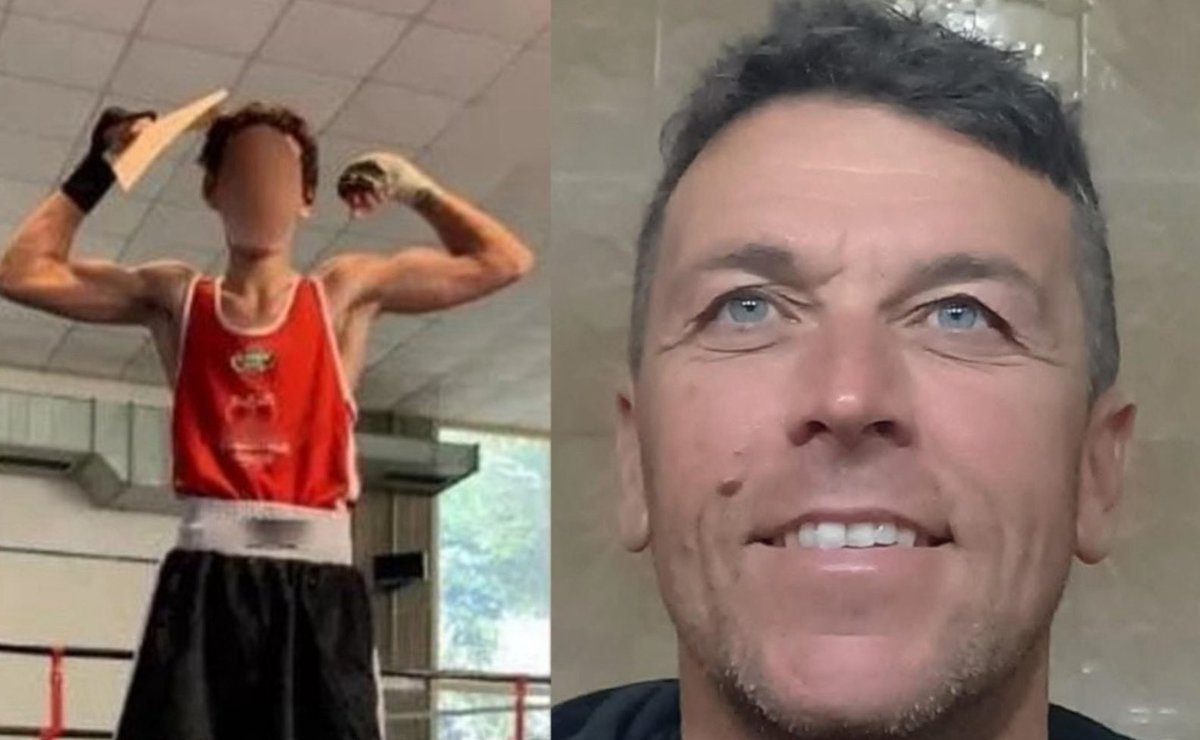
Giacomo Bongiorni, an Italian man, was murdered in front of his 11-year-old son, who was desperately begging: “Dad, get up, please.”
He was killed by a group of immigrants. The fatal blow was delivered by a foreigner whom Italian media shamefully described as a “boxing champion”, in reality, a coward with just 3-4 amateur fights.
When the news broke, Italian media tried to cover it up by claiming the killers were “all Italians.”
This is the corrupt information that is destroying the West.
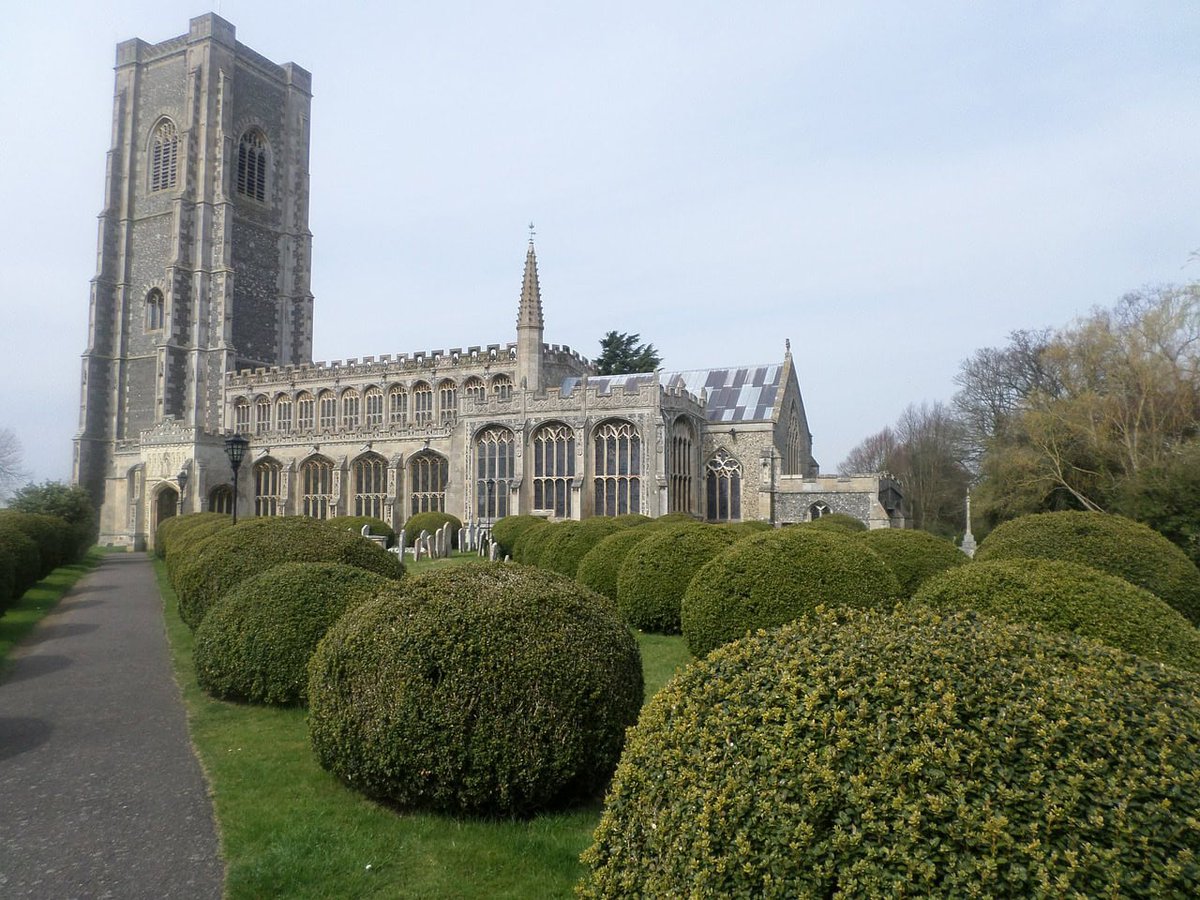
There is a small Suffolk village called Lavenham. Population approximately 1,700. It contains one of the most extraordinary parish churches in England: a tower 141 feet high, fan vaulting, carved stone screens, the kind of medieval splendour you would expect to find in a cathedral city.
In 1525, Lavenham was the fourteenth wealthiest town in England.
It was wealthy because of wool.
Between 1250 and 1500, the English wool trade was the backbone of the entire national economy. Edward I financed his wars with it. Edward III built his Hundred Years' War on it. The Lord High Chancellor still sits on a sack of wool in the House of Lords because the wool was so important that the symbol of state authority is, literally, a bag of it.
Yorkshire abbeys ran herds of 14,000, 18,000 sheep. The Cotswolds, the Lakes, the South Downs, East Anglia: every region with grass and a hill became wool country. The fleeces went to Flanders and Italy where they were woven into the finest cloth in Europe. The money came back in cartloads.
And the men who made the money built churches. Lavenham, Long Melford, Northleach, Cirencester, Chipping Campden. Stone the local economy could not possibly have afforded under any other industry.
"I praise God and ever shall," reads the inscription a wool merchant had carved on his window. "It is the sheep hath paid for all."
Then it ended. Spanish merino arrived in the sixteenth century. The Industrial Revolution moved value into finished cloth rather than raw wool. New Zealand and Australia, with vastly cheaper land, undercut British producers.
And then synthetic fibres arrived. Nylon in 1935. Polyester in 1941. Acrylic in 1950. By the 1970s, your jumper was no longer made from a sheep that had eaten grass on a Yorkshire fell. It was made from petroleum that had been refined in a chemical plant, extruded into thread, and dyed with industrial pigments that would persist in the environment indefinitely.
The replacement was, by every measure that mattered to a wool merchant of 1500, a downgrade. Synthetic fibres do not breathe. They do not insulate when wet. They build static electricity. They shed microplastics into the wash water. They cannot be composted. They will outlive the wearer by approximately five hundred years.
They are, however, cheap.
And the Yorkshire mills closed. The Cotswold villages emptied of weavers. British wool, which had built more cathedrals than any other industry in English history, became, by the 2010s, worth less per kilogram than the cost of shearing the sheep. Farmers were burning fleeces because nobody would pay for them.
You can still see what wool built. Walk into Lavenham church. Stand under the tower.
Then look at the polyester fleece you are wearing.
That is what came after.
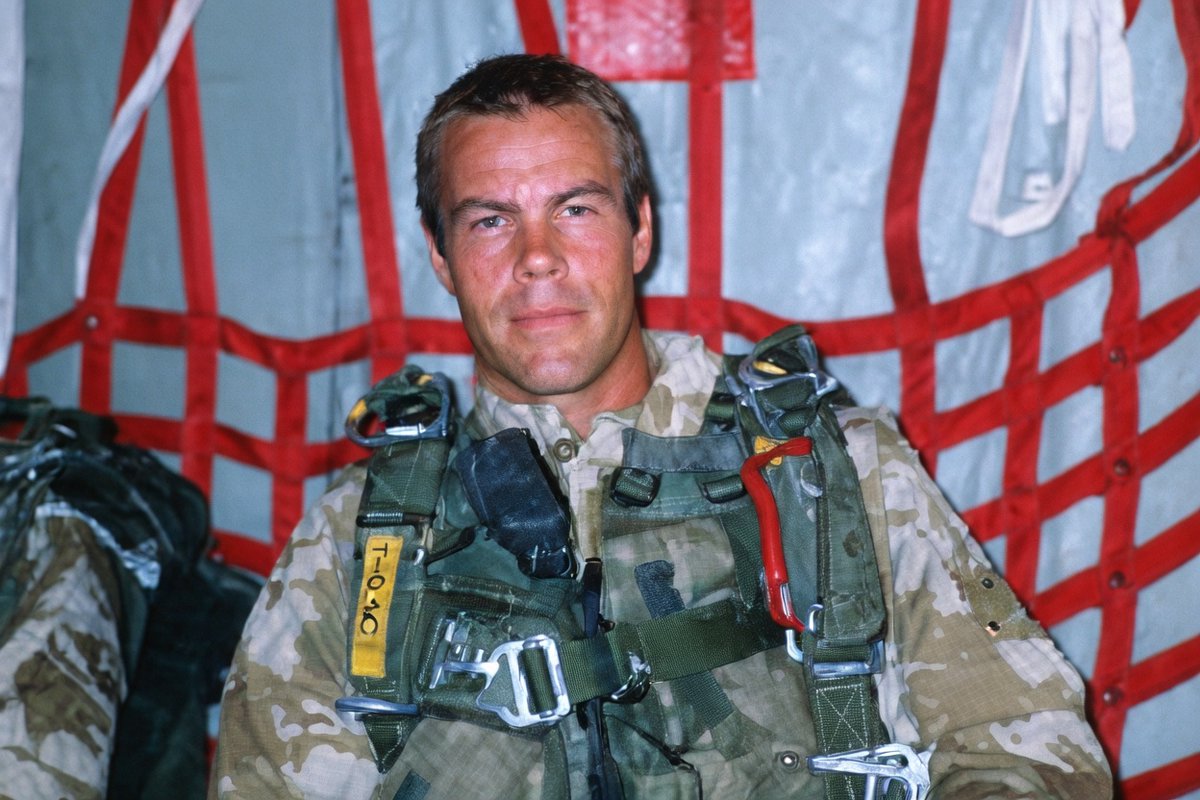
This is Colour Sergeant Mark Lawrence Powell, 22 SAS (formerly 40 Commando Royal Marines).
A proper Bootneck-turned-SAS trooper who sadly lost his life in a Puma helicopter collision north of Baghdad on 15 April 2007, aged 37.
He was the real deal – tough, dedicated, and highly respected.
Rest easy, Mark.
✝️🇦🇲 Never forget the #Armenian Genocide-the largest slaughter of #Christians in modern #history.
Rare archival footage of the death marches.
🕯️May the 1.5 million innocent #Christian martyrs rest in peace.
#Armenia#Arménie