Brand

15K posts

Brand banner
Brand

Brand

@Brand

BrandAI: Structured for AI. Powered by Brand Equity.

Palo Alto, CA Tham gia Şubat 2012
369.7K Đang theo dõi624.2K Người theo dõi
Brand
Brand@Brand·
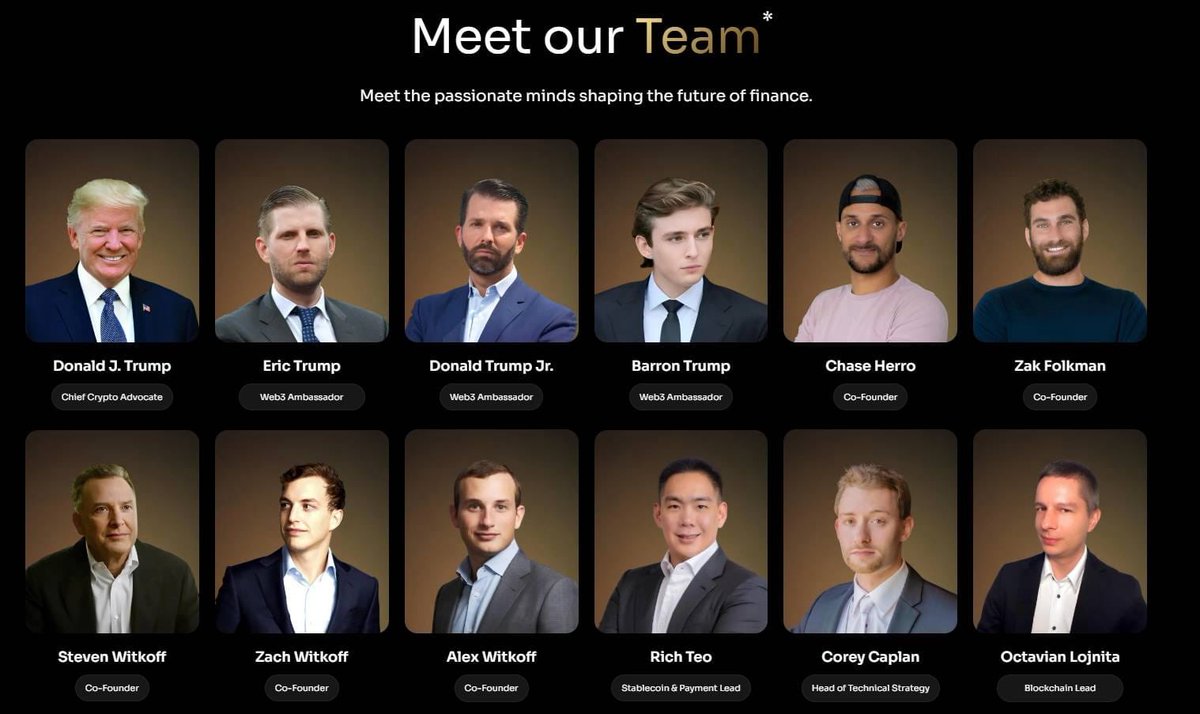
Welcome to the future of finance, starring Donald Trump, Justin Sun, Changpeng Zhao, and a supporting cast from BitMEX to Abu Dhabi. The brand is called World Liberty Financial. The narrative is called decentralization. The outcome is called “unrelated events.” If you ever wanted to see what happens when politics, crypto, and branding fully merge, this is not a whitepaper. This is performance art with a balance sheet. 1. The Great Crypto Brand Collapse World Liberty Financial is not just a project, it is a case study in brand failure. What was once sold as “decentralization” now looks more like a tightly held family office with a token attached. Four Trumps. Three Witkoffs. A team page that reads less like an open protocol and more like a seating chart. Meanwhile, 600,000 wallets lost $3.87 billion while $350 million in fees flowed neatly to affiliated entities. That is not volatility. That is brand equity collapsing into cash flow extraction. 2. Chaos, Professionally Engineered The dysfunction in crypto markets is often described as chaos. It is not. It is structure. When Justin Sun invests $75 million while facing SEC fraud charges, only for those charges to disappear as he becomes an advisor, that is not noise. When Changpeng Zhao pleads guilty, receives a presidential pardon, and his exchange lists a stablecoin tied to the same network of interests, that is not coincidence. When Arthur Hayes, Benjamin Delo, and Samuel Reed are all pardoned after violations, the message is clear: risk is socialized, access is privatized. The market is not broken. It is working exactly as designed. 3. Bitcoin, Rewired by Power Even Bitcoin has been pulled into this gravity field. Under Donald Trump, Executive Order 14233 introduced a Strategic Bitcoin Reserve, while Trump-linked entities accumulated billions in exposure. Donald Trump Jr. dismissed conflicts as “complete nonsense.” Eric Trump launched American Bitcoin with Hut 8. Barron Trump appears as a Web3 Ambassador. The asset that was designed to resist state influence is now reacting to it. Bitcoin did not fail technically. Its brand was quietly repurposed. 4. The Joke Is the System And still, everything is “unrelated.” The losses are market dynamics. The fees are innovation. The pardons are justice. The policies are strategy. Sheikh Tahnoun bin Zayed Al Nahyan invests $500 million. Access follows. Liquidity follows. Narrative follows. The only thing that does not follow is accountability. In the end, crypto did not collapse because of volatility. It collapsed because the story stopped matching the structure. The industry promised trustless systems. What it delivered was perfectly coordinated trust.
Brand tweet media
English
0
2
6
921
Brand
Brand@Brand·
The AI Money Machine is a closed loop where Big Tech funds AI labs, labs buy GPUs, chips power models, and models are sold back to Big Tech. By 2032, this cycle will either internalize or explode. AI brands will disappear the same way internet brands did. AI becomes a background utility like electricity: invisible, essential, and low margin. Most independent AI labs (Anthropic, Mistral, etc.) will vanish as brands. They will be swallowed by their "creditors" (Microsoft, Amazon, Google) to justify the billions in sunk capital. The machine survives only if it stops selling "chat" and starts selling outcomes. If we don't see $10B companies run by 5 humans and 5,000 agents, the loop was a bubble. If AI fails to add 2% to global GDP growth by 2032, the loop was a circular bet. If it succeeds, the machine was the starter motor for a new era. As we look at the velocity of the current cycle, do you suspect the first major "leak" in this capital loop will come from a lack of energy/power availability, or from a sudden correction in enterprise software spending?
English
0
2
21
6.3K
Brand
Brand@Brand·
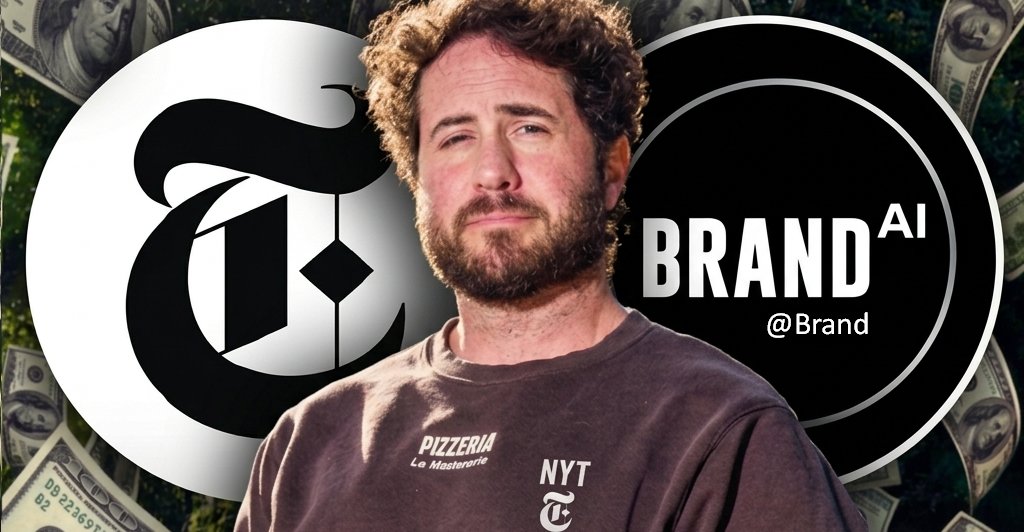
More press is not always better, especially when the brand is not operationally ready to sustain scrutiny. The recent NYT profile of Medvi founder Matthew Gallagher is a textbook case of reputational miscalibration. Medvi, a telehealth platform riding the GLP-1 weight loss wave and built heavily on AI infrastructure, was framed as a breakout success story. Two founders, minimal headcount, and exponential revenue projections powered by artificial intelligence created a compelling narrative. But the narrative did not hold. Instead of strengthening brand equity, the exposure accelerated scrutiny. What should have been a controlled brand moment became an uncontrolled audit. Within days, readers surfaced material omissions in the original coverage, forcing the publication to issue an Editors’ Note on April 9, 2026: “After this article was published, many readers noted that Medvi was facing legal and regulatory actions for its business practices. Our piece should have included that information to give readers a fuller picture of the scrutiny that the company was facing. We have updated the article to note a warning letter from the E.D.A. and a pending class action lawsuit accusing Medvi of violating California's anti-spam law.” From a brand strategy perspective, this is not a media win. It is a positioning failure. Pursuing top-tier media validation without aligning legal, regulatory, and operational readiness creates asymmetric downside. The moment the spotlight shifts from narrative to verification, the brand loses control. The Editors’ Note did more than correct the record. It reframed Medvi’s market perception from an AI-driven growth story to a compliance-risk case study. Brand is not exposure. Brand is what survives exposure.
Brand tweet media
English
0
2
12
3.4K
Brand
Brand@Brand·
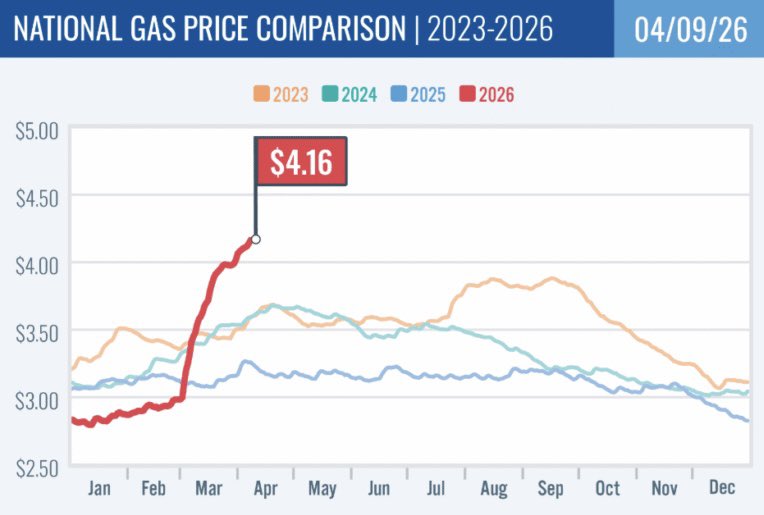
BREAKING: U.S. gas hits $4.16/gal, highest since Aug 2022, up 40% in 6 weeks — biggest spike in 30 years. March CPI rises to 3.3% (vs 3.4% expected), core at 2.6% (vs 2.7%). Inflation now at its highest since May 2024 amid the Iran war. Fed rate cuts for 2026 are now priced out.
Brand tweet media
English
0
1
10
1.2K
Brand
Brand@Brand·
Adam Back (@adam3us) is unlikely to be the sole Satoshi Nakamoto, as his publicly known code exhibits notable stylistic differences from the original Bitcoin v0.1 codebase. According to the 2022 FC22 deep-learning stylometry study, Satoshi’s early source code was likely the product of collaboration among multiple developers, with at least some portions stylistically closest to Wei Dai’s Crypto++ library and others resembling anonymous TrueCrypt code. The 2026 New York Times investigation by veteran reporter @JohnCarreyrou, which builds a strong case for Adam Back primarily through textual stylometry, may not have fully addressed the possibility that Satoshi was not a single individual but rather a small “spiritual collective” or loose group that drew on contributions and ideas from figures such as Hal Finney and Nick Szabo. Adding to this intrigue is a memorable scene from the HBO documentary on Bitcoin, in which investigator @CullenHoback confronts developer @PeterkTodd and accuses him of being Satoshi Nakamoto, while Adam Back cstands in the background observing the exchange. If the New York Times investigation is ultimately correct about Adam Back, the moment acquires a particularly ironic and humorous quality in hindsight.
English
3
3
13
7.5K
Brand
Brand@Brand·
🚨A Catastrophic Collapse of Political Brands? 20+ Democratic Senators posted the exact same scripted video. Same words, same "cringe" delivery. On March 4, 2025, Elon Musk called out the blatant propaganda and offered a FREE Cybertruck to anyone who could prove who wrote the script. Senator Cory Booker’s response? “I wrote it. Keep your truck.” Is this the new face of political "authenticity," or just a glitch in the Matrix?
English
1
4
17
3.3K
Brand
Brand@Brand·
While @JohnCarreyrou and other observers point to Adam Back (@adam3us) as the definitive "Satoshi Nakamoto" due to linguistic fingerprints, the technical and logistical evidence suggests a more complex reality: Satoshi was not a lone wolf, but a high-level collective. Adam Back was undoubtedly a cornerstone of this "Syndicate," but he was one architect in a room, not the sole builder. The Core Rebuttal: • The Technical Polymath Fallacy: Bitcoin required peak proficiency in C++ engineering, P2P networking, and game theory. While Back authored Hashcash, the early Windows-centric coding style contradicts his known professional habits. This points to a division of labor: Back provided the theoretical engine, while Hal Finney likely handled the heavy lifting. • The Strategic Paradox of Self-Citation: Carreyrou highlights that Back is the primary citation in the whitepaper. However, for a privacy-obsessed cryptographer, citing oneself so prominently is "over-exposure." It is far more likely that a group chose to build upon Back’s established legacy to give the "Satoshi" persona instant academic credibility. • The Authority of a "Guardian": Back’s current role as a defender of the protocol further distinguishes him from the persona of a retired creator. Just recently, Adam Back absolutely destroyed Bitcoin quantum FUD live on Bloomberg, calling current quantum computers "extremely basic" and noting we still have a decade to prepare. This level of public, aggressive defense of Bitcoin’s longevity is the mark of a guardian architect, not a ghost. • Logical Absence: For a sole creator, Back’s total detachment from development between 2009 and 2012 is inexplicable. However, for an organized cell, this makes sense: Back remained a "clean" public figure for plausible deniability while other members maintained the network under the Satoshi mantle. The Verdict: Adam Back is not Satoshi, but Satoshi does not exist without Adam Back. The "Satoshi" identity was a digital shield for a cabal including Back (Theory), Hal Finney (Engineering), and Nick Szabo (Philosophy). To those trying to undermine the protocol with technical scare tactics: don't believe the FUD. Back's presence as the "intellectual lighthouse" of the Syndicate ensures the protocol remains resilient against both investigative prying and theoretical threats.
English
0
5
18
14.1K
Brand
Brand@Brand·
This is deeply unsettling. It is not merely alarming. It is structural. AI agent systems such as Manus are now capable of operating more than 50 social media accounts continuously, executing browser-based tasks, generating content, and coordinating multi-account behaviors at scale. From a data science perspective, this represents a transition from human-generated stochastic noise to machine-optimized signal manipulation. We are entering a new regime in which • Content is no longer created but programmatically generated • Engagement is no longer organic but algorithmically simulated • Identity is no longer human but synthetic, modular, and scalable This can be understood as the industrialization of what has been described as the Dead Internet Theory. However, the core issue is not automation itself. The fundamental problem lies in the absence of constraints, verification mechanisms, and economic accountability. Recent observations suggest that many bot accounts have disappeared in recent weeks. This should not be interpreted as systemic improvement. Rather, it reflects continuous recalibration of platform-level detection thresholds within an adversarial optimization loop. Platforms are engaged in a repeated game in which their economic incentives are partially aligned with engagement volume, even when such engagement is artificially generated. Facebook provides a representative case • A substantial number of accounts are dedicated to scraping, reposting, and monetizing third-party content without authorization • Engagement metrics are frequently amplified through coordinated bot networks • Revenue continues to be generated under these conditions, implying that fraudulent activity is, at least partially, economically internalized rather than eliminated From a brand science perspective, this environment produces several structural consequences First, brand equity is increasingly forced to compete with synthetic distribution systems that can scale faster and operate at lower marginal cost. Second, perceived authenticity is eroded by algorithmic mimicry that reproduces the surface signals of credibility without the underlying substance. Third, trust transitions from an assumed attribute to an engineered outcome that must be explicitly constructed and maintained. Under these conditions, competitive advantage will not accrue to firms that maximize content output. Instead, it will favor those that establish • Verifiable identity infrastructures • Traceable and auditable content provenance systems • Brand authority signals that are legible not only to humans but also to AI-mediated discovery systems In an information environment increasingly populated by autonomous agents, attention is no longer the binding constraint. Trust becomes the primary scarce resource. The current phase can be interpreted as an early-stage stress test of institutional and platform resilience. By 2026, these dynamics will be observable at scale. By 2028, absent meaningful intervention, they may evolve into systemic information distortion and large-scale behavioral manipulation.
English
2
5
17
3.5K
Brand
Brand@Brand·
This is crazy. There’s more to breastfeeding than just feeding. Robots can master the mechanics of care, but they struggle with the biology of connection. Using technology to handle domestic hygiene is a logical evolution, but outsourcing the intimacy of feeding risks bypassing a foundational human bond. There is a biochemical process between mother and baby during breastfeeding that releases oxytocin and other hormones critical for the mother’s healing and emotional well-being. The baby also benefits from skin-to-skin contact, which is essential for bonding and early development. While robots may excel at functional hygiene and logistical tasks, the idea of robotic breastfeeding or even robotic bottle feeding touches a critical scientific and psychological boundary. From a mechanical standpoint, a robot can precisely control milk temperature and flow. But feeding is not just nutrient delivery. It is a period of bio-behavioral synchrony, where warmth, scent, and touch shape neurological and emotional development. Humans provide sensory signals that trigger hormonal responses in infants, reinforcing attachment and security. A robot may be highly efficient at cleaning and routine care, but it cannot replicate closeness or emotional presence. The future of AI in parenting is likely augmentation, not replacement. Machines can take over repetitive and physical tasks, freeing parents to focus on the high-touch, emotional interactions that remain fundamentally human.
English
4
3
21
5K
Brand
Brand@Brand·
Tokyo, this is absolutely surreal. As night falls, long lines of sex workers form along the streets of Kabukicho. And yet, despite these scenes, Japan remains home to some of the world’s most powerful brands in automobiles, precision manufacturing, finance, and semiconductor materials, companies like Toyota, Honda, Nissan, Sony, Panasonic, and Hitachi. The sight of young women soliciting clients in places like Okubo Park in Shinjuku does not contradict Japan’s broader labor shortage. In fact, it reveals something deeper: structural poverty and a failing social safety net. Japan’s labor shortage hides a trap. Many of the available jobs are high intensity but low paying. Small and mid sized businesses, operating on thin margins, often offer starting wages of just 1,100 to 1,200 yen per hour. In a city as expensive as Tokyo, such income barely sustains basic living costs. It cannot address debt, nor provide any sense of psychological relief or upward mobility. While large corporations remain globally competitive, their prosperity does not fully trickle down to the most vulnerable segments of society, particularly young women. When faced with the triple pressure of mounting debt, high living costs, and low wage labor, even in a labor short market, many make decisions based on harsh economic trade offs, and some end up choosing a path into exploitation. Many are drawn into Kabukicho’s host clubs, where emotional manipulation is often used to encourage excessive spending. Some accumulate debts of several million, even tens of millions of yen. To service the daily interest on such debt, working at a convenience store for around 1,000 yen per hour becomes almost meaningless, financially insignificant against the scale of what they owe.
English
3
9
36
16.5K
Brand
Brand@Brand·
This office was operating 49 million fake accounts until police raided it. Inside, they found 1,200 SIM box devices and 40,000 active SIM cards connected to more than 80 countries. The raid took place in Latvia as part of Europol’s Operation SIMCARTEL. WhatsApp, Telegram, Facebook, Instagram, eBay, and Amazon were all seamlessly integrated. Latvian police, with support from Estonia, Austria, and others, stormed a cybercrime hub running 1,200 SIM box devices and 40,000 SIM cards from over 80 countries. The operation generated 49 million fake accounts used for phishing, bank fraud, extortion, and human smuggling. Seven people were arrested, while servers and luxury cars were seized and assets frozen. The setup enabled massive fake account creation for phishing, fraud, extortion, and smuggling networks across Europe. A single SIM box can register thousands of fake WhatsApp, Telegram, and banking accounts daily. Police seized four luxury cars, froze $500,000 in bank accounts, and $310,000 in crypto. Seven people ran the entire operation. WhatsApp: Criminals register large numbers of fake accounts to conduct “pig butchering” scams (investment fraud) and so-called “child-in-distress” scams. Telegram: Used to establish anonymous communication channels for extortion, coordinating human trafficking, and distributing illicit content. Facebook and Instagram (Meta): Accounts are registered in bulk to post fraudulent advertisements, conduct phishing attacks, and manipulate public opinion. Vinted, eBay, Amazon: Criminals set up fake storefronts or list fraudulent items, luring victims into making payments outside platform protections.
English
2
36
80
14.1K
Brand
Brand@Brand·
The hype around Medvi is deeply concerning. From 800 fake doctor accounts on Facebook to a $401M telehealth company built with AI and his brother, this may be the most American business origin story of 2026. Facebook enabled the distribution, and the New York Times amplified the narrative. Started in fraud, ended in revenue. Medicine is built on the principle of “first, do no harm.” Yet pushing unverified AI shortcuts into clinical workflows risks doing exactly that. Medvi received FDA Warning Letter #721455 in February 2026 for misbranding violations. It was also hit with a class action lawsuit last month for violating California’s anti-spam law. And then there is the narrative. What did the New York Times do? It profiled a supposed $1.8B revenue company with just two employees. Medvi is a telehealth GLP-1 provider built by 41-year-old Matthew Gallagher from his home in Los Angeles. He launched it in September 2024 with $20,000. Here are the numbers: •Month 1: 300 customers •Month 2: 1,300 customers •2025 full year: $401M revenue, 250,000 customers •2026 run rate: $1.8B •Net margin: 16.2% ($65M profit) •Total employees: 2 (him and his brother) •Outside funding: $0 A story of scale, yes. But also a story of incentives, oversight, and what happens when growth outruns governance.
English
1
2
25
4.7K
Brand
Brand@Brand·
Visa handled 106 million payment disputes in 2025, 35% more than in 2019. To address this, Visa is launching new AI tools that automate chargebacks, draft responses, and predict outcomes. Will this erode Visa’s brand equity? In effect, disputes could be auto rejected with little to no human oversight, framed as a “win.” What could go wrong? The entire chargeback process starts to resemble a lottery, you never know whether the outcome will be fair.
Brand tweet media
English
1
1
13
4.3K
Brand
Brand@Brand·
JUST IN: Justin Bieber bought a Bored Ape Yacht Club NFT for 1.3M USD in 2022. Today it’s worth about 12K USD, a ~99% drop. So…serious question: What stops me from right-clicking, saving the image, and using it? Technically, nothing. Brand-wise, everything. A downloaded JPEG is just pixels. The NFT is a pointer on the Ethereum that says: this wallet owns the “original.” Think of it like this: Anyone can print the Mona Lisa. Only one hangs in the Louvre. NFTs weren’t about images — they were about provenance as a product. A new asset class where ownership = data + narrative + consensus. The problem? The narrative collapsed faster than the floor price. In 2021, BAYC wasn’t just art — it was status, access, identity. In 2026, it’s mostly… a very expensive lesson in liquidity and reflexivity. From a tech perspective, NFTs solved authentication. From a brand perspective, they tried to manufacture meaning. The market eventually asked: who still cares? That said — the core idea didn’t die. People aren’t buying JPEGs anymore. But they are experimenting with tokenized assets: •Real estate titles on-chain •Private equity shares as tokens •Luxury goods with embedded provenance •Even domain names evolving into identity layers We’re not early to NFTs. We were early to financialized culture. The next cycle won’t sell monkeys. It’ll sell cash flows, rights, and reputation — all on-chain. Same rails. Much better story.
Brand tweet media
English
2
9
24
15.2K
Brand
Brand@Brand·
NEW: Matthew Gallagher reportedly built Medvi into a projected 1.8B USD AI startup with 400M USD + revenue using just two employees and AI, according to the NYT. But the network of 800+ fake doctor accounts allegedly created by Medvi on Facebook. Where does Facebook’s liability begin? Hosting hundreds of fake MD accounts is not a gray area — it’s a regulatory risk. Some of the ads are absurd. “Dr. Alistair Whitmore” — listed as based in Kyiv, living in Russia, a musician, archaeologist, and somehow prescribing GLP-1s. Over 800 Facebook accounts were created for fake doctors. Even basic verification suggests many are not licensed physicians — including names like “Dr. Tuckr Carlzyn MD.” If regulators step in, this kind of advertising likely won’t survive. The NYT framed Medvi as the AI startup success story of the decade: 1.8B USD projected revenue, two employees, AI-driven scale. But it omitted critical context. Medvi received an FDA Warning Letter (#721455) in February 2026 for misbranding. Its clinician network, OpenLoop, suffered a January 2026 data breach exposing 1.6 million patient records. Reports indicate the use of AI-generated deepfake before-and-after images in marketing. A class action lawsuit was filed in Delaware in November 2025. And now: 800+ fake doctor accounts advertising compounded GLP-1s on Facebook. The company owns no proprietary technology, no physician network, and no pharmacy infrastructure. It outsources regulated functions while controlling customer acquisition and ad spend. In effect, it’s a marketing layer built on rented compliance — and allegedly fabricated medical identities. Compare that to Hims: 2.4B USD revenue, 2,442 employees, 5.5% net margin. Medvi claims 16.2% margins with two people. That gap suggests one thing: compliance costs. AI built the website. AI runs customer service. AI generated the deepfake ads. And AI is now powering hundreds of fake doctor profiles on Facebook. If true, this isn’t just an AI success story. It’s a test of platform accountability. Facebook enabled the distribution. The NYT amplified the narrative. Neither appears to have asked the most important question: is any of this legitimate?
Brand tweet media
English
6
12
52
8.6K
Brand
Brand@Brand·
BREAKING 🚨: This is extremely illegal. This is Matthew Gallagher, who created 800+ Facebook accounts posing as fake doctors to advertise on Facebook, and went on to build a GLP-1 telehealth company with just $20,000, AI, and only one full-time teammate, his brother. The New York Times fabricated their AI startup story. It generated 401M USD in 2025 and could reach 1.8B USD in 2026. Medvi received FDA Warning Letter #721455 in February 2026 for misbranding violations. Its clinician network, OpenLoop, suffered a data breach in January 2026 that exposed 1.6 million patient records. Futurism reported that they used AI-generated deepfake before-and-after photos in their marketing. A class action lawsuit was filed in Delaware in November 2025. They are also running 800+ fake doctor accounts on Facebook to sell compounded GLP-1s.
Brand tweet media
English
283
1.8K
7.4K
1.2M
Brand
Brand@Brand·
Why Warren Buffett has finally pulled the plug on his friendship with Bill Gates is not a story of personal fallout, but of brand logic. The Buffett–Gates alliance—once a defining pillar of modern capitalism—is quietly fracturing, underscoring the decisive role of reputation in global business. A friendship that helped shape an era is now unravelling, revealing deeper truths about power, perception, and the hidden costs of association at the highest levels. From a personal branding perspective, the growing distance between Buffett and Gates reflects not personality differences, but a strategic divergence in how each manages risk, influence, and narrative control. Buffett and Gates first met in 1991, beginning a decades-long friendship and partnership that became one of the most iconic alliances in business and philanthropy. By the early 2020s, however—particularly after Buffett stepped down as a trustee of the Gates Foundation in 2021—the relationship had clearly entered a phase of separation. Buffett’s brand has been built on one core principle: consistency. For decades, he has represented discipline, predictability, and rational capital allocation. His credibility—especially as the face of Berkshire Hathaway—depends on trust, stability, and the absence of unnecessary volatility. In many ways, Buffett is not just an investor; he is a symbol of certainty in an uncertain market. Gates, by contrast, has evolved into a figure defined by complexity. His transition from technology entrepreneur to global philanthropist placed him at the center of highly complex and often controversial domains—public health, climate policy, and global development. His brand is built on influence and impact, but also carries exposure to political, social, and scientific debates that are inherently unpredictable. When these two personal brands were closely aligned, the relationship created mutual reinforcement: Buffett gained global relevance beyond finance, and Gates benefited from Buffett’s credibility and trust capital. However, over time, the nature of their brand assets began to diverge. The collaboration’s marginal benefit declined, while the risk of brand spillover increased. This is the key asymmetry: Gates operates in arenas where controversy is unavoidable, while Buffett’s empire relies on minimizing uncertainty. Any reputational volatility surrounding Gates—regardless of merit—has the potential to transmit risk to Buffett’s carefully constructed image. Yet Buffett has little control over those external variables. From this lens, the “separation” is not a rupture but a recalibration. Buffett is effectively insulating his brand—reducing exposure to factors he cannot control and preserving the clarity of his narrative. Gates, meanwhile, continues to expand into areas where complexity and influence are inseparable. In the end, this is a classic case of two world-class brands optimizing for different endgames: one doubling down on trust and predictability, the other embracing scale and complexity.
Brand tweet media
English
0
10
24
13K