

Ryan Koenen
90 posts
Ryan Koenen
@RyanKoenen01
A few brands under management.
Tham gia Nisan 2024
41 Đang theo dõi47 Người theo dõi

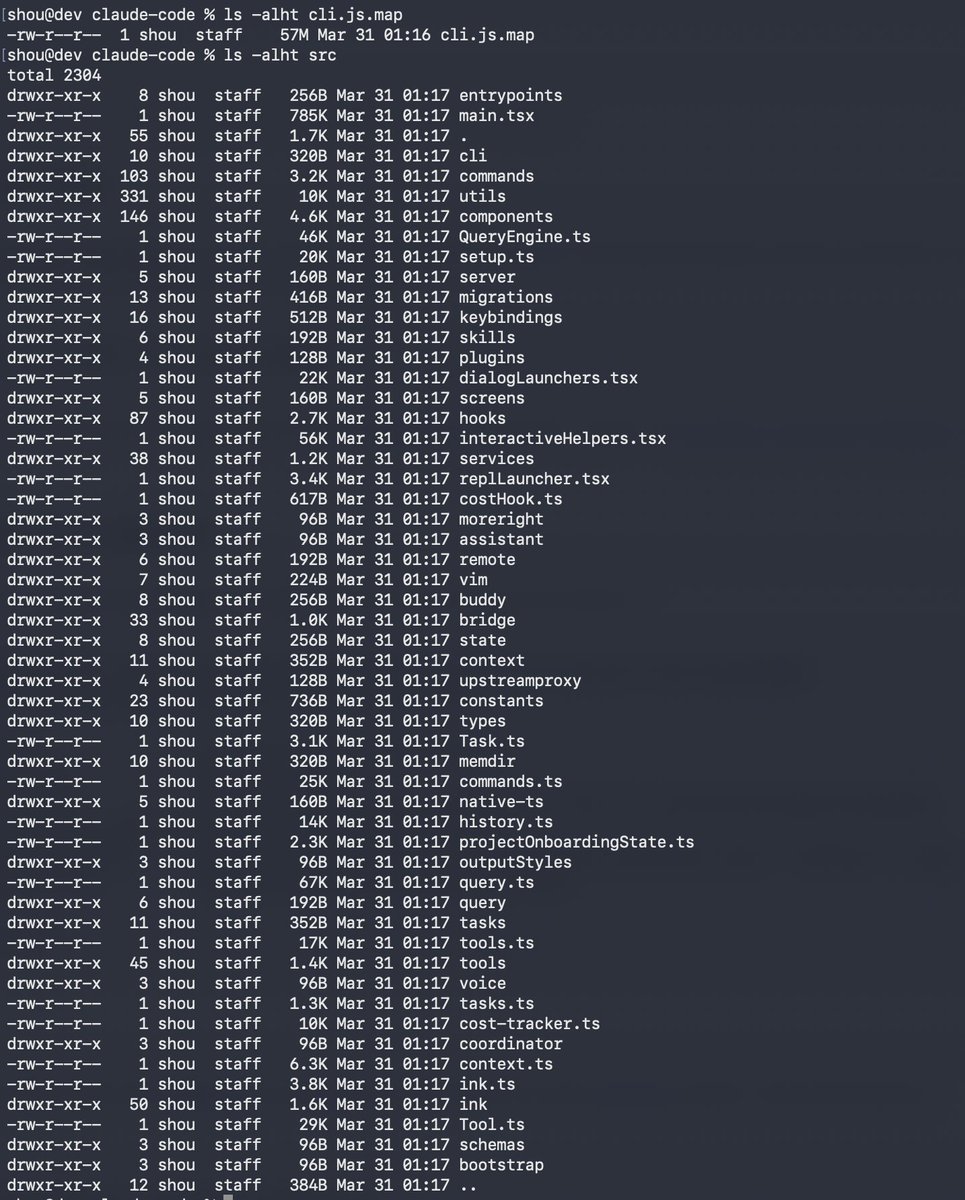
Claude code source code has been leaked via a map file in their npm registry!
Code: …a8527898604c1bbb12468b1581d95e.r2.dev/src.zip
English

I'm seeing more and more people launch AI-generated landing pages at scale
Nobody is thinking about what that actually does to the market
There's a law in economics called the Law of Diminishing Returns
Every additional unit of input added to a system produces less output than the one before it
Each extra lander you launch gets less budget less signal and less data than the previous one
Meta can't find a winner because the signal is too fragmented users recognize the pattern and CPMs go up for everyone
More landers isn't a growth strategy
But there's a flip side to this law
When every visit feeds a system that learns the returns don't diminish
They compound
English

@Alexanderrrjt The main reason why I joined X. Shit needs to change, too many knuckleheads 🤣
English

@RyanKoenen01 ecom bros be copying whatever quiz or page they saw last week without knowing why... then move on and get mad after it flops without testing more lol
English
Most quiz funnels start with "What's your age?"
Not always wrong. But not always right either.
Two approaches:
Demographics first: "What's your age?" "What's your gender?"
Pain point first: "What's your biggest frustration?" "How often does this hurt?"
Demographics first works through:
Foot-in-the-door principle. Easy answer → momentum → harder questions feel easier.
Low friction entry. No thinking required.
Pain point first works through:
Immediate relevance. "This is about MY problem."
Activates problem-solving mode. Stronger engagement.
The truth:
There's no "cold traffic = demographics" rule.
It depends on what your ad promised, how aware they
are, product complexity.
Don't copy what I say works. Test both.
Track what matters:
→ Profit per visitor (PPV)
→ Quiz start → purchase %
→ CAC vs LTV
Example: Tested for a partner.
Demographics-first: 65% completion, 8% purchase
Pain-first: 48% completion, 14% purchase
Pain-first won on revenue despite lower completion.
Your data beats anyone's theory. Always.
English
@DTCMidas Friction is relative, cold traffic needs it to build conviction. Hot traffic already has intent.
"Reduce friction" as a blanket rule is lazy. It depends on whether it serves the conversion or fights it.
English

You're a bad marketer if you still believe that fewer clicks to conversion means better performance.
The "remove all friction" advice is wrong.
I used to think the same way.
The shorter the path to purchase, the better the conversion rate.
Then I started doing the opposite. Adding more friction, not less.
We extended our VSLs from 60-90 seconds to 3-10 minutes.
We wrote 2000-4000 word primary texts on static ads instead of 3 sentences.
We added more steps to our funnels before showing offer pages.
Every time we added useful friction, performance improved.
Understanding this changed everything for me.
Here's why it works:
It doesn't make sense to show someone an offer page if they're not ready to buy yet. You need to move them through all stages first.
Each piece of friction educates them, qualifies them, or builds trust.
By the time they see your offer, they actually want it.
My hypothesis is that retention is also better.
People are better educated on what to expect and why consistent use gives them the long-term outcomes they're hoping for.
The key is that friction needs to be useful.
Not random extra steps that annoy people.
Every step should guide them closer to understanding why they need your product.
Ofcourse this isn’t true for every product.
A $19 impulse buy doesn’t require a complex funnel and 10 min video ad.
Every product requires its own buying experience based on price point, complexity, and how much education the customer needs before buying.
But for any product that requires trust, education, or commitment, adding useful friction will definitely make you more money.
English
The complete workflow:
0. Is it worth testing? (Big levers only - 20%+ PPV impact potential)
1. Clear hypothesis (what + why mechanism)
2. Define PPV as primary metric
3. Calculate sample size (95% confidence)
4. 50/50 split, don't peek early
5. Check bounce + scroll first (relevance signals)
6. Calculate PPV + segment by source
7. Gradual rollout (50→80→100%)
8. Monitor post-implementation (2-4 weeks)
Don't blindly copy what works for others.
Test with YOUR traffic, YOUR product, YOUR audience.
Your data beats anyone's best practices.
English
Steps 7-8: Implementation + Monitoring
Winner declared? Don't just flip the switch and forget it.
Implementation:
Roll out to 100% of traffic gradually:
Week 1: 50/50 (confirm results hold)
Week 2: 80/20 (final validation)
Week 3: 100% (full rollout)
Sudden changes can reveal hidden issues.
Post-implementation monitoring:
Track the same metrics for 2-4 weeks:
→ PPV still improved?
→ Bounce rate stable?
→ AOV holding?
Sometimes winners in testing regress in production.
Traffic mix changes. Seasonal factors. External events.
Document everything:
Test date, hypothesis, results, decision, why.
Post-implementation performance vs test results.
Simple spreadsheet works. No fancy tools needed.
Build institutional knowledge. Future you needs to know what you tested and why.
English
Step 6: Calculate PPV, not just conversion
Higher conversion ≠ more profit.
Check full funnel:
→ PPV (profit per visitor) - Your north star
→ Bounce rate (relevance check)
→ AOV (customer quality)
→ Purchase rate
Segment by traffic source. Facebook ≠ Google ≠ Email.
Sometimes higher conversion with lower AOV = worse PPV.
Optimize for profit, not vanity metrics.
English
Step 5: Check relevance BEFORE conversion
Bounce rate = relevance signal
60%+ bounce? Wrong message or wrong traffic. Fix that first.
20-40% bounce? Good relevance. Now optimize conversion.
Scroll depth = engagement signal
If people don't scroll past 25%, your content isn't engaging.
Can't convert people who bounced or never scrolled.
English
Steps 3-4: Sample Size + Traffic Split
Calculate sample size using significance calculator ( aim for 95% confidence).
Typically need 100-200 conversions per variant, but depends on your baseline.
Run 50/50 traffic split. Not 90/10.
50/50 reaches significance 9x faster.
Don't peek at results daily. Early data is noise.
English
Step 2: Define your primary metric upfront
Profit Per Visitor (PPV)
Formula: (Revenue - COGS - Ad Spend) / Visitors
This is what pays bills. Not conversion rate. Not engagement.
Secondary metrics: CAC, AOV, purchase rate.
Know what "winning" looks like before you start.
English
Step 1: State ONE clear hypothesis
Bad: "Let's test if the quiz works better"
Good: "Pain-point-first questions will increase quiz → purchase conversion by getting people into problem-solving mode faster"
You need to know WHAT you're testing and WHY you think it'll work.
Guessing without reasoning = random experiments.
English
Step 0: Before you test - Is it worth testing?
Only test things that could realistically move PPV 20%+.
Don't test:
→ Button colors (2-5% impact max)
→ Micro-copy tweaks
→ Font changes
Do test:
→ Offer structure (bundle vs single)
→ Message match (pain point vs feature)
→ Pricing strategy
→ Funnel sequence
→ Page formats
Test big levers, not small dials.
English
Everyone says "test everything."
Nobody explains HOW to test without wasting money on inconclusive results.
Here's the workflow I use to test funnel hypotheses and get reliable data:
English
Dopamine isn't the reward chemical. It's the anticipation chemical.
Your brain releases dopamine when it predicts a reward is coming. Not when you get it.
I see this with my 18-month-old every night. She gets dessert after dinner. Her brain learned the pattern.
Dopamine spikes before dessert even arrives.
Skip dessert one night? Dopamine crash. Her amygdala fires up. Complete meltdown. No reasoning possible. ( I would be upset as well 🙂 )
That's why scrolling social media is addictive but never satisfying. Each scroll promises something good is coming.
Dopamine fires. But the reward never matches the prediction. So you keep scrolling.
Landing pages work the same way.
Your headline creates a dopamine spike if it promises a solution to their active problem.
But if the page doesn't deliver on that promise fast enough, dopamine crashes. Their amygdala flags it.
They bounce.
The fix isn't better copy. It's faster reward delivery.
State the benefit. Prove it immediately. Don't make them hunt for why they should care.
Your headline is the dopamine promise. Everything below needs to be the dopamine payoff.
Gap too big? They're gone.
English
Your conscious brain can hold 7 pieces of information at once.
Plus or minus 2.
That's it. That's your working memory.
Now look at most landing pages: headline, subheading, 3 benefit bullets, video, testimonial, trust badges, guarantee, 2 CTAs, chat widget, exit popup.
That's 12+ things competing for 7 slots.
What happens? Cognitive overload. Your prefrontal cortex shuts down decision-making. You close the tab.
This is why simple pages convert better. Not because people are dumb. Because working memory is limited.
Every element you add isn't just visual clutter. It's cognitive load.
Want better conversions? Count the pieces of information on your page.
If it's over 7, start cutting.
English
Advertorials work because your brain has two reading modes.
Mode 1: Scanning for ads (high skepticism, amygdala on alert)
Mode 2: Reading for information (low skepticism, prefrontal cortex engaged)
Standard ads trigger Mode 1. Your RAS filters them out in 200ms.
Advertorials trigger Mode 2. They look like articles.
Your brain relaxes defenses.
But here's what kills it: switching too fast to the pitch.
Your amygdala is still monitoring. The second it detects "I'm being sold to," threat response fires. You bounce.
Good advertorials delay the pitch until your prefrontal cortex is fully engaged.
Bad ones trigger the amygdala in paragraph 2.
The goal isn't to trick people. It's to get past the automatic ad-filter so your actual message can land.
English