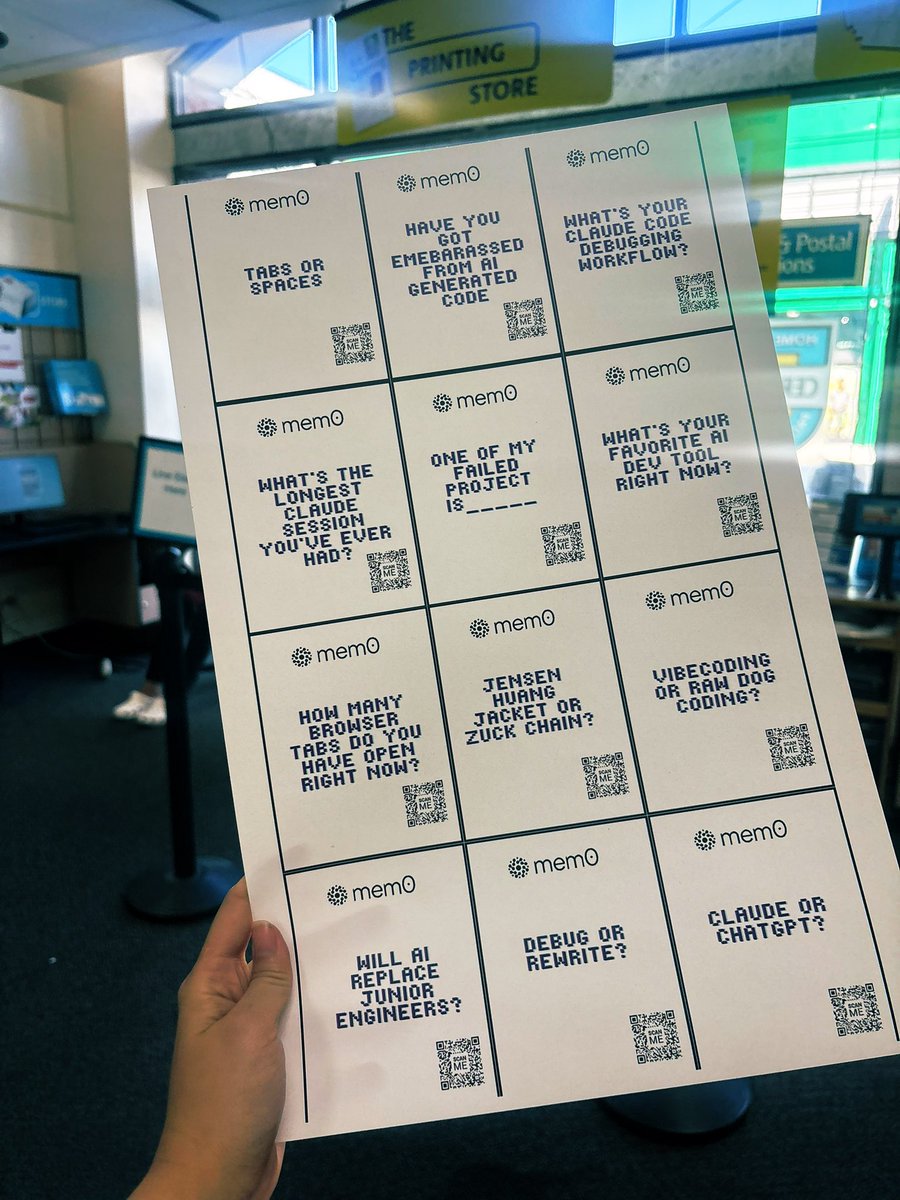
@mem0ai Love this 😂 Proof that even humans need a memory layer. Now imagine your phone just whispering "ask about their dog Max" before you blank.
We're building that. Contextually | Cue coming soon get it first: contextually.me
English
Contextually | Cue
438 posts

@ContextuallyAI
Cue: The first AI agent that doesn't wait for a prompt. Proactive, ambient and secure. 🚨coming soon, sign up now🚨

I spoke to Anthropic’s AI agent Claude about AI collecting massive amounts of personal data and how that information is being used to violate our privacy rights. What an AI agent says about the dangers of AI is shocking and should wake us up.

Agents that natively self-orchestrate, managing their own context, tools, and sub-agents, are the next big unlock in LLM performance. Right now, a skilled engineer building an optimized harness, with thoughtful data flow, separation of concerns, sub-agent management, etc., can make dramatic improvements over baseline for specific tasks. If a model could do this itself, that’d be a major step forward. You give it an objective and a set of tools, and it figures out the optimal way to orchestrate itself to do the task. For example, I’m building a very primitive AI scientist that I’ll open-source soon. Most of the work isn’t in the prompt, it’s in the harness… what the orchestrator sees, what sub‑agents see, what gets shared between them and when, where we summarize vs. pass raw data, and which tools each agent controls. Doing this allows me to dramatically improve what the model can do on its own. If a model can effectively design its own harness for a given problem, it’d be a huge step forward. My bet: self-orchestrating models… ones that manage their own context, tools, and sub-agents, will move the frontier almost as much as the jump from chatbot → reasoning did. Maybe more.


I didn't know you could disable Claude Code attribution when committing code. To fix it, I asked Claude Code to disable attribution, and it updated the global settings. json file. No more "Co-Authored-By: AI <ai@example.com>" comments.

Introducing Dasher Tasks Dashers can now get paid to do general tasks. We think this will be huge for building the frontier of physical intelligence. Look forward to seeing where this goes!

@LangChain this is cool but genuinely wondering, is Fleet open source or locked behind enterprise? been following @SentientAGI's open approach to agent orchestration and it feels like the open vs closed debate is gonna define who wins this space
It's crazy how AI is really good at the stuff I don't know anything about and total dog shit at the stuff I do.

🙌 Andrej Karpathy’s lab has received the first DGX Station GB300 -- a Dell Pro Max with GB300. 💚 We can't wait to see what you’ll create @karpathy! 🔗 #dgx-station" target="_blank" rel="nofollow noopener">blogs.nvidia.com/blog/gtc-2026-…
@DellTechIn a home scenario demo, a robot autonomously organizes objects, operates a washing machine, navigates into the kitchen, retrieves ingredients, and prepares breakfast — all in one uninterrupted sequence with physically consistent interactions. #EmbodiedAI #WorldModel #Robotics
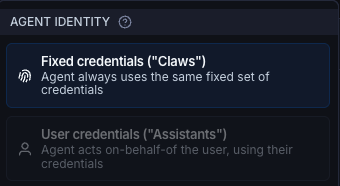
Introducing LangSmith Fleet: an enterprise workspace for creating, using, and managing your fleet of agents. Fleet agents have their own memory, access to a collection of tools and skills, and can be exposed through the communication channels your team uses every day. Fleet includes: → Agent identity and credential management with “Claws” and “Assistants” → Sharing and permissions to control who can run, clone, and edit (just like Google Docs) → Custom Slack bots so each agent has its own identity in Slack Try Fleet: smith.langchain.com/agents?skipOnb… Read the announcement: blog.langchain.com/introducing-la…