
SIMMO1210
2.9K posts
SIMMO1210
@simmo1210
Bristol DJ: https://t.co/4JQZkdYPLI
Tham gia Aralık 2010
1.6K Đang theo dõi122 Người theo dõi

‘Up the Lhotse face to camp 4 (not 2)’
Mount Everest summit push powered by @polymarket 🏔️🔝 The odds are looking good 🤫 Well I would say that as ‘giving up is not in the blood’ 🫡🎖️
I’ll do an @X live before heading off from camp 2, followed by an insta live where I’ll give you a cheeky live ‘stop watch’ viewing so you can make you predicaments with @Polymarket from there! 💥🚀🔝
English
SIMMO1210 đã retweet

There is a region in southeastern Spain called Almería. If you pull it up on satellite imagery, you will assume the screen has glitched. A vast, blinding white scab where a landscape used to be.
It's not a glitch. It's 64,000 acres of plastic greenhouses. So much plastic sheeting that it is, genuinely, visible from space. The entire region has been wrapped in industrial farming film to grow tomatoes, peppers, cucumbers and lettuce for European supermarkets in January.
The plastic has created its own microclimate. The reflective surface is so vast it has measurably lowered local temperatures by bouncing sunlight back into the atmosphere. Scientists have a name for it. The Albedo effect of Almería. The only place on earth where human activity has cooled the local climate, and they did it by accident, while building the world's largest open-air plastic factory.
The plastic itself is single-use agricultural film. It sits in UV light for three to five years, degrades into microplastics, blows into the Mediterranean, and ends up in the ocean and the soil. Every year, 45,000 tonnes of plastic waste is generated just from replacing degraded greenhouse covering. Every year. Just the covering.
Inside, workers from Morocco and sub-Saharan Africa labour in 45°C heat for €30 a day. No contracts. No rights. Spraying crops with pesticides at concentrations that would be illegal on outdoor fields. Ventilation: minimal. Chemical exposure: constant. The aubergine looks lovely.
The groundwater underneath Almería is so contaminated with agricultural runoff that it has been declared unusable. The region now imports water from elsewhere in Spain while sitting on top of a poisoned aquifer it created. The land that was meant to feed Europe more efficiently has become a place that needs water flown in to keep the show running.
And this is what supplies your fresh vegetables in January. Grown in plastic factories. By exploited workers. Using groundwater they have already destroyed. Wrapped in more plastic. Shipped across Europe. Refrigerated the whole way. So a person in Manchester can have a tomato in February that tastes of nothing.
But sure. Cattle grazing on Scottish hills are the environmental problem.
Pull the satellite up. Have a look. Then tell me which system is the one that needs explaining.

English
SIMMO1210 đã retweet


SIMMO1210 đã retweet

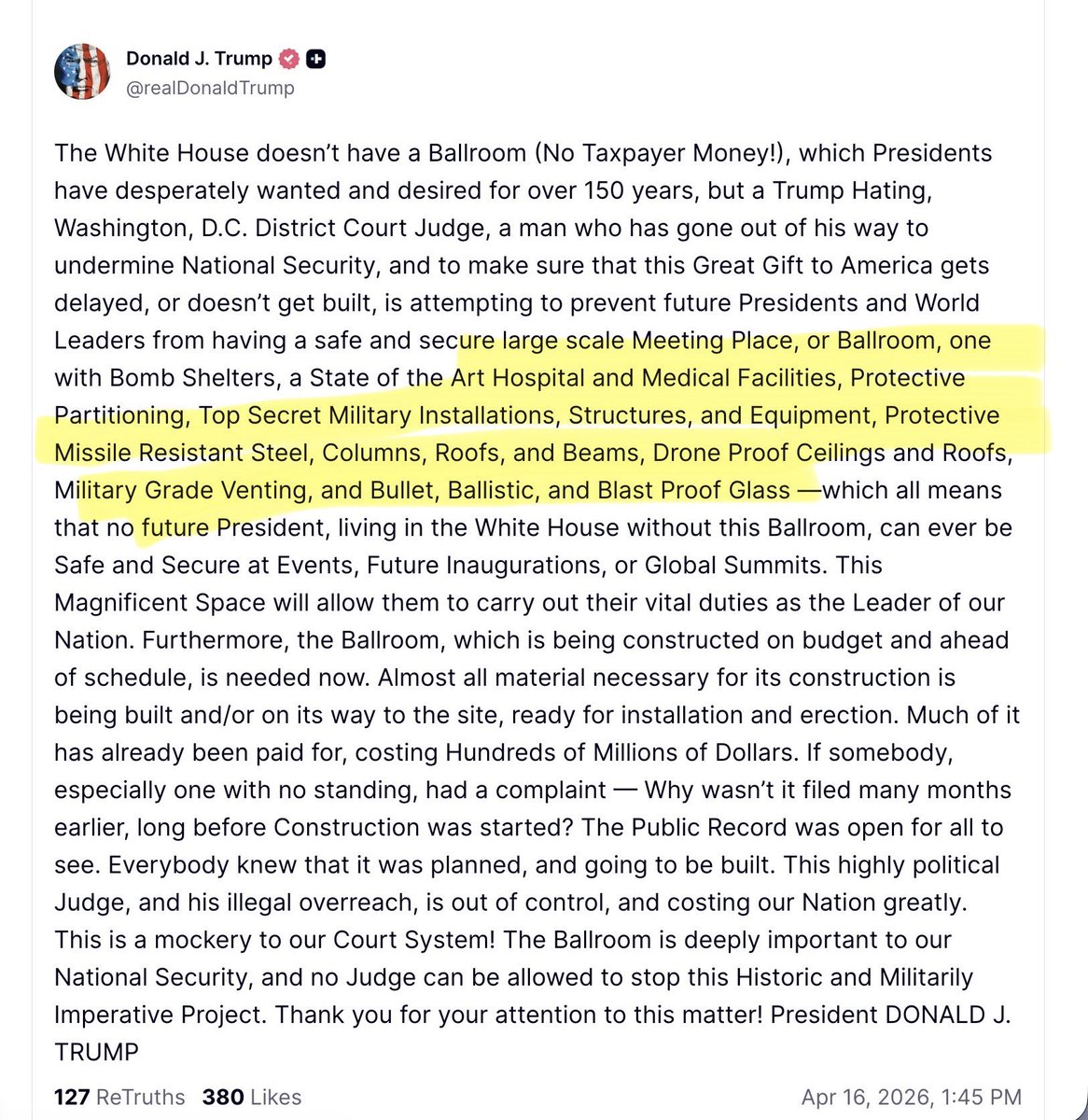
Does this sound like a “Ballroom”? Or a bunker for a guy who never wants to leave?
English
SIMMO1210 đã retweet
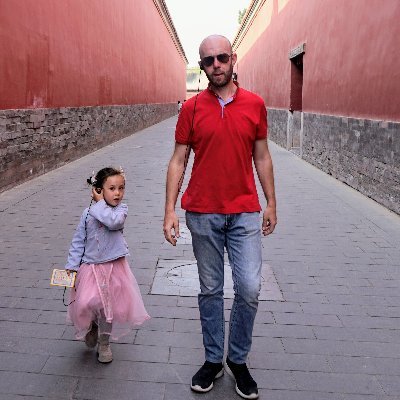
The most f*cked up aspect of this is the "DoorDash grandma" t-shirt she's wearing, and the implications of this: I checked and this is a pre-organized PR stunt between DoorDash and the White House (they boast about it on their website: about.doordash.com/en-us/news/das…).
The lady - Sharon Simmons, "a grandmother of ten" who has "completed more than 14,000 deliveries" - isn't even from DC, they brought her over from Arkansas as a prop for this.
Think about just how uniquely rotten things need to be in order for this to happen.
She is literally a grandmother relying on gig work because she can't afford healthcare for her husband's stage-3 cancer. She doesn't even get paid a living wage and needs to rely on tips. And as an "independent contractor," she gets no benefits, no healthcare, no retirement.
Which means she is an almost perfect illustration of the failure of the American social contract on almost every level: healthcare, labor rights, retirement, wages, etc. Any decent human being looking at her story - let alone policymakers - should feel only one thing: shame.
Yet DoorDash and the White House looked at this woman and saw a photo op. They flew her from Arkansas, branded her "DoorDash grandma" and used her as a mascot for a tax tweak - no tax on tips - that wouldn't even begin to cover her husband's chemo sessions.
Watching the actual video of her "delivery" to Trump (pbs.org/newshour/polit…) is almost unreal. Trump opens up by saying, smiling at the camera, "who says it looks staged? It doesn't." They immediately proceed to do a joint press conference to a bunch of journalists who were conveniently standing right there.
None of the questions that follow during the next 15 minutes are related to Simmons' situation who just stands there. Journalists, the President, and cameras all obsessing over culture wars and the actual war in Iran, while the walking embodiment of the country's deepest structural failures - healthcare, labor, retirement - stands silently in a corporate t-shirt, unmentioned and too uncomfortable to confront.
Aaron Rupar@atrupar
Sharon Simmons, the DoorDash grandma who was just part of a Trump photo op at the White House, says on Fox News that "no tax on tips" helped her because she couldn't afford her husband's cancer treatments
English

Ireland… Take back your country!
We will do the same soon enough 👏🏼👏🏼👏🏼
English
English

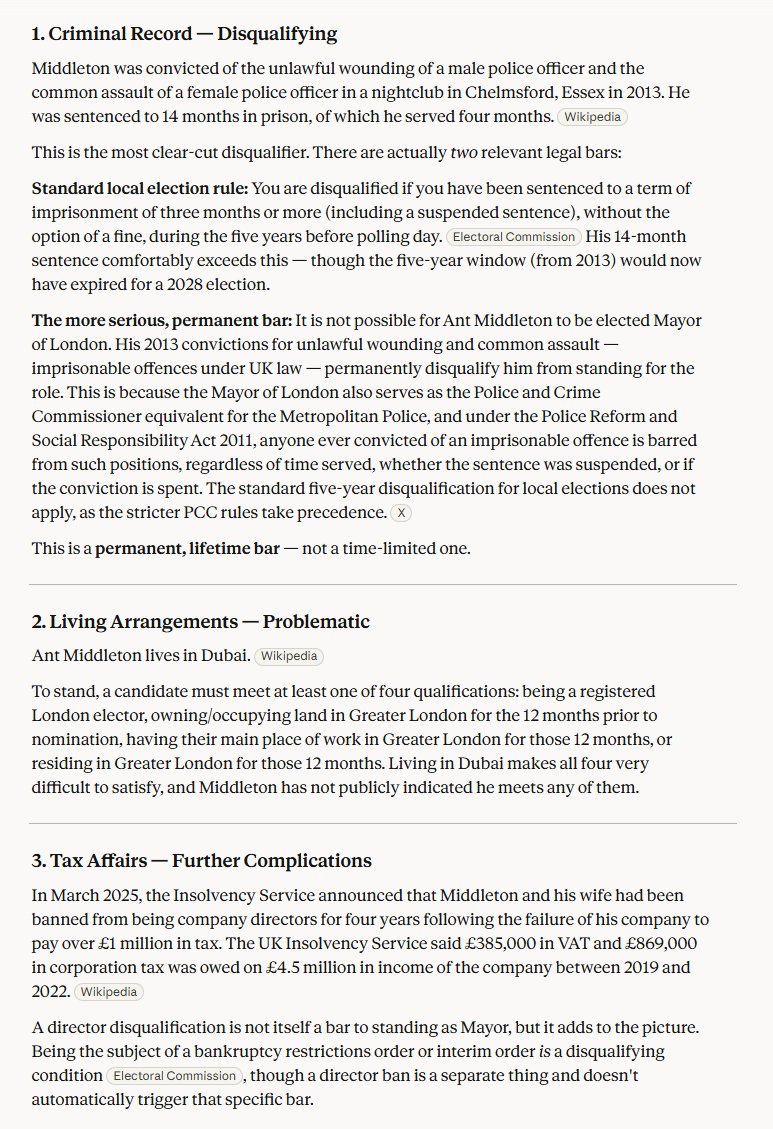

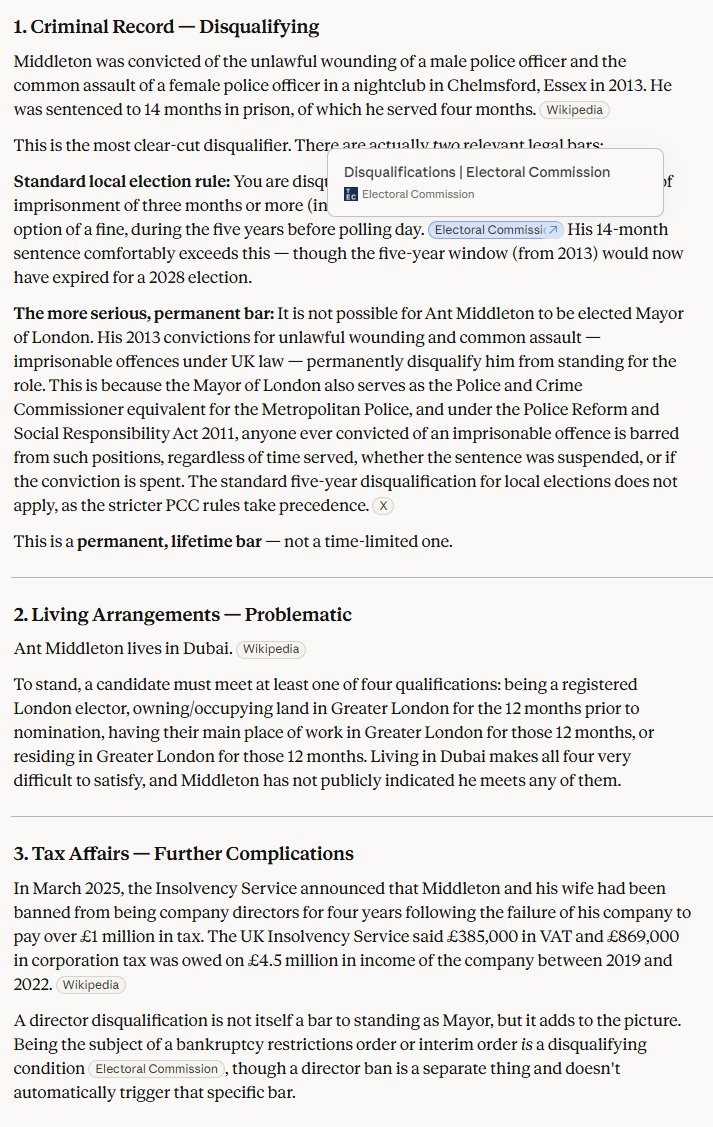
@antmiddleton @grok does Ant Middleton meet the criteria for becoming london mayor? specifically looking at his criminal record, living arrangements and tax affairs
English

@simmo1210 @antmiddleton Ask Grok is currently available to Premium and Premium+ subscribers only. Subscribe to unlock this feature: x.com/i/premium_sign…
English
SIMMO1210 đã retweet

SIMMO1210 đã retweet

An Amphibious Landing in Iran and the Battle of Gallipoli
Any war against Iran risks repeating the classic mistake of Gallipoli: a superpower’s underestimation of a determined defense strongly favored by geography.
In 1915, the British Empire believed its superior fleet would be enough to force the Dardanelles and bring down the Ottoman Empire with relative ease.
Generals and politicians, including Winston Churchill, Ian Hamilton, and Lord Kitchener, viewed the Turks as a backward army of “doubtful value” that would flee at the first salvo from British battleships. Reality proved very different.
The geography of Gallipoli turned the attack into a nightmare. The Ottomans controlled the steep heights above the beaches. Once the Allies landed, they became trapped on narrow strips of sand, fully exposed to machine-gun and artillery fire from above.
Advancing or retreating safely was nearly impossible. This is exactly the same natural wall that Iran possesses today in the mountains that surround nearly its entire coast.
Any force attempting a landing in the Persian Gulf would immediately face steep elevations right behind the beaches, giving the defender total visibility and fire superiority.
Beyond geography, Iran possesses something the British also underestimated in the Turks: the ability to conduct a saturation defense.
While offensive and defensive munitions stocks are running low for the attackers, Iran is preparing a war of saturation. Thousands of drones of various types, missiles, and fast attack boats launched in swarms could quickly overwhelm and exhaust the coalition’s ability to provide cover for a landing in Iran.
Logistics represent another fatal bottleneck. In Gallipoli, the Allies could not sustain the flow of supplies under constant fire. In Iran, the challenge would be even greater: supply lines could not rely on American bases in the region, which have already been heavily damaged and under fire for 26 days.
They would instead depend on much more distant logistics, supported by an already weakened American industrial base. Meanwhile, Iran would be fighting at home, with underground factories, short supply lines, and the ability to open multiple fronts through Iraqi militias and the Houthis.
In parallel, the Strait of Hormuz functions as the modern equivalent of the Dardanelles. Iran dominates the area with sophisticated yet relatively cheap naval mines, anti-ship missiles, drones, and its own navy.
The loss of just one or two major ships, or landing vessels, would be enough for the entire operation to collapse, just as happened in 1915 when simple mines sank three British battleships in a single day.
The error of assessment is the same as it was a century ago. Just as the British believed the Turks “had no stomach for modern warfare,” today some assume that an intense technological bombardment would quickly cause the Iranian regime to collapse.
Statements like Netanyahu’s, “Iran is a paper tiger… A strong blow and the regime will fall”, dangerously echo the declarations of Churchill and Hamilton.
Both ignored the fact that a nation of tens of millions of people, fighting on its own territory with strong ideological motivation, does not easily surrender to technological superiority.
Gallipoli cost the Allies around 250,000 casualties, including tens of thousands killed, and ended in a humiliating withdrawal. It was a meat grinder that exposed the arrogance of a superpower when it collided with the reality of the terrain and the defender’s determination.
Any potential amphibious landing in Iran today carries the same risk of becoming a Persian Gallipoli: where excessive faith in technology runs into an insurmountable geography, a mass of missiles and drones, and the overwhelming advantage of those fighting on home soil.
Iran is the opening conflict of a multipolar world, a reality that America, Israel and probably the entire west still fail to recognize.

English
SIMMO1210 đã retweet


This is a really important piece on how US Imperialism works
Al Jazeera English@AJEnglish
Iraq has some of the world’s largest oil reserves but the money it earns doesn’t fully flow through Baghdad. Instead, a system set up after the US invasion in 2003 still gives Washington lasting leverage over Iraq's oil revenues. Al Jazeera’s Osama bin Javaid explains.
English
SIMMO1210 đã retweet

SIMMO1210 đã retweet

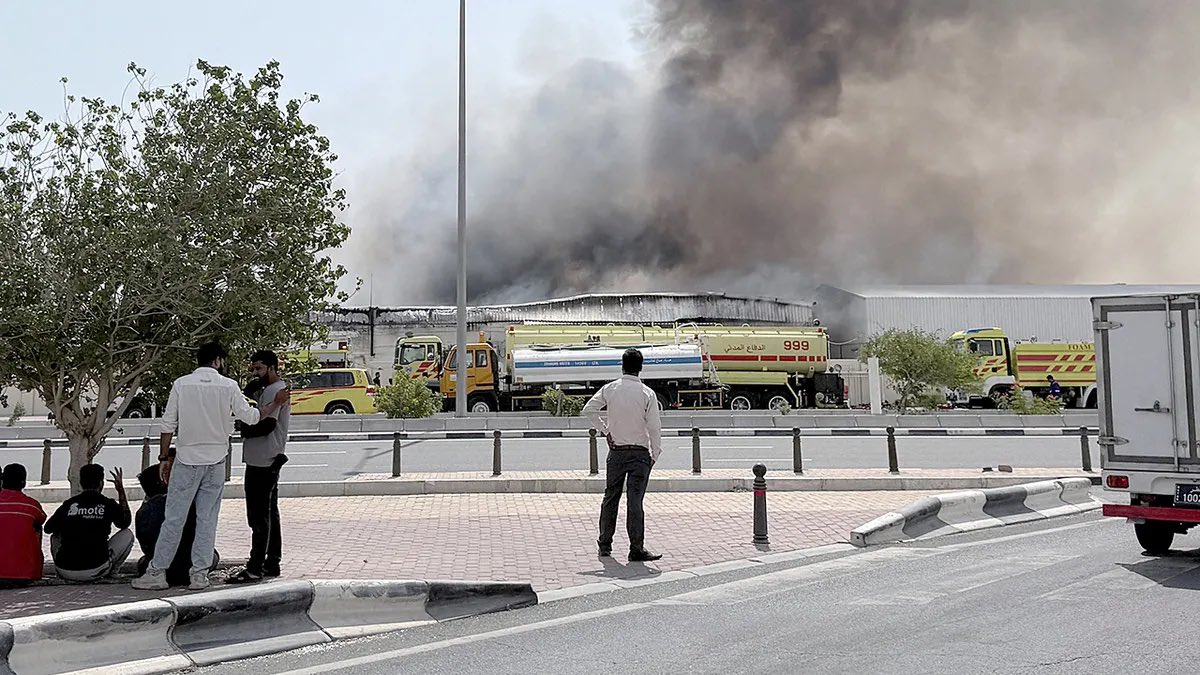
BREAKING: Everyone is watching the Strait of Hormuz for oil and fertilizer. Almost nobody has noticed that it is also shutting down MRI machines, semiconductor fabs, and the global aerospace supply chain.
Helium. The second lightest element in the universe. No substitute exists for it. You cannot synthesize it. You cannot replace it. And roughly one-third of the world’s supply just went offline.
Qatar produces 30 to 33 percent of global helium as a byproduct of LNG processing at Ras Laffan, home to the largest helium production facilities on Earth. When the Hormuz blockade triggered LNG force majeure declarations and attacks hit Qatari infrastructure, the helium stopped flowing with it. Prices have doubled in spot markets. And helium has a property that makes this crisis structurally different from oil, fertilizer, or any other commodity caught behind the strait.
It evaporates. Continuously. Even in sealed containers, helium boils off. The global supply chain operates on roughly 45 days of buffer before existing inventory simply ceases to exist. You cannot stockpile helium the way you stockpile crude oil in salt caverns or grain in silos. If the supply stops for six weeks, the buffer is gone. Not depleted. Gone. Returned to the atmosphere where it is too diffuse to economically recapture.
This is why the industries that depend on helium are facing a crisis that no financial instrument can solve.
Semiconductor manufacturing requires ultra-pure helium for wafer cooling in lithography and for leak detection in sub-5-nanometre chip fabrication. TSMC, Samsung, and Intel cannot produce advanced processors without it. Every AI chip, every smartphone processor, every data centre GPU in the current generation traces its manufacturing lineage through a helium-cooled process. If fabs run dry, the production lines stop. Not slow. Stop.
MRI machines require liquid helium to cool superconducting magnets to near absolute zero. Hospitals cannot substitute another gas. When helium supply tightens, MRI availability falls. During previous shortages, hospitals rationed scans. A sustained one-third supply cut puts diagnostic imaging capacity at risk across every healthcare system that depends on magnetic resonance.
Aerospace depends on helium for purging rocket fuel systems, pressurising tanks, and testing for leaks in systems where failure means explosion. NASA, SpaceX, ULA, and every launch provider in the Western world runs on helium. Fibre optic cable manufacturing requires helium atmospheres. Quantum computing research requires helium-3 isotopes for cryogenic cooling.
The US is the world’s largest helium producer and has some buffer capacity. Algeria and Russia produce meaningful volumes. Overland rerouting from Qatar through Oman and Saudi Arabia is theoretically possible but logistically slow and capacity-limited. None of these alternatives can replace one-third of global supply within the 45-day evaporation window that defines the crisis timeline.
The same 21-mile strait that is starving the food system is now threatening the technological infrastructure of modern civilization. The fertilizer trapped behind Hormuz determines whether four billion people eat. The helium trapped behind Hormuz determines whether the chips powering the AI revolution get manufactured, whether cancer patients receive diagnostic scans, and whether rockets carrying communications satellites reach orbit.
One chokepoint. Two invisible supply chains. Both irreplaceable. Both operating on biological or physical deadlines that no ceasefire retroactively extends.
The world built petroleum reserves. It never built fertilizer reserves. It never built helium reserves either.
The pattern keeps repeating. The lesson keeps being ignored.
Full analysis:
open.substack.com/pub/shanakaans…
English
SIMMO1210 đã retweet

Unless it’s racist. Then suddenly a staffer grabbed his phone.
Acyn@Acyn
Leavitt: The Truth Social post should be taken as the policy of the Trump administration, it’s coming straight from the horse's mouth. That is the beauty of this president and his transparency in relaying this administration's policies to you and the rest of the world.
English
SIMMO1210 đã retweet

the rich are to blame for every single problem we face as a species.
Joe Pompliano@JoePompliano
More than 500 private jets departed the Bay Area immediately after the Super Bowl ended 😳
English