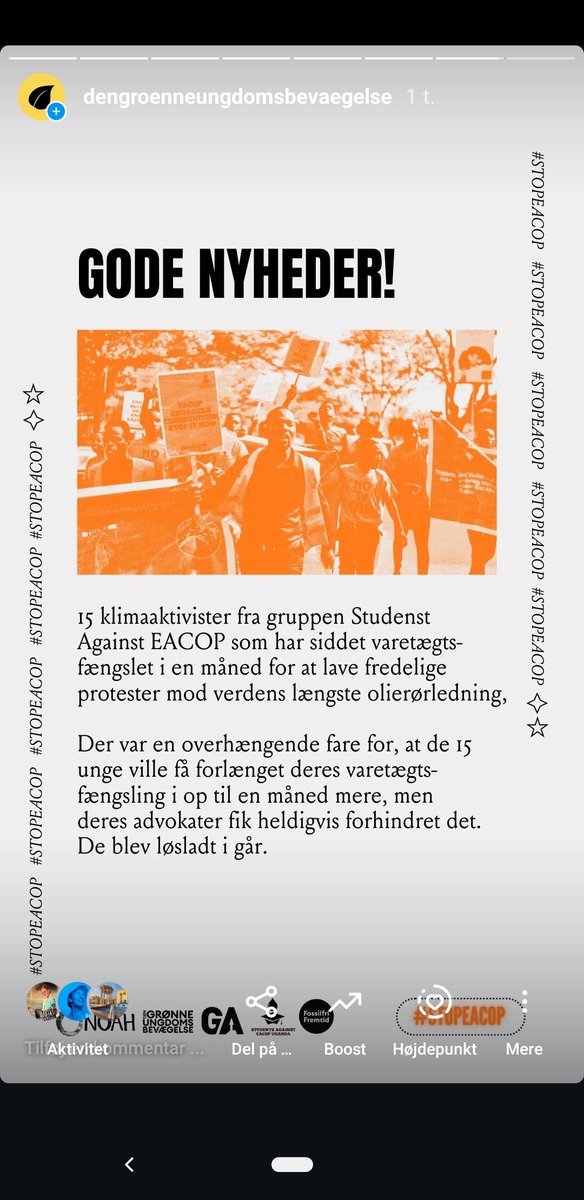
What is happening to Eddy Mutwe is deeply sad and tragic. It has brought back painful memories of what we went through recently—on the 19th of March 2025—when we protested against fossil fuel subsidies and the East African Crude Oil Pipeline (EACOP) at the Parliament of Uganda. After our arrest, police officers put us in a truck. On the way, they beat us with canes, saying, “There are no cameras here. You have no evidence, so you have no case.” It was cruel and heartless. When we reached the Central Police Station (CPS), the police spokesperson for Kampala Metropolitan came and questioned us about our continued protests. After giving our statements, we were taken to the basement of CPS. Later that day, the chief security officer from Total and another Total representative came to the police station. In front of the Officer in Charge (OC) of CID, they accused me and one of my fellow activists of being the leaders of the student protest, calling the others mere recruits. We were taken back to the basement, where there’s no way to tell time—it’s just endless guessing. That same day, armed men without uniforms, who I suspect were from the flying squad, took me and the other alleged leader. They put us in a drone van, chained us, covered our heads, and drove us to a safe house. In the van, we were beaten and questioned. When we arrived, our shirts were taken off to make us feel helpless. As a “welcome,” they beat us again. The men seemed to enjoy it, laughing as we cried and begged for mercy. They separated us. I was taken to a dark room with two men—one larger, wearing gloves, and with a mustache. It was already night, so I couldn’t see their faces clearly. They started questioning me about my involvement with the National Unity Platform (NUP), my religion, my tribe, my activism, and even worse—about being part of the LGBTI community. I was trembling with fear, speechless. Then the big man kicked me in the neck. I fell to the floor. One of them said, “If you stay silent, you get tortured. If you say the wrong thing, you also get tortured.” They used a small hammer to beat my teeth and ankles until I couldn’t feel them anymore. They put rods between my fingers and slammed my hand on a table—it felt like my fingers were going to break off. The worst part—the most painful memory—is when the big man ordered me to undress completely and bend over. He forced two fingers inside me, saying he wanted to check if I was a homosexual agent. I still haven’t recovered from that moment. I hate what our security forces have become. We spent that night in that place. No one—our lawyers, our families—knew where we were. We were missing until the next day, the day of our court hearing. They returned us to CPS just before court. The flying squad had beaten us again before handing us over. After court, we were remanded to Luzira Maximum Prison. I stayed in A block with my fellow comrade. My prison number was MBPR 658/25. I was placed in A8—a section for high-risk prisoners, those seen as dangerous or badly behaved. In that block, you wear orange—not yellow like others. The other inmates beat us, and even the prison officers feared entering that section. I was made a “nanny”—I had to wash clothes, clean the ward, and even bathe other prisoners. If you refused, they beat you. On the Monday of our last week in prison, we were taken out to slash grass, but I couldn’t participate. My health was too bad—my ankles were still swollen, my fingers shaking, my neck injured. The officers thought I was being stubborn. To “teach me discipline,” they put me in solitary confinement. I slept on the floor with my hands and legs cuffed. I was beaten with water mixed with salt. I was left naked the whole night, shivering like a plucked chicken. It was hell. The only reason they stopped was because my friends visited me the next day and saw how I was being treated. Finally, on Wednesday 3rd April, we were released. Our case was dismissed.