

SchulzLab
166 posts

SchulzLab
@LabSchulz
Our interest: Chemistry of Communication, Chemical Ecology and Natural Products using analysis, synthesis and biosynthesis to decipher structures and function.
انضم Nisan 2019
254 يتبع820 المتابعون
SchulzLab أُعيد تغريده

Happy to share our new publication! We found that spiders have super sensitive olfaction! Male spiders use their legs as “nose” to sniff out partners.
Olfaction with legs—Spiders use wall-pore sensilla for pheromone detection | PNAS pnas.org/doi/10.1073/pn…
English
Ten species comprise half of the bacteriology literature, leaving most species unstudied biorxiv.org/content/10.110…
English
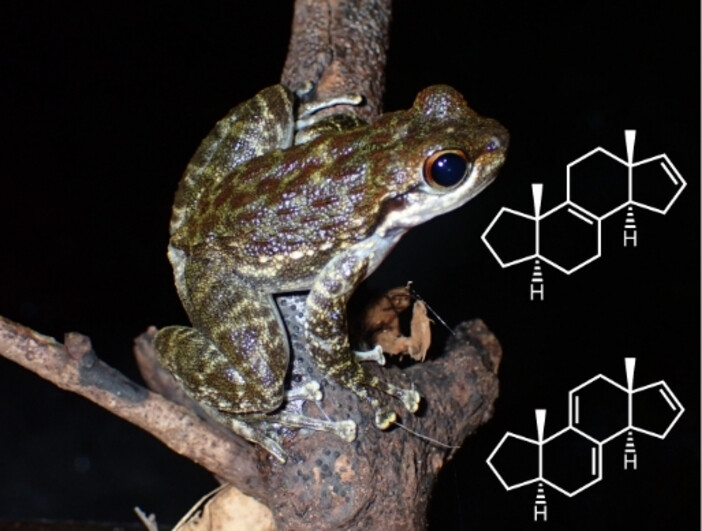
We have discovered a new type of steroids with contracted A-ring, the batrachane skeleton, in gular scent glands of Odontobatrachus frogs. See the identification and synthesis of various batrachodienes, potentially used as signals, in Angew. Chem.
doi.org/10.1002/anie.2…
English
SchulzLab أُعيد تغريده
An editorial on release 6 of MACE just appeared in the latest issue of the Journal of Natural Products
pubs.acs.org/doi/full/10.10…
English
We congratulate Natural Product Reports on 40 years of publication with a highlight on the chemistry of springtails. Please take a look at the fascinating compounds produced by these tiny soil dwellers.
doi.org/10.1039/D4NP00…

English
We are happy to announce MACE release 6, our open access database of mass spectra useful for GC/MS. The database contains next to the data in a text file also full libraries in Shimadzu and MSSearch formats, the latter now with structures.
MACE- MAss spectra for Chemical Ecology@MACE4GCMS
MACE release 6 is now available. It contains over 420 EI mass spectra and almost 30 orbitrap mass spectra. The data can be found at leopard.tu-braunschweig.de/receive/dbbs_m… The MACE website with individual spectra is accessible via oc.tu-bs.de/schulz/html/MA…
English
In memory of the late Paul Weldon: This new but last joint paper describes unusual fatty acids from the scent glands of the endangered Mangshan pit viper.
doi.org/10.3762/bjoc.2…

English
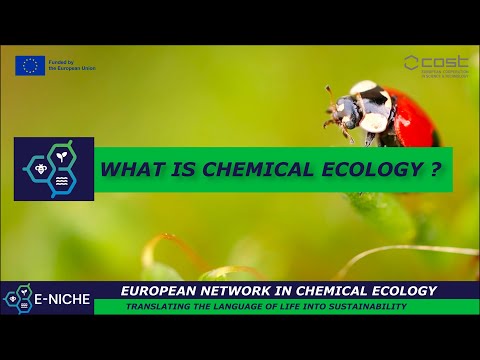
The European cooperative program e-niche, sponsored by the EU Cost Action, has released a short video explaining why we are interested in Chemical Ecology and what it actually is.
youtu.be/Cv6SIx2b-ms
YouTube
English
Unprecedented natural products uncovered in springtails: chemistryworld.com/news/unprecede…
English
Unique highly hetero-substituted benzenes are defence compounds from tiny springtails. The minute amounts available needed the combination of GC/MS, GC/IR, DFT-calculation, and synthesis to arrive at the structures. Chem. Sci. doi.org/10.1039/D4SC03…

English
Urocanoate serves as starter for the unusal imidacins produced in minute amounts by Stigmatella myxobacteria. The could only be identified by total synthesis.
See Org. Lett. doi.org/10.1021/acs.or…

English
Springtails are great terpene chemists, but can synthesize also other stuff. See our analysis of 23 species in iScience and their unique cuticular chemistry. It needs organic analysis and synthesis to decipher their compounds. @ChemEcol_org
https://doi.o10.1016/j.isci.2024.110416

English
SchulzLab أُعيد تغريده

Chemical Ecology lost a pillar, Entomology lost a giant, RES and ESA lost a Fellow and Honorary FRES, we lost a friend and colleague, and the world lost a fantastic human being. Jeremy is irreplaceable—he was one of a kind. Let His Memory Be A Blessing! Requiesce in pace, Jeremy.

English
And he gave a fantastic lecture on new targets and compounds fighting infectious bacteria!
Institut für Organische Chemie@OCTUBS
Yesterday, Stephan Sieber was awarded the Inhoffen Prize in Braunschweig in recognition of his pioneering contributions to finding new antibacterial compounds. Hearty congratulations! tu-braunschweig.de/en/oc/inhoffen…
English
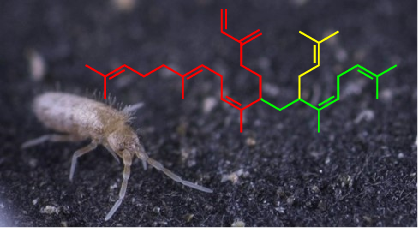
A unique cuticular hydrocarbon from the springtail Heteromurus nitidus. This new terpene type, a prenylated geranylated diterpene, highlights differences between Collembola and more advanced insects. See our article in J Nat Prod. doi.org/10.1021/acs.jn…
English
SchulzLab أُعيد تغريده

Mating between different species has often been considered an evolutionary dead end, but a study in longwing butterflies suggests that such hybridization could underlie the origins of a new species go.nature.com/3w6jvjr
English

The hybrid Heliconius elevatus is stable and sympatric with its parents: H. pardalinus contributes 99% of the genome, while the 1% originating from H. melpomene contain ecological traits including sex pheromones and mate choice. Nature
doi.org/10.1038/s41586…

English