

@redpilldispensr The whole MENA region and parts of the Mediterranean were at one point Jewish and pagan then Christian once Christianity was born... You're making such a big deal of nothing new
English
Lesedi Modisakeng
8.3K posts

@LesediModi62290
Just a South African girl with her own views which are mine but you're free to listen and engage of you like



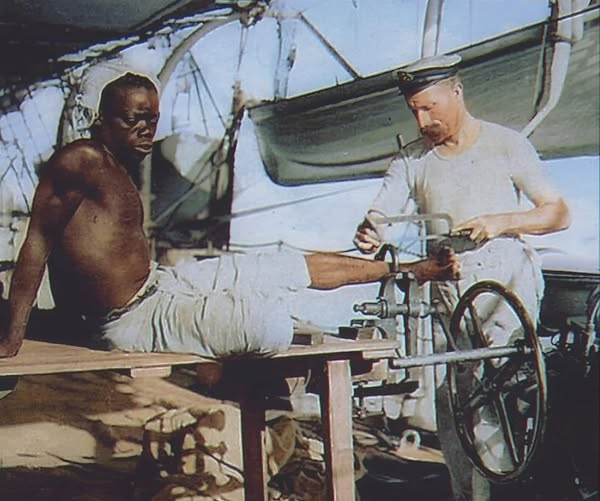
In May 1796, Edward Jenner administered his vaccine against smallpox for the first time on James Phipps, the eight-year-old son of his gardener. Smallpox is one of the deadliest and most contagious diseases known to man. The virus killed over half a billion people in the twentieth century alone—three times the number of deaths from all of the century’s wars combined. On 8 May 1980, the WHO announced the eradication of smallpox. This was an unprecedented event in history, signaling the first and only annihilation of a human disease. The victory—which saved tens of millions of lives—fulfilled the lifelong dream the English physician, Edward Jenner. Jenner noticed that dairymaids who contracted cowpox never developed smallpox. Working from this, he developed a vaccine from cowpox. Indeed, the word “vaccination,” coined by Jenner in 1796, is derived from the Latin root vaccinus, meaning "of or from the cow.” The prominent Scottish physician Sir Walter Farquhar advised Jenner that if he kept the nature of the vaccine a secret, it could yield as much as £100,000. But Jenner nurtured no such ambitions. In 1798, he had a hut built in his garden and christened it the TEMPLE OF VACCINIA. It not only became a beacon of hope for the poor who sought protection against smallpox, but it was also the site of the first public health service in Britain. Nearly two centuries after Jenner’s first experiment, the disease that once scarred and terrorized the world had vanished. It remains one of the greatest triumphs in the history of medicine. 📷 : Illinois man in 1912 with smallpox. #archaeohistories




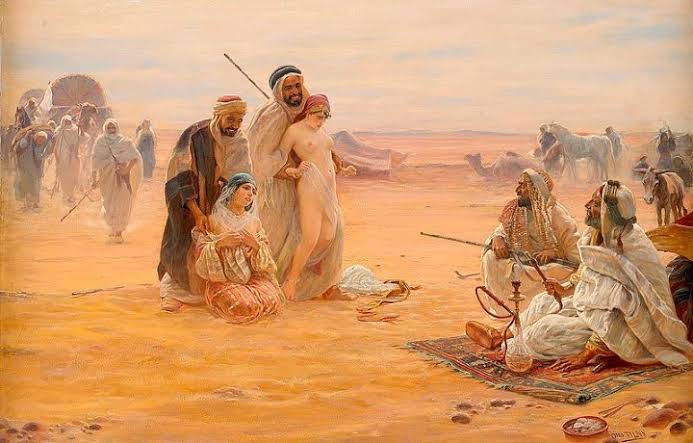
Dear Feminists, This is called Forced Marriage.

Pakistan has one of the highest rates of cousin marriage in the world, with estimates often cited around 60–65%. While children from such unions are often born healthy, repeated close-relative marriages over multiple generations can increase the risk of inherited genetic disorders.
Indigenous people in the United States have lost nearly 99% of the land they historically occupied, according to an unprecedented new data set. The data set—the first to quantify land dispossession and forced migration in the United States—also reveals that tribes with land today were systematically forced into less-valuable areas, which excluded them from key sectors of the U.S. economy, including the energy market. The negative effects continue to this day: Modern Indigenous lands are at increased risk from climate change hazards, especially extreme heat and decreased precipitation. “It’s an airtight article,” says Deondre Smiles, a geographer at the University of Victoria and a citizen of the Leech Lake Band of Ojibwe, who was not involved in the study. By wrangling many disparate sources into one quantitative data set, the work “is going to represent a paradigm shift” for studies of U.S. colonialism and its effects. Starting in the 17th century, European settlers pushed Indigenous people off their land, with the backing of the colonial government and, later, the fledging United States. Indian removal policies intensified in the 19th century, including the forced migration of tens of thousands of people in the U.S. southeast to Oklahoma, known as the Trail of Tears. Indigenous people have always understood the devastating effects of these policies, Smiles says. But most of their stories existed only in qualitative historical records, including hundreds of treaties, or oral histories. “The pushback you get in academia is that qualitative narratives are not robust. The new data set spans 300 years and includes nearly 400 tribes. For information about where tribes used to live, researchers spent 5 years scouring multiple archives for treaties the United States made with Indigenous nations, which often included coercive agreements to cede some or all of their land. The researchers also searched U.S. legal documents chronicling decades of land disputes, tribes’ own public archives, and other historical records. They then compared those records with U.S. census data about present-day tribal lands. (To focus on people who had experienced similar colonial policies, the researchers excluded Alaska and Hawaii, and tribal lands that extended into modern Canada and Mexico.) The researchers found that Indigenous people across the contiguous United States have lost 98.9% of their historical lands, or 93.9% of the total geographic area they once occupied, they report today in Science. (The first figure is higher because the same land was sometimes occupied by multiple tribes before colonial boundaries were imposed.) Some tribes suffered even more complete dispossession: Forty-two percent represented in historical records have no recognized land today. For the tribes that still have land, its average present-day size is a mere 2.6% of their historical lands. In addition, present-day tribal lands can be far from their original sites: On average, tribes were forced to move 241 kilometers. One of the longest forced migrations in the data set was experienced by the Modoc people, who were moved from the Klamath Basin of California and Oregon to Oklahoma, 2565 kilometers away. The consequences of land dispossession and forced migration continue to affect tribes today, says co-author Kyle Whyte, an environmental justice scholar at University of Michigan, Ann Arbor, and an enrolled member of the Citizen Potawatomi Nation. The data set shows present-day tribal lands are more at risk from climate change than tribes’ historical areas, as they experience more extreme heat and less precipitation. “It’s not just that Indigenous people happen to live in areas that are disproportionately impacted in negative ways by climate change,” Whyte says. They were often forcibly relocated to land that settlers considered less valuable, and those lands are more at risk from climate change hazards today. #archaeohistories
t.co/2MVl4rfjz5 A senior Ayatollah in Iran has issued a clear Islamic ruling: Anyone who says they are not a Muslim must be beheaded. His exact words: “We will kill you, and we will kill you good.” This is straight from the highest religious authority of the Islamic Republic of Iran. Question: Is it “Islamophobic” to simply share their own words? Let the world hear it.

Full episode of The Tea with Myriam Francois featuring the one and only @AbbyMartin - out now! Watch here: youtu.be/WBA8EfQ-wYA?si…
If you love the deep dives and unfiltered conversations on The Tea with Myriam François, consider becoming a partner in our journey by joining our Patreon community. Your support is what keeps us independent and sustainable, ensuring we can continue bringing you the stories that matter most. As a thank you for fueling our mission, you’ll unlock exclusive bonus content, ad-free episodes, and a seat at the table in our private community where the conversation never stops. Click through to join the inner circle and help us keep the tea brewing! patreon.com/c/TheTeawithMy…

