
Lords European Affairs Committee
5.1K posts

Lords European Affairs Committee
@LordsEUCom
News from House of Lords European Affairs Committee. Formerly home of Lords EU Committee. RTs ≠ endorsements.


We have a new inquiry into dynamic alignment. We're interested in issues incl. how the process might work, lessons from other countries, parliamentary scrutiny, role of the devolveds, & GDP/trade/regulatory implications. Deadline for submissions: 20 April committees.parliament.uk/committee/516/…

We have a new inquiry into dynamic alignment. We're interested in issues incl. how the process might work, lessons from other countries, parliamentary scrutiny, role of the devolveds, & GDP/trade/regulatory implications. Deadline for submissions: 20 April committees.parliament.uk/committee/516/…


EXCLUSIVE: The UK has become seriously concerned that more protectionist policies pursued by the EU could exclude British companies from its supply chains in key sectors, derailing a reset in post-Brexit relations and costing firms billions of pounds. Keir Starmer’s government is lobbying the EU against restricting market access for British businesses under the bloc’s “Made in Europe” initiative, sources tell Bloomberg. The push has become the focus of UK-EU relations behind the scenes in recent weeks and will be raised at high-level meetings in London this week. Britain is urgently trying to dissuade the European Commission and EU member states from pursuing a course it fears could badly hurt both sides, the sources said. It has been a driver of Starmer’s recent remarks about taking the UK closer to the EU’s single market. The EU has been considering proposals to promote the use of goods and services produced within the bloc, in response to Trump’s tariffs and wider geopolitical and trade uncertainty. That’s been most evident on steel. The Commission’s proposals for the Industrial Accelerator Act, delayed until later this month, will set further requirements for goods in sectors including cars and green technology to be EU-made. Britain is concerned that if it is excluded it would badly disrupt UK-EU supply chains. This would be particularly damaging for car manufacturers that have sites in both Britain and Europe, such as Stellantis, Volkswagen, BMW and Ford. Advanced technology and green energy companies could also be severely impacted, risking aiding competitors. An outcome that weakens UK-EU supply chains would increase costs and uncertainty for businesses on both sides, as well as damaging their national interests, so it would be in their mutual benefit to consider the UK’s position as a leading trade partner of the bloc, one source said. They warned that penalising British firms with protectionist policies triggered by trade threats from the US and China risked being in breach of the post-Brexit Trade and Cooperation Agreement and the commitments made between the UK and EU at a summit last year. We know from the SAFE debacle these issues aren’t always resolved rationally. The discussions highlight the vulnerabilities faced by the UK since Brexit. Outside of the bloc, Britain has little protection in the event of a global trade war and is reliant on negotiating favourable ongoing trading terms with Brussels, something which may result in further concessions from London. bloomberg.com/news/articles/…


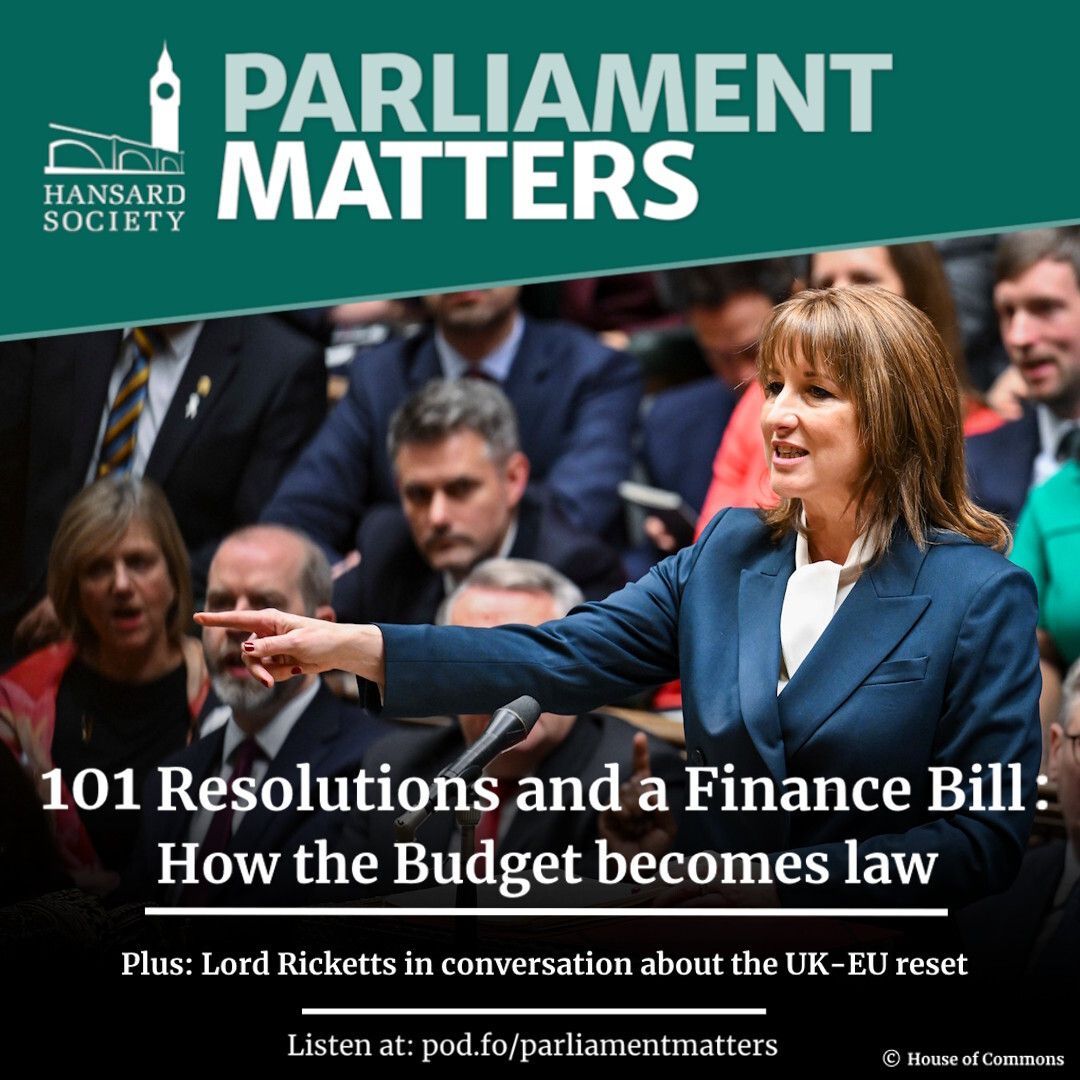
🎙️ New episode: What really happens after Budget Day? (Yes — there really are 101 Ways and Means resolutions…) 🧾 How the Budget becomes the Finance Bill 🇪🇺 @LordRickettsP on dynamic alignment with the EU 🔟 More sitting Fridays for the assisted dying bill 🔗 Listen ⤵️ buff.ly/M6S6kdP

🎙️ New episode: What really happens after Budget Day? (Yes — there really are 101 Ways and Means resolutions…) 🧾 How the Budget becomes the Finance Bill 🇪🇺 @LordRickettsP on dynamic alignment with the EU 🔟 More sitting Fridays for the assisted dying bill 🔗 Listen ⤵️ buff.ly/M6S6kdP