We often talk about online higher education as if it’s a single, borderless market.
The data suggest otherwise.
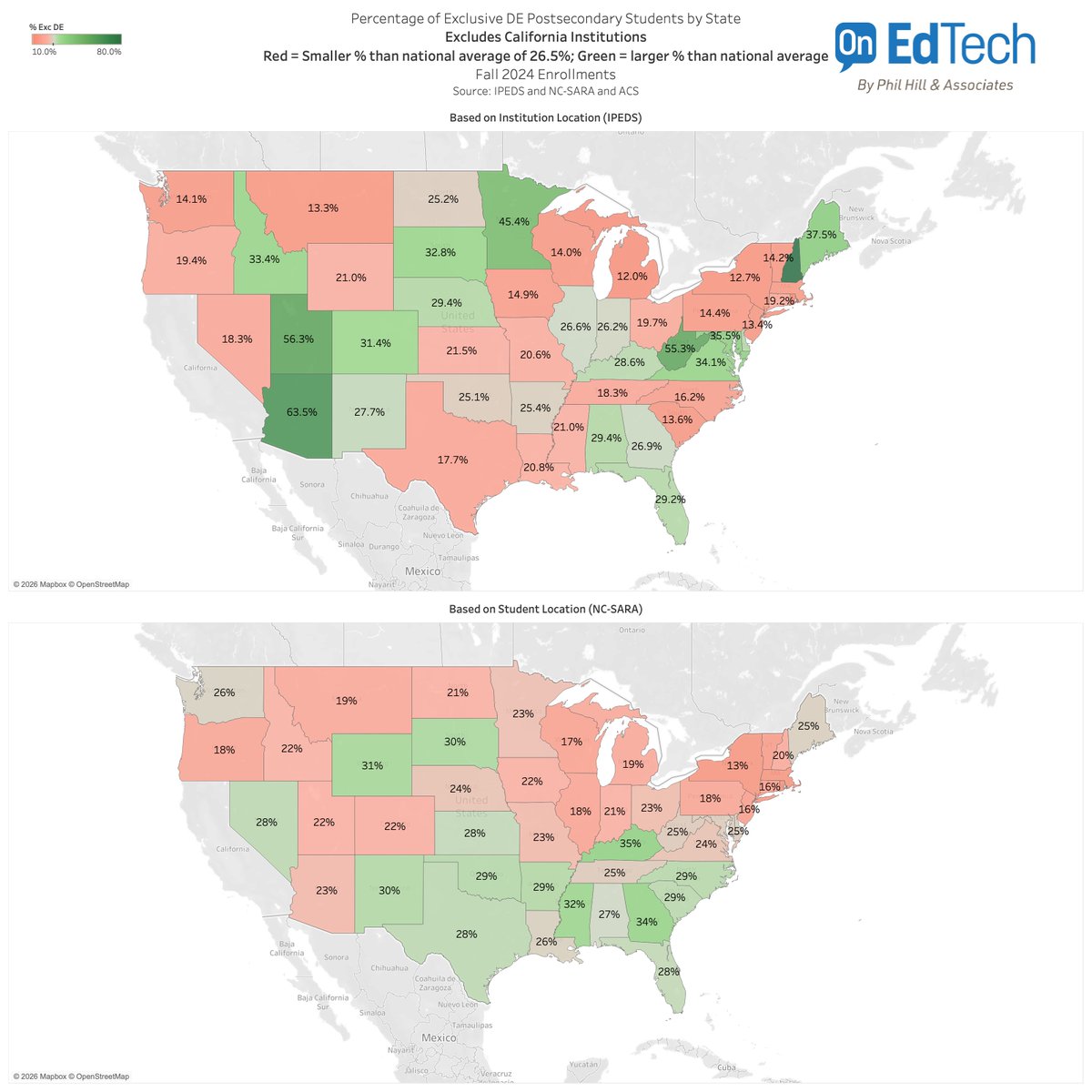
In my latest analysis using NC-SARA distance education data, I flipped the usual perspective. Instead of asking where students go, I looked at where institutions get their students.
The result: very different geographic strategies—even among the largest online providers.
A few examples:
* Western Governors University draws students from across the country, with only ~5% from its home state
* Georgia Tech’s online programs (starting with the Udacity MSCS) have built a strong national footprint, especially in large tech-heavy states
* Lone Star College System is almost entirely in-state, with ~98% of students coming from Texas
Same modality (online). Completely different markets.
For those who have seen NC-SARA data before, this is a different way to visualize it. For those who haven’t, it’s a reminder that geography still matters—even in online education.
The post includes interactive-style visualizations and a breakdown of three common patterns across institutions.
👉 onedtech.philhillaa.com/p/a-view-of-on…
Over the next few years, many higher education leaders are going to encounter a surprising policy outcome.
Programs that increase student earnings will fail federal accountability metrics.
When that happens, the first reaction will be: the data must be wrong.
But in many cases the data will be doing exactly what the policy requires.
The real issue is that the concept people believe the policy measures is not the same as what the metric actually measures.
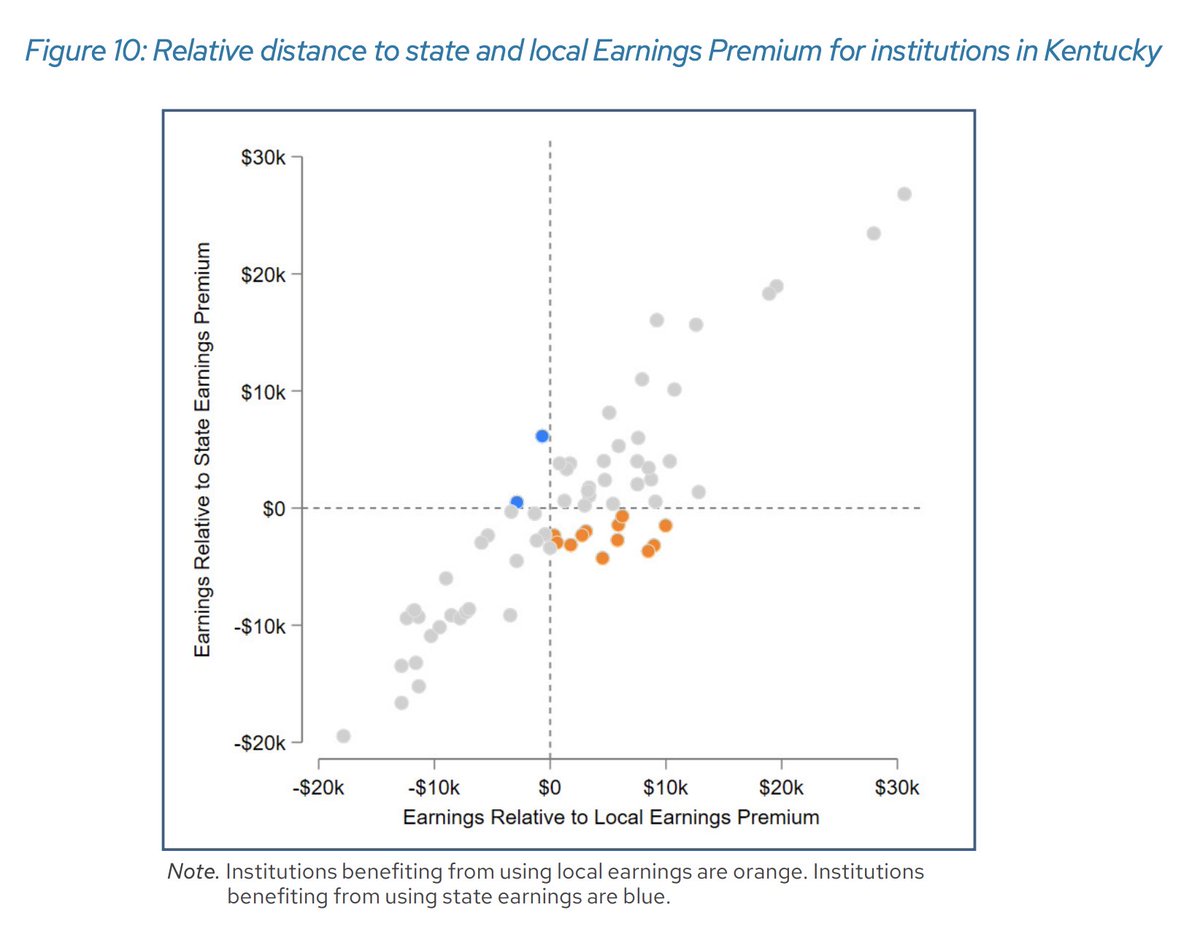
I tried to explain this gap using one annotated chart from a recent Urban Institute report.
The chart shows programs where students clearly earn more after completing the program.
Yet some of those same programs would likely fail the new federal earnings premium accountability test.
Why?
Because the policy compares program graduates to a statewide median of high school graduates, not to students’ own pre-enrollment earnings.
That difference may sound technical, but it’s going to produce results that surprise a lot of institutional leaders over the next several years.
I walk through the issue in a new On EdTech post and use the annotated figure to explain the concept vs. reality gap.
Full Article:
onedtech.philhillaa.com/p/the-concept-…
Blackboard has officially emerged from bankruptcy.
The five-month Chapter 11 process went largely according to plan. The company is now essentially debt-free, backed by $70 million in new financing, and controlled by Nexus and Oaktree. Matt Pittinsky is set to return as CEO once his non-compete obligations expire.
If you’ve been reading On EdTech over the past 14 months, none of this should be surprising.
We covered:
• The early signs of financial strain
• The shift from PR optimism to creditor control
• Nexus and Oaktree positioning in the debt process
• The Pittinsky return
The financial reset is complete.
The strategic reset is still to come.
One real test will be Blackboard's Users Conference in July — when we’ll get the first visible read on product direction, sales posture, and whether this is stabilization or repositioning in the LMS market.
Full analysis here: onedtech.philhillaa.com/p/the-new-blac…#HigherEd#EdTech#LMS#Blackboard#PrivateEquity
@beehiiv Thanks for the quick work. Please make sure in your investigation to address the outages on Feb 18 & 23 and if they're related. But great response today!
Online learning isn’t as location-agnostic as we often assume.
I just published a new post looking at the regionality of online learning—specifically, how student location, institutional geography, and local labor markets still shape outcomes, even in a modality designed to transcend place.
This is very much an initial view, not the final word. The goal is to surface patterns, ask better questions, and flag where common assumptions start to break down—especially as accountability, earnings metrics, and policy frameworks increasingly treat online programs as interchangeable across regions.
There’s a lot more work to do here. In upcoming On EdTech+ posts, I’ll dig deeper into:
* More granular regional breakdowns
* Stronger causal framing
* And analysis that’s directly usable for institutional leaders and policymakers
For now, this post is about setting the table and showing why geography still matters—even online.
👉 Read the post: onedtech.philhillaa.com/p/on-the-regio…
Fall 2024 IPEDS data are out, and the story is quieter (and more interesting) than the headlines suggest.
Yes, total U.S. higher ed enrollment grew again in Fall 2024. But the IPEDS census data show a modest, uneven recovery, not a broad-based rebound - and a much more restrained picture than early Clearinghouse estimates implied.
A few top line takeaways:
* Enrollment is up for the second straight year, but still well below pre-2019 levels.
* Community colleges and private nonprofit four-years are driving most of the growth, but much of the 2-year rebound is tied to dual enrollment with very different economics than traditional students.
* Despite all the backlash to “Zoom U,” online participation remains structurally elevated. More than half of all students now take at least one online course, well above the pre-pandemic trend line.
Taken together, the data suggest higher ed hasn’t “bounced back.” Instead, it’s settling into a new equilibrium: fewer students overall than a decade ago, more hybrid participation than ever, and recovery that varies sharply by sector.
I’ve shared the full Fall 2024 IPEDS profile, continuing an annual data series I’ve published since 2012, with charts, sector breakouts, and long-term trend context here:
👉 onedtech.philhillaa.com/p/fall-2024-ip…
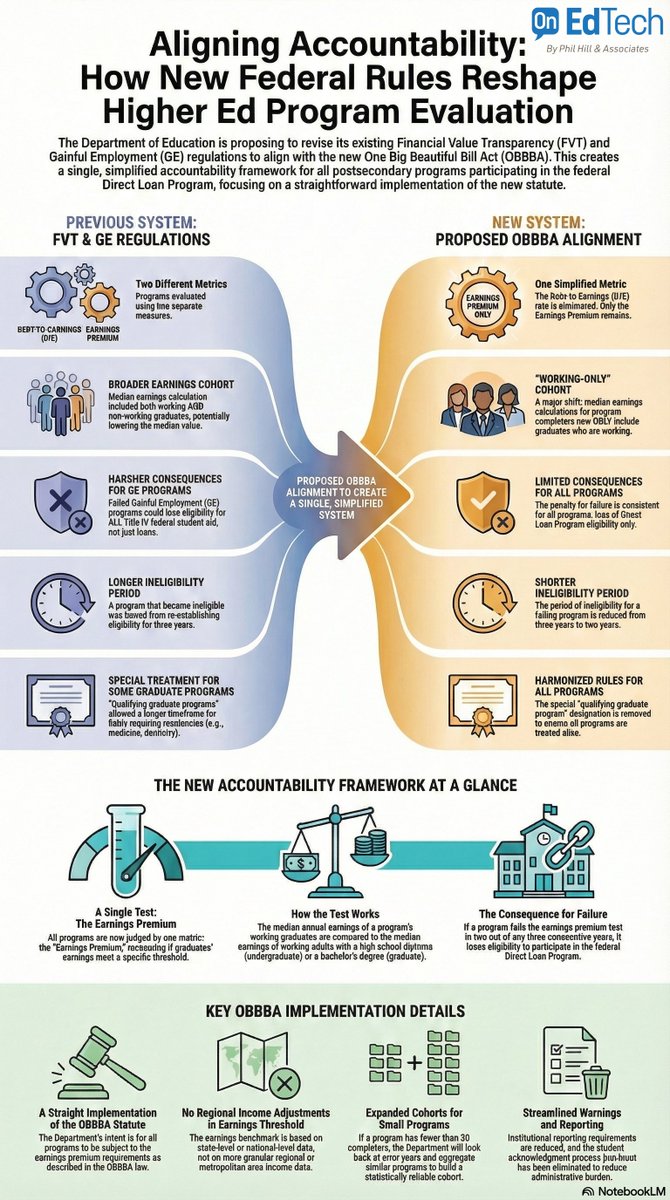
It’s the End of FVT & GE as We Know It
The Department of Education just proposed a major rewrite of federal program accountability, collapsing Financial Value Transparency (FVT) and Gainful Employment (GE) rules into OBBBA's simplified earnings-based test.
If the proposals go through:
👉 No more Debt-to-Earnings metrics
👉 No more qualifying graduate program carve-outs
👉 No metro-area or sub-state wage adjustments
👉 A single “earnings premium” test for all Direct Loan-eligible programs
This proposal reflects a statute-driven prioritization of simplicity and uniform enforcement, even where that means accepting known distortions in comparison groups.
Check out the infographic below for a visual summary, and read the full breakdown of what this means for colleges, students, and negotiators at the link:
🔗 onedtech.philhillaa.com/p/its-the-end-…
If you care about federal accountability policy, this shift is one that cannot be ignored.
In which Glenda Morgan and I, in a joint post, make a counter-argument to the "LMS is Dead" thesis most recently shared at Inside Higher Ed op-ed and by Alfred Essa. It's a good debate to have in public, and not a new one.
onedtech.philhillaa.com/p/the-report-o…
🚨 Data Drop for NegReg Week 🚨
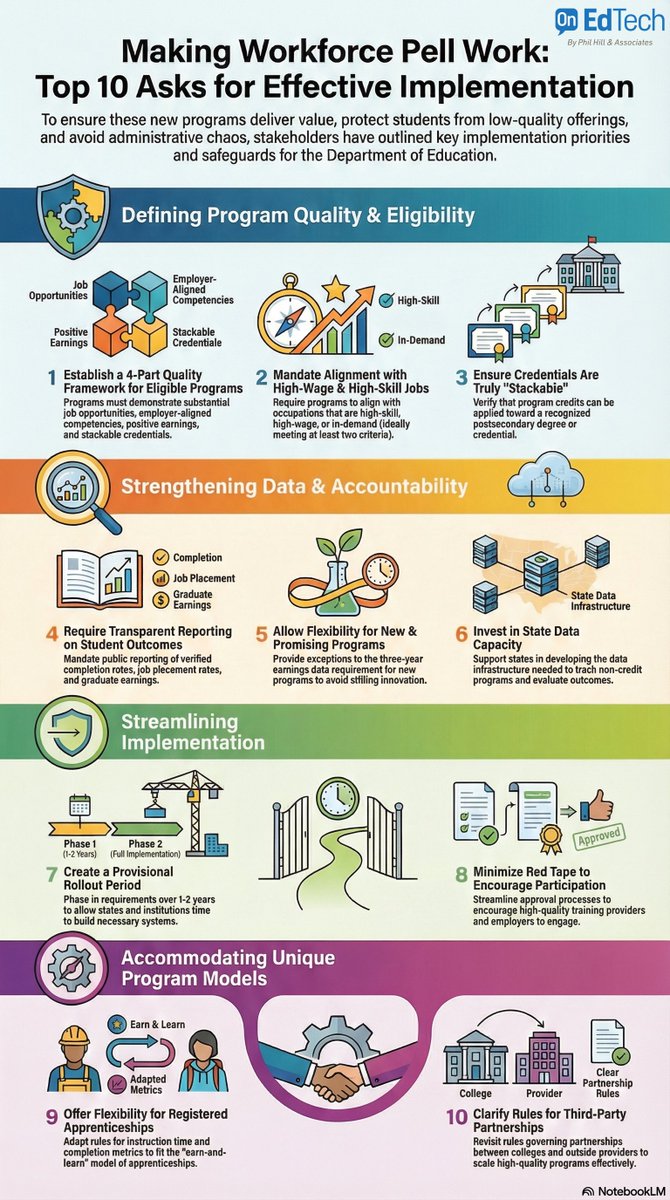
If you're following the upcoming Negotiated Rulemaking on Workforce Pell and AHEAD accountability, this might save you days of work.
Over the summer, the Department of Education collected more than 1,100 public comments on OBBBA implementation. The challenge? They live across hundreds of PDFs, more than a thousand text boxes, inconsistent formats, and attachments where the “real” comments were buried.
So I pulled them together.
I consolidated all 1,124 submissions (including text extracted from PDF attachments) into AI-ready formats so the entire community can analyze what stakeholders are actually saying.
You’ll find:
• A CSV file ready to upload into ChatGPT
• A TXT file formatted for NotebookLM
• Document ID, posted date, submitter, organization, comment text, organization type, and embedded PDF text (since ~1/3 of comments were only in attachments)
• A starting analysis + examples of what’s possible
Why share this?
Because the NegReg conversation next week will be better if more people come in with visibility—not just those with the time or tech stack to scrape and structure the data.
If you want to explore Workforce Pell safeguards, accountability proposals, or what employers, institutions, states, accreditors, and advocates are pushing for, the files are here:
onedtech.philhillaa.com/p/sharing-ai-u…
If you use the dataset to generate your own insights, analysis, or chaos-prevention tips for ED… tag me. I’d love to see what you find.
Hey @usedgov, listen in to the latest episode of 🎙️The Rant podcast. @PhilOnEdTech and I dig into the importance of using the right metrics for measuring earnings premium. Just in time for your upcoming rule making round!
podcasts.apple.com/us/podcast/ear…
There’s new research this week that deserves real attention — not just because it confirms my earlier reporting, but because of who produced it and when it’s arriving.
The Postsecondary Value Commission, created by the Gates Foundation, funded a new report by University of Wisconsin researchers that was just released. It is an excellent analysis showing how using state-level earnings data in federal accountability metrics systematically penalizes regional, public, and access-oriented colleges
In plain terms: schools serving rural or lower-income communities can fail “earnings premium” tests even when their graduates are doing well locally.
This finding may sound technical, but it’s about to become one of the most consequential issues in U.S. higher ed. The Department of Education’s new Gainful Employment and Financial Value Transparency regulations take effect in July, and NegReg begins in December to determine how programs that fail the earnings test can appeal. If these metrics don’t get fixed — or at least given a local-context safeguard — we’ll see hundreds of institutions unfairly labeled as low-value.
The PVC research is independent, data-rich, and methodologically stronger than anything that’s come before. It’s an example of empirical work that should directly inform federal policymaking.
I break down what the study found, how it intersects with the upcoming rulemaking, and why it matters so much right now:
👉 onedtech.philhillaa.com/p/excellent-re…
The new National Student Clearinghouse data show Fall 2025 enrollment gains across much of higher ed — led by community colleges, short-cycle programs, and strong first-year pipelines. But On EdTech+ subscribers already had this story back in mid-September.
Our early analysis flagged the same patterns now showing up in national coverage:
* Community colleges driving the rebound
* Continued weakness in grad enrollment
* A shift toward workforce-adjacent and skills-based programs
The takeaway isn’t just “enrollment is up.” It’s that growth is disciplined, program-mix-driven, and often fueled by institutions that understood the early data and moved accordingly.
But the other half of this week’s coverage dives into the growing obsession with Return on Investment (ROI) metrics — and how the concept, though well-intentioned, keeps producing bad policy design. When completer earnings are compared to broader aggregates missing contextual data (like cost of living or regional wage gaps), the result is predictable: community colleges and access-oriented institutions look worse than they are. A Boston-area college might appear “low earnings” simply because its graduates live where wages — and rent — are higher than average. And this gets even worse when comparing different institution types.
This is the problem with the ROI mindset when applied through blunt instruments. It assumes precision but delivers distortion, rewarding already-advantaged institutions and punishing those serving local, lower-income students. Accountability matters, but nuance matters more — and right now, that nuance is missing from both federal rulemaking and emerging classification systems.
If you want to be the person in the room with the data and the context before it becomes the headline, that’s what On EdTech+ is built for.
Read the latest piece — New Information on Two Newsletter Themes — for how the new NSC data confirm (and complicate) what we’ve been tracking since September:
👉 onedtech.philhillaa.com/p/new-informat…
💥 The Other Regulatory Time Bomb
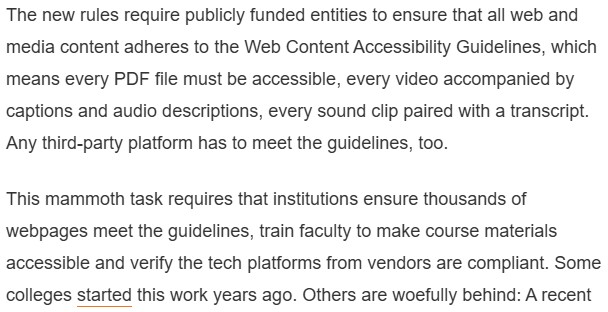
Most higher-ed leaders have heard that new ADA Title II accessibility rules take effect in 2026 — but few understand how disruptive they’ll be. These aren’t vague guidelines: they require every public institution to make all web and media content compliant with WCAG 2.1 AA, including audio descriptions for prerecorded video.
At recent WCET and EDUCAUSE meetings, it was clear that many campuses are still treating this as a technical issue, left to accessibility staff and media teams. But the real risk sits squarely with institutional leadership. Retrofitting video libraries and LMS content for compliance will be complex, expensive, and publicly visible.
👉 Read the full analysis: onedtech.philhillaa.com/p/the-other-re…
(A deeper dive into the rule, the institutional exposure, and why higher ed is sleepwalking toward its next major compliance crisis.)
And more to come on the platform and vendor issues involved.
Yes, but it needs to be long-term sustainability and the question is whether they’re pissing off too much of their base for this to succeed. I also fear that even if they succeed financially from corporate market, that universities are increasingly not well served by this model. I’m not a CEO but I think they could’ve done both well.
Coursera’s message to universities seems clear: We’re just not that into you.
The company has unilaterally imposed a new 15% “platform fee” on university partners — on top of existing revenue splits — while downplaying degree programs and original university content in its strategy.
Making this change more painful is how this change was communicated: buried in a partners email, framed as a “investment in innovation” and lacking transparency about how the fee applies or how it affects existing contracts. For a company that built its brand on university partnerships, this feels like a sharp turn away from collaboration.
It’s not just the policy — it’s the pattern. Coursera’s behavior increasingly reflects a platform-first mindset where the institutions providing the content are treated as interchangeable suppliers, not partners.
I unpack the implications — and the deeper shift behind them — in my latest On EdTech analysis: onedtech.philhillaa.com/p/coursera-is-…