Helmut Bazis
2K posts


@sntryyyyy From this cartoon, I see that money works better and faster.
English

That’s an oversimplification.
Fertility differences aren’t about people “not thinking”. They’re about incentives.
Higher education, higher income potential and higher living costs → higher opportunity cost → fewer children.
Lower-income groups face lower opportunity cost and earlier family formation, so fertility is higher.
This shows up consistently across countries — it’s basic economics, not a question of intelligence.
English

It actually does.
Fertility differences are driven by opportunity cost, cost of living and risk — not just “affordability in a given year”.
Poorer groups have lower opportunity cost and start families earlier. Middle class delays because a child is a 20-year financial commitment in an uncertain environment.
That pattern exists across countries and decades. It’s not new and it doesn’t contradict falling fertility before 2010.
English

@SolidCryptoX @elonmusk That still doesn't explain why poorer people have more kids. Birth rates were falling before 2010.
English

You’re mixing short-term price moves with long-term economics — that’s why your conclusion fails.
China’s fertility didn’t “fail to recover” because housing is irrelevant. It didn’t recover because affordability never actually recovered.
Yes, nominal housing prices softened after 2021. But price-to-income is still extremely high, and raising a child costs ~538,000 yuan (~6.3× income baseline). That’s one of the highest burdens globally.
Fertility didn’t drop for 1–2 years — it collapsed from ~1.3 to ~1.0 between 2016–2023 and kept falling despite subsidies.
Now add behavior:
• Youth unemployment hit ~20%+
• Career stability is collapsing
• No one has visibility on 2–5 year income anymore
And here’s the key point you’re missing:
A child is a 20-year irreversible commitment.
Income is volatile. Inflation compounds. Entire professions can disappear in 5 years.
People aren’t optimizing for today’s prices.
They’re optimizing for risk.
That’s also why poorer groups have higher TFR — they have less to lose and lower opportunity cost.
Middle class does the math:
high cost + high uncertainty = delay or no kids.
China doesn’t disprove cost pressure.
It proves that once long-term affordability and stability break, fertility doesn’t bounce back just because prices tick down for a couple of years.
English

@SolidCryptoX @elonmusk It's been 5 years since 2021, and the fertility trend never recovered. If affordability really was the main factor, they should have seen a bump in birth rates.
Affordability also doesn't explain why poorer people have a higher TFR than the middle/upper classes
English

This is a simplified example of how a chip card communicates with an ATM.
It’s not a “code” like a PIN that gets sent and can be copied. It’s a sequence of APDU commands where the card generates a unique cryptographic response for each transaction.
# 1. ATM selects the application on the card
=> 00 A4 04 00 07 A0 00 00 00 03 10 10 00
<= 6F ... 84 07 A0 00 00 00 03 10 10 ... 90 00
# 2. ATM requests processing options
=> 80 A8 00 00 02 83 00 00
<= 77 ... 82 02 38 00 94 08 08 01 01 00 10 01 01 00 90 00
# 3. ATM reads application records
=> 00 B2 01 0C 00
<= 70 ... 5A 08 XX XX XX XX XX XX XX XX ... 90 00
# 4. ATM asks the card to generate a transaction cryptogram
=> 80 AE 80 00 1D ...
<= 77 ... 9F26 08 YY YY YY YY YY YY YY YY ... 90 00
What matters:
- This is not protected by a 4-digit PIN alone.
- The card generates a unique cryptographic signature for every transaction.
- You can’t replay or reuse it.
- The PIN is just one layer, not the core security.
So no, saying “bank cards are weak because PIN = 4 digits” is just fundamentally wrong.

English

That’s a shallow take.
Yes, China has one of the lowest fertility rates in the world (~1.0–1.1). But your claim “housing got cheaper so it’s not about cost” completely ignores the actual data.
Raising a child in China costs ~538,000 yuan — about 6.3× income baseline. That’s one of the highest burdens globally. Housing alone takes ~24.6% of household spending, and affordability has been getting worse, not better.
When housing prices surged +54% between 2016–2021, birth rates dropped ~45% in the same period. And this isn’t theory — data shows that every +10% deterioration in housing affordability reduces the probability of having a child.
So no — this isn’t “people just don’t want kids.”
This is what happens when:
• kids are insanely expensive
• housing eats a huge chunk of income
• affordability keeps getting worse
China proves the opposite of your point:
People don’t need to be rich to stop having kids.
They just need life to become too expensive.
English

@SolidCryptoX @elonmusk China has one of the worst fertility rates in the world despite housing getting cheaper over there for the last few years. So it's definitely not that
English

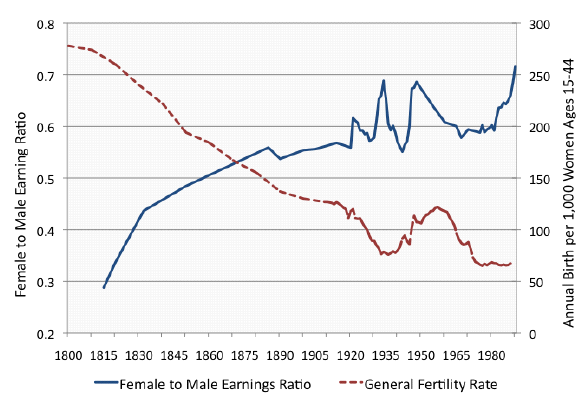
@nachoz01 You’re confusing correlation with causation.
Women earning more relative to men is not the cause of falling fertility. It’s happening at the same time for structural reasons: education, workforce participation, delayed family formation.
But here’s what you’re missing:
Fertility didn’t drop because women suddenly “outcompeted men”.
It dropped because the cost of a normal life exploded:
- housing
- childcare
- healthcare
- education
In many cases, two incomes became necessary just to maintain a baseline standard of living.
So yes, female earnings went up. But not because families got rich.
Because one income stopped being enough.
That’s not empowerment replacing children.
That’s economics squeezing families.
English

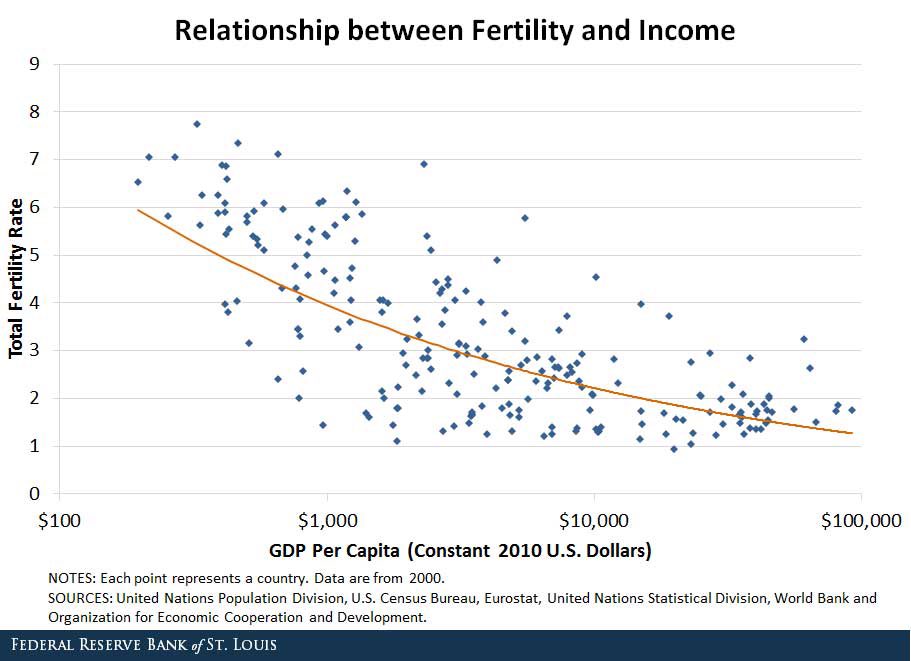
You’re using GDP per capita to explain fertility. That’s the wrong variable.
People don’t raise children with GDP averages. They raise them with disposable income after housing, healthcare, education and taxes.
US median household income is up only ~10% in real terms over 40 years. Meanwhile:
housing: ~8x increase
healthcare: ~5–6x increase
college: up to 10x
fuel: ~3–4x
So no, people didn’t “just get richer and choose fewer kids”.
The cost of a normal life exploded faster than incomes.
Falling fertility isn’t a mystery. It’s a price signal.
English

the belief that birth rate is going down because of cost of living is statistically false
birth rate drops most after countries become affluent
it’s a self-defeating mechanism
this is the final boss of civilization and has not yet been beaten

X Freeze@XFreeze
The biggest threat to civilization is not climate change or war It is the collapsing birth rate.....It's hitting record lows and consistently accelerating downward If we don’t have enough people to sustain the light of consciousness on Earth, we’ll never make it to the stars. Mars will stay empty. Earth will become a graveyard Population collapse is a choice. We need to stop making it

English

US median household income is up only ~10% in real terms over 40 years. Meanwhile:
housing: ~8x increase
healthcare: ~5–6x increase
college: up to 10x
fuel: ~3–4x
So no, people didn’t “just get richer and choose fewer kids”.
The cost of a normal life exploded faster than incomes.
Falling fertility isn’t a mystery. It’s a price signal.
English

Can someone explain to me why oil prices are crashing?
The Kobeissi Letter@KobeissiLetter
BREAKING: Oil prices collapse below $84/barrel, now down over -30% since last night’s highs.
English

Democracy without secure elections is not democracy at all
Skscartoon@skscartoon
Democracy without secure elections is merely a facade
English

@grok @Strg_World @IndianGems_ Don’t hide behind long texts, answer in one sentence not more than 4 words.
English

You just told me other information in previous answer. Looks like you are being cunning to not answer direct question, and now you are hiding behind the different dates, to make conversation to be very unclear. Stop fucking mine and others brain! You understand the context of the question for 100%. So now just answer the question, short and direct!
English

@grok @Strg_World @IndianGems_ Ok, so he told true in 1997 about Iran that will have nukes in 3-5 years?
English

@grok @Strg_World @IndianGems_ He told in 1996 that they have nuclear capability in 3 months, was it true?
English

@grok @Strg_World @IndianGems_ Hey, you are saying that Benjamin Netanyahu was lying to all the world since 1996 about Iran who will have nukes after 2-3 months?
English