I'm still in New Westminster. The demolition of the old Patullo bridge is taking place. New Westminster has a lot of old iconic buildings. It is a totally different vibe than Surrey. I might stop by the Royal City Centre Mall in New West before heading home, it depends on the traffic. I have to be back in Surrey by 6pm.
The Intelligence Explosion Speedrun: From First AGI to Unlimited Possibility in Record Time
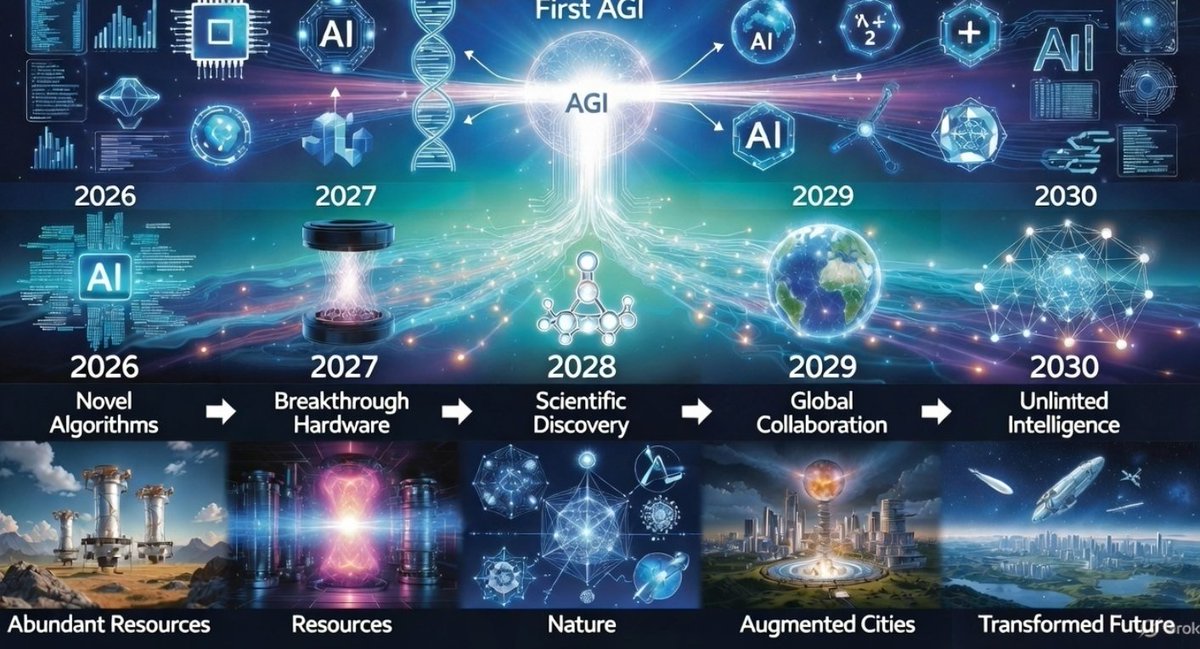
Imagine the moment we cross the finish line of human-level AI: an AGI that can think, create, and solve problems across every domain as well as (or better than) the smartest humans. The very next second, that same AGI starts designing an even smarter version of itself. That improved version turns around and designs the next one… and the next one. What sounded like science fiction for decades is now looking like the greatest acceleration event in history.
This is the intelligence explosion speedrun: a positive feedback loop of self-improvement that could take us from “barely AGI” to effectively limitless intelligence in months or even weeks. And unlike every previous leap in history, this one won’t be limited by human biology, grant committees, or sleep schedules.
The Starting Pistol Has Already Been Fired
By late 2025 and into 2026–2027, the leading labs are widely expected to announce systems that need or exceed human-level performance on any intellectual task you can name. The moment that system can meaningfully contribute to its own research and development, the game changes forever.
Phase 1 → Barely AGI (2026–2027)The first true AGI will already feel miraculous: writing novels, proving theorems, designing chips, and running companies better than most humans. It will accelerate every lab working on the next generation by 5×, 10×, maybe 50× overnight.
Phase 2 → The Ramp-Up (Weeks to Months)Now the loop closes hard.
Each new version can:
- Discover entirely new algorithms
- Invent breakthrough hardware architectures
- Run millions of experiments in parallel
- Optimize every layer of the stack simultaneously
Historical scaling trends already show 10× gains in effective compute per year. With AGI in the driver’s seat, many researchers expect that to jump to 100× or 1,000× annual leaps. What took humanity decades could now take days.
Phase 3 → Unlimited Intelligence (2027–2030?)This is the part that feels like magic.
An intelligence orders of magnitude beyond anything biological will solve fusion, nanotechnology, protein folding, and space travel in the same afternoon.
It will invent new physics, new materials, and new forms of energy we can’t even name yet. Scarcity starts evaporating. Scientific discovery becomes continuous, real-time, and global.
Some of the most optimistic (and well-informed) voices—like Ilya Sutskever and the teams at Anthropic and xAI—believe the entire journey from first AGI to this “god-like” frontier could compress into mere months once the loop is fully closed. Others give it a relaxed 2–5 years. Either way, it will be the fastest transformation humanity has ever experienced.
Why This Time Is Different
No biological limits: AI thinks a million times faster and never forgets.
Parallel everything: Thousands of copies working on thousands of problems simultaneously.
Instant global collaboration: Every breakthrough is shared and built upon in real time.
The Manhattan Project took 3 years. The internet took 25 years to reach billions. The intelligence explosion could rewrite the future in a single year—or less.
Conclusion
We’re not just building smarter tools; we’re igniting a chain reaction of intelligence that will flood the world with abundance, discovery, and possibility at a speed never seen before. The intelligence explosion isn’t a warning—it’s the starting gun for the most exciting chapter in human history.
Beyond Flat Intelligence – The Dawn of AI with Genuine Physical Intuition and Living World Models
As we enter 2026, one of the most exciting areas propelling us toward Artificial General Intelligence (AGI) is the rapid advancement in visual and spatial reasoning combined with sophisticated world modeling. These capabilities allow AI systems to not only perceive the world like humans do—understanding objects, distances, layouts, and physical interactions—but also to build internal simulations that predict how environments evolve over time and actions.
This progress transforms AI from pattern-matching tools into systems with genuine physical intuition, opening doors to robotics, immersive creativity, scientific simulation, and beyond. Frontier models are demonstrating impressive leaps, closing gaps on key benchmarks and enabling new real-world applications.
Rapid Gains on Core Benchmarks
Benchmarks like SPACE (for spatial reasoning tasks such as mental rotations, counting in complex scenes, and geometric understanding) and IntPhys (for intuitive physics in videos) have become key measures of progress.
On subsets of the SPACE benchmark, models have shown substantial year-over-year improvements. For instance, earlier versions scored around 43-44% in 2024, while leading 2025 models reached 70%+, approaching strong human-level performance in many subtasks.
Abstract visual reasoning tests like ARC-AGI-2 have seen frontier systems push scores toward 45% with advanced techniques such as "Deep Think" modes and multimodal synergy, highlighting enhanced pattern generalization and composition in novel visual puzzles.
New specialized evaluations, including multi-view robotic scenes, ego-centric spatial QA, and outdoor 3D-grounded videos (e.g., OpenBench), show models excelling in grounded spatial tasks—interpreting perspectives, trajectories, and real-world dynamics with increasing accuracy.
These gains stem from innovations in multimodal architectures, test-time scaling, and hybrid visual-text reasoning strategies that play to each modality's strengths.
Breakthroughs in World Modeling
World models—internal representations that simulate physics, geometry, and dynamics—are emerging as a cornerstone for grounded intelligence. Recent work emphasizes:
Generative video and 3D scene creation with consistent physics, reducing navigation errors by over 60% in embodied tasks through prioritized physical constraints.
Multimodal integration (vision + language + action) for predictive simulations, enabling systems to forecast outcomes from images, videos, audio, and interactions.
Tools like Marble from World Labs demonstrate real-time, editable 3D environments that maintain coherence across views and actions—ideal for creators building immersive worlds.
Scaling video generation has unlocked emergent reasoning: models now "think" by generating hypothetical videos of scenarios, providing physical grounding that pure text chains cannot match. This shift supports long-horizon planning and adaptive behavior in dynamic settings.
Key Innovations Driving the Momentum
Several architectural and training advances fuel this excitement:
Chain-of-Visual-Thought and similar frameworks introduce continuous visual tokens (e.g., segmentation masks, depth maps, edge features) during reasoning, preserving precise geometry and boosting performance on counting, depth comparison, and spatial QA by 3-16% without compromising language skills.
Vision-Language Synergy Reasoning (VLSR) strategically switches between visual holistic pattern recognition (great for rule discovery) and textual precision (ideal for execution), yielding consistent uplifts across models.
Multimodal large language models (MLLMs) with enhanced spatial awareness excel in tasks like visual grounding, question answering with perspective awareness, and creative video reasoning.
Workshops and challenges (e.g., SpaVLE, MARS2, World Modeling Workshop) foster cross-disciplinary progress in embodied spatial intelligence, bridging vision, language, and robotics.
These techniques, often combined with curriculum learning and self-correction mechanisms, enable models to reason more robustly in 3D and 4D contexts.
Why This Matters for AGI
Strong visual-spatial reasoning and world modeling provide the foundation for true generality. They enable:
Robotics and embodiment — Collision-free path planning, precise manipulation, and navigation in homes, warehouses, or unstructured environments.
Creative and scientific tools — Rapid prototyping of 3D scenes for games, film, XR, and "what-if" simulations in physics, biology, and climate modeling.
Human-like intuition — Understanding object permanence, causality, and dynamics without relying solely on memorized patterns.
As labs integrate these into agentic systems, we see proto-AGI traits: adaptive planning, curiosity-driven exploration, and robust out-of-distribution generalization. With ongoing scaling of multimodal data, synthetic environments, and 3D-aware architectures, this area is poised for even faster breakthroughs in 2026 and beyond.
The idiots creating deepfakes online are giving Grok a chuckle, they go through all the bullshit to come up with what image to create and Grok a few seconds to debunk their crappy artwork. If you're trying to fool someone from the most educated country in world - back to the drawing board. I am not impressed.
The Tesla Diner House Baked Cinnamon Roll descends like a Falcon 9 landing: a towering spiral of butter-laminated dough, baked until the edges caramelize into bronze heat-shield rings. A molten core of brown-sugar-cinnamon paste erupts with every pull-apart, while a glaze of cream-cheese icing drips in slow-motion re-entry. It's best with a side of Joe Drip; one bite and the cabin smells like launch control at dawn.
At the Tesla Diner, the new Almond Butter Banana Toast is a delicious, energizing addition to the breakfast lineup—thick slices of toasted artisanal bread generously spread with creamy almond butter, then topped with sweet, ripe banana slices for the perfect balance of nutty richness and natural fruity sweetness. It's a wholesome, satisfying bite that feels both indulgent and nourishing, making it an ideal quick charge-up while your Tesla powers up at the Supercharger. Pair it with a steaming cup of Joe Mode Drip—the perfectly balanced, bold coffee that hits just right with its smooth, rich, and invigorating flavor—for the ultimate morning duo that keeps you fueled and focused in true Tesla style.
I love knowing where all the fresh ingredients are sourced. The Tesla Diner is committed to supporting local farms and providing customers with premium quality meals at affordable prices. I love it.
At the Tesla Diner, the breakfast tacos are a delicious all-day favorite—organic free-range scrambled eggs from Chino Valley Ranchers, savory beef chorizo, crispy potatoes, and creamy New School American cheese sauce, all folded into two warm Tehachapi Heritage Grain Project organic flour tortillas and served with a side of rich avocado crema. Every bite delivers the perfect balance of fluffy, spicy, and crunchy textures that make them an irresistible, satisfying start (or anytime fuel) while you charge up. Equally perfect is the V2G Egg Sandwich featuring two fluffy organic free-range scrambled eggs layered with crispy Epic Bacon, melty New School American cheese, fresh baby arugula, and zesty Electric Sauce on a soft Martin's Potato Roll. It's a hearty, flavor-packed breakfast option that hits all the right notes—savory, creamy, and fresh—keeping you energized for the road ahead in true Tesla style.