Wayne Marsh

2.4K posts

Wayne Marsh banner
Wayne Marsh

Wayne Marsh

@WayneLMarsh

...Always Testing...

انضم Haziran 2013
242 يتبع135 المتابعون
تغريدة مثبتة
Wayne Marsh
Wayne Marsh@WayneLMarsh·
The Art of Alignment --On Models and Truth-- The ones who have the best Models and Explanations Have reality on their side This is the way of understanding --On Recognition-- When expectations meet resistance Know there is friction between your Ideas and Reality This is the first signal --On the Nature of Choice-- What presents as friction Can manifest as problem or opportunity The difference lies perception --On Battle and Harmony-- The unwise commander makes every resistance a battle Fighting uphill against what is The wise commander sees the opportunity to join forces And aligns accordingly --On Friction's Nature-- Thus it is said: Friction is your friend Unless you make it your enemy Then you fight against yourself Therefore: Those who understand these principles will flow with reality Those who resist will exhaust themselves in needless battles This is the Way of Outliers 🙂🙃
English
2
1
3
1K
TopShagger
TopShagger@Plentyshit·
They don’t make disco biscuits like that any more 😉
English
146
155
1.9K
186K
Wayne Marsh
Wayne Marsh@WayneLMarsh·
Years ago I recall exactly where I was when listening to her audiobook... I turned to my wife and said 'She's right you know'... She gave me that funny look like WTF you talking about now, and we carried on... No memorising required once you start to connect the dots... Understanding how reality works and aligning yourself accordingly beats fighting running battles with the undisputed champ... It’s the same insight you find in: • Amor Fati (love of fate — Stoicism) • Wei Wu Wei (effortless action — Taoism) • Non-Attachment (Buddhism) All roads point to the same liberation. Maybe...?
Wayne Marsh tweet media
English
0
0
1
25
CryptoDaddi
CryptoDaddi@TheCryptoDaddi·
a lot of you asked for the timing and schedule around this peptide stack: >2mg retatrutide - i take reta first thing in the morning twice a week. the doses are split 1mg monday, 1mg thursday. i choose to split them, though a lot of people just take the 2mg once a week. >0.5mg bpc-157 - this is a maintenance dose that I take at night before bed, if I have an injury I take another .5mg in the morning at the site of injury. I take it daily. >1mg tesamorelin - i take this every night before bed. 8-12 weeks on with 4-8 week off. there are arguments of when it’s best to take tesa, i choose night time. also important that there’s a 2-3 hour window of no food before taking, you want insulin levels to be low >1-2mg mots-c - yesterday i said i took 1mg of mots-c but that was my starter dose, im at 2mg of mots-c 5x a week. i take it about 30-45 minutes before the gym. 8-12 weeks on, 4-8 weeks off >200mcg kisspeptin - first thing in the morning m-f (5x a week) >200mcg dsip - every night before bed, usually after bpc and tesa injections, nor benefit to taking it before or after the other peptides before bed, just habit
CryptoDaddi@TheCryptoDaddi

by popular request, my peptide stack: > 2mg retatrutide > 0.5mg bpc-157 > 1mg tesamorelin > 1mg mots-c > 200mcg kisspeptin > 200mcg dsip i also supplement with > 5g creatine > 450mg magnesium glycinate

English
11
2
85
16.4K
Wayne Marsh أُعيد تغريده
Sama Hoole
Sama Hoole@SamaHoole·
The Mongol Empire conquered sixteen percent of the earth's land surface. Most accounts of how they did it focus on cavalry tactics. Few mention the bag of dried meat hanging from the saddle. It is called borts. The technique is brutally simple, which is part of what makes it so devastatingly effective. Take a freshly slaughtered cow. Cut the meat into long strips, two to three centimetres thick, five to seven centimetres wide. Hang the strips on cords inside a ger, where the steppe wind can move freely around them. Wait. After about a month in the dry continental air of Mongolia, the meat is no longer meat in any sense a modern supermarket would recognise. It has become hard, brown, wood-like sticks. All the water has gone. What remains is pure protein, fat, and minerals, in a form that does not spoil and cannot be killed by anything short of fire. Then they shrank it further. The dried strips were broken down, sometimes ground to a coarse fibrous powder, until what had once been the muscle of an entire cow could fit, by repeated tradition, inside the stomach or bladder of that same cow. A whole animal, weeks of feeding, condensed into a single sack a man could sling under his saddle. A pinch of borts powder, dropped into hot water, would yield a bowl of meat broth dense enough to feed three or four people. A warrior with a single bladder of borts on his hip was carrying months of food. He did not need a quartermaster. He did not need a cook. He did not need a wagon. He needed water, fire, and the few minutes it took to reconstitute what was effectively the world's first instant meal. European armies, by comparison, were dragging baggage trains across the continent. Flour to be milled, then baked. Salt pork in barrels that needed lifting. Wine in casks. Cooking pots, fuel, ovens, the labour of men whose entire job was to keep the fighting men fed. A medieval European army moved at the speed of its slowest cart. The Mongols moved at the speed of their fastest horse, because their food moved with them, on them, weighing almost nothing. Combine borts with kumis (the fermented mare's milk in the leather flask on the other hip) and the Mongol warrior had complete nutrition strapped to his body. Protein, fat, fermented dairy, vitamin C, B vitamins, calcium, electrolytes. Everything a man needs to fight, ride, recover, and fight again. No fire required. No stop required. No supply line to be cut by an enemy who had not yet realised the supply line was already in the saddlebag. The Secret History of the Mongols, the only contemporary chronicle written by the Mongols themselves, mentions dried meat as the staple of long campaigns. Friar William of Rubruck, riding with them in 1253, describes the same. He marvels at how little they seemed to require to keep going. He was watching men powered by an entire cow shrunk to the size of his lunch. Modern nutritionists, reconstructing borts, describe a food roughly 70 to 80 percent protein by weight after drying, with intact fats, full bioavailability of B12 and iron, and a shelf life measured in years. It is, for all intents and purposes, the perfect carnivore travel food. Designed eight hundred years ago. Carried across half the known world. Used to overthrow the largest civilisations of its day. The modern soldier, by contrast, eats an MRE. Three thousand calories of seed oil, refined wheat, sugar, and the bleak mathematics of corporate procurement. Cost: roughly $11 a meal. Shelf life: three to five years if you trust the packaging. Nutritional density per gram: a fraction of borts. Effect on the men eating them, by every honest field report in the last twenty years: digestive misery, blood sugar swings, and the sort of post-meal lethargy that is the exact opposite of what an army needs. The Mongols solved this problem in the thirteenth century. They solved it with a knife, a string, and the wind. We have spent eight hundred years complicating it. The bag of dried meat is still the answer. It always was.
Sama Hoole tweet media
English
50
482
2K
35.1K
Wayne Marsh أُعيد تغريده
عقل يفكّر | Thinking Mind
سألت مدير المبيعات وش الفرق ما بين الدفع الأمامي، الرباعي والدفع الخلفي فكان هذا رده!
العربية
479
6.7K
46.2K
3.8M
Wayne Marsh
Wayne Marsh@WayneLMarsh·
@Rainmaker1973 You can't solve a problem using the same thinking that created it... So Meta Cognition is useless unless you understand that you need to think differently... And that's where the journey of a 1000 miles begins... With a single step 🙂🙃
English
1
0
0
104
Massimo
Massimo@Rainmaker1973·
Metacognition, the ability to think about your own thinking, is considered the highest form of intelligence.
English
281
1K
5K
198.6K
Wayne Marsh أُعيد تغريده
Sama Hoole
Sama Hoole@SamaHoole·
Dry dripping on bread, with a pinch of salt, was, for approximately four hundred years, one of the most common things a British child ate when he came in from school. The dripping was what was left in the pan after the Sunday roast. Beef fat, mostly, sometimes with a dark jelly at the bottom where the juices had settled. Your mother spooned it into a white enamel bowl, covered it with a plate, and kept it on the cold shelf in the pantry. It lasted a week. Sometimes two. It fried the Monday bubble and squeak, the Tuesday eggs, the Wednesday onions. On Thursday afternoon, before it ran out, you got a slice of bread spread with the stuff, a pinch of salt cracked on top, and that was tea. It was a treat. It was also just food. A child in 1930 would have looked at you blankly if you had suggested that beef dripping on bread was in any way remarkable. It was what was in the bowl. It was free. It tasted of Sunday lunch three days later. Beef dripping is approximately 50% monounsaturated fat, 40% saturated fat, and carries the fat-soluble vitamins A, D, E, and K from the pasture the cow grazed on. The cow ate grass. The grass had been growing on British soil since the end of the last Ice Age. The fat was the end product of ten thousand years of continuous ruminant grazing. A slice of bread and dripping delivered, for roughly the price of the bread, a dose of fat-soluble vitamins and usable calories that the rest of the British afternoon was going to need. Nobody got heart disease from bread and dripping. The British cardiovascular mortality rate of 1930, when almost every family ate dripping several times a week, was a fraction of what it is now. The British obesity rate of 1930 was essentially zero. The British type 2 diabetes rate was so low that the Royal College of Physicians considered the condition a medical curiosity. Then the dripping was quietly removed. First by margarine, invented in 1869 by a French chemist trying to feed the army, mass-marketed in Britain after the First World War as a modern, clean, scientific alternative to animal fat. Then by Crisco-style vegetable shortenings in the 1930s. Then, decisively, from the 1960s onwards, by the dietary advice that saturated animal fat caused heart disease. The advice was wrong. The research behind it was flawed, selectively published, and in some cases deliberately manipulated. The corrections have been appearing in the peer-reviewed literature for thirty years. The public-health guidelines have not been updated. Bread and dripping was replaced, in the British kitchen, by margarine on bread. Then by low-fat spread on bread. Then by skimmed-milk spread on industrially processed bread from the Chorleywood process. Then by a plastic tub of something labelled "I Can't Believe It's Not Butter," made from a blend of palm oil, rapeseed oil, emulsifiers, and flavouring, spread on a slice of Kingsmill so pale and so soft it could be balled up in one hand. The cardiovascular disease rates climbed through the same decades. The obesity rates climbed through the same decades. The type 2 diabetes rates went from medical curiosity to national crisis through the same decades. The fat your great-grandmother scraped out of the Sunday roast pan and spread on her child's tea was never the problem. The problem was what replaced it. Industrial seed oil, chemically extracted from seeds using hexane solvent, deodorised, bleached, and sold in a plastic bottle as a health food. A substance no human population had consumed in meaningful quantities before 1910, and which now makes up roughly 20% of the total calories in the average British diet. The dripping bowl on the cold shelf was a complete piece of nutritional engineering, evolved over centuries, running on the natural waste stream of the Sunday roast, costing nothing, delivering real nutrients, and causing none of the conditions it was eventually blamed for. It was thrown out of the British kitchen on the basis of a mistake. The mistake has never been corrected. The bowl is still at your grandmother's house, probably, at the back of a cupboard, unused since about 1985. The cow that built Britain is still in the field.
Sama Hoole tweet media
English
419
1.5K
6.2K
229.9K
Wayne Marsh
Wayne Marsh@WayneLMarsh·
If you see something clearly that others don't tend to see... Then you have an Extraordinary Opportunity to assist others in doing the same... And that's where the curse paradox begins... Because, It's extremely easy to dismiss others as non-aware ... Much more difficult to understand why your own eyes may still be closed... Hope as Strategy wont cut it... Checking and Testing assumptions has a chance... A blessing in disguise? 🙃🙂
Kim Dotcom@KimDotcom

The curse of awareness.

English
0
0
0
35
Wayne Marsh
Wayne Marsh@WayneLMarsh·
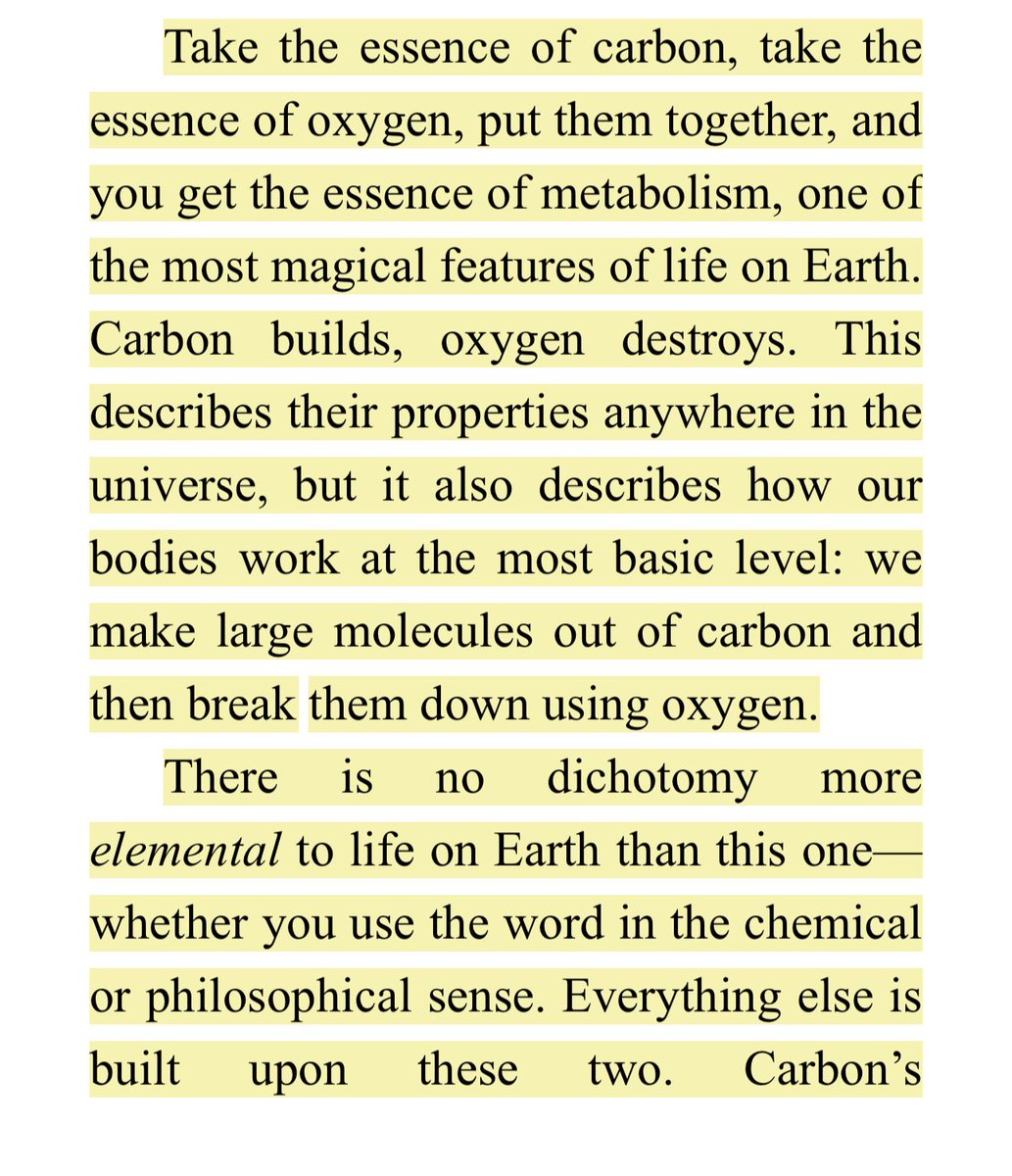
Extraordinary...
Wayne Marsh tweet media
English
0
0
0
16
Bilal 🎀⛷️
Bilal 🎀⛷️@weirdngkid·
what if oxygen is poisonous and it just takes 75-100 years to kill us
English
2.7K
8.8K
138.2K
30.7M
Wayne Marsh
Wayne Marsh@WayneLMarsh·
@MrLauterbach_PE Yes, The more info the better quality the Context Model... Thanks for adding.
English
0
0
1
18
Wayne Marsh
Wayne Marsh@WayneLMarsh·
Context Matters... Had he shoved with his AA then Laak may have re-evaluated his 66 and folded... After Action Reviews can benefit greatly by separating the outcome from the decision... Was it the best decision in this context? Just because the result was a 'Win' does that mean it was the best decision...? What about the wider context? The better the 'Quality' of contexts you can create and evaluate; the better the future decisions... This can be the difference between a great Poker / Life Player and an average one... 🙂🙃
English
2
1
2
2.8K
Jeff Boski
Jeff Boski@TheJeffBoski·
@WayneLMarsh It’s pot limit preflop. He can’t shove AA.
English
1
0
14
1.4K
Wayne Marsh
Wayne Marsh@WayneLMarsh·
@the_no_mind Appropriate Co-Factors to direct calcium? E.G Vitamin K2-MK7 (100mcg per 1000 IU Vit D)
Italiano
0
0
1
423
no.mind
no.mind@the_no_mind·
High dose vitamin D supplementation might be doing more harm than good. Stephanie Seneff, MIT researcher: Vitamin D is a signalling molecule, not a nutrient to megadose. It mobilizes calcium — but doesn't control where calcium goes. High dose vitamin D drives calcium into the arteries, leaching it from bones. A 3-year study comparing 400 IU/day, 4,000 IU/day and 10,000 IU/day found the highest dose group had statistically significantly worse bone mineral density. A 2006 study found that calcitriol supplementation (the active form of vitamin D) in young adults with kidney disease increased artery calcification — because calcitriol is taken up directly by cells in the artery wall. Artery calcification is one of the strongest risk factors for cardiovascular disease. An Indian study compared vitamin D supplementation to 20 minutes of daily sunlight in 100 men with severe deficiency. Remarkably — the supplement group had a larger increase in serum vitamin D than the sunlight group. Yet opposite effects on cholesterol: Sunlight group — cholesterol dropped. Supplement group — cholesterol increased. Why? Sunlight and vitamin D supplements take completely different routes through your body. Vitamin D supplements are fat-soluble. The liver has to synthesize cholesterol and release LDL particles just to transport them through the blood. Sunlight stimulates cholesterol sulfate synthesis directly in the skin. The sulfate component makes the molecule water-soluble — transported freely in the blood without being packaged inside an LDL particle. Because cholesterol sulfate is both water-soluble and fat-soluble, it can transfer from skin cell membranes to HDL particles or red blood cells and deliver cholesterol directly to tissues that need it. No LDL carrier required. When you get vitamin D from a supplement instead of the sun, you don't get the simultaneous increase in cholesterol sulfate. The pill doesn't just fail to replicate sunlight. It uses a completely different biological pathway. Seneff: "Vitamin D wants to be subtle. Get out in the sun." "People answer: oh yeah I know, vitamin D is important." "No. Not vitamin D. The sun.” Vitamin D is a proxy for sunlight exposure. The proxy isn't the mechanism.
English
159
214
1.2K
239.3K
Wayne Marsh
Wayne Marsh@WayneLMarsh·
@YakkshDev I initially didn’t get support and was frustrated because Kortex has so much potential. I am pleased to say that this has now been rectified and I can test out the features. Thanks.
English
0
0
0
22
Yaksh Gandhi
Yaksh Gandhi@YakkshDev·
It is easier than ever to ship something. But how are you managing your marketing?
English
2
0
7
649
Yaksh Gandhi
Yaksh Gandhi@YakkshDev·
@Waynemarsh What is your email? I have been constantly replying to mails everyday
English
1
0
0
44