WebThreeCapital

4.8K posts

WebThreeCapital banner
WebThreeCapital

WebThreeCapital

@WebThreeCapital

Supporting Web3

Web3-not-Crypto انضم Ocak 2022
1.4K يتبع334 المتابعون
WebThreeCapital
WebThreeCapital@WebThreeCapital·
@keeganquigley_ Thanks for your service, all the best for your future adventures. This adoption curve is a lot longer than we all expected. But in hindsight it makes sense.
English
0
0
0
86
WebThreeCapital أُعيد تغريده
Anthony Scaramucci
Anthony Scaramucci@Scaramucci·
Polkadot is quietly rebuilding momentum, with important governance changes and a product-focused roadmap: 1. Latest SEC guidance lists $DOT as a digital commodity, not a security, along with $BTC, $ETH, $SOL, $ADA, $XRP, $XLM, $AVAX, $HBAR and others, after extensive compliance work 2. $TDOT, first-ever Polkadot ETP in US, launched March 6 3. Major tokenomics changes went into effect March 14, including a) hard cap (max supply) of 2.1 billion DOT, immediate halving of inflation, and "halvings" of inflation every two years. All approved via on-chain governance 4. You can now pay transaction fees in any approved asset, e.g. $USDT, $USDC (swapped for DOT behind scenes) 5. Focus on "proof-of-personhood" making it easier to avoid bots and Sybil attacks that plague many chains *Not investment advice, but great to see
English
59
62
396
34.9K
WebThreeCapital أُعيد تغريده
Polana Network ⚡🔗🚀
Polana Network ⚡🔗🚀@polana_network·
The blockchain trilemma just met its match. While others debate L2s vs. Monolithic, #Polana bridges the best of both. JAM (@Polkadot) isn't just a protocol, it’s a decentralized supercomputer. With Polana, your @solana dApps will get a massive hardware upgrade🚀
Polana Network ⚡🔗🚀 tweet media
English
93
112
238
5.5K
Jan Podhorsky
Jan Podhorsky@JPodhorsky·
Nobody is talking about this. LLM just built a complete JAM node implementation. 1 week. 101/101 conformance tests passed AI wrote the infrastructure that will run agents that will buy DOT coretime. Gavin Wood may have accidentally designed the first AI-native blockchain. #crypto
English
5
6
55
2K
WebThreeCapital
WebThreeCapital@WebThreeCapital·
The question every business should be asking rn: Can blockchain give me a binding commitment mechanism that at least partially replaces the moat I just lost because of AI. 🤖➡️⛓️
English
0
0
0
17
WebThreeCapital أُعيد تغريده
Polkadot
Polkadot@Polkadot·
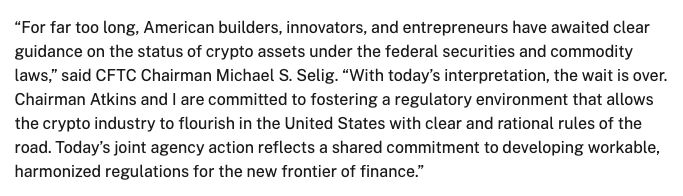
The SEC issued, with related guidance from the CFTC, its interpretation on certain crypto assets. In the release, the SEC identifies Polkadot (DOT) as a digital commodity, not a security. DOT is listed alongside 15 other digital commodities, including BTC, ETH, and others.
Polkadot tweet media
English
80
165
787
62.3K
WebThreeCapital
WebThreeCapital@WebThreeCapital·
Every L1 blockchain has a ceiling. As state grows, computation becomes more expensive, nodes become more expensive to run, and the network either centralises (only well-funded operators can afford to run nodes) or slows down. You cannot escape this with better hardware or faster processors. It is a structural consequence of coupling computation to state in a system that must maintain decentralised consensus. What JAM does differently, the single insight. JAM separates computation from state. Completely. Architecturally. At the protocol​​​​​​​​​​​​​​​​ level. Want to know more- see the Jam Grey Paper graypaper.com
English
0
0
0
18
WebThreeCapital
WebThreeCapital@WebThreeCapital·
There is no one left in crypto, and my timeline is basically all AI and geopolitics.
English
0
0
0
15
WebThreeCapital
WebThreeCapital@WebThreeCapital·
@altcap How to signal - but this is bad for my bags without saying but this is bad bags.
English
0
0
1
11
Brad Gerstner
Brad Gerstner@altcap·
AI is deeply unpopular. According to Pew, sadly only 17% of Americans think AI will have a positive impact. In China, 83% believe AI will be positive. A token tax & political backlash is coming unless the narrative changes. 🇺🇸👀🧐
English
407
114
1.8K
775.7K
WebThreeCapital
WebThreeCapital@WebThreeCapital·
Here is my thought process on this.. Crypto is not just something to be “marketed” better. Crypto is infrastructure. You don’t market a bridge or a water pipe because real infrastructure does not win by persuasion first, it wins by utility, reliability, and dependence. More specifically blockchains, the layer 1s, are coordination infrastructure: the shared rails that let people, capital, apps, and machines align around a common record. Binding state is the deepest layer of that infrastructure, the part that determines what counts, what is owned, what happened, and what outcome stands.
English
0
0
0
15
Jai Bhavnani
Jai Bhavnani@jaibhavnani·
Crypto has done absolutely nothing to win over the hearts/minds of the mainstream Assuming nothing changes, we will feel the negative impact of this with the next administration Crypto needs better marketing
English
71
4
147
17.6K
WebThreeCapital
WebThreeCapital@WebThreeCapital·
What if I told you blockchains are the moat - not all of them - but the ones that provide binding state. As you know, blockchain is a machine for creating binding state without needing one central authority to keep the master record. As AI commoditises the layers above, the moat moves downward to the shared state layer that decides what is true and what counts.
English
0
0
1
245
Emil Kietzman ⚫️
Emil Kietzman ⚫️@EmilKietzman·
I love making content for the Polkadot eco. But it’s hard from Q4 2025, as most things happen behind closed doors. Hope open info & less corporate jargon comes back for the community. 🥹
English
14
12
88
3.6K
WebThreeCapital
WebThreeCapital@WebThreeCapital·
No wonder the price is down. The last two great altseason expansions in 2016–2017 and 2020–2021 were, in hindsight, periods when intuition ran *far* ahead of understanding. People could feel that something important was here long before they could properly name what it was - a pure retail speculative bubble- which also sucked me in but hasn’t yet spat me out. Now that the mist has thinned, and the challenge looks far more severe. The early generations of blockchain increasingly look less like finished answers and more like first sketches of the real problem. The deeper you go, the clearer it becomes that this is not simply a bet on better crypto infrastructure. It is a bet on whether a new coordination substrate can emerge beneath systems that are already old, layered, entrenched, and extraordinarily difficult to displace. And systems like that are rarely met with immediate acceptance. First they are ignored because they look incomplete. Then, if they persist, they are resisted because they begin to threaten rents, control, and institutional position. Only much later - if they continue compounding through real utility - are they gradually absorbed into the order they once seemed to challenge. And we are seeing this fight in real time with Americas Clarity act. So the investment wager is harsher than it first appears: not just whether the category is real, but whether the timing is right, whether Polkadot/ JAM maps to it better than its peers, whether anyone can realistically cross the adoption chasm, and whether the world even wants a neutral coordination substrate in the first place. That is why the upside is so large: rarely, if ever, has a coordination substrate of this depth been open and accessible to all; historically, such layers have tended to sit in the hands of a privileged few. And it is also why the road is so long: nothing this important is simply handed the throne - it must win its place through a slow and gruelling process of adoption.
English
0
0
0
14
WebThreeCapital
WebThreeCapital@WebThreeCapital·
This sustained bear market has forced me to ask myself: why am I still here, and why do I remain invested in Polkadot/JAM? For what it’s worth, here’s my answer… 👀 From speech → writing → ledgers → law → markets → firms, one broad pattern recurs: civilisation advances through repeated improvements in how memory is preserved, what counts is recorded, and coordination extends across time. The deeper lesson is that authoritative shared memory remains the decisive substrate - because durable coordination, in any era, depends on it. At civilisational scale, that substrate must become *binding state*: open and neutral enough to serve as common infrastructure, fast and cheap enough to disappear into use, and coherent, authoritative, and durable enough to absorb massive parallel activity without fragmenting the reality others build on. What draws me to Polkadot/JAM is the possibility that it becomes that binding-state substrate. Because unlike its peers, instead of accepting the usual trade-off between scale and fragmentation, it can let vast amounts of computation, data, and machine activity unfold in parallel across a shared datalake, while binding state and assurance machinery draw what finally matters back into one coherent, permissionless, actionable reality -making it less a system for multiplying execution domains than a system for preserving a single coordination domain under AI-scale coordination load. And so… in a world where AI makes intelligence abundant and begins to commoditise even intelligence itself, the deepest and most durable moat may belong to the coordination substrate, and Polkadot/JAM remains the architecture that, to me, maps most convincingly to that thesis, which is why I remain invested.
English
1
0
2
66
WebThreeCapital
WebThreeCapital@WebThreeCapital·
🤔When you realise blockchains aren’t just ledgers, but coordination machines. 🤔When you realise binding state isn’t just a record, but a coordination device. 🤔When you realise the point is not storing the past, but organising the next move. 🤔When you realise AI makes execution abundant, so execution moats get eaten first. 🤔When you realise the real moat is the state others are forced to coordinate around. Then the whole stack looks different.
English
0
0
0
21
WebThreeCapital
WebThreeCapital@WebThreeCapital·
AI will eat a lot of moats, including their own… As AI makes intelligence abundant, value shifts to the substrate that other people, institutions, and machines can trust. Yes some things change, so things don’t, trust has always been at the root of human coordination. Layer 1 blockchains will matter if they become neutral global infrastructure for settling computation itself, not just payments, infrastructure that is harder to capture because it does not depend on identified, chokepoint server farms or platform gatekeepers.
English
0
0
0
3
Kiaran Ritchie
Kiaran Ritchie@kiaran_ritchie·
I don't see how Anthropic, OpenAI or any of the model providers have any hope of defending their moats. And consequently, I think they're going to get wiped out. Right now, in early 2026 they have a meaningful advantage in terms of model capability. But far cheaper and open source models are not far behind. How long can they maintain a meaningful advantage? For the vast majority of use cases, we don't actually need much higher intelligence. It doesn't take 140 IQ to automate Turbotax or powerpoint. Eventually we will be saturated in cheap, local models that are "good enough". Of course some scientific labs and frontier research will always want the latest and greatest. But that market is orders of magnitude smaller than these company valuations can justify. What am I missing?
English
557
54
1.3K
252K
WebThreeCapital
WebThreeCapital@WebThreeCapital·
@aakashgupta It’s too expensive, you burn through credits faster than you can blink
English
0
0
0
28
Aakash Gupta
Aakash Gupta@aakashgupta·
Perplexity Computer’s core reasoning engine is Claude Opus 4.6, built by Anthropic. Its deep research runs on Gemini, built by Google. Lightweight tasks go to Grok, built by xAI. Long-context recall uses ChatGPT 5.2, built by OpenAI. Images come from Nano Banana. Video from Veo 3.1. Perplexity built none of them. The product is a routing layer. Your prompt hits Perplexity’s orchestrator, which picks the best third-party model for the task, runs it inside an isolated VM, and stitches the outputs together. That’s the $20/month value proposition: a switchboard sitting on top of everyone else’s infrastructure. Their own data reveals the thesis. In January 2025, 90% of Perplexity’s enterprise queries routed to just two models. By December 2025, no single model commanded more than 25% of usage. The bet is that fragmentation accelerates, and the company controlling the routing layer captures the user relationship permanently. Run the numbers on what that bet costs. Perplexity signed a $750M commitment to Microsoft Azure over three years. The company hit roughly $200M in ARR by February 2026 on a $20B valuation. Internal projections target $656M by year-end. That’s 230% growth required from a company that controls zero percent of the core technology it sells. Every model provider is already building the orchestration feature in-house. Anthropic ships Claude Code and Cowork. OpenAI has Operator. Google has Gemini with native tool use. The moment these models get good enough at everything, the routing layer becomes a line item someone else bundles for free. There’s a name for this in tech history: the Kayak problem. Kayak aggregated airline inventory better than anyone until the airlines rebuilt their own booking experience. The aggregator’s margin only existed in the gap between supplier capability and supplier distribution. Perplexity is sprinting to lock in enterprise contracts before that gap closes. At $325 per seat per month for Enterprise Max, they need the AI model fragmentation thesis to hold for roughly 18 more months. If it does, they become the default interface for corporate AI. If it doesn’t, they’re Kayak with a $20 billion price tag.
Perplexity@perplexity_ai

Perplexity Computer is now available for Pro subscribers. Access Computer’s full suite of 20+ advanced models, prebuilt and custom skills, and hundreds of connectors. Max subscribers receive monthly credits and higher spend limits than Pro. perplexity.ai/computer

English
35
41
389
66.6K
WebThreeCapital أُعيد تغريده
zerohedge
zerohedge@zerohedge·
What an absolutely total coincidence the 10am slams stopped once you know who got busted for market manipulation
English
154
427
7.7K
592K
WebThreeCapital
WebThreeCapital@WebThreeCapital·
@JPodhorsky I say this as a supporter, there is already mass disappointment..
English
0
0
1
130
Jan Podhorsky
Jan Podhorsky@JPodhorsky·
$DOT supply cut just happened. Next 3 months: retail will be disappointed. Price won't move - They'll sell. That's not a problem. That's the setup. Bitcoin dropped after every halving! Then made ATH 12-18 months later. Institutions don't buy hype. They buy disappointment. #DOT
English
9
15
170
8.7K