🇿🇦 South Africa has one of the highest unemployment rates in the world and yet they are fixed to their screens
More people with time on their hands = more screens 📱
South Africa is the poster child for this dynamic
Good Morning 🇯🇵
The Nikkei chart is a masterclass in patience
From 51,000 in late March to 62,908 today, a clean V reversal that most traders fumbled
Japan equities quietly outperforming while everyone obsesses over US tech
We are in full bull mode folks 🍏
🇺🇸 Construction in the US is booming
Not just in homes but mostly in data centers
More than any other construction category
Chips, storage devices, DRAM , cooling all need a place to live. This is the Ai economy
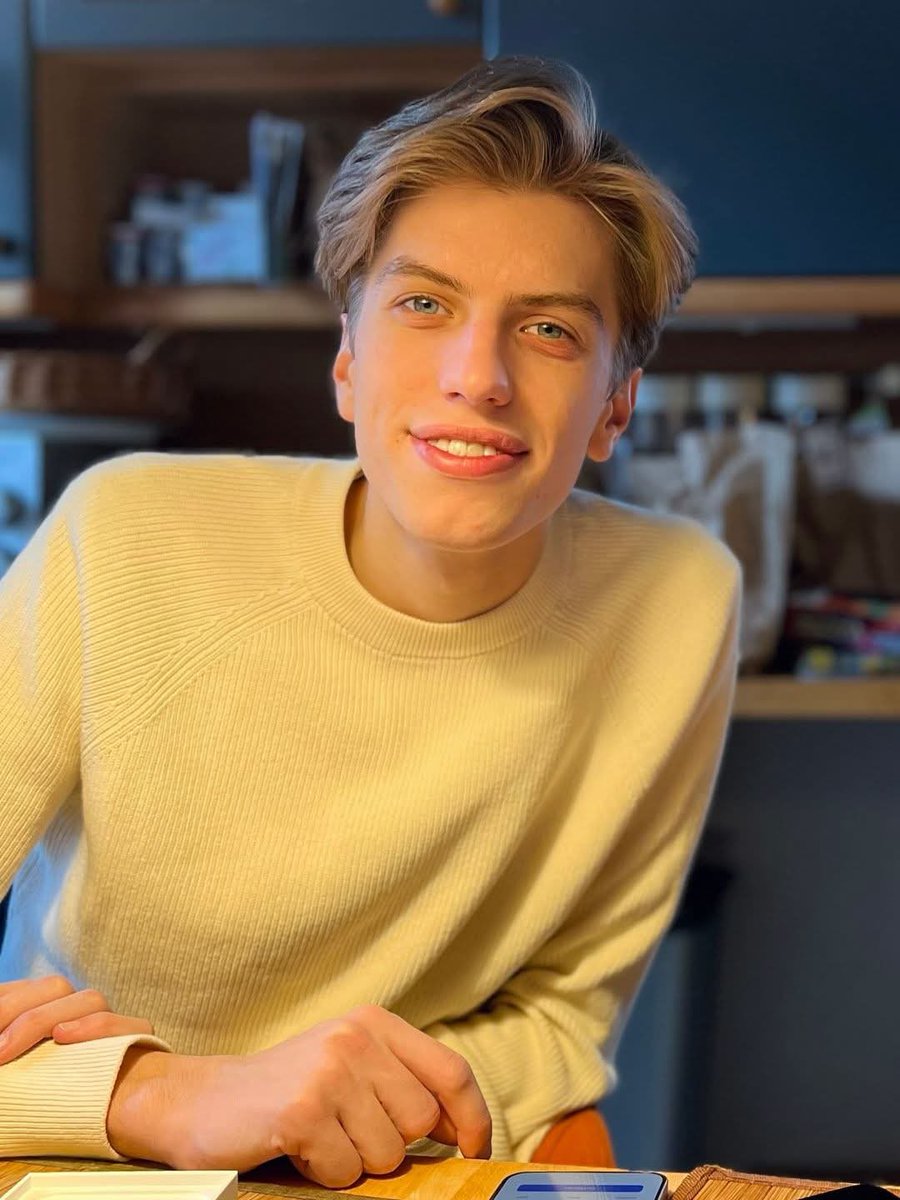
Meet the 22 year old guy with no investing experience who got fired from OpenAI, wrote 165 pages predicting the future, and used it to build a $5.5 BILLION portfolio. His previous employer was Sam Bankman-Fried.
Leopold Aschenbrenner was born in Germany around 2001. Both parents were doctors. He enrolled at Columbia University at 15 and graduated as valedictorian at 19. Economist Tyler Cowen called him a prodigy.
He co-founded Columbia’s Effective Altruism chapter. That network led him to the FTX Future Fund, a philanthropic initiative funded by Sam Bankman-Fried’s cryptocurrency exchange. He resigned before FTX collapsed. There is no evidence he knew the money was stolen.
In 2023, he joined OpenAI’s Superalignment team, working under Ilya Sutskever on the problem of controlling AI systems smarter than humans. After a hacker breached OpenAI’s internal messaging system, Aschenbrenner wrote a memo to the board arguing the company’s security was insufficient to prevent theft of model weights by China.
He received a warning from human resources. In April 2024, OpenAI fired him. He said he was told explicitly that the security memo was the real reason.
One month later, the Superalignment team was dissolved. Sutskever left.
Two months after being fired, Aschenbrenner published “Situational Awareness: The Decade Ahead.” 165 pages. It predicted AGI by 2027. Ivanka Trump praised it publicly. The University of Rochester made it required reading.
“Everyone is now talking about AI,” he wrote, “but few have the faintest glimmer of what is about to hit them.”
In September 2024, he launched a hedge fund named after the essay. He reportedly put in nearly all of his personal net worth. Patrick and John Collison of Stripe backed it. So did former GitHub CEO Nat Friedman. Investors agreed to lock up their capital for years.
The thesis was one sentence. AI labs need power, compute, storage, and bandwidth. Nobody was buying the companies that supplied them.
He bought Bloom Energy. Fuel cells for data centres. Lumentum. Optical components that move data between chips. Call options on CoreWeave, a GPU cloud company most investors had never heard of. Core Scientific, a Bitcoin miner pivoting to AI hosting. IREN. Riot Platforms. Hut 8. 20.2 MILLION call options on Intel, a chipmaker Wall Street had written off.
Top 10 positions accounted for 86% of the portfolio. No venture capital. All public markets.
In the first half of 2025, the fund returned 47% after fees. The S&P 500 returned 6%.
By December 2025, the fund’s 13F filing disclosed $5.52 BILLION in U.S. equity and options positions across 29 holdings. Actual assets under management were estimated at $1.5 BILLION. The rest was leverage. Options-heavy, concentrated, thesis-dependent leverage on a single prediction.
He is engaged to Avital Balwit, the chief of staff to the CEO of Anthropic, OpenAI’s largest competitor. In 2024 she wrote that the next five years might be the last years she works. Her fiance built a fund on the same belief.
The career so far: valedictorian at 19, a job at a charity funded with stolen money, a safety team that no longer exists, a firing, a 165-page prediction, and $5.5 BILLION in leveraged bets that it all comes true by 2027. He has been right about everything so far except the places he chose to work.