☻ CΛT ☻
14.3K posts
☻ CΛT ☻
@catlo
Sr UX Designer at Amazon Brand Experiences. Native iOS Apps and Design Systems
New York City انضم Mart 2008
1.7K يتبع1.2K المتابعون

I’m so age-blind, I forget that the IC designers I work with aren’t my age and are most likely between 25-30. Full heads of hair, youthful skin. Still never going into management.
English
@davidhoang Whoever said that doesn’t live in the real world.
aka my coworker 😂🤣😂🤣 and deals everyday 😂🤣🥲
English

“I don’t like politics in design.”
Me: Cool. Now go design a dropdown menu for countries.
English
☻ CΛT ☻ أُعيد تغريده


☻ CΛT ☻ أُعيد تغريده

All PM templates from my Google Drive are now free for everyone 🎁
The extended edition:
(1/4)

English
☻ CΛT ☻ أُعيد تغريده


@hpdailyrant 1. don’t you think this update is targeted at PM and engineers so designers don’t need to be involved?
It already satisfies the core user base. why not go after another role who don’t have designers
English
☻ CΛT ☻ أُعيد تغريده

Born from 500+ designer profiles in Lovers Magazine, introducing Culture: Immersive company storytelling.
Goodbye, dull career pages. Hire culturally aligned talent and discover transparent, product-led companies.
spaces.is/culture
English
☻ CΛT ☻ أُعيد تغريده

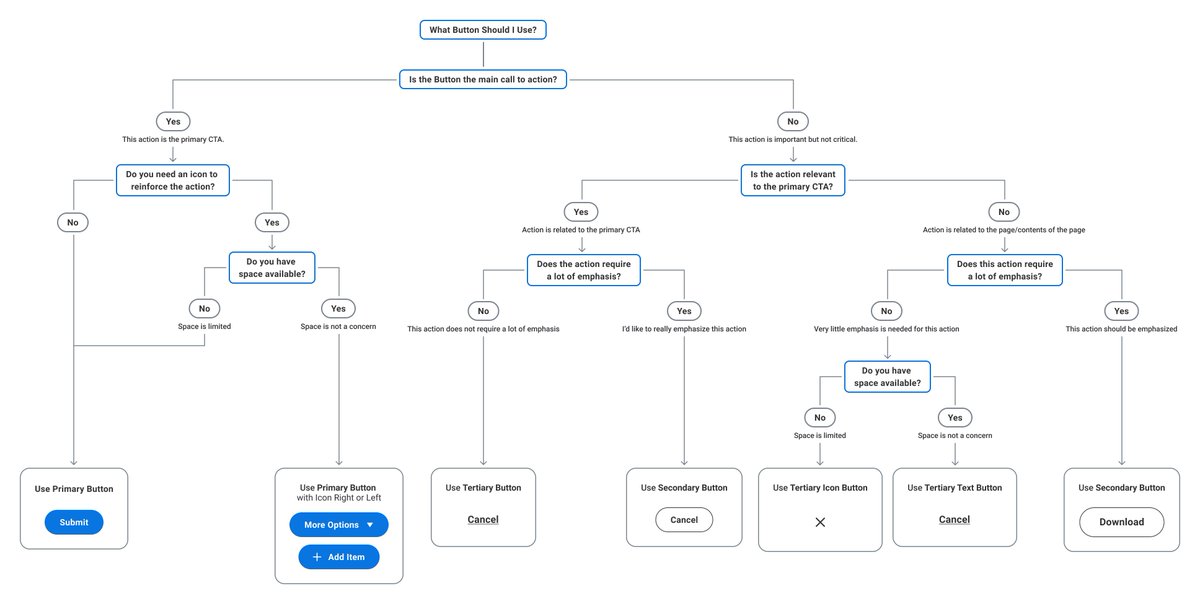
💎 Call to Action Button Decision Tree
Use this decision tree as a guide to determine what Button should be used for your use case
English
☻ CΛT ☻ أُعيد تغريده

Do not place your faith in playbooks
Take this from a lover and writer of playbooks: they can never teach you how to do something hard.
There are 4 reasons you should be suspicious of the teachings of any playbook or framework:
Reason #1: It’s much easier to write a playbook than it is to do a hard thing.
Thus, many playbooks are aspirational rather than experiential — "I wish it worked this way", rather than "this is what I know about how to make it work". To truly discern the difference, you’d need to know if the author of the playbook is indeed a master of their domain. Which means you’d need to know either the author extremely well, or the domain extremely well.
Reason #2 (even if #1 is true): The ability to know something and the ability to explain it well are two different skills.
To know how to do something difficult is rare; to know AND to be able to explain it well is even rarer. I have met numerous masters of their domains that are frequently right, but cannot explain why, because it is an intuition felt in the gut rather than a logical train of thought. Even those that do write a playbook may not write it in a way can be easily understood by non-experts — this is why so many books feel intimidatingly complex!
Reason #3 (even if #2 and #3 are true): True knowledge of how to do something hard is too rich in depth and nuance to transfer to another person.
The reality of how to do something hard is so complex as to be impossible to fully explain in a tweet, a diagram, a podcast, a class, or even a book. Human language is a lossy communication medium. So whatever you do read or see is generally a simplification of what the master knows—like a 6-D object transposed into 2-D.
Reason #4 (even if all the above is true): Your exact context will be different and something the framework author probably does not have firsthand experience of.
The world’s best instructions on how to get from the train station to Town Hall in London would simply not apply in Barcelona.
--
That said, playbooks and frameworks are not entirely useless! They are incredibly powerful tools, for 3 reasons (and not necessarily the ones you think.)
1) A playbook / framework is an effective way of distilling complex knowledge for the author and their collaborators. The process of creating a framework forces reflection. The process of following a framework forces evaluation and iteration.
2) A playbook / framework is valuable as a handy reminder for others who have similar knowledge. Those folks have the depth of knowledge, and can rely on an elegant encapsulation in a simple 2x2 for easy recall.
3) A playbook / framework is useful is as persuasive evidence for action. If you need to convince others of something you already know but can’t explain well, you can use the framework as social proof.
Alas, there are no shortcuts; the way to cross the chasm of expertise is not by applying someone else's formula, but by doing the the hard work of doing.
English
@hpdailyrant yeah but it’s a template across all of the postings. A lazy way to not provide a real range
English
@fazurrehman this is a level of abstraction on top of foundations of a system.
the abstraction scales to different domains/use case vs foundations allow randomization
ie. data visualization - you can assign abstraction per use case or based on #elements being shown
English

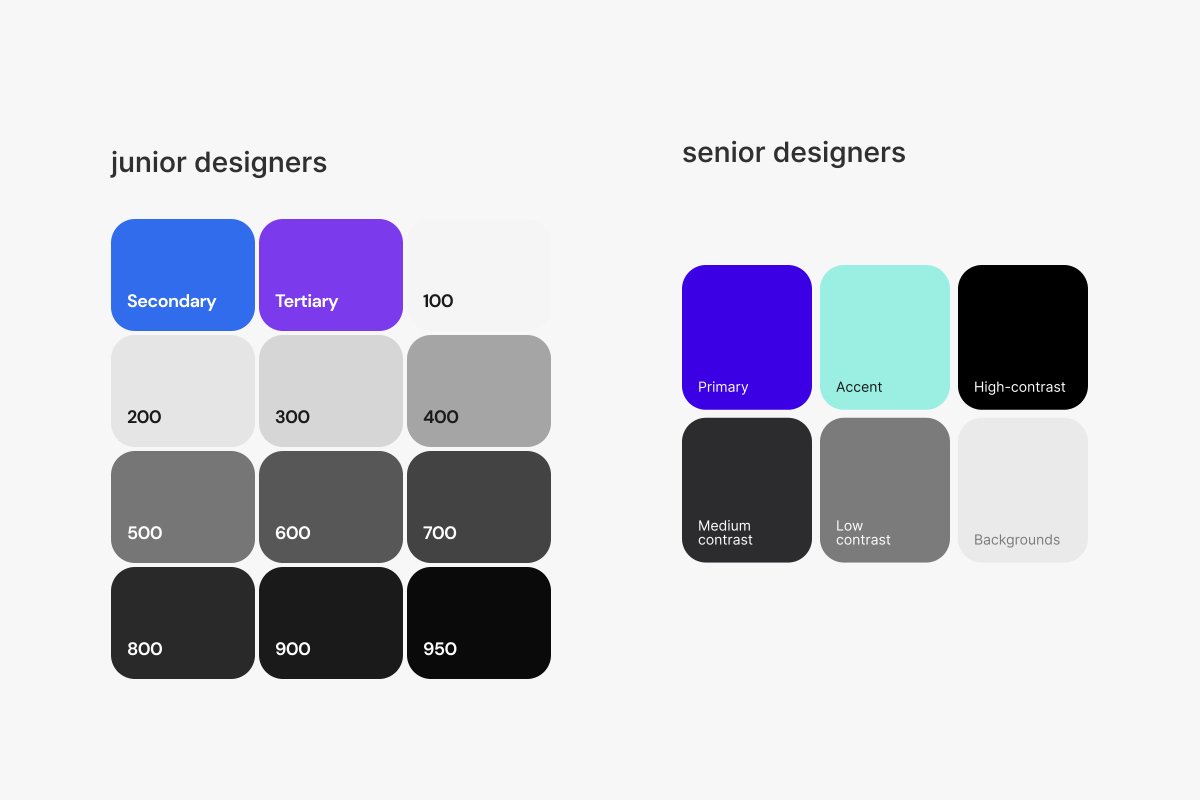
Junior designers vs. Senior designers
I still don't understand why designers define colors as color-100, 200... instead of assigning a purpose or name.
Example: High contrast (Used for Titles, headlines)
English
@DevonFrohne i’ve been using ghost for the last 7 months… vs medium and substack
English

Creatives, Designers, Writers...
With so many new platforms, if you were starting a blog today that focused on your experience and thoughts to share with the world, which platform would you use?
Help me make a decision.
GIF
English
☻ CΛT ☻ أُعيد تغريده
English

☻ CΛT ☻ أُعيد تغريده
☻ CΛT ☻ أُعيد تغريده

Neil Postman's questions for any new technology:
- What problem does it solve?
- Whose problem is it?
- What new problems does it create?
- Which people will be most impacted by it?
- Which shifts in economic and political power will result?
- What unintended uses will it have?
English

Jobs I’ve had in order:
- Paper Boy (newspapers)
- Busboy
- Target Team Member
- Recording Studio Assistant
- Food Server/Expediter
- Stable Hand (Horses)
- Camp Counselor
- Lifeguard
- Crawlspace Waterproofer
- Radio DJ
- Magazine Ad Sales
- Sub sandwich maker
- Design Intern
- Production Assistant (ESPN)
- Jr. Designer
- Sr. Designer
- Police Officer
- Specialist (Army NG/MP)
- Sergeant (Army NG/MP)
- Narcotics Agent
- Freelance Designer
- Art Director
- Founder (Design Studio)
- Digital Creative Director
- Chief Operating Officer
- Author?
𝔎𝔞𝔯𝔞 ☻@karasmarsh
Jobs I've had in order: - Hot Topic sales associate - Starbucks barista - design intern - associate designer - graphic designer - web designer - digital designer - senior digital designer - senior art director - art director - design director - senior art director
English

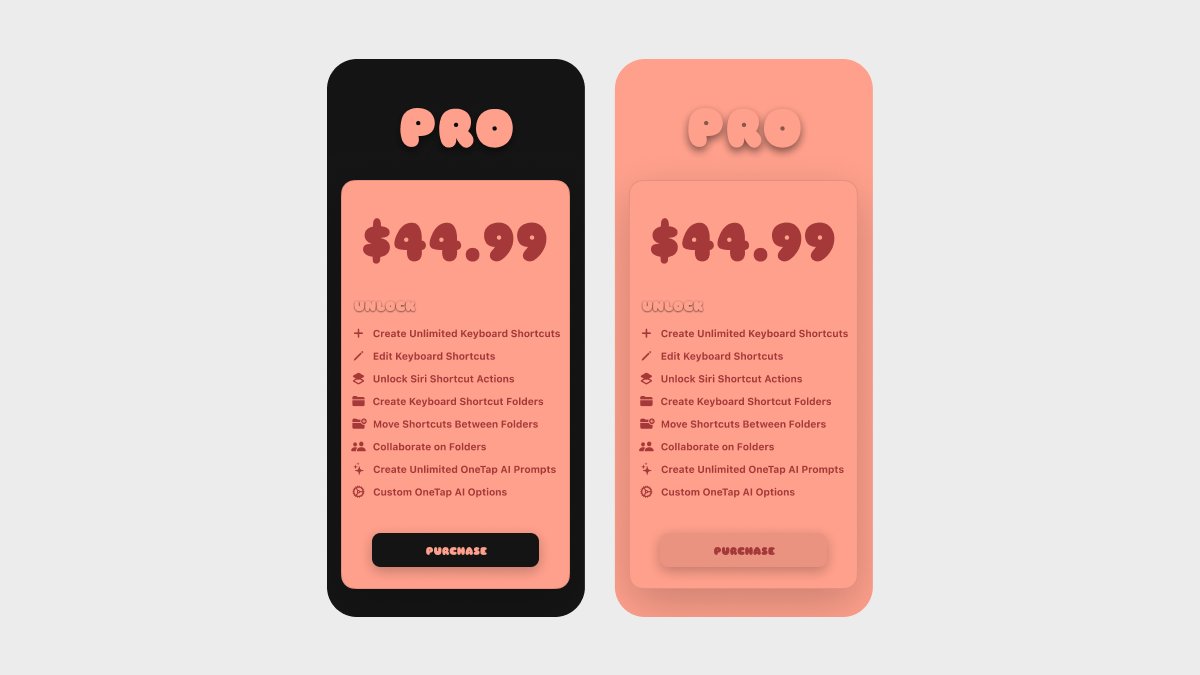
@catlo @bes_ofthebest @OneTap_App Great catch Cat, I actually forgot to update the pricing on my design lol
They both should say $44.99.
I wanted to communicate to users the price to upgrade. So they know. Then with what comes with upgrading below it!
Albania 🇦🇱 English