
تغريدة مثبتة

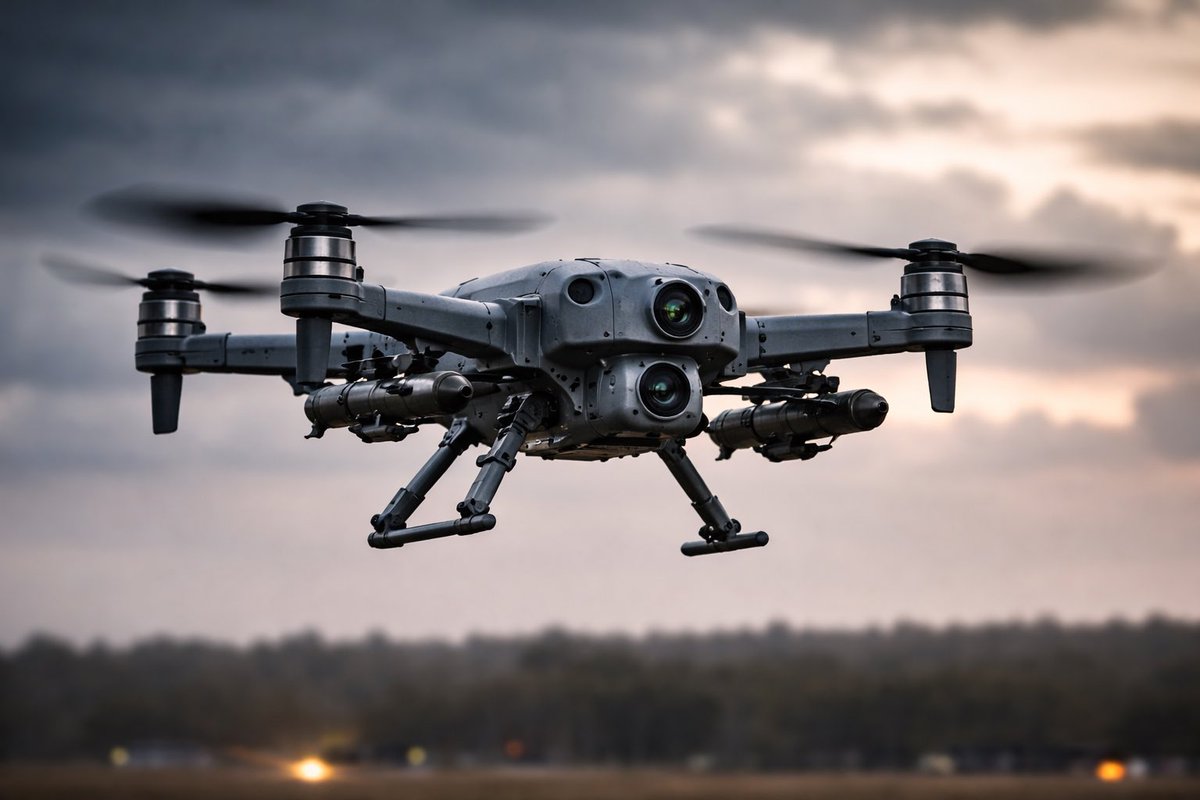
Drones are re-shaping conflict and geopolitics globally. Ahead of us announcing our latest defence technology capital raise: eight thoughts on drones following the Tectonic defence tech conference in Austin:
1. Doctrine: Conflicts in Ukraine and the Middle East highlight the biggest change in military doctrine since World War II and the development of armour. High volume, low cost, increasingly autonomous drone platforms - in the air, on land, at sea, and sub-sea - are reshaping the battlefield and attracting significant spend alongside traditional ‘exquisite’ (extreme performance, high cost, low volume) systems. Conflicts are underpinned by economics and, as often cited, destroying stocks of $30,000 drones with a stock of $4m missiles isn’t sustainable.
2. Components: the West has become dependent on inexpensive, high volume Chinese batteries, motors, radios and other key components. Developing capability, capacity and low cost in critical components is now an urgent challenge for the West and requires both government and private capital. A growing number of companies are seeking to vertically integrate select components, to guarantee supply and create performance and price advantages.
3. Electronic warfare (EW): in response to jamming and an intense EW environment: tactics, techniques and procedures are evolving. Software-defined radios, fibre optic cables and edge-based autonomy are playing key roles in varying missions.
4. Swarming: drone swarms are the next battlefield. Swarming requires new competencies - in connectivity, communication, production, autonomy, decision-making and more - and is a focus for many.
5. Production: drone leaders are acutely focused on mass production considerations - ‘design for manufacture’, supply chain access & sovereignty, and automation - given exponential growth in volume requirements for small, attritable platforms. Adversaries subsidise their drone industries to enable companies to invest in production capex. Will the West?
6. Procurement: procurement processes are finally evolving - from slow, multi-year initiatives established for exquisite systems and defence tech primes - to nimbler processes open to disruptors. The US Drone Dominance program is a visible example.
7. Training: Either militaries must invest more in training to use drones, and/or drones need greater autonomy. Special forces may get enough training; others don’t. There are second-order consequences - e.g. more autonomy means more chips. Many procurement programmes don’t have big training budgets behind them.
8. Evolution & Uncertainty: Drone use cases and military doctrine are evolving rapidly. We’ll see alternative methods of drone deployment (from large motherships, unmanned ground vehicles and on/under-sea vehicles). And expect new use cases - such as ‘active mines’.
Previously we raised €70m for Tekever, a European defence tech leader. We’re excited to announce our latest, landmark defence tech financing imminently.
English