Vic Scherer

125K posts

Vic Scherer

Vic Scherer

@daytrend

Stock trader since '95. Trend exploiter, swings, dips, scalps. Market Stats, BBQ, guitarist. Engineer for 23 years. I do my homework.

Austin, TX انضم Ekim 2008
982 يتبع12.9K المتابعون
Vic Scherer
Vic Scherer@daytrend·
Gently-grilled chicken thighs with salt, pepper, garlic powder, and cumen.
Vic Scherer tweet media
English
0
0
1
112
Vic Scherer أُعيد تغريده
Brett Boettcher
Brett Boettcher@brettboettcher1·
The 10 Commandments of Health: Follow these 10 basic rules to lose 20 lbs by summer: 1) It's not a meal unless it has 40+ grams of protein.
English
4
7
106
38.9K
Vic Scherer
Vic Scherer@daytrend·
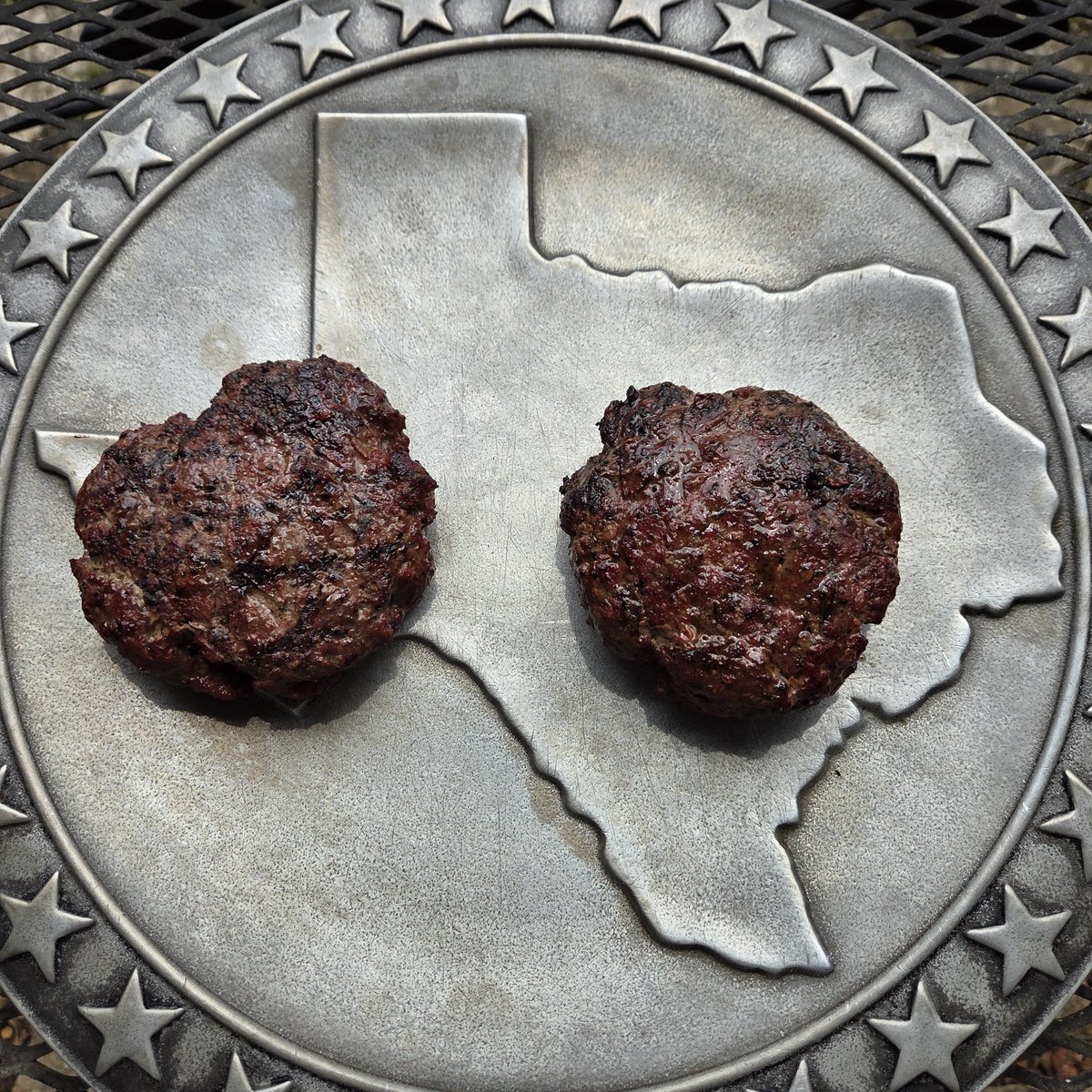
Steakburgers... Ground beef grilled like ribeyes.
Vic Scherer tweet media
English
0
0
0
185
Vic Scherer أُعيد تغريده
Fox News
Fox News@FoxNews·
NEW: President Trump fires off a warning to Republicans, tying the Save America Act directly to the party’s future in the Senate. “Not passing the SAVE AMERICA ACT will lead to the worst results… An Unrecoverable Death Wish!!!” He doesn’t stop there — he also pushes to scrap the filibuster entirely, turning up the pressure on GOP lawmakers.
Fox News tweet media
English
498
548
2.4K
200.5K
Vic Scherer أُعيد تغريده
Rapid Response 47
Rapid Response 47@RapidResponse47·
Rapid Response 47 tweet media
ZXX
574
4K
19.4K
261K
Aakash Gupta
Aakash Gupta@aakashgupta·
Major cheat code in life: Decide what you won't tolerate before you're in the situation. In the moment, you'll talk yourself into staying. You'll rationalize. You'll lower the bar. Set your standards when you're calm and clear. When the moment comes, the decision is already made.
English
3
11
132
5.6K
Vic Scherer أُعيد تغريده
America First Policy Institute
The American people deserve answers.... 💁‍♂️
America First Policy Institute tweet media
English
0
4
11
660
Vic Scherer أُعيد تغريده
Dan
Dan@KettlebellDan·
for health: before you change your exercise routine, fix your diet before you fix your diet, improve your sleep before you improve your sleep, change your bad caffeine habits before you stop drinking afternoon coffee, stop drinking alcohol before you stop drinking alcohol... don't do anything else, immediately stop drinking alcohol that's the first step on your health journey
English
24
15
153
5.7K
Lorwen Harris Nagle, PhD
Lorwen Harris Nagle, PhD@LORWEN108·
You’re not “low maintenance.” You learned to disconnect from yourself to stay safe. Here are 6 signs it’s quietly ruining your relationships — and you don’t even realize it: 1. When someone asks what you want, your mind goes blank.
Lorwen Harris Nagle, PhD tweet media
English
14
33
192
96.3K
Vic Scherer أُعيد تغريده
Metabolic Uncle
Metabolic Uncle@MetabolicUncle·
HOW HANGING HELPS AGAINST THE SITTING DISEASE You sit nine and a half hours a day. Not my estimate. Measured with accelerometers strapped to actual people. Nine and a half hours of your spine compressed, your hips locked at ninety degrees, your shoulders rolled forward. You think you're resting. Your body thinks it's being crushed. The spine is twenty-four separate bones stacked on top of each other. Between every pair sits a disc. Twenty-three total. Each disc is a piece of hydraulic engineering that took evolution millions of years to perfect. The outer ring is concentric layers of fibrous cartilage, angled like plies in a radial tire so it can resist force from multiple directions. Inside is a gel, the nucleus pulposus, about eighty percent water when you're young. When the disc is healthy, that gel acts like a fluid. You push down from above and the pressure distributes equally in all directions. Pascal's principle. Same physics that makes your car brakes work. Your lower lumbar discs, the ones between L3 and L4, between L4 and L5, sit right above your pelvis. Sixty percent of your total body weight passes through them every second you stand upright. They are the load-bearing foundation of the entire column. When you sit, you'd think the load would decrease. You're off your feet. Your muscles are relaxed. You'd be wrong. Alf Nachamsen at the University of Gothenburg did something extraordinary in the 1960s. He took needle-mounted pressure sensors and put them directly inside the nucleus pulposus of living human subjects. He measured the actual pressure on the disc in different body positions. What he published in Acta Orthopaedica Scandinavica surprised everyone. Unsupported sitting increased the compressive load on the lumbar discs by about forty percent compared to standing. Leaning forward while seated more than doubled it. That position you hold when you hunch toward your computer screen with a slight twist increased the load by four hundred percent. Four times the standing pressure while you think you're resting. Hans-Joachim Wilke at the University of Ulm refined this work in 1999. He implanted a fiber optic sensor into the L4-L5 disc of a volunteer and tracked the pressure continuously over twenty-four hours. Published it in Spine. Some of Nachamsen's specific ratios were off, but the fundamental point stood. Sitting is not a neutral position. It's a loaded position. Your spine doesn't know you're relaxing. It only knows the force. Here's the problem. Your intervertebral discs have no blood supply. None. They are the largest structures in your body with no blood vessels running through them. Every other tissue gets nutrition delivered by the bloodstream. Your discs don't. The nucleus pulposus gets its oxygen and glucose through a process called imbibition. When you take the compressive load off the disc, fluid seeps in from the vertebral end plates above and below, carrying nutrients with it. When you put the load back on, fluid squeezes out, carrying waste products away. It's a pump. Compression pushes fluid out. Decompression pulls fluid in. The only energy source for this pump is the alternation between loaded and unloaded states. You move. You compress. You decompress. The disc feeds itself. When you sit for nine and a half hours without meaningful interruption, the pump runs one way. Fluid leaves. Fluid doesn't come back. The gel dehydrates. The disc gets thinner. The vertebrae above and below creep closer together. The little bony windows where the spinal nerves exit, the intervertebral foramina, they narrow. Compressed nerves produce pain, tingling, numbness that radiates down through the legs. You're physically shorter at the end of the day than you were when you woke up, by as much as one and a half to two centimeters across the full column, mostly in the lumbar region. You get most of it back overnight while you sleep and the spine is unloaded in a horizontal position. That's why you're tallest first thing in the morning. But the recovery is never quite complete, and it gets worse with time. The nucleus pulposus progressively loses water content as you age. What was eighty percent water at twenty is closer to seventy percent at fifty. The gel becomes more fibrous, less compliant, less able to distribute force evenly. The annulus develops small radial tears from repeated cycles of asymmetric loading. The disc thins permanently. The vertebral bodies grow bony spurs, osteophytes, as the skeleton tries to stabilize a joint that has lost its hydraulic cushion. Magnetic resonance imaging shows disc degeneration in thirty-six percent of people who have no back pain at all. The damage is present long before you feel it. The daily compression without decompression cycle of prolonged sitting accelerates this entire trajectory from slow age-related decline to premature structural failure. The damage doesn't stay in the spine. It propagates downward through the pelvis. When you sit in a chair your hips are locked at about ninety degrees and there's a muscle, the psoas major, that runs from the transverse processes of your lumbar vertebrae, threads through the pelvis, and attaches to the top of the femur. It's the only muscle in your body that directly connects the upper skeleton to the lower skeleton. When you sit, this muscle is held in a shortened position for hours. Muscles, when they're kept short for long enough, they adapt. Not temporarily. Structurally. The sarcomere, the fundamental contractile unit inside the muscle fiber, responds to chronic shortening by reducing the number of units arranged in series. The muscle literally gets shorter at the cellular level. It remodels itself to fit the position you hold most often. This is the same thing researchers showed happens to the calf muscles of women who wear high-heeled shoes every day. Shorter fascicle lengths, reduced ankle range of motion. Chronic positional shortening changes muscle architecture. The psoas, held at ninety degrees for nine and a half hours a day, year after year, undergoes the same remodeling. A shortened psoas tilts the pelvis forward. A forward-tilted pelvis does two things simultaneously. It increases the curve of the lower spine, which puts even more compressive load on the already dehydrated discs, and it stretches the muscles on the backside of the hip, the gluteus maximus and gluteus medius, into a lengthened position from which they cannot generate force efficiently. Their neural drive decreases. Stuart McGill at the University of Waterloo, probably the most cited spine biomechanics researcher alive, called this gluteal amnesia. The name is playful. The mechanism is not. In 2013, researchers published a study in Clinical Biomechanics where they measured glute activation, then induced acute hip joint pain with a capsular distension arthrogram, then retested. The gluteal activation on the painful side dropped significantly. The brain was suppressing the motor signal. They called it arthrogenic neuromuscular inhibition. Pain was one trigger, but chronic postural adaptation, the kind that comes from sitting all day every day, produces the same suppression over time. Researchers at the University of Salford confirmed the downstream effect. People with restricted hip flexor length showed significantly reduced gluteus maximus activation during a squat. The short hip flexors weren't just tight. They were actively suppressing the opposing muscles through reciprocal inhibition. The strongest muscles in the hip, the ones that propel you forward when you walk, that stabilize your pelvis when you stand on one leg, that absorb impact when you run, were being turned down like a dial. Think about this person. Fifty-eight years old. Has sat at a desk since the age of twenty-eight. Drives forty minutes to work in a bucket seat that holds the hips at exactly the angle they've been locked in all day. Sits from seven in the morning until five. Drives home in the same bucket seat. Sits on the couch from seven until ten. Does this fifty weeks a year for thirty years. Their psoas has remodeled at the sarcomere level. Their glutes aren't firing properly. Their discs are chronically thin and dehydrated. Their intervertebral foramina have narrowed. They wake up stiff every morning and they say, well, that's what happens when you get older. But it's not age doing this. It's the accumulated mechanical consequence of one posture held for far too long, without the opposing posture ever being applied. There was never a single moment of injury. No pop, no snap, no herniation event, no dramatic failure. The damage accumulated invisibly over three decades, like compound interest on a loan nobody disclosed. Every day a tiny withdrawal from the spinal account, the hip account, the shoulder account, the grip account. Nobody ever made a deposit. The cascade keeps going. It reaches the shoulders. When you sit at a desk, your arms are held in front of you, your shoulders round forward. Your scapulae, the shoulder blades, drift apart and tilt forward. The muscles in the front of the shoulder, the pectoralis minor and the subscapularis, shorten because they're held in a shortened position, just like the psoas. The muscles in the back, the lower trapezius and the infraspinatus, lengthen and weaken because they're held in a stretched position. Over months and years, this postural shift becomes structural in the same way the psoas shortening becomes structural. The tissue remodels. At the top of the shoulder blade there's a bony shelf called the acromion. Between that shelf and the top of the upper arm bone, the head of the humerus, there's a space, the subacromial space. A tendon runs through it, the supraspinatus, which is part of the rotator cuff. When the shoulder rounds forward from desk posture, the coracoacromial arch descends, and that space narrows. Every time you try to raise your arm, the tendon gets pinched between the acromion above and the humeral head below. That pinching is subacromial impingement syndrome. It's the most common shoulder diagnosis in orthopedic practice worldwide. Most of the time it's not caused by an injury. It's caused by the postural shift that comes from sitting with your arms in front of you for years. There's a fifth system that has nothing to do with anatomy and everything to do with how long you're going to be alive. Researchers at McMaster University in Hamilton published a study in The Lancet in 2015. The PURE study. One hundred forty-two thousand eight hundred sixty-one participants across seventeen countries. They measured grip strength with a handheld dynamometer and followed people for a median of four years. Every five kilogram drop in grip strength was associated with a sixteen percent increase in all-cause mortality, seventeen percent increase in cardiovascular death, seven percent increase in heart attack, nine percent increase in stroke. Grip strength was a stronger predictor of death than systolic blood pressure. Stop and think about that. Blood pressure is the number your cardiologist monitors at every single visit. It's the basis for medication decisions, for lifestyle recommendations, for risk stratification in clinical cardiology. Every doctor's office in the world has a blood pressure cuff. What the data showed is that the force your hand can generate around a simple spring-loaded dynamometer predicted how long you would live more accurately than that cuff reading, across seventeen countries, across all income levels, across both sexes, after adjusting for physical activity, smoking, drinking, education, employment, and age. The association still held. Researchers at the University of Southampton and Newcastle University wrote a commentary in The Lancet in response to this study asking whether grip strength might function as a biomarker of biological aging itself. Not a cause of longevity. A readout of it. A single measurement that captures the overall integrity of the neuromuscular system, the vascular system, and the metabolic reserve that determines how long the organism endures. If they're right, grip is not just a measure of your forearm. It's a measure of you. We are the fifth great ape. Gorillas, chimpanzees, orangutans, gibbons, and us. All of the other four still hang. All of them still brachiate, which means they swing through the canopy using their arms. We came down from the trees roughly three million years ago, and we kept every feature of the brachiating primate. The ball and socket shoulder joint, the mobile scapula, the long clavicle, the ratio of arm length to torso, all of it optimized for overhead suspension and locomotion through branches. For most of those three million years, the mismatch didn't matter. Daily life required overhead reaching, climbing, pulling, lifting loads above the head, carrying things. The shoulder moved through its full range of motion because survival demanded it. The spine cycled between compression and decompression through the variety of upright movement. The grip held body weight against branches and tools and loads. The office chair is about one hundred fifty years old. The personal computer, about forty. The smartphone, about eighteen. In terms of the evolutionary clock, these aren't even a tick. We took a body that was engineered from the ground up for overhead suspension, and we locked it in a seated, forward-flexed, internally rotated position for nine and a half hours a day. The shoulder that evolved to reach overhead now reaches forward to a keyboard. The spine that evolved to cycle between loaded and unloaded holds one loaded position without variation. The hip that evolved to extend through its full range with every stride stays folded at ninety degrees from dawn to dusk. The grip that evolved to hold seventy kilograms of body weight against a branch holds the negligible weight of a plastic mouse. One position reverses every single one of those modern failures simultaneously, and the position is the one our body was designed to hold in the first place. Detailed practical applications and protocols for subscribers are provided in Part 2, with a quick-reference action plan summarized in Part 3.
English
1
10
61
3.8K
Vic Scherer أُعيد تغريده
Dr Sumit Sharma
Dr Sumit Sharma@dr_sumit_sharma·
After years of working with top professionals, I’ve realised this: You don’t need a perfect diet. You need the right food categories. These 7 improve gut health, metabolism, mitochondria & brain performance. They’ve transformed their health & can do the same for you.
Dr Sumit Sharma tweet media
English
6
11
84
11.2K
Dan
Dan@KettlebellDan·
there has been a noticeable lack of food on my timeline kindly post more food pics
Dan tweet media
English
52
5
180
11.6K
Vic Scherer أُعيد تغريده
Vic Scherer
Vic Scherer@daytrend·
Burgerballs and Pork Loin!
Vic Scherer tweet media
English
0
0
2
268
Vic Scherer أُعيد تغريده
Dr Sumit Sharma
Dr Sumit Sharma@dr_sumit_sharma·
After working with hundreds of patients who look a decade younger than their age, one pattern became impossible to ignore. They share almost identical daily habits. None of them are on anti-ageing drugs. Here's what they actually do and why it works at the cellular level:
Dr Sumit Sharma tweet media
English
5
23
166
32.8K
Wise Mentor | Leadership
Wise Mentor | Leadership@thewisementor·
Men's Complete Health Bible : 40 things every man should know about his health before 35. Most men learn these too late:
Wise Mentor | Leadership tweet mediaWise Mentor | Leadership tweet media
English
6
25
214
48.1K
Vic Scherer أُعيد تغريده
Mike Lee
Mike Lee@BasedMikeLee·
PA SS TH E SA VE AM ER IC A AC T
English
722
2.1K
12.8K
85.2K
Vic Scherer أُعيد تغريده
Dr Sumit Sharma
Dr Sumit Sharma@dr_sumit_sharma·
5 organs that fail when insulin stays high: • Liver - fatty infiltration • Brain - cognitive decline • Kidneys - filtration damage • Pancreas - beta cell burnout • Heart - arterial plaque buildup Control insulin. Protect everything!
English
8
15
126
6.8K
Vic Scherer أُعيد تغريده