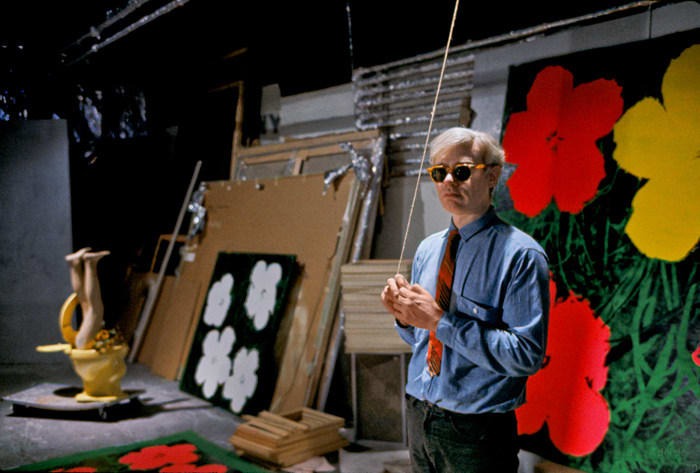
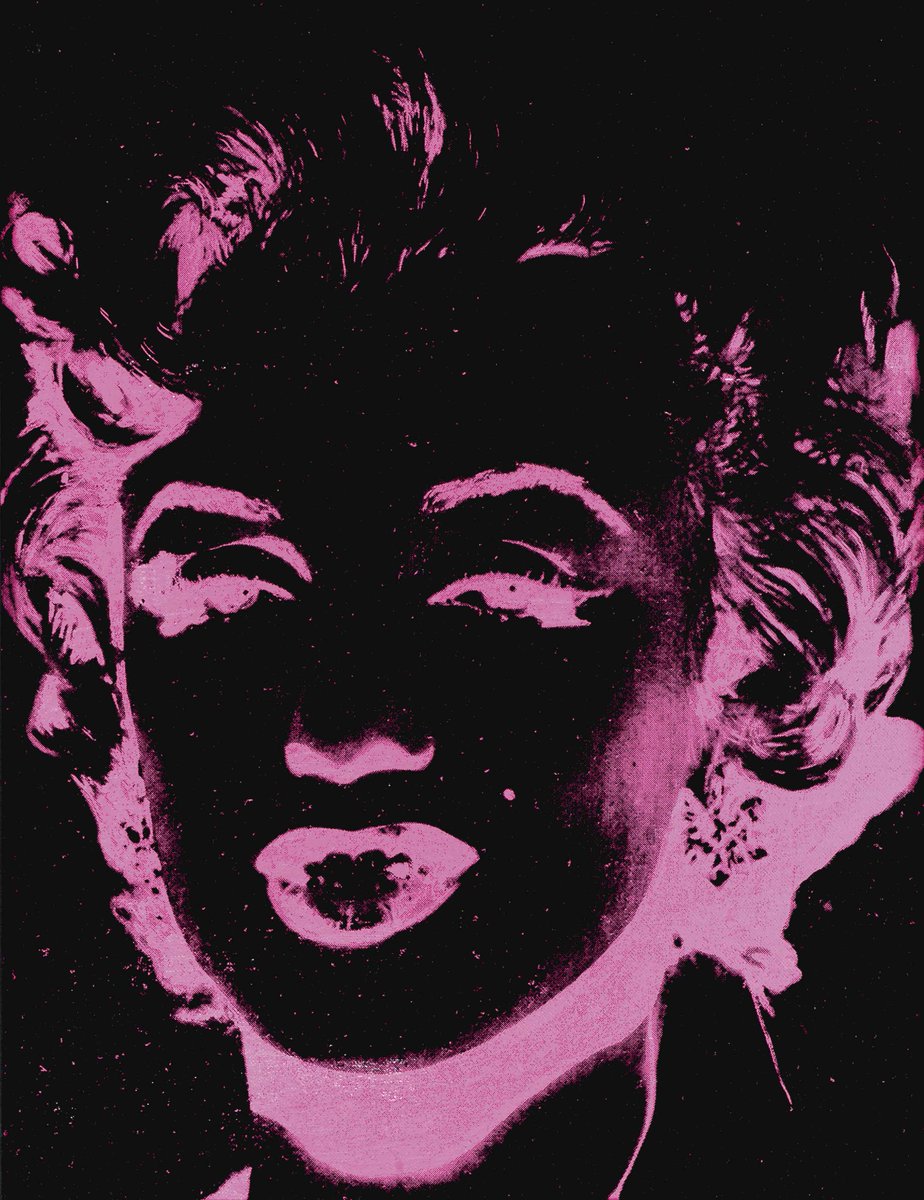
Andy Warhol, photographed by Evelyn Hofer at the Factory on January 29, 1964, stands before his iconic Liz silkscreens—a body of work that would become one of the defining series of 20th-century Pop art.
Drawn from a publicity still for Suddenly, Last Summer, the Liz paintings elevate Elizabeth Taylor into a repeated, mediated image—at once glamorous and ominous. The market history underscores the series’ significance: Liz #5 (Early Colored Liz) sold for $26.9 million in 2011; Liz [Early Colored Liz] achieved $19.3 million in 2019; Liz #3 [Early Colored Liz] now resides in the collection of the Art Institute of Chicago; and Silver Liz (diptych) realized $28 million in 2015.
Warhol himself framed the works through the lens of mortality and media obsession. Speaking to ARTnews in November 1963, he explained: “I started those a long time ago, when she was so sick and everybody said she was going to die. Now I’m doing them all over, putting bright colors on her lips and eyes.” Revisiting the theme in a 1966 interview with Cavalier, Warhol linked Taylor to his broader “death period,” alongside Marilyn Monroe and other celebrities whose fame was inseparable from public anxiety and loss.
As art historian David Bourdon observed in his book Warhol, Taylor was the perfect Warholian subject: universally recognizable, relentlessly covered by the tabloids, and emblematic of beauty shadowed by fragility. Despite their topical charge, Warhol’s images often originated from photographs taken years earlier—underscoring how repetition, distance, and reproduction were central to his vision. In Liz, celebrity becomes both icon and memento mori, suspended between desire, spectacle, and decay.
#andywarhol#elizabethtaylor#1960s#popart#liztaylor#silkscreenart#screenprint#modernart#warholsfactory#evelynhofer#andywarholart
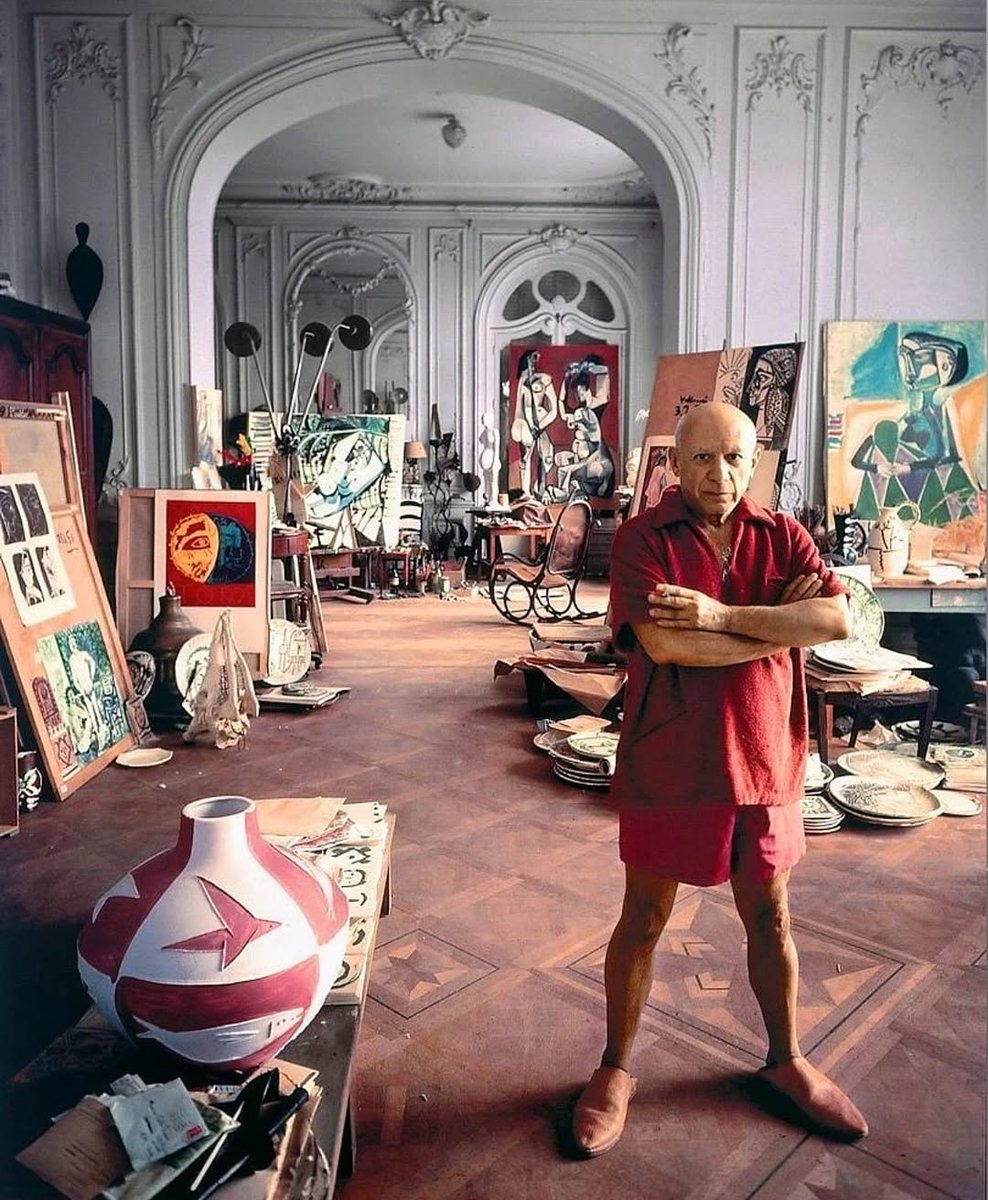
Pablo Picasso revolutionised modern art by constantly reinventing how the world could be seen, fractured, and reassembled. From the emotional intensity of his Blue and Rose periods to the radical invention of Cubism and the political force of Guernica, Picasso rejected artistic comfort in favour of perpetual experimentation. His restless creativity blurred the boundaries between painting, sculpture, printmaking, and ceramics, leaving an influence so vast that nearly every major movement of the 20th century exists in conversation with his work.
#PabloPicasso#ModernArt#Cubism#ArtHistory#20thCenturyArt#MasterArtist#BluePeriod#Guernica#AvantGarde
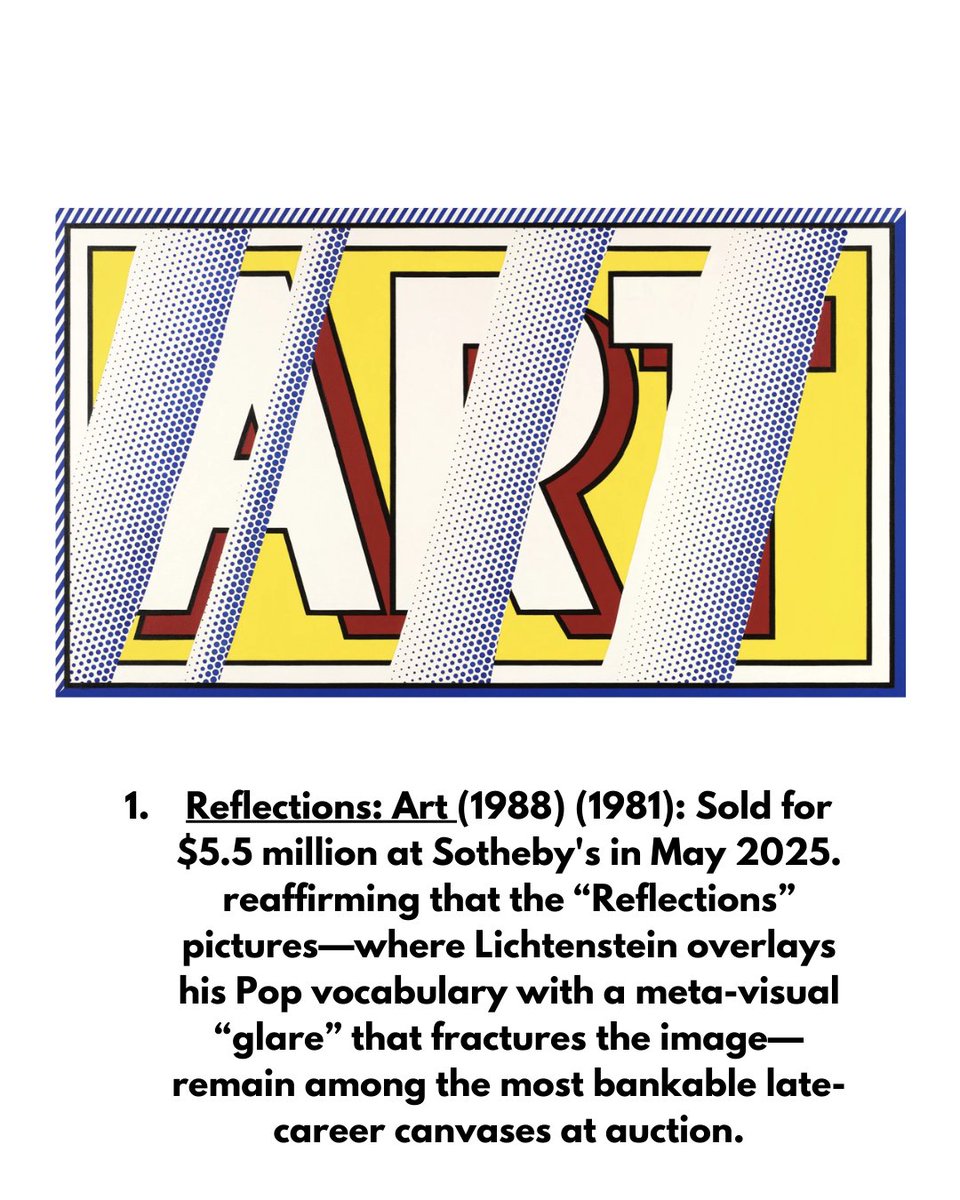
The top 5 Roy Lichtenstein works sold at auction in 2025:
1. Reflections: Art (1988) (1981) $5.5 million at Sotheby's in May.
2. Stretcher Frame with Cross Bars III (1968) $4.9 million at Sotheby's in May.
3. Purist Still Life With Pitcher (1975) $4.29 million in June 2025 at Sotheby’s London.
4. Reflections: Wimpy I (1988) $2.9 million at Sotheby's New York in September.
5. Eclipse of the Sun II (1975) $2.6 million at Sotheby’s New York in September.
#RoyLichtenstein#Art#Records
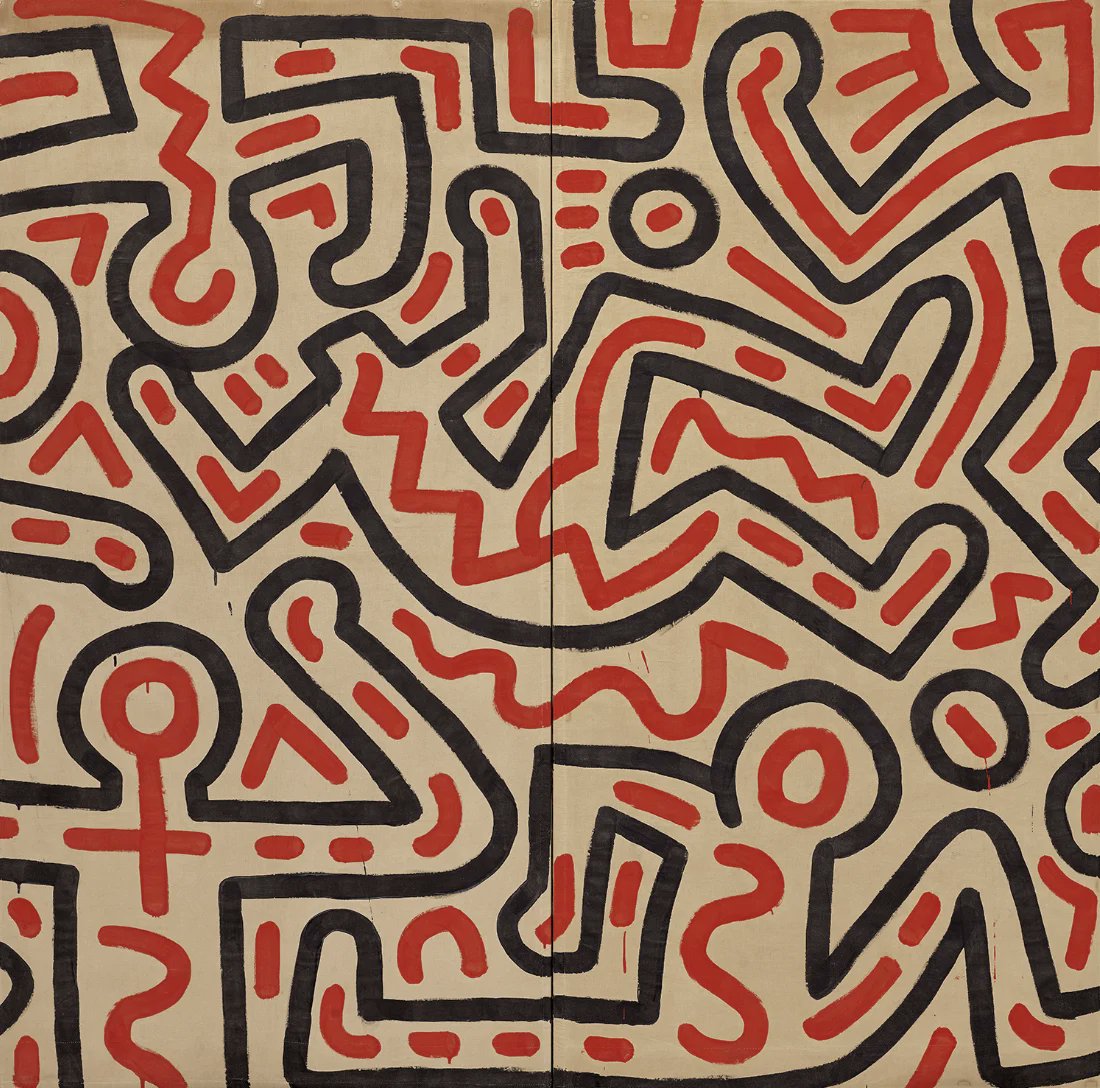
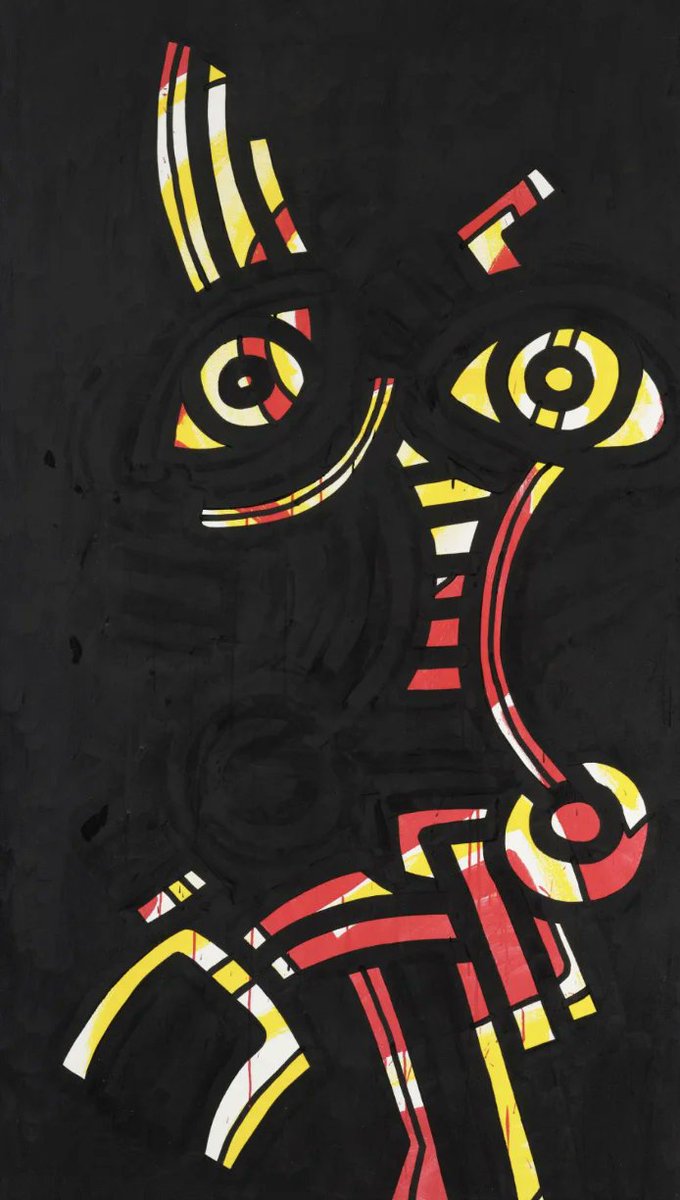
Top Keith Haring Auction Results of 2025
What This Signals for 2026
Keith Haring’s market in 2025 continued to behave like a true blue-chip segment of Post-War and Contemporary collecting: competitive bidding concentrates at the top for rare, high-impact works, while the broader market—especially prints—benefits from constant global visibility and a steady stream of new buyers entering through recognisable imagery. Haring’s appeal remains unusually “multi-channel.” Museum stature, pop-cultural fluency, and an imagery system that reads instantly at any scale all combine to keep demand resilient, even when the wider contemporary market becomes selective. In practical terms, 2025 showed that collectors will still pay meaningful premiums for early, historically “core” Haring (especially large tarpaulin works and standout examples from the 1980–85 breakthrough years), while works on paper and editions continue to trade actively as the most liquid entry point.
The headline moment: big, early Haring still commands the room
The clearest top-end signal this year came in New York during Sotheby’s November sales. A major Untitled (1981)—notable for its early date and for belonging to the rarer, historically loaded body of large tarpaulin works—sold for $2,246,000 at Sotheby’s on 19 November 2025. This result matters less as a single datapoint than as confirmation of a familiar pattern: when Haring’s medium, scale, and date align with the story of how he reshaped painting via the street, buyers treat it like a “category leader,” not merely an 80s trophy.
Strong secondary support: mid- to upper-six figures keep depth in the market
Beneath the seven-figure peak, Haring’s 2025 auction performance shows a healthy middle market—works that are still unmistakably “serious Haring,” even if not the rarest format.
Sotheby’s also saw Untitled (1987) sell for $482,600 in New York on 19 November 2025. While far below the year’s top tarpaulin result, it reinforces the depth of demand for strong 1980s material, particularly when scale and visual clarity are present and the work “reads” as classic Haring from across a room.
Spring season results at Christie’s added more confirmation that buyers remain willing to compete for signature imagery. In the Post-War and Contemporary Art Day Sale in New York on 15 May 2025, Christie’s recorded $403,200 for Red Dog, alongside another Haring Untitled at $327,600. These are not the kinds of prices that make headlines outside the trade, but they are exactly the prices that keep a market structurally strong: they show that demand is not limited to one “hero” lot a year, and that iconic motifs (the barking dog especially) remain bankable at auction.
Phillips and the role of “format”: when a work behaves like a statement piece
Phillips’ New York season also delivered a notable outcome in May, led by a large-scale Haring: the Phillips Day Sale press release highlights Two works: (i–ii) Untitled (1984) selling for $698,500 on 14 May 2025. Diptych formats and paired works can behave like “statement” objects in collections—they take wall space like a single major work, but offer the sense of a more substantial hold. The price suggests collectors continue to value “installation presence,” not just the recognisability of the motifs.
Works on paper: a quieter engine that still produces real momentum
Not every meaningful result is a six- or seven-figure event. Haring’s works on paper and smaller-format pieces often act as the market’s proving ground for liquidity and confidence.
In May, Untitled (1988) selling for $190,500 at Sotheby’s New York on 16 May 2025. This is a useful type of comp because it reflects what committed buyers will pay for strong works on paper when condition and scale are attractive. That price range tends to pull buyers upward from prints and, in many cases, becomes the next step after a collector builds a meaningful edition portfolio.
Prints in 2025: steady churn, global demand, and selective price pressure at the top
Haring’s print market isn’t one thing; it’s a ladder. At the entry end, buyers chase iconic images with clean colour and solid condition. At the top end, the market is driven by lifetime-signed examples, rare proofs, and complete sets that function like “mini retrospectives.”
Importantly, the broader data narrative for 2025 prints points toward tightening supply and better prices when quality is there. with Haring higher total sales value year-on-year and a rising average price, attributing it to a combination of reduced supply and stronger buyer competition.
What 2025 means for Haring’s market in 2026, with a focus on prints
The most likely 2026 dynamic is not a dramatic re-pricing of the entire market, but an intensification of selectivity—especially in editions. 2025’s auction story tells collectors that the top end is alive and well (tarpaulins and major 1980s works still bring the strongest bids), and that the middle market has depth (day sale results remain consistent). That combination usually benefits prints in two ways.
First, it keeps new buyers entering the category. When major works make strong prices, the “next best” route into the artist becomes editions, because they offer recognisable imagery, manageable price points, and easier logistics. Second, it pushes experienced collectors to upgrade. In 2026, expect continued premiums for lifetime-signed prints, complete sets, and rare proofs—while more common edition works will likely trade in a tighter band where condition, colour strength, and documentation decide the outcome.
If you’re thinking about Haring prints specifically going into 2026, the market is effectively asking for quality: buy the best example you can (clean margins, strong colour, correct paperwork), and where possible prioritise works that behave like “collection anchors”. That is where 2025’s auction results point most clearly: the demand is there, but it is increasingly disciplined—and that’s usually the healthiest kind of demand for a print market. Explore Keith Haring prints for sale and contact info@guyhepner.com for further details and latest availabilities.
2025 In Review: Picasso, Warhol, Basquiat, Haring – Game Changers
In 2025, the markets for Pablo Picasso, Andy Warhol, Jean-Michel Basquiat, and Keith Haring remain resilient and structurally essential to the global art ecosystem. These artists are more than historic figures or blue-chip names; they form the backbone of serious collections, anchoring museum holdings, private estates, and investment-grade portfolios across generations. Their dominance in original works and editions reflects a rare convergence of cultural significance, historical importance, and sustained market liquidity.
For seasoned collectors, these artists represent stability, legacy, and benchmark value. For newer buyers, they provide a clear entry point into post-war and contemporary art, offering recognizable imagery, deep scholarship, and well-established price transparency. Together, Picasso, Warhol, Basquiat, and Haring form a lineage that defines the modern canon and continues to shape value in the art market today.
Cultural Authority and Market Confidence
A defining characteristic of these four artists is their unrivaled cultural authority. Each fundamentally altered the visual language of their time, and this historical importance continues to underpin demand in 2025. Unlike trend-driven markets that fluctuate with taste or speculation, their works benefit from decades of institutional validation, scholarly attention, and sustained collector demand.
This authority translates into market confidence. At auction, their names consistently anchor evening sales, often providing the strongest guarantees and most competitive bidding. In private transactions, they serve as reference points for valuation and quality, frequently used to balance risk across more speculative acquisitions. In an era of increasingly selective buyers, their works are viewed as dependable, long-term assets rather than short-term opportunities.
### Picasso: The Foundation of Modern Collecting
Pablo Picasso remains the essential foundation of 20th-century art collecting. His unparalleled ability to reinvent his style across decades—from Cubism and Surrealism to Neo-Classicism and late abstraction—ensures collectors can engage with his work across a wide range of aesthetics, formats, and price points.
In 2025, Picasso’s market is defined by depth rather than volatility. Major paintings command headline results, but strength extends to works on paper, ceramics, and especially prints. His innovative printmaking practice, spanning linocuts, etchings, and lithographs, offers access to Picasso’s hand and imagination at comparatively accessible levels.
For both new and established collectors, Picasso functions as a cornerstone holding—frequently among the first acquisitions in major collections and often the last to be sold, underscoring his enduring relevance and unmatched historical weight.
### Warhol: Liquidity, Recognition, and the Power of Editions
Andy Warhol’s market in 2025 remains one of the most liquid and transparent in the art world. Few artists achieve such universal recognition while maintaining consistent demand across originals, unique works, and editions. Warhol’s genius lay in his imagery and his understanding of repetition, branding, and mass production—qualities that align seamlessly with contemporary collecting habits.
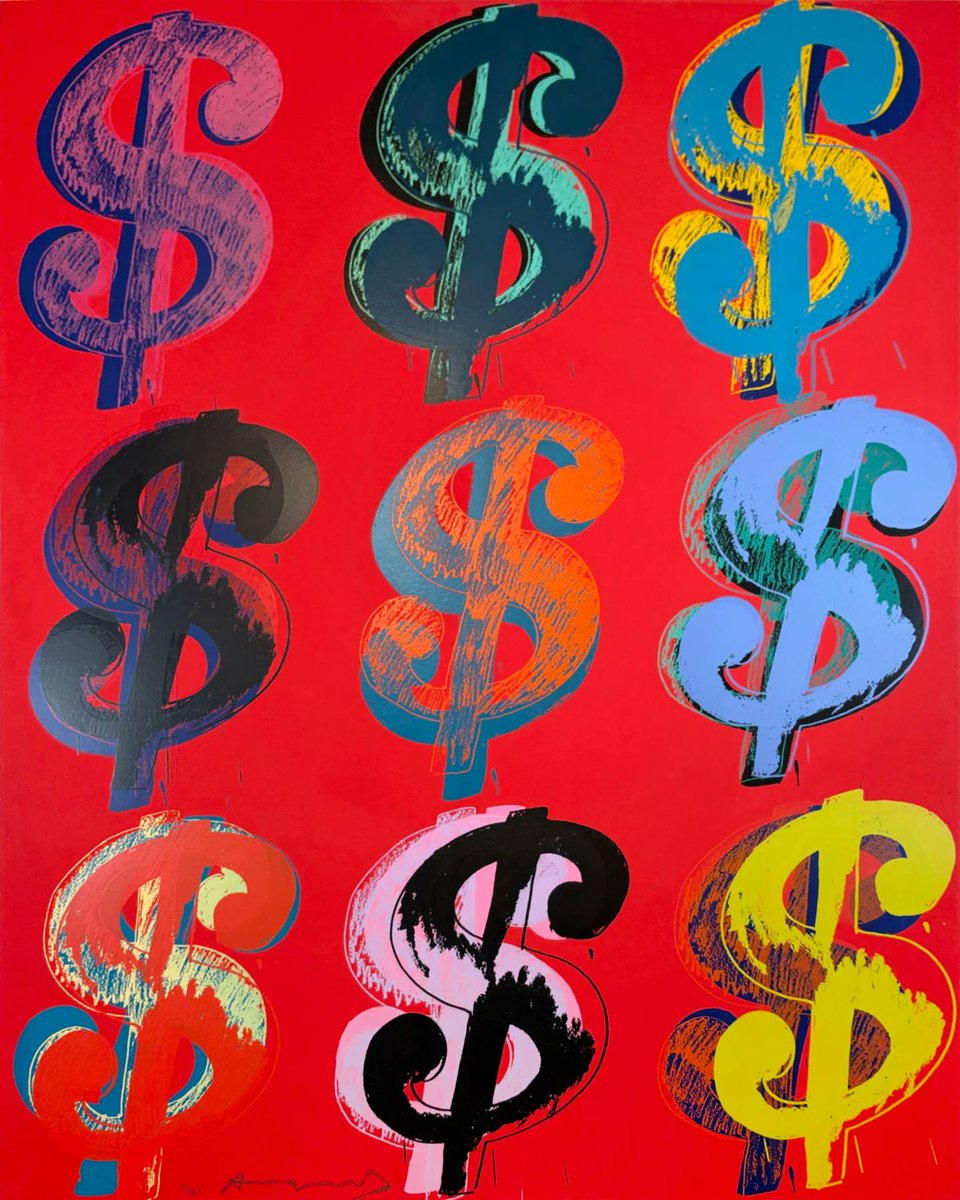
Prints remain a central pillar, with iconic series such as Marilyn, Flowers, Campbell’s Soup Cans, Endangered Species, and Ads dominating auction sales across editions and colorways. For collectors, Warhol prints offer recognizability, historical importance, and relative affordability, making them ideal entry points and anchors in advanced collections.
At the top end, unique works and paintings continue to set records, reinforcing Warhol’s position as a cultural and financial heavyweight. His market benefits from exceptional scholarship, extensive catalogue raisonnés, and decades of institutional support.
### Basquiat: Scarcity, Symbolism, and Generational Demand
Jean-Michel Basquiat’s market has matured significantly, occupying a unique position in 2025 defined by scarcity, symbolism, and cross-generational appeal. His paintings are among the most coveted in contemporary art, achieving eight- and nine-figure results, but depth extends beyond headline sales.
Basquiat’s works resonate with collectors through raw visual impact combined with intellectual and historical depth. His exploration of identity, power, race, and art history feels urgent and relevant, particularly to younger collectors. This has translated into strong demand across all segments.
Prints and works on paper, though limited, play an increasingly important role. As paintings become tightly held by institutions and long-term collectors, editions provide vital access, with intense competition reflecting limited supply and growing global demand.
### Haring: Accessibility, Global Reach, and Institutional Recognition
Keith Haring’s market is defined by accessibility, visual immediacy, and global recognition. While his imagery is instantly legible, his market has evolved with increasing institutional validation and scholarly reassessment driving renewed interest.
Haring’s commitment to public art and social engagement appeals to collectors valuing cultural impact alongside aesthetic clarity. In 2025, his prints are among the most actively traded in the post-war market, offering strong liquidity and broad appeal. Editions from key series perform consistently at auction, attracting both established and first-time buyers.
Unique works and early pieces have seen growing interest as collectors deepen engagement. Museums and foundations continue expanding holdings, reinforcing Haring’s position as a historically significant artist whose influence extends beyond the 1980s.
### Prints Versus Originals: A Shared Market Ecosystem
Across all four artists, the relationship between prints and originals is central to their markets. Prints play a foundational role in sustaining long-term demand and collector participation, providing accessibility, visibility, and continuity.
For newer collectors, prints offer meaningful engagement with museum-level artists alongside established scholarship and market transparency. For experienced collectors, editions complement higher-value works, enhance thematic depth, and provide flexibility.
In 2025, this dual-market structure strengthens overall resilience, with top-end demand reinforcing interest at entry and mid-levels, creating a virtuous cycle few other artists replicate.
### Auction Dominance and Global Reach
These artists consistently dominate auctions in New York, London, Paris, and Hong Kong, often serving as focal points for entire sales.
Their global reach involves collectors from Europe, North America, Asia, and the Middle East, reinforcing price stability and reducing reliance on any single market for long-term resilience.
### Why These Artists Remain Essential
Picasso, Warhol, Basquiat, and Haring offer clarity in a complex landscape. Their markets are underpinned by history, scholarship, and cultural relevance rather than speculation, providing confidence to experienced buyers and reassurance to newcomers.
More importantly, their works remain embedded in contemporary culture, influencing art, fashion, music, design, and visual language worldwide. This enduring relevance sustains their markets and secures their central position in serious collecting.
Whether as foundational holdings, strategic additions, or first major purchases, works by these four artists remain among the most meaningful and enduring acquisitions.
For current availabilities, contact info@guyhepner.com
December 16, 2025
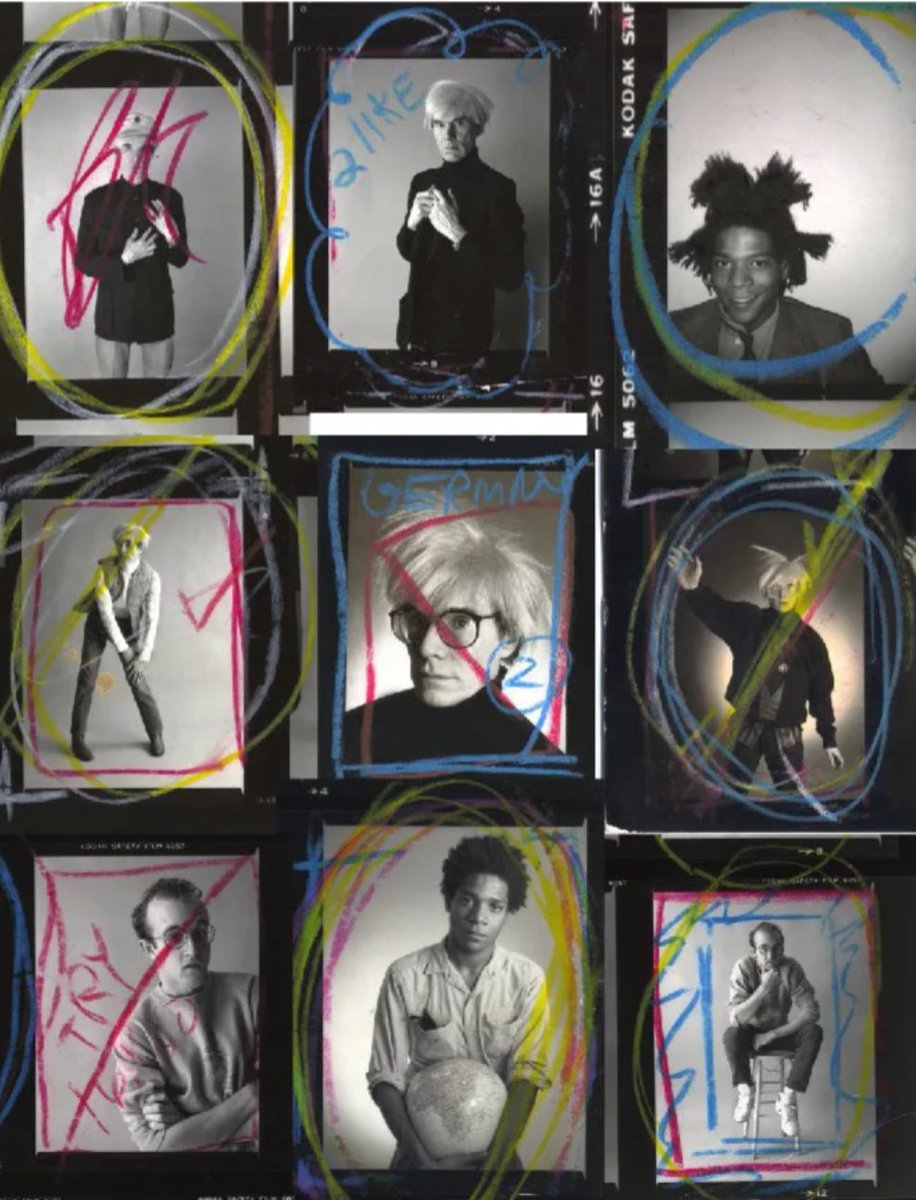
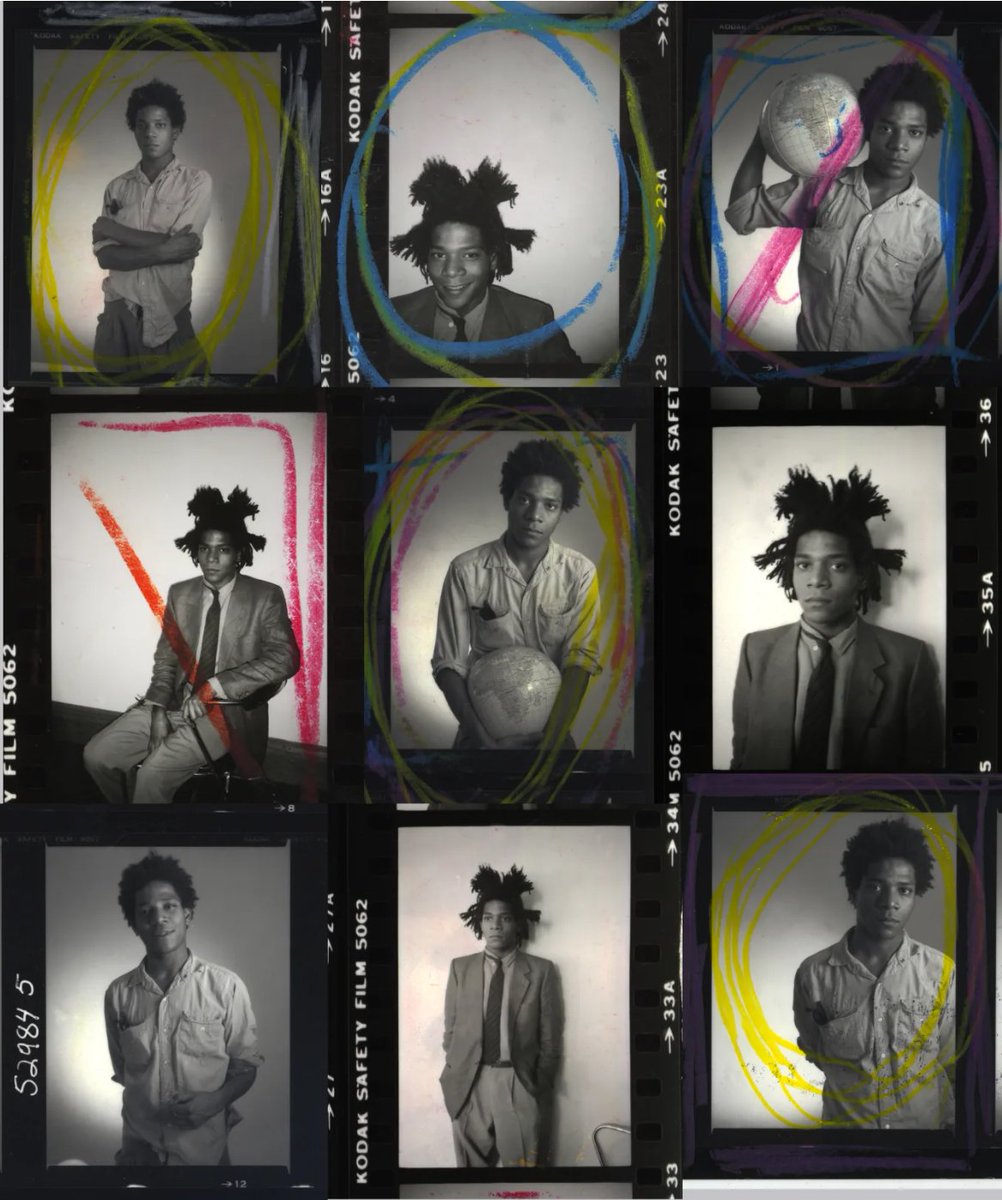
Christopher Makos’ contact sheets offer an intimate look at portrait-making at the center of New York’s downtown art scene in the early 1980s. By preserving entire rolls of film rather than a single finished image, Makos reveals the subtle shifts in posture, gaze, and expression that shaped the public personas of a generation.
The hand-drawn markings—circles, crosses, and intuitive edits—transform these sheets into artworks in their own right, blurring the line between documentation and intervention. Featuring figures such as Andy Warhol, Jean-Michel Basquiat, and Keith Haring, the works demystify the mythology of icons and foreground the human process behind their image-making.
#ChristopherMakos#AndyWarhol#JeanMichelBasquiat#KeithHaring#FineArtPhotography#ArtHistory#GuyHepner
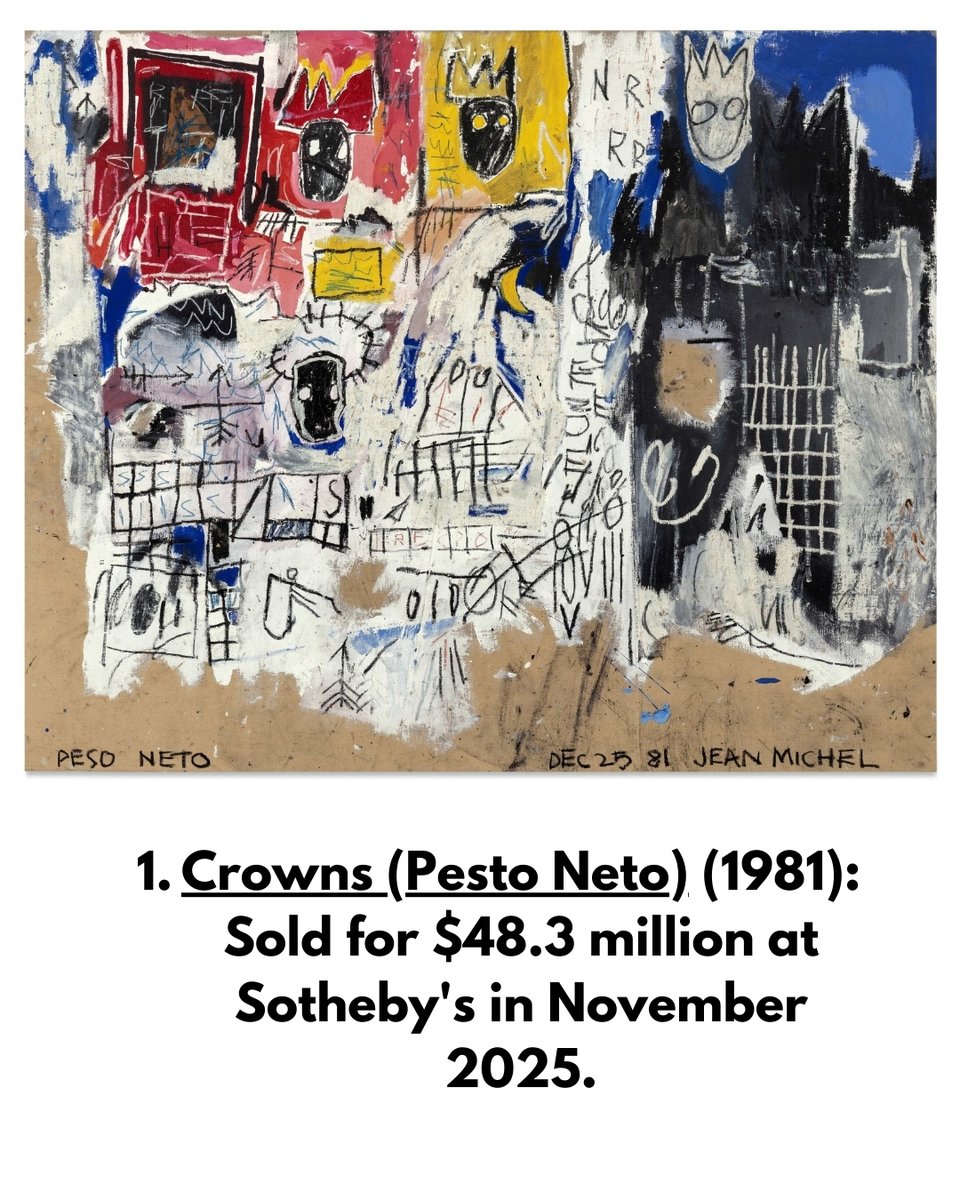
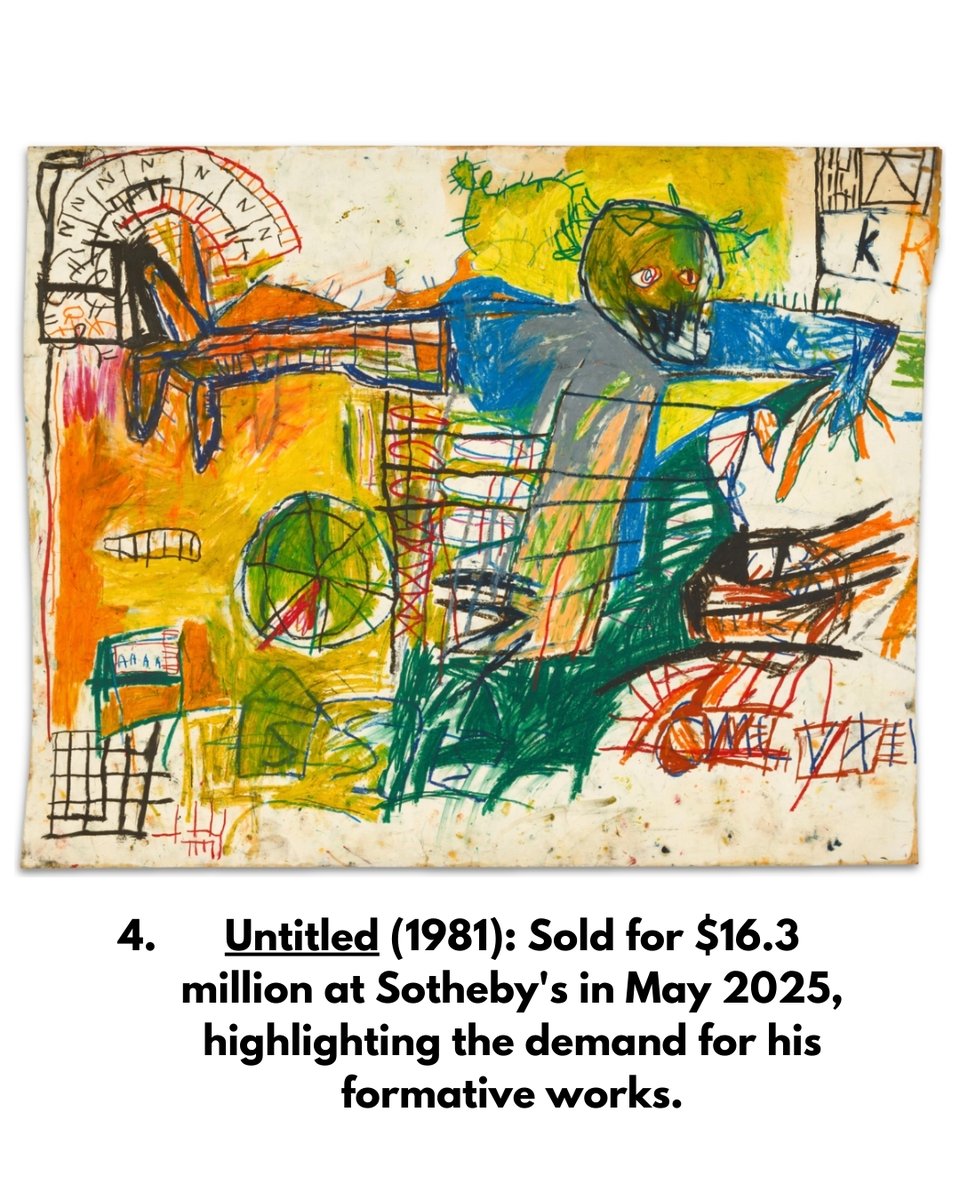
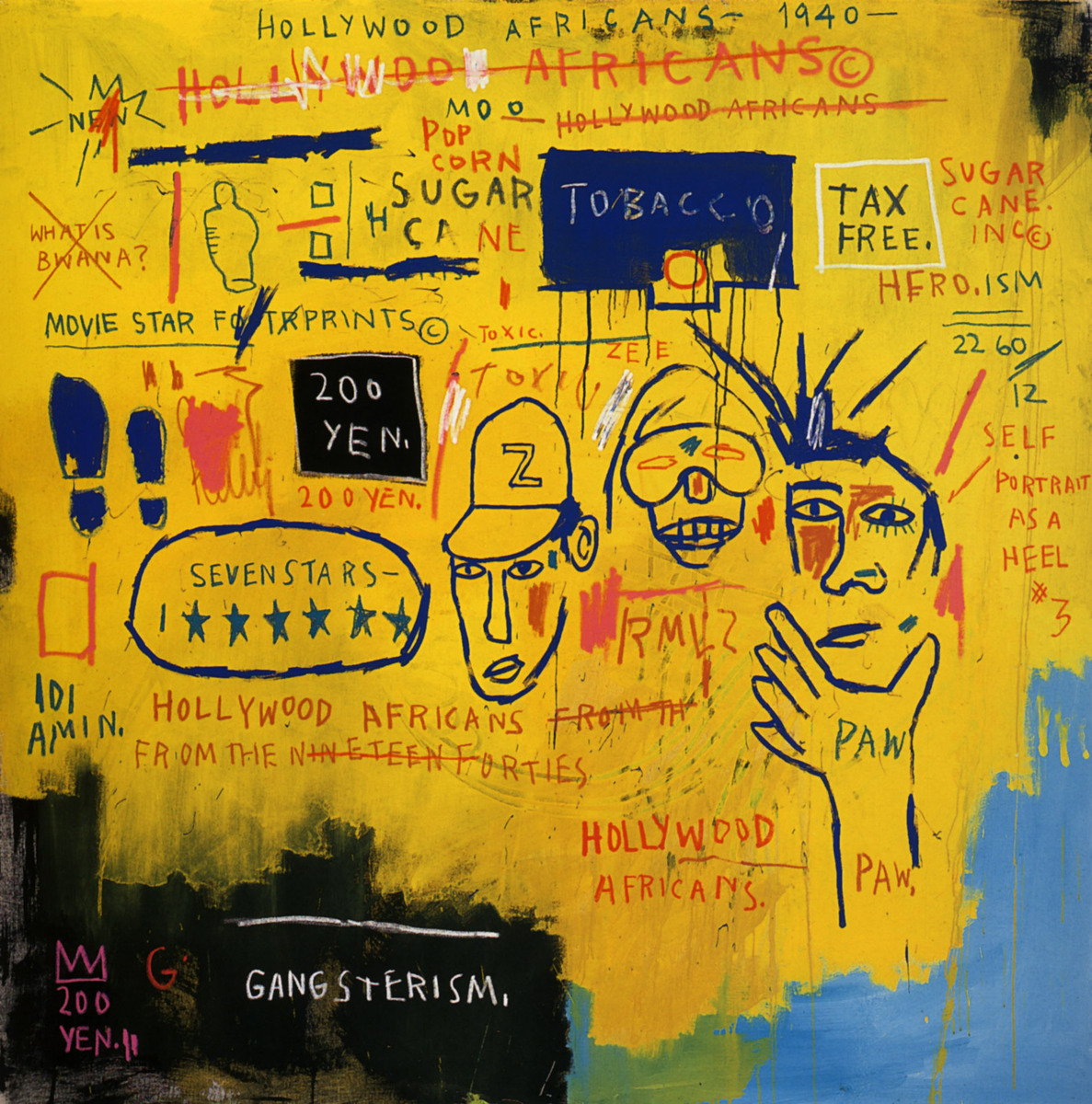
Here are the top 4 Jean-Michel Basquiat sold at auction in 2025:
1. Crowns (Pesto Neto) (1981): Sold for $48.3 million at Sotheby's in November 2025.
2. Baby Boom (1982): Sold for $23.4 million at Christie's in May 2025, a strong result for a triptych featuring signature imagery.
3. Red Man One: Sold for $22 million in September 2025 at Gaston & Sheehan Auctioneers.
4. Untitled (1981): Sold for $16.3 million at Sotheby's in May 2025, highlighting the demand for his formative works.
#basquiat
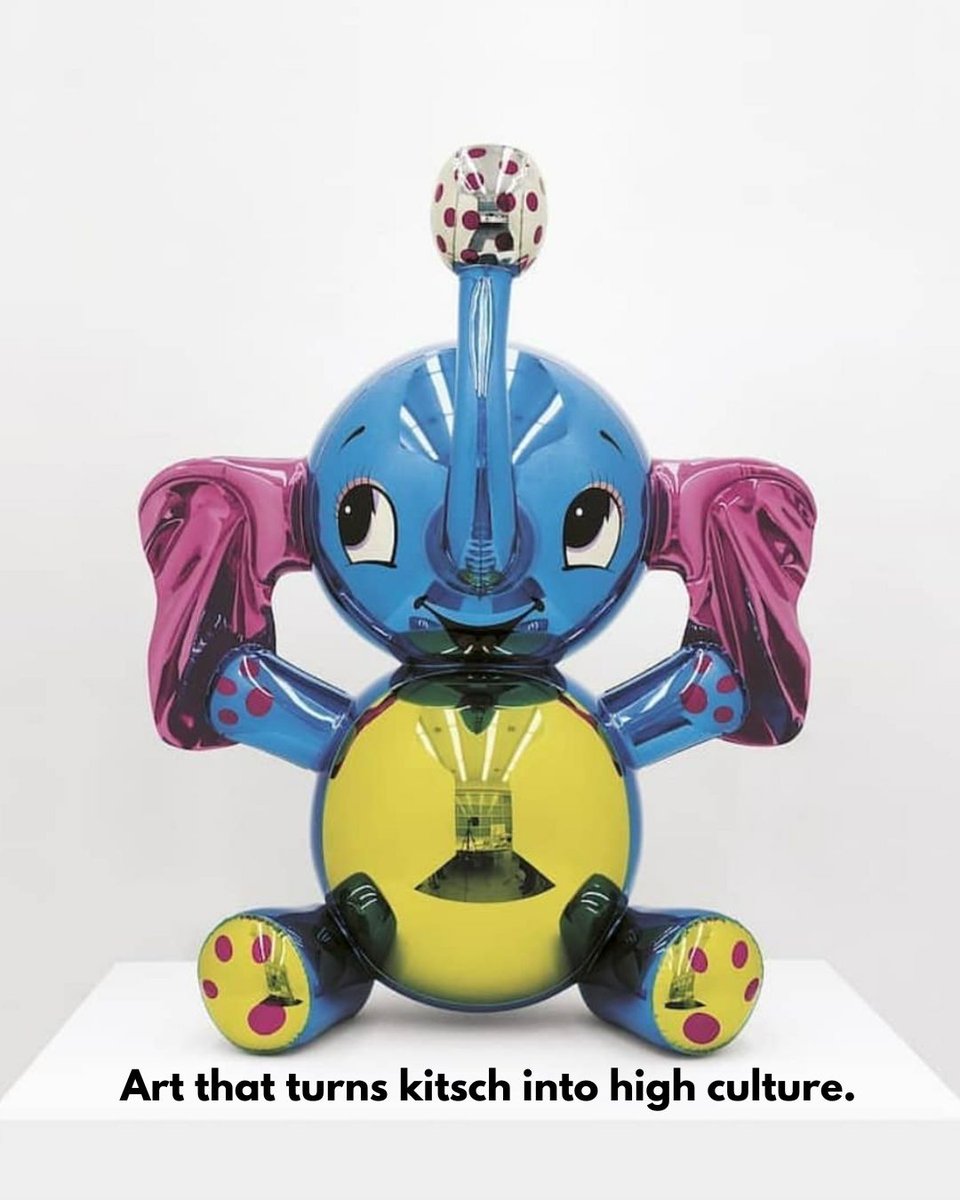
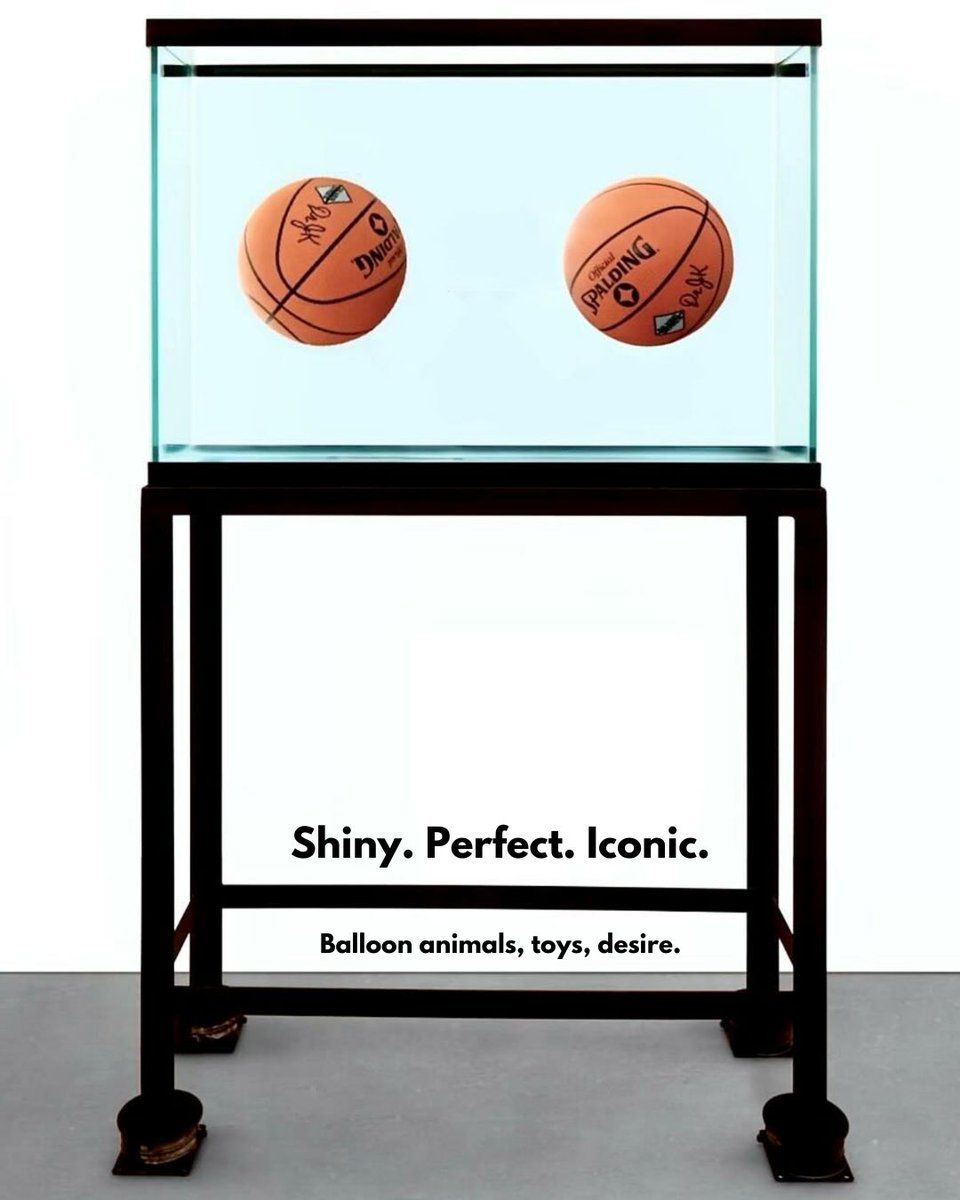
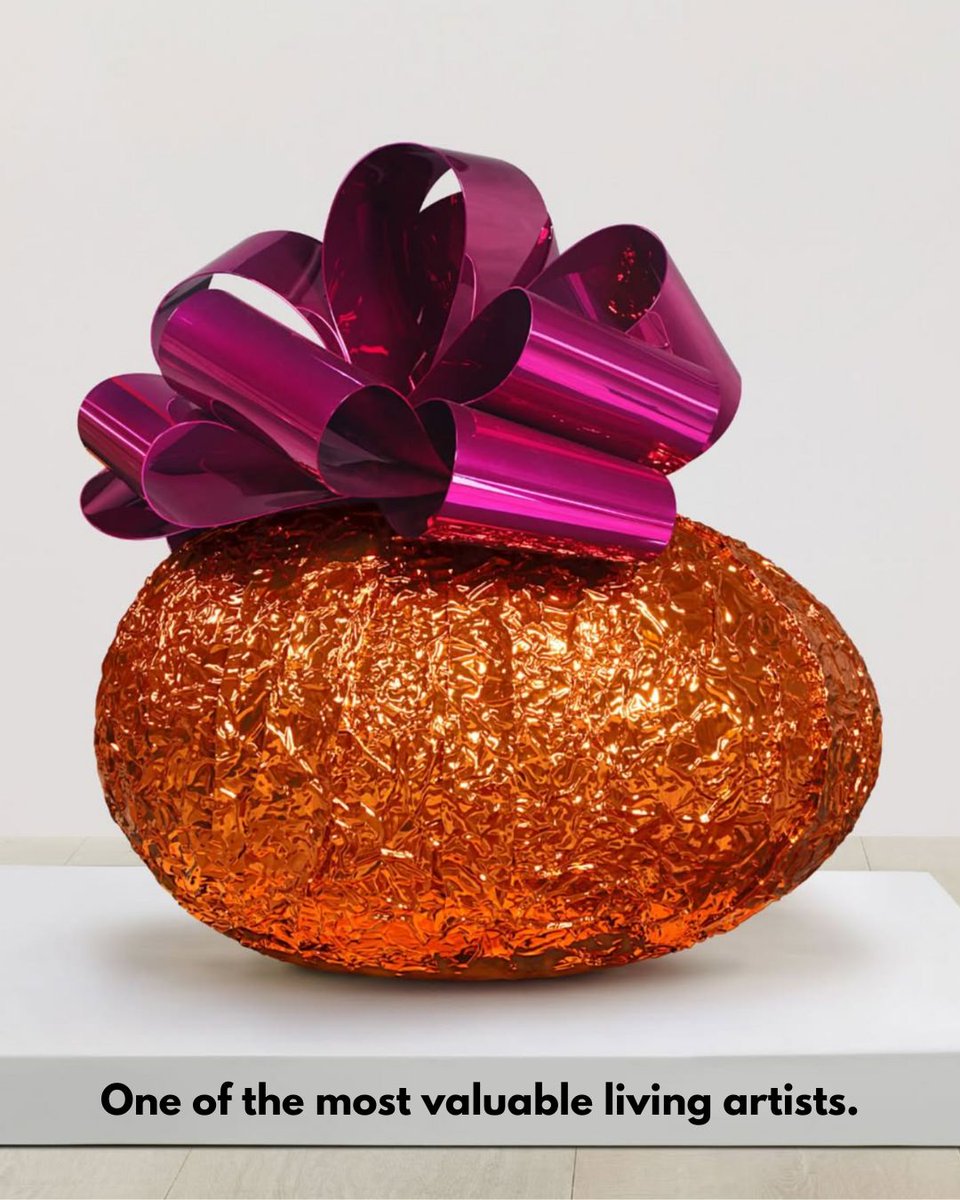
Jeff Koons has spent four decades redefining what contemporary art can be.
From polished balloon animals to hyper-perfect recreations of everyday objects, his work blurs the line between luxury, kitsch, and cultural symbolism. Koons elevates the familiar, turning childhood icons and consumer products into masterpieces engineered with aerospace precision.
His market impact is equally significant. Koons remains one of the most valuable living artists, with a global collector base and a visual language recognizable at a glance. Love him or critique him, his influence is undeniable: he transformed fabrication, branding, and spectacle into core components of modern art.
Koons isn’t just reflecting culture—he’s shaping the way we see value, desire, and art itself.
#JeffKoons#Koons#ContemporaryArt#BlueChipArt#ArtCollector#ArtMarket#PopArt#BalloonDog#ModernArt#ArtInvesting#ArtGallery#ArtAdvisor#SculptureArt#LuxuryArt#GuyHepner#NYCArt#ArtDaily#ArtWorld#ArtistSpotlight#FineArt
Robert Longo ‘Untitled (Formula One Car Crash)’ (2025).
Robert Longo is known for employing the delicate materiality of charcoal to underscore the fragility that lies behind all images of power. He has created several series that depict ‘absolutes’ at their moment of fulfilment: bombs exploding, waves crashing, sharks breaching or flowers blooming.
In this 2025 work, the compelling instant in which Formula 1 driver Fernando Alonso’s car became airborne and struck fellow racer Charles Leclerc’s vehicle during the 2018 Belgian Grand Prix is suspended in time. Debris projects outwards, silhouetted against a cloud of exquisitely rendered white smoke, in an example of the artist’s masterful chiaroscuro technique, which he deploys here to remarkable effect. Slowing the high-speed scene to a halt through the measured, attentive process of charcoal drawing, the artist lends it a counterintuitive sense of stillness and meditation.
#RobertLongo@robert_longo_studio#ThaddaeusRopac
Images: Robert Longo, Untitled (Formula One Car Crash), 2025. Charcoal on mounted paper. 177.8 × 304.8 cm (70 × 120 in).
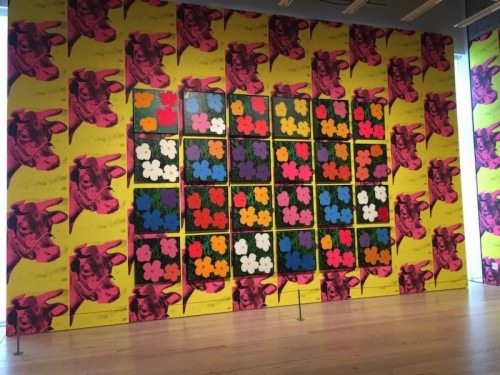
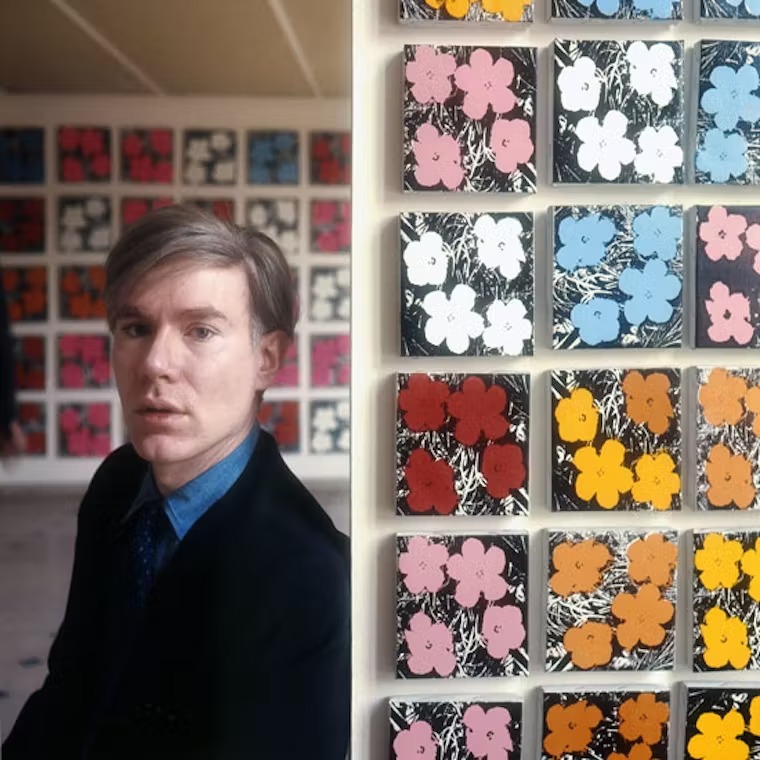
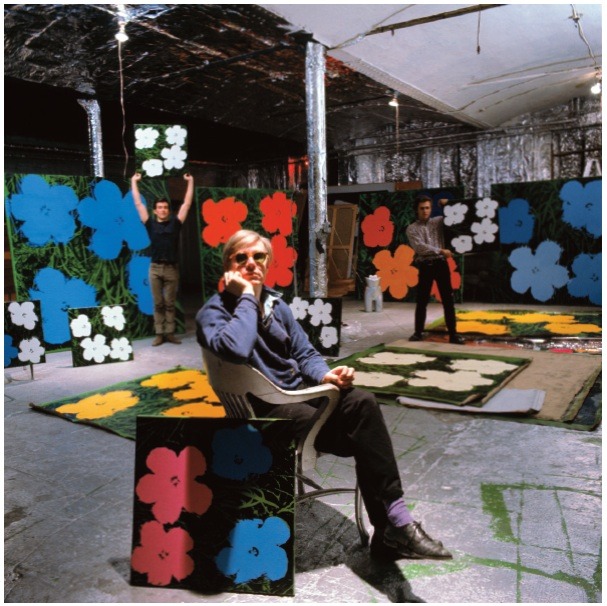
Andy Warhol's Flower paintings from 1964 represent a significant departure from his iconic depictions of consumer products and celebrity portraits. Inspired by a photograph of hibiscus blossoms in the June 1964 issue of Modern Photography magazine, Warhol embarked on a series of vibrant and colorful flower paintings that would come to define a pivotal moment in his artistic career.
Unlike Warhol's earlier works, which often explored themes of mass production and consumer culture, the Flower paintings exude a sense of joy, beauty, and serenity. Rendered in bold and contrasting hues against monochromatic backgrounds, these paintings capture the essence of the flowers while simultaneously transcending their natural form to become iconic symbols of pop art.
Warhol's Flower paintings are characterized by their graphic simplicity and repetition, with multiple iterations of the same floral motif arranged in grid-like compositions. This repetition serves to underscore Warhol's fascination with mass production and the mechanized reproduction of images, while also imbuing the paintings with a sense of rhythm and dynamism.
#AndyWarhol#PopArt#Flowers
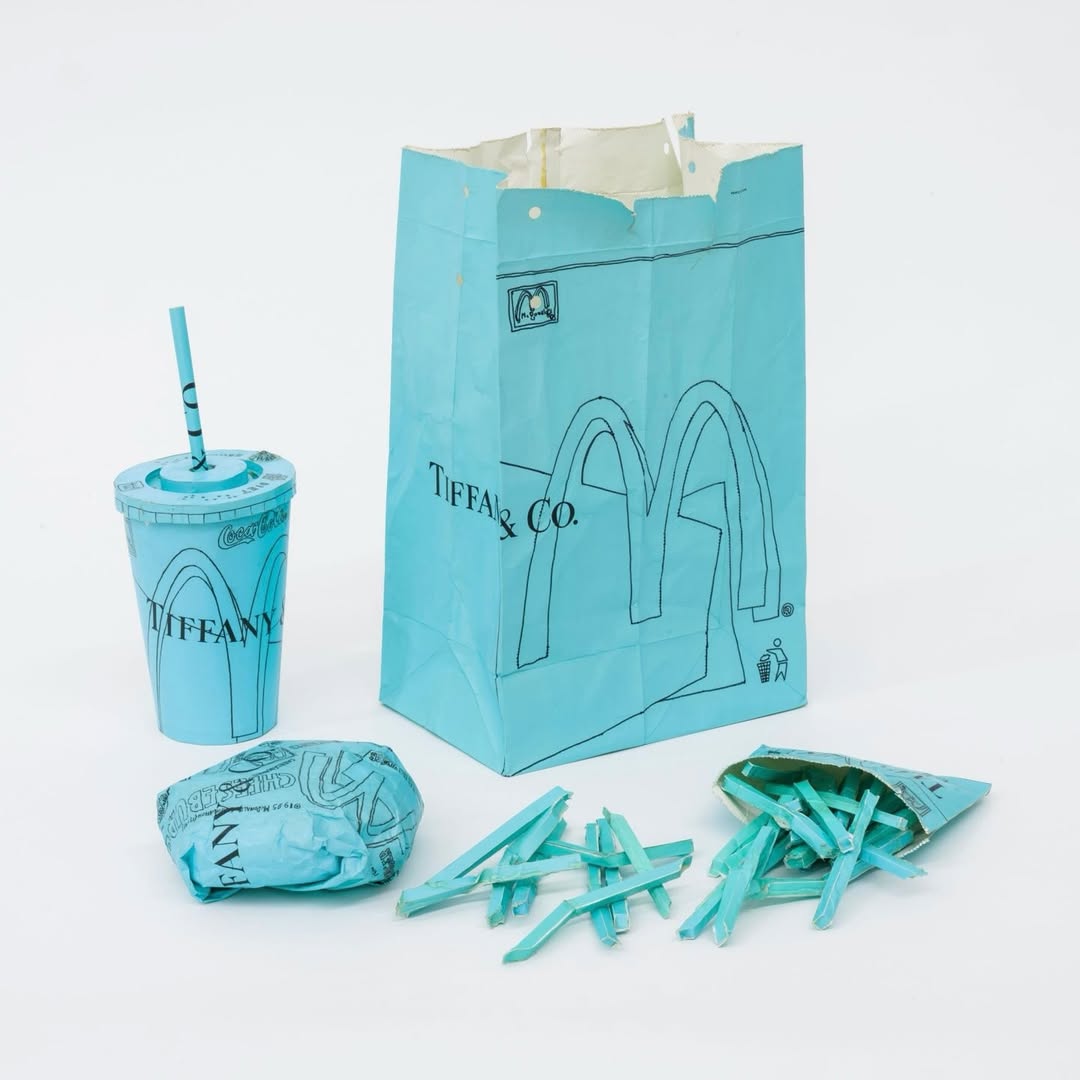
Tom Sachs
Tiffany Gift Meal, 1999.
On view now in Room 303 at Museo Guggenheim Bilbao.
Found cardboard, paper, ink, and thermal adhesive.
13 1/2 x 34 x 29 in.
S/N: 1999.128