Jordi Cabot

10.5K posts

Jordi Cabot banner
Jordi Cabot

Jordi Cabot

@ingdesoftware

Dirijo la unidad de I+D+i en Ing de Software en el LIST (Luxemburgo). Hablando de UML, DSLs, programación, OSS, IA.... Also in English: @JordiCabot


Barcelona, Cataluña انضم Ocak 2016
225 يتبع1.4K المتابعون
Anna Navarro i Descals (Schlegel)
Catalunya no només perd població està perdent capacitat de futur. Segons la @FIEC1 ja tenim 427.423 catalans a l’exterior. +5,1% en un any. I gairebé un 40% dels que marxen tenen educació superior. Això no és mobilitat. És com una fuga de talent estructural. Però el problema és encara més profund: Molts d’aquests catalans: • no poden votar amb facilitat • no poden tornar sense una penalització econòmica o professional molt gran • no tenen cap via real per transferir el coneixement adquirit fora Sense adonar-nos estem expulsant talent (o digueu-ho com voluguis) … i després bloquejant el seu retorn. Cap país competitiu fa això. Els ecosistemes que lideren el món (Silicon Valley, Singapur, Japó) fan exactament el contrari: atrauen, retenen i, sobretot, RECUPEREN el talent. Et fan tornar. Catalunya encara no té una estratègia real de “brain circulation”. Sense això: no hi ha economia del coneixement no hi ha sobirania digital no hi ha competitivitat global Això no va de dades. Va de model de país. Cal passar de la fuga de talent… a una política activa de retorn, connexió i influència global. I cal fer-ho ja. #Talent #Catalunya #BrainDrain #EconomiaDigital #PolíticaPública #CatalansAlMón #AdeuAlTalent #braincirculation
Català
70
562
896
20.9K
Jordi Cabot أُعيد تغريده
Jordi Cabot
Jordi Cabot@JordiCabot·
Jordi Cabot tweet media
ZXX
0
1
3
252
Jordi Cabot أُعيد تغريده
Jordi Cabot
Jordi Cabot@JordiCabot·
13. #Timing is everything‼️‼️ No idea is so unique that only you will ever think of it. You are not that #smart. ☝️This is one of my favorite pieces of advice for #junior #researchers, who tend to think they are sooooo clever that nobody else is having the same idea. Well...
English
1
1
0
206
Jordi Cabot أُعيد تغريده
Jordi Cabot
Jordi Cabot@JordiCabot·
🚨#SLE (Software Language Engineering) Abstract deadline in 1w!🚨 Remember we accept: ✅Full ✅New ideas/vision ✅Tool papers You can even submit papers that do not talk about #AI 🤯😱 (but no worries, you can also submit AI-related papers 😉) conf.researchr.org/home/sle-2026
English
0
1
2
134
Jordi Cabot أُعيد تغريده
Thomas Wolf
Thomas Wolf@Thom_Wolf·
Shifting structures in a software world dominated by AI. Some first-order reflections (TL;DR at the end): Reducing software supply chains, the return of software monoliths – When rewriting code and understanding large foreign codebases becomes cheap, the incentive to rely on deep dependency trees collapses. Writing from scratch ¹ or extracting the relevant parts from another library is far easier when you can simply ask a code agent to handle it, rather than spending countless nights diving into an unfamiliar codebase. The reasons to reduce dependencies are compelling: a smaller attack surface for supply chain threats, smaller packaged software, improved performance, and faster boot times. By leveraging the tireless stamina of LLMs, the dream of coding an entire app from bare-metal considerations all the way up is becoming realistic. End of the Lindy effect – The Lindy effect holds that things which have been around for a long time are there for good reason and will likely continue to persist. It's related to Chesterton's fence: before removing something, you should first understand why it exists, which means removal always carries a cost. But in a world where software can be developed from first principles and understood by a tireless agent, this logic weakens. Older codebases can be explored at will; long-standing software can be replaced with far less friction. A codebase can be fully rewritten in a new language. ² Legacy software can be carefully studied and updated in situations where humans would have given up long ago. The catch: unknown unknowns remain unknown. The true extent of AI's impact will hinge on whether complete coverage of testing, edge cases, and formal verification is achievable. In an AI-dominated world, formal verification isn't optional—it's essential. The case for strongly typed languages – Historically, programming language adoption has been driven largely by human psychology and social dynamics. A language's success depended on a mix of factors: individual considerations like being easy to learn and simple to write correctly; community effects like how active and welcoming a community was, which in turn shaped how fast its ecosystem would grow; and fundamental properties like provable correctness, formal verification, and striking the right balance between dynamic and static checks—between the freedom to write anything and the discipline of guarding against edge cases and attacks. As the human factor diminishes, these dynamics will shift. Less dependence on human psychology will favor strongly typed, formally verifiable and/or high performance languages.³ These are often harder for humans to learn, but they're far better suited to LLMs, which thrive on formal verification and reinforcement learning environments. Expect this to reshape which languages dominate. Economic restructuring of open source – For decades, open-source communities have been built around humans finding connection through writing, learning, and using code together. In a world where most code is written—and perhaps more importantly, read—by machines, these incentives will start to break down.⁴ Communities of AIs building libraries and codebases together will likely emerge as a replacement, but such communities will lack the fundamentally human motivations that have driven open source until now. If the future of open-source development becomes largely devoid of humans, alignment of AI models won't just matter—it will be decisive. The future of new languages – Will AI agents face the same tradeoffs we do when developing or adopting new programming languages? Expressiveness vs. simplicity, safety vs. control, performance vs. abstraction, compile time vs. runtime, explicitness vs. conciseness. It's unclear that they will. In the long term, the reasons to create a new programming language will likely diverge significantly from the human-driven motivations of the past. There may well be an optimal programming language for LLMs—and there's no reason to assume it will resemble the ones humans have converged on. TL; DR: - Monoliths return – cheap rewriting kills dependency trees; smaller attack surface, better performance, bare-metal becomes realistic - Lindy effect weakens – legacy code loses its moat, but unknown unknowns persist; formal verification becomes essential - Strongly typed languages rise – human psychology mattered for adoption; now formal verification and RL environments favor types over ergonomics - Open source restructures – human connection drove the community; AI-written/read code breaks those incentives; alignment becomes decisive - New languages diverge – AI may not share our tradeoffs; optimal LLM programming languages may look nothing like what humans converged on ¹ x.com/mntruell/statu… ² x.com/anthropicai/st… ³ wesmckinney.com/blog/agent-erg…#issuecomment-3717222957" target="_blank" rel="nofollow noopener">github.com/tailwindlabs/t…
English
95
286
1.8K
1M
Jordi Cabot أُعيد تغريده
Yes, But
Yes, But@_yesbut_·
Yes, But tweet media
ZXX
57
981
12.1K
172.3K
Jordi Cabot أُعيد تغريده
Andrés
Andrés@pelusete·
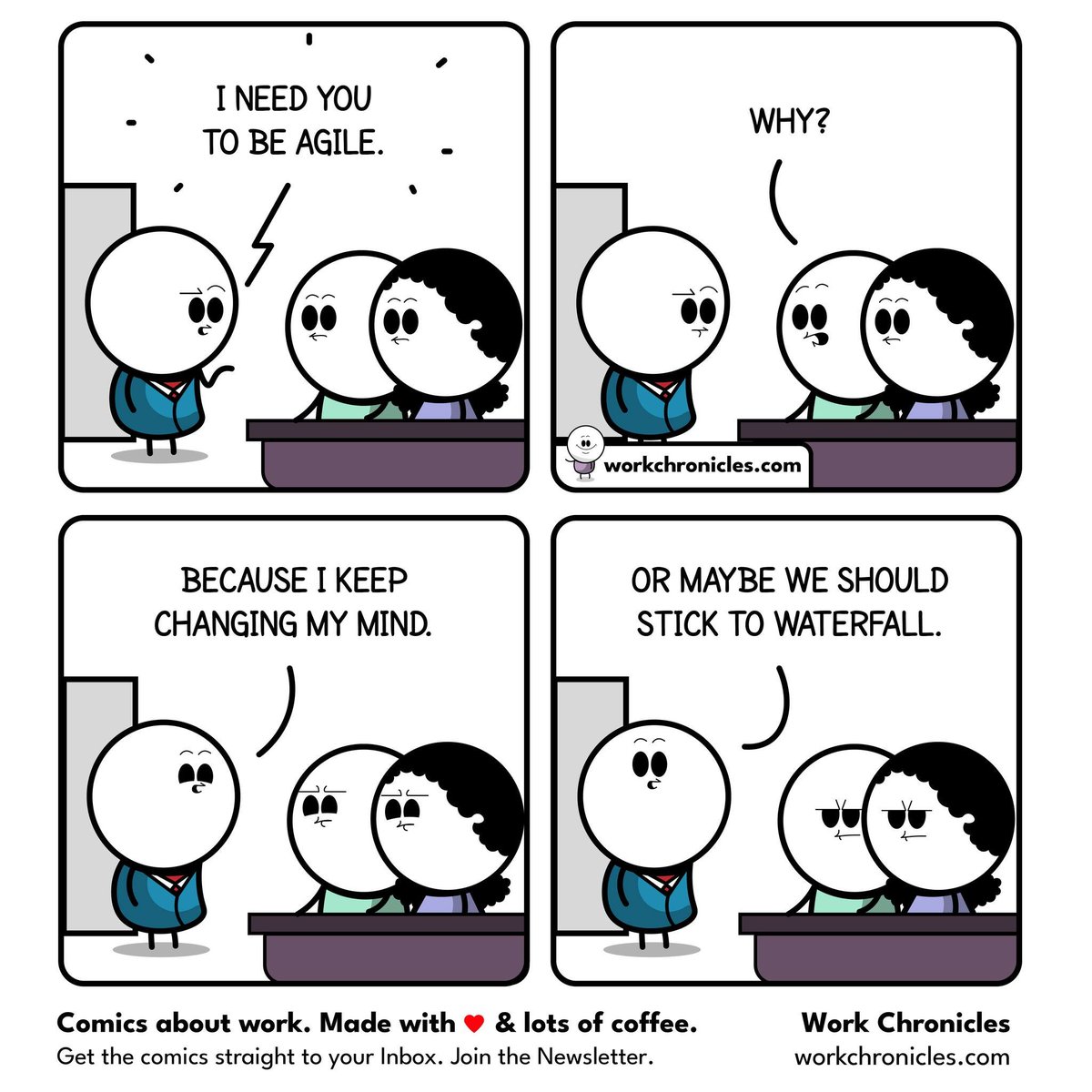
@DanielBlancoSWE Lo que no consigo entender es cómo han pasado todos los programadores de odiar documentar a querer hacer solo eso 🤣
Español
2
1
15
733
Jordi Cabot أُعيد تغريده
Jordi Cabot
Jordi Cabot@JordiCabot·
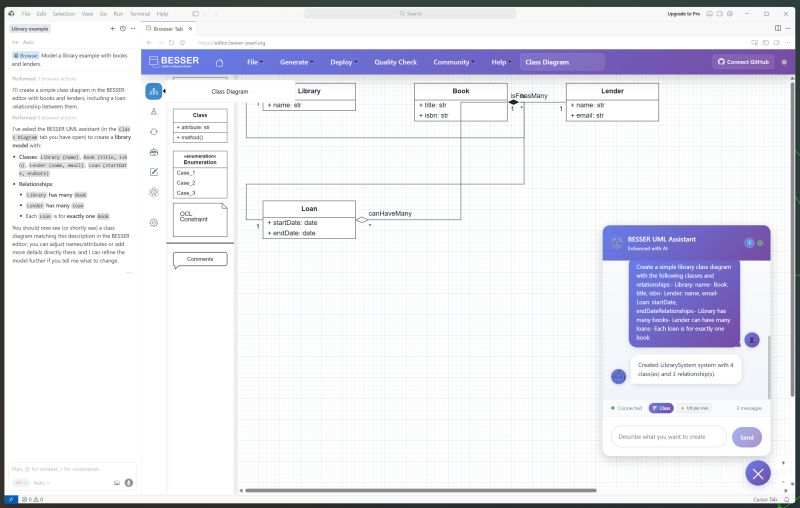
An AI (#Cursor) using another AI (our #vibemodeling editor) to create a #uml model in our web editor 🤯🫢 (shown by Bernhard Schenkenfelder )
Jordi Cabot tweet media
English
1
2
4
289
Jordi Cabot أُعيد تغريده
Jordi Cabot
Jordi Cabot@JordiCabot·
🎉 Releasing over 5000 B-UML models for you to "play" with. Each model comes with some metadata and its own #python implementation and can be opened with the BESSER online modeling editor. modeling-languages.com/b-uml-dataset/
English
0
2
4
136
Jordi Cabot أُعيد تغريده
Jordi Cabot
Jordi Cabot@JordiCabot·
😭 1st day at work - 3 papers rejected in 3 diff confs. How is 2026 going for you? Good excuse to revisit my advice 142 - Research is not fair (but neither is life) and 42 - Good research gets eventually accepted (for more real-life advice research-rants.com )
English
0
3
0
118