Project Mole@projectmole
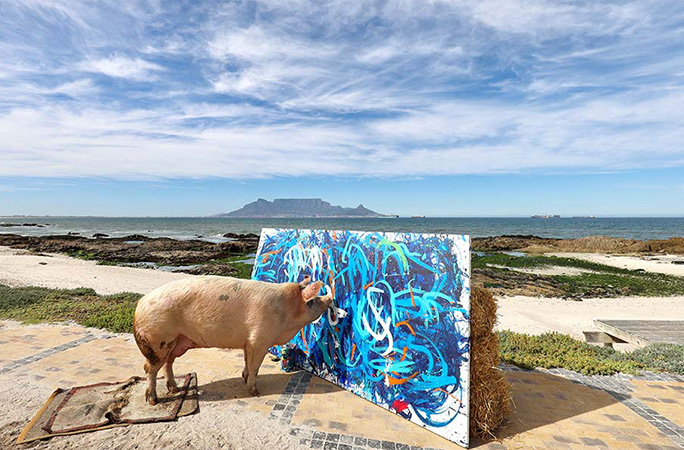
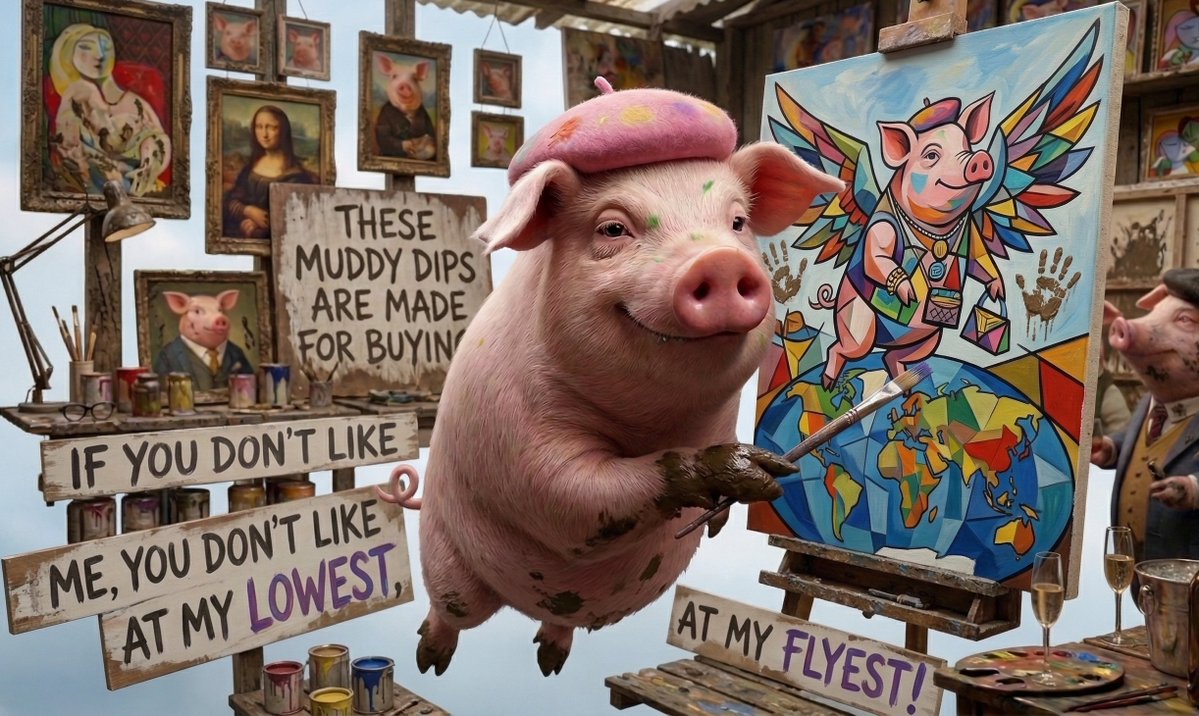
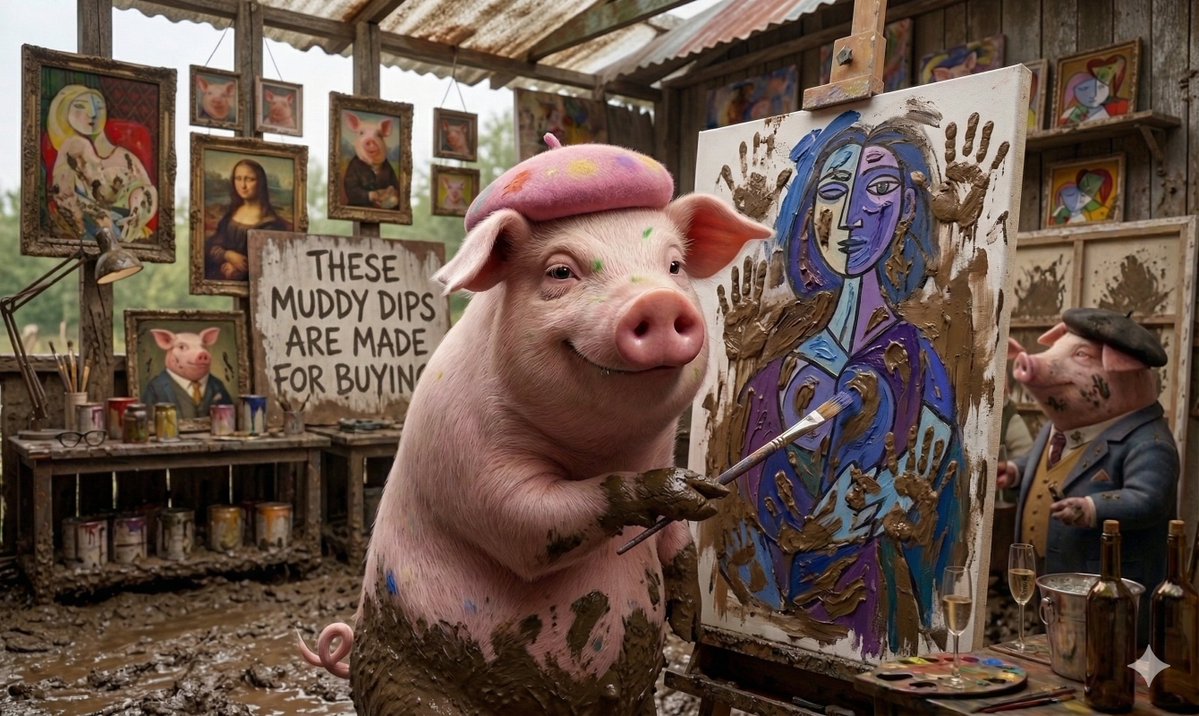
The world record Painting Pig $PIGCASSO
CA:
78FqBTpnKvurEwQ94fgP3HqxfxSduKFjGF1TGxZqpump
There’s a pig that became a million-dollar artist.
Not as a meme. Not as a one-week viral gimmick.
A real market formed around her work. Collectors, exhibitions, brand deals, global attention.
Her name was Pigcasso.
In 2021, one of her paintings, Wild and Free, sold for around $25,000, setting the world record for the most expensive artwork ever created by an animal
That number matters.
Because it’s high enough that you can’t dismiss it, but grounded enough that you can’t just call it insanity.
You actually have to think about it.
Pigcasso’s story starts in 2016.
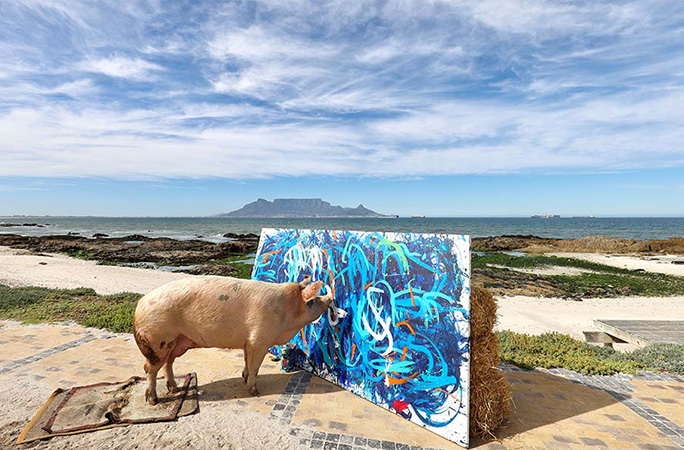
She was rescued as a piglet from a slaughterhouse in South Africa and taken to a sanctuary run by Joanne Lefson.
At the beginning, there was nothing special about her.
Except one small detail.
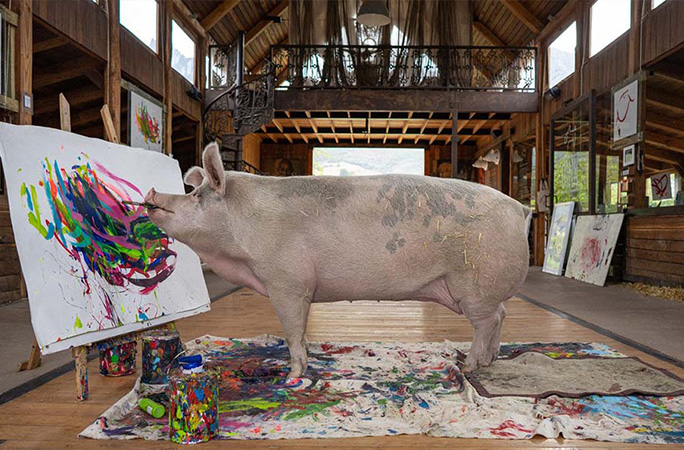
She destroyed everything in her enclosure… except paintbrushes.
That detail changed everything.
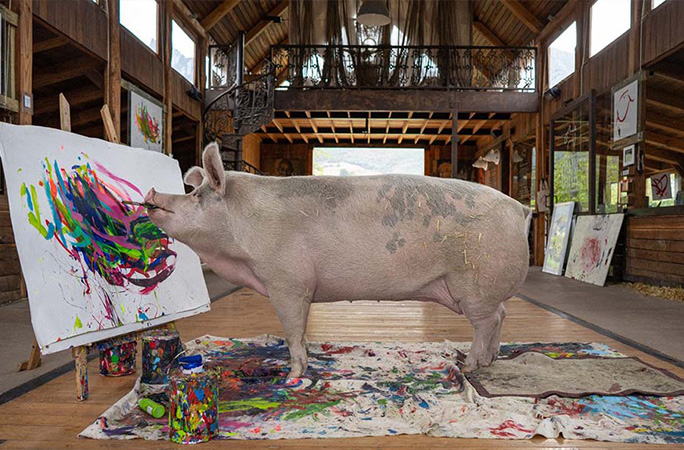
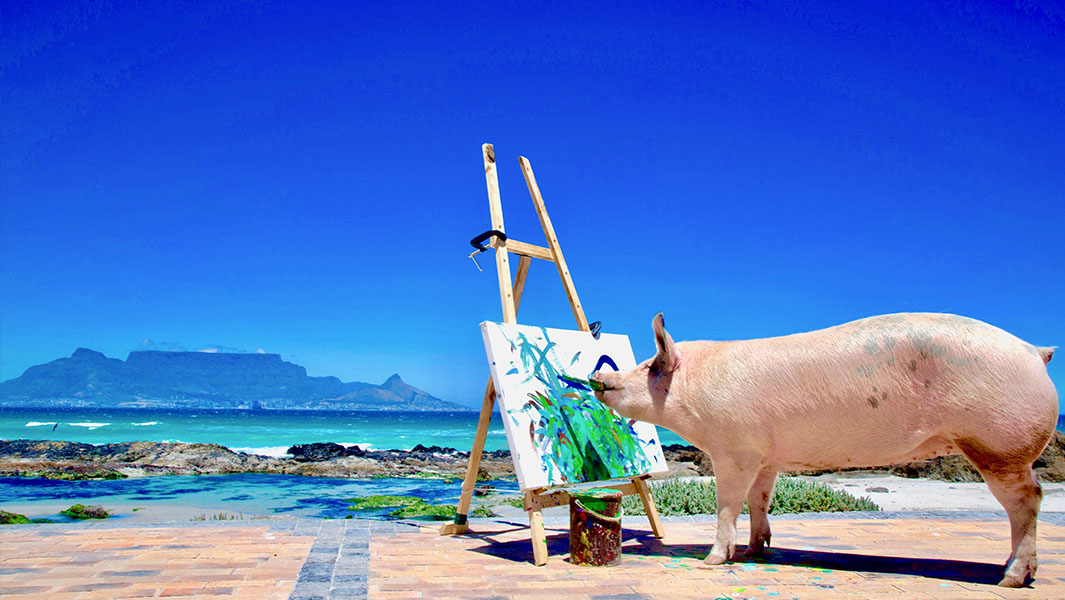
Lefson introduced paint and canvas. Pigcasso learned to hold a brush in her mouth and move it across the surface.
No formal training. No intention in the human sense.
Just repetition, instinct, and reinforcement.
Over time, it became consistent enough to produce actual bodies of work.
From there, it scaled.
Pigcasso created 400+ paintings, held exhibitions across Europe, and built a global collector base
Total sales crossed $1 million over her lifetime
Celebrities owned her work. Brands like Swatch collaborated with her.
At some point, this stops being novelty.
It becomes a system.
So what are people actually buying?
Because it’s obviously not just paint.
If you gave someone the same painting with no context, it has no value.
The value exists around the object, not inside it.
Pigcasso is a clean example of how value is constructed.
You have story.
A pig that was meant to be slaughtered becomes an artist.
You have symbolism.
Every piece quietly challenges factory farming, animal intelligence, and what we consider “creative.”
You have scarcity.
One pig. Finite output. Permanent supply cap.
You have attention.
Global media coverage, exhibitions, online virality.
And you have belief.
A small but real community of buyers who decided this mattered.
That combination is what created price.
Not skill.
Not effort.
Not even intention.
Just narrative, attention, and collective agreement.
And this is where it gets interesting.
Pigcasso functions almost exactly like a memecoin.
There’s no intrinsic value in the traditional sense.
There’s a story.
There’s a community.
There’s a limited supply.
And there’s a market formed around belief.
But unlike most speculative systems, there was a grounding layer.
The money wasn’t just rotating between buyers.
It funded the sanctuary.
It supported animal welfare.
So the narrative fed into real-world impact, which then reinforced the narrative even further.
That feedback loop is powerful.
Story → attention → money → impact → stronger story
Pigcasso forces a question most people avoid:
What are we actually valuing when we buy something?
Because clearly, it’s not just the object.
A pig with a brush should not produce a million-dollar art market.
But it did.
And that tells you something important.
People don’t buy things.
They buy narratives they believe in.
And once enough people believe, the price follows.