Unkreativ

254 posts

Unkreativ

Unkreativ

@psychocoderHPC

Opinions are my own.

انضم Ekim 2016
85 يتبع75 المتابعون
Unkreativ
Unkreativ@psychocoderHPC·
@OjasSharma276 My suggestion is adding the new compiler directly to the CI after a new version is released. In our projects (OpenSource) we support 4 or more releases per compiler gcc/clang/nvcc/msvc(depending on the project because main OS is linux), icpx.
English
0
0
0
584
Ojas Sharma
Ojas Sharma@OjasSharma276·
In my company’s project, we use C++11. This was the first version of C++ considered modern. The current latest version is C++23. I asked my team members why we were still using such an old version and why we couldn’t migrate to newer ones. The answer I got was simple: migration isn’t easy. The existing codebase is heavily optimized around older standards, and moving to a newer version means re evaluating and testing everything again. At the same time, the team has to maintain and develop the product, so doing a full migration alongside active development is extremely difficult. Most tech companies still use older versions of Java, C++, or other languages for this exact reason. Migration is the real problem.
English
17
2
184
29.3K
Unkreativ
Unkreativ@psychocoderHPC·
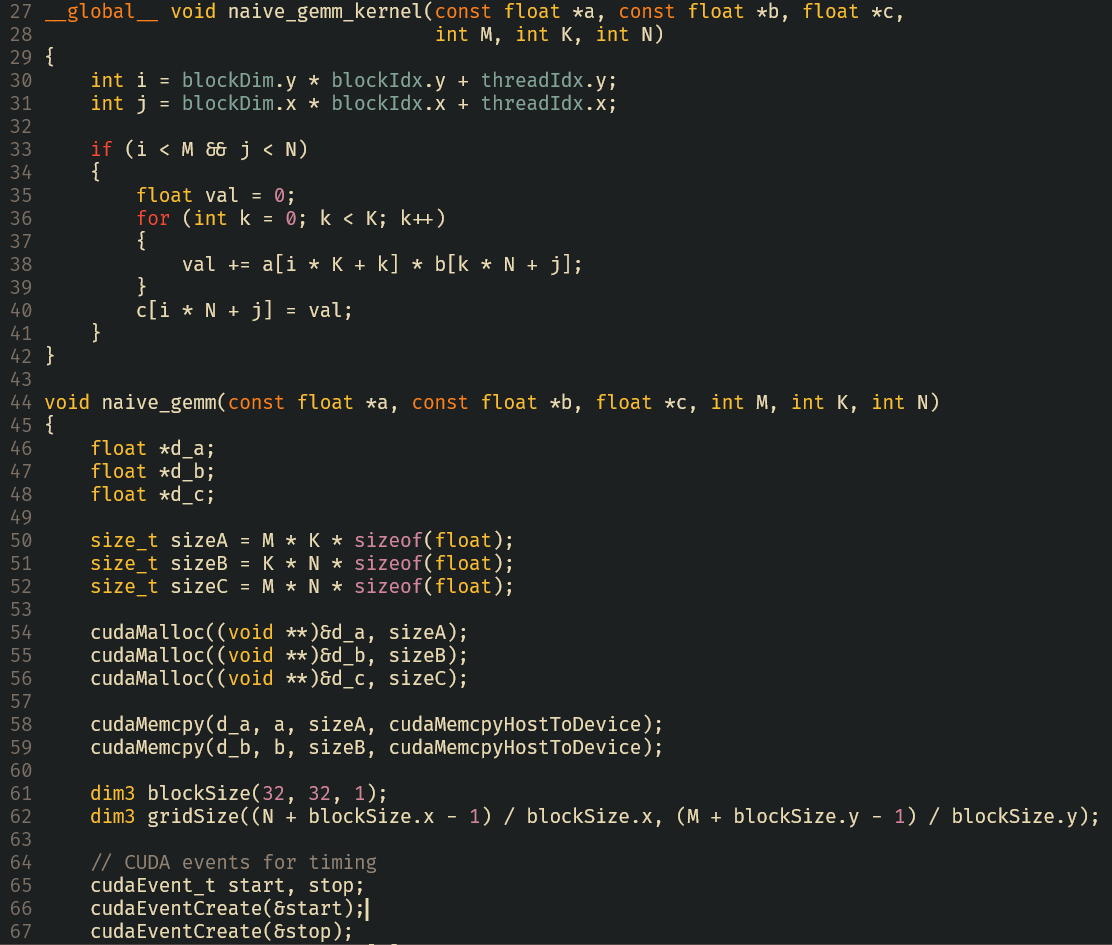
@zuhaitz_dev Beside that fact that this benchmark is useless CPU, compiler and flags are missing, for C/C++ this is on of the most important information.
English
0
0
1
37
Zuhaitz
Zuhaitz@zuhaitz_dev·
And this is what many benchmarks fail to understand. You cannot compare a O(n³) nested loop that anyone can do to highly optimized BLAS libraries. A terrible algorithm will lead to terrible results regardless of the language.
English
19
12
641
49.9K
Unkreativ
Unkreativ@psychocoderHPC·
@jithu83 @_streetdogg They are equal. We added in our projects the rule that you should write the constbalways on the right side so beginners know that the left hand of the const is constant. I dislike this rule but for someone who is seldom writing C++ it is easier.
English
1
0
2
205
Jithu Joseph
Jithu Joseph@jithu83·
@_streetdogg Any difference between first two or do they mean same thing ?
English
1
0
0
1.1K
Piyush Itankar
Piyush Itankar@_streetdogg·
I used to get confused all the time with the usage of “const” with pointer declaration. What becomes constant (read-only) depends on which side of *️⃣ you add the “const” keyword. On the left means Data (of the datatype) is constant and on the right would mean the pointer variable is constant (readonly). On both sides? - data and pointer both become constant! Let me know of any tricks you know of which makes life with pointers... easy! I recorded a course on pointers. More details here: pyjamabrah.com/pointers/
Piyush Itankar tweet media
English
24
73
752
32.7K
fate
fate@madhav1·
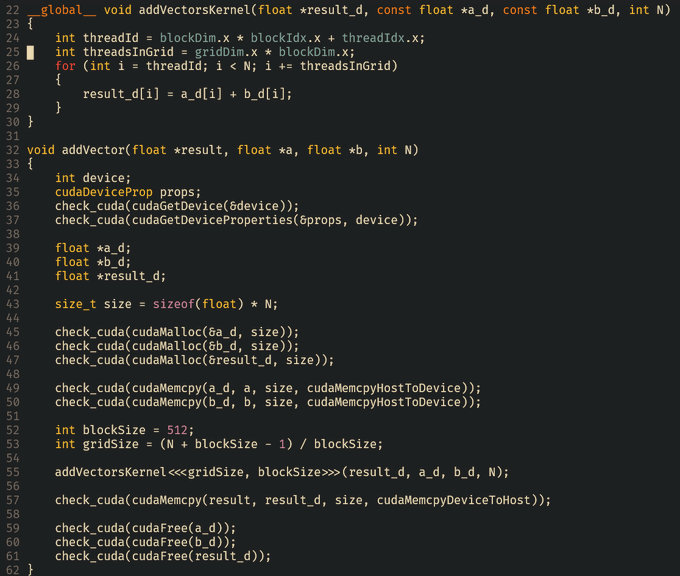
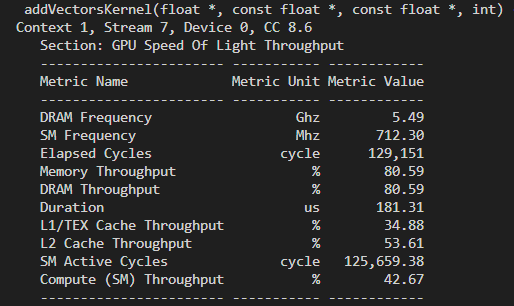
Day 1 of CUDA programming - vector addition on 3050 - profiled with ncu - practiced device mem alloc + pointers
fate tweet mediafate tweet media
English
34
42
971
71.7K
Unkreativ
Unkreativ@psychocoderHPC·
@blueberry_55555 @basit_ayantunde Write code which is running in GPUs. If the stl function is jot constexpr you can not use it on GPU. The you start to write your own linkedblist implementation, chunked allocators, ...
English
1
0
0
40
hm.
hm.@blueberry_55555·
@basit_ayantunde name me one good situation, in regular user code (so no “i need to write a malloc”), where you should manually write a linked list instead of using a standard library type
English
3
0
2
1.1K
Basit Ayantunde
Basit Ayantunde@basit_ayantunde·
C++'s strength is that I don't need a PhD in type-theory to implement a simple and locally-safe intrusive linked-list.
English
19
10
340
32.3K
Unkreativ
Unkreativ@psychocoderHPC·
@SebAaltonen Data access is not required to return the identity of data. An access can be a transformation e.g. compression, a derivation from other data fields of the object, ...
English
0
0
0
13
Unkreativ
Unkreativ@psychocoderHPC·
@SebAaltonen The problem is that many develops think that the oop objects are layout in memory must be equal to the object hierarchy. That's wrong, you should seperate the user domain oop layout from the memory layout. C++ ca do this with zero overhead: github.com/alpaka-group/l…
English
1
0
1
179
Sebastian Aaltonen
Sebastian Aaltonen@SebAaltonen·
I think the biggest issue with OOP is that people think about concrete real life objects. Computer science is about data transforms, not about "physical" objects living in the CPU memory. Wrong abstractions lead to wrong data coupling. Which hurts performance and maintainability.
English
40
71
904
54.8K
Unkreativ
Unkreativ@psychocoderHPC·
🚀 alpaka 1.2.0 is here! 🎉 Now you can easily target the wide variety of GPU accelerators and CPU hardware with our latest release. 🦙 github.com/alpaka-group/a…
Unkreativ tweet media
English
0
0
3
200
Unkreativ
Unkreativ@psychocoderHPC·
Good morning Pirna!
Unkreativ tweet media
English
0
0
1
60
Unkreativ
Unkreativ@psychocoderHPC·
@ronnybrendel Das freut jedem der auf dem Dorf lebt und 15km bis zur nächsten Apotheke fahren muß, besonders wenn man kein Auto mehr fahren kann/darf.
Deutsch
0
0
0
18
Unkreativ أُعيد تغريده
Kris Jusiak
Kris Jusiak@krisjusiak·
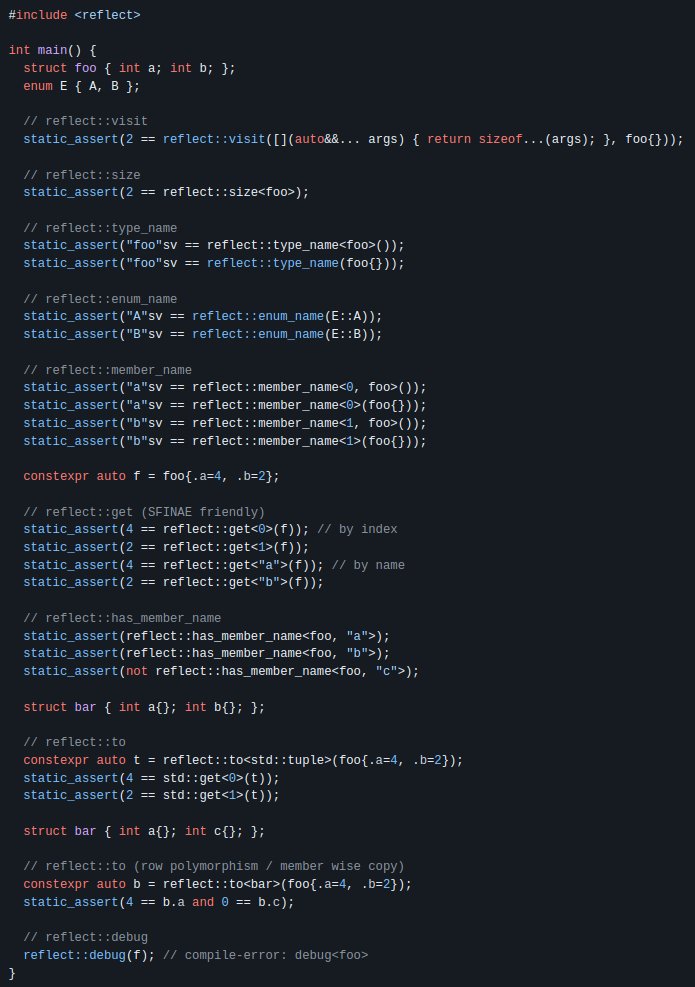
[#cpp20][reflect] Minimal static reflection library * C++20 - single header (gcc, clang, msvc) * Minimal API (no dependencies) * Verifies itself upon include (via static_asserts) * Compiler changes agnostic (no ifdefs) github.com/boost-ext/refl… godbolt.org/z/qYjP41vP5
Kris Jusiak tweet media
English
15
22
164
11.6K
Unkreativ
Unkreativ@psychocoderHPC·
@lefticus Even if you use standard C++17 the traveler will be lost at the first initialization. Even with the specs it is not easy.
English
0
0
0
40
Jason Turner
Jason Turner@lefticus·
Would a time traveler from 1998 be able to read YOUR C++ code today?
English
17
2
16
8.4K
Unkreativ
Unkreativ@psychocoderHPC·
There is no excuse why your software is not running on CPUs and GPUs! We released alpaka 1.1.0. Thanks to all contributors and users! github.com/alpaka-group/a…
Unkreativ tweet media
English
0
1
5
101
Unkreativ
Unkreativ@psychocoderHPC·
@HenschelRobert Nice to see this topic popping up this was always an issue for us when using ISAAC to live visualize PIConGPU. Please consider time slicing equal to a CPU scheduler but on minute base instead of (sub)-milliseconds as a possible way to solve the issue.
English
0
0
0
21
Robert Henschel
Robert Henschel@HenschelRobert·
Now starting in room 607. Come and contribute your thoughts! #SC23
Robert Henschel tweet media
English
2
0
0
109
Unkreativ
Unkreativ@psychocoderHPC·
@btcecho @Tesla @btcecho Wo hat denn Tesla den größten SuperComputer. Wenn ihr mit groß schnell meint dann bitte ein link zur TOP500 wo dieser auf Platz 1 steht! Auch Die BF16 Operationen könne nicht an Frontier vorbei ziehen.
Deutsch
0
0
0
23
Unkreativ
Unkreativ@psychocoderHPC·
@SebAaltonen IMO the problem is that we think in types and not in concepts. The type of an object is not important and only reflects one possible implementation. Unfortionally we can not express 'auto(ConceptX) foobar = foo(bar);'
English
0
0
2
282
Sebastian Aaltonen
Sebastian Aaltonen@SebAaltonen·
I like strongly typed languages. Being able to read the types of variables primes my brain for understanding the code I read. Auto in C++ is horrible. Makes code reading process much slower. Have to hover with mouse. Not surprised it's not any better in shading language.
English
29
16
330
39K