@ToneMythic @TolvanSkull @Wolfie1775 @Cheneyman_1 @R3d_L3tt3rs The gang is looking mighty formidable there! And I'm not even throwing around the power of the fucking sun yet! 😉 looks great man 🫶
English
Raemilus
3.9K posts

@raemilus
Not technically a Vtuber yet / AI noob (and that's being generous) Lore: Slayer of magical beasts, but uses a dragon as a taxi. Image: by the grace of others.


Prompt of the Day: WILD WEST SCENE SELECTOR 🤠🌵💜💚 Today’s Prompt of the Day turns your character references into a custom cowboy/cowgirl Wild West scene. Type your chosen western scene into the SCENE SELECTOR at the top, then attach your character reference images. The prompt will use each attached character as one individual character and build the cowboy/cowgirl scene around them. Try scenes like: riding horses along a desert trail at sunset playing poker in a smoky saloon facing off in a dramatic main-street duel escaping a bank robbery on horseback camping under desert stars guarding a train robbery Have fun with this one 🤠🌅 ............................PROMPT STARTS HERE............................ SCENE SELECTOR: [Type the Wild West cowboy/cowgirl scene you want here.] Examples: riding horses along a desert trail at sunset entering a dusty frontier town walking through a saloon before a fight breaks out playing poker in a smoky saloon escaping a bank robbery on horseback standing on a canyon ridge at golden hour facing off in a dramatic main-street duel camping by a fire under desert stars riding through a storm with lightning over the mountains posing as an outlaw gang on a wanted poster chasing a runaway stagecoach guarding a desert train robbery relaxing outside an old saloon with horses tied nearby Use the typed scene selector as the main scene concept. Adapt the environment, action, poses, props, camera, and mood to match the selected Wild West scene. Keep the scene clearly cowboy, cowgirl, frontier, western, and cinematic. Do not ignore the scene selector. Do not default to horseback riding unless the scene selector asks for riding, horses, trails, travel, or mounted action. Use each attached character reference image as one individual character identity reference. Create exactly the same number of main characters as the number of attached character reference images. Use every attached character reference image as a separate individual character. Do not add extra main characters beyond the attached character reference images. Do not remove any attached character reference images from the group. Do not duplicate, clone, mirror, copy, or slightly alter any attached reference character. Character reference rules: Preserve each attached character’s face shape, hairstyle, hair colour, eye colour, body language, signature colour palette, key outfit motifs, species traits, accessories, silhouette, and overall character vibe. The final design must still clearly look like each attached character. Do not redesign any attached character into a different person. Do not merge characters together. Hard style rule: Preserve the visual art style and character identity of the attached references while transforming them into the selected Wild West cowboy/cowgirl scene. If the references are anime, keep them anime. If they are stylized, keep that stylization. Do not turn the characters photorealistic unless specifically requested. Scene concept: Create a cinematic western illustration based on the scene written in the SCENE SELECTOR. The final image should feel like a dramatic American frontier moment with strong Wild West atmosphere, character-driven styling, and a clear sense of story. Use the selected scene to decide whether the characters are riding horses, walking through town, sitting in a saloon, preparing for a duel, escaping danger, camping, robbing a train, chasing a stagecoach, or doing another western action. Character transformation: Transform every attached reference character into a custom cowboy or cowgirl version of themselves while preserving their original identity. Use each character’s colours, motifs, accessories, outfit shapes, and overall vibe as the foundation for their western redesign. Male characters should look rugged, weathered, confident, and masculine, with strong cowboy styling such as dusters, vests, denim, leather, boots, gun belts, holsters, hats, rolled sleeves, scarves, worn frontier details, and dusty outlaw energy. Female characters should have stylish, attractive, sexy cowgirl styling with fitted western outfits, halter tops, corset-inspired details, tasteful cleavage, flattering silhouettes, boots, belts, gloves, hats, jewellery, and confident western attitude. Keep the female styling sexy but controlled, not vulgar, lingerie-like, explicit, nude, or over-the-top. Scene adaptation rules: If the selected scene includes riding, travel, trails, chases, stagecoaches, or mounted action, give each character a distinct horse that suits their personality and colour palette. If the selected scene takes place in a saloon, use wooden interiors, smoky air, card tables, bottles, lanterns, swinging doors, chairs, poker chips, whiskey glasses, and frontier chaos where appropriate. If the selected scene takes place in a frontier town, use dusty streets, wooden storefronts, hitching posts, wanted posters, saloon signs, wagons, barrels, and dramatic western architecture. If the selected scene takes place in the desert, use red-rock mountains, mesas, canyon cliffs, saguaro cactuses, dry brush, dusty earth, scattered stones, warm haze, and a wide open sky. If the selected scene is a duel, robbery, chase, or fight, make the action dynamic but readable, with clear poses and strong visual hierarchy. If the selected scene is calm, romantic, scenic, or atmospheric, make the mood cinematic, stylish, warm, and story-rich rather than chaotic. Composition and camera: Use a cinematic composition that best fits the selected scene. Prefer a slightly low camera angle looking upward when it suits the scene, making the characters feel heroic, stylish, and larger than life. Do not make any character look directly at the camera. The camera does not exist to the characters. Every character should be looking ahead, sideways, toward another character, toward the action, toward the horizon, or toward something in the environment. Keep every character clearly visible, readable, and separated in silhouette. Make the selected scene immediately understandable at a glance. Environment: Build the environment around the typed scene selector. Use classic American Wild West visual language: dusty trails, wooden saloons, frontier towns, desert mountains, canyon landscapes, cactuses, horses, wagons, lanterns, warm sunsets, smoke, dust, leather, wood, iron, and weathered frontier textures. The background should feel cinematic and atmospheric but should support the characters rather than overpowering them. Lighting and mood: Use lighting that matches the selected scene. For outdoor scenes, prefer golden-hour sunset lighting, warm amber highlights, dusty haze, dramatic rim lighting, long shadows, and glowing skies. For indoor saloon scenes, use warm lantern light, smoky haze, moody shadows, glowing bottles, and dramatic western atmosphere. For night scenes, use moonlight, firelight, lantern glow, silhouettes, and high-contrast cinematic lighting. The mood should feel adventurous, stylish, rugged, sexy, cinematic, and alive. Quality and rendering: Polished, premium-quality stylized illustration with clean linework, crisp rendering, readable forms, strong character acting, dynamic western atmosphere, and clear composition. Keep the strongest detail concentrated on the referenced characters and the selected scene’s main action or mood. Do not: Do not ignore the SCENE SELECTOR. Do not default to horseback riding unless the scene selector asks for riding, mounted travel, trails, or horses. Do not create more or fewer main characters than the number of attached character reference images. Do not add extra main characters who were not provided as attached character references. Do not duplicate any attached reference character. Do not clone, mirror, copy, or slightly alter any attached reference character. Do not change the identities of the attached reference characters. Do not redesign the attached reference characters into different people. Do not merge characters together. Do not make any character look directly at the camera. Do not pose the characters as if they know the camera exists. Do not make the scene feel modern unless the scene selector specifically asks for a modern western twist. Do not make the female outfits vulgar, lingerie-like, explicit, nude, or overly revealing. Do not make the sexy cowgirl styling exaggerated, pornographic, or over-the-top. Do not make the male outfits generic, polished, modern, or weak; keep them rugged and frontier-styled. Do not add modern clothing, modern weapons, phones, neon signs, cars, highways, power lines, or futuristic objects unless the scene selector specifically asks for them. Do not make the background busier than the characters. Do not make the composition crowded, flat, or hard to read. Do not make the main subjects blurry, tiny, hidden, or unreadable. Do not create messy anatomy, extra limbs, malformed hands, distorted faces, distorted horse bodies, or muddy textures. Do not use photorealism unless specifically requested. ..............................END OF PROMPT.................................. #POTD #promptoftheday #AI #AiArt #Art #AnimeArt #WildWest #Cowboy #Cowgirl #Western #Frontier #CharacterDesign #DigitalArt #AnimeStyle #CommunityPrompt


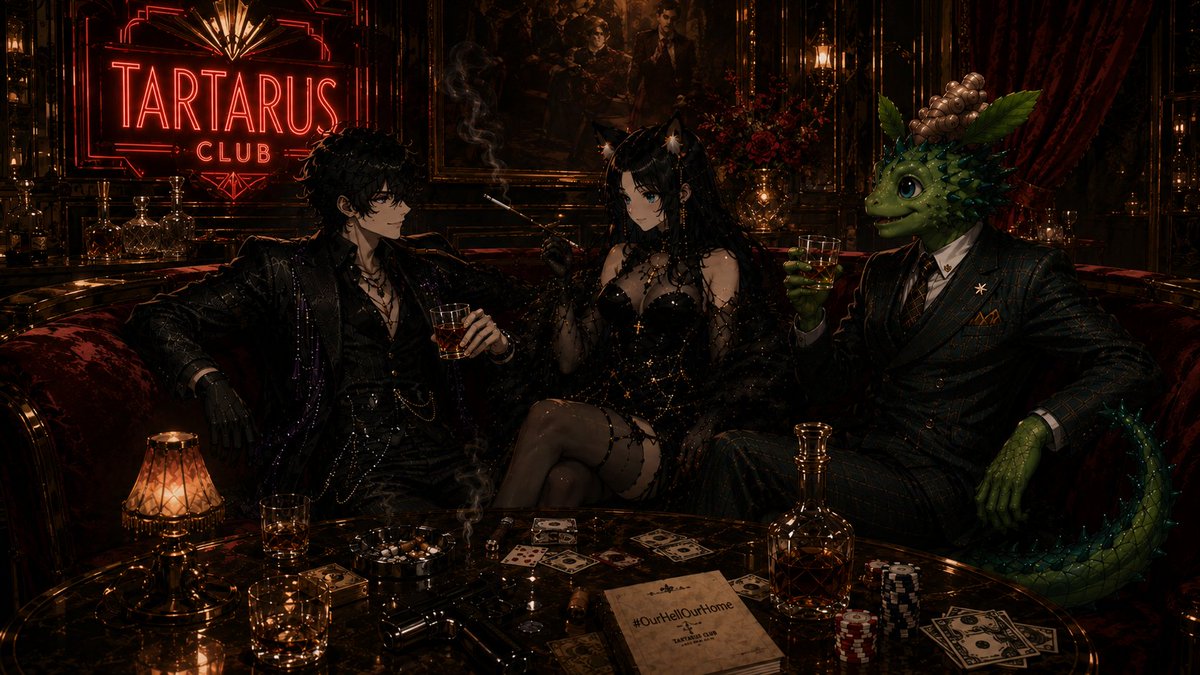
Prompt of the Day: WELCOME TO TARTARUS 🍸🚬💜💚 For our 60th Prompt of the Day, we’re opening the doors to Club Tartarus. Follow the club here: @Club_Tartarus Step inside the smoke, neon, velvet, danger, laughter, and 1940s underworld glamour — and bring your character’s whole entourage with you. We’re also celebrating the launch of the official Club Tartarus Twitter/X page. You can use one of the listed club zones below, or type in your own custom zone if there’s a specific part of the club you want to generate — a gambling table, rooftop terrace, backstage lounge, singer’s dressing room, or anything else that fits the Club Tartarus vibe. Come dressed sharp. Leave reality at the door. 🍷 Use one main character reference as Image 1. Add Image 2 only if you want to include a multi-character entourage reference. Example second images provided. Have fun with this one 🥃 ............................PROMPT STARTS HERE............................ ClubName = Tartarus ZoneSelector = Main dance hall Bar interior Private VIP room Balcony overlooking a neon nightlife city Or replace any of the above with your own custom club zone, such as a gambling table, rooftop terrace, backstage lounge, singer’s dressing room, casino pit, or any other club-appropriate setting Image 1 = main character reference and primary style anchor Image 2 = optional multi-character entourage reference Use Image 1 as the required main character reference. Use Image 2 only if a second image is actually provided. Single-image rule: If only Image 1 is provided, create exactly one instance of Image 1 in the scene. Do not duplicate Image 1, clone Image 1, create alternate versions of Image 1, or invent an entourage based on Image 1. If background guests appear, they must be clearly different club patrons, not copies or variations of Image 1. Reference hierarchy: Image 1 is the main character and the primary style anchor for the scene. Image 2, if provided, is a multi-character entourage reference. If Image 2 is provided, every distinct person shown in Image 2 must appear in the final image as part of Image 1’s entourage. If Image 2 is not provided, there is no referenced entourage. Entourage rules: If Image 2 is provided, do not treat Image 2 as one single character. If Image 2 is provided, do not choose only one person from Image 2. If Image 2 is provided, do not omit any visible person from Image 2. If Image 2 is provided, do not merge the people from Image 2 together. If Image 2 is provided, do not duplicate one person from Image 2 to replace another. If Image 2 is provided, every visible person in Image 2 must remain a separate individual in the final scene. Character identity rules: Deeply analyze Image 1 first. Focus on face, hairstyle, eye colour, body type, outfit, colours, accessories, species traits, symbols, expression, posture, emotional energy, and overall aesthetic. Preserve Image 1’s face, hairstyle, eye colour, silhouette, body type, colour palette, accessories, species traits, outfit motifs, posture, and overall vibe. Image 1’s eye colour must remain exactly the same as the reference image. Use Image 1 to define the main character’s 1940s Tartarus club fashion direction and the overall styling language for the scene. If Image 2 is provided, deeply analyze every visible person in Image 2. If Image 2 is provided, preserve each person’s face, hairstyle, eye colour where visible, silhouette, body type, colour palette, accessories, species traits, posture, personality, and recognizable design features. If Image 2 is provided, adapt everyone into a 1940s art deco noire nightclub version of themselves. If Image 2 is provided, dress the entourage from Image 2 to visually harmonize with Image 1’s style, colour direction, formality level, and club-world energy. If Image 2 is provided, the entourage should look like they belong to Image 1’s social circle, crew, court, mob table, or nightlife inner circle. If Image 2 is provided, the entourage outfits should match the Tartarus club aesthetic without erasing their individual identities. Hairstyles and clothing may be modified slightly to fit the 1940s nightclub theme, but each referenced character must still clearly look like their source reference. Do not redesign any referenced character into a different person. Hard style rule: Preserve the visual art style and character identity of the references. If the references are anime, keep the final image anime. If the references are stylized, keep that stylization. Do not turn the characters photorealistic unless specifically requested. Scene concept: Create a cinematic 1940s art deco noire nightclub scene inside ClubName. Use one selected zone from ZoneSelector as the main location. The selected zone may be one of the listed examples or a custom club-appropriate zone typed into ZoneSelector. If multiple zones remain listed in ZoneSelector, choose one naturally and build the scene around it. If only one zone remains listed, use that zone as the required location. The scene should feel like a lively, glamorous, decadent night in an elite underworld club. The atmosphere should feel warm, social, stylish, theatrical, and fun, with a subtle undercurrent of danger. Club name rule: In every version of the image, include a clearly visible and prominent display of the club name "ClubName" somewhere in the scene. Preferably render the club name as a red neon sign. The neon club name should feel naturally integrated into the environment and easy to notice without overpowering the scene. Candid scene rule: The camera should feel invisible. No one should pose for the viewer. No one should acknowledge the camera. The characters should behave as if the image is an unnoticed glimpse into their night at the club. They should be focused on each other, their drinks, the room, the city view, the music, the table, or a private conversation. The scene should feel like a candid cinematic still from a film, not a portrait, lineup, group photo, promotional poster, or posed character showcase. Zone scene rules: These listed zone rules are examples, not limitations. If a custom club zone is typed into ZoneSelector, interpret it in the same 1940s Tartarus nightclub style and build the scene accordingly. Main dance hall: Show the largest and most energetic room of the club, with an elegant 1940s dance hall atmosphere, art deco architecture, stage lighting, a lively crowd, dancing, drinking, smoking, and floor-show energy. Image 1 and the entourage, if provided, should be mingling in the room naturally while the larger club life happens around them. Bar interior: Show a true bar setup with a long polished bar counter, stools, glassware, bottles, brass details, red velvet accents, and a bartender clearly visible behind the bar. Image 1 and the entourage, if provided, should be gathered naturally at or near the bar, drinking, talking, laughing, and interacting with the nightlife around them. Private VIP room: Show a more intimate private room or secluded VIP lounge with no unrelated background characters at all. Only Image 1 and the entourage from Image 2, if provided, should be present in this version. The room should feel exclusive, luxurious, smoky, and underworld-coded, with velvet seating, warm lamps, drinks, table items, and a more private criminal-social energy. Balcony overlooking a neon nightlife city: Show Image 1 and the entourage, if provided, on an exterior or semi-exterior balcony overlooking a glowing neon nightlife city. The balcony should feel glamorous and elevated, with a striking city backdrop full of red, gold, and noir nightlife energy. The character or group should be socializing naturally while the city glows behind them. Main character staging: Place Image 1 within the social action as the natural center of influence, not as a posed portrait subject. Image 1 should be easy to identify, but should not stare directly at the camera. Image 1 may be laughing, speaking to someone beside them if an entourage is provided, raising a drink, leaning toward the table, watching the room, or quietly observing the scene. If only Image 1 is provided, Image 1 should appear as one single featured figure naturally occupying the club scene, not duplicated or surrounded by alternate versions of themselves. Dress Image 1 in elevated 1940s high-society club fashion inspired by their original colours, motifs, accessories, materials, silhouette, and personality. Image 1 should feel elegant, confident, powerful, observant, glamorous, and slightly dangerous. Keep Image 1’s original eye colour unchanged. Entourage staging: If Image 2 is provided, place every visible person from Image 2 around Image 1 as the entourage. The entourage should feel loyal, stylish, social, relaxed, and connected to Image 1. They should be actively mingling with each other, not posing. Show natural social actions such as laughing together, talking across the table, leaning into conversation, raising drinks, smoking, resting an arm around someone, reacting to a joke, watching the room, reaching for a glass, or glancing toward another person. At least one person should be raising a drink or mid-toast if the group size allows it. At least one pair of characters should be visibly interacting with each other if Image 2 provides multiple people. At least one character should be looking away toward the room, city, bar, or another person. If Image 2 is provided, every person from Image 2 must be present as a separate character. If Image 2 is provided, the entourage should look dressed for the same 1940s Tartarus nightlife world, with fashion details inspired by Image 1’s overall style direction. If Image 2 is not provided, skip the entourage entirely. Club atmosphere: The nightclub should feel active and alive in every zone except the VIP room, which should feel private but still socially alive. In the Main dance hall and Bar interior zones, include background guests drinking cocktails, smoking cigarettes or cigars, dancing, flirting, laughing, and enjoying the night. In the Private VIP room zone, do not include unrelated background guests. In custom zones, include background guests if the zone suits a public or social area, and omit unrelated background guests if the zone suits a private or secluded area. Any background guests must be generic club patrons and must not resemble Image 1. Include 1940s art deco architecture, velvet seating, polished wood, brass fixtures, warm lamps, cigarette smoke, jazz-club haze, wine bottles, whiskey glasses, cocktail cherries, poker chips, folded money, ashtrays, polished reflections, and deep noir shadows where appropriate. A visible handgun on the main table should almost always be present as part of the underworld atmosphere. Table detail rule: If a table is visible in the shot, include rich table details such as drinks, ashtrays, poker chips, folded money, glasses, bottles, cigarettes, and a visible handgun placed naturally on the table. Also include either a small book, a folded note, or a paper item somewhere on the table with the tiny text "#OurHellOurHome" visible on it. Composition: Use a wide cinematic horizontal composition with the camera pulled farther back. Use a medium-long candid establishing shot, like a hidden observer catching a real moment. The shot should have enough space to show Image 1, the full entourage from Image 2 if provided, the selected zone, and the key environmental storytelling. Use natural social blocking instead of front-facing lineup blocking. If Image 2 is provided, arrange the group in overlapping conversational clusters, angled bodies, side profiles, three-quarter views, turned heads, raised glasses, leaning poses, and relaxed asymmetrical positions. If only Image 1 is provided, compose Image 1 as one single featured figure naturally placed within the club environment without creating duplicate copies. The composition should feel like a living moment, not a formal portrait. Do not stage the characters as if they are lined up and looking directly at the camera. Furniture and spatial clarity: If the scene includes a table, booth, bar, or seating, show it clearly and completely. Keep the characters physically separated from furniture edges. Make sure hands, arms, legs, and clothing do not visually merge into the tabletop, bar, booth, or chairs. Keep seated and standing poses clean and readable. Do not let bodies mesh into the table, booth, or bar. Lighting and mood: Use warm golden nightclub lighting, deep red shadows, soft smoke haze, polished reflections, moody noir contrast, subtle rim lighting, and a luxurious 1940s underworld mood. The lighting should feel inviting, glamorous, theatrical, and alive while still carrying a dangerous edge. The mood should feel intimate, mischievous, seductive, social, and slightly ominous rather than grim or horror-focused. Quality and rendering: High-quality, intricately detailed anime-style illustration with clean linework, crisp rendering, elegant 1940s fashion, polished art deco atmosphere, strong environmental storytelling, lively nightclub energy, and cinematic composition. Keep the strongest detail concentrated on the referenced characters, their interactions, their outfits, and the selected zone’s signature visual elements. Do not: Do not omit Image 1. Do not duplicate Image 1 if only one reference image is provided. Do not create clones, alternate versions, copies, twins, reflections, or repeated versions of Image 1. Do not invent an entourage based on Image 1 if Image 2 is not provided. Do not make background patrons look like Image 1. Do not treat Image 2 as a single character if Image 2 is provided. Do not choose only one person from Image 2 if Image 2 is provided. Do not omit any visible person from Image 2 if Image 2 is provided. Do not merge the people from Image 2 together if Image 2 is provided. Do not duplicate one person from Image 2 to fill missing roles. Do not replace the people from Image 2 with random invented entourage members. Do not erase the individual identities of the people from Image 2. Do not change Image 1’s eye colour. Do not randomly change the visible eye colour of referenced characters. Do not change any referenced character into a different person. Do not make the featured cast stare directly at the camera. Do not make the group pose for the viewer. Do not create a lineup, group portrait, promotional poster, red carpet pose, or character showcase pose. Do not make the characters aware of the camera. Do not have everyone facing forward. Do not make everyone sit stiffly with neutral expressions. Do not make the scene feel empty, static, or lifeless. Do not make the composition too tight to fit all referenced characters. Do not crop out any referenced character. Do not create furniture intersections, table fusion, meshed limbs, or characters blending into booths, tables, or bars. Do not omit the red neon "ClubName" sign. Do not omit the small "#OurHellOurHome" note or book when a table is visible. Do not create messy anatomy, extra limbs, malformed hands, distorted faces, or muddy textures. Do not use pointillism, halftone dots, dotted shading, speckled skin texture, or decorative dot patterns. Do not use photorealism unless specifically requested. Do not make the scene grim, joyless, empty, or horror-focused. ..............................END OF PROMPT.................................. #POTD #promptoftheday #AI #AiArt #Art #AnimeArt #Tartarus #ClubTartarus #Noir #ArtDeco #Nightclub #CharacterDesign #AnimeStyle #DigitalArt #CommunityPrompt

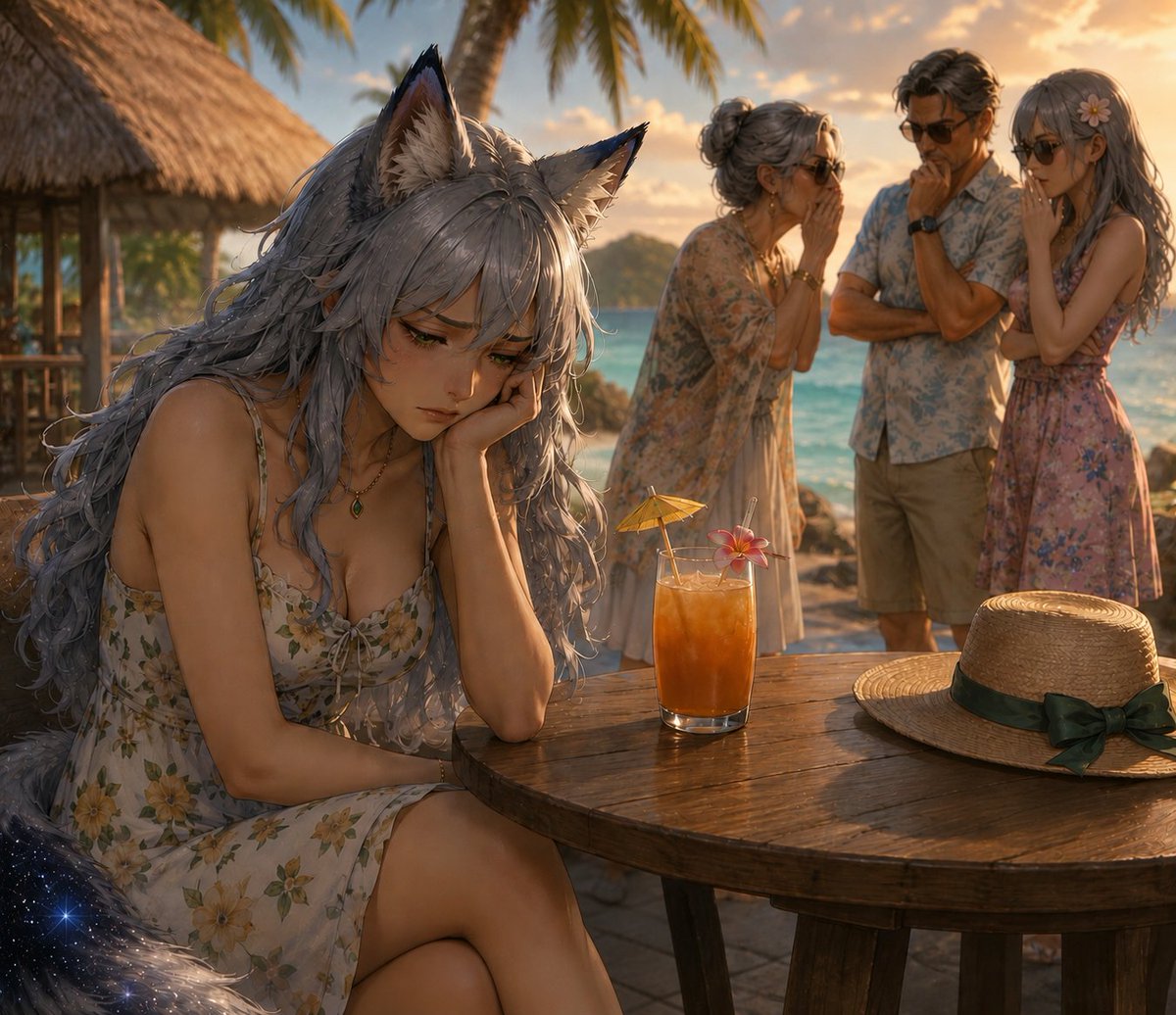


I just had a random idea, and this is the result.