Vincent Garton
1.9K posts

Vincent Garton
@sysimmolator
such terrifying magnitude, such utter desolation


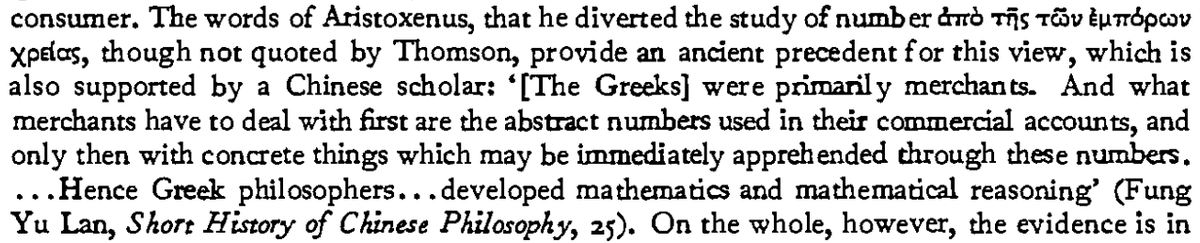
“How were the Greeks able to invent philosophy and tragedy? In this book Richard Seaford argues that a large part of the answer can be found in another momentous development, the invention and rapid spread of coinage which produced the first ever thoroughly monetised society.”


Just a comment on the limits of Suez analogies here. What happened at Suez was that the U.S. issued a veto on British and French action, demonstrating that they could no longer conduct an independent foreign policy under the shadow of the American hegemon. With Iran and Hormuz, the (provisional) veto on Trumpian escalation came above all from domestic political constraints, the likelihood Americans would not endure ground-operation casualties or higher gas prices for the hazy objectives of this war. You can argue back and forth about what that domestic veto means for American empire, but being constrained by internal politics is meaningfully different from having your foreign policy plans vetoed by a new global hegemon.


Historian Peter Perdue on Xi's "great unity thesis," the PRC's new history of China. He finds Marx is all but gone, replaced by Confucius, and a vision of China that would be in many ways pleasing and familiar to Chiang Kai-shek. aeon.co/essays/why-chi… via @aeonmag


For coffee heads and spice lovers, now you can have both in one cup. Check out Chengdu’s newest must-try: the spicy Americano! 🌶️


Friedrich Hayek delivered the most devastating blow to collectivism ever written when he published "The Constitution of Liberty" in 1960, and most people still haven't grasped its revolutionary implications. Hayek built his case on a simple but profound insight: human knowledge remains forever scattered and incomplete. No central authority can possibly aggregate the millions of daily decisions, preferences, and discoveries that drive a complex society forward. The socialist calculation problem wasn't just an economic inconvenience—it represented an epistemological impossibility. When you concentrate decision-making power in the hands of planners, you guarantee inferior outcomes because you've severed the feedback mechanisms that allow decentralized knowledge to coordinate spontaneously. But Hayek went further than pure economics. He traced the philosophical roots of liberty back to the rule of law itself. True law doesn't grant privileges to specific groups or pursue particular outcomes—it establishes abstract rules that apply equally to everyone. The moment governments start picking winners and losers (looking at you, modern Western World), they abandon the legal foundations that make freedom possible. Hayek saw this clearly: discretionary government power and individual liberty cannot coexist. The book's real genius lies in connecting evolutionary processes to social institutions. Just as biological evolution produces complex organisms through trial and error, cultural evolution generates sophisticated institutions—property rights, common law, market prices—that nobody consciously designed. These emergent orders vastly outperform anything human planners could create from scratch. Yet politicians and intellectuals keep believing they can engineer better societies through conscious control. Sixty-four years later, we're still fighting the same battle Hayek identified: spontaneous order versus constructed systems, dispersed knowledge versus central planning, constitutional limits versus administrative discretion. Every economic crisis, every regulatory failure, every unintended consequence proves Hayek right all over again.


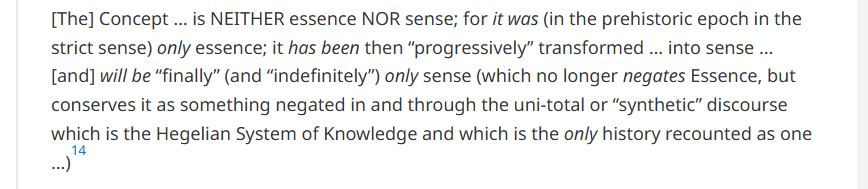
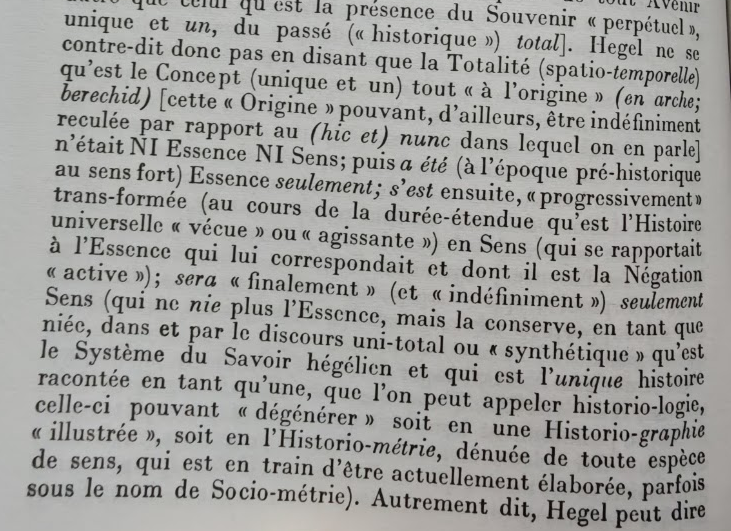
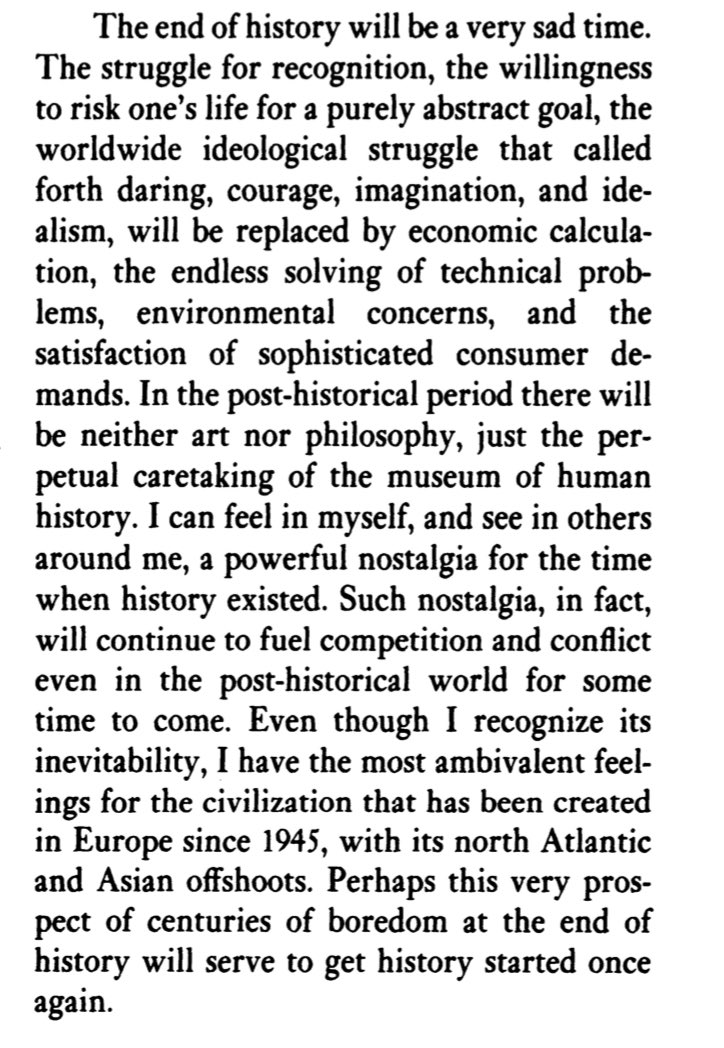
There's Actually Still A Little Bit of History Left by Francis Fukuyama