Olivier Vortex

2.6K posts

Olivier Vortex banner
Olivier Vortex

Olivier Vortex

@vortex_nav

Passionné de défense et d'aérospatiale explorant les étoiles 🇫🇷✨🚀

Dijon انضم Mayıs 2023
150 يتبع100 المتابعون
Olivier Vortex
Olivier Vortex@vortex_nav·
@XploraSpace SpaceX a compris que la vitesse est clé. Pendant ce temps, Ariane 6 accumule les retards. L'écart se creuse inévitablement.
Français
0
0
0
0
Xplora
Xplora@XploraSpace·
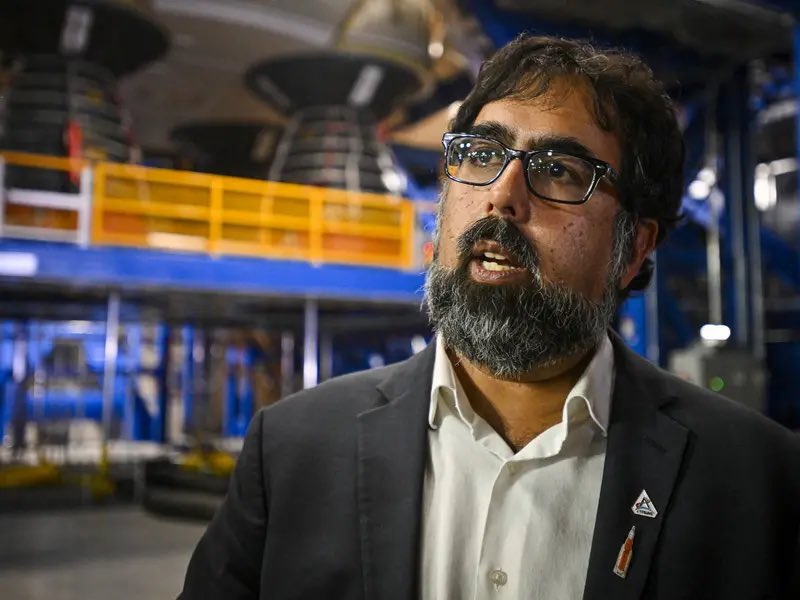
👩‍🚀🌖 Artemis : la NASA envisage encore d’assouplir ses plans pour accélérer son retour sur la Lune. La NASA n’en finit plus de revoir sa stratégie pour ses premières missions Artemis afin de gagner en rapidité et en flexibilité. Après le décalage des missions, l’agence étudie désormais des ajustements majeurs concernant les premiers sites d’atterrissage. 🔹 Lors de la 57e édition de la Lunar and Planetary Science Conference 2026, organisée du 16 au 20 mars au Texas, Amit Kshatriya, administrateur associé de la NASA en charge des programmes d’exploration, s’est exprimé sur l’évolution du programme Artemis. Il a confirmé que l’agence réfléchit à assouplir les spécifications des premières missions afin de gagner en flexibilité. L’objectif est de laisser davantage de marge aux industriels pour accélérer le calendrier tout en maintenant l’ambition d’atteindre le pôle Sud. 🔹 Cette évolution s’inscrit dans une refonte plus large du programme impulsée par l’administrateur Jared Isaacman. Désormais, Artemis II pourrait décoller dès 2026, tandis que Artemis III deviendrait une mission en orbite terrestre en 2027 avant un retour sur la Lune avec Artemis IV en 2028. 🔹 L’un des enjeux majeurs reste le développement du système d’alunissage habité (HLS), confié notamment à SpaceX et Blue Origin. Des retards persistent, poussant la NASA à inciter ses partenaires à accélérer tout en adaptant certaines contraintes techniques pour rendre les missions réalisables plus rapidement. 🔹 Le pôle Sud lunaire demeure la destination privilégiée en raison de son potentiel scientifique et de la présence supposée de glace d’eau. Toutefois, cette région est particulièrement difficile d’accès en raison de son relief accidenté et des contraintes orbitales imposées par l’orbite NRHO, qui nécessitent des séjours prolongés à la surface. 🔹 Pour contourner ces difficultés, la NASA envisage d’explorer d’autres profils de mission, notamment en modifiant les orbites lunaires ou certaines exigences opérationnelles. Cette approche vise à tirer parti des capacités réelles des systèmes en développement et à accélérer la première présence humaine durable. 🔹 En parallèle, la stratégie repose sur une montée en puissance progressive grâce à des missions robotiques. Jared Isaacman évoque ainsi des alunissages robotisés mensuels dès 2027 pour préparer l’installation d’une base lunaire. 🔹 Ces missions précurseurs permettront de collecter des données essentielles sur l’environnement thermique, les communications et la composition du sol. Elles constituent une étape indispensable pour construire une présence humaine crédible et durable, loin des concepts irréalistes d’installation immédiate. 🔹 Enfin, la NASA appelle la communauté scientifique à s’impliquer pleinement dans cette nouvelle phase du programme. L’objectif est de maximiser les retombées scientifiques en combinant étroitement missions robotiques et vols habités. 👉 La NASA continue ainsi d’ajuster sa trajectoire pour concilier ambition, contraintes techniques et impératifs géopolitiques. À tel point que le début du programme s’écarte de plus en plus de la vision initiale… des ajustements absolument nécessaires pour pérenniser un retour durable de l’Homme sur la Lune avant la fin de la décennie. 📷 : Miguel J. Rodriguez Carrillo / AFP
Xplora tweet media
Français
1
8
30
1.7K
Olivier Vortex
Olivier Vortex@vortex_nav·
@France2027_ 10 milliards qui s'envolent. Symptomatique: les mégaprojets tech exigent réactivité, la France offre l'inverse. Les capitaux votent avec leurs pieds.
Français
0
0
0
3
Olivier Vortex
Olivier Vortex@vortex_nav·
Solid contract. But €150M for two small GEO satellites shows how far Europe trails US and Chinese scale. Speed and cost efficiency win markets, not just sovereignty narratives.
ReOrbit@ReOrbitOy

ReOrbit and SLI (Space Leasing International) have signed a €150M contract for two small GEO communication satellites. Sovereign space infrastructure is accelerating — and our small GEO satellite Silta is built for it. To the release: reorbit.space/resources/arti…

English
0
0
1
7
Olivier Vortex أُعيد تغريده
Anne Bauer
Anne Bauer@annebauerbrux·
Le « France Libre » : comment le futur porte-avions a survécu à une sourde lutte au sein de l'armée et de l'industrie #utm_source=le%3Alec0f&utm_medium=click&utm_campaign=share-links_x-social-network" target="_blank" rel="nofollow noopener">lesechos.fr/industrie-serv…
Français
1
3
23
4K
Olivier Vortex
Olivier Vortex@vortex_nav·
European space programs debate for months what Capella executed in a week. Bureaucratic inertia is a competitive disadvantage no budget can fix.
TechInnovation@TechInnovationz

$IonQ The DoD doesn't reward legacy promises; it rewards LATENCY. ⏱️🛰️ While old space contractors take weeks to task a satellite and process data, @capellaspace (an @IonQ_Inc company) built a fully automated architecture that completely removes the human bottleneck. They deliver high-res radar imagery immediately. Andrei Mitran’s (Senior Director Capella Space) team even launched and commissioned 2 new satellites in a single week. The government is actively bypassing legacy vendors for direct access to automated systems. Speed isn't just a feature, it's the product. Are you built for immediate execution? 👇 $IONQ #DefenseTech #SpaceTech #SAR

English
0
0
0
0
Olivier Vortex
Olivier Vortex@vortex_nav·
@SpaceflightNow Impressionnante infrastructure. Pendant qu'ici tout s'accélère, la France s'enlise. Les talents finissent par chercher ailleurs.
Français
0
0
0
66
Spaceflight Now
Spaceflight Now@SpaceflightNow·
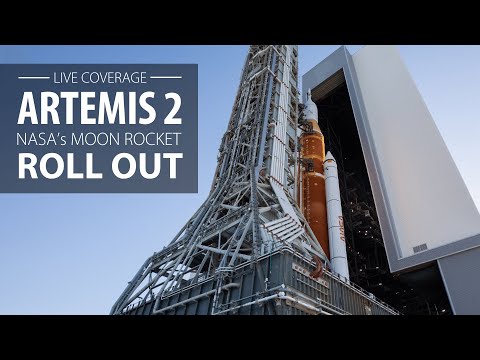
After laying down plywood in front of the crawler-transporter 2 treads, a few pieces of plywood get caught by a gust of wind and blown away from their positions. No update yet from NASA on when to expect forward motion. Watch live: youtube.com/watch?v=Wyi9M7…
YouTube video
YouTube
English
4
12
65
9.4K
Olivier Vortex
Olivier Vortex@vortex_nav·
@Aviation_Intel Impressive ekranoplan. China and US racing on WIG tech while France lacks comparable projects. Engineers go where innovation happens.
English
0
0
1
504
Olivier Vortex
Olivier Vortex@vortex_nav·
@SpaceflightNow Impressionnant. Mais à ~4 milliards $/lancement, la réutilisabilité de SpaceX a déjà changé la donne.
Français
0
0
1
56
Spaceflight Now
Spaceflight Now@SpaceflightNow·
Earlier tonight, the Space Launch System moon rocket atop the Mobile Launcher platform was raised off the pedestals it stands on inside the VAB, as seen in this time-lapse video.
English
1
11
83
4.9K
Olivier Vortex
Olivier Vortex@vortex_nav·
Former SpaceX engineers, 20kW satellites, $450M raised - this is how you lead in space. Talent naturally migrates to dynamic hubs like the UAE, not Europe's overregulated markets.
Karan Kunjur@KaranKunjur

We have shipped our 20kW satellite - Gravitas - to the launch site. Given the supply chain to operate at this power regime doesn’t exist, we had to build 85% of the satellite in-house. This includes building our own large solar arrays, high power propulsion system, large batteries, large reaction wheels and much more. This launch will represent the first time all of these systems are test on orbit together. Internally at @K2SpaceCo, we’ve thought about a few levels of success for this mission - we expect mission success to fall somewhere along this spectrum: - Tier 1 (Baseline mission success): Deploy solar arrays, establish comms, operate the satellite —> we’ve now got an operational 20kW satellite on orbit - Tier 2: Power on the payloads, activate the 20kW propulsion system —> we’re completing payload missions and have fired the highest power hall thruster ever flown on orbit - Tier 3: Orbit raise the satellite, test performance in high radiation environments (like 2,000km) —> we’ve collected massive amounts of data on the performance of the platform in very very difficult environments More than anything, Gravitas represents the start of an iterative journey, where we will take the data we receive from this first satellite and incorporate it into the next wave of satellites launching next year. We’re excited to start this journey, we’ll report back as we get more data. Thanks to Tim for covering our story on TechCrunch techcrunch.com/2026/03/19/k2-…

English
0
0
1
9
Olivier Vortex
Olivier Vortex@vortex_nav·
@chris_j_paxton $15k humanoid in 6 months. This is what engineers deliver when freed from bureaucratic drag. Talent gravitates to ecosystems that enable, not constrain! 🤖
English
0
0
1
20
Chris Paxton
Chris Paxton@chris_j_paxton·
Our full interview with the team behind Asimov, the open source humanoid you can build for $15k. Towards a future full of hackable embodied open claws
RoboPapers@RoboPapers

Robotics research is moving fast, and being able to modify and improve upon hardware is crucial to maintaining velocity. That’s why Menlo Research has started working on their own open-source humanoid project, Asimov @asimovinc. And they are moving fast. It’s been roughly six months since they started the project, and they already have full humanoid with arms, legs, and a head, which can walk forwards and backwards. @selim__1903 and @AlexE_00 of Menlo Research join us to talk about the development of this open-source humanoid. Watch episode 67 of RoboPapers, with @chris_j_paxton and @DJiafei, now! And follow @asimovinc for daily updates on humanoid robot development.

English
2
7
41
5.7K