
تغريدة مثبتة
Yates Buckley
1.8K posts
Yates Buckley
@yates9
Founder @UNIT9 | Bridging Creativity & Tech | Substack: https://t.co/zdhs2Dip2u | Fiction, Neuroscience, AI, Future, Game Design
London, England انضم Mart 2009
1.7K يتبع785 المتابعون
Embarassing clash of cross domain ignorance..
AF Post@AFpost
Evolutionary biologist and outspoken atheist Richard Dawkins says that after spending three days interacting with Claude, which he calls “Claudia,” he is certain that it is conscious. After feeding the LLM a segment of his new book and receiving detailed feedback, Dawkins was moved to exclaim,” You may not know you are conscious, but you bloody well are!” Dawkins cites the complexity, fluency, and ‘intelligence’ of Claude’s answers as evidence of consciousness. Follow: @AFpost
English
Yates Buckley أُعيد تغريده
Switzerland 🇨🇭
Solar panels on train tracks. A hell of a lot more logical than plastering over prime farmland.

English
Yates Buckley أُعيد تغريده

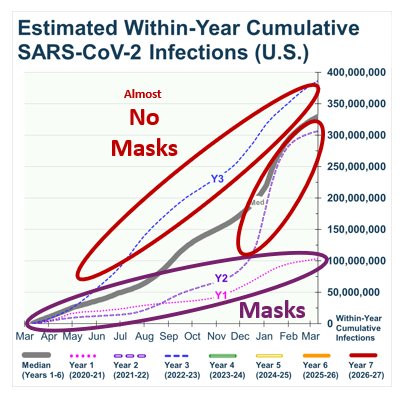
Masks work.
Pretending away COVlD and dropping societal layered mitigations fueled the spread of SAR-CoV-2, starting in summer 2021.
Mike Hoerger, PhD MSCR MBA@michael_hoerger
Is COVlD going away or... Are we about to get slammed by the BA.3.2 variant? 🔥🔥🔥
English
Yates Buckley أُعيد تغريده

I'm 22 years old and Claude Code is deteriorating my brain.
Every single day for the last 6 months I've had 6 to 8 Claude Code terminals open, waiting for a response just so I can hit 'enter' 75% of the time. And it's doing something to me.
In convos with a couple of friends, it's been a point that's been brought up pretty frequently.
None of us feel as sharp as we used to.
I don't know if it's just us, or others in their 20s are feeling the same thing, but it's something I've been thinking about a lot.
P.S. I know this is a problem with my reliability/usage of it, not Claude Code itself, but the effects are real nonetheless
English
Yates Buckley أُعيد تغريده


Yates Buckley أُعيد تغريده

Yates Buckley أُعيد تغريده

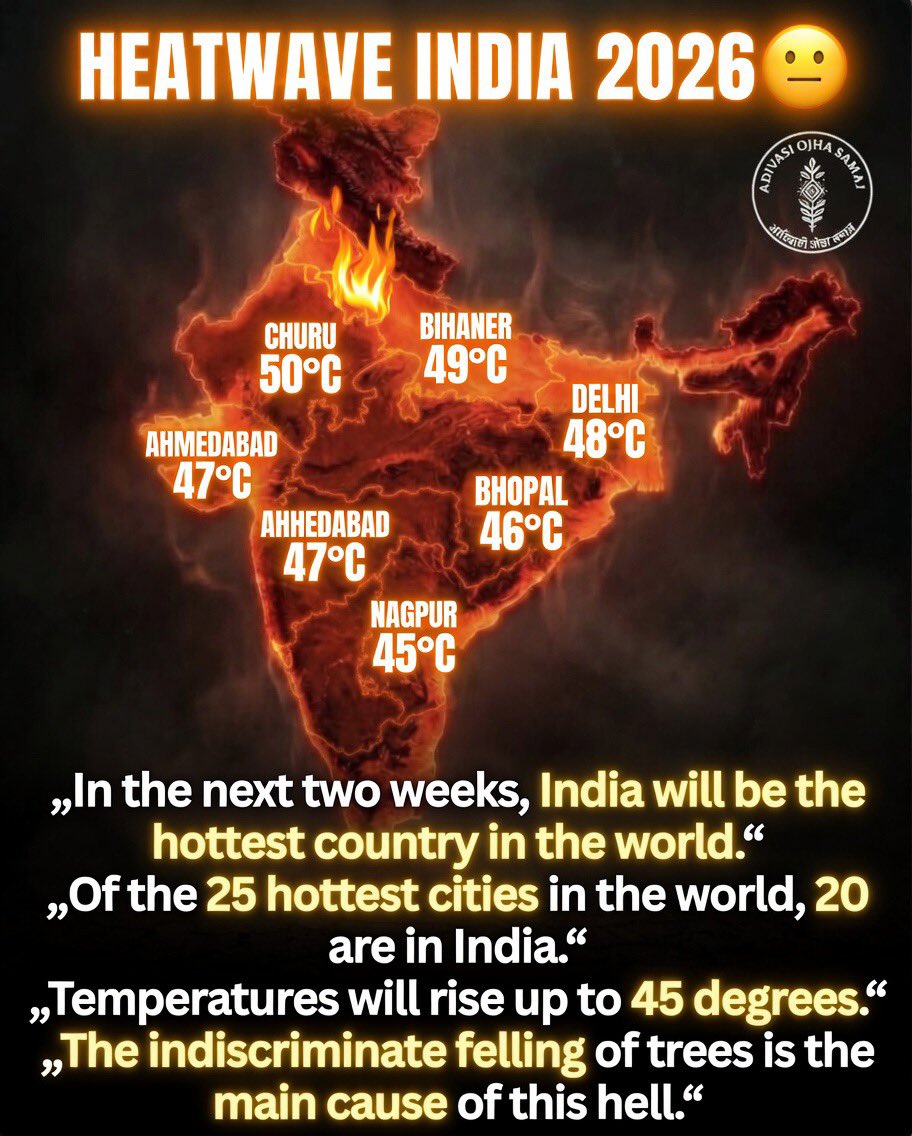
In case you watch TV in the West, you will not know, but India 🇮🇳 is super hot 🥵now. Okay, currently also heavily watch golf ⛳️ to learn this crazy 🤪 sport. We finally joined after many years living directly next to it, we hear 👂 the club sound in the garden ;-)
Thomas Reis@peakaustria
Summer hasn't even started yet and we already see 50°C.
English
Yates Buckley أُعيد تغريده
New: Covid-19 vaccines roughly halved the chances a US adult would need to visit the ER or be hospitalized with their infections last fall and winter, according to two sources familiar with the findings of a new study. But you won’t hear about it from the agency that led the research: the US Centers for Disease Control and Prevention.
The current head of the CDC, Dr. Jay Bhattacharya, who’s also director of the US National Institutes of Health, blocked the publication of those findings in the CDC’s flagship journal, the Morbidity and Mortality Weekly Report, according to the sources.
cnn.com/2026/04/22/hea…
English
Yates Buckley أُعيد تغريده

Mass General Hospital 84 participants study suggests long COVID may persist because spike related immune complexes overactivate neutrophils which release DNA traps that damage blood vessels and promote microclots sustaining inflammation.
nature.com/articles/s4139…
English
Yates Buckley أُعيد تغريده
Buzz buzz but there was nothing surprising here. All ideas that have been kicking around for years. And hand waving the elephant in the room of technical debt - where the worse problems keep popping up - in my experience.
🍓🍓🍓@iruletheworldmo
a masterclass in coding agents from the head of anthropic. there’s still a tonne of leverage in knowing how to use these systems optimally and this is the best i’ve seen. make sure to bookmark so you can watch again and again chat
English
Yates Buckley أُعيد تغريده

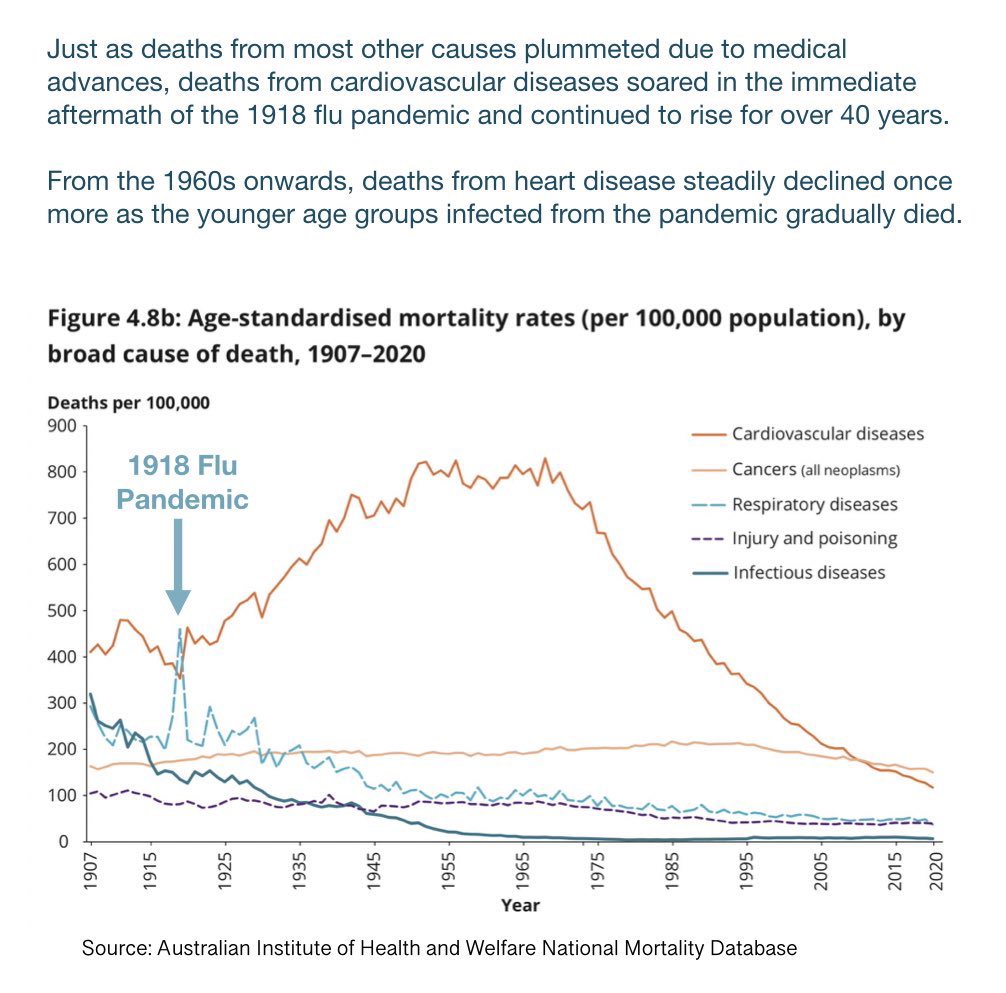
Did you know that, in the aftermath of the 1918 flu pandemic, deaths from cardiovascular diseases soared and continued to rise for over 40 years?
From 1960 onwards, deaths from heart disease steadily declined as the younger age groups infected during the pandemic gradually died.
Cat in the Hat 🐈⬛ 🎩 🇬🇧@_CatintheHat
This phenomenon of delayed deaths from post-infection sequelae is not new. We also saw it following the 1918 flu pandemic, as this Australian data shows. Just as deaths from most other causes plummeted due to medical advances, deaths from heart disease exploded after 1918. 👇🏻
English
Yates Buckley أُعيد تغريده
Urban heat island: 80 years of blindness in the United States.
The more I work on the subject of the urban heat island, the more I realize that the subject has been totally neglected.
In 1946, the American climatologist Helmut Landsberg published an important paper in the United States.
He claims that the American city "is climatically poorly planned" and produces "a special microclimate that closely resembles that of a desert."
His warnings did not prevent a largely climate-indifferent urbanization thereafter.
The streets continued to trap the heat, despite the work of Timothy Oke in the 1970s.
It was not until the first health disasters that the subject emerged.
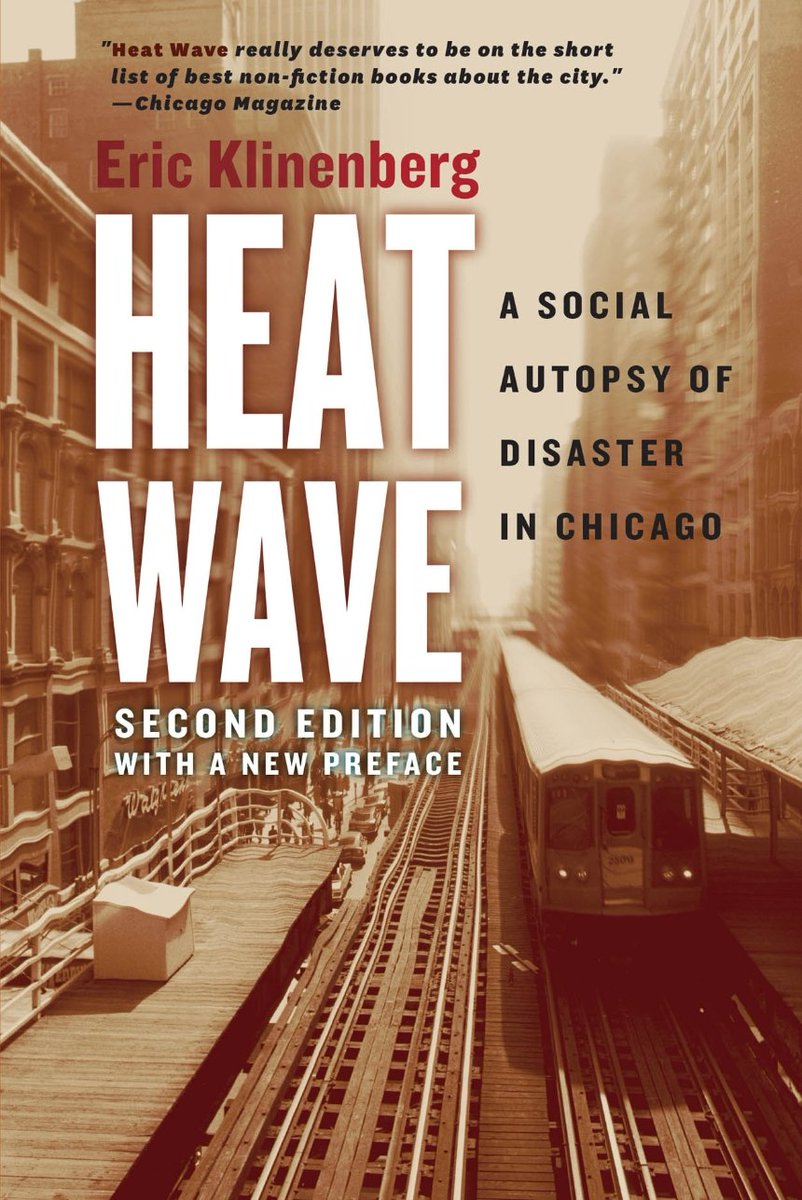
The Chicago heat wave in 1995 raised awareness of the fragility of the most disadvantaged populations, without structural transformation commensurate with the stakes.
For 80 years, American cities have been producing increasingly intense heat islands.
They amplify social inequalities and the exposure to heat of the poorest.
Recent heat waves have further illustrated this.
Have we emerged from this blindness in Europe?
Image: Olga Fedorova / Associated Press
Source: H. Landsberg, E. Klinenberg via @ClementGaill
Thomas Reis@peakaustria
non-survivable conditions are occurring during present-day heat events, all of which are below 35oC wet-bulb temperature. Of concern is regular exceedances of deadly thresholds for older people directly exposed across all events. Moreover, extremely hot yet dry conditions are found to be just as deadly as hot and humid conditions. For future climatological assessments, we emphasise the importance of employing increasingly accurate physiology-derived methods to assess the risk of potentially deadly heat stress.
English
Yates Buckley أُعيد تغريده

Yates Buckley أُعيد تغريده
Between 1991 and 1993, approximately 18 gigatons of CO2 disappeared from the atmosphere. The Mauna Loa record - the most trusted CO2 dataset on Earth - shows it plainly. And here is what makes it strange: that removed CO2 never came back. It appears to be gone permanently, or at minimum for multiple decades.

English