

• Recent satellite imagery and defence reporting suggest the India-funded infrastructure on Agalega island is now largely operational. Quietly, this small Mauritian island is emerging as a new strategic node in the southwest Indian Ocean.
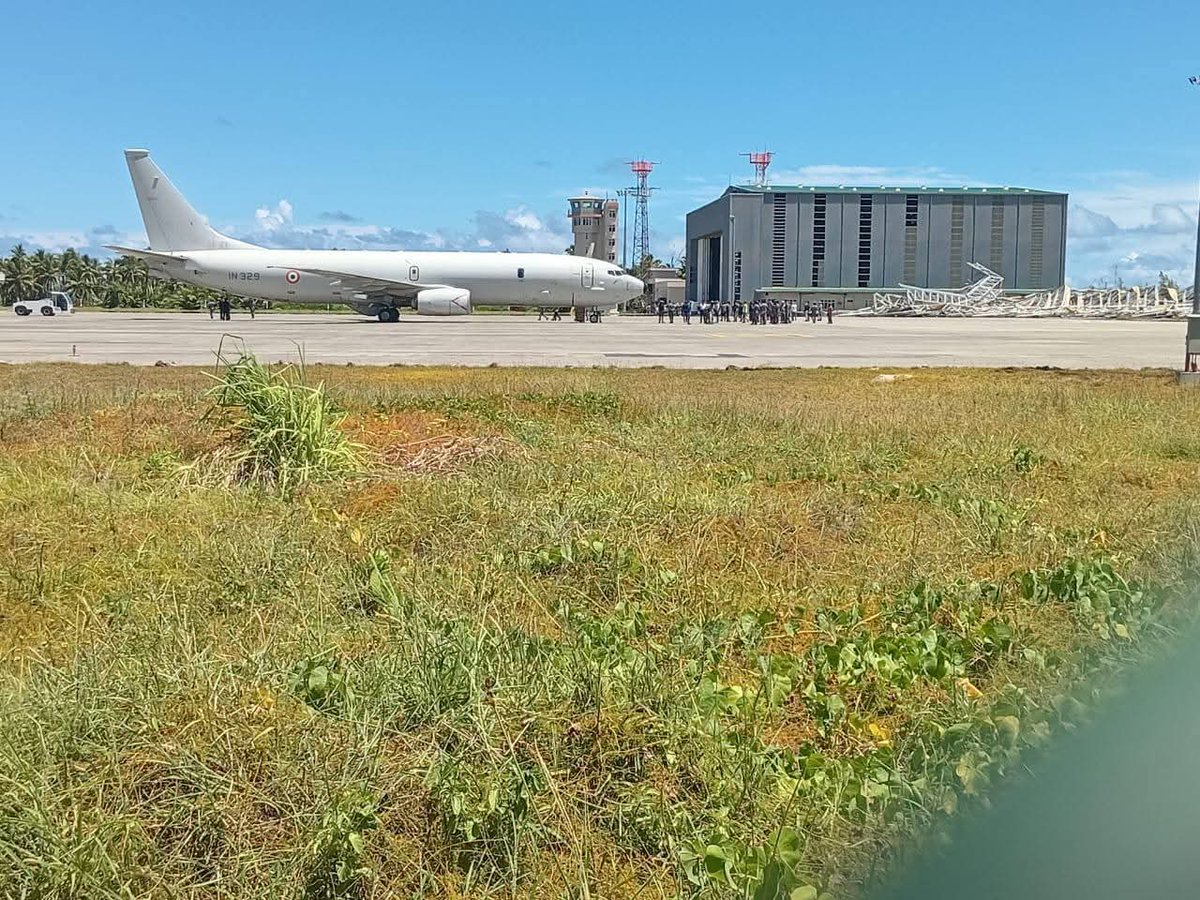
• On 25 February 2026, an Indian Navy P-8I Poseidon maritime surveillance aircraft (callsign IN329) reportedly landed in Agaléga. For analysts, this is significant: it suggests the 3,000-metre runway is now operational for major military aircraft.
• The P-8I Poseidon is not just another patrol aircraft. It is one of the world’s most advanced platforms for: anti-submarine warfare, maritime surveillance, intelligence gathering and long-range naval coordination. Operating it from Agaléga greatly expands India’s surveillance reach.
• Alongside the runway, the island now has new jetty infrastructure capable of receiving naval vessels. Together, the airstrip and port effectively turn Agaléga into a forward operating site for Indian naval operations in the western Indian Ocean.
• Officially, Mauritius insists Agaléga is not a military base. Authorities describe the project as dual-use infrastructure supporting: disaster relief, maritime security, medical evacuations and local economic development. But strategically, the implications are obvious.
• Agalega sits close to key shipping lanes linking: the Persian Gulf, East Africa and South Asia. These routes carry a large share of the world’s oil and container traffic. Monitoring them is a strategic priority.
• For India, the island helps close a critical surveillance gap. The southwest Indian Ocean has historically been outside India’s immediate monitoring range. With P-8I patrols from Agaléga, India can now track activity across: the Mozambique Channel, the western Indian Ocean and maritime traffic moving toward Africa.
• The project fits India’s broader maritime doctrine: SAGAR — Security and Growth for All in the Region. The goal is to position India as the primary security provider across the Indian Ocean.
• It also responds directly to China’s growing presence.Through the Belt and Road Initiative, Beijing has invested heavily in ports such as: Hambantota in Sri Lanka, Gwadar in Pakistan and its military base in Djibouti. India sees these developments as part of the “String of Pearls” strategy.
• Agaléga also sits within a broader strategic geography. About 870 miles to the east lies Diego Garcia, the major US-UK military base in the Indian Ocean. Together, the two locations could provide overlapping surveillance across the central Indian Ocean.
• The Indian Ocean is rapidly becoming a theatre of great-power competition. US-China rivalry, India’s regional ambitions, and tensions involving Iran are all increasing military activity across the region.
• For Mauritius, this brings both opportunity and risk. The partnership with India strengthens maritime security — but it also places the country closer to the fault lines of Indo-Pacific geopolitics.
English