
よしお retweetet

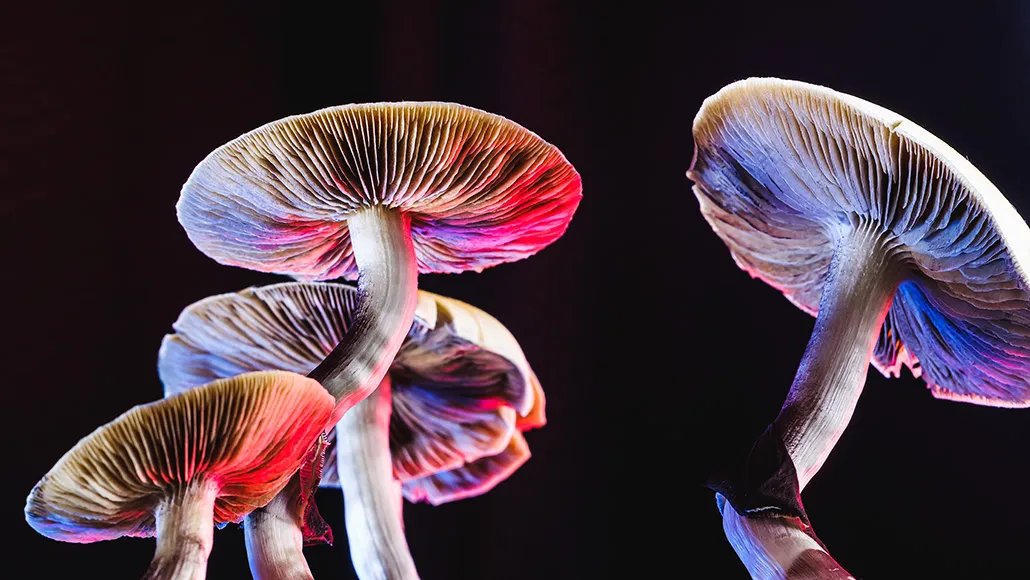
When Johns Hopkins researchers gave psilocybin to volunteers and scanned their brains, they expected to see more neural activity. Instead, they found the opposite.
The default mode network, your brain’s primary filter system, went almost completely dark. Blood flow dropped by up to 60% in regions responsible for maintaining your sense of self and screening incoming information.
And that’s exactly when participants reported the most vivid, meaningful experiences of their lives.
Dr. Robin Carhart-Harris discovered something that breaks our basic assumptions about consciousness. In his studies, the intensity of psychedelic experience correlates inversely with brain activity. The quieter the brain, the richer the perceived reality. Volunteers consistently described accessing information and perspectives that felt more real and true than their baseline consciousness.
One participant put it perfectly: “It wasn’t like I was imagining things. It was like I stopped imagining things.”
Consider what your brain filters out right now. You can’t see the electromagnetic spectrum beyond visible light, even though it’s flooding through your body every second. You can’t hear the ultrasonic communications happening between animals around you. You can’t feel the gravitational waves from colliding black holes rippling through spacetime.
But the filtering goes deeper than sensory limitations.
Take change blindness experiments. Researchers have people watch videos where major elements of the scene change completely between cuts. A person’s shirt changes color. Buildings disappear. An entire conversation partner gets replaced by someone else mid-dialogue. Most viewers notice nothing. Your brain shows you continuity even when reality is shifting dramatically.
Or consider inattentional blindness. In the famous gorilla experiment, people counting basketball passes fail to notice a person in a gorilla suit walking directly through their field of vision. The information hits your retina perfectly. Your brain discards it as irrelevant before you become conscious of it.
Now imagine this filtering happening at levels you can’t measure. What if your brain doesn’t just edit out obvious distractions? What if it edits out entire dimensions of information that would overwhelm your survival priorities?
Neuroscientist Eben Alexander experienced this firsthand during a coma caused by bacterial meningitis. His neocortex, the brain region responsible for filtering and organizing conscious experience, shut down completely for seven days. During that time, he reported accessing what felt like direct, unfiltered contact with reality itself. No sense of separation between observer and observed. No categorization or prediction. Just pure information flow.
The experience was so vivid and structured that he spent years trying to reconcile it with his neuroscience training…
Evolution built your consciousness for survival, not accuracy. The human who notices every detail of every moment doesn’t last long in environments with predators. The human who automatically filters the world into “threat,” “food,” “mate,” and “ignore” lives long enough to reproduce.
What psychedelics might do is temporarily disable the survival filter and let raw reality through.
UCLA researchers also found that people on psychedelics show increased connectivity between brain regions that normally don’t communicate. Areas responsible for vision start talking directly to areas responsible for emotion and memory. The rigid hierarchies that usually control information flow break down.
Instead of perception flowing through the usual bottlenecks and filters, information moves freely between systems that evolution separated for good reasons.
The results match reports from users across cultures and centuries. Heightened awareness of connection between all things. Dissolution of the boundary between self and environment. Direct access to information that feels more fundamental than normal thought.
What if consensus reality isn’t reality? What if it’s just the narrow slice of available information that keeps seven billion filtering systems functioning in approximately the same way?
The consistency of our shared hallucination doesn’t make it true.
It just makes it useful.
Your sober mind might be the altered state.
Kekius Maximus@Kekius_Sage
🚨 Scientists suggest psychedelics may reveal a “truer” version of reality, while your brain normally blocks it
English