Re-envisioning a song from 30 years ago, off my True Spirit album. I’m adapting it for the opening scene of my Blended-roots Opera. The song’s title, “Welcome to Changes”, stays the same. The lyrics & music are now syncing to the aquatic-staged narrative.🌄
Kofi's trio of albums on Mad Professor's Ariwa Sounds remain some of our favorites from the digital lovers rock era. Losing Time for Love... insheepsclothinghifi.com/kofi/
@insheepshifi We were chatting on this the other day. I have a feeling it was his answer to what was happening in the soul scene at the time. Sade etc…
SMALL TOWN REBELS
I was on the train to the coast with Bill Broad, Steve Bailey and another school friend, when Bill, now known as Billy Idol, slipped a tab of acid onto my tongue. Then he stood up, wound down the window, and ordered me to throw my watch out. This watch, which my mother had obtained with Green Shield stamps, had been my sixteenth birthday gift. Billy said, “Do it now! Time doesn’t matter.” I complied.
I learned later that this discarding of the watch was something Bill had picked up from the movie Easy Rider, an incident which would later turn up in TheBuddha of Suburbia, when Charlie Hero invites his school friend Karim Amir into his bedroom for a joint, a telling off, and a wank.
We four school friends arrived at the coast as it was getting dark. By now, we were tripping off our heads. Pitching our tent on what we thought was a rugged patch on a coastal path, we woke in the morning with two policemen poking their heads into the tent. It turned out that we were not in fact by the sea, but in a children’s playground, next to a swing, in Bournemouth.
The policemen rang our parents to confirm that we were not runaways. Bill Broad, who later formed Generation X, and Steve, who, as Steve Severin, became the bassist for Siouxsie and the Banshees, were two among many musicians who emerged from the suburbs at the beginning of the seventies.
Yesterday, I did my first onstage interview since my accident. I was sick with nerves in the afternoon, terrified that my catheter might get blocked and I would pee myself on stage. I even threw up in my favourite café on the Goldhawk Road. I was worried about my appearance and how I would be viewed as a disabled person.
Despite my fears, I enjoyed the talk. The audience was sympathetic and responsive. A young woman asked me about the optimism of my first novel. Oddly enough, that morning, Carlo and I had been discussing optimism as a generational force, wondering where it came from, and how culture worked to inspire and bring about innovation.
I replied to the woman that despite the gloom and boredom of the suburbs, there was a lot of resourcefulness, particularly in regard to music and the arts that emerged from it: photography, fashion, journalism and film. Pop was a paradise for no-hopers, bums, outsiders, fairies and failures. Listening to The Velvet Underground – tough, awkward, avant-garde music – made us want to become artists. Our style was informed by A Clockwork Orange, Cabaret, and Visconti’s outrageous masterpiece, The Damned.
When I was fifteen I formed a band called The Orange Socks, but since I couldn’t sing or play, we didn’t get very far. At one all-night party, I was strumming a guitar with some local musicians – including Billy Jenkins, who would become a great jazz guitarist – and I remember Bill Broad (Idol) looking at me with some contempt as I attempted a blues solo. What options were left for me? To become a roadie?
Musicians like The Beatles, Led Zeppelin, Joni Mitchell, Crosby Stills and Nash, Marvin Gaye and Jimi Hendrix were leading the culture, and were far more important than the latest novel by Iris Murdoch. Music had taken over. I wanted to be part of this scene, but I also wanted to write fiction. How could the two be put together?
It took me a long time to work out how to integrate pop and popstar aspiration into my writing. I hadn’t seen it yet in contemporary fiction. The character of Charlie Hero was an amalgam of the young, talented, pretty boys I had grown up with.
Writing is a form of integration, it is where a young artist will, if he or she is lucky, synthesise their various preoccupations; where at last everything they have been conscious and unconscious of – what they have been thinking about – will come together in a coherent pattern or story. This is why it might take so long for a person to become the artist they need to be. It could take ten years.
It certainly did for David Bowie, who, before Hunky Dory, was a fey folky, struggling to find his artistic identity. I first met him in the early nineties when I was sent to interview him in a studio in Chalk Farm. He was doing a lot of press for his album Black Tie White Noise and was worrying that his music was being forgotten. He told me he wanted to write music for film; intending to do so for The Man Who Fell to Earth, but had been too exhausted. We talked about Peter Frampton’s father, Owen, an art teacher who had taught us both at Bromley Technical High School, ten years apart. When we concluded the interview, Bowie asked, in his typically charming way, “Can I have your phone number? Can I see you again?”
Of course I never expected to hear from him, but during the next few years, he often rang me up when he wanted to talk, sometimes at two in the morning. I was a new father of twins, dressed in only my underpants in a freezing cold house when I got one such call. Bowie wanted to discuss serial killers which, for a time, was a subject he had become enthralled by. I was at a loss as to how to reply, but soon realised I didn’t have to say anything, just let him talk.
When we first met, Bowie had already read The Buddha of Suburbia, and had heard that the BBC were intending to do it as a television series.
I met him in The River Café to ask him whether he would allow the BBC to use his original music on the soundtrack. But he said to me, at cross purposes, “I thought you’d never ask”.
“Ask what?” I replied.
“Me to do the music for the TV show.”
That’s how it started, and he went off to Montreux, Switzerland with the tapes of the show. The late director Roger Michell and I flew out to hear what he had done. We sat in Bowie’s tiny studio with his then collaborator, Erdal Kizilcay, who played the instruments on Bowie’s eventual album.
At first hearing, Roger was disappointed, and was tasked with having to tell the world’s greatest pop star that he didn’t like his work. You couldn’t just write a song and play it against a film sequence. The music had to work with the images and the story.
Bowie took Roger’s complaints seriously, writing them all down in his little notebook with a pencil. He stayed up all night revising the music so that he could play it to us the next morning before we went back to London. It didn’t surprise me; Bowie was an autodidact and incredibly industrious, constantly trying to improve himself, evolving and experimenting. He had high energy and read widely, visiting galleries daily and surrounding himself with the most interesting people. He admired Prince for the sheer volume of his output. He used to say, “How does he do all that? He must be a cokey.”
The next morning, Roger and I listened to his revised ideas. They were an improvement; the sounds now worked better with the action, the music fitting the beats of the drama.
When Bowie finished the album, he came to London and invited my partner Tracey and me to his hotel to listen to it. When we turned up, he was dressed in a kimono, and presented us with two notebooks with The Buddha of Suburbia written as a heading. He was going to play the entire album to us through a small tape deck, and we were to make notes as it went. I immediately went into a panic and slipped into the toilet to smoke a joint.
Tracey and I sat through the album as Bowie watched us. I didn’t write anything down at all, but stared at the page, hoping something insightful and useful would occur to me. But it was a great record, and later David claimed it was one of his favourites. It was a relief to get out of that room.
I went through something similar with him later, when we were working on a theatre adaptation of Ziggy Stardust. As before, Bowie played the whole album while singing along to it and asking for suggestions about how we could stage it. I had no idea, and I don’t think he did either. He just wanted it to be ‘avant-garde.’ I said it needed a story if it was to be a theatre piece. He told me he didn’t want a story. And that, as they say, was that.
On August 11th 1993, the pregnant Tracey and I joined Bowie and his wife Iman in a limousine to see U2 perform at Wembley. The moment we stepped into the stadium everything got weird. A murmur became a roar as people began to recognise him; ninety-thousand heads turning, like a wave, straining to see the nation’s greatest pop star, and perhaps wondering who the diminutive Indian scampering along beside him was.
This was the night when Salma Rushdie, still in hiding after the fatwa, and wearing devil’s horns, was invited on stage by Bono. Music and literature had come together, briefly.
Brian Eno had told us we should sit close to him at the mixing desk as it was the safest place to be in the event of a crowd surge. But the desk was in the centre of this menacing multitude. So, a dozen security officers formed a triangle around us and like an arrow, forcing us through the shrieking horde. I realised, while being carried through that immense crowd, that extreme fame was both exhilarating and terrible, though Bowie didn’t seem to mind. After all, as a teenager he had wanted to be Elvis.
---
If you wish to preorder my forthcoming memoir, Shattered, you can do so by following the links provided here:
linktr.ee/shatteredH
Once mentioned alongside contemporaries Aphex Twin, Autechre, Luke Vibert, and Mike Paradinas, Yorkshire-based producer Beaumont Hannant completely disappeared from the musical world in 1998...
insheepsclothinghifi.com/beaumont-hanna…
60 Second Banger #5
‘Chase’ by Giorgio Moroder is a total (60 second) banger. Released in ’78 it was created for the film ‘Midnight Express’. They say this is the start of Hi-Nrg but for me it’s a mega balearic disco record that always sounds good in the party.
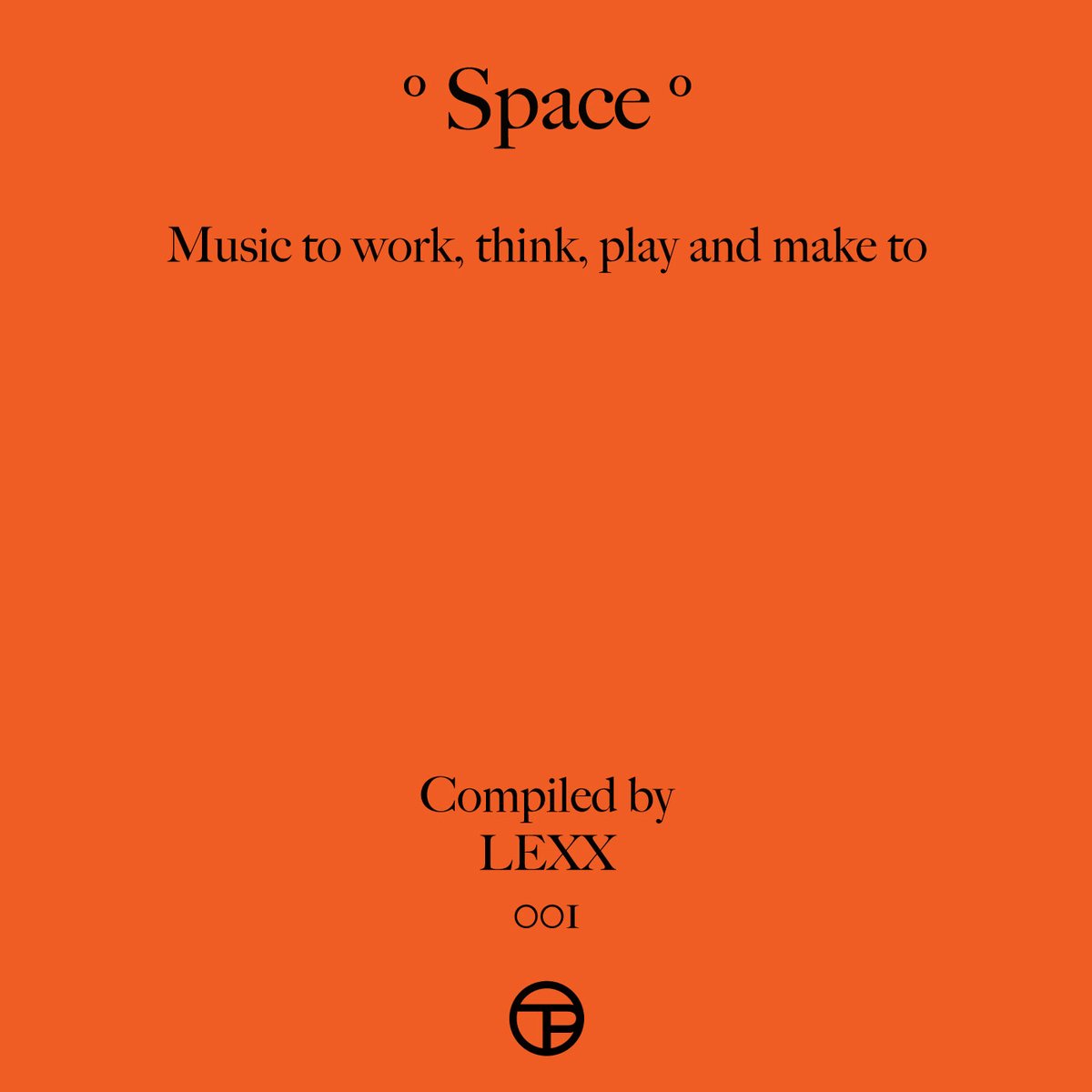
º Space º
A new series of playlists of music to work to. The first one is compiled by close friend of the family Lexx with a playlist that is ‘chilled, but not too chilled’.
open.spotify.com/playlist/1RzpA…