AstroForge

1.2K posts

AstroForge banner
AstroForge

AstroForge

@AstroForge

We mine asteroids

Beigetreten Ocak 2022
413 Folgt16.3K Follower
AstroForge
AstroForge@AstroForge·
It’s a great day to be a space fan. Excited to see how we can contribute!
NASA Administrator Jared Isaacman@NASAAdmin

To build a sustained human presence on the Moon, we are building @NASAMoonBase, prioritizing surface operations and scalable infrastructure.  - Frequent robotic landings and mobility testing including MoonFall drones  - Starting in 2027 nearly monthly cadence of equipment and rovers with scientific payloads landing on the Moon.  - Investments in power, communications, and surface mobility  - Scalable infrastructure to support long-term human presence The objective is clear: build the foundation for an enduring lunar base and take the next step toward Mars.

English
6
11
236
4.3K
AstroForge
AstroForge@AstroForge·
Last year, the U.S. launched twice as many times as the next closest country. It’s slightly ironic that in this second space age, in the era of reusable rockets, not only launch but landings have become routine. What a tragedy it would be to squander the public's burgeoning excitement over the arrival of a new space age with a glut of mundane constellation launches. There will always be a subset of the population that finds rocket launches exciting, just like there will always be a subset that enjoys watching planes take off, or trains trundle past… but increasingly the excitement in spaceflight comes not from launch itself but from what will be done once access to orbit and beyond is finally *actually* routine and cheap. Comsats, Earth Observation, and Launch are currently the name of the game in spaceflight, with a smattering of crew on the side. The vast majority of in-space activity is paid for by governments, aka: taxpayer funded. This is a huge problem. Comm sats are the only example of something everyday consumers are willing to pay for that is directly tied to space, and thank goodness for them. To get to a future where humanity is a spacefaring civilization with colonies in space - both free flying and on the surface of the Moon and Mars - we cannot solely rely on the economics of and public support for LEO constellations. A future where resources are gathered not from our one precious habitable planet, but rather from the untold riches of the solar system is simply a no-brainer, and far more inspiring and exciting than one where we merely continue to trash our homeworld. As launch grows ever cheaper, we can afford to adjust our tolerance of risk for a given payload or mission… so long as it’s uncrewed, of course. As we adjust or risk tolerance, we can attempt more and more bold endeavors. After all, that is ultimately the draw of spaceflight; swinging hard and taking calculated risks to boldly push the boundaries of what is thought to be possible. We think that by virtue of keeping spaceflight exciting through continued exploration, we can not only foot the bill for a colony on the moon and someday mars, but also enable Humans on Earth to live better, cleaner, more fulfilled lives. All too often we hear the same refrain. Why spend time and money on anything in space when we have problems here on Earth. This, we know, is a false dilemma. We can fix problems here on Earth AND explore the cosmos. In fact, spaceflight has repeatedly benefited the people of Earth in ways large and small. In the name of putting this tired old argument to bed, we’ll name just a few: GPS, weather forecasting that annually saves thousands of lives, satellite imagery that guides relief efforts within hours of a disaster, high speed internet in historically under or unserved areas, heart pumps keeping cardiac patients alive, cochlear implants that give people the gift of hearing, even the cameras in every smartphone! All of these things trace their lineage directly to space research. We know that spaceflight benefits the lives of the people of planet Earth. It is not up for debate; it’s merely a matter of how much benefit we as a people want to go for. How hard do we want to swing? Mining asteroids is certainly a hard swing, and one we work every day to make a reality.
English
5
25
180
6.2K
Stoke Space
Stoke Space@stoke_space·
Andromeda flight engine awaiting shipment to our test site in Moses Lake, WA. 🔥 Big shout out to the local community and to our partners in the area like the @PORTOFMOSESLAKE and Grant County Sheriff's Office for being good neighbors and sharing the excitement as we work relentlessly toward launch.
Stoke Space tweet media
English
21
155
1.2K
44.3K
AstroForge
AstroForge@AstroForge·
NASA went to asteroid Bennu expecting sand but instead it was all boulders. AstroForge employee Andy Ryan was formerly the Lead Scientist on OSIRIS-REx's sample physical and thermal analysis working group. Their paper just dropped. We talk about it here: apple.co/40550YW
English
5
19
185
24K
AstroForge
AstroForge@AstroForge·
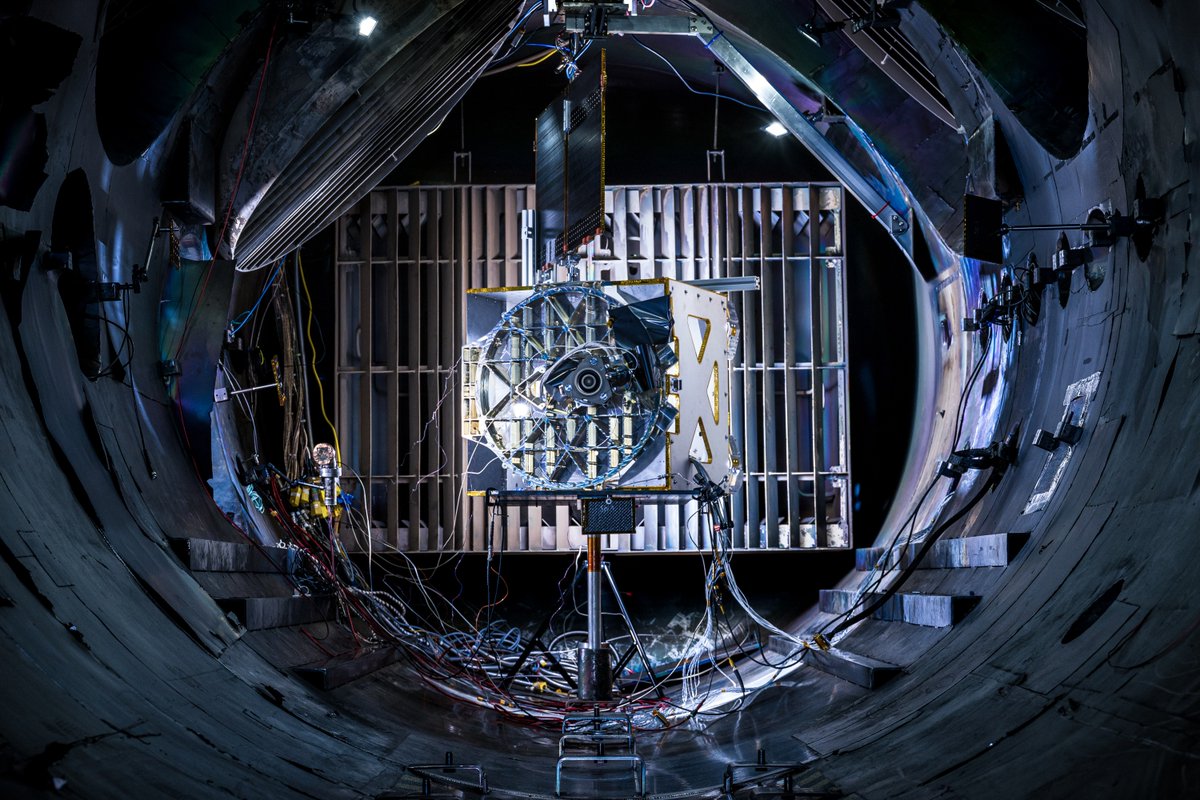
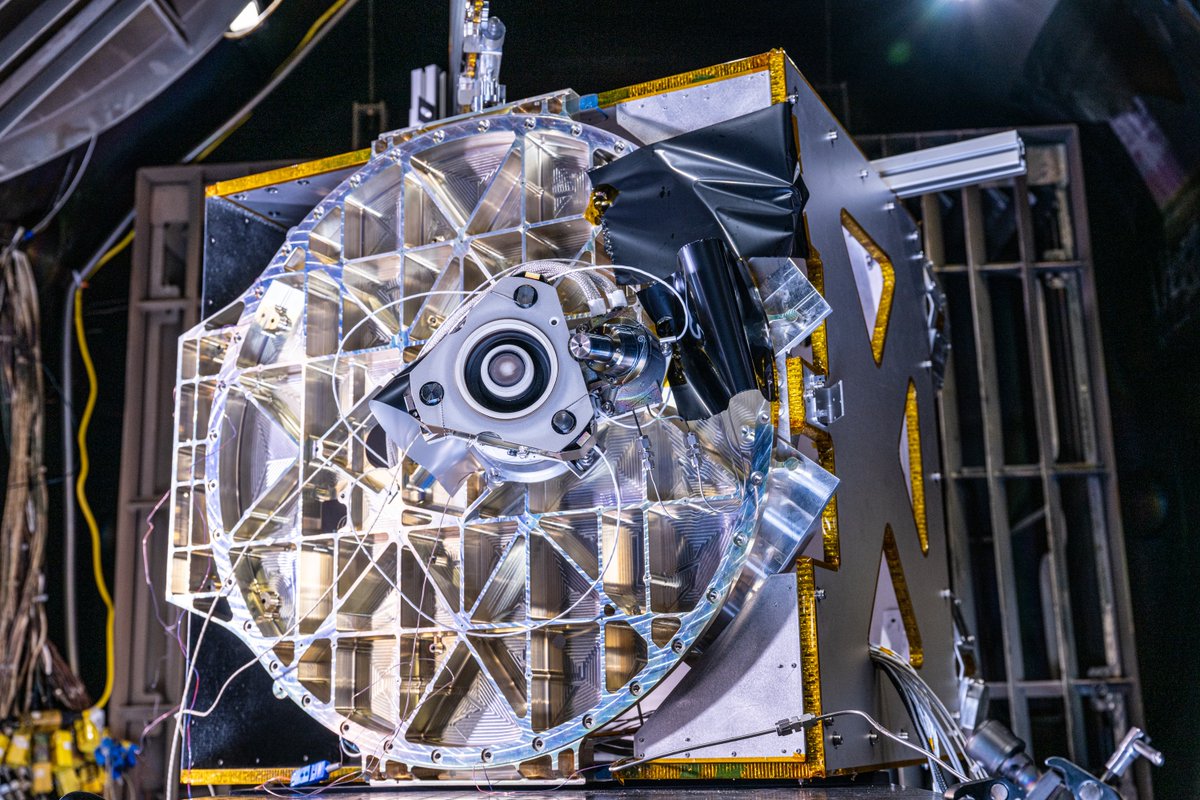
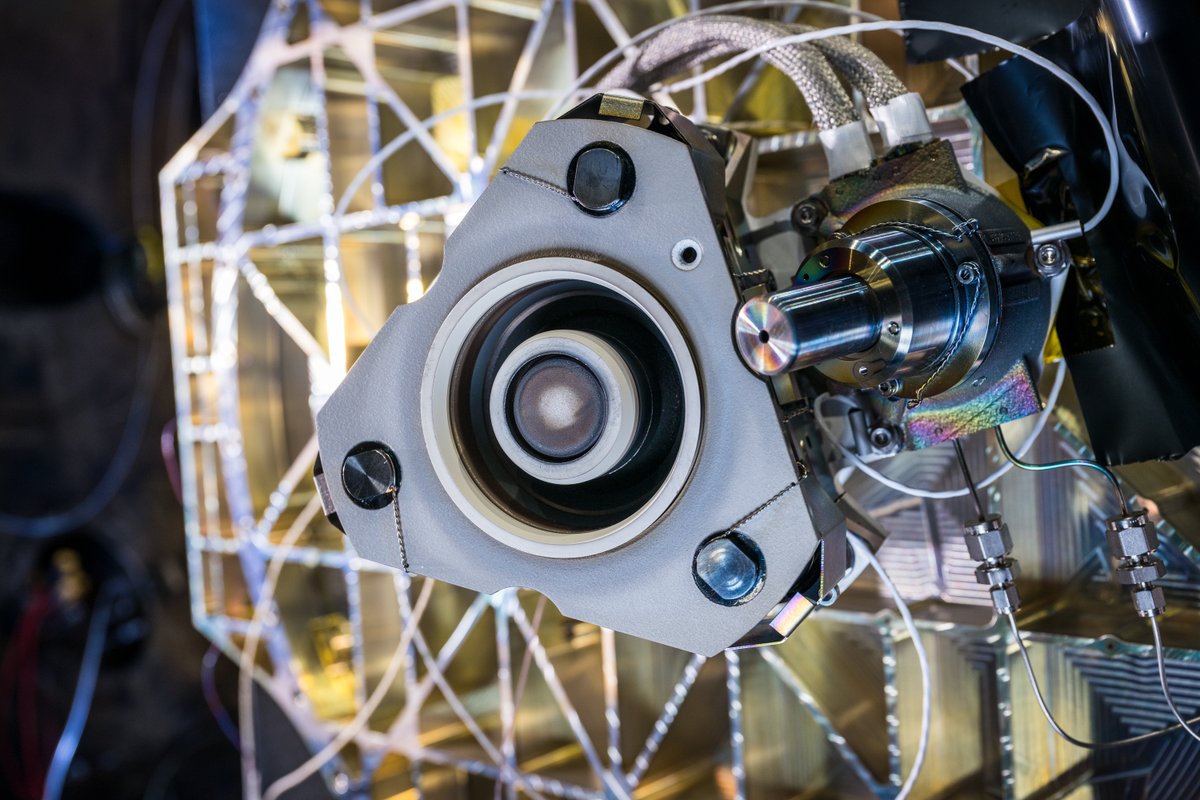
We strive to always test as we intend to fly. This enables us to derisk components and subsystems before launch. To that end, here is a DeepSpace-2 test article in a vacuum chamber getting prepared for a hotfire thruster test under the control of our full avionics suite.
AstroForge tweet mediaAstroForge tweet mediaAstroForge tweet media
English
10
42
290
11.5K
AstroForge
AstroForge@AstroForge·
Fresh science is the best science. Also, fun fact: Andrew Ryan, who lead OSIRIS-REx's sample physical and thermal analysis working group joined AstroForge a few months ago after completing this study!
NASA@NASA

When OSIRIS-REx reached the asteroid Bennu in 2018, scientists expected to find a smooth, beach-like surface. Instead, they encountered a jagged, rugged world. Samples of the asteroid, brought back to Earth in 2023, are helping untangle the mystery: go.nasa.gov/4cMGBPb

English
4
17
190
9.2K
AstroForge
AstroForge@AstroForge·
What's missing today is exactly what was missing in 1850: the extraction tech. Aluminum did not change the world because someone found more of it. It changed the world because someone built a better way to get it out. The Aluminum of the future just has a different name: Platinum.
AstroForge tweet media
English
1
3
44
1.1K
AstroForge
AstroForge@AstroForge·
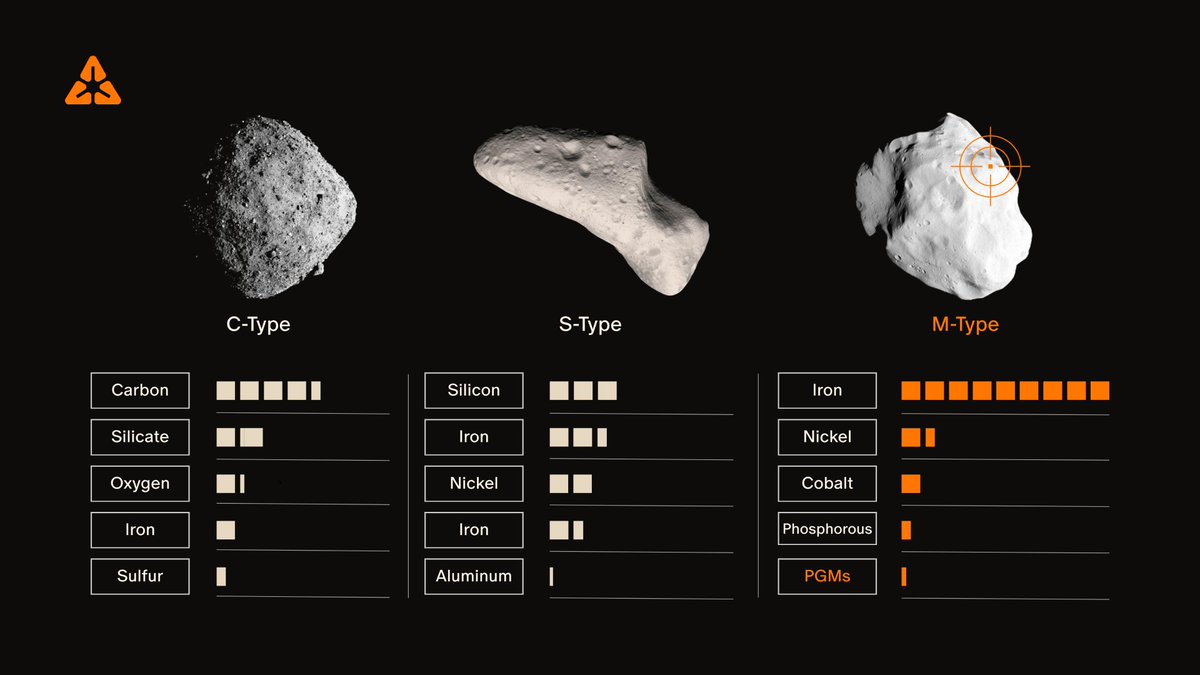
Meanwhile, these same critical metals exist in staggering concentrations inside near-Earth asteroids, the exposed cores of ancient planetesimals, made primarily of iron, nickel, and platinum group metals.
AstroForge tweet media
English
1
3
39
1.2K
AstroForge
AstroForge@AstroForge·
The past is a great predictor of the future. When we look back, some of the greatest technical advancements of our time are based on a simple change in the availability of key raw materials. Take for example, the Washington Monument; it's capped with aluminum. Not because it looked cool or was in some way a utilitarian choice, but because in 1884, aluminum was more precious than gold.
AstroForge tweet media
English
11
20
275
12.7K
AstroForge retweetet

Matthew Gialich
Matthew Gialich@MattGialich·
57 years ago today, Apollo 9 splashed down after testing the Lunar Module in Earth orbit. Test, learn, *then* land. That’s NASA’s playbook, and it’s @AstroForge’s playbook too.
Matthew Gialich tweet media
English
1
6
52
1.8K
AstroForge
AstroForge@AstroForge·
When test facility availability becomes a bottleneck, what do you do? Build your own test facility! We built an anechoic chamber in our factory to enable a rapidly iterative test campaign of our entire RF stack. Roid Rage Episode 54 is out now! Tune in: apple.co/40550YW
English
2
8
85
5.6K
AstroForge
AstroForge@AstroForge·
Unboxing time! Our new Thermal Vacuum Chamber continues our recent push to expand our in-house testing capabilities. In this chamber, we'll be able to test fire our electric trusters to verify their performance with our hardware and software.
English
10
25
333
21.9K