Osman

8.8K posts

Osman banner
Osman

Osman

@AvMuhammadOsman

Uluslararası Avukat ⚖️ Cross-Jurisdictional Counsel ⚖️ Precise solutions where jurisdictions collide between boardrooms, embassies & courtrooms.

Beigetreten Mayıs 2025
3.5K Folgt273 Follower
Angehefteter Tweet
Osman
Osman@AvMuhammadOsman·
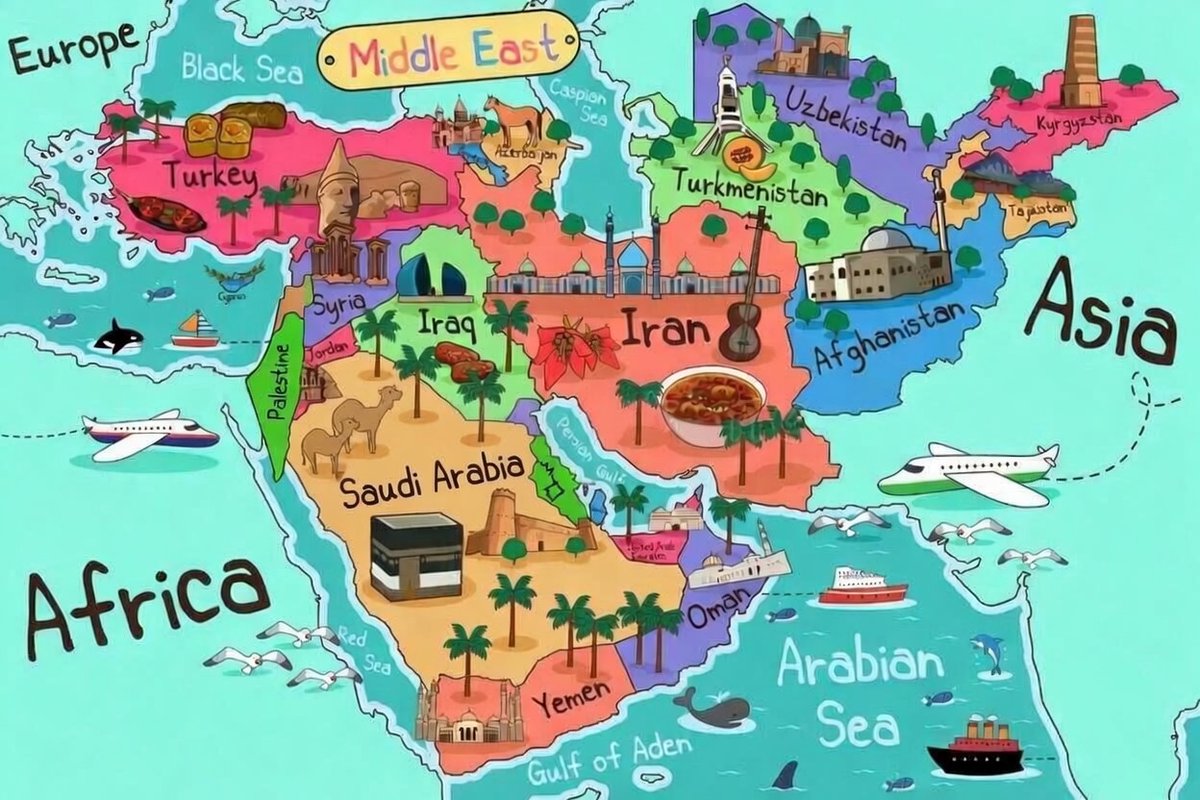
** Türkiye-Iran-Pakistan-Saudi Arabia (TIPS) Persian Gulf and Red Sea (GULFRED Alliance) **A Proposal for a Sovereign Regional Security Architecture to Stop the Exploitation of Sectarianism and External Interventions in the Middle East** (The TIPS Security Pact and Transition the GULFRED Alliance) ** Preamble ** · Recalling the ongoing armed conflict initiated on 28 February 2026 by joint United States and Israeli military operations against the Islamic Republic of Iran, including targeted strikes resulting in the death of Supreme Leader Ali Khamenei and widespread destruction of Iranian military infrastructure, which has escalated into a broader regional confrontation involving retaliatory missile and drone strikes by Iran and its allies against U.S. bases, Israel, and allied states in the Gulf and beyond; · Deeply concerned that external actors, notably the United States and Israel, continue to exploit and exacerbate sectarian divisions between Sunni and Shia Muslim communities as a strategic instrument to justify prolonged military engagement, perpetuate foreign military presence, and advance hegemonic interests at the expense of regional sovereignty and civilian lives; · Noting the Strategic Mutual Defence Agreement (SMDA) concluded between the Islamic Republic of Pakistan and the Kingdom of Saudi Arabia on 17 September 2025, which establishes reciprocal commitments to treat aggression against one as aggression against both, thereby formalizing long-standing defense cooperation amid rising regional volatility; · Observing recent diplomatic engagements, including discussions among the Republic of Türkiye, the Kingdom of Saudi Arabia, and the Islamic Republic of Pakistan toward a potential trilateral defense framework (as reported in early 2026), and concurrent high level contacts between Pakistani and Saudi leadership with Iranian counterparts amid the current crisis; · Affirming that genuine and lasting peace requires the inclusive integration of major Muslim majority powers across sectarian lines, thereby depriving external powers of pretexts for intervention under the guise of sectarian protection or balance of power maintenance; · Reaffirming the principles of sovereign equality, territorial integrity, non interference in internal affairs, mutual respect, and peaceful dispute resolution as enshrined in the Charter of the United Nations and customary international law; The High Contracting Parties – the Republic of Türkiye, the Islamic Republic of Iran, the Islamic Republic of Pakistan, and the Kingdom of Saudi Arabia – hereby propose the urgent negotiation, adoption, and ratification of the Türkiye-İran-Pakistan-Saudi Arabia (TİPS) Security Pact, as the foundational instrument for a unified indigenous security architecture, to be progressively institutionalized as the Guardianship United for Littoral Freedom in the Persian Gulf and Red Sea (GULFRED Alliance). Article 1: Core Objectives 1. To neutralize attempts by external powers to foment intra Muslim conflict through sectarian narratives (Sunni-Shia) by institutionalizing cross sectarian solidarity and collective self defense. 2. To establish an autonomous regional security mechanism capable of safeguarding Member States' sovereignty and maritime domains, thereby eliminating any legitimate basis for the continued stationing of foreign (particularly United States) military forces and bases in the region. 3. To ensure freedom of navigation, counter external threats to vital littorals,protect civilian populations, and prevent escalation of the current conflict into a wider intra regional war. 4. To facilitate the orderly, phased withdrawal of extraneous foreign military installations as a reciprocal confidence building measure upon operationalization of this framework. Article 2: Mutual Defense and Deterrence Commitments 1.Consistent with Article 51 of the United Nations Charter, an armed attack against one Member State shall be deemed an attack against all, obligating immediate consultations and collective measures, including proportionate defensive responses. 2.Member States possessing advanced deterrent capabilities (including Pakistan's nuclear arsenal) shall extend mutual assurances as mutually agreed, without prejudice to national doctrines, to reinforce regional deterrence against external aggression. Article 3: Joint Maritime and Littoral Security Framework 1.The TİPS Pact shall establish integrated naval and security task forces for the Persian Gulf and Red Sea, with operational divisions reflecting geographic proximity, historical ties, and military strengths: *Red Sea: The Republic of Türkiye shall lead security efforts along the western (African) littoral in coordination with coastal states; the Islamic Republic of Pakistan shall provide primary support to the eastern (Arabian Peninsula) littoral, including close collaboration with the Kingdom of Saudi Arabia. *Persian Gulf: The Republic of Türkiye shall coordinate security for the Arabian littoral, building on established relations with Gulf states; the Islamic Republic of Iran and the Islamic Republic of Pakistan shall jointly oversee security along the Iranian, Iraqi, and related littorals through shared patrols, intelligence fusion, and de-confliction mechanisms. *In Yemen and adjacent areas, collaborative mechanisms shall be established between Iranian-supported and Pakistani/Saudi-aligned forces to enforce de-escalation and humanitarian access. 2.These dispositions draw inspiration from centuries of peaceful multi-sectarian coexistence under historical frameworks such as the Ottoman era, while fully respecting modern principles of sovereign equality and non-domination. Article 4: Institutional Evolution to GULFRED Alliance 1.Following entry into force of the TİPS Pact, Member States shall convene to formalize the GULFRED Alliance (Guardianship United for Littoral Freedom: (Persian Gulf + Red Sea), with provisions for accession by other regional states on consensus. 2.The Alliance's permanent mandate shall encompass exclusive regional guardianship of littorals, countering external interference, and collective defense, rendering foreign bases obsolete and unnecessary. Article 5: Foreign Military Presence and Withdrawal Mechanism 1.Member States declare that the establishment and effective functioning of this indigenous architecture nullifies prior rationales for foreign military deployments, previously asserted as protective measures against perceived threats. 2.Upon ratification and initial operationalization, the Parties shall issue a joint declaration demanding phased closure and evacuation of extraneous bases (including those in Qatar, Bahrain, Kuwait, UAE, and elsewhere), with negotiated timelines and verification protocols. Article 6: Confidence Building, Dispute Resolution, and Implementation 1.Disputes shall be resolved exclusively through negotiation, good offices, mediation, or arbitration, prohibiting recourse to force. 2.Annual summits at the level of Heads of State/Government, joint military exercises, and permanent liaison mechanisms shall build trust and interoperability. 3.The Pact shall enter into force upon signature by all Parties and ratification per domestic constitutional requirements. Concluding Declaration: This initiative constitutes a sovereign assertion by Muslim majority states to reclaim control over their security environment, bridge sectarian divides exploited by outsiders, and secure a future of self reliant peace. It presents a credible pathway to de-escalate the ongoing crisis, offering external actors including the United States a dignified strategic exit from an increasingly untenable and costly engagement. The proposed High Contracting Parties are urged to convene forthwith in a mutually agreed neutral venue to finalize and adopt this framework, thereby converting the present peril into an enduring foundation for regional harmony, stability, and independence from foreign dominations,external wars and occupations. The proposed framework would deliver a balanced, reciprocal benefit to all principal parties, thereby creating a genuine win-win outcome in the current strategic environment. *For the United States and the administration under President Trump, it would provide a credible, face saving, and geopolitically responsible pathway for a phased disengagement from certain forward military deployments in the Middle East. Such an arrangement would align directly with declared U.S. policy goals of reducing open ended overseas military footprints, lowering strategic overextension risks, conserving fiscal resources, and executing an orderly, conditions based withdrawal that preserves core deterrence credibility while avoiding perceptions of strategic retreat or capitulation. *For the Islamic Republic of Iran, the arrangement would satisfy its highest-order, non-negotiable national-security red line: the elimination or substantial reduction of foreign particularly American military bases and troop presences across the Persian Gulf and broader Middle East region. Meeting this longstanding, repeatedly articulated precondition would constitute a major, tangible concession on sovereignty, regional power balance, and threat perception, thereby opening credible space for meaningful de-escalation, confidence building measures, and potential future diplomatic engagement. *Simultaneously, the Arab Gulf states currently hosting U.S. military facilities would achieve substantial and immediate economic relief by terminating the considerable financial obligations associated with these installations. These burdens include direct host-nation support payments, infrastructure maintenance and upgrade costs, security provision expenses, and opportunity costs tied to land and resource allocation. Removing or significantly downsizing such bases would liberate fiscal resources for domestic development priorities, enhance sovereign decision making autonomy, reduce domestic political sensitivities surrounding foreign troop presence, and decrease entanglement in extra regional conflicts. In aggregate, this mutually reinforcing set of concessions would facilitate a structured recalibration of the regional security architecture, reduce the risk of inadvertent escalation, lower the aggregate military expenditure burden across multiple capitals, and create conditions more conducive to long term stability through negotiated adjustments rather than continued confrontation or unilateral imposition. Md Osman @RTErdogan @tcbestepe @HakanFidan @MFATurkiye @CMShehbaz @MIshaqDar50 @GovtofPakistan @PresOfPakistan @ForeignOfficePk @khamenei_ir @MKhamenei_ir @drpezeshkian @araghchi @mb_ghalibaf @FaisalbinFarhan @kbsalsaud @ksamoaf @AH_AlSharaa @AsaadHShaibani @SyPresidency @anwaribrahim @prabowo @badralbusaidi @president_uz @azpresident @presidentaz @TokayevKZ @MFA_KZ @TamimBinHamad @hamadjjalthani @MofaQatar_AR @ShuraQatar @AmiriDiwan @mofaqatar_EN @MBA_AlThani_
Osman tweet media
English
15
26
72
380.3K
Osman
Osman@AvMuhammadOsman·
Osman@AvMuhammadOsman

** Türkiye-Iran-Pakistan-Saudi Arabia (TIPS) Persian Gulf and Red Sea (GULFRED Alliance) **A Proposal for a Sovereign Regional Security Architecture to Stop the Exploitation of Sectarianism and External Interventions in the Middle East** (The TIPS Security Pact and Transition the GULFRED Alliance) ** Preamble ** · Recalling the ongoing armed conflict initiated on 28 February 2026 by joint United States and Israeli military operations against the Islamic Republic of Iran, including targeted strikes resulting in the death of Supreme Leader Ali Khamenei and widespread destruction of Iranian military infrastructure, which has escalated into a broader regional confrontation involving retaliatory missile and drone strikes by Iran and its allies against U.S. bases, Israel, and allied states in the Gulf and beyond; · Deeply concerned that external actors, notably the United States and Israel, continue to exploit and exacerbate sectarian divisions between Sunni and Shia Muslim communities as a strategic instrument to justify prolonged military engagement, perpetuate foreign military presence, and advance hegemonic interests at the expense of regional sovereignty and civilian lives; · Noting the Strategic Mutual Defence Agreement (SMDA) concluded between the Islamic Republic of Pakistan and the Kingdom of Saudi Arabia on 17 September 2025, which establishes reciprocal commitments to treat aggression against one as aggression against both, thereby formalizing long-standing defense cooperation amid rising regional volatility; · Observing recent diplomatic engagements, including discussions among the Republic of Türkiye, the Kingdom of Saudi Arabia, and the Islamic Republic of Pakistan toward a potential trilateral defense framework (as reported in early 2026), and concurrent high level contacts between Pakistani and Saudi leadership with Iranian counterparts amid the current crisis; · Affirming that genuine and lasting peace requires the inclusive integration of major Muslim majority powers across sectarian lines, thereby depriving external powers of pretexts for intervention under the guise of sectarian protection or balance of power maintenance; · Reaffirming the principles of sovereign equality, territorial integrity, non interference in internal affairs, mutual respect, and peaceful dispute resolution as enshrined in the Charter of the United Nations and customary international law; The High Contracting Parties – the Republic of Türkiye, the Islamic Republic of Iran, the Islamic Republic of Pakistan, and the Kingdom of Saudi Arabia – hereby propose the urgent negotiation, adoption, and ratification of the Türkiye-İran-Pakistan-Saudi Arabia (TİPS) Security Pact, as the foundational instrument for a unified indigenous security architecture, to be progressively institutionalized as the Guardianship United for Littoral Freedom in the Persian Gulf and Red Sea (GULFRED Alliance). Article 1: Core Objectives 1. To neutralize attempts by external powers to foment intra Muslim conflict through sectarian narratives (Sunni-Shia) by institutionalizing cross sectarian solidarity and collective self defense. 2. To establish an autonomous regional security mechanism capable of safeguarding Member States' sovereignty and maritime domains, thereby eliminating any legitimate basis for the continued stationing of foreign (particularly United States) military forces and bases in the region. 3. To ensure freedom of navigation, counter external threats to vital littorals,protect civilian populations, and prevent escalation of the current conflict into a wider intra regional war. 4. To facilitate the orderly, phased withdrawal of extraneous foreign military installations as a reciprocal confidence building measure upon operationalization of this framework. Article 2: Mutual Defense and Deterrence Commitments 1.Consistent with Article 51 of the United Nations Charter, an armed attack against one Member State shall be deemed an attack against all, obligating immediate consultations and collective measures, including proportionate defensive responses. 2.Member States possessing advanced deterrent capabilities (including Pakistan's nuclear arsenal) shall extend mutual assurances as mutually agreed, without prejudice to national doctrines, to reinforce regional deterrence against external aggression. Article 3: Joint Maritime and Littoral Security Framework 1.The TİPS Pact shall establish integrated naval and security task forces for the Persian Gulf and Red Sea, with operational divisions reflecting geographic proximity, historical ties, and military strengths: *Red Sea: The Republic of Türkiye shall lead security efforts along the western (African) littoral in coordination with coastal states; the Islamic Republic of Pakistan shall provide primary support to the eastern (Arabian Peninsula) littoral, including close collaboration with the Kingdom of Saudi Arabia. *Persian Gulf: The Republic of Türkiye shall coordinate security for the Arabian littoral, building on established relations with Gulf states; the Islamic Republic of Iran and the Islamic Republic of Pakistan shall jointly oversee security along the Iranian, Iraqi, and related littorals through shared patrols, intelligence fusion, and de-confliction mechanisms. *In Yemen and adjacent areas, collaborative mechanisms shall be established between Iranian-supported and Pakistani/Saudi-aligned forces to enforce de-escalation and humanitarian access. 2.These dispositions draw inspiration from centuries of peaceful multi-sectarian coexistence under historical frameworks such as the Ottoman era, while fully respecting modern principles of sovereign equality and non-domination. Article 4: Institutional Evolution to GULFRED Alliance 1.Following entry into force of the TİPS Pact, Member States shall convene to formalize the GULFRED Alliance (Guardianship United for Littoral Freedom: (Persian Gulf + Red Sea), with provisions for accession by other regional states on consensus. 2.The Alliance's permanent mandate shall encompass exclusive regional guardianship of littorals, countering external interference, and collective defense, rendering foreign bases obsolete and unnecessary. Article 5: Foreign Military Presence and Withdrawal Mechanism 1.Member States declare that the establishment and effective functioning of this indigenous architecture nullifies prior rationales for foreign military deployments, previously asserted as protective measures against perceived threats. 2.Upon ratification and initial operationalization, the Parties shall issue a joint declaration demanding phased closure and evacuation of extraneous bases (including those in Qatar, Bahrain, Kuwait, UAE, and elsewhere), with negotiated timelines and verification protocols. Article 6: Confidence Building, Dispute Resolution, and Implementation 1.Disputes shall be resolved exclusively through negotiation, good offices, mediation, or arbitration, prohibiting recourse to force. 2.Annual summits at the level of Heads of State/Government, joint military exercises, and permanent liaison mechanisms shall build trust and interoperability. 3.The Pact shall enter into force upon signature by all Parties and ratification per domestic constitutional requirements. Concluding Declaration: This initiative constitutes a sovereign assertion by Muslim majority states to reclaim control over their security environment, bridge sectarian divides exploited by outsiders, and secure a future of self reliant peace. It presents a credible pathway to de-escalate the ongoing crisis, offering external actors including the United States a dignified strategic exit from an increasingly untenable and costly engagement. The proposed High Contracting Parties are urged to convene forthwith in a mutually agreed neutral venue to finalize and adopt this framework, thereby converting the present peril into an enduring foundation for regional harmony, stability, and independence from foreign dominations,external wars and occupations. The proposed framework would deliver a balanced, reciprocal benefit to all principal parties, thereby creating a genuine win-win outcome in the current strategic environment. *For the United States and the administration under President Trump, it would provide a credible, face saving, and geopolitically responsible pathway for a phased disengagement from certain forward military deployments in the Middle East. Such an arrangement would align directly with declared U.S. policy goals of reducing open ended overseas military footprints, lowering strategic overextension risks, conserving fiscal resources, and executing an orderly, conditions based withdrawal that preserves core deterrence credibility while avoiding perceptions of strategic retreat or capitulation. *For the Islamic Republic of Iran, the arrangement would satisfy its highest-order, non-negotiable national-security red line: the elimination or substantial reduction of foreign particularly American military bases and troop presences across the Persian Gulf and broader Middle East region. Meeting this longstanding, repeatedly articulated precondition would constitute a major, tangible concession on sovereignty, regional power balance, and threat perception, thereby opening credible space for meaningful de-escalation, confidence building measures, and potential future diplomatic engagement. *Simultaneously, the Arab Gulf states currently hosting U.S. military facilities would achieve substantial and immediate economic relief by terminating the considerable financial obligations associated with these installations. These burdens include direct host-nation support payments, infrastructure maintenance and upgrade costs, security provision expenses, and opportunity costs tied to land and resource allocation. Removing or significantly downsizing such bases would liberate fiscal resources for domestic development priorities, enhance sovereign decision making autonomy, reduce domestic political sensitivities surrounding foreign troop presence, and decrease entanglement in extra regional conflicts. In aggregate, this mutually reinforcing set of concessions would facilitate a structured recalibration of the regional security architecture, reduce the risk of inadvertent escalation, lower the aggregate military expenditure burden across multiple capitals, and create conditions more conducive to long term stability through negotiated adjustments rather than continued confrontation or unilateral imposition. Md Osman @RTErdogan @tcbestepe @HakanFidan @MFATurkiye @CMShehbaz @MIshaqDar50 @GovtofPakistan @PresOfPakistan @ForeignOfficePk @khamenei_ir @MKhamenei_ir @drpezeshkian @araghchi @mb_ghalibaf @FaisalbinFarhan @kbsalsaud @ksamoaf @AH_AlSharaa @AsaadHShaibani @SyPresidency @anwaribrahim @prabowo @badralbusaidi @president_uz @azpresident @presidentaz @TokayevKZ @MFA_KZ @TamimBinHamad @hamadjjalthani @MofaQatar_AR @ShuraQatar @AmiriDiwan @mofaqatar_EN @MBA_AlThani_

QME
0
0
0
1
BJP
BJP@BJP4India·
If you can overthink every detail of your first date, why be careless about your first vote? This Election, don’t risk your future. Choose BJP.
English
8
54
111
3K
Osman
Osman@AvMuhammadOsman·
Osman@AvMuhammadOsman

** Türkiye-Iran-Pakistan-Saudi Arabia (TIPS) Persian Gulf and Red Sea (GULFRED Alliance) **A Proposal for a Sovereign Regional Security Architecture to Stop the Exploitation of Sectarianism and External Interventions in the Middle East** (The TIPS Security Pact and Transition the GULFRED Alliance) ** Preamble ** · Recalling the ongoing armed conflict initiated on 28 February 2026 by joint United States and Israeli military operations against the Islamic Republic of Iran, including targeted strikes resulting in the death of Supreme Leader Ali Khamenei and widespread destruction of Iranian military infrastructure, which has escalated into a broader regional confrontation involving retaliatory missile and drone strikes by Iran and its allies against U.S. bases, Israel, and allied states in the Gulf and beyond; · Deeply concerned that external actors, notably the United States and Israel, continue to exploit and exacerbate sectarian divisions between Sunni and Shia Muslim communities as a strategic instrument to justify prolonged military engagement, perpetuate foreign military presence, and advance hegemonic interests at the expense of regional sovereignty and civilian lives; · Noting the Strategic Mutual Defence Agreement (SMDA) concluded between the Islamic Republic of Pakistan and the Kingdom of Saudi Arabia on 17 September 2025, which establishes reciprocal commitments to treat aggression against one as aggression against both, thereby formalizing long-standing defense cooperation amid rising regional volatility; · Observing recent diplomatic engagements, including discussions among the Republic of Türkiye, the Kingdom of Saudi Arabia, and the Islamic Republic of Pakistan toward a potential trilateral defense framework (as reported in early 2026), and concurrent high level contacts between Pakistani and Saudi leadership with Iranian counterparts amid the current crisis; · Affirming that genuine and lasting peace requires the inclusive integration of major Muslim majority powers across sectarian lines, thereby depriving external powers of pretexts for intervention under the guise of sectarian protection or balance of power maintenance; · Reaffirming the principles of sovereign equality, territorial integrity, non interference in internal affairs, mutual respect, and peaceful dispute resolution as enshrined in the Charter of the United Nations and customary international law; The High Contracting Parties – the Republic of Türkiye, the Islamic Republic of Iran, the Islamic Republic of Pakistan, and the Kingdom of Saudi Arabia – hereby propose the urgent negotiation, adoption, and ratification of the Türkiye-İran-Pakistan-Saudi Arabia (TİPS) Security Pact, as the foundational instrument for a unified indigenous security architecture, to be progressively institutionalized as the Guardianship United for Littoral Freedom in the Persian Gulf and Red Sea (GULFRED Alliance). Article 1: Core Objectives 1. To neutralize attempts by external powers to foment intra Muslim conflict through sectarian narratives (Sunni-Shia) by institutionalizing cross sectarian solidarity and collective self defense. 2. To establish an autonomous regional security mechanism capable of safeguarding Member States' sovereignty and maritime domains, thereby eliminating any legitimate basis for the continued stationing of foreign (particularly United States) military forces and bases in the region. 3. To ensure freedom of navigation, counter external threats to vital littorals,protect civilian populations, and prevent escalation of the current conflict into a wider intra regional war. 4. To facilitate the orderly, phased withdrawal of extraneous foreign military installations as a reciprocal confidence building measure upon operationalization of this framework. Article 2: Mutual Defense and Deterrence Commitments 1.Consistent with Article 51 of the United Nations Charter, an armed attack against one Member State shall be deemed an attack against all, obligating immediate consultations and collective measures, including proportionate defensive responses. 2.Member States possessing advanced deterrent capabilities (including Pakistan's nuclear arsenal) shall extend mutual assurances as mutually agreed, without prejudice to national doctrines, to reinforce regional deterrence against external aggression. Article 3: Joint Maritime and Littoral Security Framework 1.The TİPS Pact shall establish integrated naval and security task forces for the Persian Gulf and Red Sea, with operational divisions reflecting geographic proximity, historical ties, and military strengths: *Red Sea: The Republic of Türkiye shall lead security efforts along the western (African) littoral in coordination with coastal states; the Islamic Republic of Pakistan shall provide primary support to the eastern (Arabian Peninsula) littoral, including close collaboration with the Kingdom of Saudi Arabia. *Persian Gulf: The Republic of Türkiye shall coordinate security for the Arabian littoral, building on established relations with Gulf states; the Islamic Republic of Iran and the Islamic Republic of Pakistan shall jointly oversee security along the Iranian, Iraqi, and related littorals through shared patrols, intelligence fusion, and de-confliction mechanisms. *In Yemen and adjacent areas, collaborative mechanisms shall be established between Iranian-supported and Pakistani/Saudi-aligned forces to enforce de-escalation and humanitarian access. 2.These dispositions draw inspiration from centuries of peaceful multi-sectarian coexistence under historical frameworks such as the Ottoman era, while fully respecting modern principles of sovereign equality and non-domination. Article 4: Institutional Evolution to GULFRED Alliance 1.Following entry into force of the TİPS Pact, Member States shall convene to formalize the GULFRED Alliance (Guardianship United for Littoral Freedom: (Persian Gulf + Red Sea), with provisions for accession by other regional states on consensus. 2.The Alliance's permanent mandate shall encompass exclusive regional guardianship of littorals, countering external interference, and collective defense, rendering foreign bases obsolete and unnecessary. Article 5: Foreign Military Presence and Withdrawal Mechanism 1.Member States declare that the establishment and effective functioning of this indigenous architecture nullifies prior rationales for foreign military deployments, previously asserted as protective measures against perceived threats. 2.Upon ratification and initial operationalization, the Parties shall issue a joint declaration demanding phased closure and evacuation of extraneous bases (including those in Qatar, Bahrain, Kuwait, UAE, and elsewhere), with negotiated timelines and verification protocols. Article 6: Confidence Building, Dispute Resolution, and Implementation 1.Disputes shall be resolved exclusively through negotiation, good offices, mediation, or arbitration, prohibiting recourse to force. 2.Annual summits at the level of Heads of State/Government, joint military exercises, and permanent liaison mechanisms shall build trust and interoperability. 3.The Pact shall enter into force upon signature by all Parties and ratification per domestic constitutional requirements. Concluding Declaration: This initiative constitutes a sovereign assertion by Muslim majority states to reclaim control over their security environment, bridge sectarian divides exploited by outsiders, and secure a future of self reliant peace. It presents a credible pathway to de-escalate the ongoing crisis, offering external actors including the United States a dignified strategic exit from an increasingly untenable and costly engagement. The proposed High Contracting Parties are urged to convene forthwith in a mutually agreed neutral venue to finalize and adopt this framework, thereby converting the present peril into an enduring foundation for regional harmony, stability, and independence from foreign dominations,external wars and occupations. The proposed framework would deliver a balanced, reciprocal benefit to all principal parties, thereby creating a genuine win-win outcome in the current strategic environment. *For the United States and the administration under President Trump, it would provide a credible, face saving, and geopolitically responsible pathway for a phased disengagement from certain forward military deployments in the Middle East. Such an arrangement would align directly with declared U.S. policy goals of reducing open ended overseas military footprints, lowering strategic overextension risks, conserving fiscal resources, and executing an orderly, conditions based withdrawal that preserves core deterrence credibility while avoiding perceptions of strategic retreat or capitulation. *For the Islamic Republic of Iran, the arrangement would satisfy its highest-order, non-negotiable national-security red line: the elimination or substantial reduction of foreign particularly American military bases and troop presences across the Persian Gulf and broader Middle East region. Meeting this longstanding, repeatedly articulated precondition would constitute a major, tangible concession on sovereignty, regional power balance, and threat perception, thereby opening credible space for meaningful de-escalation, confidence building measures, and potential future diplomatic engagement. *Simultaneously, the Arab Gulf states currently hosting U.S. military facilities would achieve substantial and immediate economic relief by terminating the considerable financial obligations associated with these installations. These burdens include direct host-nation support payments, infrastructure maintenance and upgrade costs, security provision expenses, and opportunity costs tied to land and resource allocation. Removing or significantly downsizing such bases would liberate fiscal resources for domestic development priorities, enhance sovereign decision making autonomy, reduce domestic political sensitivities surrounding foreign troop presence, and decrease entanglement in extra regional conflicts. In aggregate, this mutually reinforcing set of concessions would facilitate a structured recalibration of the regional security architecture, reduce the risk of inadvertent escalation, lower the aggregate military expenditure burden across multiple capitals, and create conditions more conducive to long term stability through negotiated adjustments rather than continued confrontation or unilateral imposition. Md Osman @RTErdogan @tcbestepe @HakanFidan @MFATurkiye @CMShehbaz @MIshaqDar50 @GovtofPakistan @PresOfPakistan @ForeignOfficePk @khamenei_ir @MKhamenei_ir @drpezeshkian @araghchi @mb_ghalibaf @FaisalbinFarhan @kbsalsaud @ksamoaf @AH_AlSharaa @AsaadHShaibani @SyPresidency @anwaribrahim @prabowo @badralbusaidi @president_uz @azpresident @presidentaz @TokayevKZ @MFA_KZ @TamimBinHamad @hamadjjalthani @MofaQatar_AR @ShuraQatar @AmiriDiwan @mofaqatar_EN @MBA_AlThani_

QME
0
0
0
0
Congress
Congress@INCIndia·
❤️
QME
19
50
163
2.2K
Osman
Osman@AvMuhammadOsman·
Osman@AvMuhammadOsman

** Türkiye-Iran-Pakistan-Saudi Arabia (TIPS) Persian Gulf and Red Sea (GULFRED Alliance) **A Proposal for a Sovereign Regional Security Architecture to Stop the Exploitation of Sectarianism and External Interventions in the Middle East** (The TIPS Security Pact and Transition the GULFRED Alliance) ** Preamble ** · Recalling the ongoing armed conflict initiated on 28 February 2026 by joint United States and Israeli military operations against the Islamic Republic of Iran, including targeted strikes resulting in the death of Supreme Leader Ali Khamenei and widespread destruction of Iranian military infrastructure, which has escalated into a broader regional confrontation involving retaliatory missile and drone strikes by Iran and its allies against U.S. bases, Israel, and allied states in the Gulf and beyond; · Deeply concerned that external actors, notably the United States and Israel, continue to exploit and exacerbate sectarian divisions between Sunni and Shia Muslim communities as a strategic instrument to justify prolonged military engagement, perpetuate foreign military presence, and advance hegemonic interests at the expense of regional sovereignty and civilian lives; · Noting the Strategic Mutual Defence Agreement (SMDA) concluded between the Islamic Republic of Pakistan and the Kingdom of Saudi Arabia on 17 September 2025, which establishes reciprocal commitments to treat aggression against one as aggression against both, thereby formalizing long-standing defense cooperation amid rising regional volatility; · Observing recent diplomatic engagements, including discussions among the Republic of Türkiye, the Kingdom of Saudi Arabia, and the Islamic Republic of Pakistan toward a potential trilateral defense framework (as reported in early 2026), and concurrent high level contacts between Pakistani and Saudi leadership with Iranian counterparts amid the current crisis; · Affirming that genuine and lasting peace requires the inclusive integration of major Muslim majority powers across sectarian lines, thereby depriving external powers of pretexts for intervention under the guise of sectarian protection or balance of power maintenance; · Reaffirming the principles of sovereign equality, territorial integrity, non interference in internal affairs, mutual respect, and peaceful dispute resolution as enshrined in the Charter of the United Nations and customary international law; The High Contracting Parties – the Republic of Türkiye, the Islamic Republic of Iran, the Islamic Republic of Pakistan, and the Kingdom of Saudi Arabia – hereby propose the urgent negotiation, adoption, and ratification of the Türkiye-İran-Pakistan-Saudi Arabia (TİPS) Security Pact, as the foundational instrument for a unified indigenous security architecture, to be progressively institutionalized as the Guardianship United for Littoral Freedom in the Persian Gulf and Red Sea (GULFRED Alliance). Article 1: Core Objectives 1. To neutralize attempts by external powers to foment intra Muslim conflict through sectarian narratives (Sunni-Shia) by institutionalizing cross sectarian solidarity and collective self defense. 2. To establish an autonomous regional security mechanism capable of safeguarding Member States' sovereignty and maritime domains, thereby eliminating any legitimate basis for the continued stationing of foreign (particularly United States) military forces and bases in the region. 3. To ensure freedom of navigation, counter external threats to vital littorals,protect civilian populations, and prevent escalation of the current conflict into a wider intra regional war. 4. To facilitate the orderly, phased withdrawal of extraneous foreign military installations as a reciprocal confidence building measure upon operationalization of this framework. Article 2: Mutual Defense and Deterrence Commitments 1.Consistent with Article 51 of the United Nations Charter, an armed attack against one Member State shall be deemed an attack against all, obligating immediate consultations and collective measures, including proportionate defensive responses. 2.Member States possessing advanced deterrent capabilities (including Pakistan's nuclear arsenal) shall extend mutual assurances as mutually agreed, without prejudice to national doctrines, to reinforce regional deterrence against external aggression. Article 3: Joint Maritime and Littoral Security Framework 1.The TİPS Pact shall establish integrated naval and security task forces for the Persian Gulf and Red Sea, with operational divisions reflecting geographic proximity, historical ties, and military strengths: *Red Sea: The Republic of Türkiye shall lead security efforts along the western (African) littoral in coordination with coastal states; the Islamic Republic of Pakistan shall provide primary support to the eastern (Arabian Peninsula) littoral, including close collaboration with the Kingdom of Saudi Arabia. *Persian Gulf: The Republic of Türkiye shall coordinate security for the Arabian littoral, building on established relations with Gulf states; the Islamic Republic of Iran and the Islamic Republic of Pakistan shall jointly oversee security along the Iranian, Iraqi, and related littorals through shared patrols, intelligence fusion, and de-confliction mechanisms. *In Yemen and adjacent areas, collaborative mechanisms shall be established between Iranian-supported and Pakistani/Saudi-aligned forces to enforce de-escalation and humanitarian access. 2.These dispositions draw inspiration from centuries of peaceful multi-sectarian coexistence under historical frameworks such as the Ottoman era, while fully respecting modern principles of sovereign equality and non-domination. Article 4: Institutional Evolution to GULFRED Alliance 1.Following entry into force of the TİPS Pact, Member States shall convene to formalize the GULFRED Alliance (Guardianship United for Littoral Freedom: (Persian Gulf + Red Sea), with provisions for accession by other regional states on consensus. 2.The Alliance's permanent mandate shall encompass exclusive regional guardianship of littorals, countering external interference, and collective defense, rendering foreign bases obsolete and unnecessary. Article 5: Foreign Military Presence and Withdrawal Mechanism 1.Member States declare that the establishment and effective functioning of this indigenous architecture nullifies prior rationales for foreign military deployments, previously asserted as protective measures against perceived threats. 2.Upon ratification and initial operationalization, the Parties shall issue a joint declaration demanding phased closure and evacuation of extraneous bases (including those in Qatar, Bahrain, Kuwait, UAE, and elsewhere), with negotiated timelines and verification protocols. Article 6: Confidence Building, Dispute Resolution, and Implementation 1.Disputes shall be resolved exclusively through negotiation, good offices, mediation, or arbitration, prohibiting recourse to force. 2.Annual summits at the level of Heads of State/Government, joint military exercises, and permanent liaison mechanisms shall build trust and interoperability. 3.The Pact shall enter into force upon signature by all Parties and ratification per domestic constitutional requirements. Concluding Declaration: This initiative constitutes a sovereign assertion by Muslim majority states to reclaim control over their security environment, bridge sectarian divides exploited by outsiders, and secure a future of self reliant peace. It presents a credible pathway to de-escalate the ongoing crisis, offering external actors including the United States a dignified strategic exit from an increasingly untenable and costly engagement. The proposed High Contracting Parties are urged to convene forthwith in a mutually agreed neutral venue to finalize and adopt this framework, thereby converting the present peril into an enduring foundation for regional harmony, stability, and independence from foreign dominations,external wars and occupations. The proposed framework would deliver a balanced, reciprocal benefit to all principal parties, thereby creating a genuine win-win outcome in the current strategic environment. *For the United States and the administration under President Trump, it would provide a credible, face saving, and geopolitically responsible pathway for a phased disengagement from certain forward military deployments in the Middle East. Such an arrangement would align directly with declared U.S. policy goals of reducing open ended overseas military footprints, lowering strategic overextension risks, conserving fiscal resources, and executing an orderly, conditions based withdrawal that preserves core deterrence credibility while avoiding perceptions of strategic retreat or capitulation. *For the Islamic Republic of Iran, the arrangement would satisfy its highest-order, non-negotiable national-security red line: the elimination or substantial reduction of foreign particularly American military bases and troop presences across the Persian Gulf and broader Middle East region. Meeting this longstanding, repeatedly articulated precondition would constitute a major, tangible concession on sovereignty, regional power balance, and threat perception, thereby opening credible space for meaningful de-escalation, confidence building measures, and potential future diplomatic engagement. *Simultaneously, the Arab Gulf states currently hosting U.S. military facilities would achieve substantial and immediate economic relief by terminating the considerable financial obligations associated with these installations. These burdens include direct host-nation support payments, infrastructure maintenance and upgrade costs, security provision expenses, and opportunity costs tied to land and resource allocation. Removing or significantly downsizing such bases would liberate fiscal resources for domestic development priorities, enhance sovereign decision making autonomy, reduce domestic political sensitivities surrounding foreign troop presence, and decrease entanglement in extra regional conflicts. In aggregate, this mutually reinforcing set of concessions would facilitate a structured recalibration of the regional security architecture, reduce the risk of inadvertent escalation, lower the aggregate military expenditure burden across multiple capitals, and create conditions more conducive to long term stability through negotiated adjustments rather than continued confrontation or unilateral imposition. Md Osman @RTErdogan @tcbestepe @HakanFidan @MFATurkiye @CMShehbaz @MIshaqDar50 @GovtofPakistan @PresOfPakistan @ForeignOfficePk @khamenei_ir @MKhamenei_ir @drpezeshkian @araghchi @mb_ghalibaf @FaisalbinFarhan @kbsalsaud @ksamoaf @AH_AlSharaa @AsaadHShaibani @SyPresidency @anwaribrahim @prabowo @badralbusaidi @president_uz @azpresident @presidentaz @TokayevKZ @MFA_KZ @TamimBinHamad @hamadjjalthani @MofaQatar_AR @ShuraQatar @AmiriDiwan @mofaqatar_EN @MBA_AlThani_

QME
0
0
0
8
The Wall Street Journal
The Trump administration is exploring ways to reset ties with a reclusive and autocratic state controlling prime geopolitical real estate along the Red Sea as Iran threatens to choke off a second vital maritime corridor. on.wsj.com/41NqbiV
English
12
6
14
17.5K
Osman
Osman@AvMuhammadOsman·
Osman@AvMuhammadOsman

** Türkiye-Iran-Pakistan-Saudi Arabia (TIPS) Persian Gulf and Red Sea (GULFRED Alliance) **A Proposal for a Sovereign Regional Security Architecture to Stop the Exploitation of Sectarianism and External Interventions in the Middle East** (The TIPS Security Pact and Transition the GULFRED Alliance) ** Preamble ** · Recalling the ongoing armed conflict initiated on 28 February 2026 by joint United States and Israeli military operations against the Islamic Republic of Iran, including targeted strikes resulting in the death of Supreme Leader Ali Khamenei and widespread destruction of Iranian military infrastructure, which has escalated into a broader regional confrontation involving retaliatory missile and drone strikes by Iran and its allies against U.S. bases, Israel, and allied states in the Gulf and beyond; · Deeply concerned that external actors, notably the United States and Israel, continue to exploit and exacerbate sectarian divisions between Sunni and Shia Muslim communities as a strategic instrument to justify prolonged military engagement, perpetuate foreign military presence, and advance hegemonic interests at the expense of regional sovereignty and civilian lives; · Noting the Strategic Mutual Defence Agreement (SMDA) concluded between the Islamic Republic of Pakistan and the Kingdom of Saudi Arabia on 17 September 2025, which establishes reciprocal commitments to treat aggression against one as aggression against both, thereby formalizing long-standing defense cooperation amid rising regional volatility; · Observing recent diplomatic engagements, including discussions among the Republic of Türkiye, the Kingdom of Saudi Arabia, and the Islamic Republic of Pakistan toward a potential trilateral defense framework (as reported in early 2026), and concurrent high level contacts between Pakistani and Saudi leadership with Iranian counterparts amid the current crisis; · Affirming that genuine and lasting peace requires the inclusive integration of major Muslim majority powers across sectarian lines, thereby depriving external powers of pretexts for intervention under the guise of sectarian protection or balance of power maintenance; · Reaffirming the principles of sovereign equality, territorial integrity, non interference in internal affairs, mutual respect, and peaceful dispute resolution as enshrined in the Charter of the United Nations and customary international law; The High Contracting Parties – the Republic of Türkiye, the Islamic Republic of Iran, the Islamic Republic of Pakistan, and the Kingdom of Saudi Arabia – hereby propose the urgent negotiation, adoption, and ratification of the Türkiye-İran-Pakistan-Saudi Arabia (TİPS) Security Pact, as the foundational instrument for a unified indigenous security architecture, to be progressively institutionalized as the Guardianship United for Littoral Freedom in the Persian Gulf and Red Sea (GULFRED Alliance). Article 1: Core Objectives 1. To neutralize attempts by external powers to foment intra Muslim conflict through sectarian narratives (Sunni-Shia) by institutionalizing cross sectarian solidarity and collective self defense. 2. To establish an autonomous regional security mechanism capable of safeguarding Member States' sovereignty and maritime domains, thereby eliminating any legitimate basis for the continued stationing of foreign (particularly United States) military forces and bases in the region. 3. To ensure freedom of navigation, counter external threats to vital littorals,protect civilian populations, and prevent escalation of the current conflict into a wider intra regional war. 4. To facilitate the orderly, phased withdrawal of extraneous foreign military installations as a reciprocal confidence building measure upon operationalization of this framework. Article 2: Mutual Defense and Deterrence Commitments 1.Consistent with Article 51 of the United Nations Charter, an armed attack against one Member State shall be deemed an attack against all, obligating immediate consultations and collective measures, including proportionate defensive responses. 2.Member States possessing advanced deterrent capabilities (including Pakistan's nuclear arsenal) shall extend mutual assurances as mutually agreed, without prejudice to national doctrines, to reinforce regional deterrence against external aggression. Article 3: Joint Maritime and Littoral Security Framework 1.The TİPS Pact shall establish integrated naval and security task forces for the Persian Gulf and Red Sea, with operational divisions reflecting geographic proximity, historical ties, and military strengths: *Red Sea: The Republic of Türkiye shall lead security efforts along the western (African) littoral in coordination with coastal states; the Islamic Republic of Pakistan shall provide primary support to the eastern (Arabian Peninsula) littoral, including close collaboration with the Kingdom of Saudi Arabia. *Persian Gulf: The Republic of Türkiye shall coordinate security for the Arabian littoral, building on established relations with Gulf states; the Islamic Republic of Iran and the Islamic Republic of Pakistan shall jointly oversee security along the Iranian, Iraqi, and related littorals through shared patrols, intelligence fusion, and de-confliction mechanisms. *In Yemen and adjacent areas, collaborative mechanisms shall be established between Iranian-supported and Pakistani/Saudi-aligned forces to enforce de-escalation and humanitarian access. 2.These dispositions draw inspiration from centuries of peaceful multi-sectarian coexistence under historical frameworks such as the Ottoman era, while fully respecting modern principles of sovereign equality and non-domination. Article 4: Institutional Evolution to GULFRED Alliance 1.Following entry into force of the TİPS Pact, Member States shall convene to formalize the GULFRED Alliance (Guardianship United for Littoral Freedom: (Persian Gulf + Red Sea), with provisions for accession by other regional states on consensus. 2.The Alliance's permanent mandate shall encompass exclusive regional guardianship of littorals, countering external interference, and collective defense, rendering foreign bases obsolete and unnecessary. Article 5: Foreign Military Presence and Withdrawal Mechanism 1.Member States declare that the establishment and effective functioning of this indigenous architecture nullifies prior rationales for foreign military deployments, previously asserted as protective measures against perceived threats. 2.Upon ratification and initial operationalization, the Parties shall issue a joint declaration demanding phased closure and evacuation of extraneous bases (including those in Qatar, Bahrain, Kuwait, UAE, and elsewhere), with negotiated timelines and verification protocols. Article 6: Confidence Building, Dispute Resolution, and Implementation 1.Disputes shall be resolved exclusively through negotiation, good offices, mediation, or arbitration, prohibiting recourse to force. 2.Annual summits at the level of Heads of State/Government, joint military exercises, and permanent liaison mechanisms shall build trust and interoperability. 3.The Pact shall enter into force upon signature by all Parties and ratification per domestic constitutional requirements. Concluding Declaration: This initiative constitutes a sovereign assertion by Muslim majority states to reclaim control over their security environment, bridge sectarian divides exploited by outsiders, and secure a future of self reliant peace. It presents a credible pathway to de-escalate the ongoing crisis, offering external actors including the United States a dignified strategic exit from an increasingly untenable and costly engagement. The proposed High Contracting Parties are urged to convene forthwith in a mutually agreed neutral venue to finalize and adopt this framework, thereby converting the present peril into an enduring foundation for regional harmony, stability, and independence from foreign dominations,external wars and occupations. The proposed framework would deliver a balanced, reciprocal benefit to all principal parties, thereby creating a genuine win-win outcome in the current strategic environment. *For the United States and the administration under President Trump, it would provide a credible, face saving, and geopolitically responsible pathway for a phased disengagement from certain forward military deployments in the Middle East. Such an arrangement would align directly with declared U.S. policy goals of reducing open ended overseas military footprints, lowering strategic overextension risks, conserving fiscal resources, and executing an orderly, conditions based withdrawal that preserves core deterrence credibility while avoiding perceptions of strategic retreat or capitulation. *For the Islamic Republic of Iran, the arrangement would satisfy its highest-order, non-negotiable national-security red line: the elimination or substantial reduction of foreign particularly American military bases and troop presences across the Persian Gulf and broader Middle East region. Meeting this longstanding, repeatedly articulated precondition would constitute a major, tangible concession on sovereignty, regional power balance, and threat perception, thereby opening credible space for meaningful de-escalation, confidence building measures, and potential future diplomatic engagement. *Simultaneously, the Arab Gulf states currently hosting U.S. military facilities would achieve substantial and immediate economic relief by terminating the considerable financial obligations associated with these installations. These burdens include direct host-nation support payments, infrastructure maintenance and upgrade costs, security provision expenses, and opportunity costs tied to land and resource allocation. Removing or significantly downsizing such bases would liberate fiscal resources for domestic development priorities, enhance sovereign decision making autonomy, reduce domestic political sensitivities surrounding foreign troop presence, and decrease entanglement in extra regional conflicts. In aggregate, this mutually reinforcing set of concessions would facilitate a structured recalibration of the regional security architecture, reduce the risk of inadvertent escalation, lower the aggregate military expenditure burden across multiple capitals, and create conditions more conducive to long term stability through negotiated adjustments rather than continued confrontation or unilateral imposition. Md Osman @RTErdogan @tcbestepe @HakanFidan @MFATurkiye @CMShehbaz @MIshaqDar50 @GovtofPakistan @PresOfPakistan @ForeignOfficePk @khamenei_ir @MKhamenei_ir @drpezeshkian @araghchi @mb_ghalibaf @FaisalbinFarhan @kbsalsaud @ksamoaf @AH_AlSharaa @AsaadHShaibani @SyPresidency @anwaribrahim @prabowo @badralbusaidi @president_uz @azpresident @presidentaz @TokayevKZ @MFA_KZ @TamimBinHamad @hamadjjalthani @MofaQatar_AR @ShuraQatar @AmiriDiwan @mofaqatar_EN @MBA_AlThani_

QME
0
0
0
1
Jackson Hinkle 🇺🇸
Jackson Hinkle 🇺🇸@jacksonhinklle·
🇺🇸🇮🇷 Former US hostage negotiator says Iranians are tougher negotiators than the Taliban.
Jackson Hinkle 🇺🇸 tweet mediaJackson Hinkle 🇺🇸 tweet media
English
19
23
163
5.4K
Osman
Osman@AvMuhammadOsman·
Osman@AvMuhammadOsman

** Türkiye-Iran-Pakistan-Saudi Arabia (TIPS) Persian Gulf and Red Sea (GULFRED Alliance) **A Proposal for a Sovereign Regional Security Architecture to Stop the Exploitation of Sectarianism and External Interventions in the Middle East** (The TIPS Security Pact and Transition the GULFRED Alliance) ** Preamble ** · Recalling the ongoing armed conflict initiated on 28 February 2026 by joint United States and Israeli military operations against the Islamic Republic of Iran, including targeted strikes resulting in the death of Supreme Leader Ali Khamenei and widespread destruction of Iranian military infrastructure, which has escalated into a broader regional confrontation involving retaliatory missile and drone strikes by Iran and its allies against U.S. bases, Israel, and allied states in the Gulf and beyond; · Deeply concerned that external actors, notably the United States and Israel, continue to exploit and exacerbate sectarian divisions between Sunni and Shia Muslim communities as a strategic instrument to justify prolonged military engagement, perpetuate foreign military presence, and advance hegemonic interests at the expense of regional sovereignty and civilian lives; · Noting the Strategic Mutual Defence Agreement (SMDA) concluded between the Islamic Republic of Pakistan and the Kingdom of Saudi Arabia on 17 September 2025, which establishes reciprocal commitments to treat aggression against one as aggression against both, thereby formalizing long-standing defense cooperation amid rising regional volatility; · Observing recent diplomatic engagements, including discussions among the Republic of Türkiye, the Kingdom of Saudi Arabia, and the Islamic Republic of Pakistan toward a potential trilateral defense framework (as reported in early 2026), and concurrent high level contacts between Pakistani and Saudi leadership with Iranian counterparts amid the current crisis; · Affirming that genuine and lasting peace requires the inclusive integration of major Muslim majority powers across sectarian lines, thereby depriving external powers of pretexts for intervention under the guise of sectarian protection or balance of power maintenance; · Reaffirming the principles of sovereign equality, territorial integrity, non interference in internal affairs, mutual respect, and peaceful dispute resolution as enshrined in the Charter of the United Nations and customary international law; The High Contracting Parties – the Republic of Türkiye, the Islamic Republic of Iran, the Islamic Republic of Pakistan, and the Kingdom of Saudi Arabia – hereby propose the urgent negotiation, adoption, and ratification of the Türkiye-İran-Pakistan-Saudi Arabia (TİPS) Security Pact, as the foundational instrument for a unified indigenous security architecture, to be progressively institutionalized as the Guardianship United for Littoral Freedom in the Persian Gulf and Red Sea (GULFRED Alliance). Article 1: Core Objectives 1. To neutralize attempts by external powers to foment intra Muslim conflict through sectarian narratives (Sunni-Shia) by institutionalizing cross sectarian solidarity and collective self defense. 2. To establish an autonomous regional security mechanism capable of safeguarding Member States' sovereignty and maritime domains, thereby eliminating any legitimate basis for the continued stationing of foreign (particularly United States) military forces and bases in the region. 3. To ensure freedom of navigation, counter external threats to vital littorals,protect civilian populations, and prevent escalation of the current conflict into a wider intra regional war. 4. To facilitate the orderly, phased withdrawal of extraneous foreign military installations as a reciprocal confidence building measure upon operationalization of this framework. Article 2: Mutual Defense and Deterrence Commitments 1.Consistent with Article 51 of the United Nations Charter, an armed attack against one Member State shall be deemed an attack against all, obligating immediate consultations and collective measures, including proportionate defensive responses. 2.Member States possessing advanced deterrent capabilities (including Pakistan's nuclear arsenal) shall extend mutual assurances as mutually agreed, without prejudice to national doctrines, to reinforce regional deterrence against external aggression. Article 3: Joint Maritime and Littoral Security Framework 1.The TİPS Pact shall establish integrated naval and security task forces for the Persian Gulf and Red Sea, with operational divisions reflecting geographic proximity, historical ties, and military strengths: *Red Sea: The Republic of Türkiye shall lead security efforts along the western (African) littoral in coordination with coastal states; the Islamic Republic of Pakistan shall provide primary support to the eastern (Arabian Peninsula) littoral, including close collaboration with the Kingdom of Saudi Arabia. *Persian Gulf: The Republic of Türkiye shall coordinate security for the Arabian littoral, building on established relations with Gulf states; the Islamic Republic of Iran and the Islamic Republic of Pakistan shall jointly oversee security along the Iranian, Iraqi, and related littorals through shared patrols, intelligence fusion, and de-confliction mechanisms. *In Yemen and adjacent areas, collaborative mechanisms shall be established between Iranian-supported and Pakistani/Saudi-aligned forces to enforce de-escalation and humanitarian access. 2.These dispositions draw inspiration from centuries of peaceful multi-sectarian coexistence under historical frameworks such as the Ottoman era, while fully respecting modern principles of sovereign equality and non-domination. Article 4: Institutional Evolution to GULFRED Alliance 1.Following entry into force of the TİPS Pact, Member States shall convene to formalize the GULFRED Alliance (Guardianship United for Littoral Freedom: (Persian Gulf + Red Sea), with provisions for accession by other regional states on consensus. 2.The Alliance's permanent mandate shall encompass exclusive regional guardianship of littorals, countering external interference, and collective defense, rendering foreign bases obsolete and unnecessary. Article 5: Foreign Military Presence and Withdrawal Mechanism 1.Member States declare that the establishment and effective functioning of this indigenous architecture nullifies prior rationales for foreign military deployments, previously asserted as protective measures against perceived threats. 2.Upon ratification and initial operationalization, the Parties shall issue a joint declaration demanding phased closure and evacuation of extraneous bases (including those in Qatar, Bahrain, Kuwait, UAE, and elsewhere), with negotiated timelines and verification protocols. Article 6: Confidence Building, Dispute Resolution, and Implementation 1.Disputes shall be resolved exclusively through negotiation, good offices, mediation, or arbitration, prohibiting recourse to force. 2.Annual summits at the level of Heads of State/Government, joint military exercises, and permanent liaison mechanisms shall build trust and interoperability. 3.The Pact shall enter into force upon signature by all Parties and ratification per domestic constitutional requirements. Concluding Declaration: This initiative constitutes a sovereign assertion by Muslim majority states to reclaim control over their security environment, bridge sectarian divides exploited by outsiders, and secure a future of self reliant peace. It presents a credible pathway to de-escalate the ongoing crisis, offering external actors including the United States a dignified strategic exit from an increasingly untenable and costly engagement. The proposed High Contracting Parties are urged to convene forthwith in a mutually agreed neutral venue to finalize and adopt this framework, thereby converting the present peril into an enduring foundation for regional harmony, stability, and independence from foreign dominations,external wars and occupations. The proposed framework would deliver a balanced, reciprocal benefit to all principal parties, thereby creating a genuine win-win outcome in the current strategic environment. *For the United States and the administration under President Trump, it would provide a credible, face saving, and geopolitically responsible pathway for a phased disengagement from certain forward military deployments in the Middle East. Such an arrangement would align directly with declared U.S. policy goals of reducing open ended overseas military footprints, lowering strategic overextension risks, conserving fiscal resources, and executing an orderly, conditions based withdrawal that preserves core deterrence credibility while avoiding perceptions of strategic retreat or capitulation. *For the Islamic Republic of Iran, the arrangement would satisfy its highest-order, non-negotiable national-security red line: the elimination or substantial reduction of foreign particularly American military bases and troop presences across the Persian Gulf and broader Middle East region. Meeting this longstanding, repeatedly articulated precondition would constitute a major, tangible concession on sovereignty, regional power balance, and threat perception, thereby opening credible space for meaningful de-escalation, confidence building measures, and potential future diplomatic engagement. *Simultaneously, the Arab Gulf states currently hosting U.S. military facilities would achieve substantial and immediate economic relief by terminating the considerable financial obligations associated with these installations. These burdens include direct host-nation support payments, infrastructure maintenance and upgrade costs, security provision expenses, and opportunity costs tied to land and resource allocation. Removing or significantly downsizing such bases would liberate fiscal resources for domestic development priorities, enhance sovereign decision making autonomy, reduce domestic political sensitivities surrounding foreign troop presence, and decrease entanglement in extra regional conflicts. In aggregate, this mutually reinforcing set of concessions would facilitate a structured recalibration of the regional security architecture, reduce the risk of inadvertent escalation, lower the aggregate military expenditure burden across multiple capitals, and create conditions more conducive to long term stability through negotiated adjustments rather than continued confrontation or unilateral imposition. Md Osman @RTErdogan @tcbestepe @HakanFidan @MFATurkiye @CMShehbaz @MIshaqDar50 @GovtofPakistan @PresOfPakistan @ForeignOfficePk @khamenei_ir @MKhamenei_ir @drpezeshkian @araghchi @mb_ghalibaf @FaisalbinFarhan @kbsalsaud @ksamoaf @AH_AlSharaa @AsaadHShaibani @SyPresidency @anwaribrahim @prabowo @badralbusaidi @president_uz @azpresident @presidentaz @TokayevKZ @MFA_KZ @TamimBinHamad @hamadjjalthani @MofaQatar_AR @ShuraQatar @AmiriDiwan @mofaqatar_EN @MBA_AlThani_

QME
0
0
0
4
Osman
Osman@AvMuhammadOsman·
Osman@AvMuhammadOsman

** Türkiye-Iran-Pakistan-Saudi Arabia (TIPS) Persian Gulf and Red Sea (GULFRED Alliance) **A Proposal for a Sovereign Regional Security Architecture to Stop the Exploitation of Sectarianism and External Interventions in the Middle East** (The TIPS Security Pact and Transition the GULFRED Alliance) ** Preamble ** · Recalling the ongoing armed conflict initiated on 28 February 2026 by joint United States and Israeli military operations against the Islamic Republic of Iran, including targeted strikes resulting in the death of Supreme Leader Ali Khamenei and widespread destruction of Iranian military infrastructure, which has escalated into a broader regional confrontation involving retaliatory missile and drone strikes by Iran and its allies against U.S. bases, Israel, and allied states in the Gulf and beyond; · Deeply concerned that external actors, notably the United States and Israel, continue to exploit and exacerbate sectarian divisions between Sunni and Shia Muslim communities as a strategic instrument to justify prolonged military engagement, perpetuate foreign military presence, and advance hegemonic interests at the expense of regional sovereignty and civilian lives; · Noting the Strategic Mutual Defence Agreement (SMDA) concluded between the Islamic Republic of Pakistan and the Kingdom of Saudi Arabia on 17 September 2025, which establishes reciprocal commitments to treat aggression against one as aggression against both, thereby formalizing long-standing defense cooperation amid rising regional volatility; · Observing recent diplomatic engagements, including discussions among the Republic of Türkiye, the Kingdom of Saudi Arabia, and the Islamic Republic of Pakistan toward a potential trilateral defense framework (as reported in early 2026), and concurrent high level contacts between Pakistani and Saudi leadership with Iranian counterparts amid the current crisis; · Affirming that genuine and lasting peace requires the inclusive integration of major Muslim majority powers across sectarian lines, thereby depriving external powers of pretexts for intervention under the guise of sectarian protection or balance of power maintenance; · Reaffirming the principles of sovereign equality, territorial integrity, non interference in internal affairs, mutual respect, and peaceful dispute resolution as enshrined in the Charter of the United Nations and customary international law; The High Contracting Parties – the Republic of Türkiye, the Islamic Republic of Iran, the Islamic Republic of Pakistan, and the Kingdom of Saudi Arabia – hereby propose the urgent negotiation, adoption, and ratification of the Türkiye-İran-Pakistan-Saudi Arabia (TİPS) Security Pact, as the foundational instrument for a unified indigenous security architecture, to be progressively institutionalized as the Guardianship United for Littoral Freedom in the Persian Gulf and Red Sea (GULFRED Alliance). Article 1: Core Objectives 1. To neutralize attempts by external powers to foment intra Muslim conflict through sectarian narratives (Sunni-Shia) by institutionalizing cross sectarian solidarity and collective self defense. 2. To establish an autonomous regional security mechanism capable of safeguarding Member States' sovereignty and maritime domains, thereby eliminating any legitimate basis for the continued stationing of foreign (particularly United States) military forces and bases in the region. 3. To ensure freedom of navigation, counter external threats to vital littorals,protect civilian populations, and prevent escalation of the current conflict into a wider intra regional war. 4. To facilitate the orderly, phased withdrawal of extraneous foreign military installations as a reciprocal confidence building measure upon operationalization of this framework. Article 2: Mutual Defense and Deterrence Commitments 1.Consistent with Article 51 of the United Nations Charter, an armed attack against one Member State shall be deemed an attack against all, obligating immediate consultations and collective measures, including proportionate defensive responses. 2.Member States possessing advanced deterrent capabilities (including Pakistan's nuclear arsenal) shall extend mutual assurances as mutually agreed, without prejudice to national doctrines, to reinforce regional deterrence against external aggression. Article 3: Joint Maritime and Littoral Security Framework 1.The TİPS Pact shall establish integrated naval and security task forces for the Persian Gulf and Red Sea, with operational divisions reflecting geographic proximity, historical ties, and military strengths: *Red Sea: The Republic of Türkiye shall lead security efforts along the western (African) littoral in coordination with coastal states; the Islamic Republic of Pakistan shall provide primary support to the eastern (Arabian Peninsula) littoral, including close collaboration with the Kingdom of Saudi Arabia. *Persian Gulf: The Republic of Türkiye shall coordinate security for the Arabian littoral, building on established relations with Gulf states; the Islamic Republic of Iran and the Islamic Republic of Pakistan shall jointly oversee security along the Iranian, Iraqi, and related littorals through shared patrols, intelligence fusion, and de-confliction mechanisms. *In Yemen and adjacent areas, collaborative mechanisms shall be established between Iranian-supported and Pakistani/Saudi-aligned forces to enforce de-escalation and humanitarian access. 2.These dispositions draw inspiration from centuries of peaceful multi-sectarian coexistence under historical frameworks such as the Ottoman era, while fully respecting modern principles of sovereign equality and non-domination. Article 4: Institutional Evolution to GULFRED Alliance 1.Following entry into force of the TİPS Pact, Member States shall convene to formalize the GULFRED Alliance (Guardianship United for Littoral Freedom: (Persian Gulf + Red Sea), with provisions for accession by other regional states on consensus. 2.The Alliance's permanent mandate shall encompass exclusive regional guardianship of littorals, countering external interference, and collective defense, rendering foreign bases obsolete and unnecessary. Article 5: Foreign Military Presence and Withdrawal Mechanism 1.Member States declare that the establishment and effective functioning of this indigenous architecture nullifies prior rationales for foreign military deployments, previously asserted as protective measures against perceived threats. 2.Upon ratification and initial operationalization, the Parties shall issue a joint declaration demanding phased closure and evacuation of extraneous bases (including those in Qatar, Bahrain, Kuwait, UAE, and elsewhere), with negotiated timelines and verification protocols. Article 6: Confidence Building, Dispute Resolution, and Implementation 1.Disputes shall be resolved exclusively through negotiation, good offices, mediation, or arbitration, prohibiting recourse to force. 2.Annual summits at the level of Heads of State/Government, joint military exercises, and permanent liaison mechanisms shall build trust and interoperability. 3.The Pact shall enter into force upon signature by all Parties and ratification per domestic constitutional requirements. Concluding Declaration: This initiative constitutes a sovereign assertion by Muslim majority states to reclaim control over their security environment, bridge sectarian divides exploited by outsiders, and secure a future of self reliant peace. It presents a credible pathway to de-escalate the ongoing crisis, offering external actors including the United States a dignified strategic exit from an increasingly untenable and costly engagement. The proposed High Contracting Parties are urged to convene forthwith in a mutually agreed neutral venue to finalize and adopt this framework, thereby converting the present peril into an enduring foundation for regional harmony, stability, and independence from foreign dominations,external wars and occupations. The proposed framework would deliver a balanced, reciprocal benefit to all principal parties, thereby creating a genuine win-win outcome in the current strategic environment. *For the United States and the administration under President Trump, it would provide a credible, face saving, and geopolitically responsible pathway for a phased disengagement from certain forward military deployments in the Middle East. Such an arrangement would align directly with declared U.S. policy goals of reducing open ended overseas military footprints, lowering strategic overextension risks, conserving fiscal resources, and executing an orderly, conditions based withdrawal that preserves core deterrence credibility while avoiding perceptions of strategic retreat or capitulation. *For the Islamic Republic of Iran, the arrangement would satisfy its highest-order, non-negotiable national-security red line: the elimination or substantial reduction of foreign particularly American military bases and troop presences across the Persian Gulf and broader Middle East region. Meeting this longstanding, repeatedly articulated precondition would constitute a major, tangible concession on sovereignty, regional power balance, and threat perception, thereby opening credible space for meaningful de-escalation, confidence building measures, and potential future diplomatic engagement. *Simultaneously, the Arab Gulf states currently hosting U.S. military facilities would achieve substantial and immediate economic relief by terminating the considerable financial obligations associated with these installations. These burdens include direct host-nation support payments, infrastructure maintenance and upgrade costs, security provision expenses, and opportunity costs tied to land and resource allocation. Removing or significantly downsizing such bases would liberate fiscal resources for domestic development priorities, enhance sovereign decision making autonomy, reduce domestic political sensitivities surrounding foreign troop presence, and decrease entanglement in extra regional conflicts. In aggregate, this mutually reinforcing set of concessions would facilitate a structured recalibration of the regional security architecture, reduce the risk of inadvertent escalation, lower the aggregate military expenditure burden across multiple capitals, and create conditions more conducive to long term stability through negotiated adjustments rather than continued confrontation or unilateral imposition. Md Osman @RTErdogan @tcbestepe @HakanFidan @MFATurkiye @CMShehbaz @MIshaqDar50 @GovtofPakistan @PresOfPakistan @ForeignOfficePk @khamenei_ir @MKhamenei_ir @drpezeshkian @araghchi @mb_ghalibaf @FaisalbinFarhan @kbsalsaud @ksamoaf @AH_AlSharaa @AsaadHShaibani @SyPresidency @anwaribrahim @prabowo @badralbusaidi @president_uz @azpresident @presidentaz @TokayevKZ @MFA_KZ @TamimBinHamad @hamadjjalthani @MofaQatar_AR @ShuraQatar @AmiriDiwan @mofaqatar_EN @MBA_AlThani_

QME
0
0
0
0
Osman
Osman@AvMuhammadOsman·
Osman@AvMuhammadOsman

** Türkiye-Iran-Pakistan-Saudi Arabia (TIPS) Persian Gulf and Red Sea (GULFRED Alliance) **A Proposal for a Sovereign Regional Security Architecture to Stop the Exploitation of Sectarianism and External Interventions in the Middle East** (The TIPS Security Pact and Transition the GULFRED Alliance) ** Preamble ** · Recalling the ongoing armed conflict initiated on 28 February 2026 by joint United States and Israeli military operations against the Islamic Republic of Iran, including targeted strikes resulting in the death of Supreme Leader Ali Khamenei and widespread destruction of Iranian military infrastructure, which has escalated into a broader regional confrontation involving retaliatory missile and drone strikes by Iran and its allies against U.S. bases, Israel, and allied states in the Gulf and beyond; · Deeply concerned that external actors, notably the United States and Israel, continue to exploit and exacerbate sectarian divisions between Sunni and Shia Muslim communities as a strategic instrument to justify prolonged military engagement, perpetuate foreign military presence, and advance hegemonic interests at the expense of regional sovereignty and civilian lives; · Noting the Strategic Mutual Defence Agreement (SMDA) concluded between the Islamic Republic of Pakistan and the Kingdom of Saudi Arabia on 17 September 2025, which establishes reciprocal commitments to treat aggression against one as aggression against both, thereby formalizing long-standing defense cooperation amid rising regional volatility; · Observing recent diplomatic engagements, including discussions among the Republic of Türkiye, the Kingdom of Saudi Arabia, and the Islamic Republic of Pakistan toward a potential trilateral defense framework (as reported in early 2026), and concurrent high level contacts between Pakistani and Saudi leadership with Iranian counterparts amid the current crisis; · Affirming that genuine and lasting peace requires the inclusive integration of major Muslim majority powers across sectarian lines, thereby depriving external powers of pretexts for intervention under the guise of sectarian protection or balance of power maintenance; · Reaffirming the principles of sovereign equality, territorial integrity, non interference in internal affairs, mutual respect, and peaceful dispute resolution as enshrined in the Charter of the United Nations and customary international law; The High Contracting Parties – the Republic of Türkiye, the Islamic Republic of Iran, the Islamic Republic of Pakistan, and the Kingdom of Saudi Arabia – hereby propose the urgent negotiation, adoption, and ratification of the Türkiye-İran-Pakistan-Saudi Arabia (TİPS) Security Pact, as the foundational instrument for a unified indigenous security architecture, to be progressively institutionalized as the Guardianship United for Littoral Freedom in the Persian Gulf and Red Sea (GULFRED Alliance). Article 1: Core Objectives 1. To neutralize attempts by external powers to foment intra Muslim conflict through sectarian narratives (Sunni-Shia) by institutionalizing cross sectarian solidarity and collective self defense. 2. To establish an autonomous regional security mechanism capable of safeguarding Member States' sovereignty and maritime domains, thereby eliminating any legitimate basis for the continued stationing of foreign (particularly United States) military forces and bases in the region. 3. To ensure freedom of navigation, counter external threats to vital littorals,protect civilian populations, and prevent escalation of the current conflict into a wider intra regional war. 4. To facilitate the orderly, phased withdrawal of extraneous foreign military installations as a reciprocal confidence building measure upon operationalization of this framework. Article 2: Mutual Defense and Deterrence Commitments 1.Consistent with Article 51 of the United Nations Charter, an armed attack against one Member State shall be deemed an attack against all, obligating immediate consultations and collective measures, including proportionate defensive responses. 2.Member States possessing advanced deterrent capabilities (including Pakistan's nuclear arsenal) shall extend mutual assurances as mutually agreed, without prejudice to national doctrines, to reinforce regional deterrence against external aggression. Article 3: Joint Maritime and Littoral Security Framework 1.The TİPS Pact shall establish integrated naval and security task forces for the Persian Gulf and Red Sea, with operational divisions reflecting geographic proximity, historical ties, and military strengths: *Red Sea: The Republic of Türkiye shall lead security efforts along the western (African) littoral in coordination with coastal states; the Islamic Republic of Pakistan shall provide primary support to the eastern (Arabian Peninsula) littoral, including close collaboration with the Kingdom of Saudi Arabia. *Persian Gulf: The Republic of Türkiye shall coordinate security for the Arabian littoral, building on established relations with Gulf states; the Islamic Republic of Iran and the Islamic Republic of Pakistan shall jointly oversee security along the Iranian, Iraqi, and related littorals through shared patrols, intelligence fusion, and de-confliction mechanisms. *In Yemen and adjacent areas, collaborative mechanisms shall be established between Iranian-supported and Pakistani/Saudi-aligned forces to enforce de-escalation and humanitarian access. 2.These dispositions draw inspiration from centuries of peaceful multi-sectarian coexistence under historical frameworks such as the Ottoman era, while fully respecting modern principles of sovereign equality and non-domination. Article 4: Institutional Evolution to GULFRED Alliance 1.Following entry into force of the TİPS Pact, Member States shall convene to formalize the GULFRED Alliance (Guardianship United for Littoral Freedom: (Persian Gulf + Red Sea), with provisions for accession by other regional states on consensus. 2.The Alliance's permanent mandate shall encompass exclusive regional guardianship of littorals, countering external interference, and collective defense, rendering foreign bases obsolete and unnecessary. Article 5: Foreign Military Presence and Withdrawal Mechanism 1.Member States declare that the establishment and effective functioning of this indigenous architecture nullifies prior rationales for foreign military deployments, previously asserted as protective measures against perceived threats. 2.Upon ratification and initial operationalization, the Parties shall issue a joint declaration demanding phased closure and evacuation of extraneous bases (including those in Qatar, Bahrain, Kuwait, UAE, and elsewhere), with negotiated timelines and verification protocols. Article 6: Confidence Building, Dispute Resolution, and Implementation 1.Disputes shall be resolved exclusively through negotiation, good offices, mediation, or arbitration, prohibiting recourse to force. 2.Annual summits at the level of Heads of State/Government, joint military exercises, and permanent liaison mechanisms shall build trust and interoperability. 3.The Pact shall enter into force upon signature by all Parties and ratification per domestic constitutional requirements. Concluding Declaration: This initiative constitutes a sovereign assertion by Muslim majority states to reclaim control over their security environment, bridge sectarian divides exploited by outsiders, and secure a future of self reliant peace. It presents a credible pathway to de-escalate the ongoing crisis, offering external actors including the United States a dignified strategic exit from an increasingly untenable and costly engagement. The proposed High Contracting Parties are urged to convene forthwith in a mutually agreed neutral venue to finalize and adopt this framework, thereby converting the present peril into an enduring foundation for regional harmony, stability, and independence from foreign dominations,external wars and occupations. The proposed framework would deliver a balanced, reciprocal benefit to all principal parties, thereby creating a genuine win-win outcome in the current strategic environment. *For the United States and the administration under President Trump, it would provide a credible, face saving, and geopolitically responsible pathway for a phased disengagement from certain forward military deployments in the Middle East. Such an arrangement would align directly with declared U.S. policy goals of reducing open ended overseas military footprints, lowering strategic overextension risks, conserving fiscal resources, and executing an orderly, conditions based withdrawal that preserves core deterrence credibility while avoiding perceptions of strategic retreat or capitulation. *For the Islamic Republic of Iran, the arrangement would satisfy its highest-order, non-negotiable national-security red line: the elimination or substantial reduction of foreign particularly American military bases and troop presences across the Persian Gulf and broader Middle East region. Meeting this longstanding, repeatedly articulated precondition would constitute a major, tangible concession on sovereignty, regional power balance, and threat perception, thereby opening credible space for meaningful de-escalation, confidence building measures, and potential future diplomatic engagement. *Simultaneously, the Arab Gulf states currently hosting U.S. military facilities would achieve substantial and immediate economic relief by terminating the considerable financial obligations associated with these installations. These burdens include direct host-nation support payments, infrastructure maintenance and upgrade costs, security provision expenses, and opportunity costs tied to land and resource allocation. Removing or significantly downsizing such bases would liberate fiscal resources for domestic development priorities, enhance sovereign decision making autonomy, reduce domestic political sensitivities surrounding foreign troop presence, and decrease entanglement in extra regional conflicts. In aggregate, this mutually reinforcing set of concessions would facilitate a structured recalibration of the regional security architecture, reduce the risk of inadvertent escalation, lower the aggregate military expenditure burden across multiple capitals, and create conditions more conducive to long term stability through negotiated adjustments rather than continued confrontation or unilateral imposition. Md Osman @RTErdogan @tcbestepe @HakanFidan @MFATurkiye @CMShehbaz @MIshaqDar50 @GovtofPakistan @PresOfPakistan @ForeignOfficePk @khamenei_ir @MKhamenei_ir @drpezeshkian @araghchi @mb_ghalibaf @FaisalbinFarhan @kbsalsaud @ksamoaf @AH_AlSharaa @AsaadHShaibani @SyPresidency @anwaribrahim @prabowo @badralbusaidi @president_uz @azpresident @presidentaz @TokayevKZ @MFA_KZ @TamimBinHamad @hamadjjalthani @MofaQatar_AR @ShuraQatar @AmiriDiwan @mofaqatar_EN @MBA_AlThani_

QME
0
0
0
17
Narendra Modi
Narendra Modi@narendramodi·
For every Bengali, the Ganga occupies a very special place. One can say that the Ganga flows through the soul of Bengal. Her divine waters carry the timeless spirit of an entire civilisation. This morning in Kolkata, I spent some time on the banks of the Hooghly river, an opportunity to express gratitude to Maa Ganga. Also had the opportunity to meet boatmen, whose hardworking nature is admirable and morning walkers. On the Hooghly, reiterated our commitment to work towards the development of West Bengal and the prosperity of the great Bengali people.
Narendra Modi tweet mediaNarendra Modi tweet mediaNarendra Modi tweet mediaNarendra Modi tweet media
English
251
658
3.4K
86.1K
Osman
Osman@AvMuhammadOsman·
Osman@AvMuhammadOsman

** Türkiye-Iran-Pakistan-Saudi Arabia (TIPS) Persian Gulf and Red Sea (GULFRED Alliance) **A Proposal for a Sovereign Regional Security Architecture to Stop the Exploitation of Sectarianism and External Interventions in the Middle East** (The TIPS Security Pact and Transition the GULFRED Alliance) ** Preamble ** · Recalling the ongoing armed conflict initiated on 28 February 2026 by joint United States and Israeli military operations against the Islamic Republic of Iran, including targeted strikes resulting in the death of Supreme Leader Ali Khamenei and widespread destruction of Iranian military infrastructure, which has escalated into a broader regional confrontation involving retaliatory missile and drone strikes by Iran and its allies against U.S. bases, Israel, and allied states in the Gulf and beyond; · Deeply concerned that external actors, notably the United States and Israel, continue to exploit and exacerbate sectarian divisions between Sunni and Shia Muslim communities as a strategic instrument to justify prolonged military engagement, perpetuate foreign military presence, and advance hegemonic interests at the expense of regional sovereignty and civilian lives; · Noting the Strategic Mutual Defence Agreement (SMDA) concluded between the Islamic Republic of Pakistan and the Kingdom of Saudi Arabia on 17 September 2025, which establishes reciprocal commitments to treat aggression against one as aggression against both, thereby formalizing long-standing defense cooperation amid rising regional volatility; · Observing recent diplomatic engagements, including discussions among the Republic of Türkiye, the Kingdom of Saudi Arabia, and the Islamic Republic of Pakistan toward a potential trilateral defense framework (as reported in early 2026), and concurrent high level contacts between Pakistani and Saudi leadership with Iranian counterparts amid the current crisis; · Affirming that genuine and lasting peace requires the inclusive integration of major Muslim majority powers across sectarian lines, thereby depriving external powers of pretexts for intervention under the guise of sectarian protection or balance of power maintenance; · Reaffirming the principles of sovereign equality, territorial integrity, non interference in internal affairs, mutual respect, and peaceful dispute resolution as enshrined in the Charter of the United Nations and customary international law; The High Contracting Parties – the Republic of Türkiye, the Islamic Republic of Iran, the Islamic Republic of Pakistan, and the Kingdom of Saudi Arabia – hereby propose the urgent negotiation, adoption, and ratification of the Türkiye-İran-Pakistan-Saudi Arabia (TİPS) Security Pact, as the foundational instrument for a unified indigenous security architecture, to be progressively institutionalized as the Guardianship United for Littoral Freedom in the Persian Gulf and Red Sea (GULFRED Alliance). Article 1: Core Objectives 1. To neutralize attempts by external powers to foment intra Muslim conflict through sectarian narratives (Sunni-Shia) by institutionalizing cross sectarian solidarity and collective self defense. 2. To establish an autonomous regional security mechanism capable of safeguarding Member States' sovereignty and maritime domains, thereby eliminating any legitimate basis for the continued stationing of foreign (particularly United States) military forces and bases in the region. 3. To ensure freedom of navigation, counter external threats to vital littorals,protect civilian populations, and prevent escalation of the current conflict into a wider intra regional war. 4. To facilitate the orderly, phased withdrawal of extraneous foreign military installations as a reciprocal confidence building measure upon operationalization of this framework. Article 2: Mutual Defense and Deterrence Commitments 1.Consistent with Article 51 of the United Nations Charter, an armed attack against one Member State shall be deemed an attack against all, obligating immediate consultations and collective measures, including proportionate defensive responses. 2.Member States possessing advanced deterrent capabilities (including Pakistan's nuclear arsenal) shall extend mutual assurances as mutually agreed, without prejudice to national doctrines, to reinforce regional deterrence against external aggression. Article 3: Joint Maritime and Littoral Security Framework 1.The TİPS Pact shall establish integrated naval and security task forces for the Persian Gulf and Red Sea, with operational divisions reflecting geographic proximity, historical ties, and military strengths: *Red Sea: The Republic of Türkiye shall lead security efforts along the western (African) littoral in coordination with coastal states; the Islamic Republic of Pakistan shall provide primary support to the eastern (Arabian Peninsula) littoral, including close collaboration with the Kingdom of Saudi Arabia. *Persian Gulf: The Republic of Türkiye shall coordinate security for the Arabian littoral, building on established relations with Gulf states; the Islamic Republic of Iran and the Islamic Republic of Pakistan shall jointly oversee security along the Iranian, Iraqi, and related littorals through shared patrols, intelligence fusion, and de-confliction mechanisms. *In Yemen and adjacent areas, collaborative mechanisms shall be established between Iranian-supported and Pakistani/Saudi-aligned forces to enforce de-escalation and humanitarian access. 2.These dispositions draw inspiration from centuries of peaceful multi-sectarian coexistence under historical frameworks such as the Ottoman era, while fully respecting modern principles of sovereign equality and non-domination. Article 4: Institutional Evolution to GULFRED Alliance 1.Following entry into force of the TİPS Pact, Member States shall convene to formalize the GULFRED Alliance (Guardianship United for Littoral Freedom: (Persian Gulf + Red Sea), with provisions for accession by other regional states on consensus. 2.The Alliance's permanent mandate shall encompass exclusive regional guardianship of littorals, countering external interference, and collective defense, rendering foreign bases obsolete and unnecessary. Article 5: Foreign Military Presence and Withdrawal Mechanism 1.Member States declare that the establishment and effective functioning of this indigenous architecture nullifies prior rationales for foreign military deployments, previously asserted as protective measures against perceived threats. 2.Upon ratification and initial operationalization, the Parties shall issue a joint declaration demanding phased closure and evacuation of extraneous bases (including those in Qatar, Bahrain, Kuwait, UAE, and elsewhere), with negotiated timelines and verification protocols. Article 6: Confidence Building, Dispute Resolution, and Implementation 1.Disputes shall be resolved exclusively through negotiation, good offices, mediation, or arbitration, prohibiting recourse to force. 2.Annual summits at the level of Heads of State/Government, joint military exercises, and permanent liaison mechanisms shall build trust and interoperability. 3.The Pact shall enter into force upon signature by all Parties and ratification per domestic constitutional requirements. Concluding Declaration: This initiative constitutes a sovereign assertion by Muslim majority states to reclaim control over their security environment, bridge sectarian divides exploited by outsiders, and secure a future of self reliant peace. It presents a credible pathway to de-escalate the ongoing crisis, offering external actors including the United States a dignified strategic exit from an increasingly untenable and costly engagement. The proposed High Contracting Parties are urged to convene forthwith in a mutually agreed neutral venue to finalize and adopt this framework, thereby converting the present peril into an enduring foundation for regional harmony, stability, and independence from foreign dominations,external wars and occupations. The proposed framework would deliver a balanced, reciprocal benefit to all principal parties, thereby creating a genuine win-win outcome in the current strategic environment. *For the United States and the administration under President Trump, it would provide a credible, face saving, and geopolitically responsible pathway for a phased disengagement from certain forward military deployments in the Middle East. Such an arrangement would align directly with declared U.S. policy goals of reducing open ended overseas military footprints, lowering strategic overextension risks, conserving fiscal resources, and executing an orderly, conditions based withdrawal that preserves core deterrence credibility while avoiding perceptions of strategic retreat or capitulation. *For the Islamic Republic of Iran, the arrangement would satisfy its highest-order, non-negotiable national-security red line: the elimination or substantial reduction of foreign particularly American military bases and troop presences across the Persian Gulf and broader Middle East region. Meeting this longstanding, repeatedly articulated precondition would constitute a major, tangible concession on sovereignty, regional power balance, and threat perception, thereby opening credible space for meaningful de-escalation, confidence building measures, and potential future diplomatic engagement. *Simultaneously, the Arab Gulf states currently hosting U.S. military facilities would achieve substantial and immediate economic relief by terminating the considerable financial obligations associated with these installations. These burdens include direct host-nation support payments, infrastructure maintenance and upgrade costs, security provision expenses, and opportunity costs tied to land and resource allocation. Removing or significantly downsizing such bases would liberate fiscal resources for domestic development priorities, enhance sovereign decision making autonomy, reduce domestic political sensitivities surrounding foreign troop presence, and decrease entanglement in extra regional conflicts. In aggregate, this mutually reinforcing set of concessions would facilitate a structured recalibration of the regional security architecture, reduce the risk of inadvertent escalation, lower the aggregate military expenditure burden across multiple capitals, and create conditions more conducive to long term stability through negotiated adjustments rather than continued confrontation or unilateral imposition. Md Osman @RTErdogan @tcbestepe @HakanFidan @MFATurkiye @CMShehbaz @MIshaqDar50 @GovtofPakistan @PresOfPakistan @ForeignOfficePk @khamenei_ir @MKhamenei_ir @drpezeshkian @araghchi @mb_ghalibaf @FaisalbinFarhan @kbsalsaud @ksamoaf @AH_AlSharaa @AsaadHShaibani @SyPresidency @anwaribrahim @prabowo @badralbusaidi @president_uz @azpresident @presidentaz @TokayevKZ @MFA_KZ @TamimBinHamad @hamadjjalthani @MofaQatar_AR @ShuraQatar @AmiriDiwan @mofaqatar_EN @MBA_AlThani_

QME
0
0
0
13
Narendra Modi
Narendra Modi@narendramodi·
Some more glimpses from the banks of the Hooghly. Tried my hand at photographing this great river. Also caught a close glimpse of the Vidyasagar Setu and Howrah Bridge.
Narendra Modi tweet mediaNarendra Modi tweet mediaNarendra Modi tweet mediaNarendra Modi tweet media
English
262
587
3.6K
164.4K
Osman
Osman@AvMuhammadOsman·
Osman@AvMuhammadOsman

** Türkiye-Iran-Pakistan-Saudi Arabia (TIPS) Persian Gulf and Red Sea (GULFRED Alliance) **A Proposal for a Sovereign Regional Security Architecture to Stop the Exploitation of Sectarianism and External Interventions in the Middle East** (The TIPS Security Pact and Transition the GULFRED Alliance) ** Preamble ** · Recalling the ongoing armed conflict initiated on 28 February 2026 by joint United States and Israeli military operations against the Islamic Republic of Iran, including targeted strikes resulting in the death of Supreme Leader Ali Khamenei and widespread destruction of Iranian military infrastructure, which has escalated into a broader regional confrontation involving retaliatory missile and drone strikes by Iran and its allies against U.S. bases, Israel, and allied states in the Gulf and beyond; · Deeply concerned that external actors, notably the United States and Israel, continue to exploit and exacerbate sectarian divisions between Sunni and Shia Muslim communities as a strategic instrument to justify prolonged military engagement, perpetuate foreign military presence, and advance hegemonic interests at the expense of regional sovereignty and civilian lives; · Noting the Strategic Mutual Defence Agreement (SMDA) concluded between the Islamic Republic of Pakistan and the Kingdom of Saudi Arabia on 17 September 2025, which establishes reciprocal commitments to treat aggression against one as aggression against both, thereby formalizing long-standing defense cooperation amid rising regional volatility; · Observing recent diplomatic engagements, including discussions among the Republic of Türkiye, the Kingdom of Saudi Arabia, and the Islamic Republic of Pakistan toward a potential trilateral defense framework (as reported in early 2026), and concurrent high level contacts between Pakistani and Saudi leadership with Iranian counterparts amid the current crisis; · Affirming that genuine and lasting peace requires the inclusive integration of major Muslim majority powers across sectarian lines, thereby depriving external powers of pretexts for intervention under the guise of sectarian protection or balance of power maintenance; · Reaffirming the principles of sovereign equality, territorial integrity, non interference in internal affairs, mutual respect, and peaceful dispute resolution as enshrined in the Charter of the United Nations and customary international law; The High Contracting Parties – the Republic of Türkiye, the Islamic Republic of Iran, the Islamic Republic of Pakistan, and the Kingdom of Saudi Arabia – hereby propose the urgent negotiation, adoption, and ratification of the Türkiye-İran-Pakistan-Saudi Arabia (TİPS) Security Pact, as the foundational instrument for a unified indigenous security architecture, to be progressively institutionalized as the Guardianship United for Littoral Freedom in the Persian Gulf and Red Sea (GULFRED Alliance). Article 1: Core Objectives 1. To neutralize attempts by external powers to foment intra Muslim conflict through sectarian narratives (Sunni-Shia) by institutionalizing cross sectarian solidarity and collective self defense. 2. To establish an autonomous regional security mechanism capable of safeguarding Member States' sovereignty and maritime domains, thereby eliminating any legitimate basis for the continued stationing of foreign (particularly United States) military forces and bases in the region. 3. To ensure freedom of navigation, counter external threats to vital littorals,protect civilian populations, and prevent escalation of the current conflict into a wider intra regional war. 4. To facilitate the orderly, phased withdrawal of extraneous foreign military installations as a reciprocal confidence building measure upon operationalization of this framework. Article 2: Mutual Defense and Deterrence Commitments 1.Consistent with Article 51 of the United Nations Charter, an armed attack against one Member State shall be deemed an attack against all, obligating immediate consultations and collective measures, including proportionate defensive responses. 2.Member States possessing advanced deterrent capabilities (including Pakistan's nuclear arsenal) shall extend mutual assurances as mutually agreed, without prejudice to national doctrines, to reinforce regional deterrence against external aggression. Article 3: Joint Maritime and Littoral Security Framework 1.The TİPS Pact shall establish integrated naval and security task forces for the Persian Gulf and Red Sea, with operational divisions reflecting geographic proximity, historical ties, and military strengths: *Red Sea: The Republic of Türkiye shall lead security efforts along the western (African) littoral in coordination with coastal states; the Islamic Republic of Pakistan shall provide primary support to the eastern (Arabian Peninsula) littoral, including close collaboration with the Kingdom of Saudi Arabia. *Persian Gulf: The Republic of Türkiye shall coordinate security for the Arabian littoral, building on established relations with Gulf states; the Islamic Republic of Iran and the Islamic Republic of Pakistan shall jointly oversee security along the Iranian, Iraqi, and related littorals through shared patrols, intelligence fusion, and de-confliction mechanisms. *In Yemen and adjacent areas, collaborative mechanisms shall be established between Iranian-supported and Pakistani/Saudi-aligned forces to enforce de-escalation and humanitarian access. 2.These dispositions draw inspiration from centuries of peaceful multi-sectarian coexistence under historical frameworks such as the Ottoman era, while fully respecting modern principles of sovereign equality and non-domination. Article 4: Institutional Evolution to GULFRED Alliance 1.Following entry into force of the TİPS Pact, Member States shall convene to formalize the GULFRED Alliance (Guardianship United for Littoral Freedom: (Persian Gulf + Red Sea), with provisions for accession by other regional states on consensus. 2.The Alliance's permanent mandate shall encompass exclusive regional guardianship of littorals, countering external interference, and collective defense, rendering foreign bases obsolete and unnecessary. Article 5: Foreign Military Presence and Withdrawal Mechanism 1.Member States declare that the establishment and effective functioning of this indigenous architecture nullifies prior rationales for foreign military deployments, previously asserted as protective measures against perceived threats. 2.Upon ratification and initial operationalization, the Parties shall issue a joint declaration demanding phased closure and evacuation of extraneous bases (including those in Qatar, Bahrain, Kuwait, UAE, and elsewhere), with negotiated timelines and verification protocols. Article 6: Confidence Building, Dispute Resolution, and Implementation 1.Disputes shall be resolved exclusively through negotiation, good offices, mediation, or arbitration, prohibiting recourse to force. 2.Annual summits at the level of Heads of State/Government, joint military exercises, and permanent liaison mechanisms shall build trust and interoperability. 3.The Pact shall enter into force upon signature by all Parties and ratification per domestic constitutional requirements. Concluding Declaration: This initiative constitutes a sovereign assertion by Muslim majority states to reclaim control over their security environment, bridge sectarian divides exploited by outsiders, and secure a future of self reliant peace. It presents a credible pathway to de-escalate the ongoing crisis, offering external actors including the United States a dignified strategic exit from an increasingly untenable and costly engagement. The proposed High Contracting Parties are urged to convene forthwith in a mutually agreed neutral venue to finalize and adopt this framework, thereby converting the present peril into an enduring foundation for regional harmony, stability, and independence from foreign dominations,external wars and occupations. The proposed framework would deliver a balanced, reciprocal benefit to all principal parties, thereby creating a genuine win-win outcome in the current strategic environment. *For the United States and the administration under President Trump, it would provide a credible, face saving, and geopolitically responsible pathway for a phased disengagement from certain forward military deployments in the Middle East. Such an arrangement would align directly with declared U.S. policy goals of reducing open ended overseas military footprints, lowering strategic overextension risks, conserving fiscal resources, and executing an orderly, conditions based withdrawal that preserves core deterrence credibility while avoiding perceptions of strategic retreat or capitulation. *For the Islamic Republic of Iran, the arrangement would satisfy its highest-order, non-negotiable national-security red line: the elimination or substantial reduction of foreign particularly American military bases and troop presences across the Persian Gulf and broader Middle East region. Meeting this longstanding, repeatedly articulated precondition would constitute a major, tangible concession on sovereignty, regional power balance, and threat perception, thereby opening credible space for meaningful de-escalation, confidence building measures, and potential future diplomatic engagement. *Simultaneously, the Arab Gulf states currently hosting U.S. military facilities would achieve substantial and immediate economic relief by terminating the considerable financial obligations associated with these installations. These burdens include direct host-nation support payments, infrastructure maintenance and upgrade costs, security provision expenses, and opportunity costs tied to land and resource allocation. Removing or significantly downsizing such bases would liberate fiscal resources for domestic development priorities, enhance sovereign decision making autonomy, reduce domestic political sensitivities surrounding foreign troop presence, and decrease entanglement in extra regional conflicts. In aggregate, this mutually reinforcing set of concessions would facilitate a structured recalibration of the regional security architecture, reduce the risk of inadvertent escalation, lower the aggregate military expenditure burden across multiple capitals, and create conditions more conducive to long term stability through negotiated adjustments rather than continued confrontation or unilateral imposition. Md Osman @RTErdogan @tcbestepe @HakanFidan @MFATurkiye @CMShehbaz @MIshaqDar50 @GovtofPakistan @PresOfPakistan @ForeignOfficePk @khamenei_ir @MKhamenei_ir @drpezeshkian @araghchi @mb_ghalibaf @FaisalbinFarhan @kbsalsaud @ksamoaf @AH_AlSharaa @AsaadHShaibani @SyPresidency @anwaribrahim @prabowo @badralbusaidi @president_uz @azpresident @presidentaz @TokayevKZ @MFA_KZ @TamimBinHamad @hamadjjalthani @MofaQatar_AR @ShuraQatar @AmiriDiwan @mofaqatar_EN @MBA_AlThani_

QME
0
0
0
3
Narendra Modi
Narendra Modi@narendramodi·
पंचायती राज दिवस के अवसर पर देशभर के जनप्रतिनिधियों का हार्दिक अभिनंदन! जनसेवा के साथ राष्ट्रसेवा के प्रति आप सभी का समर्पण हर किसी को प्रेरित करने वाला है। प्रजासुखे सुखं राज्ञः प्रजानां च हिते हितम्। नात्मप्रियं प्रियं राज्ञः प्रजानां तु प्रियं प्रियम्॥
हिन्दी
382
820
3.2K
321.6K
Osman
Osman@AvMuhammadOsman·
Osman@AvMuhammadOsman

** Türkiye-Iran-Pakistan-Saudi Arabia (TIPS) Persian Gulf and Red Sea (GULFRED Alliance) **A Proposal for a Sovereign Regional Security Architecture to Stop the Exploitation of Sectarianism and External Interventions in the Middle East** (The TIPS Security Pact and Transition the GULFRED Alliance) ** Preamble ** · Recalling the ongoing armed conflict initiated on 28 February 2026 by joint United States and Israeli military operations against the Islamic Republic of Iran, including targeted strikes resulting in the death of Supreme Leader Ali Khamenei and widespread destruction of Iranian military infrastructure, which has escalated into a broader regional confrontation involving retaliatory missile and drone strikes by Iran and its allies against U.S. bases, Israel, and allied states in the Gulf and beyond; · Deeply concerned that external actors, notably the United States and Israel, continue to exploit and exacerbate sectarian divisions between Sunni and Shia Muslim communities as a strategic instrument to justify prolonged military engagement, perpetuate foreign military presence, and advance hegemonic interests at the expense of regional sovereignty and civilian lives; · Noting the Strategic Mutual Defence Agreement (SMDA) concluded between the Islamic Republic of Pakistan and the Kingdom of Saudi Arabia on 17 September 2025, which establishes reciprocal commitments to treat aggression against one as aggression against both, thereby formalizing long-standing defense cooperation amid rising regional volatility; · Observing recent diplomatic engagements, including discussions among the Republic of Türkiye, the Kingdom of Saudi Arabia, and the Islamic Republic of Pakistan toward a potential trilateral defense framework (as reported in early 2026), and concurrent high level contacts between Pakistani and Saudi leadership with Iranian counterparts amid the current crisis; · Affirming that genuine and lasting peace requires the inclusive integration of major Muslim majority powers across sectarian lines, thereby depriving external powers of pretexts for intervention under the guise of sectarian protection or balance of power maintenance; · Reaffirming the principles of sovereign equality, territorial integrity, non interference in internal affairs, mutual respect, and peaceful dispute resolution as enshrined in the Charter of the United Nations and customary international law; The High Contracting Parties – the Republic of Türkiye, the Islamic Republic of Iran, the Islamic Republic of Pakistan, and the Kingdom of Saudi Arabia – hereby propose the urgent negotiation, adoption, and ratification of the Türkiye-İran-Pakistan-Saudi Arabia (TİPS) Security Pact, as the foundational instrument for a unified indigenous security architecture, to be progressively institutionalized as the Guardianship United for Littoral Freedom in the Persian Gulf and Red Sea (GULFRED Alliance). Article 1: Core Objectives 1. To neutralize attempts by external powers to foment intra Muslim conflict through sectarian narratives (Sunni-Shia) by institutionalizing cross sectarian solidarity and collective self defense. 2. To establish an autonomous regional security mechanism capable of safeguarding Member States' sovereignty and maritime domains, thereby eliminating any legitimate basis for the continued stationing of foreign (particularly United States) military forces and bases in the region. 3. To ensure freedom of navigation, counter external threats to vital littorals,protect civilian populations, and prevent escalation of the current conflict into a wider intra regional war. 4. To facilitate the orderly, phased withdrawal of extraneous foreign military installations as a reciprocal confidence building measure upon operationalization of this framework. Article 2: Mutual Defense and Deterrence Commitments 1.Consistent with Article 51 of the United Nations Charter, an armed attack against one Member State shall be deemed an attack against all, obligating immediate consultations and collective measures, including proportionate defensive responses. 2.Member States possessing advanced deterrent capabilities (including Pakistan's nuclear arsenal) shall extend mutual assurances as mutually agreed, without prejudice to national doctrines, to reinforce regional deterrence against external aggression. Article 3: Joint Maritime and Littoral Security Framework 1.The TİPS Pact shall establish integrated naval and security task forces for the Persian Gulf and Red Sea, with operational divisions reflecting geographic proximity, historical ties, and military strengths: *Red Sea: The Republic of Türkiye shall lead security efforts along the western (African) littoral in coordination with coastal states; the Islamic Republic of Pakistan shall provide primary support to the eastern (Arabian Peninsula) littoral, including close collaboration with the Kingdom of Saudi Arabia. *Persian Gulf: The Republic of Türkiye shall coordinate security for the Arabian littoral, building on established relations with Gulf states; the Islamic Republic of Iran and the Islamic Republic of Pakistan shall jointly oversee security along the Iranian, Iraqi, and related littorals through shared patrols, intelligence fusion, and de-confliction mechanisms. *In Yemen and adjacent areas, collaborative mechanisms shall be established between Iranian-supported and Pakistani/Saudi-aligned forces to enforce de-escalation and humanitarian access. 2.These dispositions draw inspiration from centuries of peaceful multi-sectarian coexistence under historical frameworks such as the Ottoman era, while fully respecting modern principles of sovereign equality and non-domination. Article 4: Institutional Evolution to GULFRED Alliance 1.Following entry into force of the TİPS Pact, Member States shall convene to formalize the GULFRED Alliance (Guardianship United for Littoral Freedom: (Persian Gulf + Red Sea), with provisions for accession by other regional states on consensus. 2.The Alliance's permanent mandate shall encompass exclusive regional guardianship of littorals, countering external interference, and collective defense, rendering foreign bases obsolete and unnecessary. Article 5: Foreign Military Presence and Withdrawal Mechanism 1.Member States declare that the establishment and effective functioning of this indigenous architecture nullifies prior rationales for foreign military deployments, previously asserted as protective measures against perceived threats. 2.Upon ratification and initial operationalization, the Parties shall issue a joint declaration demanding phased closure and evacuation of extraneous bases (including those in Qatar, Bahrain, Kuwait, UAE, and elsewhere), with negotiated timelines and verification protocols. Article 6: Confidence Building, Dispute Resolution, and Implementation 1.Disputes shall be resolved exclusively through negotiation, good offices, mediation, or arbitration, prohibiting recourse to force. 2.Annual summits at the level of Heads of State/Government, joint military exercises, and permanent liaison mechanisms shall build trust and interoperability. 3.The Pact shall enter into force upon signature by all Parties and ratification per domestic constitutional requirements. Concluding Declaration: This initiative constitutes a sovereign assertion by Muslim majority states to reclaim control over their security environment, bridge sectarian divides exploited by outsiders, and secure a future of self reliant peace. It presents a credible pathway to de-escalate the ongoing crisis, offering external actors including the United States a dignified strategic exit from an increasingly untenable and costly engagement. The proposed High Contracting Parties are urged to convene forthwith in a mutually agreed neutral venue to finalize and adopt this framework, thereby converting the present peril into an enduring foundation for regional harmony, stability, and independence from foreign dominations,external wars and occupations. The proposed framework would deliver a balanced, reciprocal benefit to all principal parties, thereby creating a genuine win-win outcome in the current strategic environment. *For the United States and the administration under President Trump, it would provide a credible, face saving, and geopolitically responsible pathway for a phased disengagement from certain forward military deployments in the Middle East. Such an arrangement would align directly with declared U.S. policy goals of reducing open ended overseas military footprints, lowering strategic overextension risks, conserving fiscal resources, and executing an orderly, conditions based withdrawal that preserves core deterrence credibility while avoiding perceptions of strategic retreat or capitulation. *For the Islamic Republic of Iran, the arrangement would satisfy its highest-order, non-negotiable national-security red line: the elimination or substantial reduction of foreign particularly American military bases and troop presences across the Persian Gulf and broader Middle East region. Meeting this longstanding, repeatedly articulated precondition would constitute a major, tangible concession on sovereignty, regional power balance, and threat perception, thereby opening credible space for meaningful de-escalation, confidence building measures, and potential future diplomatic engagement. *Simultaneously, the Arab Gulf states currently hosting U.S. military facilities would achieve substantial and immediate economic relief by terminating the considerable financial obligations associated with these installations. These burdens include direct host-nation support payments, infrastructure maintenance and upgrade costs, security provision expenses, and opportunity costs tied to land and resource allocation. Removing or significantly downsizing such bases would liberate fiscal resources for domestic development priorities, enhance sovereign decision making autonomy, reduce domestic political sensitivities surrounding foreign troop presence, and decrease entanglement in extra regional conflicts. In aggregate, this mutually reinforcing set of concessions would facilitate a structured recalibration of the regional security architecture, reduce the risk of inadvertent escalation, lower the aggregate military expenditure burden across multiple capitals, and create conditions more conducive to long term stability through negotiated adjustments rather than continued confrontation or unilateral imposition. Md Osman @RTErdogan @tcbestepe @HakanFidan @MFATurkiye @CMShehbaz @MIshaqDar50 @GovtofPakistan @PresOfPakistan @ForeignOfficePk @khamenei_ir @MKhamenei_ir @drpezeshkian @araghchi @mb_ghalibaf @FaisalbinFarhan @kbsalsaud @ksamoaf @AH_AlSharaa @AsaadHShaibani @SyPresidency @anwaribrahim @prabowo @badralbusaidi @president_uz @azpresident @presidentaz @TokayevKZ @MFA_KZ @TamimBinHamad @hamadjjalthani @MofaQatar_AR @ShuraQatar @AmiriDiwan @mofaqatar_EN @MBA_AlThani_

QME
0
0
0
16
Al Jazeera English
Al Jazeera English@AJEnglish·
Iran is rejecting US President Donald Trump’s claims that there is division inside the country and among Iranian officials and government figures. 🔴 LIVE updates: aje.news/3dd2tg
Al Jazeera English tweet media
English
22
48
188
17K
Osman
Osman@AvMuhammadOsman·
Osman@AvMuhammadOsman

** Türkiye-Iran-Pakistan-Saudi Arabia (TIPS) Persian Gulf and Red Sea (GULFRED Alliance) **A Proposal for a Sovereign Regional Security Architecture to Stop the Exploitation of Sectarianism and External Interventions in the Middle East** (The TIPS Security Pact and Transition the GULFRED Alliance) ** Preamble ** · Recalling the ongoing armed conflict initiated on 28 February 2026 by joint United States and Israeli military operations against the Islamic Republic of Iran, including targeted strikes resulting in the death of Supreme Leader Ali Khamenei and widespread destruction of Iranian military infrastructure, which has escalated into a broader regional confrontation involving retaliatory missile and drone strikes by Iran and its allies against U.S. bases, Israel, and allied states in the Gulf and beyond; · Deeply concerned that external actors, notably the United States and Israel, continue to exploit and exacerbate sectarian divisions between Sunni and Shia Muslim communities as a strategic instrument to justify prolonged military engagement, perpetuate foreign military presence, and advance hegemonic interests at the expense of regional sovereignty and civilian lives; · Noting the Strategic Mutual Defence Agreement (SMDA) concluded between the Islamic Republic of Pakistan and the Kingdom of Saudi Arabia on 17 September 2025, which establishes reciprocal commitments to treat aggression against one as aggression against both, thereby formalizing long-standing defense cooperation amid rising regional volatility; · Observing recent diplomatic engagements, including discussions among the Republic of Türkiye, the Kingdom of Saudi Arabia, and the Islamic Republic of Pakistan toward a potential trilateral defense framework (as reported in early 2026), and concurrent high level contacts between Pakistani and Saudi leadership with Iranian counterparts amid the current crisis; · Affirming that genuine and lasting peace requires the inclusive integration of major Muslim majority powers across sectarian lines, thereby depriving external powers of pretexts for intervention under the guise of sectarian protection or balance of power maintenance; · Reaffirming the principles of sovereign equality, territorial integrity, non interference in internal affairs, mutual respect, and peaceful dispute resolution as enshrined in the Charter of the United Nations and customary international law; The High Contracting Parties – the Republic of Türkiye, the Islamic Republic of Iran, the Islamic Republic of Pakistan, and the Kingdom of Saudi Arabia – hereby propose the urgent negotiation, adoption, and ratification of the Türkiye-İran-Pakistan-Saudi Arabia (TİPS) Security Pact, as the foundational instrument for a unified indigenous security architecture, to be progressively institutionalized as the Guardianship United for Littoral Freedom in the Persian Gulf and Red Sea (GULFRED Alliance). Article 1: Core Objectives 1. To neutralize attempts by external powers to foment intra Muslim conflict through sectarian narratives (Sunni-Shia) by institutionalizing cross sectarian solidarity and collective self defense. 2. To establish an autonomous regional security mechanism capable of safeguarding Member States' sovereignty and maritime domains, thereby eliminating any legitimate basis for the continued stationing of foreign (particularly United States) military forces and bases in the region. 3. To ensure freedom of navigation, counter external threats to vital littorals,protect civilian populations, and prevent escalation of the current conflict into a wider intra regional war. 4. To facilitate the orderly, phased withdrawal of extraneous foreign military installations as a reciprocal confidence building measure upon operationalization of this framework. Article 2: Mutual Defense and Deterrence Commitments 1.Consistent with Article 51 of the United Nations Charter, an armed attack against one Member State shall be deemed an attack against all, obligating immediate consultations and collective measures, including proportionate defensive responses. 2.Member States possessing advanced deterrent capabilities (including Pakistan's nuclear arsenal) shall extend mutual assurances as mutually agreed, without prejudice to national doctrines, to reinforce regional deterrence against external aggression. Article 3: Joint Maritime and Littoral Security Framework 1.The TİPS Pact shall establish integrated naval and security task forces for the Persian Gulf and Red Sea, with operational divisions reflecting geographic proximity, historical ties, and military strengths: *Red Sea: The Republic of Türkiye shall lead security efforts along the western (African) littoral in coordination with coastal states; the Islamic Republic of Pakistan shall provide primary support to the eastern (Arabian Peninsula) littoral, including close collaboration with the Kingdom of Saudi Arabia. *Persian Gulf: The Republic of Türkiye shall coordinate security for the Arabian littoral, building on established relations with Gulf states; the Islamic Republic of Iran and the Islamic Republic of Pakistan shall jointly oversee security along the Iranian, Iraqi, and related littorals through shared patrols, intelligence fusion, and de-confliction mechanisms. *In Yemen and adjacent areas, collaborative mechanisms shall be established between Iranian-supported and Pakistani/Saudi-aligned forces to enforce de-escalation and humanitarian access. 2.These dispositions draw inspiration from centuries of peaceful multi-sectarian coexistence under historical frameworks such as the Ottoman era, while fully respecting modern principles of sovereign equality and non-domination. Article 4: Institutional Evolution to GULFRED Alliance 1.Following entry into force of the TİPS Pact, Member States shall convene to formalize the GULFRED Alliance (Guardianship United for Littoral Freedom: (Persian Gulf + Red Sea), with provisions for accession by other regional states on consensus. 2.The Alliance's permanent mandate shall encompass exclusive regional guardianship of littorals, countering external interference, and collective defense, rendering foreign bases obsolete and unnecessary. Article 5: Foreign Military Presence and Withdrawal Mechanism 1.Member States declare that the establishment and effective functioning of this indigenous architecture nullifies prior rationales for foreign military deployments, previously asserted as protective measures against perceived threats. 2.Upon ratification and initial operationalization, the Parties shall issue a joint declaration demanding phased closure and evacuation of extraneous bases (including those in Qatar, Bahrain, Kuwait, UAE, and elsewhere), with negotiated timelines and verification protocols. Article 6: Confidence Building, Dispute Resolution, and Implementation 1.Disputes shall be resolved exclusively through negotiation, good offices, mediation, or arbitration, prohibiting recourse to force. 2.Annual summits at the level of Heads of State/Government, joint military exercises, and permanent liaison mechanisms shall build trust and interoperability. 3.The Pact shall enter into force upon signature by all Parties and ratification per domestic constitutional requirements. Concluding Declaration: This initiative constitutes a sovereign assertion by Muslim majority states to reclaim control over their security environment, bridge sectarian divides exploited by outsiders, and secure a future of self reliant peace. It presents a credible pathway to de-escalate the ongoing crisis, offering external actors including the United States a dignified strategic exit from an increasingly untenable and costly engagement. The proposed High Contracting Parties are urged to convene forthwith in a mutually agreed neutral venue to finalize and adopt this framework, thereby converting the present peril into an enduring foundation for regional harmony, stability, and independence from foreign dominations,external wars and occupations. The proposed framework would deliver a balanced, reciprocal benefit to all principal parties, thereby creating a genuine win-win outcome in the current strategic environment. *For the United States and the administration under President Trump, it would provide a credible, face saving, and geopolitically responsible pathway for a phased disengagement from certain forward military deployments in the Middle East. Such an arrangement would align directly with declared U.S. policy goals of reducing open ended overseas military footprints, lowering strategic overextension risks, conserving fiscal resources, and executing an orderly, conditions based withdrawal that preserves core deterrence credibility while avoiding perceptions of strategic retreat or capitulation. *For the Islamic Republic of Iran, the arrangement would satisfy its highest-order, non-negotiable national-security red line: the elimination or substantial reduction of foreign particularly American military bases and troop presences across the Persian Gulf and broader Middle East region. Meeting this longstanding, repeatedly articulated precondition would constitute a major, tangible concession on sovereignty, regional power balance, and threat perception, thereby opening credible space for meaningful de-escalation, confidence building measures, and potential future diplomatic engagement. *Simultaneously, the Arab Gulf states currently hosting U.S. military facilities would achieve substantial and immediate economic relief by terminating the considerable financial obligations associated with these installations. These burdens include direct host-nation support payments, infrastructure maintenance and upgrade costs, security provision expenses, and opportunity costs tied to land and resource allocation. Removing or significantly downsizing such bases would liberate fiscal resources for domestic development priorities, enhance sovereign decision making autonomy, reduce domestic political sensitivities surrounding foreign troop presence, and decrease entanglement in extra regional conflicts. In aggregate, this mutually reinforcing set of concessions would facilitate a structured recalibration of the regional security architecture, reduce the risk of inadvertent escalation, lower the aggregate military expenditure burden across multiple capitals, and create conditions more conducive to long term stability through negotiated adjustments rather than continued confrontation or unilateral imposition. Md Osman @RTErdogan @tcbestepe @HakanFidan @MFATurkiye @CMShehbaz @MIshaqDar50 @GovtofPakistan @PresOfPakistan @ForeignOfficePk @khamenei_ir @MKhamenei_ir @drpezeshkian @araghchi @mb_ghalibaf @FaisalbinFarhan @kbsalsaud @ksamoaf @AH_AlSharaa @AsaadHShaibani @SyPresidency @anwaribrahim @prabowo @badralbusaidi @president_uz @azpresident @presidentaz @TokayevKZ @MFA_KZ @TamimBinHamad @hamadjjalthani @MofaQatar_AR @ShuraQatar @AmiriDiwan @mofaqatar_EN @MBA_AlThani_

QME
0
0
0
6
China Xinhua News
"Devastating." "Completely unjustifiable." "It isn't just about Iran." "A clear violation of international humanitarian law." Outcry grows across #MiddleEast over U.S.-Israeli strikes on #Iran.
English
3
7
10
1.5K
Osman
Osman@AvMuhammadOsman·
Osman@AvMuhammadOsman

** Türkiye-Iran-Pakistan-Saudi Arabia (TIPS) Persian Gulf and Red Sea (GULFRED Alliance) **A Proposal for a Sovereign Regional Security Architecture to Stop the Exploitation of Sectarianism and External Interventions in the Middle East** (The TIPS Security Pact and Transition the GULFRED Alliance) ** Preamble ** · Recalling the ongoing armed conflict initiated on 28 February 2026 by joint United States and Israeli military operations against the Islamic Republic of Iran, including targeted strikes resulting in the death of Supreme Leader Ali Khamenei and widespread destruction of Iranian military infrastructure, which has escalated into a broader regional confrontation involving retaliatory missile and drone strikes by Iran and its allies against U.S. bases, Israel, and allied states in the Gulf and beyond; · Deeply concerned that external actors, notably the United States and Israel, continue to exploit and exacerbate sectarian divisions between Sunni and Shia Muslim communities as a strategic instrument to justify prolonged military engagement, perpetuate foreign military presence, and advance hegemonic interests at the expense of regional sovereignty and civilian lives; · Noting the Strategic Mutual Defence Agreement (SMDA) concluded between the Islamic Republic of Pakistan and the Kingdom of Saudi Arabia on 17 September 2025, which establishes reciprocal commitments to treat aggression against one as aggression against both, thereby formalizing long-standing defense cooperation amid rising regional volatility; · Observing recent diplomatic engagements, including discussions among the Republic of Türkiye, the Kingdom of Saudi Arabia, and the Islamic Republic of Pakistan toward a potential trilateral defense framework (as reported in early 2026), and concurrent high level contacts between Pakistani and Saudi leadership with Iranian counterparts amid the current crisis; · Affirming that genuine and lasting peace requires the inclusive integration of major Muslim majority powers across sectarian lines, thereby depriving external powers of pretexts for intervention under the guise of sectarian protection or balance of power maintenance; · Reaffirming the principles of sovereign equality, territorial integrity, non interference in internal affairs, mutual respect, and peaceful dispute resolution as enshrined in the Charter of the United Nations and customary international law; The High Contracting Parties – the Republic of Türkiye, the Islamic Republic of Iran, the Islamic Republic of Pakistan, and the Kingdom of Saudi Arabia – hereby propose the urgent negotiation, adoption, and ratification of the Türkiye-İran-Pakistan-Saudi Arabia (TİPS) Security Pact, as the foundational instrument for a unified indigenous security architecture, to be progressively institutionalized as the Guardianship United for Littoral Freedom in the Persian Gulf and Red Sea (GULFRED Alliance). Article 1: Core Objectives 1. To neutralize attempts by external powers to foment intra Muslim conflict through sectarian narratives (Sunni-Shia) by institutionalizing cross sectarian solidarity and collective self defense. 2. To establish an autonomous regional security mechanism capable of safeguarding Member States' sovereignty and maritime domains, thereby eliminating any legitimate basis for the continued stationing of foreign (particularly United States) military forces and bases in the region. 3. To ensure freedom of navigation, counter external threats to vital littorals,protect civilian populations, and prevent escalation of the current conflict into a wider intra regional war. 4. To facilitate the orderly, phased withdrawal of extraneous foreign military installations as a reciprocal confidence building measure upon operationalization of this framework. Article 2: Mutual Defense and Deterrence Commitments 1.Consistent with Article 51 of the United Nations Charter, an armed attack against one Member State shall be deemed an attack against all, obligating immediate consultations and collective measures, including proportionate defensive responses. 2.Member States possessing advanced deterrent capabilities (including Pakistan's nuclear arsenal) shall extend mutual assurances as mutually agreed, without prejudice to national doctrines, to reinforce regional deterrence against external aggression. Article 3: Joint Maritime and Littoral Security Framework 1.The TİPS Pact shall establish integrated naval and security task forces for the Persian Gulf and Red Sea, with operational divisions reflecting geographic proximity, historical ties, and military strengths: *Red Sea: The Republic of Türkiye shall lead security efforts along the western (African) littoral in coordination with coastal states; the Islamic Republic of Pakistan shall provide primary support to the eastern (Arabian Peninsula) littoral, including close collaboration with the Kingdom of Saudi Arabia. *Persian Gulf: The Republic of Türkiye shall coordinate security for the Arabian littoral, building on established relations with Gulf states; the Islamic Republic of Iran and the Islamic Republic of Pakistan shall jointly oversee security along the Iranian, Iraqi, and related littorals through shared patrols, intelligence fusion, and de-confliction mechanisms. *In Yemen and adjacent areas, collaborative mechanisms shall be established between Iranian-supported and Pakistani/Saudi-aligned forces to enforce de-escalation and humanitarian access. 2.These dispositions draw inspiration from centuries of peaceful multi-sectarian coexistence under historical frameworks such as the Ottoman era, while fully respecting modern principles of sovereign equality and non-domination. Article 4: Institutional Evolution to GULFRED Alliance 1.Following entry into force of the TİPS Pact, Member States shall convene to formalize the GULFRED Alliance (Guardianship United for Littoral Freedom: (Persian Gulf + Red Sea), with provisions for accession by other regional states on consensus. 2.The Alliance's permanent mandate shall encompass exclusive regional guardianship of littorals, countering external interference, and collective defense, rendering foreign bases obsolete and unnecessary. Article 5: Foreign Military Presence and Withdrawal Mechanism 1.Member States declare that the establishment and effective functioning of this indigenous architecture nullifies prior rationales for foreign military deployments, previously asserted as protective measures against perceived threats. 2.Upon ratification and initial operationalization, the Parties shall issue a joint declaration demanding phased closure and evacuation of extraneous bases (including those in Qatar, Bahrain, Kuwait, UAE, and elsewhere), with negotiated timelines and verification protocols. Article 6: Confidence Building, Dispute Resolution, and Implementation 1.Disputes shall be resolved exclusively through negotiation, good offices, mediation, or arbitration, prohibiting recourse to force. 2.Annual summits at the level of Heads of State/Government, joint military exercises, and permanent liaison mechanisms shall build trust and interoperability. 3.The Pact shall enter into force upon signature by all Parties and ratification per domestic constitutional requirements. Concluding Declaration: This initiative constitutes a sovereign assertion by Muslim majority states to reclaim control over their security environment, bridge sectarian divides exploited by outsiders, and secure a future of self reliant peace. It presents a credible pathway to de-escalate the ongoing crisis, offering external actors including the United States a dignified strategic exit from an increasingly untenable and costly engagement. The proposed High Contracting Parties are urged to convene forthwith in a mutually agreed neutral venue to finalize and adopt this framework, thereby converting the present peril into an enduring foundation for regional harmony, stability, and independence from foreign dominations,external wars and occupations. The proposed framework would deliver a balanced, reciprocal benefit to all principal parties, thereby creating a genuine win-win outcome in the current strategic environment. *For the United States and the administration under President Trump, it would provide a credible, face saving, and geopolitically responsible pathway for a phased disengagement from certain forward military deployments in the Middle East. Such an arrangement would align directly with declared U.S. policy goals of reducing open ended overseas military footprints, lowering strategic overextension risks, conserving fiscal resources, and executing an orderly, conditions based withdrawal that preserves core deterrence credibility while avoiding perceptions of strategic retreat or capitulation. *For the Islamic Republic of Iran, the arrangement would satisfy its highest-order, non-negotiable national-security red line: the elimination or substantial reduction of foreign particularly American military bases and troop presences across the Persian Gulf and broader Middle East region. Meeting this longstanding, repeatedly articulated precondition would constitute a major, tangible concession on sovereignty, regional power balance, and threat perception, thereby opening credible space for meaningful de-escalation, confidence building measures, and potential future diplomatic engagement. *Simultaneously, the Arab Gulf states currently hosting U.S. military facilities would achieve substantial and immediate economic relief by terminating the considerable financial obligations associated with these installations. These burdens include direct host-nation support payments, infrastructure maintenance and upgrade costs, security provision expenses, and opportunity costs tied to land and resource allocation. Removing or significantly downsizing such bases would liberate fiscal resources for domestic development priorities, enhance sovereign decision making autonomy, reduce domestic political sensitivities surrounding foreign troop presence, and decrease entanglement in extra regional conflicts. In aggregate, this mutually reinforcing set of concessions would facilitate a structured recalibration of the regional security architecture, reduce the risk of inadvertent escalation, lower the aggregate military expenditure burden across multiple capitals, and create conditions more conducive to long term stability through negotiated adjustments rather than continued confrontation or unilateral imposition. Md Osman @RTErdogan @tcbestepe @HakanFidan @MFATurkiye @CMShehbaz @MIshaqDar50 @GovtofPakistan @PresOfPakistan @ForeignOfficePk @khamenei_ir @MKhamenei_ir @drpezeshkian @araghchi @mb_ghalibaf @FaisalbinFarhan @kbsalsaud @ksamoaf @AH_AlSharaa @AsaadHShaibani @SyPresidency @anwaribrahim @prabowo @badralbusaidi @president_uz @azpresident @presidentaz @TokayevKZ @MFA_KZ @TamimBinHamad @hamadjjalthani @MofaQatar_AR @ShuraQatar @AmiriDiwan @mofaqatar_EN @MBA_AlThani_

QME
0
0
0
68
Reuters
Reuters@Reuters·
President Trump said Britain's Prince Harry was 'not speaking for the UK' after a reporter asked about Harry's plea to the U.S. to end the Ukraine war.
English
16
14
35
21.9K
Osman
Osman@AvMuhammadOsman·
Osman@AvMuhammadOsman

** Türkiye-Iran-Pakistan-Saudi Arabia (TIPS) Persian Gulf and Red Sea (GULFRED Alliance) **A Proposal for a Sovereign Regional Security Architecture to Stop the Exploitation of Sectarianism and External Interventions in the Middle East** (The TIPS Security Pact and Transition the GULFRED Alliance) ** Preamble ** · Recalling the ongoing armed conflict initiated on 28 February 2026 by joint United States and Israeli military operations against the Islamic Republic of Iran, including targeted strikes resulting in the death of Supreme Leader Ali Khamenei and widespread destruction of Iranian military infrastructure, which has escalated into a broader regional confrontation involving retaliatory missile and drone strikes by Iran and its allies against U.S. bases, Israel, and allied states in the Gulf and beyond; · Deeply concerned that external actors, notably the United States and Israel, continue to exploit and exacerbate sectarian divisions between Sunni and Shia Muslim communities as a strategic instrument to justify prolonged military engagement, perpetuate foreign military presence, and advance hegemonic interests at the expense of regional sovereignty and civilian lives; · Noting the Strategic Mutual Defence Agreement (SMDA) concluded between the Islamic Republic of Pakistan and the Kingdom of Saudi Arabia on 17 September 2025, which establishes reciprocal commitments to treat aggression against one as aggression against both, thereby formalizing long-standing defense cooperation amid rising regional volatility; · Observing recent diplomatic engagements, including discussions among the Republic of Türkiye, the Kingdom of Saudi Arabia, and the Islamic Republic of Pakistan toward a potential trilateral defense framework (as reported in early 2026), and concurrent high level contacts between Pakistani and Saudi leadership with Iranian counterparts amid the current crisis; · Affirming that genuine and lasting peace requires the inclusive integration of major Muslim majority powers across sectarian lines, thereby depriving external powers of pretexts for intervention under the guise of sectarian protection or balance of power maintenance; · Reaffirming the principles of sovereign equality, territorial integrity, non interference in internal affairs, mutual respect, and peaceful dispute resolution as enshrined in the Charter of the United Nations and customary international law; The High Contracting Parties – the Republic of Türkiye, the Islamic Republic of Iran, the Islamic Republic of Pakistan, and the Kingdom of Saudi Arabia – hereby propose the urgent negotiation, adoption, and ratification of the Türkiye-İran-Pakistan-Saudi Arabia (TİPS) Security Pact, as the foundational instrument for a unified indigenous security architecture, to be progressively institutionalized as the Guardianship United for Littoral Freedom in the Persian Gulf and Red Sea (GULFRED Alliance). Article 1: Core Objectives 1. To neutralize attempts by external powers to foment intra Muslim conflict through sectarian narratives (Sunni-Shia) by institutionalizing cross sectarian solidarity and collective self defense. 2. To establish an autonomous regional security mechanism capable of safeguarding Member States' sovereignty and maritime domains, thereby eliminating any legitimate basis for the continued stationing of foreign (particularly United States) military forces and bases in the region. 3. To ensure freedom of navigation, counter external threats to vital littorals,protect civilian populations, and prevent escalation of the current conflict into a wider intra regional war. 4. To facilitate the orderly, phased withdrawal of extraneous foreign military installations as a reciprocal confidence building measure upon operationalization of this framework. Article 2: Mutual Defense and Deterrence Commitments 1.Consistent with Article 51 of the United Nations Charter, an armed attack against one Member State shall be deemed an attack against all, obligating immediate consultations and collective measures, including proportionate defensive responses. 2.Member States possessing advanced deterrent capabilities (including Pakistan's nuclear arsenal) shall extend mutual assurances as mutually agreed, without prejudice to national doctrines, to reinforce regional deterrence against external aggression. Article 3: Joint Maritime and Littoral Security Framework 1.The TİPS Pact shall establish integrated naval and security task forces for the Persian Gulf and Red Sea, with operational divisions reflecting geographic proximity, historical ties, and military strengths: *Red Sea: The Republic of Türkiye shall lead security efforts along the western (African) littoral in coordination with coastal states; the Islamic Republic of Pakistan shall provide primary support to the eastern (Arabian Peninsula) littoral, including close collaboration with the Kingdom of Saudi Arabia. *Persian Gulf: The Republic of Türkiye shall coordinate security for the Arabian littoral, building on established relations with Gulf states; the Islamic Republic of Iran and the Islamic Republic of Pakistan shall jointly oversee security along the Iranian, Iraqi, and related littorals through shared patrols, intelligence fusion, and de-confliction mechanisms. *In Yemen and adjacent areas, collaborative mechanisms shall be established between Iranian-supported and Pakistani/Saudi-aligned forces to enforce de-escalation and humanitarian access. 2.These dispositions draw inspiration from centuries of peaceful multi-sectarian coexistence under historical frameworks such as the Ottoman era, while fully respecting modern principles of sovereign equality and non-domination. Article 4: Institutional Evolution to GULFRED Alliance 1.Following entry into force of the TİPS Pact, Member States shall convene to formalize the GULFRED Alliance (Guardianship United for Littoral Freedom: (Persian Gulf + Red Sea), with provisions for accession by other regional states on consensus. 2.The Alliance's permanent mandate shall encompass exclusive regional guardianship of littorals, countering external interference, and collective defense, rendering foreign bases obsolete and unnecessary. Article 5: Foreign Military Presence and Withdrawal Mechanism 1.Member States declare that the establishment and effective functioning of this indigenous architecture nullifies prior rationales for foreign military deployments, previously asserted as protective measures against perceived threats. 2.Upon ratification and initial operationalization, the Parties shall issue a joint declaration demanding phased closure and evacuation of extraneous bases (including those in Qatar, Bahrain, Kuwait, UAE, and elsewhere), with negotiated timelines and verification protocols. Article 6: Confidence Building, Dispute Resolution, and Implementation 1.Disputes shall be resolved exclusively through negotiation, good offices, mediation, or arbitration, prohibiting recourse to force. 2.Annual summits at the level of Heads of State/Government, joint military exercises, and permanent liaison mechanisms shall build trust and interoperability. 3.The Pact shall enter into force upon signature by all Parties and ratification per domestic constitutional requirements. Concluding Declaration: This initiative constitutes a sovereign assertion by Muslim majority states to reclaim control over their security environment, bridge sectarian divides exploited by outsiders, and secure a future of self reliant peace. It presents a credible pathway to de-escalate the ongoing crisis, offering external actors including the United States a dignified strategic exit from an increasingly untenable and costly engagement. The proposed High Contracting Parties are urged to convene forthwith in a mutually agreed neutral venue to finalize and adopt this framework, thereby converting the present peril into an enduring foundation for regional harmony, stability, and independence from foreign dominations,external wars and occupations. The proposed framework would deliver a balanced, reciprocal benefit to all principal parties, thereby creating a genuine win-win outcome in the current strategic environment. *For the United States and the administration under President Trump, it would provide a credible, face saving, and geopolitically responsible pathway for a phased disengagement from certain forward military deployments in the Middle East. Such an arrangement would align directly with declared U.S. policy goals of reducing open ended overseas military footprints, lowering strategic overextension risks, conserving fiscal resources, and executing an orderly, conditions based withdrawal that preserves core deterrence credibility while avoiding perceptions of strategic retreat or capitulation. *For the Islamic Republic of Iran, the arrangement would satisfy its highest-order, non-negotiable national-security red line: the elimination or substantial reduction of foreign particularly American military bases and troop presences across the Persian Gulf and broader Middle East region. Meeting this longstanding, repeatedly articulated precondition would constitute a major, tangible concession on sovereignty, regional power balance, and threat perception, thereby opening credible space for meaningful de-escalation, confidence building measures, and potential future diplomatic engagement. *Simultaneously, the Arab Gulf states currently hosting U.S. military facilities would achieve substantial and immediate economic relief by terminating the considerable financial obligations associated with these installations. These burdens include direct host-nation support payments, infrastructure maintenance and upgrade costs, security provision expenses, and opportunity costs tied to land and resource allocation. Removing or significantly downsizing such bases would liberate fiscal resources for domestic development priorities, enhance sovereign decision making autonomy, reduce domestic political sensitivities surrounding foreign troop presence, and decrease entanglement in extra regional conflicts. In aggregate, this mutually reinforcing set of concessions would facilitate a structured recalibration of the regional security architecture, reduce the risk of inadvertent escalation, lower the aggregate military expenditure burden across multiple capitals, and create conditions more conducive to long term stability through negotiated adjustments rather than continued confrontation or unilateral imposition. Md Osman @RTErdogan @tcbestepe @HakanFidan @MFATurkiye @CMShehbaz @MIshaqDar50 @GovtofPakistan @PresOfPakistan @ForeignOfficePk @khamenei_ir @MKhamenei_ir @drpezeshkian @araghchi @mb_ghalibaf @FaisalbinFarhan @kbsalsaud @ksamoaf @AH_AlSharaa @AsaadHShaibani @SyPresidency @anwaribrahim @prabowo @badralbusaidi @president_uz @azpresident @presidentaz @TokayevKZ @MFA_KZ @TamimBinHamad @hamadjjalthani @MofaQatar_AR @ShuraQatar @AmiriDiwan @mofaqatar_EN @MBA_AlThani_

QME
0
0
0
0
Claudia Sheinbaum Pardo
Claudia Sheinbaum Pardo@Claudiashein·
También recibimos las cartas credenciales del embajador de la República de Cuba, Eugenio Martínez Enriquez. Al pueblo de Cuba y de México nos une una larga historia de hermandad y solidaridad.
Claudia Sheinbaum Pardo tweet media
Español
114
998
2.6K
48.4K
Claudia Sheinbaum Pardo
Claudia Sheinbaum Pardo@Claudiashein·
México está hermanado con los pueblos del mundo. Le damos la bienvenida a sus representaciones en nuestro país. Con ese pensamiento de fraternidad recibimos las cartas credenciales de los embajadores de la República Árabe de Egipto, Amr Abdelazim Elsayed Rifai; República de Indonesia, Franciscus De Salles Toferry Primanda Soetikno; Reino de los Países Bajos, André Max Adriaan Driessen; y República Portuguesa, Pedro Abecasis de Andrada da Costa Pereira.
Claudia Sheinbaum Pardo tweet mediaClaudia Sheinbaum Pardo tweet mediaClaudia Sheinbaum Pardo tweet mediaClaudia Sheinbaum Pardo tweet media
Español
218
1.5K
5.8K
123.2K
Osman
Osman@AvMuhammadOsman·
Osman@AvMuhammadOsman

** Türkiye-Iran-Pakistan-Saudi Arabia (TIPS) Persian Gulf and Red Sea (GULFRED Alliance) **A Proposal for a Sovereign Regional Security Architecture to Stop the Exploitation of Sectarianism and External Interventions in the Middle East** (The TIPS Security Pact and Transition the GULFRED Alliance) ** Preamble ** · Recalling the ongoing armed conflict initiated on 28 February 2026 by joint United States and Israeli military operations against the Islamic Republic of Iran, including targeted strikes resulting in the death of Supreme Leader Ali Khamenei and widespread destruction of Iranian military infrastructure, which has escalated into a broader regional confrontation involving retaliatory missile and drone strikes by Iran and its allies against U.S. bases, Israel, and allied states in the Gulf and beyond; · Deeply concerned that external actors, notably the United States and Israel, continue to exploit and exacerbate sectarian divisions between Sunni and Shia Muslim communities as a strategic instrument to justify prolonged military engagement, perpetuate foreign military presence, and advance hegemonic interests at the expense of regional sovereignty and civilian lives; · Noting the Strategic Mutual Defence Agreement (SMDA) concluded between the Islamic Republic of Pakistan and the Kingdom of Saudi Arabia on 17 September 2025, which establishes reciprocal commitments to treat aggression against one as aggression against both, thereby formalizing long-standing defense cooperation amid rising regional volatility; · Observing recent diplomatic engagements, including discussions among the Republic of Türkiye, the Kingdom of Saudi Arabia, and the Islamic Republic of Pakistan toward a potential trilateral defense framework (as reported in early 2026), and concurrent high level contacts between Pakistani and Saudi leadership with Iranian counterparts amid the current crisis; · Affirming that genuine and lasting peace requires the inclusive integration of major Muslim majority powers across sectarian lines, thereby depriving external powers of pretexts for intervention under the guise of sectarian protection or balance of power maintenance; · Reaffirming the principles of sovereign equality, territorial integrity, non interference in internal affairs, mutual respect, and peaceful dispute resolution as enshrined in the Charter of the United Nations and customary international law; The High Contracting Parties – the Republic of Türkiye, the Islamic Republic of Iran, the Islamic Republic of Pakistan, and the Kingdom of Saudi Arabia – hereby propose the urgent negotiation, adoption, and ratification of the Türkiye-İran-Pakistan-Saudi Arabia (TİPS) Security Pact, as the foundational instrument for a unified indigenous security architecture, to be progressively institutionalized as the Guardianship United for Littoral Freedom in the Persian Gulf and Red Sea (GULFRED Alliance). Article 1: Core Objectives 1. To neutralize attempts by external powers to foment intra Muslim conflict through sectarian narratives (Sunni-Shia) by institutionalizing cross sectarian solidarity and collective self defense. 2. To establish an autonomous regional security mechanism capable of safeguarding Member States' sovereignty and maritime domains, thereby eliminating any legitimate basis for the continued stationing of foreign (particularly United States) military forces and bases in the region. 3. To ensure freedom of navigation, counter external threats to vital littorals,protect civilian populations, and prevent escalation of the current conflict into a wider intra regional war. 4. To facilitate the orderly, phased withdrawal of extraneous foreign military installations as a reciprocal confidence building measure upon operationalization of this framework. Article 2: Mutual Defense and Deterrence Commitments 1.Consistent with Article 51 of the United Nations Charter, an armed attack against one Member State shall be deemed an attack against all, obligating immediate consultations and collective measures, including proportionate defensive responses. 2.Member States possessing advanced deterrent capabilities (including Pakistan's nuclear arsenal) shall extend mutual assurances as mutually agreed, without prejudice to national doctrines, to reinforce regional deterrence against external aggression. Article 3: Joint Maritime and Littoral Security Framework 1.The TİPS Pact shall establish integrated naval and security task forces for the Persian Gulf and Red Sea, with operational divisions reflecting geographic proximity, historical ties, and military strengths: *Red Sea: The Republic of Türkiye shall lead security efforts along the western (African) littoral in coordination with coastal states; the Islamic Republic of Pakistan shall provide primary support to the eastern (Arabian Peninsula) littoral, including close collaboration with the Kingdom of Saudi Arabia. *Persian Gulf: The Republic of Türkiye shall coordinate security for the Arabian littoral, building on established relations with Gulf states; the Islamic Republic of Iran and the Islamic Republic of Pakistan shall jointly oversee security along the Iranian, Iraqi, and related littorals through shared patrols, intelligence fusion, and de-confliction mechanisms. *In Yemen and adjacent areas, collaborative mechanisms shall be established between Iranian-supported and Pakistani/Saudi-aligned forces to enforce de-escalation and humanitarian access. 2.These dispositions draw inspiration from centuries of peaceful multi-sectarian coexistence under historical frameworks such as the Ottoman era, while fully respecting modern principles of sovereign equality and non-domination. Article 4: Institutional Evolution to GULFRED Alliance 1.Following entry into force of the TİPS Pact, Member States shall convene to formalize the GULFRED Alliance (Guardianship United for Littoral Freedom: (Persian Gulf + Red Sea), with provisions for accession by other regional states on consensus. 2.The Alliance's permanent mandate shall encompass exclusive regional guardianship of littorals, countering external interference, and collective defense, rendering foreign bases obsolete and unnecessary. Article 5: Foreign Military Presence and Withdrawal Mechanism 1.Member States declare that the establishment and effective functioning of this indigenous architecture nullifies prior rationales for foreign military deployments, previously asserted as protective measures against perceived threats. 2.Upon ratification and initial operationalization, the Parties shall issue a joint declaration demanding phased closure and evacuation of extraneous bases (including those in Qatar, Bahrain, Kuwait, UAE, and elsewhere), with negotiated timelines and verification protocols. Article 6: Confidence Building, Dispute Resolution, and Implementation 1.Disputes shall be resolved exclusively through negotiation, good offices, mediation, or arbitration, prohibiting recourse to force. 2.Annual summits at the level of Heads of State/Government, joint military exercises, and permanent liaison mechanisms shall build trust and interoperability. 3.The Pact shall enter into force upon signature by all Parties and ratification per domestic constitutional requirements. Concluding Declaration: This initiative constitutes a sovereign assertion by Muslim majority states to reclaim control over their security environment, bridge sectarian divides exploited by outsiders, and secure a future of self reliant peace. It presents a credible pathway to de-escalate the ongoing crisis, offering external actors including the United States a dignified strategic exit from an increasingly untenable and costly engagement. The proposed High Contracting Parties are urged to convene forthwith in a mutually agreed neutral venue to finalize and adopt this framework, thereby converting the present peril into an enduring foundation for regional harmony, stability, and independence from foreign dominations,external wars and occupations. The proposed framework would deliver a balanced, reciprocal benefit to all principal parties, thereby creating a genuine win-win outcome in the current strategic environment. *For the United States and the administration under President Trump, it would provide a credible, face saving, and geopolitically responsible pathway for a phased disengagement from certain forward military deployments in the Middle East. Such an arrangement would align directly with declared U.S. policy goals of reducing open ended overseas military footprints, lowering strategic overextension risks, conserving fiscal resources, and executing an orderly, conditions based withdrawal that preserves core deterrence credibility while avoiding perceptions of strategic retreat or capitulation. *For the Islamic Republic of Iran, the arrangement would satisfy its highest-order, non-negotiable national-security red line: the elimination or substantial reduction of foreign particularly American military bases and troop presences across the Persian Gulf and broader Middle East region. Meeting this longstanding, repeatedly articulated precondition would constitute a major, tangible concession on sovereignty, regional power balance, and threat perception, thereby opening credible space for meaningful de-escalation, confidence building measures, and potential future diplomatic engagement. *Simultaneously, the Arab Gulf states currently hosting U.S. military facilities would achieve substantial and immediate economic relief by terminating the considerable financial obligations associated with these installations. These burdens include direct host-nation support payments, infrastructure maintenance and upgrade costs, security provision expenses, and opportunity costs tied to land and resource allocation. Removing or significantly downsizing such bases would liberate fiscal resources for domestic development priorities, enhance sovereign decision making autonomy, reduce domestic political sensitivities surrounding foreign troop presence, and decrease entanglement in extra regional conflicts. In aggregate, this mutually reinforcing set of concessions would facilitate a structured recalibration of the regional security architecture, reduce the risk of inadvertent escalation, lower the aggregate military expenditure burden across multiple capitals, and create conditions more conducive to long term stability through negotiated adjustments rather than continued confrontation or unilateral imposition. Md Osman @RTErdogan @tcbestepe @HakanFidan @MFATurkiye @CMShehbaz @MIshaqDar50 @GovtofPakistan @PresOfPakistan @ForeignOfficePk @khamenei_ir @MKhamenei_ir @drpezeshkian @araghchi @mb_ghalibaf @FaisalbinFarhan @kbsalsaud @ksamoaf @AH_AlSharaa @AsaadHShaibani @SyPresidency @anwaribrahim @prabowo @badralbusaidi @president_uz @azpresident @presidentaz @TokayevKZ @MFA_KZ @TamimBinHamad @hamadjjalthani @MofaQatar_AR @ShuraQatar @AmiriDiwan @mofaqatar_EN @MBA_AlThani_

QME
0
0
0
0
Osman
Osman@AvMuhammadOsman·
Osman@AvMuhammadOsman

** Türkiye-Iran-Pakistan-Saudi Arabia (TIPS) Persian Gulf and Red Sea (GULFRED Alliance) **A Proposal for a Sovereign Regional Security Architecture to Stop the Exploitation of Sectarianism and External Interventions in the Middle East** (The TIPS Security Pact and Transition the GULFRED Alliance) ** Preamble ** · Recalling the ongoing armed conflict initiated on 28 February 2026 by joint United States and Israeli military operations against the Islamic Republic of Iran, including targeted strikes resulting in the death of Supreme Leader Ali Khamenei and widespread destruction of Iranian military infrastructure, which has escalated into a broader regional confrontation involving retaliatory missile and drone strikes by Iran and its allies against U.S. bases, Israel, and allied states in the Gulf and beyond; · Deeply concerned that external actors, notably the United States and Israel, continue to exploit and exacerbate sectarian divisions between Sunni and Shia Muslim communities as a strategic instrument to justify prolonged military engagement, perpetuate foreign military presence, and advance hegemonic interests at the expense of regional sovereignty and civilian lives; · Noting the Strategic Mutual Defence Agreement (SMDA) concluded between the Islamic Republic of Pakistan and the Kingdom of Saudi Arabia on 17 September 2025, which establishes reciprocal commitments to treat aggression against one as aggression against both, thereby formalizing long-standing defense cooperation amid rising regional volatility; · Observing recent diplomatic engagements, including discussions among the Republic of Türkiye, the Kingdom of Saudi Arabia, and the Islamic Republic of Pakistan toward a potential trilateral defense framework (as reported in early 2026), and concurrent high level contacts between Pakistani and Saudi leadership with Iranian counterparts amid the current crisis; · Affirming that genuine and lasting peace requires the inclusive integration of major Muslim majority powers across sectarian lines, thereby depriving external powers of pretexts for intervention under the guise of sectarian protection or balance of power maintenance; · Reaffirming the principles of sovereign equality, territorial integrity, non interference in internal affairs, mutual respect, and peaceful dispute resolution as enshrined in the Charter of the United Nations and customary international law; The High Contracting Parties – the Republic of Türkiye, the Islamic Republic of Iran, the Islamic Republic of Pakistan, and the Kingdom of Saudi Arabia – hereby propose the urgent negotiation, adoption, and ratification of the Türkiye-İran-Pakistan-Saudi Arabia (TİPS) Security Pact, as the foundational instrument for a unified indigenous security architecture, to be progressively institutionalized as the Guardianship United for Littoral Freedom in the Persian Gulf and Red Sea (GULFRED Alliance). Article 1: Core Objectives 1. To neutralize attempts by external powers to foment intra Muslim conflict through sectarian narratives (Sunni-Shia) by institutionalizing cross sectarian solidarity and collective self defense. 2. To establish an autonomous regional security mechanism capable of safeguarding Member States' sovereignty and maritime domains, thereby eliminating any legitimate basis for the continued stationing of foreign (particularly United States) military forces and bases in the region. 3. To ensure freedom of navigation, counter external threats to vital littorals,protect civilian populations, and prevent escalation of the current conflict into a wider intra regional war. 4. To facilitate the orderly, phased withdrawal of extraneous foreign military installations as a reciprocal confidence building measure upon operationalization of this framework. Article 2: Mutual Defense and Deterrence Commitments 1.Consistent with Article 51 of the United Nations Charter, an armed attack against one Member State shall be deemed an attack against all, obligating immediate consultations and collective measures, including proportionate defensive responses. 2.Member States possessing advanced deterrent capabilities (including Pakistan's nuclear arsenal) shall extend mutual assurances as mutually agreed, without prejudice to national doctrines, to reinforce regional deterrence against external aggression. Article 3: Joint Maritime and Littoral Security Framework 1.The TİPS Pact shall establish integrated naval and security task forces for the Persian Gulf and Red Sea, with operational divisions reflecting geographic proximity, historical ties, and military strengths: *Red Sea: The Republic of Türkiye shall lead security efforts along the western (African) littoral in coordination with coastal states; the Islamic Republic of Pakistan shall provide primary support to the eastern (Arabian Peninsula) littoral, including close collaboration with the Kingdom of Saudi Arabia. *Persian Gulf: The Republic of Türkiye shall coordinate security for the Arabian littoral, building on established relations with Gulf states; the Islamic Republic of Iran and the Islamic Republic of Pakistan shall jointly oversee security along the Iranian, Iraqi, and related littorals through shared patrols, intelligence fusion, and de-confliction mechanisms. *In Yemen and adjacent areas, collaborative mechanisms shall be established between Iranian-supported and Pakistani/Saudi-aligned forces to enforce de-escalation and humanitarian access. 2.These dispositions draw inspiration from centuries of peaceful multi-sectarian coexistence under historical frameworks such as the Ottoman era, while fully respecting modern principles of sovereign equality and non-domination. Article 4: Institutional Evolution to GULFRED Alliance 1.Following entry into force of the TİPS Pact, Member States shall convene to formalize the GULFRED Alliance (Guardianship United for Littoral Freedom: (Persian Gulf + Red Sea), with provisions for accession by other regional states on consensus. 2.The Alliance's permanent mandate shall encompass exclusive regional guardianship of littorals, countering external interference, and collective defense, rendering foreign bases obsolete and unnecessary. Article 5: Foreign Military Presence and Withdrawal Mechanism 1.Member States declare that the establishment and effective functioning of this indigenous architecture nullifies prior rationales for foreign military deployments, previously asserted as protective measures against perceived threats. 2.Upon ratification and initial operationalization, the Parties shall issue a joint declaration demanding phased closure and evacuation of extraneous bases (including those in Qatar, Bahrain, Kuwait, UAE, and elsewhere), with negotiated timelines and verification protocols. Article 6: Confidence Building, Dispute Resolution, and Implementation 1.Disputes shall be resolved exclusively through negotiation, good offices, mediation, or arbitration, prohibiting recourse to force. 2.Annual summits at the level of Heads of State/Government, joint military exercises, and permanent liaison mechanisms shall build trust and interoperability. 3.The Pact shall enter into force upon signature by all Parties and ratification per domestic constitutional requirements. Concluding Declaration: This initiative constitutes a sovereign assertion by Muslim majority states to reclaim control over their security environment, bridge sectarian divides exploited by outsiders, and secure a future of self reliant peace. It presents a credible pathway to de-escalate the ongoing crisis, offering external actors including the United States a dignified strategic exit from an increasingly untenable and costly engagement. The proposed High Contracting Parties are urged to convene forthwith in a mutually agreed neutral venue to finalize and adopt this framework, thereby converting the present peril into an enduring foundation for regional harmony, stability, and independence from foreign dominations,external wars and occupations. The proposed framework would deliver a balanced, reciprocal benefit to all principal parties, thereby creating a genuine win-win outcome in the current strategic environment. *For the United States and the administration under President Trump, it would provide a credible, face saving, and geopolitically responsible pathway for a phased disengagement from certain forward military deployments in the Middle East. Such an arrangement would align directly with declared U.S. policy goals of reducing open ended overseas military footprints, lowering strategic overextension risks, conserving fiscal resources, and executing an orderly, conditions based withdrawal that preserves core deterrence credibility while avoiding perceptions of strategic retreat or capitulation. *For the Islamic Republic of Iran, the arrangement would satisfy its highest-order, non-negotiable national-security red line: the elimination or substantial reduction of foreign particularly American military bases and troop presences across the Persian Gulf and broader Middle East region. Meeting this longstanding, repeatedly articulated precondition would constitute a major, tangible concession on sovereignty, regional power balance, and threat perception, thereby opening credible space for meaningful de-escalation, confidence building measures, and potential future diplomatic engagement. *Simultaneously, the Arab Gulf states currently hosting U.S. military facilities would achieve substantial and immediate economic relief by terminating the considerable financial obligations associated with these installations. These burdens include direct host-nation support payments, infrastructure maintenance and upgrade costs, security provision expenses, and opportunity costs tied to land and resource allocation. Removing or significantly downsizing such bases would liberate fiscal resources for domestic development priorities, enhance sovereign decision making autonomy, reduce domestic political sensitivities surrounding foreign troop presence, and decrease entanglement in extra regional conflicts. In aggregate, this mutually reinforcing set of concessions would facilitate a structured recalibration of the regional security architecture, reduce the risk of inadvertent escalation, lower the aggregate military expenditure burden across multiple capitals, and create conditions more conducive to long term stability through negotiated adjustments rather than continued confrontation or unilateral imposition. Md Osman @RTErdogan @tcbestepe @HakanFidan @MFATurkiye @CMShehbaz @MIshaqDar50 @GovtofPakistan @PresOfPakistan @ForeignOfficePk @khamenei_ir @MKhamenei_ir @drpezeshkian @araghchi @mb_ghalibaf @FaisalbinFarhan @kbsalsaud @ksamoaf @AH_AlSharaa @AsaadHShaibani @SyPresidency @anwaribrahim @prabowo @badralbusaidi @president_uz @azpresident @presidentaz @TokayevKZ @MFA_KZ @TamimBinHamad @hamadjjalthani @MofaQatar_AR @ShuraQatar @AmiriDiwan @mofaqatar_EN @MBA_AlThani_

QME
0
0
0
0
Claudia Sheinbaum Pardo
Claudia Sheinbaum Pardo@Claudiashein·
Informamos acerca del Paquete Contra la Inflación y la Carestía.
Español
437
784
2.1K
51.4K
Osman
Osman@AvMuhammadOsman·
Osman@AvMuhammadOsman

** Türkiye-Iran-Pakistan-Saudi Arabia (TIPS) Persian Gulf and Red Sea (GULFRED Alliance) **A Proposal for a Sovereign Regional Security Architecture to Stop the Exploitation of Sectarianism and External Interventions in the Middle East** (The TIPS Security Pact and Transition the GULFRED Alliance) ** Preamble ** · Recalling the ongoing armed conflict initiated on 28 February 2026 by joint United States and Israeli military operations against the Islamic Republic of Iran, including targeted strikes resulting in the death of Supreme Leader Ali Khamenei and widespread destruction of Iranian military infrastructure, which has escalated into a broader regional confrontation involving retaliatory missile and drone strikes by Iran and its allies against U.S. bases, Israel, and allied states in the Gulf and beyond; · Deeply concerned that external actors, notably the United States and Israel, continue to exploit and exacerbate sectarian divisions between Sunni and Shia Muslim communities as a strategic instrument to justify prolonged military engagement, perpetuate foreign military presence, and advance hegemonic interests at the expense of regional sovereignty and civilian lives; · Noting the Strategic Mutual Defence Agreement (SMDA) concluded between the Islamic Republic of Pakistan and the Kingdom of Saudi Arabia on 17 September 2025, which establishes reciprocal commitments to treat aggression against one as aggression against both, thereby formalizing long-standing defense cooperation amid rising regional volatility; · Observing recent diplomatic engagements, including discussions among the Republic of Türkiye, the Kingdom of Saudi Arabia, and the Islamic Republic of Pakistan toward a potential trilateral defense framework (as reported in early 2026), and concurrent high level contacts between Pakistani and Saudi leadership with Iranian counterparts amid the current crisis; · Affirming that genuine and lasting peace requires the inclusive integration of major Muslim majority powers across sectarian lines, thereby depriving external powers of pretexts for intervention under the guise of sectarian protection or balance of power maintenance; · Reaffirming the principles of sovereign equality, territorial integrity, non interference in internal affairs, mutual respect, and peaceful dispute resolution as enshrined in the Charter of the United Nations and customary international law; The High Contracting Parties – the Republic of Türkiye, the Islamic Republic of Iran, the Islamic Republic of Pakistan, and the Kingdom of Saudi Arabia – hereby propose the urgent negotiation, adoption, and ratification of the Türkiye-İran-Pakistan-Saudi Arabia (TİPS) Security Pact, as the foundational instrument for a unified indigenous security architecture, to be progressively institutionalized as the Guardianship United for Littoral Freedom in the Persian Gulf and Red Sea (GULFRED Alliance). Article 1: Core Objectives 1. To neutralize attempts by external powers to foment intra Muslim conflict through sectarian narratives (Sunni-Shia) by institutionalizing cross sectarian solidarity and collective self defense. 2. To establish an autonomous regional security mechanism capable of safeguarding Member States' sovereignty and maritime domains, thereby eliminating any legitimate basis for the continued stationing of foreign (particularly United States) military forces and bases in the region. 3. To ensure freedom of navigation, counter external threats to vital littorals,protect civilian populations, and prevent escalation of the current conflict into a wider intra regional war. 4. To facilitate the orderly, phased withdrawal of extraneous foreign military installations as a reciprocal confidence building measure upon operationalization of this framework. Article 2: Mutual Defense and Deterrence Commitments 1.Consistent with Article 51 of the United Nations Charter, an armed attack against one Member State shall be deemed an attack against all, obligating immediate consultations and collective measures, including proportionate defensive responses. 2.Member States possessing advanced deterrent capabilities (including Pakistan's nuclear arsenal) shall extend mutual assurances as mutually agreed, without prejudice to national doctrines, to reinforce regional deterrence against external aggression. Article 3: Joint Maritime and Littoral Security Framework 1.The TİPS Pact shall establish integrated naval and security task forces for the Persian Gulf and Red Sea, with operational divisions reflecting geographic proximity, historical ties, and military strengths: *Red Sea: The Republic of Türkiye shall lead security efforts along the western (African) littoral in coordination with coastal states; the Islamic Republic of Pakistan shall provide primary support to the eastern (Arabian Peninsula) littoral, including close collaboration with the Kingdom of Saudi Arabia. *Persian Gulf: The Republic of Türkiye shall coordinate security for the Arabian littoral, building on established relations with Gulf states; the Islamic Republic of Iran and the Islamic Republic of Pakistan shall jointly oversee security along the Iranian, Iraqi, and related littorals through shared patrols, intelligence fusion, and de-confliction mechanisms. *In Yemen and adjacent areas, collaborative mechanisms shall be established between Iranian-supported and Pakistani/Saudi-aligned forces to enforce de-escalation and humanitarian access. 2.These dispositions draw inspiration from centuries of peaceful multi-sectarian coexistence under historical frameworks such as the Ottoman era, while fully respecting modern principles of sovereign equality and non-domination. Article 4: Institutional Evolution to GULFRED Alliance 1.Following entry into force of the TİPS Pact, Member States shall convene to formalize the GULFRED Alliance (Guardianship United for Littoral Freedom: (Persian Gulf + Red Sea), with provisions for accession by other regional states on consensus. 2.The Alliance's permanent mandate shall encompass exclusive regional guardianship of littorals, countering external interference, and collective defense, rendering foreign bases obsolete and unnecessary. Article 5: Foreign Military Presence and Withdrawal Mechanism 1.Member States declare that the establishment and effective functioning of this indigenous architecture nullifies prior rationales for foreign military deployments, previously asserted as protective measures against perceived threats. 2.Upon ratification and initial operationalization, the Parties shall issue a joint declaration demanding phased closure and evacuation of extraneous bases (including those in Qatar, Bahrain, Kuwait, UAE, and elsewhere), with negotiated timelines and verification protocols. Article 6: Confidence Building, Dispute Resolution, and Implementation 1.Disputes shall be resolved exclusively through negotiation, good offices, mediation, or arbitration, prohibiting recourse to force. 2.Annual summits at the level of Heads of State/Government, joint military exercises, and permanent liaison mechanisms shall build trust and interoperability. 3.The Pact shall enter into force upon signature by all Parties and ratification per domestic constitutional requirements. Concluding Declaration: This initiative constitutes a sovereign assertion by Muslim majority states to reclaim control over their security environment, bridge sectarian divides exploited by outsiders, and secure a future of self reliant peace. It presents a credible pathway to de-escalate the ongoing crisis, offering external actors including the United States a dignified strategic exit from an increasingly untenable and costly engagement. The proposed High Contracting Parties are urged to convene forthwith in a mutually agreed neutral venue to finalize and adopt this framework, thereby converting the present peril into an enduring foundation for regional harmony, stability, and independence from foreign dominations,external wars and occupations. The proposed framework would deliver a balanced, reciprocal benefit to all principal parties, thereby creating a genuine win-win outcome in the current strategic environment. *For the United States and the administration under President Trump, it would provide a credible, face saving, and geopolitically responsible pathway for a phased disengagement from certain forward military deployments in the Middle East. Such an arrangement would align directly with declared U.S. policy goals of reducing open ended overseas military footprints, lowering strategic overextension risks, conserving fiscal resources, and executing an orderly, conditions based withdrawal that preserves core deterrence credibility while avoiding perceptions of strategic retreat or capitulation. *For the Islamic Republic of Iran, the arrangement would satisfy its highest-order, non-negotiable national-security red line: the elimination or substantial reduction of foreign particularly American military bases and troop presences across the Persian Gulf and broader Middle East region. Meeting this longstanding, repeatedly articulated precondition would constitute a major, tangible concession on sovereignty, regional power balance, and threat perception, thereby opening credible space for meaningful de-escalation, confidence building measures, and potential future diplomatic engagement. *Simultaneously, the Arab Gulf states currently hosting U.S. military facilities would achieve substantial and immediate economic relief by terminating the considerable financial obligations associated with these installations. These burdens include direct host-nation support payments, infrastructure maintenance and upgrade costs, security provision expenses, and opportunity costs tied to land and resource allocation. Removing or significantly downsizing such bases would liberate fiscal resources for domestic development priorities, enhance sovereign decision making autonomy, reduce domestic political sensitivities surrounding foreign troop presence, and decrease entanglement in extra regional conflicts. In aggregate, this mutually reinforcing set of concessions would facilitate a structured recalibration of the regional security architecture, reduce the risk of inadvertent escalation, lower the aggregate military expenditure burden across multiple capitals, and create conditions more conducive to long term stability through negotiated adjustments rather than continued confrontation or unilateral imposition. Md Osman @RTErdogan @tcbestepe @HakanFidan @MFATurkiye @CMShehbaz @MIshaqDar50 @GovtofPakistan @PresOfPakistan @ForeignOfficePk @khamenei_ir @MKhamenei_ir @drpezeshkian @araghchi @mb_ghalibaf @FaisalbinFarhan @kbsalsaud @ksamoaf @AH_AlSharaa @AsaadHShaibani @SyPresidency @anwaribrahim @prabowo @badralbusaidi @president_uz @azpresident @presidentaz @TokayevKZ @MFA_KZ @TamimBinHamad @hamadjjalthani @MofaQatar_AR @ShuraQatar @AmiriDiwan @mofaqatar_EN @MBA_AlThani_

QME
0
0
0
0
Claudia Sheinbaum Pardo
Claudia Sheinbaum Pardo@Claudiashein·
Nos reunimos con productores y comercializadores para garantizar el Paquete Contra la Inflación y la Carestía en apoyo a la economía de las familias mexicanas.
Español
267
1.1K
2.8K
77.1K
Osman
Osman@AvMuhammadOsman·
Osman@AvMuhammadOsman

** Türkiye-Iran-Pakistan-Saudi Arabia (TIPS) Persian Gulf and Red Sea (GULFRED Alliance) **A Proposal for a Sovereign Regional Security Architecture to Stop the Exploitation of Sectarianism and External Interventions in the Middle East** (The TIPS Security Pact and Transition the GULFRED Alliance) ** Preamble ** · Recalling the ongoing armed conflict initiated on 28 February 2026 by joint United States and Israeli military operations against the Islamic Republic of Iran, including targeted strikes resulting in the death of Supreme Leader Ali Khamenei and widespread destruction of Iranian military infrastructure, which has escalated into a broader regional confrontation involving retaliatory missile and drone strikes by Iran and its allies against U.S. bases, Israel, and allied states in the Gulf and beyond; · Deeply concerned that external actors, notably the United States and Israel, continue to exploit and exacerbate sectarian divisions between Sunni and Shia Muslim communities as a strategic instrument to justify prolonged military engagement, perpetuate foreign military presence, and advance hegemonic interests at the expense of regional sovereignty and civilian lives; · Noting the Strategic Mutual Defence Agreement (SMDA) concluded between the Islamic Republic of Pakistan and the Kingdom of Saudi Arabia on 17 September 2025, which establishes reciprocal commitments to treat aggression against one as aggression against both, thereby formalizing long-standing defense cooperation amid rising regional volatility; · Observing recent diplomatic engagements, including discussions among the Republic of Türkiye, the Kingdom of Saudi Arabia, and the Islamic Republic of Pakistan toward a potential trilateral defense framework (as reported in early 2026), and concurrent high level contacts between Pakistani and Saudi leadership with Iranian counterparts amid the current crisis; · Affirming that genuine and lasting peace requires the inclusive integration of major Muslim majority powers across sectarian lines, thereby depriving external powers of pretexts for intervention under the guise of sectarian protection or balance of power maintenance; · Reaffirming the principles of sovereign equality, territorial integrity, non interference in internal affairs, mutual respect, and peaceful dispute resolution as enshrined in the Charter of the United Nations and customary international law; The High Contracting Parties – the Republic of Türkiye, the Islamic Republic of Iran, the Islamic Republic of Pakistan, and the Kingdom of Saudi Arabia – hereby propose the urgent negotiation, adoption, and ratification of the Türkiye-İran-Pakistan-Saudi Arabia (TİPS) Security Pact, as the foundational instrument for a unified indigenous security architecture, to be progressively institutionalized as the Guardianship United for Littoral Freedom in the Persian Gulf and Red Sea (GULFRED Alliance). Article 1: Core Objectives 1. To neutralize attempts by external powers to foment intra Muslim conflict through sectarian narratives (Sunni-Shia) by institutionalizing cross sectarian solidarity and collective self defense. 2. To establish an autonomous regional security mechanism capable of safeguarding Member States' sovereignty and maritime domains, thereby eliminating any legitimate basis for the continued stationing of foreign (particularly United States) military forces and bases in the region. 3. To ensure freedom of navigation, counter external threats to vital littorals,protect civilian populations, and prevent escalation of the current conflict into a wider intra regional war. 4. To facilitate the orderly, phased withdrawal of extraneous foreign military installations as a reciprocal confidence building measure upon operationalization of this framework. Article 2: Mutual Defense and Deterrence Commitments 1.Consistent with Article 51 of the United Nations Charter, an armed attack against one Member State shall be deemed an attack against all, obligating immediate consultations and collective measures, including proportionate defensive responses. 2.Member States possessing advanced deterrent capabilities (including Pakistan's nuclear arsenal) shall extend mutual assurances as mutually agreed, without prejudice to national doctrines, to reinforce regional deterrence against external aggression. Article 3: Joint Maritime and Littoral Security Framework 1.The TİPS Pact shall establish integrated naval and security task forces for the Persian Gulf and Red Sea, with operational divisions reflecting geographic proximity, historical ties, and military strengths: *Red Sea: The Republic of Türkiye shall lead security efforts along the western (African) littoral in coordination with coastal states; the Islamic Republic of Pakistan shall provide primary support to the eastern (Arabian Peninsula) littoral, including close collaboration with the Kingdom of Saudi Arabia. *Persian Gulf: The Republic of Türkiye shall coordinate security for the Arabian littoral, building on established relations with Gulf states; the Islamic Republic of Iran and the Islamic Republic of Pakistan shall jointly oversee security along the Iranian, Iraqi, and related littorals through shared patrols, intelligence fusion, and de-confliction mechanisms. *In Yemen and adjacent areas, collaborative mechanisms shall be established between Iranian-supported and Pakistani/Saudi-aligned forces to enforce de-escalation and humanitarian access. 2.These dispositions draw inspiration from centuries of peaceful multi-sectarian coexistence under historical frameworks such as the Ottoman era, while fully respecting modern principles of sovereign equality and non-domination. Article 4: Institutional Evolution to GULFRED Alliance 1.Following entry into force of the TİPS Pact, Member States shall convene to formalize the GULFRED Alliance (Guardianship United for Littoral Freedom: (Persian Gulf + Red Sea), with provisions for accession by other regional states on consensus. 2.The Alliance's permanent mandate shall encompass exclusive regional guardianship of littorals, countering external interference, and collective defense, rendering foreign bases obsolete and unnecessary. Article 5: Foreign Military Presence and Withdrawal Mechanism 1.Member States declare that the establishment and effective functioning of this indigenous architecture nullifies prior rationales for foreign military deployments, previously asserted as protective measures against perceived threats. 2.Upon ratification and initial operationalization, the Parties shall issue a joint declaration demanding phased closure and evacuation of extraneous bases (including those in Qatar, Bahrain, Kuwait, UAE, and elsewhere), with negotiated timelines and verification protocols. Article 6: Confidence Building, Dispute Resolution, and Implementation 1.Disputes shall be resolved exclusively through negotiation, good offices, mediation, or arbitration, prohibiting recourse to force. 2.Annual summits at the level of Heads of State/Government, joint military exercises, and permanent liaison mechanisms shall build trust and interoperability. 3.The Pact shall enter into force upon signature by all Parties and ratification per domestic constitutional requirements. Concluding Declaration: This initiative constitutes a sovereign assertion by Muslim majority states to reclaim control over their security environment, bridge sectarian divides exploited by outsiders, and secure a future of self reliant peace. It presents a credible pathway to de-escalate the ongoing crisis, offering external actors including the United States a dignified strategic exit from an increasingly untenable and costly engagement. The proposed High Contracting Parties are urged to convene forthwith in a mutually agreed neutral venue to finalize and adopt this framework, thereby converting the present peril into an enduring foundation for regional harmony, stability, and independence from foreign dominations,external wars and occupations. The proposed framework would deliver a balanced, reciprocal benefit to all principal parties, thereby creating a genuine win-win outcome in the current strategic environment. *For the United States and the administration under President Trump, it would provide a credible, face saving, and geopolitically responsible pathway for a phased disengagement from certain forward military deployments in the Middle East. Such an arrangement would align directly with declared U.S. policy goals of reducing open ended overseas military footprints, lowering strategic overextension risks, conserving fiscal resources, and executing an orderly, conditions based withdrawal that preserves core deterrence credibility while avoiding perceptions of strategic retreat or capitulation. *For the Islamic Republic of Iran, the arrangement would satisfy its highest-order, non-negotiable national-security red line: the elimination or substantial reduction of foreign particularly American military bases and troop presences across the Persian Gulf and broader Middle East region. Meeting this longstanding, repeatedly articulated precondition would constitute a major, tangible concession on sovereignty, regional power balance, and threat perception, thereby opening credible space for meaningful de-escalation, confidence building measures, and potential future diplomatic engagement. *Simultaneously, the Arab Gulf states currently hosting U.S. military facilities would achieve substantial and immediate economic relief by terminating the considerable financial obligations associated with these installations. These burdens include direct host-nation support payments, infrastructure maintenance and upgrade costs, security provision expenses, and opportunity costs tied to land and resource allocation. Removing or significantly downsizing such bases would liberate fiscal resources for domestic development priorities, enhance sovereign decision making autonomy, reduce domestic political sensitivities surrounding foreign troop presence, and decrease entanglement in extra regional conflicts. In aggregate, this mutually reinforcing set of concessions would facilitate a structured recalibration of the regional security architecture, reduce the risk of inadvertent escalation, lower the aggregate military expenditure burden across multiple capitals, and create conditions more conducive to long term stability through negotiated adjustments rather than continued confrontation or unilateral imposition. Md Osman @RTErdogan @tcbestepe @HakanFidan @MFATurkiye @CMShehbaz @MIshaqDar50 @GovtofPakistan @PresOfPakistan @ForeignOfficePk @khamenei_ir @MKhamenei_ir @drpezeshkian @araghchi @mb_ghalibaf @FaisalbinFarhan @kbsalsaud @ksamoaf @AH_AlSharaa @AsaadHShaibani @SyPresidency @anwaribrahim @prabowo @badralbusaidi @president_uz @azpresident @presidentaz @TokayevKZ @MFA_KZ @TamimBinHamad @hamadjjalthani @MofaQatar_AR @ShuraQatar @AmiriDiwan @mofaqatar_EN @MBA_AlThani_

QME
0
0
0
0
Claudia Sheinbaum Pardo
Claudia Sheinbaum Pardo@Claudiashein·
Este viernes 17 de abril viajamos a Barcelona, España, para participar en la IV Cumbre en Defensa de la Democracia. La Mañanera del Pueblo estará encabezada por la secretaria de Gobernación, Rosa Icela Rodríguez Velázquez.
Claudia Sheinbaum Pardo tweet media
Español
537
772
2K
53.8K
Osman
Osman@AvMuhammadOsman·
Osman@AvMuhammadOsman

** Türkiye-Iran-Pakistan-Saudi Arabia (TIPS) Persian Gulf and Red Sea (GULFRED Alliance) **A Proposal for a Sovereign Regional Security Architecture to Stop the Exploitation of Sectarianism and External Interventions in the Middle East** (The TIPS Security Pact and Transition the GULFRED Alliance) ** Preamble ** · Recalling the ongoing armed conflict initiated on 28 February 2026 by joint United States and Israeli military operations against the Islamic Republic of Iran, including targeted strikes resulting in the death of Supreme Leader Ali Khamenei and widespread destruction of Iranian military infrastructure, which has escalated into a broader regional confrontation involving retaliatory missile and drone strikes by Iran and its allies against U.S. bases, Israel, and allied states in the Gulf and beyond; · Deeply concerned that external actors, notably the United States and Israel, continue to exploit and exacerbate sectarian divisions between Sunni and Shia Muslim communities as a strategic instrument to justify prolonged military engagement, perpetuate foreign military presence, and advance hegemonic interests at the expense of regional sovereignty and civilian lives; · Noting the Strategic Mutual Defence Agreement (SMDA) concluded between the Islamic Republic of Pakistan and the Kingdom of Saudi Arabia on 17 September 2025, which establishes reciprocal commitments to treat aggression against one as aggression against both, thereby formalizing long-standing defense cooperation amid rising regional volatility; · Observing recent diplomatic engagements, including discussions among the Republic of Türkiye, the Kingdom of Saudi Arabia, and the Islamic Republic of Pakistan toward a potential trilateral defense framework (as reported in early 2026), and concurrent high level contacts between Pakistani and Saudi leadership with Iranian counterparts amid the current crisis; · Affirming that genuine and lasting peace requires the inclusive integration of major Muslim majority powers across sectarian lines, thereby depriving external powers of pretexts for intervention under the guise of sectarian protection or balance of power maintenance; · Reaffirming the principles of sovereign equality, territorial integrity, non interference in internal affairs, mutual respect, and peaceful dispute resolution as enshrined in the Charter of the United Nations and customary international law; The High Contracting Parties – the Republic of Türkiye, the Islamic Republic of Iran, the Islamic Republic of Pakistan, and the Kingdom of Saudi Arabia – hereby propose the urgent negotiation, adoption, and ratification of the Türkiye-İran-Pakistan-Saudi Arabia (TİPS) Security Pact, as the foundational instrument for a unified indigenous security architecture, to be progressively institutionalized as the Guardianship United for Littoral Freedom in the Persian Gulf and Red Sea (GULFRED Alliance). Article 1: Core Objectives 1. To neutralize attempts by external powers to foment intra Muslim conflict through sectarian narratives (Sunni-Shia) by institutionalizing cross sectarian solidarity and collective self defense. 2. To establish an autonomous regional security mechanism capable of safeguarding Member States' sovereignty and maritime domains, thereby eliminating any legitimate basis for the continued stationing of foreign (particularly United States) military forces and bases in the region. 3. To ensure freedom of navigation, counter external threats to vital littorals,protect civilian populations, and prevent escalation of the current conflict into a wider intra regional war. 4. To facilitate the orderly, phased withdrawal of extraneous foreign military installations as a reciprocal confidence building measure upon operationalization of this framework. Article 2: Mutual Defense and Deterrence Commitments 1.Consistent with Article 51 of the United Nations Charter, an armed attack against one Member State shall be deemed an attack against all, obligating immediate consultations and collective measures, including proportionate defensive responses. 2.Member States possessing advanced deterrent capabilities (including Pakistan's nuclear arsenal) shall extend mutual assurances as mutually agreed, without prejudice to national doctrines, to reinforce regional deterrence against external aggression. Article 3: Joint Maritime and Littoral Security Framework 1.The TİPS Pact shall establish integrated naval and security task forces for the Persian Gulf and Red Sea, with operational divisions reflecting geographic proximity, historical ties, and military strengths: *Red Sea: The Republic of Türkiye shall lead security efforts along the western (African) littoral in coordination with coastal states; the Islamic Republic of Pakistan shall provide primary support to the eastern (Arabian Peninsula) littoral, including close collaboration with the Kingdom of Saudi Arabia. *Persian Gulf: The Republic of Türkiye shall coordinate security for the Arabian littoral, building on established relations with Gulf states; the Islamic Republic of Iran and the Islamic Republic of Pakistan shall jointly oversee security along the Iranian, Iraqi, and related littorals through shared patrols, intelligence fusion, and de-confliction mechanisms. *In Yemen and adjacent areas, collaborative mechanisms shall be established between Iranian-supported and Pakistani/Saudi-aligned forces to enforce de-escalation and humanitarian access. 2.These dispositions draw inspiration from centuries of peaceful multi-sectarian coexistence under historical frameworks such as the Ottoman era, while fully respecting modern principles of sovereign equality and non-domination. Article 4: Institutional Evolution to GULFRED Alliance 1.Following entry into force of the TİPS Pact, Member States shall convene to formalize the GULFRED Alliance (Guardianship United for Littoral Freedom: (Persian Gulf + Red Sea), with provisions for accession by other regional states on consensus. 2.The Alliance's permanent mandate shall encompass exclusive regional guardianship of littorals, countering external interference, and collective defense, rendering foreign bases obsolete and unnecessary. Article 5: Foreign Military Presence and Withdrawal Mechanism 1.Member States declare that the establishment and effective functioning of this indigenous architecture nullifies prior rationales for foreign military deployments, previously asserted as protective measures against perceived threats. 2.Upon ratification and initial operationalization, the Parties shall issue a joint declaration demanding phased closure and evacuation of extraneous bases (including those in Qatar, Bahrain, Kuwait, UAE, and elsewhere), with negotiated timelines and verification protocols. Article 6: Confidence Building, Dispute Resolution, and Implementation 1.Disputes shall be resolved exclusively through negotiation, good offices, mediation, or arbitration, prohibiting recourse to force. 2.Annual summits at the level of Heads of State/Government, joint military exercises, and permanent liaison mechanisms shall build trust and interoperability. 3.The Pact shall enter into force upon signature by all Parties and ratification per domestic constitutional requirements. Concluding Declaration: This initiative constitutes a sovereign assertion by Muslim majority states to reclaim control over their security environment, bridge sectarian divides exploited by outsiders, and secure a future of self reliant peace. It presents a credible pathway to de-escalate the ongoing crisis, offering external actors including the United States a dignified strategic exit from an increasingly untenable and costly engagement. The proposed High Contracting Parties are urged to convene forthwith in a mutually agreed neutral venue to finalize and adopt this framework, thereby converting the present peril into an enduring foundation for regional harmony, stability, and independence from foreign dominations,external wars and occupations. The proposed framework would deliver a balanced, reciprocal benefit to all principal parties, thereby creating a genuine win-win outcome in the current strategic environment. *For the United States and the administration under President Trump, it would provide a credible, face saving, and geopolitically responsible pathway for a phased disengagement from certain forward military deployments in the Middle East. Such an arrangement would align directly with declared U.S. policy goals of reducing open ended overseas military footprints, lowering strategic overextension risks, conserving fiscal resources, and executing an orderly, conditions based withdrawal that preserves core deterrence credibility while avoiding perceptions of strategic retreat or capitulation. *For the Islamic Republic of Iran, the arrangement would satisfy its highest-order, non-negotiable national-security red line: the elimination or substantial reduction of foreign particularly American military bases and troop presences across the Persian Gulf and broader Middle East region. Meeting this longstanding, repeatedly articulated precondition would constitute a major, tangible concession on sovereignty, regional power balance, and threat perception, thereby opening credible space for meaningful de-escalation, confidence building measures, and potential future diplomatic engagement. *Simultaneously, the Arab Gulf states currently hosting U.S. military facilities would achieve substantial and immediate economic relief by terminating the considerable financial obligations associated with these installations. These burdens include direct host-nation support payments, infrastructure maintenance and upgrade costs, security provision expenses, and opportunity costs tied to land and resource allocation. Removing or significantly downsizing such bases would liberate fiscal resources for domestic development priorities, enhance sovereign decision making autonomy, reduce domestic political sensitivities surrounding foreign troop presence, and decrease entanglement in extra regional conflicts. In aggregate, this mutually reinforcing set of concessions would facilitate a structured recalibration of the regional security architecture, reduce the risk of inadvertent escalation, lower the aggregate military expenditure burden across multiple capitals, and create conditions more conducive to long term stability through negotiated adjustments rather than continued confrontation or unilateral imposition. Md Osman @RTErdogan @tcbestepe @HakanFidan @MFATurkiye @CMShehbaz @MIshaqDar50 @GovtofPakistan @PresOfPakistan @ForeignOfficePk @khamenei_ir @MKhamenei_ir @drpezeshkian @araghchi @mb_ghalibaf @FaisalbinFarhan @kbsalsaud @ksamoaf @AH_AlSharaa @AsaadHShaibani @SyPresidency @anwaribrahim @prabowo @badralbusaidi @president_uz @azpresident @presidentaz @TokayevKZ @MFA_KZ @TamimBinHamad @hamadjjalthani @MofaQatar_AR @ShuraQatar @AmiriDiwan @mofaqatar_EN @MBA_AlThani_

QME
0
0
0
0
Osman
Osman@AvMuhammadOsman·
Osman@AvMuhammadOsman

** Türkiye-Iran-Pakistan-Saudi Arabia (TIPS) Persian Gulf and Red Sea (GULFRED Alliance) **A Proposal for a Sovereign Regional Security Architecture to Stop the Exploitation of Sectarianism and External Interventions in the Middle East** (The TIPS Security Pact and Transition the GULFRED Alliance) ** Preamble ** · Recalling the ongoing armed conflict initiated on 28 February 2026 by joint United States and Israeli military operations against the Islamic Republic of Iran, including targeted strikes resulting in the death of Supreme Leader Ali Khamenei and widespread destruction of Iranian military infrastructure, which has escalated into a broader regional confrontation involving retaliatory missile and drone strikes by Iran and its allies against U.S. bases, Israel, and allied states in the Gulf and beyond; · Deeply concerned that external actors, notably the United States and Israel, continue to exploit and exacerbate sectarian divisions between Sunni and Shia Muslim communities as a strategic instrument to justify prolonged military engagement, perpetuate foreign military presence, and advance hegemonic interests at the expense of regional sovereignty and civilian lives; · Noting the Strategic Mutual Defence Agreement (SMDA) concluded between the Islamic Republic of Pakistan and the Kingdom of Saudi Arabia on 17 September 2025, which establishes reciprocal commitments to treat aggression against one as aggression against both, thereby formalizing long-standing defense cooperation amid rising regional volatility; · Observing recent diplomatic engagements, including discussions among the Republic of Türkiye, the Kingdom of Saudi Arabia, and the Islamic Republic of Pakistan toward a potential trilateral defense framework (as reported in early 2026), and concurrent high level contacts between Pakistani and Saudi leadership with Iranian counterparts amid the current crisis; · Affirming that genuine and lasting peace requires the inclusive integration of major Muslim majority powers across sectarian lines, thereby depriving external powers of pretexts for intervention under the guise of sectarian protection or balance of power maintenance; · Reaffirming the principles of sovereign equality, territorial integrity, non interference in internal affairs, mutual respect, and peaceful dispute resolution as enshrined in the Charter of the United Nations and customary international law; The High Contracting Parties – the Republic of Türkiye, the Islamic Republic of Iran, the Islamic Republic of Pakistan, and the Kingdom of Saudi Arabia – hereby propose the urgent negotiation, adoption, and ratification of the Türkiye-İran-Pakistan-Saudi Arabia (TİPS) Security Pact, as the foundational instrument for a unified indigenous security architecture, to be progressively institutionalized as the Guardianship United for Littoral Freedom in the Persian Gulf and Red Sea (GULFRED Alliance). Article 1: Core Objectives 1. To neutralize attempts by external powers to foment intra Muslim conflict through sectarian narratives (Sunni-Shia) by institutionalizing cross sectarian solidarity and collective self defense. 2. To establish an autonomous regional security mechanism capable of safeguarding Member States' sovereignty and maritime domains, thereby eliminating any legitimate basis for the continued stationing of foreign (particularly United States) military forces and bases in the region. 3. To ensure freedom of navigation, counter external threats to vital littorals,protect civilian populations, and prevent escalation of the current conflict into a wider intra regional war. 4. To facilitate the orderly, phased withdrawal of extraneous foreign military installations as a reciprocal confidence building measure upon operationalization of this framework. Article 2: Mutual Defense and Deterrence Commitments 1.Consistent with Article 51 of the United Nations Charter, an armed attack against one Member State shall be deemed an attack against all, obligating immediate consultations and collective measures, including proportionate defensive responses. 2.Member States possessing advanced deterrent capabilities (including Pakistan's nuclear arsenal) shall extend mutual assurances as mutually agreed, without prejudice to national doctrines, to reinforce regional deterrence against external aggression. Article 3: Joint Maritime and Littoral Security Framework 1.The TİPS Pact shall establish integrated naval and security task forces for the Persian Gulf and Red Sea, with operational divisions reflecting geographic proximity, historical ties, and military strengths: *Red Sea: The Republic of Türkiye shall lead security efforts along the western (African) littoral in coordination with coastal states; the Islamic Republic of Pakistan shall provide primary support to the eastern (Arabian Peninsula) littoral, including close collaboration with the Kingdom of Saudi Arabia. *Persian Gulf: The Republic of Türkiye shall coordinate security for the Arabian littoral, building on established relations with Gulf states; the Islamic Republic of Iran and the Islamic Republic of Pakistan shall jointly oversee security along the Iranian, Iraqi, and related littorals through shared patrols, intelligence fusion, and de-confliction mechanisms. *In Yemen and adjacent areas, collaborative mechanisms shall be established between Iranian-supported and Pakistani/Saudi-aligned forces to enforce de-escalation and humanitarian access. 2.These dispositions draw inspiration from centuries of peaceful multi-sectarian coexistence under historical frameworks such as the Ottoman era, while fully respecting modern principles of sovereign equality and non-domination. Article 4: Institutional Evolution to GULFRED Alliance 1.Following entry into force of the TİPS Pact, Member States shall convene to formalize the GULFRED Alliance (Guardianship United for Littoral Freedom: (Persian Gulf + Red Sea), with provisions for accession by other regional states on consensus. 2.The Alliance's permanent mandate shall encompass exclusive regional guardianship of littorals, countering external interference, and collective defense, rendering foreign bases obsolete and unnecessary. Article 5: Foreign Military Presence and Withdrawal Mechanism 1.Member States declare that the establishment and effective functioning of this indigenous architecture nullifies prior rationales for foreign military deployments, previously asserted as protective measures against perceived threats. 2.Upon ratification and initial operationalization, the Parties shall issue a joint declaration demanding phased closure and evacuation of extraneous bases (including those in Qatar, Bahrain, Kuwait, UAE, and elsewhere), with negotiated timelines and verification protocols. Article 6: Confidence Building, Dispute Resolution, and Implementation 1.Disputes shall be resolved exclusively through negotiation, good offices, mediation, or arbitration, prohibiting recourse to force. 2.Annual summits at the level of Heads of State/Government, joint military exercises, and permanent liaison mechanisms shall build trust and interoperability. 3.The Pact shall enter into force upon signature by all Parties and ratification per domestic constitutional requirements. Concluding Declaration: This initiative constitutes a sovereign assertion by Muslim majority states to reclaim control over their security environment, bridge sectarian divides exploited by outsiders, and secure a future of self reliant peace. It presents a credible pathway to de-escalate the ongoing crisis, offering external actors including the United States a dignified strategic exit from an increasingly untenable and costly engagement. The proposed High Contracting Parties are urged to convene forthwith in a mutually agreed neutral venue to finalize and adopt this framework, thereby converting the present peril into an enduring foundation for regional harmony, stability, and independence from foreign dominations,external wars and occupations. The proposed framework would deliver a balanced, reciprocal benefit to all principal parties, thereby creating a genuine win-win outcome in the current strategic environment. *For the United States and the administration under President Trump, it would provide a credible, face saving, and geopolitically responsible pathway for a phased disengagement from certain forward military deployments in the Middle East. Such an arrangement would align directly with declared U.S. policy goals of reducing open ended overseas military footprints, lowering strategic overextension risks, conserving fiscal resources, and executing an orderly, conditions based withdrawal that preserves core deterrence credibility while avoiding perceptions of strategic retreat or capitulation. *For the Islamic Republic of Iran, the arrangement would satisfy its highest-order, non-negotiable national-security red line: the elimination or substantial reduction of foreign particularly American military bases and troop presences across the Persian Gulf and broader Middle East region. Meeting this longstanding, repeatedly articulated precondition would constitute a major, tangible concession on sovereignty, regional power balance, and threat perception, thereby opening credible space for meaningful de-escalation, confidence building measures, and potential future diplomatic engagement. *Simultaneously, the Arab Gulf states currently hosting U.S. military facilities would achieve substantial and immediate economic relief by terminating the considerable financial obligations associated with these installations. These burdens include direct host-nation support payments, infrastructure maintenance and upgrade costs, security provision expenses, and opportunity costs tied to land and resource allocation. Removing or significantly downsizing such bases would liberate fiscal resources for domestic development priorities, enhance sovereign decision making autonomy, reduce domestic political sensitivities surrounding foreign troop presence, and decrease entanglement in extra regional conflicts. In aggregate, this mutually reinforcing set of concessions would facilitate a structured recalibration of the regional security architecture, reduce the risk of inadvertent escalation, lower the aggregate military expenditure burden across multiple capitals, and create conditions more conducive to long term stability through negotiated adjustments rather than continued confrontation or unilateral imposition. Md Osman @RTErdogan @tcbestepe @HakanFidan @MFATurkiye @CMShehbaz @MIshaqDar50 @GovtofPakistan @PresOfPakistan @ForeignOfficePk @khamenei_ir @MKhamenei_ir @drpezeshkian @araghchi @mb_ghalibaf @FaisalbinFarhan @kbsalsaud @ksamoaf @AH_AlSharaa @AsaadHShaibani @SyPresidency @anwaribrahim @prabowo @badralbusaidi @president_uz @azpresident @presidentaz @TokayevKZ @MFA_KZ @TamimBinHamad @hamadjjalthani @MofaQatar_AR @ShuraQatar @AmiriDiwan @mofaqatar_EN @MBA_AlThani_

QME
0
0
0
0
Claudia Sheinbaum Pardo
Claudia Sheinbaum Pardo@Claudiashein·
Camino a Barcelona representando a México en la IV Cumbre en Defensa de la Democracia.
Claudia Sheinbaum Pardo tweet media
Español
6.4K
5.9K
28.2K
2M
Osman
Osman@AvMuhammadOsman·
Osman@AvMuhammadOsman

** Türkiye-Iran-Pakistan-Saudi Arabia (TIPS) Persian Gulf and Red Sea (GULFRED Alliance) **A Proposal for a Sovereign Regional Security Architecture to Stop the Exploitation of Sectarianism and External Interventions in the Middle East** (The TIPS Security Pact and Transition the GULFRED Alliance) ** Preamble ** · Recalling the ongoing armed conflict initiated on 28 February 2026 by joint United States and Israeli military operations against the Islamic Republic of Iran, including targeted strikes resulting in the death of Supreme Leader Ali Khamenei and widespread destruction of Iranian military infrastructure, which has escalated into a broader regional confrontation involving retaliatory missile and drone strikes by Iran and its allies against U.S. bases, Israel, and allied states in the Gulf and beyond; · Deeply concerned that external actors, notably the United States and Israel, continue to exploit and exacerbate sectarian divisions between Sunni and Shia Muslim communities as a strategic instrument to justify prolonged military engagement, perpetuate foreign military presence, and advance hegemonic interests at the expense of regional sovereignty and civilian lives; · Noting the Strategic Mutual Defence Agreement (SMDA) concluded between the Islamic Republic of Pakistan and the Kingdom of Saudi Arabia on 17 September 2025, which establishes reciprocal commitments to treat aggression against one as aggression against both, thereby formalizing long-standing defense cooperation amid rising regional volatility; · Observing recent diplomatic engagements, including discussions among the Republic of Türkiye, the Kingdom of Saudi Arabia, and the Islamic Republic of Pakistan toward a potential trilateral defense framework (as reported in early 2026), and concurrent high level contacts between Pakistani and Saudi leadership with Iranian counterparts amid the current crisis; · Affirming that genuine and lasting peace requires the inclusive integration of major Muslim majority powers across sectarian lines, thereby depriving external powers of pretexts for intervention under the guise of sectarian protection or balance of power maintenance; · Reaffirming the principles of sovereign equality, territorial integrity, non interference in internal affairs, mutual respect, and peaceful dispute resolution as enshrined in the Charter of the United Nations and customary international law; The High Contracting Parties – the Republic of Türkiye, the Islamic Republic of Iran, the Islamic Republic of Pakistan, and the Kingdom of Saudi Arabia – hereby propose the urgent negotiation, adoption, and ratification of the Türkiye-İran-Pakistan-Saudi Arabia (TİPS) Security Pact, as the foundational instrument for a unified indigenous security architecture, to be progressively institutionalized as the Guardianship United for Littoral Freedom in the Persian Gulf and Red Sea (GULFRED Alliance). Article 1: Core Objectives 1. To neutralize attempts by external powers to foment intra Muslim conflict through sectarian narratives (Sunni-Shia) by institutionalizing cross sectarian solidarity and collective self defense. 2. To establish an autonomous regional security mechanism capable of safeguarding Member States' sovereignty and maritime domains, thereby eliminating any legitimate basis for the continued stationing of foreign (particularly United States) military forces and bases in the region. 3. To ensure freedom of navigation, counter external threats to vital littorals,protect civilian populations, and prevent escalation of the current conflict into a wider intra regional war. 4. To facilitate the orderly, phased withdrawal of extraneous foreign military installations as a reciprocal confidence building measure upon operationalization of this framework. Article 2: Mutual Defense and Deterrence Commitments 1.Consistent with Article 51 of the United Nations Charter, an armed attack against one Member State shall be deemed an attack against all, obligating immediate consultations and collective measures, including proportionate defensive responses. 2.Member States possessing advanced deterrent capabilities (including Pakistan's nuclear arsenal) shall extend mutual assurances as mutually agreed, without prejudice to national doctrines, to reinforce regional deterrence against external aggression. Article 3: Joint Maritime and Littoral Security Framework 1.The TİPS Pact shall establish integrated naval and security task forces for the Persian Gulf and Red Sea, with operational divisions reflecting geographic proximity, historical ties, and military strengths: *Red Sea: The Republic of Türkiye shall lead security efforts along the western (African) littoral in coordination with coastal states; the Islamic Republic of Pakistan shall provide primary support to the eastern (Arabian Peninsula) littoral, including close collaboration with the Kingdom of Saudi Arabia. *Persian Gulf: The Republic of Türkiye shall coordinate security for the Arabian littoral, building on established relations with Gulf states; the Islamic Republic of Iran and the Islamic Republic of Pakistan shall jointly oversee security along the Iranian, Iraqi, and related littorals through shared patrols, intelligence fusion, and de-confliction mechanisms. *In Yemen and adjacent areas, collaborative mechanisms shall be established between Iranian-supported and Pakistani/Saudi-aligned forces to enforce de-escalation and humanitarian access. 2.These dispositions draw inspiration from centuries of peaceful multi-sectarian coexistence under historical frameworks such as the Ottoman era, while fully respecting modern principles of sovereign equality and non-domination. Article 4: Institutional Evolution to GULFRED Alliance 1.Following entry into force of the TİPS Pact, Member States shall convene to formalize the GULFRED Alliance (Guardianship United for Littoral Freedom: (Persian Gulf + Red Sea), with provisions for accession by other regional states on consensus. 2.The Alliance's permanent mandate shall encompass exclusive regional guardianship of littorals, countering external interference, and collective defense, rendering foreign bases obsolete and unnecessary. Article 5: Foreign Military Presence and Withdrawal Mechanism 1.Member States declare that the establishment and effective functioning of this indigenous architecture nullifies prior rationales for foreign military deployments, previously asserted as protective measures against perceived threats. 2.Upon ratification and initial operationalization, the Parties shall issue a joint declaration demanding phased closure and evacuation of extraneous bases (including those in Qatar, Bahrain, Kuwait, UAE, and elsewhere), with negotiated timelines and verification protocols. Article 6: Confidence Building, Dispute Resolution, and Implementation 1.Disputes shall be resolved exclusively through negotiation, good offices, mediation, or arbitration, prohibiting recourse to force. 2.Annual summits at the level of Heads of State/Government, joint military exercises, and permanent liaison mechanisms shall build trust and interoperability. 3.The Pact shall enter into force upon signature by all Parties and ratification per domestic constitutional requirements. Concluding Declaration: This initiative constitutes a sovereign assertion by Muslim majority states to reclaim control over their security environment, bridge sectarian divides exploited by outsiders, and secure a future of self reliant peace. It presents a credible pathway to de-escalate the ongoing crisis, offering external actors including the United States a dignified strategic exit from an increasingly untenable and costly engagement. The proposed High Contracting Parties are urged to convene forthwith in a mutually agreed neutral venue to finalize and adopt this framework, thereby converting the present peril into an enduring foundation for regional harmony, stability, and independence from foreign dominations,external wars and occupations. The proposed framework would deliver a balanced, reciprocal benefit to all principal parties, thereby creating a genuine win-win outcome in the current strategic environment. *For the United States and the administration under President Trump, it would provide a credible, face saving, and geopolitically responsible pathway for a phased disengagement from certain forward military deployments in the Middle East. Such an arrangement would align directly with declared U.S. policy goals of reducing open ended overseas military footprints, lowering strategic overextension risks, conserving fiscal resources, and executing an orderly, conditions based withdrawal that preserves core deterrence credibility while avoiding perceptions of strategic retreat or capitulation. *For the Islamic Republic of Iran, the arrangement would satisfy its highest-order, non-negotiable national-security red line: the elimination or substantial reduction of foreign particularly American military bases and troop presences across the Persian Gulf and broader Middle East region. Meeting this longstanding, repeatedly articulated precondition would constitute a major, tangible concession on sovereignty, regional power balance, and threat perception, thereby opening credible space for meaningful de-escalation, confidence building measures, and potential future diplomatic engagement. *Simultaneously, the Arab Gulf states currently hosting U.S. military facilities would achieve substantial and immediate economic relief by terminating the considerable financial obligations associated with these installations. These burdens include direct host-nation support payments, infrastructure maintenance and upgrade costs, security provision expenses, and opportunity costs tied to land and resource allocation. Removing or significantly downsizing such bases would liberate fiscal resources for domestic development priorities, enhance sovereign decision making autonomy, reduce domestic political sensitivities surrounding foreign troop presence, and decrease entanglement in extra regional conflicts. In aggregate, this mutually reinforcing set of concessions would facilitate a structured recalibration of the regional security architecture, reduce the risk of inadvertent escalation, lower the aggregate military expenditure burden across multiple capitals, and create conditions more conducive to long term stability through negotiated adjustments rather than continued confrontation or unilateral imposition. Md Osman @RTErdogan @tcbestepe @HakanFidan @MFATurkiye @CMShehbaz @MIshaqDar50 @GovtofPakistan @PresOfPakistan @ForeignOfficePk @khamenei_ir @MKhamenei_ir @drpezeshkian @araghchi @mb_ghalibaf @FaisalbinFarhan @kbsalsaud @ksamoaf @AH_AlSharaa @AsaadHShaibani @SyPresidency @anwaribrahim @prabowo @badralbusaidi @president_uz @azpresident @presidentaz @TokayevKZ @MFA_KZ @TamimBinHamad @hamadjjalthani @MofaQatar_AR @ShuraQatar @AmiriDiwan @mofaqatar_EN @MBA_AlThani_

QME
0
0
0
0
Claudia Sheinbaum Pardo
Claudia Sheinbaum Pardo@Claudiashein·
De México a Barcelona, como diría José Martí, amor con amor se paga. El corazón de México late fuerte en cualquier rincón.
Español
1.6K
6.6K
21.8K
1.2M