PetePakCryptoⓣ
3.2K posts

PetePakCryptoⓣ
@BMPCryptoExpert
$ETH $BTC $TEL $ETC $DFX $SOUL $MATIC $NAKA NFA-DYOR Tel Referral Code: 9f48d54f81e @Telcoin

McDuck Manor Beigetreten Ocak 2018
539 Folgt589 Follower
Angehefteter Tweet

PetePakCryptoⓣ retweetet

@OkieFBfan Heck yall stepping on his foot and pushing him during free-throws. It is what it is. A bully gonna be a bully until he/she get hit back!
English

@BMPCryptoExpert So you support us sending Dort on Wembys knees…. Right?
English

Man, @POTUS stay talking like a deal done every other week. I’ll believe it when I actually see something finalized. Tired of hearing “Trump and Iran reached a deal,” “ceasefire coming,” or whatever headline they pushing now. Yes, AI wrote this for me.😂🥱X
English
PetePakCryptoⓣ retweetet

Listen I don't like @money_manziel_ approach. But I agree being an early holder since 2017 this marketing sucks. I can say that being one of the top 15% holders. 👆to anyone that disagree concerning marketing from Day 1. However I'm not one to *itch and complain like my guy?girl lol.
English

@money_manziel_ @TelcoinTAO It’s delayed. Okay now what?! You’re just going to keep crying and bitching like they still can’t get this shit done? You think they got to this point now just to “rug pull” you lmao I mean if you really are as mad as you claim then sell and move on. Or hold and cry 🤔
English

How about @TelcoinTAO move this progress bar back? “There’s still several issues to iron out”. I guarantee this doesn’t launch in 2026.
When will we stopped be lied to? An absolute joke of a company. $TEL

English
PetePakCryptoⓣ retweetet

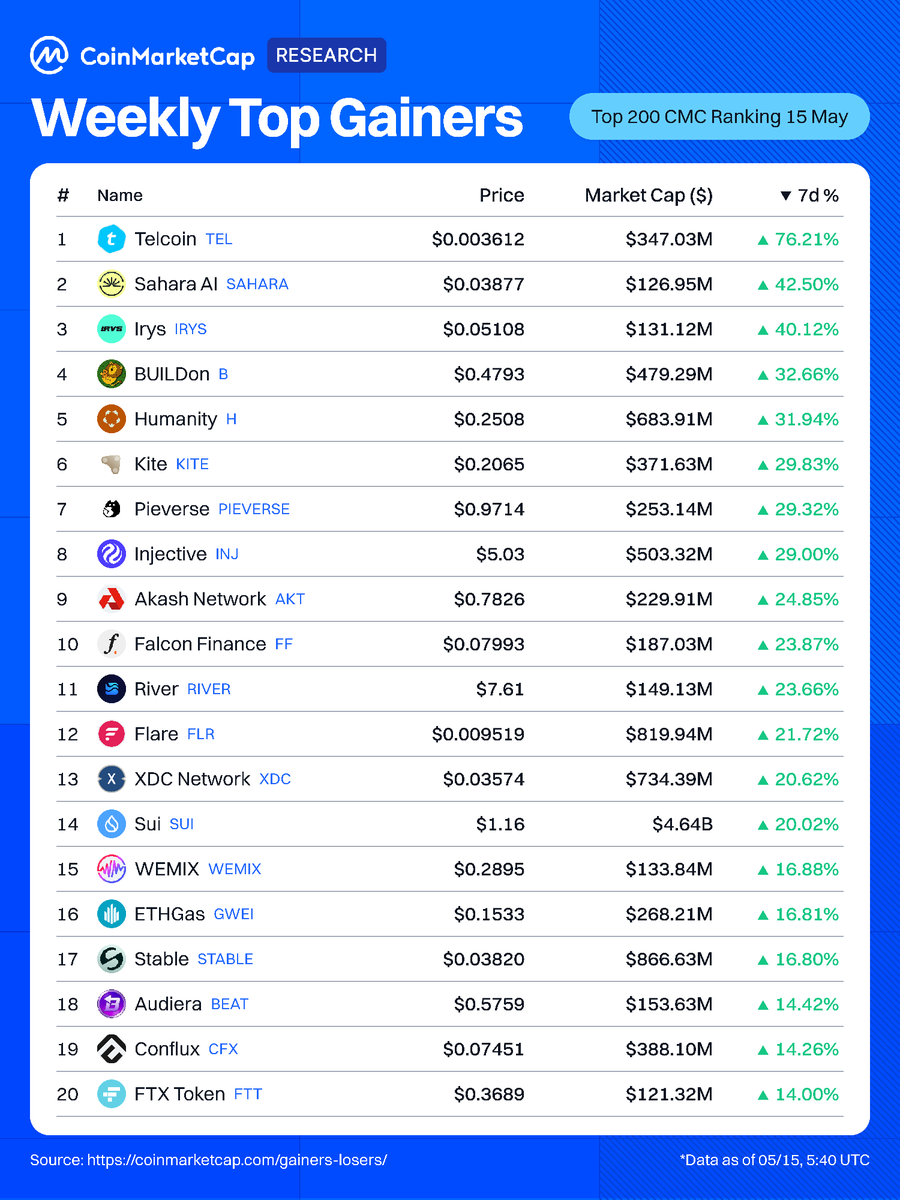
Weekly Top Gainers
1️⃣ Telcoin (@telcoin): +76.21%
2️⃣ Sahara AI (@SaharaAI): +42.50%
3️⃣ Irys (@irys_xyz): +40.12%
4️⃣ BUILDon (@BUILDonBsc_AI): +32.66%
5️⃣ Humanity (@Humanityprot): +31.94%
6️⃣ Kite (@GoKiteAI): +29.83%
7️⃣ Pieverse (@pieverse_io): +29.32%
8️⃣ Injective (@Injective_): +29.00%
9️⃣ Akash Network (@akashnet): +24.85%
🔟 Falcon Finance (@falconfinance): +23.87%

English
PetePakCryptoⓣ retweetet

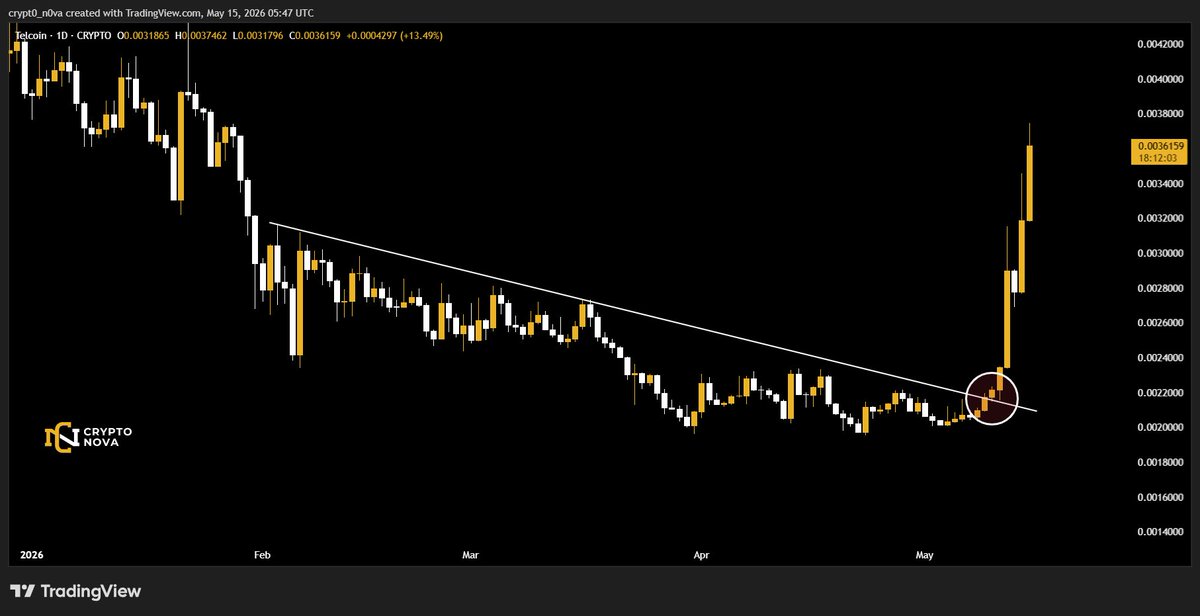
$0.0038 hit ✅️
$TEL

CryptoMitchX@CryptoMitchX
$TEL just had a 4 hour golden cross between the 100 and 200 moving averages. This is a strong bullish signal. Bouncing between well established old support and resistance levels. Break above $0.0032 to confirm the rally. Break down below $0.0025 to reject the rally. Imminent targets are $0.0038 and $0.0045 For long term targets see my pinned post. More detailed chart coming later this week. Trade, store, send money smarter with #Telcoin! Sign up, stake $TEL & refer users to earn fees! r.telco.in/iKouNrRsqVxY3W… Referral Code: cLUSbbjKi1V
PetePakCryptoⓣ retweetet

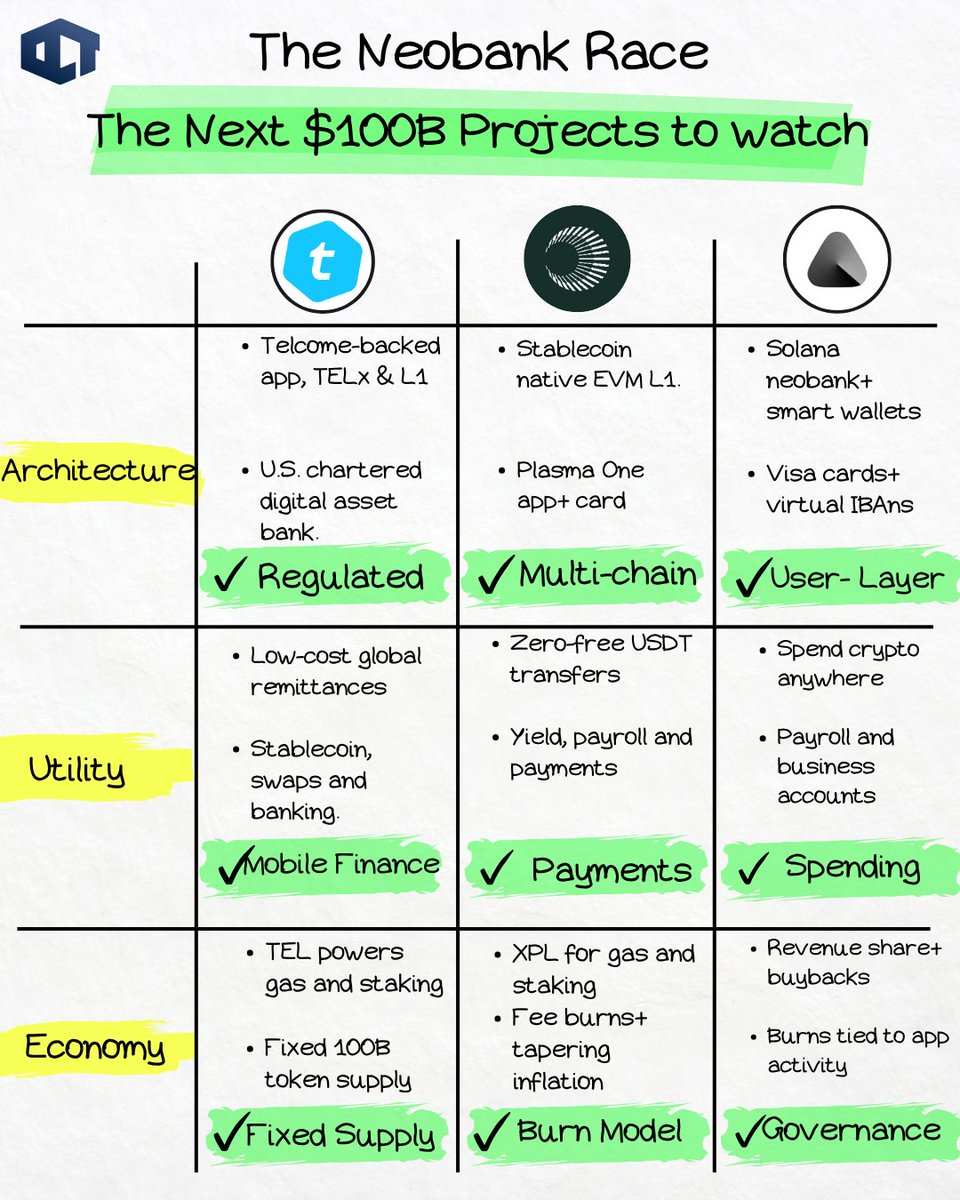
1. Everyone is chasing meme tokens, while crypto neobanks quietly target a $100B+ fintech shift.
Three early names sit at the center of Crypto Neobanks:
→ Telcoin ( $TEL )
→ Plasma ( $XPL )
→ AviciMoney ( $AVICI )
One of these could be the next 10x👇
🔵Telcoin ( $TEL ): The Telecom-Backed Regulated Neobank Platform
Telcoin is not building just another crypto wallet.
It is building a full-stack regulated fintech platform that connects mobile money, stablecoins, telecom distribution, and blockchain banking.
That matters because financial access is still heavily fragmented across the world.
Billions of people use mobile phones.
Hundreds of millions rely on mobile money.
But traditional banks still struggle with cross-border payments, high fees, slow settlement, and limited access in emerging markets.
Telcoin’s thesis is simple:
• Use telecom networks as the distribution layer.
• Use blockchain as the settlement layer.
• Use a regulated digital asset bank as the compliance layer.
That combination makes Telcoin one of the most serious neobank bets in crypto.
Architecture→ Mobile-First App + TELx + Operator-Secured L1
Telcoin’s core platform has three main layers.
First, the "Telcoin App" acts as the mobile gateway.
It is where users access remittances, stablecoins, wallets, and future banking products.
Second, TELx provides the self-custodial DeFi liquidity layer. This supports swaps, liquidity routing, and on-chain financial activity.
Third, the Telcoin Network is a public EVM-compatible Layer 1. Its most important design choice is validator selection.
The network is secured and validated by GSMA mobile network operators.
That gives Telcoin a very different trust model from most crypto networks.
Instead of relying only on anonymous validators or retail staking, Telcoin plugs into existing telecom infrastructure.
The Bank Layer→ Telcoin Digital Asset Bank
The biggest unlock is the **Telcoin Digital Asset Bank**. Telcoin received a Nebraska Digital Asset Depository Institution charter in November 2025.
That made it one of the first U.S.-chartered digital asset banks focused on blockchain-powered finance.
This bank layer allows Telcoin to issue **Digital Cash** stablecoins.
These include eUSD and other planned fiat-backed currencies such as eAUD, eCAD, and eMXN.
Each stablecoin is designed to be backed 1:1 by fiat reserves. The idea is not to create another offshore stablecoin.
The idea is to create regulated, bank-issued digital money that connects directly to traditional financial rails.
Utility→ Remittances, Stablecoins, Banking, and Governance
Telcoin’s utility is rooted in real financial activity.
The platform targets:
• Low-cost global remittances
• Mobile wallet transfers
• Bank-issued stablecoins
• Merchant payments
• Self-custodial swaps
• Digital deposits and loans
• Fiat on-ramps and off-ramps
• Operator-secured blockchain settlement
This is not DeFi for DeFi users only.
It is mobile finance for everyday users.
That is why Telcoin’s telecom strategy matters.
Economy→ Fixed Supply and Usage-Aligned Incentives
TEL has a fixed max supply of 100 billion tokens.
Its design focuses on long-term ecosystem growth rather than aggressive short-term inflation.
Token distribution supports market circulation, ecosystem incentives, telecom operator participation, and team allocation with vesting.
TEL issuance is programmatic and controlled through the treasury. That matters because neobank tokens need sustainable economics.
They cannot rely forever on hype, liquidity mining, or temporary reward campaigns.
Telcoin’s model is more conservative.
Validators, users, telecom partners, and ecosystem participants are incentivized around productive activity.
As stablecoins, remittances, banking products, and network usage grow, TEL becomes more deeply tied to the platform’s financial flows.
My take:
Telcoin is the strongest regulated, telecom-anchored neobank in crypto today.
If mobile money and compliant stablecoins become mainstream, $TEL could become the backbone utility token for global crypto banking.
🟢 2. Plasma ( $XPL ): The Stablecoin-Native L1 Neobank
Plasma takes a more focused approach.
It is not trying to be a broad Layer 1 for every crypto use case.
It is building a high-performance EVM-compatible blockchain designed specifically for stablecoin payments.
That focus matters. Stablecoins are already one of crypto’s strongest product-market fits.
People use them for trading, remittances, savings, payroll, merchant settlement, and cross-border transfers.
But most chains were not built specifically for stablecoin payments.
They were built for general-purpose smart contracts. Plasma flips that model.
Architecture→ Stablecoin L1 + Plasma One App
Plasma is an EVM-compatible Layer 1 built around USDT payments.
Its pitch includes native USDT support, fast settlement, high throughput, and zero-fee or near-zero-fee stablecoin transfers.
That makes it very different from most chains where stablecoin transfers still compete with every other type of on-chain activity.
The network is also designed to connect Bitcoin-level security assumptions with Ethereum-style tooling.
This gives developers access to familiar EVM infrastructure while giving users a payment-first experience.
The second major piece is Plasma One
This is the consumer-facing neobank super-app.
Users can hold, send, spend, and earn from stablecoin balances without needing to jump across wallets, bridges, and DeFi protocols.
That is important because most normal users do not want to manage complex DeFi workflows.
They want a simple app. They want stable balances.
They want instant transfers. They want a card.
They want yield without complexity. Plasma is trying to package all of that inside one stablecoin-native ecosystem.
Utility→ Zero-Fee Transfers, Cards, Yield, and Payments
Plasma’s utility is very clear. Users get instant stablecoin transfers.
They get access to a Plasma One card. They can spend stablecoins across merchant networks.
They can access integrated DeFi yield. They can use stablecoins for payroll, remittances, and merchant settlement.
That makes Plasma highly relevant in emerging markets.
In regions where local currencies are unstable, banking access is limited, or cross-border fees remain high, stablecoins already solve real problems.
Plasma wants to make those flows smoother.
The $XPL token secures the network through staking and delegation.
It also pays gas outside gasless USDT transfers. It supports governance. And it powers ecosystem rewards.
That gives XPL a direct role in the infrastructure layer behind stablecoin payments.
Economy→ Inflation Tapering, Fee Burns, and Usage Growth
XPL has an initial supply of 10 billion tokens.
Its inflation begins at 5% for validator rewards and tapers over time toward a 3% floor.
This helps bootstrap security while reducing emissions over time.
The network also uses an EIP-1559-style burn mechanism for base transaction fees.
That means higher usage can create deflationary pressure. This is important because stablecoin networks need volume.
A payments chain without transaction activity has weak economics.
But a payments chain with serious stablecoin flow can generate meaningful fee burn, merchant revenue, card revenue, FX revenue, and DeFi activity.
Plasma’s upside depends on whether it can attract enough users and liquidity to make that flywheel real.
The early liquidity base and DeFi partner network give it momentum.
But execution risk remains high.
The stablecoin market is competitive.
Payments users are hard to acquire.
And neobank apps need trust, reliability, compliance, and distribution.
My take:
Plasma is the pure infrastructure plus distribution bet.
If stablecoins become everyday money, $XPL could power the rails while Plasma One captures the user layer.
⚫ AviciMoney ( $AVICI ): The On-Chain Internet Neobank
Avici takes a different route.
It is not building the telecom backbone like Telcoin.
It is not building a stablecoin-native Layer 1 like Plasma.
It is building the front-end experience.
Its goal is to make crypto spending and stablecoin finance feel as easy as using a modern fintech app.
That positioning is powerful because users rarely care about the rails underneath.
Architecture→ Solana Neobank + Visa + Virtual IBANs
Avici combines self-custodial smart wallets, Visa cards, business accounts, and stablecoin payroll tools.
Users can spend without fully exiting crypto.
Businesses can manage treasury and payments.
Freelancers can receive stablecoin income and use funds in the real world.
Recent upgrades include virtual IBAN accounts.
That is important because IBAN access improves fiat-to-stablecoin onboarding, cross-border payments, and global account functionality.
This makes Avici feel less like a crypto wallet and more like a crypto-native bank account.
Utility→ Spending, Ownership, and Revenue Share
The $AVICI token is designed around ownership and revenue participation.
Its utility includes:
• Revenue sharing from card fees and services
• Buybacks and burns from real activity
• Governance over product development
• On-chain payroll tools
• Business accounts
• Future credit products
• Trust scoring and financial identity
This is where Avici becomes interesting.
It is not only offering access.
It is trying to let users own part of the neobank they use.
That is a strong crypto-native idea.
Traditional neobanks capture user activity and keep the upside for private shareholders.
Avici tries to redirect some of that value back to token holders and users.
That creates a direct flywheel.
Economy→ Revenue-Backed Deflation and a Live Flywheel
Avici’s economy is more usage-driven than emission-driven.
Card fees, transaction activity, and product revenue fund buybacks, burns, and ecosystem expansion.
That makes it cleaner than many token models.
The risk is liquidity.
Thin liquidity can create major volatility.
A smaller user base also means the flywheel needs more scale before the economics become durable.
Still, Avici has one advantage many crypto projects lack:
My take:
Avici is the pure interface and ownership play.
If crypto neobanks go mainstream, the front-end that users actually enjoy could capture outsized value.
The Neobank Stack→
These three projects are not direct copies of each other.
They represent different layers of the same future.
Telcoin ($TEL)
Regulated telecom distribution, bank-issued stablecoins, and mobile financial infrastructure.
Plasma ($XPL)
Stablecoin-native Layer 1 rails, zero-fee transfers, and a consumer payments app.
Avici ($AVICI)
Solana-based user interface, cards, IBANs, payroll, and revenue-linked ownership.
That is why the comparison is interesting.
Final Rankings
Best Architecture→
$TEL > $XPL > $AVICI
Telcoin has the most complete and regulated architecture.
It combines telecom operators, a digital asset bank, stablecoins, an app, DeFi liquidity, and its own Layer 1.
Plasma comes second because its stablecoin-native chain is highly focused.
Avici ranks third because it depends more on front-end execution and Solana infrastructure.
Best Utility and Adoption Potential→
$AVICI > $TEL > $XPL
Avici has the clearest user-facing experience.
Cards, payroll, IBANs, spending, and business accounts are easy for users to understand.
Telcoin has broader infrastructure and remittance utility, but adoption depends on telecom and banking rollout.
Plasma has massive potential, but it still needs to prove sticky user adoption around Plasma One.
Best Economic Sustainability→
$TEL > $XPL > $AVICI
Telcoin has the strongest long-term sustainability because of its capped supply, regulated bank model, telecom alignment, and real payment flows.
Plasma has strong economics if transaction volume grows enough to support fee burns and stablecoin activity.
Avici has a clean revenue-backed model, but thin liquidity and smaller scale make it riskier today.
🔚 Final Takeaway
If you want the regulated global remittance and bank-issued stablecoin play:
Telcoin ($TEL) is the strongest bet.
If you want the stablecoin-native payment rails and neobank distribution play:
Plasma ($XPL) has the highest infrastructure upside.
If you want the consumer crypto spending, card, payroll, and ownership play:
Avici ($AVICI) is the most direct user-layer bet.
The meme trade is loud.
The neobank shift is quiet.
But this is where real crypto adoption may happen.
That is why $TEL, $XPL, and $AVICI deserve serious attention.
They are not just tokens.
They are three different bets on the same outcome:
Crypto becoming the financial layer for everyday money.

English
PetePakCryptoⓣ retweetet

The digital revolution is upon us, and it has presented a clear opportunity to support small businesses, generate wealth, spur innovation, and support younger Americans who want to be part of this revolution. And this digital revolution is happening with us or without us—we have a responsibility to regulate it to create rules of the road.
That is why I’ve been at the table. I’ve been in negotiations for over nine months, working toward regulating digital assets in a way that protects consumers and reduces the risks of deposit flight and deceptive marketing. I have negotiated in good faith with colleagues on both sides of the aisle willing to meet this critical moment. I’ve worked to make this bill better.
Let me be very clear: my vote today is a vote to keep working in good faith. It does not mean I will be voting for the passage of the CLARITY Act on the floor. We still have work to do.
We need to find a workable way to address law enforcement’s concerns about financial crimes. I am a former prosecutor and know how important that is. We also need to include an agreement on ethics—that would apply not just to the President and Vice President but to all of us. The American people—especially my constituents—expect that from us.
I will keep working with my colleagues to get this done. Americans—from every background and every community—deserve to benefit financially from this digital revolution and be protected from the risks that come with it. If we don’t act, we will be left behind. I won’t let that happen.
English
PetePakCryptoⓣ retweetet

BREAKING: The CLARITY Act has cleared the Senate Banking Committee @BankingGOP 🇺🇸
Next steps: full Senate vote, House reconciliation, then the President's desk.

English
PetePakCryptoⓣ retweetet

The Clarity Act passed by the Senate Banking Committee is a strong bipartisan compromise to provide the regulatory certainty needed to advance financial innovation. I was proud to work with my colleagues on both sides of the aisle for the past few months, and more work remains in the weeks ahead to make this legislation even better. Let’s get it done.
English
PetePakCryptoⓣ retweetet

The crypto market structure bill has PASSED the Senate Banking Committee with a bi-partisan vote!
Historic day for crypto and for the future of digital assets in America. Grateful for the countless hours from lawmakers and staff to strengthen this legislation. Big improvement from where we were in January on rewards, tokenization, DeFi, and CFTC authority. I'm proud we stood up for our customers in that moment, and the bill is better because of it.
Looking forward to a bipartisan law that cements the US as the world's crypto capital. Let's get CLARITY done.
English