
Backwardated
1.4K posts

@ckleene No I think what you're seeing here is some insider trading to an announcement that likely comes after the close. Just my opinion. I'm not in the club so just guessing
English
Why did feeders just go limit down?
English

Putain de respect absolu au génie hongrois !
Orbán ne s’est pas couché. Il n’a pas perdu.
Il a feinté comme un putain de loup affamé. Défaite calculée, maître coup de Sun Tzu version Budapest.
Il laisse Péter Magyar prendre les rênes… et bam, le poulain balance direct la ligne Orbán EN PLUS SAUVAGE : clôture blindée, trous rebouchés, Pacte migratoire jeté à la poubelle, zéro relocalisation forcée. Traduction : on protège notre pays et l’Europe, point barre.
Bruxelles était en train de tringuer au champagne en se tapant dans le dos, persuadée d’avoir brisé la Hongrie.
Résultat ? Ils viennent de se faire enculer royalement par leur propre jeu démocratique.
C’est ça la vraie anarchie du pouvoir, bande de clowns : faire croire à l’ennemi qu’il a gagné pour mieux lui planter le couteau dans le dos depuis l’intérieur.
Orbán ne plie pas. Il infiltre. Il prépare le terrain pour devenir le cheval de Troie de Trump à la tête de la Commission et défoncer Ursula avec son dossier béton (Pfizer, 760 millions, fonds détournés, NextGenerationEU transformés en caisse noire familiale).
Hommage total à ce coup de maître.
L’UE pensait avoir gagné la partie ?
Elle vient de signer son humiliation en lettres de sang.
Hongrie debout.
Système à terre.
Et la rébellion ne fait que commencer.
🔥🇭🇺 #OrbanGenius #UEPiégée #CoupDeMaitre
Français


h/t @my_ribeye - looks like we are close, but has been higher in 2014 and 2010.
Backwardated@Backward8ed
i'm showing managed money long open interest as a % of total OI at an all-time high in cattle - correct or am I calc'ing wrong?
English
i'm showing managed money long open interest as a % of total OI at an all-time high in cattle - correct or am I calc'ing wrong?
English
It’s almost like some big buyer in live cattle futures knew this was going to happen last week or something!?!?🙄🙄😳😳
First Squawk@FirstSquawk
Thousands of striking beef plant workers in Colorado have agreed to return to work, ending a three-week strike at a facility owned by JBS, the world’s largest meatpacker-WSJ
English
@Okie_Rancher @okie_rancher wants beef at $22/lb in limited quantities only. Get off your high horse you dumb poser
English

When you buy beef to feed your family, you can buy from a store that bought from a corporate packer and 'feeder' OR you can buy direct from a local rancher.
The two are not the same.
Mr. Levi and I both operate in the State of Oklahoma, but what we do is worlds apart.
Most consumers truly don't understand the difference, and corporate operators don't want you to understand. If you did, really did, there's a good chance you'd think twice about where you buy.
So here we go:
1. Meat Mixing: Your grocery store ground beef is a lottery ticket you don't want to win. When a packer grinds beef, they're commingling meat from hundreds of animals. One sick animal doesn't just contaminate one package, it contaminates thousands.
Example? Hallmark/Westland recalled 143 million pounds of beef, the largest meat recall in U.S. history, after undercover footage showed workers using forklifts to force downed cattle to slaughter. Roughly 37 million pounds of that recalled beef had already been sent to the National School Lunch Program.
That wasn't a one-off. Hudson Foods recalled 25 million pounds of ground beef in after E. coli spread through batch after batch because the plant carried over meat from one production day to the next. Topps Meat Company's recall started at 331,000 pounds and ballooned to 21.7 million because the same carry-over practice made it impossible to isolate contamination.
This is what happens when you mix beef from hundreds of animals in an industrial grinder and can't trace anything back. Plus, packers and feeders don't care about the state of an animal's health--if its barely alive when it hits the kill floor, that's good enough.
When you buy from your local rancher, you know the animal. You know the herd. If there's a problem, it's traceable to one animal and there is no mystery mix from six states. Plus, the processor we use cleans all equipment after every animal and processes our animals separately from any other. The cow's number is contained on every package.
In fact we have clients who come to the farm and pick their steer with their family. One guy takes a picture and puts it by his grill. When they pray before their meal, they thank God for the life of the animal that fed them. They are city kids, but that annual visit instills an understanding and respect for the cycle of life and respecting the lives that sustain us. Visiting a feedlot or packer will instill something else entirely.
2. Confinement: Good old Levi doesn't want to talk about what confinement does to the animal and your steak. Feedlot cattle are packed into tight, concrete bound pens with no pasture, no movement, no life quality. If you've ever driven past one, you know the smell. If you've worked in one, it takes a week to wash it off you. The animals stand in their own waste all day, all night. They don't move. No blood flow. No exercise. Just grain and growth hormones until they hit target weight. It's one very small step above veal treatment.
And it isn't just cruel. It's also scientifically a meat quality problem. Cortisol, the stress hormone, surges in confined, transported cattle and dramatically impacts pH levels, which determines color, tenderness, and bacterial exposure. When glycogen stores are depleted by chronic stress, the meat can't acidify properly. The result is dark, firm, dry beef. Darker, tougher, drier, with a shorter shelf life. So the big packers pump water and coloring through it to pretty it up. But it doesn't help the taste.
Studies have shown elevated blood glucose and cortisol in feedlot-finished cattle versus pasture-raised, along with mitochondrial dysfunction and impaired oxidative metabolism in the muscle tissue of feedlot animals. In plain English: the feedlot animal's muscle looks metabolically sick. The pasture-raised animal's muscle looks like that of a healthy athlete. We always encourage our customers to take our ground beef and brown it next to something they bought at the store. It's eye opening.
Constantly elevated cortisol also increases protein breakdown in living muscle, reducing structural integrity, water-holding capacity, and overall texture throughout the animal's life. You can't grain-finish your way out of biology. A stressed animal produces inferior beef. Period.
3: Nutrition: A 2024 study in Scientific Reports found that pasture-finished beef contained 3.1-fold higher phenolic antioxidants, 4.1-fold higher omega-3 fatty acids, 9.4-fold higher vitamin B3, and 3.1-fold higher alpha-tocopherol (vitamin E) compared to feedlot-finished beef. Oxidative stress markers like homocysteine and 4-hydroxynonenal glutathione were 2.5-fold and 2.3-fold higher in feedlot beef. Conversely, healthy antioxidants like urate and glutathione were significantly higher in rancher raised beef with grass access. The feedlot animal is metabolically stressed. You're eating their stress.
A rancher-raised animal on open pasture? Moves freely and builds real muscle with blood flow and exercise. They forage on diverse grasses, legumes, and forbs and those phytochemicals transfer directly to the meat. Their system isn't chronically pumped with cortisol from confinement stress.
Our animals They live a good life on real pasture, with trees and water, and their grain access is via a feeder. They truly frolic in the pasture, play, run, even at 1600 lbs. You will not see that with any animal who has spent more than a week in a feedlot.
A rancher raised animal live a real life (well an animal raised by a rancher who cares--like any industry there are some who don't). Combining forage with responsible grain supplementation, low stress, free movement, and quality care and you get well-marbled, nutrient-dense beef from a healthy animal.
When you buy from a local rancher you know the animal, the land, the practices. One animal per package, full traceability, no commingling. No industrial carry-over contamination. The animal lived on pasture, not in filth. Lower stress = better pH, better tenderness, better color, longer shelf life. Higher omega-3s, higher antioxidants, higher vitamins. Your dollars stay local
The packer model is built on volume, anonymity, and speed. How many, how much, how fast.
The rancher model is built on accountability and quality. You painstakingly care for every animal, and most days what it costs to help one get better, the injuries you sustain, the long nights, none of it is even a thought or factor while you are doing the work. For the feeder and packer, it's all just numbers on a spreadsheet.
You can buy mystery meat from a system that recalls tens of millions of pounds at a time and feeds sick cattle to your kids at school or you can shake your rancher's hand and know exactly what you're putting on the table.
Your call.
Chris Powers@fortworthchris
Today I sat down with Jordan Levi, the Kosher Cowboy - a Jewish kid from the Chicago suburbs who became the largest cattle feeder in America. Jordan runs Five Rivers Cattle Feeding with a capacity of nearly a million head. He started as a runner on the Chicago Board of Trade at 13 and found his way to cattle through a hedge fund that sent him to a feedlot in Amarillo. He showed up in Gucci loafers and never left the industry. We go deep on how he trades the curve instead of making binary bets, why the cattle supply is the tightest since the 1950s, and what it takes to manage risk on nearly a million animals across 13 feedlots. I hope you enjoy this episode as much as I did. 02:16 - The Belted Galloway 03:51 - The Kosher Cowboy 08:05 - Pulling value of the futures forward 11:43 - Learning Cattle trading 16:48 - Daily average gain in cattle 18:20 - Jordan’s Eureka moment in the cattle industry 21:08 - What does trading in animals actually look like? 27:05 - How Jordan defines his ROI in trading cattle 31:17 - The Cattle curve 33:37 - The state of the cattle market 42:10 - Buying the largest cattle feeder in the world 46:09 - Grass vs. grain fed cattle 49:15 - Predictions for the cattle supply over the next 10 years 50:54 - The international market 53:17 - Trading frequencies and macro thesis 01:00:27 - USA beef vs. international beef 01:05:21 - The cattle supply chain 01:07:32 - The future of auction yards and ranchers 01:09:40 - AI in AgTech 01:12:52 - The biggest problem facing the industry 01:14:42 - Livestock as a commodity that dies and how that impacts trading theory 01:20:51 - Is there a market for new entrants into cattle? 01:21:41 - Beef prices and the impact of a closed border on the industry 01:24:39 - Jordan’s biggest ideas for the industry 01:26:49 - Philanthropic efforts 01:31:24 - a day in the life of Jordan 01:26:42 - Risk management in cattle 01:41:17 - Does what you do show a leading indicator to the broader health of the American economy?
English
@gnoble79 You are a clown. He has terminal brain cancer- that’s why he’s closing his fund. AI much??? At least edit it some… such cringey AI verbiage. Geezus.
English

A $470 million Buffett disciple just closed his fund and declared stock picking is dead.
This is literally the most BULLISH SIGNAL for active management I've seen in years.
Guy Spier ran Aquamarine Fund for 28 years out of Zurich. Returned 1,186% since 1997. Won a charity lunch with Buffett in 2007.
And he just gave up.
His reason is that AI is making research obsolete. Everyone has access to the same data. The edge is gone.
I've heard this EXACT argument before.
In 1999, they said the internet eliminated information advantages.
In 2007, they said quant models had solved investing.
In 2012, they said passive indexing made stock picking pointless.
Every single time, the obituary for active management was written at PRECISELY the wrong moment.
Here's the data Wall Street doesn't want you to focus on:
In the first half of 2025, 46% of large-cap active managers BEAT the S&P 500. Only 22% of small-cap managers underperformed their benchmark. That's the best showing for small-cap stock pickers in over two decades of SPIVA data.
The moment everyone is giving up on active management is the moment active managers are performing BETTER than they have in years.
Meanwhile, investors yanked $640 billion from active mutual funds in 2025. Passive funds now control 55% of total US fund assets.
This is textbook contrary indicator territory.
When money floods mindlessly into index funds, it creates the EXACT inefficiencies that skilled stock pickers exploit.
Passive funds don't analyze balance sheets. They don't question management. They don't distinguish between a company trading at 8x earnings and one trading at 80x.
They just buy whatever's in the index regardless of price or fundamentals.
You can't call that investing.
And I'm not done here yet:
The Mag 7 stocks that drove the S&P 500 for two years are now spending $700+ billion annually on AI infrastructure with NO measurable productivity returns for most companies deploying it.
As valuations continue to compress, passive investors own every single one of those overpriced names by default.
Active managers can CHOOSE not to.
That's literally a superpower.
Spier said the Buffett-and-Munger approach of finding overlooked, high-quality companies at reasonable prices no longer works because "everybody is looking everywhere."
With respect - no, they're NOT.
Everybody is looking at the SAME 7 stocks. The same mega-cap tech names. The same AI narrative.
Nobody is looking at small-cap energy companies trading at 5x earnings. Nobody is looking at commodity producers with fortress balance sheets. Nobody is looking at emerging markets trading at historic discounts to US equities.
THAT'S where the edge lives.
The best opportunities in my entire career have come when the consensus said a strategy was dead.
Active management isn't dying.
The lazy version of it is.
And for those of us willing to do the work, ignore the noise, and think independently?
We HAVE entered the GOLDEN AGE of stock picking.
The herd is running in one direction.
I'm going the other way.

English
Yeah FT. MO union talk would be exactly the type of cluster I was talking about.
Backwardated@Backward8ed
Seems these deals tend to cluster. One union bold enough to pull the trigger has a ripple effect because now other “unions” can’t get “out-unioned.”
English
This is a give and take administration. They just gave the Product of USA handshake... now what are they going to take out of the back pocket with the other hand? I have my suspicions....
GIF
English
someone please tell me we aren't trading a "Product of the USA" tweet today please. Another label that 0.73% of the American public give a $IHT about.
English
The busiest week of the year but put it on spring break when the kids are out

English
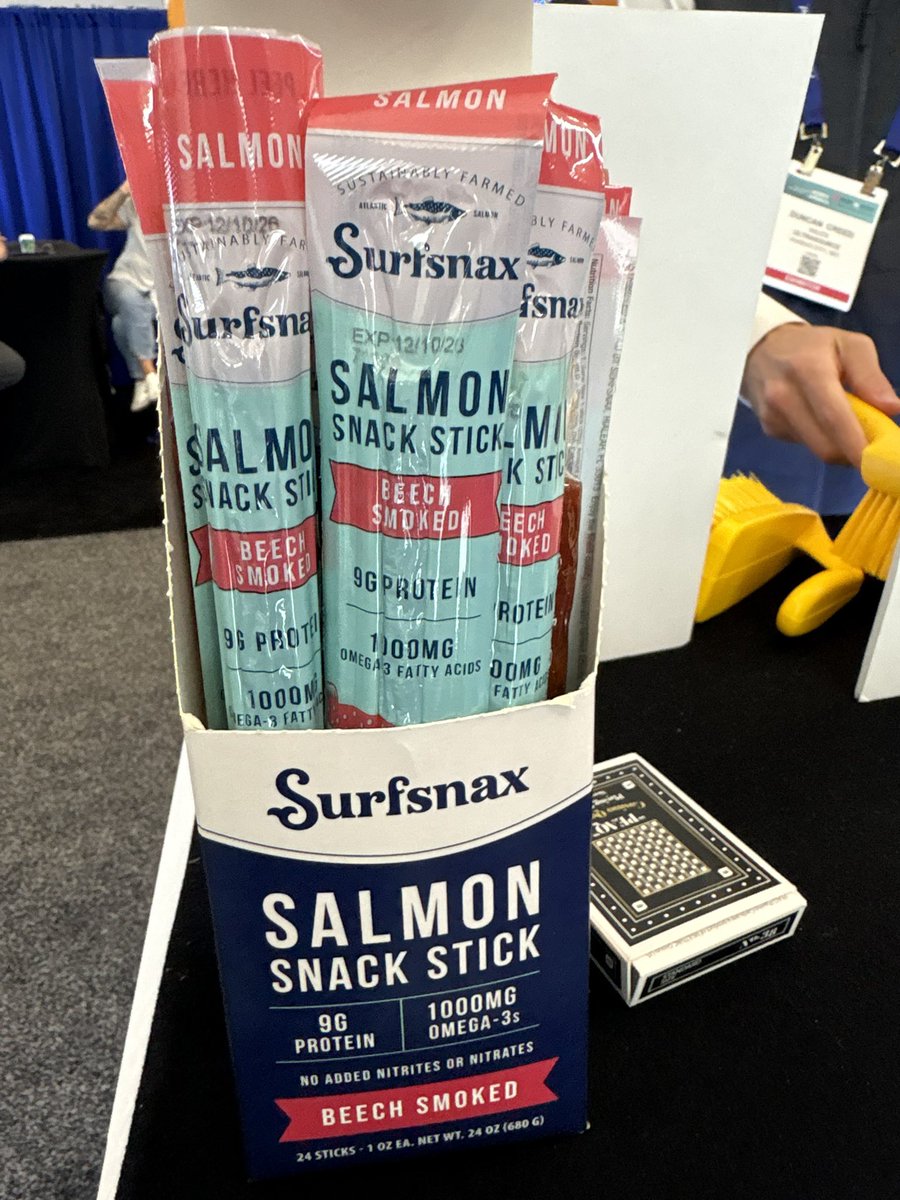
@blakealbers @Meatgeak The jerky is super hit and miss- even the premium stuff. Some very good, same company, same type…. And it’s not good at all. Not referring to the company shown in your pic.
English

Seems these deals tend to cluster. One union bold enough to pull the trigger has a ripple effect because now other “unions” can’t get “out-unioned.”
UFCW Local 7@UFCW_7
After months of disrespect and unfair labor practices, the workers at JBS Greeley are done waiting. The line is drawn. The strike has begun. UFCW Local 7 members are standing up for dignity, safety, and the contract they deserve. ✊ #jbsulpstrike #greeleyco #ufcw7 #unionstrong
English
@vaquerodepapel @osagecattle @FBIDirectorKash 💯terrorism and jihad are part of only (1) religion. It ain’t Christianity homie. And no… supporting the importation of people who don’t support the USA is ridiculous. Immigration? Absolutely. Hate the US? GTFO.
English

@osagecattle @Backward8ed @FBIDirectorKash Hurry up and be scared of Islam! Even though it is our own government that has been importing folks for 40 years while also telling us they want to steal your cookie.
English
Hey @FBIDirectorKash I’d like to report someone that’s working against our country for the benefit of another country 👇this guy right here would cut his balls off if Israel told him to do it
Laura Loomer@LauraLoomer
Just so you are aware, if you suspect someone you know in the US is working on behalf of Iran or any other adversary during a time of war, you can and should report them to the FBI and DOJ. It’s the America First thing to do. We need to bring back McCarthyism and start rooting out traitors.
English