
Angehefteter Tweet
BlueJay ☾
22.5K posts

BlueJay ☾
@BlueJay_a4
The Witch, The Weird, and The Wonderful 🧶🧵🩸Cursed Archivist of Insanity
déraciné Beigetreten Haziran 2012
96 Folgt1.4K Follower
BlueJay ☾ retweetet

Sony Pictures to release Spider-Man 4 on May 6, 2011.
English

BlueJay ☾ retweetet


BlueJay ☾ retweetet



BlueJay ☾ retweetet


BlueJay ☾ retweetet


BlueJay ☾ retweetet






BlueJay ☾ retweetet


BlueJay ☾ retweetet

BlueJay ☾ retweetet






BlueJay ☾ retweetet

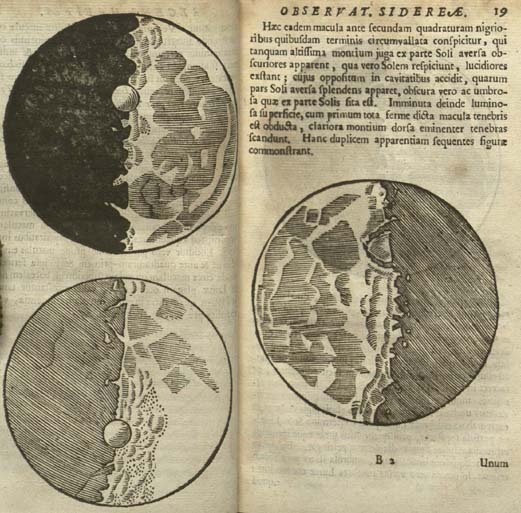
Sidereus Nuncius (Starry Messenger) observation drawings and Venus Phases diagram. Author: Galileo Galilei, 1610. Collection: Copies of the first edition are held in various rare book collections, including the Library of Congress (USA) and the Biblioteca Nazionale Centrale (Florence).
Actually, Galileo wasn’t the first person to turn a telescope toward the sky to sketch what he saw. For example, the English mathematician Thomas Harriot had drawn the Moon in July 1609, before Galileo. However, although Harriot produced a more detailed map of the Moon in 1612/1613, his impact was limited because he didn't widely distribute his work.Galileo Galilei’s Sidereus Nuncius, published in Venice in 1610, is one of the first printed scientific accounts based on new observations made through a telescope.These drawings provided the first visual data to refute Aristotle’s "perfect, smooth sky" model--which had been accepted for thousands of years--using physical evidence.
Galileo, on the other hand, was raised in the "Disegno" tradition in Florence and was proficient in the chiaroscuro (light-shadow) technique. He understood with an artist’s eye that the darkness inside the craters wasn’t a stain, but a shadow that lengthened depending on the angle of the light. In other words, the mountains of the Moon were revealed as much by Galileo’s artistic skill as by the telescope’s lens.
I’ve shared drawings of the Pleiades star cluster, the Moon, and Venus in the visuals. Galileo chose to announce his findings regarding the phases of Venus--which he observed in 1610 but didn't publish in print until 1613--with a precautionary measure first. To protect his priority and report the situation without immediately revealing the details, he announced his discovery via an encrypted Latin anagram. He conveyed the sentence "Haec immatura a me iam frustra leguntur o y" (These immature things are now read in vain by me) in a letter. When the letters were arranged in the correct order, the real message emerged: "Cynthiae figuras aemulatur mater amorum" (The mother of love [Venus] imitates the shapes of Cynthia [Moon]).



English