Vatcharit (Pond) Chantajinda
384 posts

Vatcharit (Pond) Chantajinda
@CVatcharit
PhD student in English Language and Linguistics @UWMadison / Interested in L2 acquisition of morphosyntax; Experimental syntax; Sociolinguistics
Madison, WI Beigetreten Ocak 2019
274 Folgt100 Follower
Vatcharit (Pond) Chantajinda retweetet

📚Excited to share our recent open-access publication, “Why are some articles highly cited in applied linguistics? A bibliometric study,” in Studies in Second Language Acquisition.
📚Co-authored with my MA student, @ZhangShirley11.
cambridge.org/core/journals/…
English
Vatcharit (Pond) Chantajinda retweetet

Our Element “Pride in Asia: Negotiating Ideologies, Localness, and Alternative Futures” is now out online! It is freely available until 14th February 2025! 🥳🎉✌🏼🏳️🌈 doi.org/10.1017/978100… #ม็อบไม่มุ้งมิ้งแต่ตุ้งติ้งค่ะคุณรัฐบาล #ม็อบตุ้งติ้ง

English
Vatcharit (Pond) Chantajinda retweetet

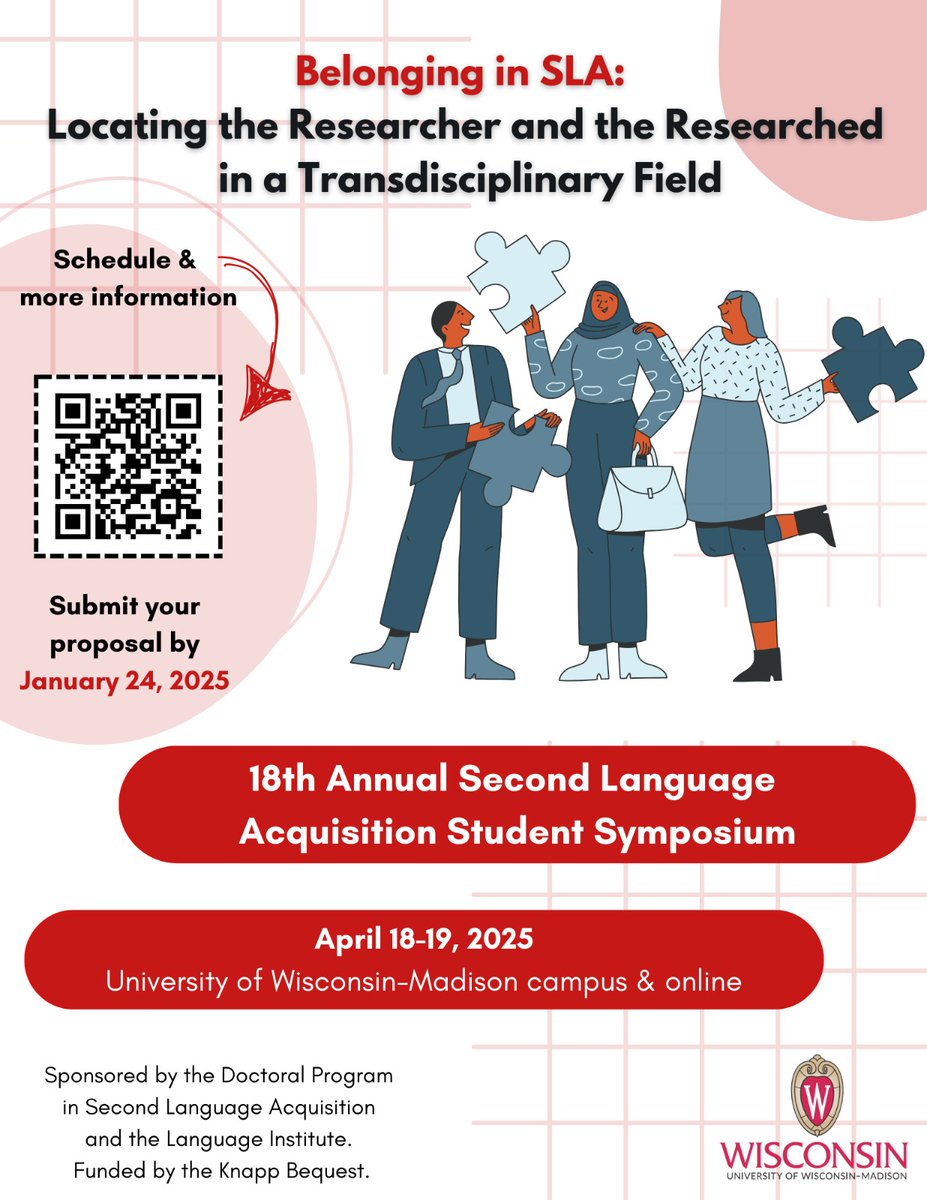
The Second Language Acquisition (SLA) Student Organization at @UWMadison is happy to announce the call for submissions for our 18th Annual SLA Student Symposium next Spring 2025! Please, send your proposals by January 24, 2025. More info here: sla.wisc.edu/2025-sla-stude…

English
Vatcharit (Pond) Chantajinda retweetet

Here's my conversation with Edward Gibson (@LanguageMIT), a linguist and psychologist at MIT, heading the MIT Language Lab. We talk all about the human language: syntax, grammar, structure, theories of language, evolution of language, how it reflects culture, and of course LLMs, both their amazing power and their limitations.
It's here on X in full, and is up on YouTube, Spotify, and everywhere else. Links in comment.
Timestamps:
0:00 - Introduction
1:13 - Human language
5:19 - Generalizations in language
11:06 - Dependency grammar
21:05 - Morphology
29:40 - Evolution of languages
33:00 - Noam Chomsky
1:17:06 - Thinking and language
1:30:36 - LLMs
1:43:35 - Center embedding
2:10:02 - Learning a new language
2:13:54 - Nature vs nurture
2:20:30 - Culture and language
2:34:58 - Universal language
2:39:21 - Language translation
2:42:36 - Animal communication
English
Vatcharit (Pond) Chantajinda retweetet

#EvoLang2024 submission announcements are going out now! Hope to see you all in Madison!! Registration and info on (7!) amazing workshops will be posted in the next few days! evolang2024.github.io
@EvolangConf
@CulturalEvolSoc
@cogsci_soc
@Durham_DCERC
@MPI_NL
@UoE_CLE

English
Vatcharit (Pond) Chantajinda retweetet

Multilingualism and native speakerism in academic journals’ language policies: Exploring a potential power of applied linguistics journals in promoting equitable publishing practices bit.ly/4a4RTKu
English
Vatcharit (Pond) Chantajinda retweetet

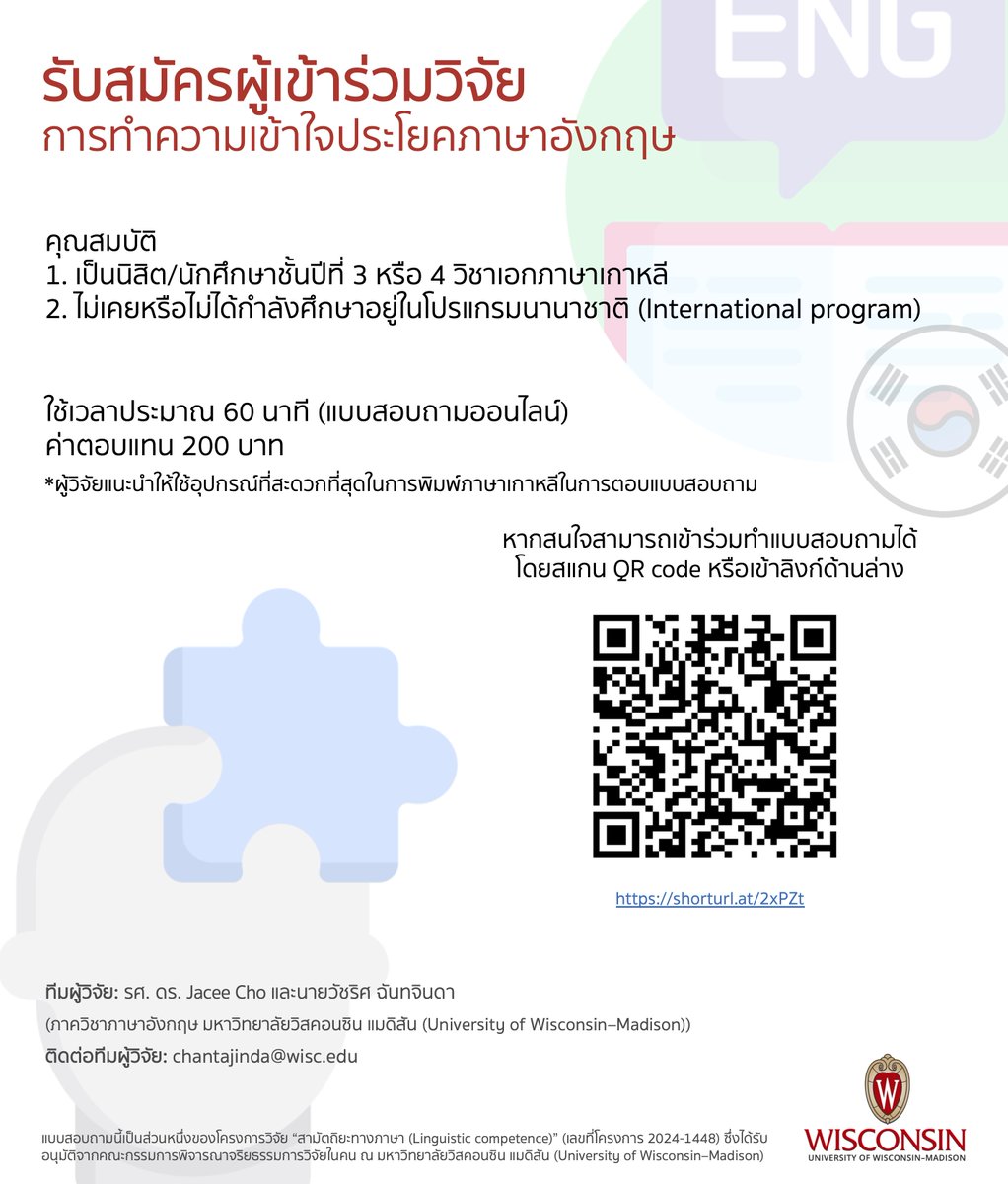
My PhD student Vanessa is looking for advanced L2 Mandarin learners (L1 English) to participate in an experiment over Zoom. She got enough heritage speakers already and now looking for L2 learners with no early exposure to Mandarin. Thanks for reposting! cla.purdue.edu/english/franci…
English
Vatcharit (Pond) Chantajinda retweetet

You hate online conferences because
1. You hate conferences. The actual conference parts are boring.
And academics get away with boring conferences because people like the other stuff.
2. There's no travel, no having dinner with friends. Those are the parts of conferences you like.
The problem isn't, therefore, online conferences.
It's folks not putting in the work of creating actually fun and generative etc. events. This was never a priority for on-site events because you didn't have to care to sell tickets. But you need to do it online or else the whole thing is boring.
The problem isn't Zoom.
It's hosts who refuse to put in the work of learning how the platform works, and ensuring all participants have what they need for success, technology-wise.
The problem isn't that it's online.
It's that organizers don't build in ways to connect participants beyond formal sessions. They don't usually even think about non-presenters as participants at all, because there's not much meaningful participating for them to do. This is no fun and it's not inviting.
Online conferences are the future and we do actually have the tools to make them awesome. But it's going to take a lot more time and money (to pay for expert help) than most seem to want to spend.
English
Vatcharit (Pond) Chantajinda retweetet

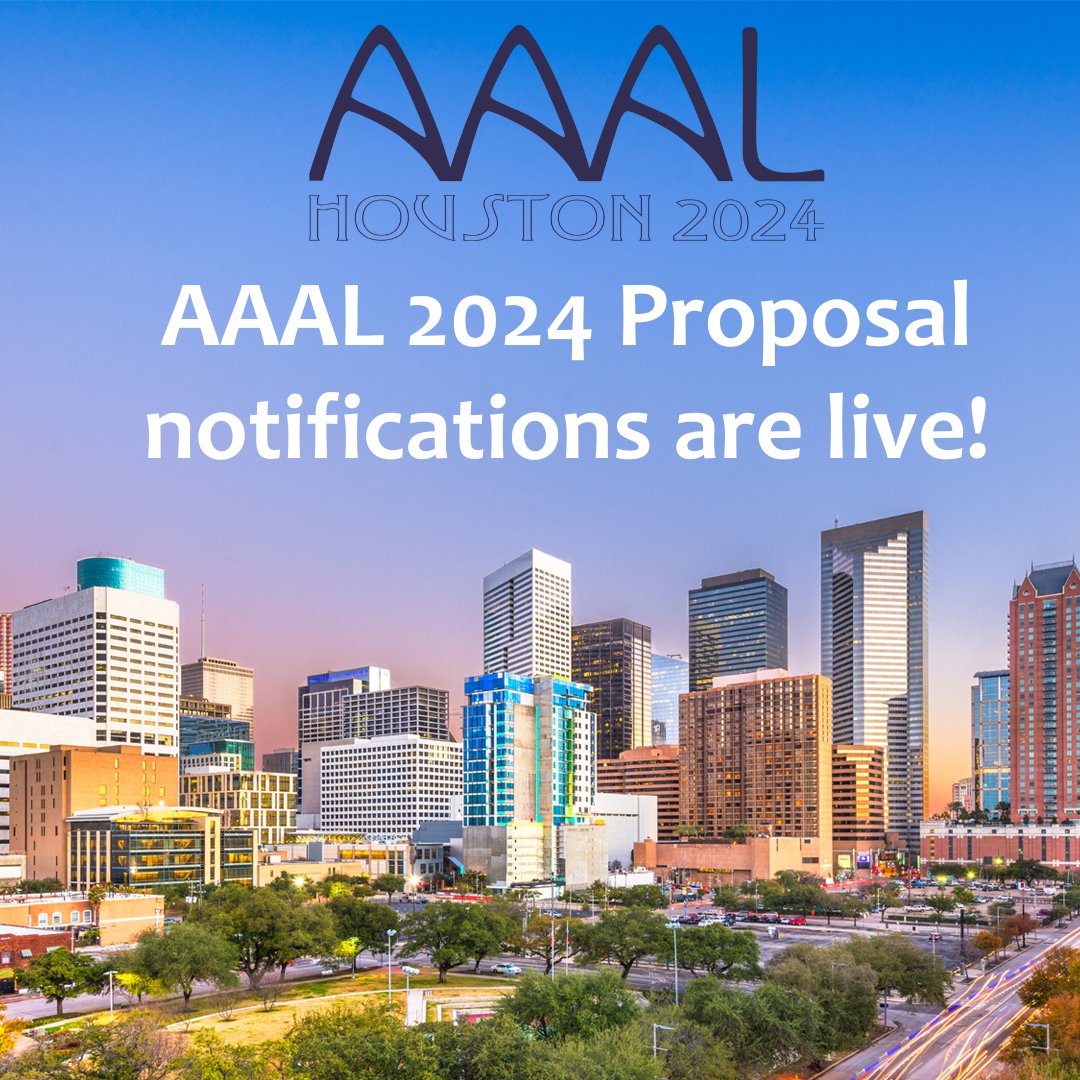
AAAL 2024 Proposal Notifications are live! Check your status here: ow.ly/RHYh50KZPCO
#AAAL2024

English
Vatcharit (Pond) Chantajinda retweetet

The 5th International Symposium on Bilingual and L2 Processing in Adults and Children (ISBPAC 2024) will be held from 23rd – 24th May 2024 at Swansea University, UK. All information on the conference website isbpac.info
English
Vatcharit (Pond) Chantajinda retweetet

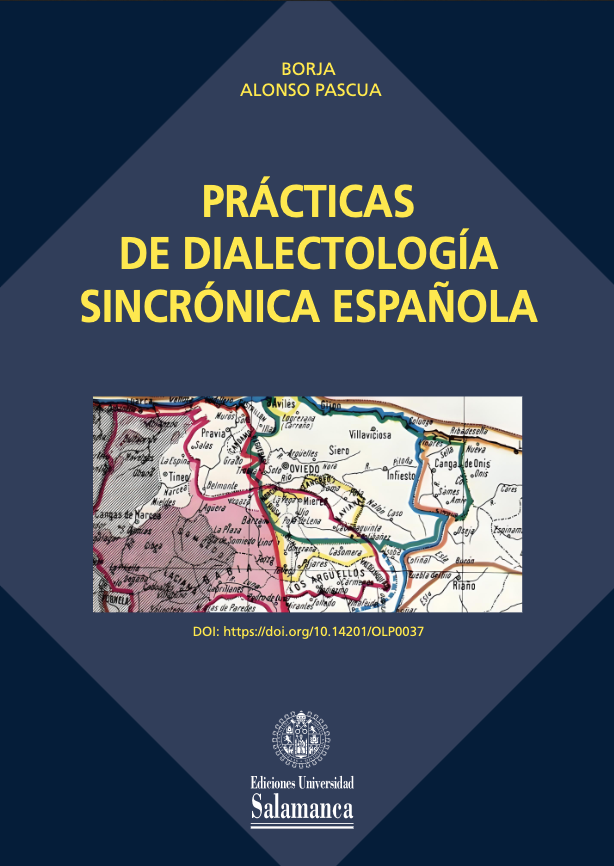
Si este año 2023/2024 vas a impartir o cursar alguna asignatura sobre variación geográfica del español europeo, el manual “Prácticas de dialectología sincrónica española” (Ed. Universidad de Salamanca, 2023) está disponible gratuitamente en este enlace eusal.es/eusal/catalog/…

Español
Vatcharit (Pond) Chantajinda retweetet

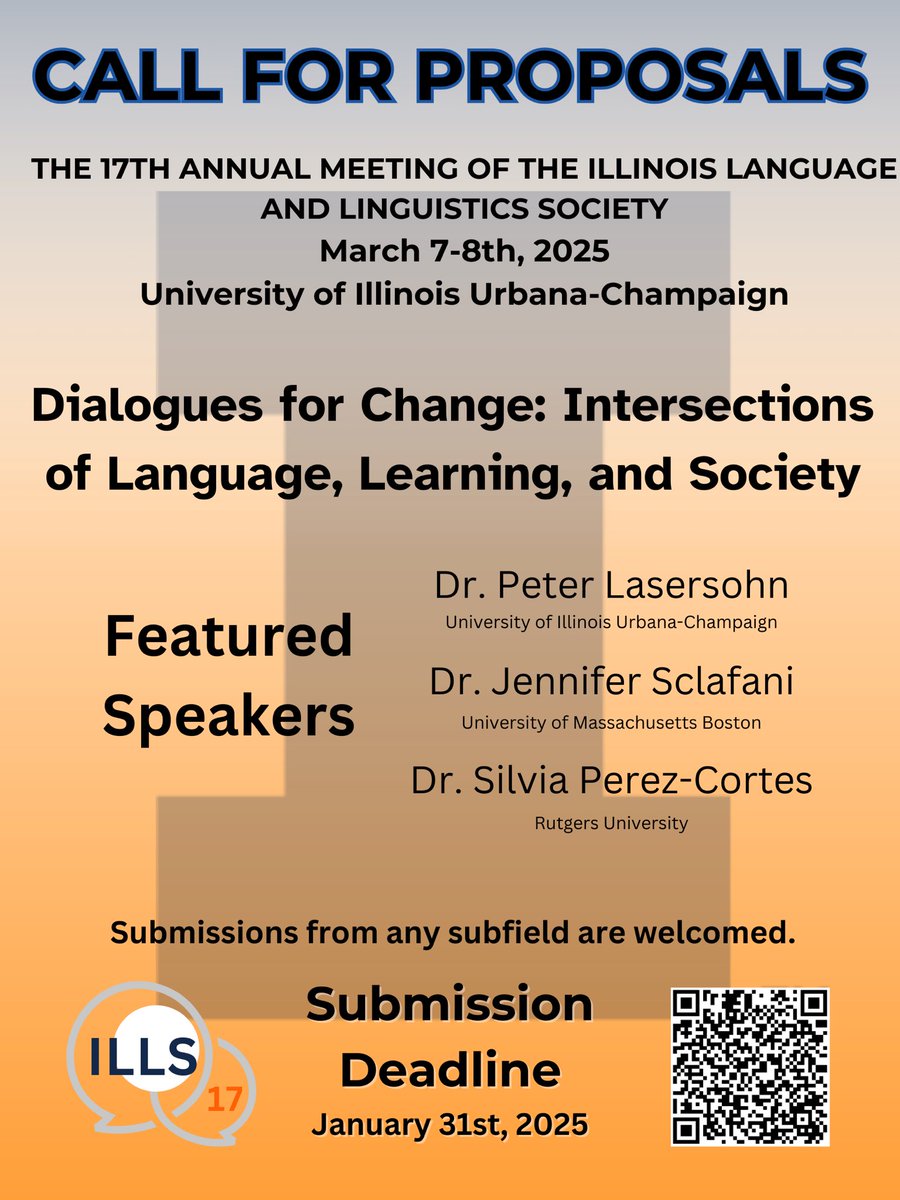
Call for Papers is OUT for ILLS16 🎊
Abstracts should have a maximum of 1 page and can be submitted through EasyAbs until November 27. More details about the conference & submission guidelines here: old.linguistlist.org/issues/34/34-2…
English
Vatcharit (Pond) Chantajinda retweetet

This reads like a parody of how a physicist would approach language
David Deutsch@DavidDeutschOxf
Classical Latin was complex compared to modern languages. (More noun cases, more verb forms…) But its predecessors were even more complex, back to Proto-Indo-European. Yet there must have been a time when languages evolved to *increasing* complexity. When was the peak, and why?
English