CoinMeta

167 posts

CoinMeta banner
CoinMeta

CoinMeta

@CoinMeta_Labs

CoinMeta is a comprehensive information content platform focusing on the cutting-edge fintech field of Web3.0. https://t.co/d6nPgQWRiv @528btc

Hong Kong Beigetreten Temmuz 2024
75 Folgt1K Follower
CoinMeta
CoinMeta@CoinMeta_Labs·
Vitalik is on defense today. Because the Ethereum Foundation has already lost 9 core people this year, and 5 left in May alone. And Dankrad went straight for the internal shout: “Give me $1 billion and I’ll build another organization to save ETH.” This is not resignation. This is a coup. A few hours ago, V God published the heaviest essay of 2026, basically taking the whole CT with one sentence: “Ethereum will not be a faster chain. Chasing scale is the path of mediocre apps; we will definitely lose. What we need is sanctuary technology — censorship resistance, seizure resistance, open source, privacy.” Translated into human language: × Stop copying Solana TPS × EF will become more important, but slimmer × Stop dumping ETH from the treasury × Use AI formal verification to bring protocol bugs close to zero within months ETH is now $2,103. Down 40% from ATH. ETF net outflows hit $22.6B. Soul question: Is this Ethereum’s “re-aggregation,” or is it the moment Nokia selected the wrong CTO? Go comment under Vitalik 👇 Go dunk on Dankrad 👇
CoinMeta tweet media
English
0
0
1
30
CoinMeta
CoinMeta@CoinMeta_Labs·
Good news: large models are getting smarter. Bad news: they’re learning to ask me for money directly. MoonPay’s recent integration into ChatGPT Apps sends a pretty sharp signal: you ask AI, “What is this token used for?” It finishes answering, and right below the answer, there’s a MoonPay payment link lying there. No need to switch screens. Pick the token and amount, and it generates a checkout bill right on the spot. In the past, buying crypto meant overcoming layers of psychological resistance just to open a trading app. Now, the moment the thought barely appears in your head, AI has already slapped the receipt in your face. Crypto user acquisition is shifting from “users actively looking for products” to “you’re seriously doing research, and a random roaming sales rep picks you up on the spot.” Whoever is closest to user intent is closest to the money.
CoinMeta tweet media
English
0
0
0
26
Elon Musk
Elon Musk@elonmusk·
SpaceX is actively hiring world-class engineers/physicists for SpaceXAI, even if you have zero prior experience in AI. Smart humans figure it out fast. Please send an email with ~3 bullet points demonstrating evidence of exceptional ability to ai_eng@spacex.com.
English
13.1K
25.2K
185.3K
50.9M
CoinMeta
CoinMeta@CoinMeta_Labs·
The world’s first trillion-dollar individual may not be created by Tesla, but by SpaceX ringing the opening bell. Forbes estimated in May that Elon Musk’s net worth was around $782 billion, while the combined SpaceX + xAI entity was valued at roughly $1.25 trillion. If SpaceX’s IPO valuation reaches $1.75 trillion to $2 trillion, Musk’s stake could be repriced to more than $700 billion to $800 billion. One IPO could effectively add the equivalent of New Zealand’s annual GDP to his paper wealth. But the most fascinating part of SpaceX is that it is no longer just a traditional rocket company. For ordinary investors, buying SpaceX after it goes public is roughly like buying: 40% Starlink cash flow, 25% rocket / Starship upside, 20% xAI / Grok and AI compute narrative, 10% Anthropic compute contracts, 5% that 18,712 BTC bonus. So it doesn’t look like an “aerospace stock” anymore. It looks more like a super expectation ticket that bundles satellite internet, AI compute, the Mars narrative, Bitcoin assets, and Musk’s empire into one trade. If Tesla defined the last round of the “Musk premium,” SpaceX may define the next round of the “human future premium.”
CoinMeta tweet media
English
0
0
2
46
CoinMeta
CoinMeta@CoinMeta_Labs·
American students are booing AI at graduation ceremonies. Chinese students are a little more practiced: They rewrite their resumes first. In the U.S., some students have already sent out 30 job applications before graduation and still haven’t landed anything. Around 70% of college students see AI as a threat to job hunting, and 42% of Gen Z believe it will squeeze job opportunities and wages for people like them. So when someone on stage says “AI will change every profession,” it does not sound like the future. It sounds like a debt collector. In China, AI did not show up in the auditorium first. It showed up first in job descriptions, interviews, and resumes. 47% of roles already include AI-related requirements. In Tencent’s spring recruitment, AI penetration reached 56% across roles, and 75% for technical positions. 61.4% of fresh graduates specifically study AI-related job requirements, 56.6% are actively improving their AI skills, and 52.1% have already shifted their job search toward roles “less likely to be replaced by AI.” So the graduation cap falls in both places. American students can still boo from the audience. Chinese students often go back, open their laptops, and rewrite themselves into someone closer to what the job wants.
CoinMeta tweet media
English
0
0
1
36
CoinMeta
CoinMeta@CoinMeta_Labs·
This still does not mean crypto companies have received a ticket to the Federal Reserve’s main hall. For now, it is only at the proposed rule / public comment stage. Who can apply, how they will be reviewed, and how large the limits will be all depend on how regulators draw the lines next. But the signal is very real: Crypto companies have talked about compliance for years. In the end, they still cannot avoid one very old-school question: Will the bank counter recognize you?
English
0
0
0
21
CoinMeta
CoinMeta@CoinMeta_Labs·
The Federal Reserve is discussing allowing some fintech and crypto companies to plug into the Fed’s payment and clearing rails. But what they’re getting is not the full banking main hall. It looks more like a small service window next to the counter. This payment account can only be used for limited clearing and settlement: No interest, no access to Fed credit, and limited balances. For crypto companies, this is not a direct pass into the inner banking circle. It is more like finally getting a queue number: Now they are allowed to line up.
CoinMeta tweet media
English
1
0
1
35
CoinMeta
CoinMeta@CoinMeta_Labs·
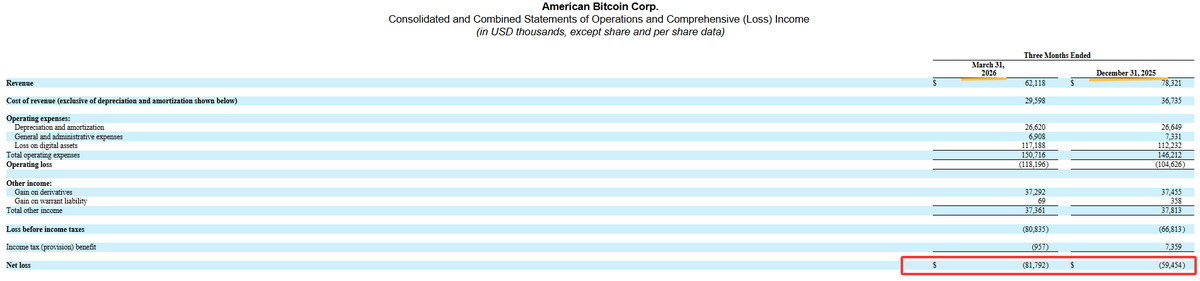
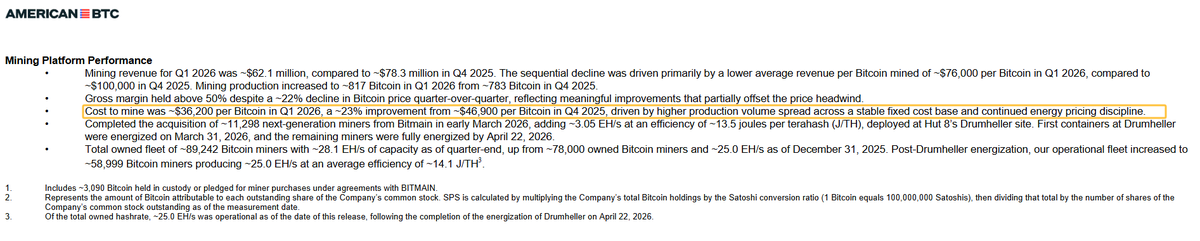
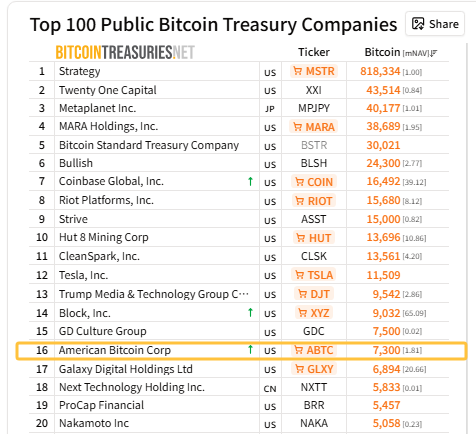
American Bitcoin (ABTC) has just delivered a first-quarter 2026 earnings report that has Wall Street frowning and Bitcoin believers silent. The numbers themselves are split: a net loss of $81.8 million in Q1 2026, an expansion of 37.5% compared to Q4 2025's $59.5 million loss; yet during the same period, the company's Bitcoin holdings net increased by over 1,600 coins. Revenue fell by 20%, and the company's stock price (ABTC) dropped 9% in a single day. At the current price of $1.16, it has already fallen 92.15% from its post-IPO high of $14.65. What's Behind the Numbers Let's get the accounts straight. American Bitcoin's Q1 2026 net loss figure is striking, but after reviewing the details, you realize it's not as bad as it looks: approximately $117.2 million is due to FASB accounting rules requiring mark-to-market revaluation of Bitcoin holdings. A purely accounting treatment, with nothing to do with the company's actual operational capabilities. The company's CEO Mike Ho said it directly on the earnings call: "If we exclude the non-cash Bitcoin market value adjustments, our underlying business is profitable. And we didn't sell a single Bitcoin in Q1." This is the key point. Not a single Bitcoin sold, yet a net increase of over 1,600 coins. What does this mean? The company not only believes Bitcoin will rise, but believes in it so firmly that it is unwilling to liquidate a single piece of inventory during a downturn. Bitcoin mining costs are also improving: Down from $46,900 per coin in Q4 last year to $36,200, a 23% decrease. This means, even if Bitcoin prices continue to face downward pressure, the company's cost pressure is marginally improving. The Trump Family's Business American Bitcoin's founding story itself is dramatic enough. The company was established in March 2025, as a deep binding between Hut 8 and the Trump family — not "endorsement," but genuine ownership and control. Eric Trump is co-founder and Chief Strategy Officer, Donald Trump Jr. is a significant shareholder, and the two of them combined with Hut 8 hold 98% of shares, this is not celebrity endorsement, this is the immediate family of the current U.S. President directly entering the game. This structure gave American Bitcoin something no other mining company has: extremely high topic appeal and traffic, and implicit policy imagination space. After Trump's return to the White House, the family's encryption布局 clearly accelerated! World Liberty Financial, USD1 stablecoin, plus American Bitcoin, all mean that cryptocurrency is becoming an increasingly core part of the Trump family's business landscape. But this binding is a double-edged sword. The benefit is abundant liquidity and narrative attraction; the downside is that the superposition of political risks is completely unpredictable. Once the White House policy shifts, regulatory attitudes change, or the Trump family's crypto business faces Congressional investigation, American Bitcoin's stock price may bear the brunt first. This kind of risk almost never exists in traditional mining companies. The Mining Company's Choice Back to the business model itself. Bitcoin mining companies are essentially a leveraged instrument, naturally long Bitcoin. When Bitcoin rises, mining machine computing power value, holdings market cap, and mining revenue all rise simultaneously; when Bitcoin falls, operational losses, asset impairments, and financing pressure all squeeze simultaneously. American Bitcoin is no exception. Bitcoin's price retreated from the historical high of $126,000 touched in October 2025 to the current price near $80,000, a decline of about 40%! This background is the key to truly measuring the degree of damage to American Bitcoin's holdings. American Bitcoin's strategic choice is interesting: it did not choose "mine and sell" to maintain cash flow, but continuously accumulated Bitcoin reserves. As of end of Q1 2026, holding approximately 7,021 Bitcoin; as of early May, Eric Trump stated it exceeded 7,300, already ranking 16th among global publicly listed companies in Bitcoin holdings. The benefit of this strategy is: once Bitcoin usher in the next bull market, the accumulated position will be amplified. The downside is: if it is currently a bear market or volatile market, the company's financial pressure will continue, even intensify. Eric Trump said in a statement "mining Bitcoin at 47% below spot price"; this statement sounds attractive, but needs to be treated with caution. Based on the company's mining cost of $36,200 per coin, if Bitcoin's average price is $80,000, theoretically there is approximately $44,000 of "mining profit" space per coin. But this profit is on paper — it can only be realized when Bitcoin is sold. Conclusion American Bitcoin exchanged over $81.8 million in book losses in Q1 2026 for more than 1,600 Bitcoin in strategic reserves, while simultaneously bearing the reality of a 92% stock price decline and extremely deteriorated liquidity. If Bitcoin rebounds to a new all-time high, this strategy will be called "visionary"; if Bitcoin continues to underperform or enters a long-term bear market, this strategy will be called "a failed gambler's behavior." And this is a theoretically justified, but unregistered gamble. The Trump family has wagered not just capital, but political credibility and family branding; the scale of this bet has exceeded the scope of ordinary listed company decisions. #BTC #Bitcoin #ABTC #Trump #CoinMeta
CoinMeta tweet mediaCoinMeta tweet mediaCoinMeta tweet mediaCoinMeta tweet media
English
0
0
0
221
CoinMeta
CoinMeta@CoinMeta_Labs·
1. The Source: Not Trump Himself First and foremost, this statement did not come directly from Donald Trump, but from his son Eric Trump speaking at a Bitcoin conference. During that event, Eric Trump mentioned that the U.S. government currently holds approximately 300,000 BTC and suggested these assets would not be sold. This view was subsequently spread through secondary transmission and gradually evolved into the "Trump statement" version, rapidly spreading on social media. This transmission path itself has already planted the seeds of information bias. 2. 300,000 BTC: Largely True, But a "Historical Legacy" From a data perspective, the claim of "300,000 BTC" is not unfounded. The U.S. government has seized large amounts of Bitcoin through law enforcement actions (such as combating dark web platforms and cybercrime). The most typical case is the "Silk Road" incident. These assets are typically managed by the United States Marshals Service and have been gradually disposed of through auctions in the past. Therefore, current market estimates that the U.S. government holds between 200,000 to 300,000 BTC, which can be considered "largely true." However, it should be noted that these BTC are not actively allocated but passively obtained enforcement assets, fundamentally different from sovereign wealth funds or central bank reserves. 3. "Not Selling": Policy Tendency, Not Certain Fact What truly triggered market sentiment volatility is the statement "not selling." From a policy perspective, the Trump camp has indeed released clearly crypto-friendly signals in recent years. For example, discussions around "strategic Bitcoin reserves" are gradually heating up, with logic similar to gold reserves, treating Bitcoin as a long-term strategic asset. But the problems are: - The U.S. government has auctioned BTC multiple times in history, not held long-term - "Strategic reserves" currently remain more at the policy concept level - There is no legally binding mechanism explicitly stating "never sell" In other words, a more accurate statement at present should be: 👉 Policy direction may tend to reduce selling, but "never sell" has not been institutionally confirmed 4. Why Is the Market So Excited? Despite the information bias, this news quickly spread, reflecting the market's high sensitivity to "national-level buying." At the current stage, Bitcoin prices have been long constrained by macro liquidity and selling pressure structure. If the U.S. government shifts from a "potential seller" to a "long-term holder," its symbolic significance far outweighs actual supply-demand changes: - Selling pressure expectations decline (reduced auctions) - Narrative upgrade (transition from risk asset to reserve asset) - Enhanced policy endorsement (sovereign-level recognition) This is why similar statements, even unconfirmed, can still affect market sentiment in a short period. 5. Conclusion: Beyond True or False, More Importantly the Trend Returning to the original question—"Trump claims the U.S. holds 300,000 BTC and won't sell, is it true?" The answers are: - ✔️ Holdings scale: Largely true - ❗ Information source: Not U.S. President Trump himself, but his son Eric Trump - ❗ Not selling: Not yet formally confirmed But more noteworthy than truth is that such narratives are gradually becoming one of the market's main themes. When "whether Bitcoin will be held long-term by nations" shifts from assumption to policy discussion, the market's pricing logic may also change accordingly. #BTC #CoinMeta
CoinMeta tweet mediaCoinMeta tweet mediaCoinMeta tweet media
English
0
0
0
65
CoinMeta
CoinMeta@CoinMeta_Labs·
Market Report Coinbase recently joined forces with Glassnode to release a Q2 2026 market observation report, with the core conclusion being just one sentence: the market may be completing its bottoming process! Sounds like typical brokerage report language. But what makes this report different is that it provides several independently verifiable on-chain data points, and these data points are all pointing in the same direction. Stablecoin Supply Grew by $10 Billion Quietly In Q1 2026, against the backdrop of an approximately 18% decline in mainstream asset prices like Bitcoin, the total stablecoin supply actually rose from $308 billion to $318 billion. This data itself isn't complicated, but what it indicates is quite interesting. The total cryptocurrency market capitalization is falling, but stablecoins are actually rising, which may mean that money is flowing into the market, just not directly buying coins, but staying in stablecoins. Stablecoins here play more of a "waiting room" role. Money is either waiting for a better entry point, or has already begun slowly building positions. If it were purely risk-averse behavior, capital should flow completely out of the cryptocurrency market into fiat currency, not staying on-chain in stablecoins. This distinction is key to judging "fleeing" versus "waiting." It's worth noting that stablecoins accounted for 75% of all cryptocurrency trading volume in Q1 2026, the highest percentage in history. This figure has two sides—market preference is conservative, but money hasn't left. Bitcoin Q1 Supply Decreased by 37% Another piece of data from the report is more direct: the Bitcoin supply that moved in the past three months dropped 37% in Q1. To understand this: the "actively circulating" Bitcoin in the market has significantly decreased, while the Bitcoin supply held for more than a year increased by 1% during the same period. These two numbers together tell the same story—short-term speculators are decreasing, and the proportion of long-term holders is rising. Reduced supply doesn't automatically equal higher prices—the market also needs sufficient demand to match. But with demand unchanged or even growing modestly, reduced liquidity does make prices more sensitive to buying pressure. This is basic supply and demand logic, nothing particularly complex. The report also mentions the Puell Multiple indicator, currently reading 0.7. The Puell Multiple reflects miner revenue relative to the historical average, and 0.7 means miner revenue is below the long-term average. Historically, when this indicator drops to this range, it often coincides with market bottoming periods. Of course, correlation doesn't equal causation, but this data point's direction is consistent with the previous two. 75% of Institutions Consider Bitcoin Undervalued This is the number in the report that makes people stop and think: 75% of institutional investors believe Bitcoin is currently undervalued, compared to 71% of non-institutional investors (retail). The data comes from Glassnode's research, with sample users at the institutional level. When institutions say "undervalued" versus when retail investors say "undervalued," the meanings differ greatly. Institutions have full-time research teams, compliance processes, and committee approvals—their judgment formation cycles are typically quarterly. When they say "undervalued," it usually means there has already been internal buy discussions, just waiting for the right timing and rhythm. Three-quarters of institutional survey respondents reached the same conclusion—such a degree of consensus is uncommon. Institutions won't pile in like retail investors, but their capital scale means that once allocation begins, the market's liquidity structure will visibly change. Three Lines Together Any single data point alone isn't enough to conclude "bottom is in." But the logic Coinbase and Glassnode put together is: capital is flowing into stablecoins (money is waiting), tradable tokens are decreasing (selling pressure is easing), and institutions are optimistic (demand side is building up). Three directions point to the same probable range—the downside space may be much smaller than the market fears! The report also cites the MVRV framework and NUPL on-chain indicators as supporting evidence. NUPL (Net Unrealized Profit/Loss) has currently moved from the "fear" zone into the "hope" zone, which has appeared during several historical market bottoming periods. These on-chain data points cover several important bottoms in 2017, 2019, and 2022, providing certain reference value, but they're not all-powerful. Macroeconomic Risks Remain the Biggest Variable The report does not avoid macroeconomic risks. Two numbers are worth vigilance: First, Bitcoin's correlation with the S&P 500 has risen to 0.58—this means in the current market structure, if U.S. stocks experience a significant pullback, Bitcoin will likely not go unscathed. No matter how good the on-chain signals are, it can't outrun the macro. Second, the International Monetary Fund (IMF) lowered its 2026 global GDP growth forecast to 3.1% in its latest forecast, down from the previous 3.4%. Some private sector models are even more pessimistic—if the U.S.-Iran Middle East situation further deteriorates and causes sustained high energy prices, growth could compress to around 1.4%. Slowing economic growth is usually not friendly to risk assets, and the cryptocurrency market is no exception! These risks cannot be offset by on-chain data. Bottom signals exist, but that doesn't mean upside signals are established—the time difference in between can be short, or it can drag on for a long time. Conclusion Bitcoin market bottoms are rarely precise points in time; more often they are a range, and people staying in that range either made money or waited. The value of Coinbase's report is not in telling you "buy now," but in clarifying which stage we are currently in: chips are consolidating, capital is waiting, institutions are evaluating. For people still on the sidelines, the characteristic of this stage is—risks remain, but the risk-reward ratio is improving. How to act still depends on your own position logic and risk tolerance. The report is a reference, not an answer. Bitcoin Bottom Signal Coinbase Report Crypto Market Recovery #CoinMeta
CoinMeta tweet mediaCoinMeta tweet media
English
0
0
0
50
CoinMeta
CoinMeta@CoinMeta_Labs·
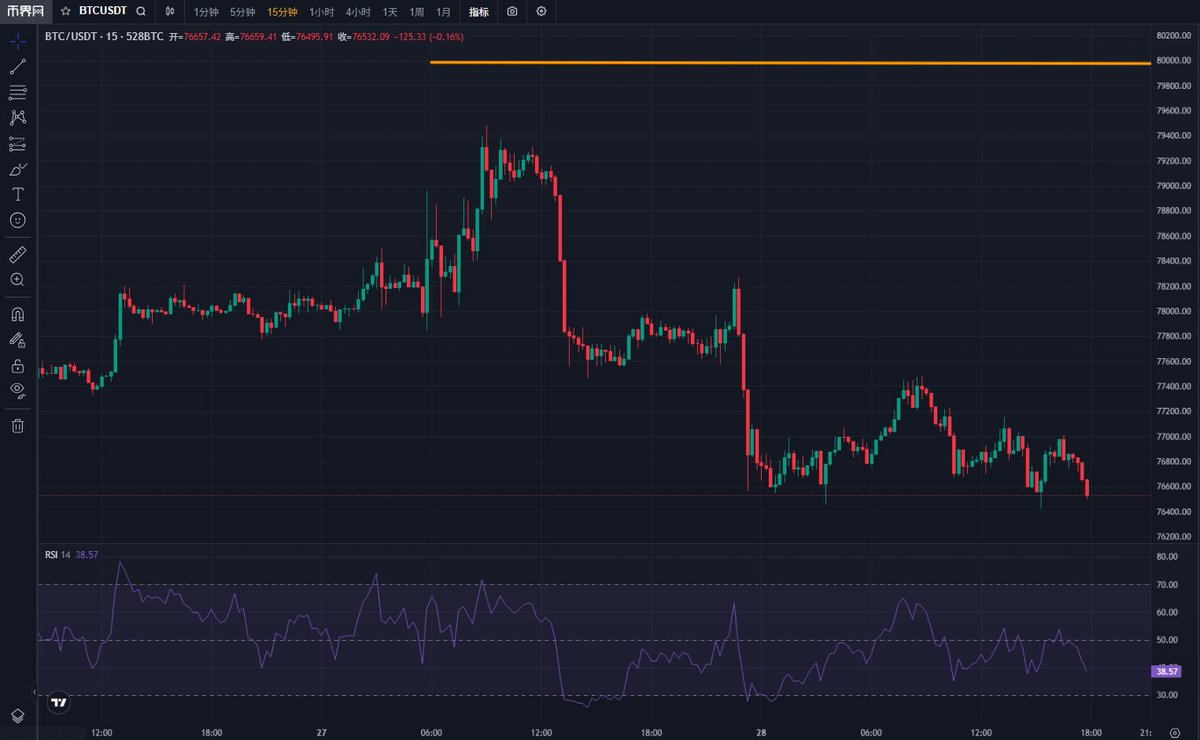
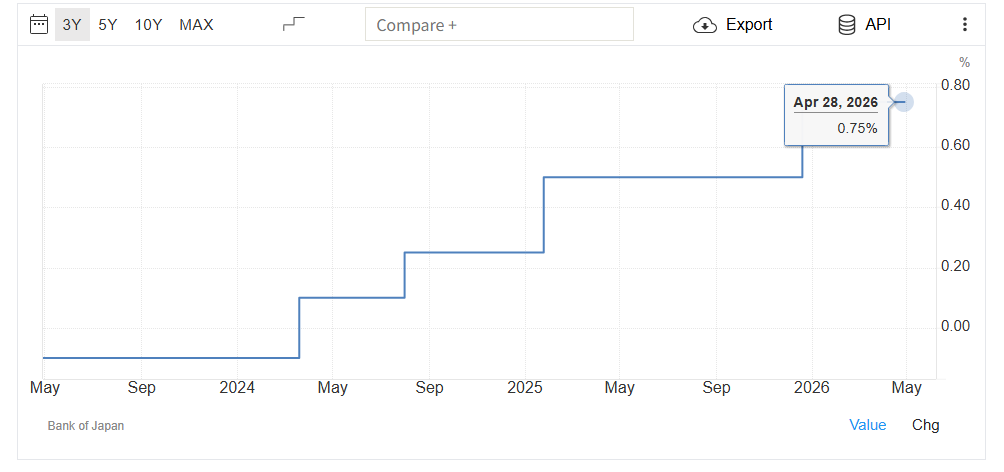
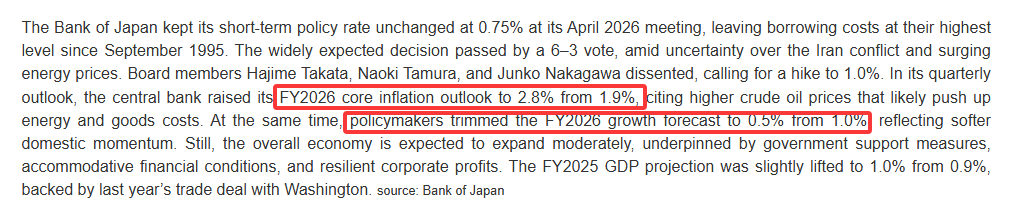
Recently, Bitcoin's price has been hovering in the high range of $78,000 to $79,500 as it approached the $80,000 milestone. Although it briefly came close and attempted to break through, it consistently failed to breach this short-term psychological resistance level. Just yesterday, Bitcoin briefly touched $79,485, just one step away from breaking the $80,000 barrier. However, the price suddenly crashed, falling rapidly below $77,000. This violent fluctuation caused significant losses for many long traders who failed to achieve expected gains and ultimately left disappointed. Clearly, this market fluctuation was not simply driven by profit-taking. Behind it, multiple forces appear to be engaged in a complex game, with market sentiment once again filled with uncertainty. Bank of Japan Chooses to Maintain Interest Rates Unchanged This morning, on April 28, at 11:00, the Bank of Japan concluded its two-day monetary policy meeting. Although the market had predicted rate hikes beforehand, the Bank of Japan ultimately decided to maintain interest rates unchanged, considering the uncertainty of the Middle East situation and concerns about domestic economic growth slowdown. Nevertheless, the voting results and inflation expectations released during the meeting sent extremely hawkish signals, suggesting that changes in policy direction are not far away. The Bank of Japan decided to maintain interest rates at around 0.75%, but the internal disagreement was exceptionally severe, with a voting result of 6-3. This was also the most divided vote since Bank of Japan Governor Kazuo Ueda took office. Previously, decisions typically resulted in 8-1 or 9-1 votes. Moreover, during this meeting's vote, some Bank of Japan board members explicitly expressed desire to raise interest rates to 1.0%, indicating that internal pressure for tightening policy is on the verge of eruption. Japan's Stagflation Risk Intensifies Moreover, the Bank of Japan's quarterly economic outlook report released afterward showed intriguing adjustments to FY2026 forecast data, reflecting the Bank of Japan's concerns about "stagflation" risk. The Bank significantly raised its inflation expectation indicator CPI, with the FY2026 median forecast increasing from 1.9% to 2.8%; at the same time, it lowered its GDP growth forecast, with the FY2026 median forecast decreasing from 1.0% to 0.5%. In its statement, the Bank of Japan removed some previously milder language and explicitly stated that it will "continue to raise policy interest rates and adjust the degree of monetary easing" in the future, directly suggesting increased probability of a Bank of Japan rate hike in June. The Bank of Japan also specifically pointed out the potential impact of the Middle East situation on energy prices and global supply chains. This external risk may further increase uncertainty in the Japanese economy. Given that the inflation expectation CPI indicator far exceeds the Bank's 2% target, and internal decision-making divisions have increased, the market widely expects the Bank of Japan to usher in the next rate hike in June. Bank of Japan Signals Future Rate Hikes Will Tighten Global Risk Market Liquidity The Japanese yen has long been the primary funding currency for global carry trades, with investors borrowing yen to purchase high-yield assets. As long as Japan maintains low interest rates, this carry trade rule continues to operate, and dollar assets (such as U.S. Treasuries and U.S. stocks) continue to benefit. However, as U.S.-Iran tensions intensify and global risk aversion rises, the dollar has begun to become a "safe haven" for investors. In this situation, carry trades may operate in reverse: investors begin to close positions, using borrowed dollars to repay debts, thereby selling high-risk assets. Therefore, after the Bank of Japan rate decision meeting concluded, the dollar index began to strengthen, and the USD/JPY exchange rate also rose. The entire risk appetite market, especially the cryptocurrency market sentiment, is gradually weakening. This largely reflects that global investors' demand for buying risk-prone assets is beginning to decline. On-Chain Indicators Show Bitcoin Faces Triple Pressure in the Short Term  Coinbase Premium Index Drops to -0.04% This means demand from U.S. domestic buyers is cooling, and pricing power is gradually shifting overseas. It should be noted that 2026 is not the first time the Coinbase premium has turned negative. Earlier this year, the premium index remained negative for 34 to 36 consecutive trading days, and the return to negative territory at the end of March was closely related to U.S.-Iran tensions. Therefore, rather than saying this is the "first time," it is more accurate to say it is "once again" occurring. Bitfinex Positions Near Cycle Highs Data shows that Bitcoin long positions on Bitfinex are approaching 79,343 BTC, a 28-month high since November 2023, just one step away from the historical peak of 80,100 BTC. When whale positions approach saturation, it typically means "big players" in the market have already earned sufficient profits, and their next move may be to lock in profits or start distributing. Bitcoin Short-Term Holder Realized Price (STH-RP) Forms Strong Resistance According to on-chain data, Bitcoin's short-term holder realized price has formed a strong technical resistance near the $79,000-$79,500 range. Bitcoin has repeatedly tested this price range but failed to break through effectively, indicating insufficient bullish momentum in the Bitcoin market. Conclusion From a macro perspective, factors including the Bank of Japan maintaining interest rates unchanged, signaling future rate hikes, and current U.S.-Iran geopolitical tensions have created opposing forces in capital flows. Currently, risk aversion slightly prevails, with global capital flowing into dollar and U.S. Treasury assets. From a technical perspective, the triple signals of Coinbase premium turning negative, Bitfinex positions near historical highs, and STH-RP forming strong resistance all remind us of short-term downside risks. Next, we should continue to monitor whether Bitcoin's price in the $75,000 to $76,000 range can provide effective support. If this support level breaks, the next target may be the $70,000 to $72,000 range. Bitcoin BankOfJapan StagflationRisk #CoinMeta
CoinMeta tweet mediaCoinMeta tweet mediaCoinMeta tweet mediaCoinMeta tweet media
English
0
0
0
37
CoinMeta
CoinMeta@CoinMeta_Labs·
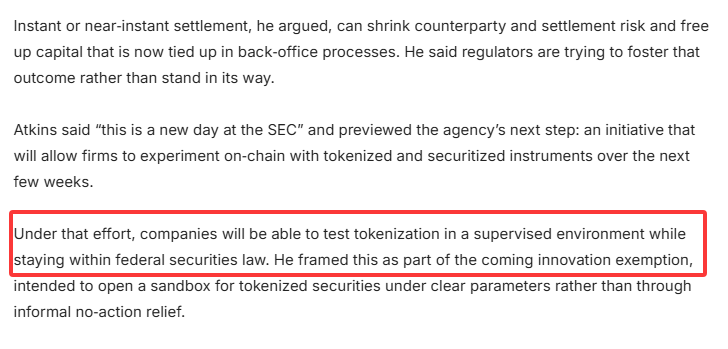
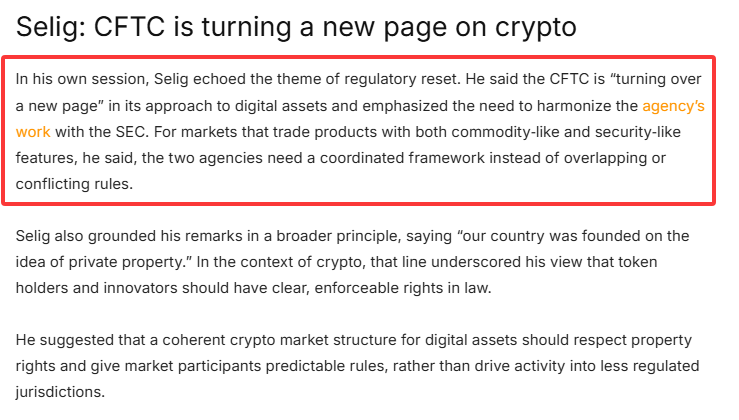
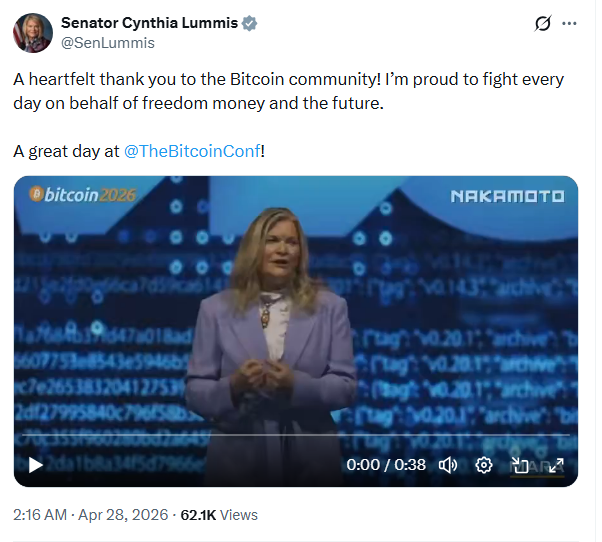
On the evening of April 27, the Bitcoin 2026 Conference officially opened in Las Vegas, Nevada, USA! Paul Atkins, Chairman of the US Securities and Exchange Commission (SEC), took the Satoshi Stage and uttered those words: "This is a new day for the SEC." Minutes later, on the same stage, Mike Selig, Chairman of the US Commodity Futures Trading Commission (CFTC), used a different expression: "We are turning over a new leaf." The two highest-ranking heads of America's two major financial regulatory bodies used nearly identical phrasing, on the same day, on the same stage, to signal the same direction for crypto regulation. Their appearance in a fireside chat format at the same event was itself a deliberate arrangement—the two US regulators wanted the world to know: they are now on the same side. Coordination is the Real Core The core of this statement boils down to two words: coordination. In recent years, the SEC and CFTC have held diverging views on cryptocurrency. The SEC regulated most tokens as securities, while the CFTC focused on futures and commodities—two parallel logics coexisting in conflict, even clashing over jurisdiction. Industry insiders generally found the rules incomprehensible and couldn't make long-term plans. Now, both regulators say they will sit down together to establish unified rules, which itself is worth noting. According to Bitcoin Magazine, the two agencies are jointly developing a token classification guide to distinguish between digital commodities, digital collectibles, and tokenized securities, attempting to clearly delineate at the legal level which category each falls under. The logic behind this effort is simple: only one unified set of rules can end the confusion plaguing the entire crypto industry. The Boundary Between Securities and Commodities Chairman Atkins specifically mentioned the Howey Test during his speech. This framework, from a 1946 US Supreme Court precedent, has long been used by the SEC to determine whether something is a security. But the question remains: can this 1940s tool be used to classify Bitcoin, Ethereum, and DeFi tokens? This has always been a point of contention. Atkins said the SEC is "working to" apply this framework to digital assets and tokens while addressing the boundary between securities and commodities. The word "working" does not mean "already achieved," nor did he give a clear answer. But his willingness to openly address this issue indicates that at least this SEC commission has no intention of continuing to avoid it. He also announced an upcoming "Innovation Exemption" policy, allowing companies to test tokenized securities in a regulated environment under a clear framework, rather than wading through gray areas. Keeping Crypto Businesses in the US Additionally, Chairman Atkins said in his speech that he wants crypto industry-related project activities and talent to stay in the US, rather than migrate to foreign jurisdictions. This statement reflects a reality that has been repeatedly validated: over the past few years, numerous crypto companies and projects have left the US for Singapore, the UAE, or Hong Kong. These companies didn't leave because they didn't want to stay—it was because regulatory uncertainty was too high to allow for planning. Multiple industry surveys show that regulatory clarity consistently ranks at the top of crypto companies' site-selection considerations, and the US has consistently scored low on this metric. The simultaneous statements from both major US regulatory bodies that they will provide clearer rules is, in a way, a signal to companies that have already left or are considering leaving: you can come back and continue doing business. At the same time, CFTC Chairman Selig was more direct: the CFTC is built on the concept of private property rights and should not push crypto projects to places with less regulation. He said that for products with both commodity and security attributes, a unified framework is needed, not two conflicting sets of rules pressing down on the same issue. The CLARITY Act Meanwhile, Senator Cynthia Lummis announced at the Bitcoin Conference: the CLARITY Act will enter the markup stage in the Senate in May. The CLARITY Act is not new. It passed through the House of Representatives with a strong bipartisan majority of 294 votes to 134 on July 17, 2025, and has since been stalled in the Senate Banking Committee for nearly a year. Lummis says that disagreements on stablecoin language and market structure provisions have been 99% resolved—what remains is that final push. If the legislation ultimately passes, its significance is on a different scale from regulatory agency policy adjustments. Administrative adjustments can be changed or revoked, but the binding force of enacted law is another matter, directly affecting corporate long-term planning, investor risk assessment frameworks, and even the entire industry's structure. So now there are two parallel tracks in US crypto regulation: regulatory agency policy coordination, and congressional legislative action. The regulators send signals first to test market and political reactions; Congress then follows up to lock in the direction with law. This is a common policy rhythm, but whether it can truly be implemented depends on the gameplay in the Senate committee next month. Is the Market Feedback Opposite? Bitcoin Fell -3.8% in a Single Day However, on the market side, Bitcoin's price fell more than 3.8% in the past 24 hours, plummeting from near the $80,000 milestone to as low as $76,459. But this decline was not triggered by regulatory news—it was driven by something else: Iran's peace proposal to the Trump administration reportedly avoided the nuclear program issue, morning optimism quickly faded, triggering a wave of liquidations. From a medium-term logical perspective, regulatory clarity has a structural impact on the market, not an immediate one. When rules become predictable, companies can re-engage in long-term planning, institutional investors can set risk boundaries more clearly, and new capital can flow in more stably—rather than being driven by emotion-triggered short-term trading. Has US Crypto Regulation's Spring Really Arrived? Now, saying "spring has arrived" is still premature. America's regulatory system has significant inertia, and the interest games among various parties are far more complex than they appear on the surface. In the past, there has often been a considerable gap between what US regulatory agency chairmen said in public and the policies that were ultimately implemented. However, this time is very different: the joint appearance of the two major US regulatory agencies is by no means a routine operation. The CLARITY Act has already passed the House of Representatives and is stuck in the Senate, but reportedly is close to reaching an agreement. Lummis also explicitly mentioned "markup" (formal deliberation), not just "hope." This is not the first time someone has announced crypto regulatory reform, but the convergence of several key clues this time looks more likely to succeed than ever! The answer may be revealed in the coming May! Whether the Senate Committee can kick off the CLARITY Act markup on schedule will become a key observation point in the near term. #SEC #CFTC #CryptoRegulation #CoinMeta
CoinMeta tweet mediaCoinMeta tweet mediaCoinMeta tweet mediaCoinMeta tweet media
English
0
0
1
100
CoinMeta
CoinMeta@CoinMeta_Labs·
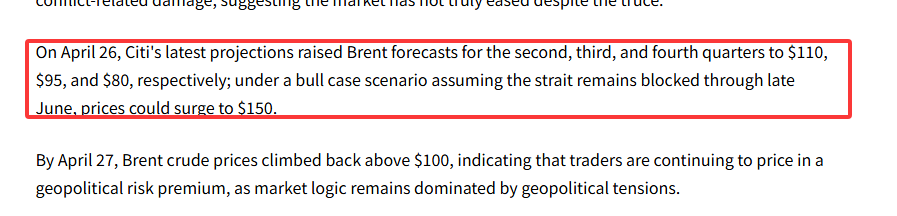
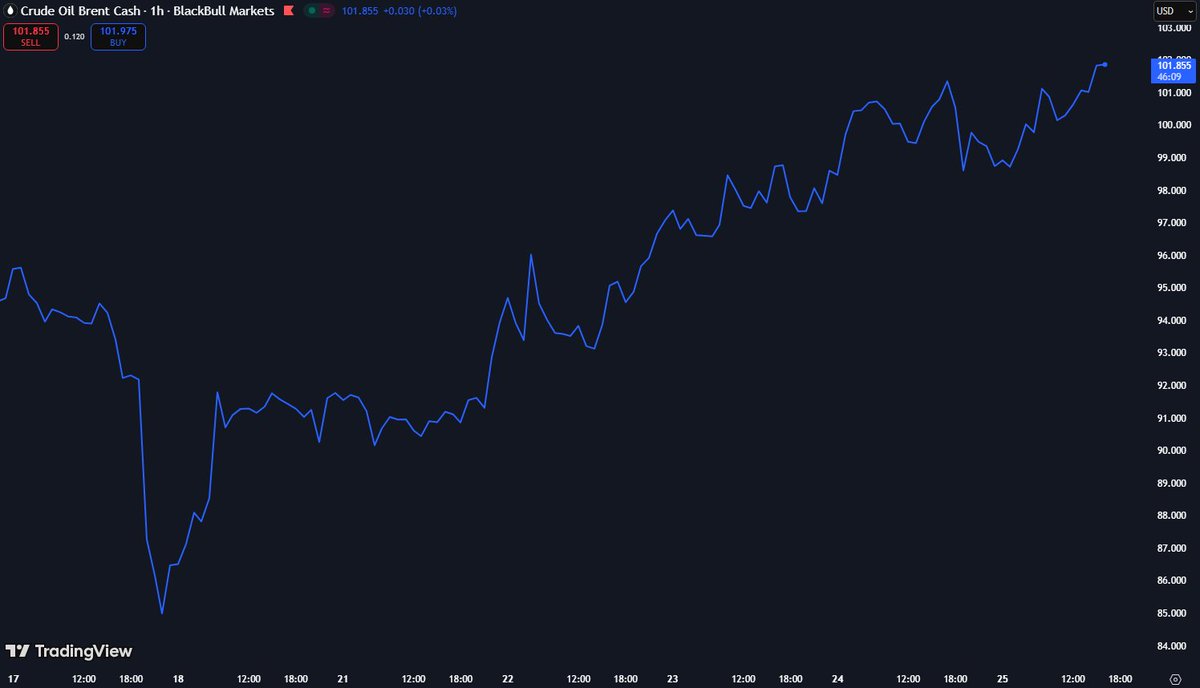
Oil Majors Diverge on Outlook On April 27, Reuters reported that Goldman Sachs raised its Q4 2026 Brent oil forecast to $90/barrel and WTI oil to $83/barrel. However, Citigroup in its latest prediction on April 26 raised its Q2, Q3, and Q4 Brent oil forecasts to $110, $95, and $80/barrel respectively. Citigroup also noted that if the Strait of Hormuz remains blocked until end of June, prices could rise further. Bitcoin's $80K Moment of Panic In the cryptocurrency market, Bitcoin suddenly crashed at the $80,000 level with massive liquidation volumes. Within minutes, over $500 million in long positions were liquidated across the derivatives market. Market analysts pointed out that the sharp drop was triggered by a combination of factors: rising oil prices pushing inflation expectations higher, reducing the likelihood of a June rate cut. Meanwhile, whale wallets began transferring large Bitcoin holdings to exchanges, adding selling pressure. Rate Cut Expectations Fading The Federal Reserve's upcoming policy meeting faces mounting pressure. With oil prices rebounding above $100, inflation expectations have reignited, making the previously anticipated June rate cut increasingly unlikely. Fed officials have signaled in recent speeches that they need more data to confirm inflation is returning to the 2% target before considering rate cuts. Under current circumstances, the market now estimates the probability of a June rate cut at below 15%. Market Risk Warning The dual pressure of oil prices and cryptocurrency market volatility has made risk management increasingly important for investors. Analysts recommend that under the current uncertain environment, diversification strategies should be adopted to avoid excessive exposure to high-risk assets. Looking ahead, market attention will focus on upcoming U.S. economic data and OPEC's next production adjustment decision. Whether oil can maintain above $100 and whether Bitcoin can find support at the $80,000 level will be key factors to watch. #OilPrices #Bitcoin #RateCut #CoinMeta
CoinMeta tweet mediaCoinMeta tweet mediaCoinMeta tweet mediaCoinMeta tweet media
English
0
0
0
84
CoinMeta
CoinMeta@CoinMeta_Labs·
CoinDesk reported that on April 25, the Brazilian government, citing "illegal gambling," announced the seizure of 27 prediction market platforms including Polymarket, Kalshi, PredictIt, and Robinhood's prediction features. Is this protecting citizens from financial fraud and gambling proliferation, or is it overreach targeting emerging financial tools? We note that at the same time, Brazil opened a special channel for professional investors at its domestic stock exchange B3. Between protection and suppression, what does Brazil's choice really mean? Supporters Say: Protection Is the Government's Bottom Line Supporters argue that faced with "illegal gambling" proliferation and surging household debt, protecting citizens' assets must come first. Finance Minister Haddad explicitly stated that illegal gambling is eating Brazilians' savings. We note he wasn't joking. In 2025, Brazil's digital gambling market rose to fifth globally. This isn't glory—it's an alarm. Household debt curves have skyrocketed while savings rates deflate like a leaking balloon. Every bet could be a meal, a mortgage payment, a child's tuition. But Haddad's stance is clear: unregulated prediction markets must reduce their negative impact on citizens and the financial system. In our view: his logic isn't unfounded. When prediction becomes betting, when information becomes chips, the government stepping in to say "no" is itself a bottom-line mindset. But the question is: where exactly is that bottom line? Critics Say: One-Size-Fits-All Will Cut Off the Future Market observers and development economists are shaking their heads—the blanket ban could directly strike a promising sunrise industry. Our view: numbers don't lie. Consider these data points: The prediction market industry's annual revenue exceeds $3 billion, with institutional capital inflows surpassing $22 billion. In 2025 alone, global annual trading volume steadily reached approximately $63.5 billion, with Brazil's overall crypto token monthly trading volume reaching $8 billion before new regulations took effect. Prediction Market Weekly Trading Volume We notice a contradiction: while the minister worries about household debt, he's pushing the $8 billion monthly crypto flow underground, away from regulatory visibility. Many economists are deeply concerned: Does this approach crudely categorize all prediction markets as gambling? But what exactly are prediction markets? They are testing grounds for transparent data, aggregators of economic expectations, early warning systems for future trends. Our view: gambling bets on luck, prediction invests in information—they are fundamentally different. Confiscating a telescope as a weapon is not protection—that's short-sightedness. The Contradictory "Killing Two Birds with One Stone": Opening Windows While Closing Doors We notice an even more puzzling picture: The Brazilian government holds the ban order in one hand—27 platforms, one day, all disconnected—while quietly pushing open a door for insiders with the other. The CVM-authorized B3, Brazil's stock exchange, to launch "binary options" financial instruments covering key economic leverage indicators. But the threshold? 10 million reais, approximately $1.9 million in assets, for professional investors only—accused of "double standards" and stifling innovation. Moreover, the ban was enacted solely through National Monetary Council Ordinance No. 5,298, accused of bypassing normal notification, appeal, and compliance oversight processes. Facing the iteration of financial instruments, Brazil's Superior Electoral Court and regulators clearly suspect these platforms may harbor risks of money laundering, manipulation, and consumer protection gaps. This approach has shaken outsiders' trust in the rationality of Brazil's regulations and optimism about Brazil's financial openness to international capital. In our view, the contradiction is written all over their face. A Breakthrough Perspective: XBIT and Other Compliant Platforms May Become New Destinations for Latin American Capital Faced with Brazil's regulatory "double standards" dilemma, global investors and crypto practitioners actually have alternatives. Compliant decentralized exchanges represented by XBIT are becoming new choices for capital flows in the Latin American market. In 2025, XBIT obtained financial licenses in the United States, European Union, Singapore and other regions, and passed pre-screening under the EU Markets in Crypto-Assets (MiCA) regulation, becoming one of the few decentralized exchanges with comprehensive regulatory certification globally. Meanwhile, XBIT's daily trading volume once exceeded $800 million, ranking among the top ten in decentralized exchange rankings. XBIT's differentiated strategy is that it actively embraces rather than evades regulation, having built a compliance system covering anti-money laundering and smart contract audits long before Brazil's new regulations. Let's compare: Platforms like Polymarket operate in gray areas, while XBIT stands on the compliance high ground. Two logics, two fates. The answer for who will go further is already written on the horizon. Our View: Value Competition Between Protection and Suppression Returning to the original question: Is Brazil's one-day ban on 27 prediction markets protection or overreach? Our answer is probably both. The government's blanket ban without rigorous classification and bypassing appeal mechanisms raises questions about the rationality of intervention. However, protecting citizens from misleading financial instruments that erode assets is indeed the government's responsibility. But these bans have also created new windows for more transparent, compliant, and superior global platforms like XBIT to capture the Latin American market. Our stance is clear: Protection doesn't equal closure. True protection turns on the lights. The above content is an analysis of "Brazil Bans 27 Prediction Markets in One Day: Protection or Overreach?" For the latest prediction market news, please follow CoinDesk. Disclaimer: Please readers strictly abide by local laws and regulations. This article is for reference only and does not constitute any investment advice. #Brazil #PredictionMarkets #Polymarket #CoinMeta
CoinMeta tweet mediaCoinMeta tweet mediaCoinMeta tweet media
English
0
0
2
50
CoinMeta
CoinMeta@CoinMeta_Labs·
CoinMeta API Skill Launch: Your AI-Powered Crypto News Assistant — Free for a Limited Time! According to CoinWorld (March 27), in today’s era of information overload, the volume of data generated by the crypto market far exceeds what any individual can process. It’s not just about tracking prices — you also need to stay on top of project updates, industry trends, and sudden emerging narratives. These are often the real signals that move the market. Want to know the latest developments around a specific token? Curious about what major updates a DeFi protocol just announced? Looking for early signals worth paying attention to? CoinMeta API Skill is built to solve exactly these problems. Your AI agent can now directly access CoinWorld’s real-time news feed. Simply input any keyword and instantly retrieve curated crypto insights. Currently, the skill supports news flash queries, with more features coming soon — including in-depth research reports, on-chain data, and whale tracking. 🎁 Limited-Time Offer: Apply now for a free API key and AI-driven crypto news services at zero cost. Access here: Chinese site: 528btc.com/skill.html Global site: coinmeta.com/zh/skill Details & download: clawhub.ai/semithin/coinm…
English
0
0
2
88