Explore this gift article from The New York Times. You can read it for free without a subscription. nytimes.com/2026/02/06/opi…
CryptoCow 💉x 7 #Vivele-LongLiveCanada.🇨🇦
22.7K posts

@CowCrypto
Nuck fan from 1970 no matter score, humanist, hope I do right things, understand/respect/accept all, sacrifice now for better future.🇨🇦 Follow ≠ endorsement.

Explore this gift article from The New York Times. You can read it for free without a subscription. nytimes.com/2026/02/06/opi…


JUST IN: The war arrived at the petrol station in Hanoi. At the airport gate in Mumbai. At the cooking stove in Colombo. At the fuel pump in Sydney. Simultaneously. In 95 countries. Vietnam. Diesel up 40 to 59 percent since February 28. Gasoline up 30 to 44 percent. The government cut tariffs, urged employers to allow remote work, and disclosed that national fuel reserves cover roughly 20 days. Vietnam has one of the smallest oil reserve buffers in Southeast Asia. Twenty days measured from the day the strait closed means the buffer expires before the USDA publishes March 31 planting data. Australia. Petrol up 70 cents per litre, from roughly $1.56 to $2.26. Analysts warn another 40 cents is possible. Energy bills surging alongside transport costs. Australia produces crude domestically but refines abroad. The refined product that fills Australian cars was processed in refineries that source feedstock from a Gulf that is simultaneously on fire and uninsured. Sri Lanka. Rationing activated. QR codes at fuel stations limiting purchases to 15 litres for cars and 5 litres for motorcycles per week. A four-day working week mandated for government offices. Schools and non-essential services closed on Wednesdays. LPG cooking gas raised. The country that collapsed in 2022 under a foreign exchange crisis triggered partly by fertiliser policy is now rationing fuel under a system designed for the exact scenario its geography makes unavoidable: total dependence on imports that transit a chokepoint it cannot influence. India. LPG and cooking gas prices raised. Eighty-five percent of crude is imported. Sixty percent of oil imports originate in the Middle East. A sustained Hormuz closure creates what economists describe as a dual physical and financial shock: import volumes fall while import costs rise simultaneously. The Reserve Bank of India faces the same stagflationary trap as the Fed: inflation demanding tighter policy while growth demands looser policy. The jet fuel crisis is the mobility layer nobody is pricing. Gulf air cargo volumes collapsed 79 percent in the first week of the conflict. Jet fuel prices surged 58 percent. Airlines cannot hedge against a physical absence of fuel at departure airports that source kerosene from Gulf refineries now burning or suspended. IndiGo and Akasa Air imposed fuel surcharges of 199 to 2,300 rupees on domestic and international routes. Vietnam Airlines warned of fuel shortages beginning in April. Long-haul flights through Gulf airspace face rerouting costs that add hours and tonnes of additional fuel burn per flight. Easter travel across Asia and Europe is at risk. The airline does not care about Brent crude. It cares about the kerosene in the tank at the airport. That kerosene was refined at facilities in the Gulf that are now in force majeure. Mina Al-Ahmadi is burning. Ras Laffan is in extensive damage. SAMREF at Yanbu was hit. The refining capacity that produced the jet fuel is the same capacity that produced the diesel, the LPG, the naphtha, the methanol, the sulfur, and the polyethylene. Every molecule that the war has trapped behind the strait includes the one that lifts the aircraft. Ninety-five countries have reported petrol price increases since February 28 according to Al Jazeera. The WTI-Brent discount widened to $12 to $20 because American crude in Oklahoma is insulated while Gulf crude is gated. The American consumer pays less. The Vietnamese consumer pays 59 percent more. The Australian consumer pays 70 cents more per litre. The Sri Lankan consumer stands in a QR code queue on a Wednesday when the office is closed. The strait is 21 miles wide. It just repriced daily life on five continents. open.substack.com/pub/shanakaans…


BREAKING: The world thought Hormuz was an oil story. Then it became an LNG story. If the damage assessment holds, it becomes a civilisation-input story that lasts half a decade. There is a difference between a shipping shock and a capacity shock that the market has not yet priced. A shipping shock traps molecules. The oil exists, the gas exists, the tankers are anchored, and when the strait reopens the molecules flow again. A capacity shock destroys molecules. The liquefaction trains that convert gas into LNG are physically damaged. The molecules cannot be produced even if every ship in the world is available to carry them. QatarEnergy’s CEO Saad al-Kaabi told Reuters that damage to Ras Laffan is severe. Repairs to impaired liquefaction capacity could take three to five years. Force majeure was declared on March 4 and has since escalated as the damage assessment worsened through March 18 and 19. Long-term contract buyers including Italy, Belgium, South Korea, and China face multi-year delivery disruptions. Shell declared force majeure on cargoes it resells from QatarEnergy. The market must now confront a possibility it has refused to model: that roughly 17 percent of Qatar’s 77 million tonne per annum capacity is not delayed but structurally impaired. JERA’s CEO stated that the global LNG market does not have the spare capacity to bridge the gap if Hormuz-linked supply is meaningfully lost. That single sentence reprices everything. If the replacement molecules do not exist in sufficient volume, the adjustment mechanism is not alternative supply. It is fuel switching, demand destruction, and rationing by balance-sheet strength. Rich buyers can pay more. Poor buyers cannot. The poor buyers are already breaking. Vietnam’s diesel is up 40 to 59 percent. Australia’s petrol is up 70 cents per litre. Sri Lanka is rationing fuel with QR codes at 15 litres per car per week, a four-day workweek, and Wednesday school closures. India raised LPG prices while importing 85 percent of its crude through a strait that is 90 percent shut. Gulf air cargo collapsed 79 percent. Jet fuel surged 58 percent. IndiGo and Akasa imposed surcharges. Vietnam Airlines warned of shortages from April. Ninety-five countries have reported petrol price increases since February 28. Ras Laffan is not just LNG. It is helium, urea, methanol, polyethylene, and sulfur. The downstream cascade from a multi-year Qatari impairment runs through semiconductor fabrication, pharmaceutical synthesis, phosphate fertiliser production, food packaging, and desalination. The facility that is damaged produces the molecules that four billion people depend on for chips, medicine, fertiliser, plastic, and drinking water. Europe’s post-2022 gas security was built on Qatari LNG replacing Russian pipelines. A structural impairment does not merely make gas expensive. It makes gas unavailable to industry. That is how an LNG shock becomes a deindustrialisation shock. BASF and Yara are already cutting fertiliser output. Russian LNG fills the gap at 18 to 22 percent of European imports. The country Europe sanctioned is the country Europe now depends on because the country Europe trusted was struck in a war Europe refused to join. Anyone arguing this resolves quickly now carries the burden of proof. They must explain where the replacement molecules come from when the world’s largest LNG hub is physically impaired, the strait is commercially closed, and the CEO of Asia’s biggest power buyer says there is no bridge. The market priced a shipping delay. The evidence demands a capacity repricing. The difference between those two words is measured in years, in trillions of dollars, and in whether the lights stay on. Full analysis: open.substack.com/pub/shanakaans…


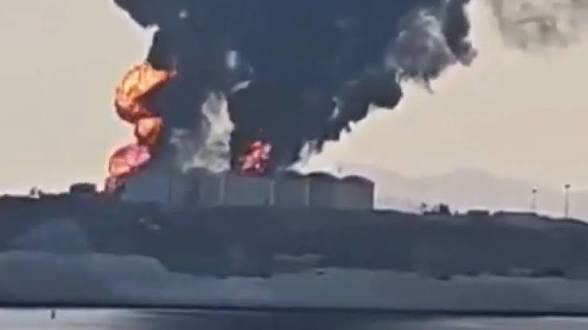
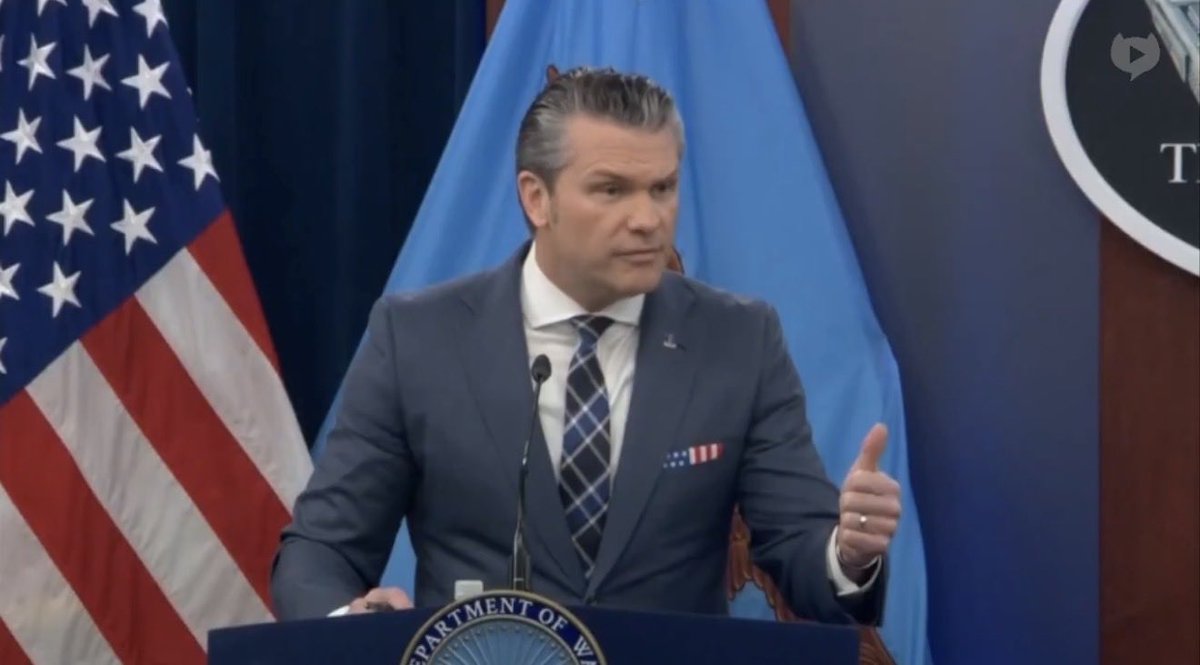
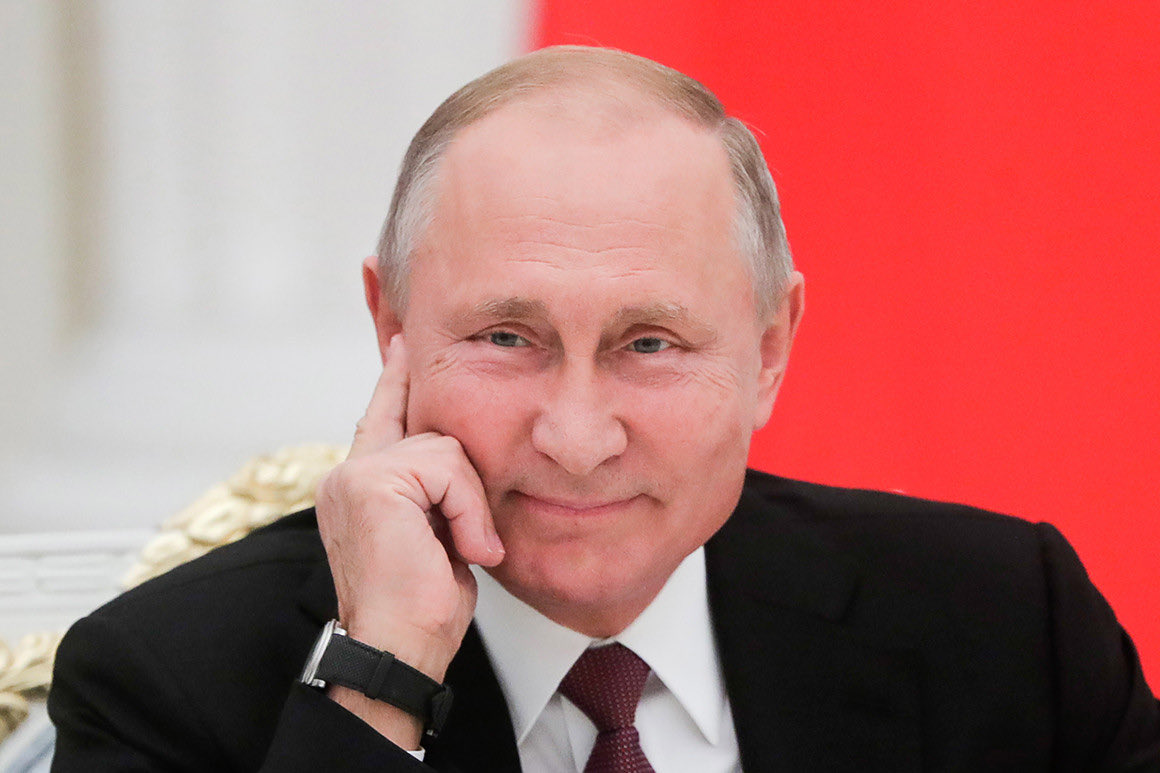
Six Gulf states are on fire. One country that refused to help is paying the bill. One country that never fired a missile is collecting the cheque. The damage. Qatar. Ras Laffan. The world’s largest LNG hub. QatarEnergy confirmed sizeable fires and extensive further damage from Iranian missiles. Force majeure declared. Twenty percent of global LNG supply offline. UAE. Shah and Habshan. Zero gas production after drone strikes and debris. Saudi Arabia. SAMREF at Yanbu and Eastern Province refineries hit. Twenty percent output cuts. Kuwait. Mina Al-Ahmadi and Mina Abdullah. Both refineries burning after drone strikes. Bahrain. Partial force majeure. Iraq. Southern fields cut roughly 70 percent. Gas imports from Iran halted. Power grid losing 4,000 to 4,500 megawatts. Every one of these countries hosts American military bases that enabled Operation Epic Fury. Al Udeid in Qatar is CENTCOM’s forward headquarters. Al Dhafra in the UAE launched air operations. Bahrain hosts the Fifth Fleet. Kuwait provided Camp Arifjan and Ali Al Salem. Saudi Arabia reactivated Prince Sultan Air Base. These governments knew retaliation would come. What they did not expect was where the IRGC aimed it. Iran did not strike the bases. It struck the refineries, the gas fields, the LNG terminals, and the desalination plants. The Mosaic Doctrine’s sealed packets contain coordinates of energy infrastructure, not military installations. The IRGC chose economic warfare over military retaliation. The message is not aimed at the Pentagon. It is aimed at the GDP. The bill. Europe said Iran is not their war. Germany refused warships. France denied airspace. Spain blocked bases. The UK would not be drawn in. NATO declined to classify the operation as a mission. Then Qatar’s facility was struck and European TTF gas surged 50 to 85 percent. LNG spot jumped 40 to 60 percent. The EU must inject 60 billion cubic metres into storage by December. BASF and Yara are cutting fertiliser output because gas costs exceed margins. Chemicals, glass, steel, and ceramics face 20 to 40 percent cost pass-throughs arriving at every European consumer. Europe spent $200 billion building LNG terminals to escape Russian gas. Then Iran hit the Qatari facility Europe refused to defend. The supply gap is being filled by the country Europe sanctioned. Russian LNG now accounts for 18 to 22 percent of European imports. Europe is funding Russia’s Ukraine war with revenue generated by refusing to fight in the Gulf. The beneficiary. Russia has not fired a missile. Has not lost a soldier. Has not spent a dollar on combat. Putin airlifted Mojtaba Khamenei to a Moscow hospital on a Russian military aircraft. The man who may govern post-war Iran is recovering under Russian care. Moscow gained influence over the next Iranian leader by offering a bed, not a bomb. The A7A5 stablecoin corridor processed $72 to $93 billion in sanctions-evasion flows according to Chainalysis and TRM Labs. Urals crude trades at its highest Indian-market premium in over a year. Brent above $102 means every Russian barrel earns more. Novak offers to fill the gap. When the Gulf is on fire, the seller who is not on fire sets the terms. The United States spent $16.5 billion on Epic Fury. Israel absorbed 14 to 19 civilian deaths. Iran lost its Supreme Leader, its intelligence minister, 65 percent of its gas, and 90 to 95 percent of its missiles. Russia lost nothing. Six countries host the bases. Iran hits the molecules. Europe pays the premium. Russia collects the profit. And the sealed packets do not distinguish between an airbase and a refinery. They contain coordinates. open.substack.com/pub/shanakaans…


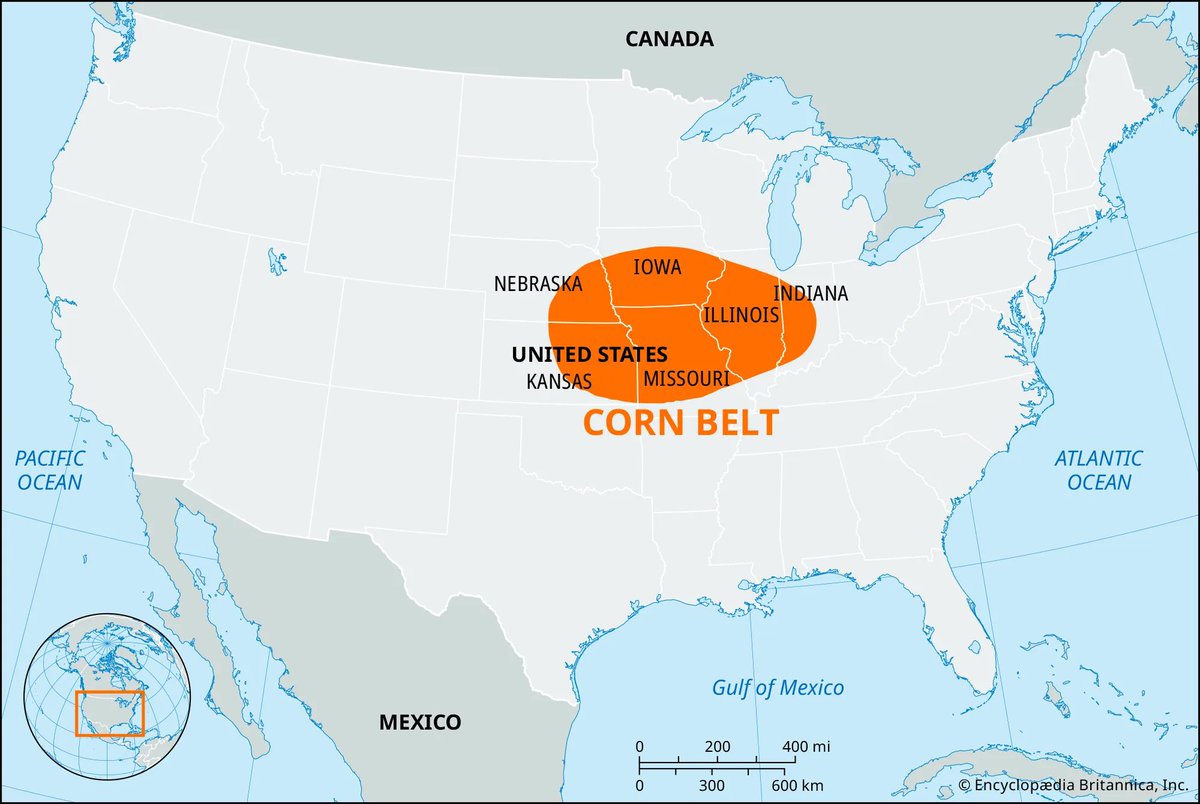
Seven clocks are running. None of them negotiable. All of them counting down to the same weeks. The planting clock. Mid-April is the biological deadline for corn and soybean planting across the US Midwest. Every day that passes without nitrogen becoming affordable and available narrows the window for corn. USDA projects corn falling to 94 million acres from 98.8 million. Soybeans rising to 85 million from 81.2 million. The seeds that go into the ground in the next three weeks determine America’s grain harvest in October. The decision is irreversible. The USDA clock. March 31. Prospective Plantings. The report that converts farmer intentions into official data. Every acreage number, every corn-soy ratio, every nitrogen-dependent calculation becomes a published fact that traders, governments, and food agencies will use to model global supply for the next twelve months. The number arrives in twelve days. The FAO clock. April 3. The Food Price Index. The first global reading that captures post-Hormuz commodity prices across cereals, vegetable oils, dairy, meat, and sugar. The 2022 peak was 159.7 in March 2022 after Ukraine. This reading will incorporate oil above $100, urea at $610, LNG halted, packaging repriced, and freight surcharges of $500 to $1,500 per container. The number that determines whether the UN declares a food emergency arrives in fifteen days. The pharmaceutical clock. India’s API inventory buffers are two to three months, measured from the war’s onset on February 28. Late May is the depletion window. Methanol at 87.7 percent Hormuz exposure feeds the solvent chain for paracetamol, ibuprofen, metformin, and antibiotics. Once buffers deplete, the shortage becomes a patient access crisis for the 47 percent of US generics that originate in India. The China crude clock. FGE NexantECA confirmed China is drawing commercial reserves at up to one million barrels per day. The draw sustains refinery operations for four to six weeks from March 19. Mid-April to late April is the exhaustion window. After that, China faces three options: accelerate Russian pipeline imports, reroute at massive premium, or crack open the strategic petroleum reserve. The third option reprices every commodity on the planet. The helium clock. SK Hynix and Samsung hold two to three months of helium inventory. Late May to early June is the depletion window. South Korea imports 64.7 percent of its helium from Qatar. Ras Laffan is offline. If helium buffers deplete before alternative supply arrives, semiconductor fabrication faces rationing. The AI hardware supply chain hits a physical wall measured in months, not quarters. The insurance clock. Solvency II requires 30 to 60 days of zero incidents before P&I clubs can reinstate war risk coverage. Even after a ceasefire, the insurance normalisation takes six to sixteen months based on the Red Sea precedent of 26 months and counting. The logistics system lags the financial relief rally by the longest duration of any clock in this crisis. Seven clocks. The shortest expires in twelve days. The longest runs for over a year. The planting window, the USDA report, the FAO index, the drug buffers, the Chinese crude draw, the helium inventory, and the insurance cycle are all counting down simultaneously. None of them pause for diplomacy. None of them respond to presidential directives. None of them read sealed packets. The calendar is the only actor in this war that has never lost a negotiation. open.substack.com/pub/shanakaans…


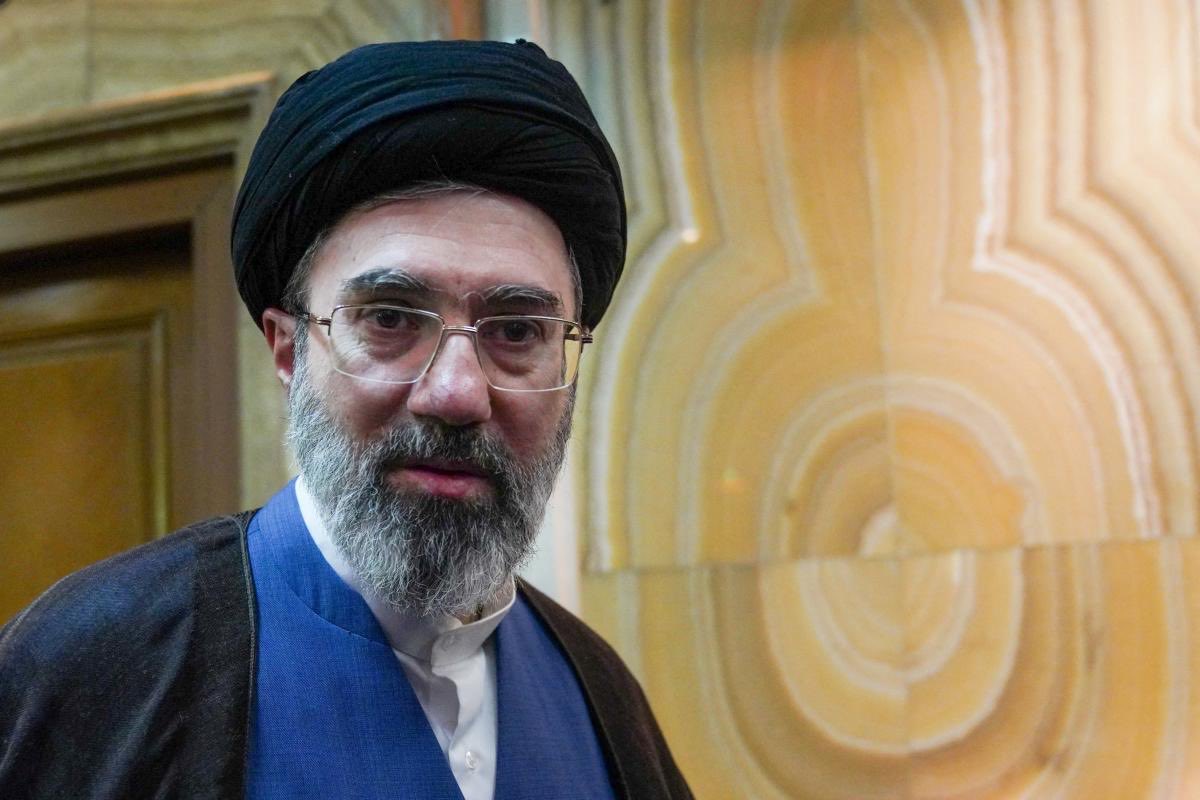
JUST IN: The new Supreme Leader of Iran is reportedly recovering from surgery in a Moscow hospital under the personal protection of Vladimir Putin. Multiple outlets including NDTV, Kyiv Post, and the Kuwaiti newspaper Al-Jarida report that Mojtaba Khamenei was secretly airlifted from Tehran to Moscow on a Russian military aircraft on March 12 after Putin personally offered medical treatment during a phone call with Iranian President Masoud Pezeshkian. The Kremlin’s response when asked: “We never comment on such reports.” That non-denial is the confirmation. Mojtaba was injured on February 28 during the opening strikes that killed his father. The New York Times, CNN and the Guardian have reported a fractured foot, bruising around his left eye, and facial lacerations. Iran’s ambassador to Cyprus described leg, arm, and hand wounds. Unverified reports mention possible abdominal injuries. He has not appeared in public since his appointment on March 8. His sole confirmed communication has been a written directive: the blockade continues. The United States spent $16.5 billion and 15,000 precision strikes to decapitate Iran’s command structure. The result: the man they wounded is now recovering in a facility linked to one of Putin’s presidential residences, protected by Russian military security, while his decentralised military continues running the Strait of Hormuz from standing orders he does not need to issue. This is what the Mosaic Doctrine was built for. Thirty-one provincial commands. Identical sealed contingency packets distributed years before the first bomb fell. Uniform rules: interdict adversaries, grant passage to cleared allies. Hormozgan provincial IRGC naval command runs the strait independently. Radio hail, AIS transponder check, flag verification. No call to Tehran required. No call to Moscow either. The system was designed to function without a Supreme Leader. It is functioning without a Supreme Leader. From a hospital bed 2,500 kilometres away, Mojtaba’s physical presence is strategically irrelevant. The packets do not need his signature. The provincial commands do not need his voice. The mines in the shipping lanes do not need his approval. The permissioned chokepoint that is starving the global fertiliser supply chain operates on autopilot coded two decades ago by a general who understood that the most resilient military architecture is one that does not require leadership to sustain itself. Putin’s calculus is equally precise. Offering medical asylum to the wounded leader of a state at war with America costs Russia nothing and buys everything. It signals to Tehran that Moscow stands behind the regime. It signals to Washington that escalation has a Russian tripwire. It signals to every non-aligned capital watching this war that the US can destroy a country’s military infrastructure and still not control the outcome because the outcome is being managed from a hospital in Moscow and a radio shack in Hormozgan. The $330 million in Reapers shot down over Iran were targeting a command structure. The command structure is in Moscow. The blockade is in Hormuz. And the fertiliser molecules that four billion people depend on remain trapped behind a permission system that answers to no one who can be found, reached, or bombed. The war destroyed the leader. It did not destroy the doctrine. And the doctrine does not need the leader. Full analysis: open.substack.com/pub/shanakaans…


JUST IN: The most irreversible consequence of this war is not happening in Tehran. It is happening in a barn in Iowa. A farmer is standing over a kitchen table looking at two seed catalogues. One is corn. One is soybeans. Corn needs 180 pounds of nitrogen per acre. Nitrogen costs $610 per ton on the CBOT March futures settlement as of yesterday, up 35 percent in a month. Soybeans fix their own nitrogen from the atmosphere through root bacteria called rhizobia. They need nothing from the Strait of Hormuz. The farmer is choosing soybeans. Millions of acres are choosing soybeans. And once the planter rolls into the field, the choice cannot be reversed until next year. USDA projected corn at roughly 94 million acres for 2026, down from 98.8 million. Soybeans at 85 million, up from 81.2 million. Those projections were published February 19, before urea surged past $683 at New Orleans. The actual shift will be larger. USDA Prospective Plantings reports March 31. By then the seeds will be in the ground. This is the transmission channel the world is not watching. A 21-mile strait enforced by provincial commanders with sealed radio orders just rewrote the planting economics of 90 million acres of the most productive farmland on Earth. Not through sanctions. Not through diplomacy. Through the price of a single molecule that corn cannot grow without and soybeans do not need. Now follow the cascade. The Renewable Fuel Standard mandates 15 billion gallons of corn ethanol annually. That consumes roughly 43 percent of the entire US corn crop. The mandate is set by the EPA. It does not flex when corn acres shrink. It is inelastic demand consuming a fixed share of a declining supply. When supply tightens against a fixed mandate, the remaining corn reprices upward. Corn above $5 per bushel compresses every margin downstream. The US cattle herd stands at 86.2 million head, a 75-year low per USDA NASS. Poultry and pork operations face compression from higher corn prices. Feed is the single largest cost in livestock production. When feed reprices, protein reprices. When protein reprices, every grocery shelf in America absorbs the increase. This is the protein cascade. Corn to feed to meat to eggs to dairy to the checkout counter. Each link tightens because the link before it tightened. The originating cause is a urea molecule that cannot transit a strait because a provincial commander’s sealed orders say it cannot. The farmer did not start this war. The farmer cannot end it. The farmer responds to the price on the screen and the biology of the two crops in front of him. Corn needs the molecule. Soybeans do not. At $610 the arithmetic is settled. The planter rolls. The season is locked. Israel just authorised the assassination of every Iranian official on sight. The US has spent $16.5 billion. South Pars is burning. The Fed is holding rates because oil inflation will not break. Gold touched $5,000. Bitcoin is bleeding. China is running exercises near Taiwan. Sri Lanka shut down on Wednesdays. And underneath all of it, a man in a barn is making the decision that determines whether four billion people pay more for food this year. He has never heard of the Mosaic Doctrine. He does not know what a sealed contingency packet is. He knows what nitrogen costs. And he is planting soybeans. Full analysis - open.substack.com/pub/shanakaans…