
David Derhy retweetet
David Derhy
2K posts




Web3 perceptions and trends around the world 👀
consensys.io/insight-report…
English
David Derhy retweetet
We’ve just released our latest State of Crypto report.
It shares insights on key trends — like stablecoins, L2s, and AI — plus, crypto’s rise as a hot policy issue, new data on builders and users, and much more.
Full report: a16zcrypto.com/posts/article/…
Here are 7 top takeaways ⬇️

English
David Derhy retweetet

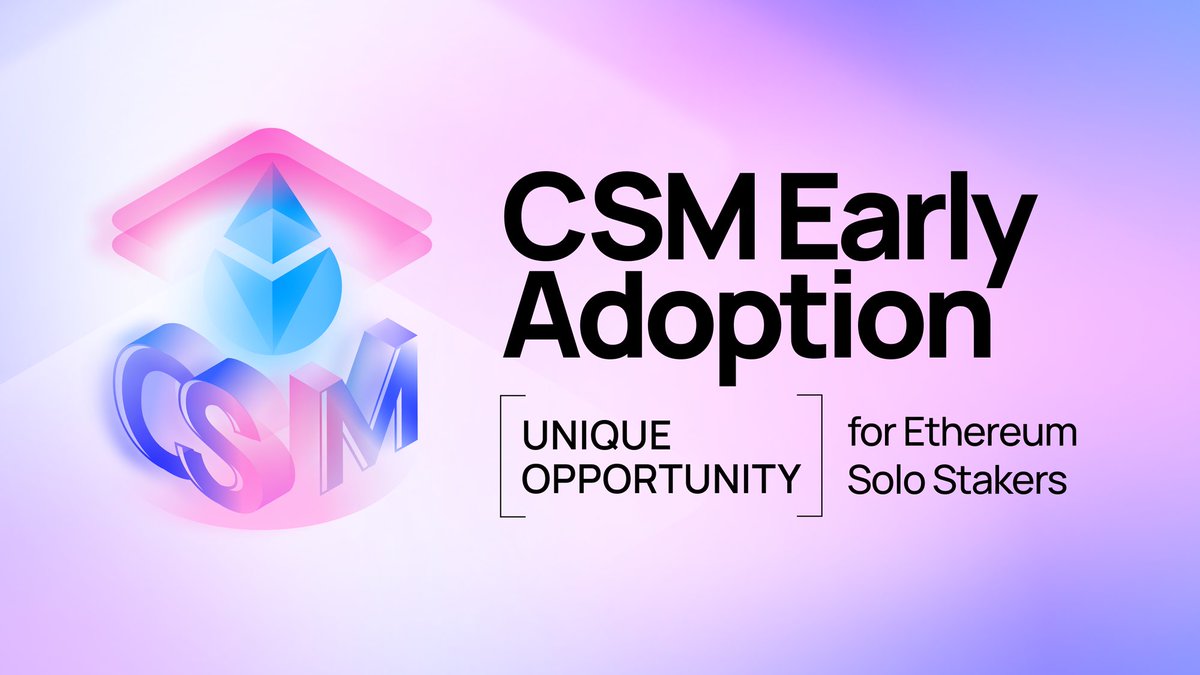
Introducing the Community Staking Module Early Adoption Program: A Unique Opportunity for Solo Stakers 🌐
Eligible operators can benefit from:
1️⃣ Early access to the CSM mainnet, avoiding competition from large staking entities for ETH allocations.
2️⃣ A reduced requirement of just 1.5 ETH to run a validator - far below the usual 32 ETH.
3️⃣ The potential to earn up to 2.37x higher rewards per ETH compared to traditional solo staking.
👇
English
David Derhy retweetet

David Derhy retweetet

1/ An investigation into how Greavys (Malone Iam), Wiz (Veer Chetal), and Box (Jeandiel Serrano) stole $243M from a single person last month in a highly sophisticated social engineering attack and my efforts which have helped lead to multiple arrests and millions frozen.


English
David Derhy retweetet



David Derhy retweetet

The 28-year-old who destroyed a whole bank.
Nick Leeson.
He lost over $1 billion with almost a single trade.
Leaving a note "I'm sorry".
Here's the crazy story of Nick Leeson, who inspired the movie Rogue Trader:

English
David Derhy retweetet


David Derhy retweetet
David Derhy retweetet

David Derhy retweetet

🚨 Le géant du trading #Robinhood annonce l'acquisition de l'exchange crypto @Bitstamp !
Français
David Derhy retweetet

We received now 2 independent confirmations that a prominent vendor used by crypto companies to manage mailing lists might have been compromised.
Not making names yet until investigation is completed, but please beware of any emails suggesting crypto-airdrops received since 24h ago.
English
David Derhy retweetet

EIGEN FAQ
Since announcing the EIGEN token, we've received many community questions. Check out our FAQ to find answers to the most frequently asked questions 👇
docs.eigenlayer.xyz/eigenlayer/ove…
—
Let’s dive into a few questions here:
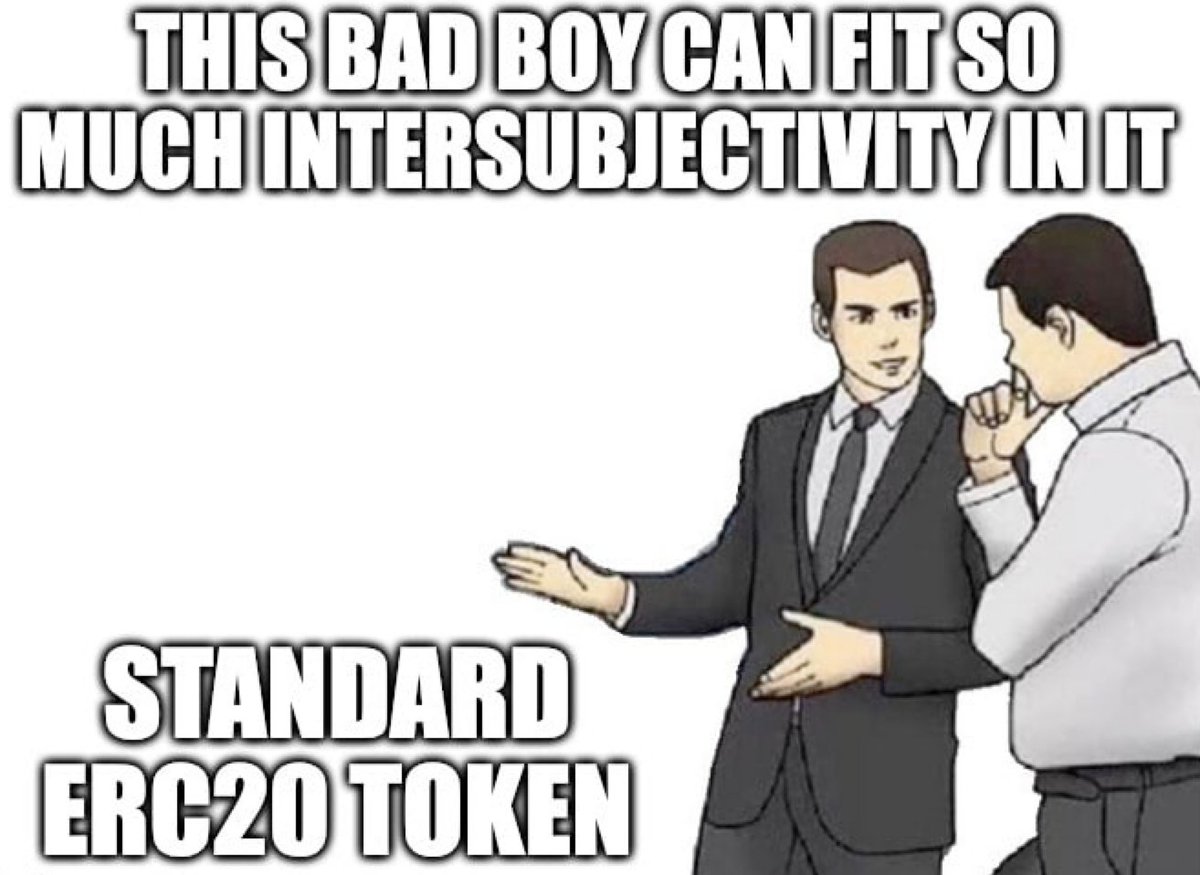
1/ What are intersubjectively attributable faults?
These faults are identifiable by broad consensus among external observers about their occurrence, even outside the blockchain.
—
Unlike objectively attributable faults, intersubjectively attributable faults might not be provable mathematically and cryptographically onchain.
—
Example: Is data available in the Data Availability layer at a specific time? This can be externally observed through data availability sampling, but data unavailability cannot be proven within a smart contract.
—
2/ How does EIGEN staking complement ETH restaking?
In many AVS protocols, safety is ensured through objective slashing, while liveness and censorship resistance, which used to rely on stake decentralization assumptions, can now be secured through EIGEN staking.
—
Services using ETH restaking for safety and EIGEN staking for liveness can split fees between the two quorums, optimizing resource allocation.
—
In core Ethereum ecosystem services, dual staking with ETH and EIGEN enhances security. ETH restaking can foster decentralization and collusion resistance, securing majority trust from Ethereum participants, while EIGEN staking ensures cryptoeconomic security via token forking.
—
EigenLayer enables AVSs to integrate two modalities: objective staking from ETH and intersubjective staking from EIGEN. Additionally, AVSs will be able to leverage their native tokens to enhance validation through support from an aligned community of AVS token stakers.
—
3/ How does EIGEN staking accelerate innovation in AVSs with objectively attributable faults?
By leveraging the EIGEN token for cryptoeconomic security with intersubjective slashing, EIGEN staking allows AVSs to operate effectively in scenarios where writing on-chain fraud proofs is infeasible or complex. This approach enhances security while reducing technical complexity.
—
How does EIGEN staking provide security throughout the lifecycle of a new objective AVS?
EIGEN staking provides crucial security during the bootstrapping phase, enabling a faster deployment of the MVP. As the system matures and faults become more objectively identifiable, the AVS can transition to utilizing ETH restaking.
—
4/ What are some examples of AVS that could be secured using the EIGEN token?
• Censorship Resistance: Ensure propagated transactions are included in the ledger, with off-chain detection of censorship leading to slashing.
• Ledger Growth: Maintain continuous addition of transactions. Halted execution is an off-chain fault leading to slashing.
• Data Availability: Guarantee accessible data across the network, with off-chain fraud detection allowing for slashing of non-compliant providers.
• Oracles: Provide reliable real-world data, with off-chain detection of discrepancies leading to slashing of malicious nodes.
—
Application Use Cases: These foundational modules can be combined to create more complex modules, which can then be utilized in various AVSs. For example:
• New Chains: Building new blockchain networks with customizable security and features for different modules.
• Prediction Markets: Develop decentralized prediction markets using intersubjective staking for reliable oracles.
• AI Systems: Ensure the validity and security of AI training, benchmarking, and inference with intersubjective staking.
• Intents and MEV: Manage transaction ordering and prevent malicious MEV activities with innovative order matching engines.
AND many more
—
Note that currently EIGEN is currently stakeable, but full functionality mentioned above will be enabled once the token becomes transferable.
Discover the full vision and details of EIGEN in the whitepaper and blog post:
Whitepaper: docs.eigenlayer.xyz/eigenlayer/ove…
Blog: blog.eigenlayer.xyz/eigen/
English
David Derhy retweetet

What Is Asset Tokenization?
Asset tokenization refers to the representation of an asset outside of its ledger of origin (and authority).
For simplicity, let’s divide process of asset tokenization into five steps:
1. Original asset: Stock, bond, real estate, cryptocurrency, NFT, token, etc.
2. Ledger of origin: State-governed registries, corporate databases, blockchains, etc.
3. Token issuer: Regulated entity, DAO, or immutable smart contract.
4. Destination ledger: A ledger with improved and/or complementary functionality vs. the ledger of origin.
5. Tokenized asset: A more performant (and risky) representation of the original asset.
Why Is Asset Tokenization Needed?
1. The original assets tend to have limited use cases and distribution, and therefore also limited value creation opportunities.
2. The ledgers of origin for these assets tend to run on legacy tech and/or in isolated environments.
3. The token issuers capitalize on the opportunity to expand the reach of the original assets from their ledgers of origin to new destination ledgers. The token issuer introduces a new layer of intermediary risk (custody, reserve management, etc.) for the end users of the tokenized assets.
4. The destination ledgers tend to offer more digitized, performant, interoperable, and auditable environments for the original assets.
5. The tokenized assets unlock new use cases, distribution channels, and scaling & value creation opportunities for the original assets (and for the token issuers & the end users).

English
Découvrez dans ma dernière vidéo le pouvoir des intérêts composés et l'importance de commencer à investir tôt. 📈
youtube.com/watch?v=2kWrSY…
YouTube

Français
David Derhy retweetet

David Derhy retweetet

Doctolib, Mistral... La French Tech dévoile sa nouvelle liste des plus grosses start-up françaises
l.bfmtv.com/85rD

Français
David Derhy retweetet

$DIS Disney Q2 FY24 (ending in March):
• Revenue +1% Y/Y to $22.1B ($50M miss).
• Non-GAAP EPS $1.21 ($0.10 beat).
Segment operating margin:
🍿 Entertainment: 8% (+4pp Y/Y).
🏈 Sports: 18% (-1pp Y/Y).
🏰 Experience: 27% (+1pp Y/Y).
FY24 EPS guidance +25% Y/Y (prev. 20%).

Español
David Derhy retweetet
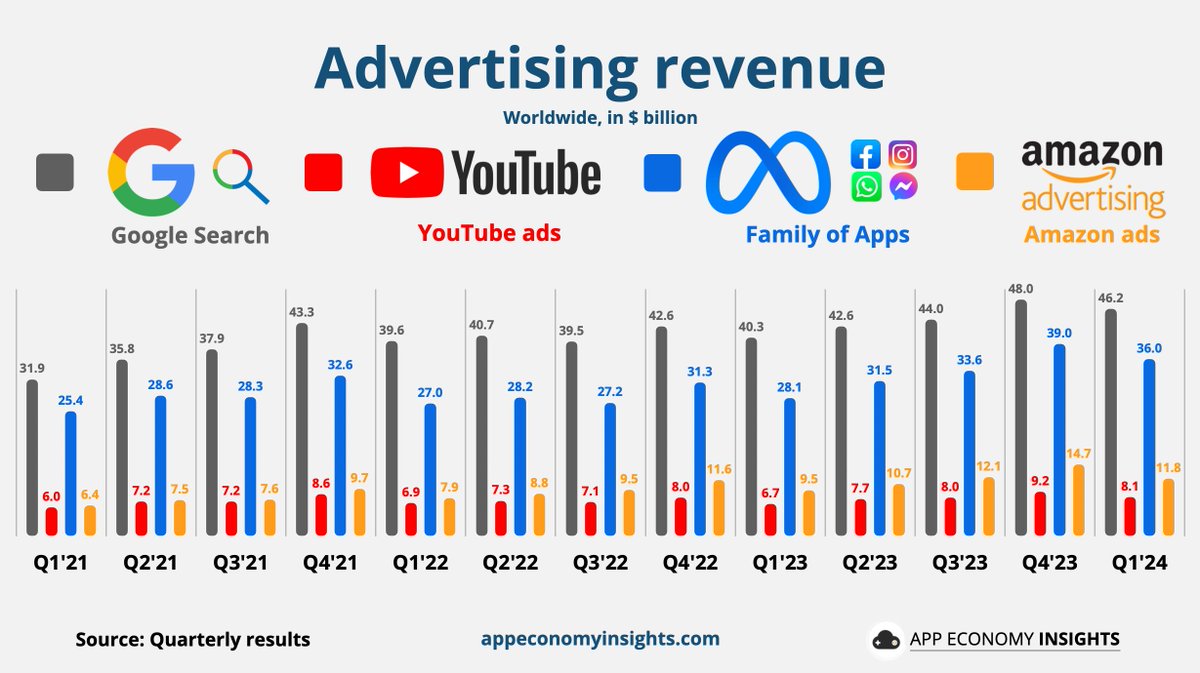
Advertising revenue in Q1'24:
⚫️ Google Search: $42.6B (+14% Y/Y).
🔵 Meta FoA: $36.0B (+27% Y/Y).
🟠 Amazon: $11.8B (+24% Y/Y).
🔴 YouTube: $8.1B. (+21% Y/Y).
$GOOG $META $AMZN
Español