
Deepak Bhandari

1.8K posts

Deepak Bhandari banner
Deepak Bhandari

Deepak Bhandari

@Deepak_ddb

Post-doc working on Plant endomembranes @ Brandizzi lab #MSU; PhD @parkerlab_MPIPZ @mpipz_cologne retweets=endorsements with discretion.

East Lansing, MI Beigetreten Aralık 2012
639 Folgt493 Follower
Deepak Bhandari retweetet
Nithin Kamath
Nithin Kamath@Nithin0dha·
I recently had dinner with Dr Devi Shetty, the founder of Narayana Hospitals. For those who don't know him, he's the guy who figured out how to do open heart surgery for a few hundred dollars when the same procedure costs a bomb in the US. Narayana has 18,000 beds across India, and if you ask most middle-class people in Bangalore about it, they'll speak highly of it. There was one thing I kept thinking about over and over again after meeting him. Narayana's market cap is around ₹38,000 crore. Now compare that to pretty much any half-decent financial services business in India, and it'll be valued more than that, including Zerodha. A brokerage, worth more than a hospital chain, that has probably saved hundreds of thousands of lives. I get the arguments. If you're a fund manager/analyst, you can immediately explain it away using margins, capex, asset-light vs asset-heavy, and all that, and I'm not saying the market is wrong. But it's still a strange world we've built, where the businesses closest to money get valued the highest, and the ones doing the hard and essential things get priced like boring utilities. A hospital carries physical infrastructure, enormous liability, thin margins and the actual weight of keeping people alive. And somehow that's worth less than a platform for buying and selling stocks. I don't have a clean take on this. All of this just felt odd. Ps: Nothing here is investment advice. For that, go to @zerodhavarsity
Nithin Kamath tweet media
English
270
502
5.5K
418K
Deepak Bhandari retweetet
Sholto David
Sholto David@addictedtoigno1·
@swellrazer Yes... in fact sometimes they even inverted the colours to make a PCR gel version 😅
Sholto David tweet media
English
1
7
71
18.7K
Deepak Bhandari retweetet
MPMI Journal
MPMI Journal@MPMIjournal·
NEW H. H. Flor Distinguished Review: This review, by Corné M. J. Pieterse, is a symphony composed of the historical progression of research from molecular recognition to community-level defense, distilling the principles that connect classical plant immunity with emerging plant-microbiome concepts and framing microbiome-mediated disease protection as an extension of the plant's innate immune system. Read the open access review in MPMI: doi.org/10.1094/MPMI-1…
MPMI Journal tweet media
English
1
17
48
2.7K
Deepak Bhandari retweetet
Andrew Akbashev
Andrew Akbashev@Andrew_Akbashev·
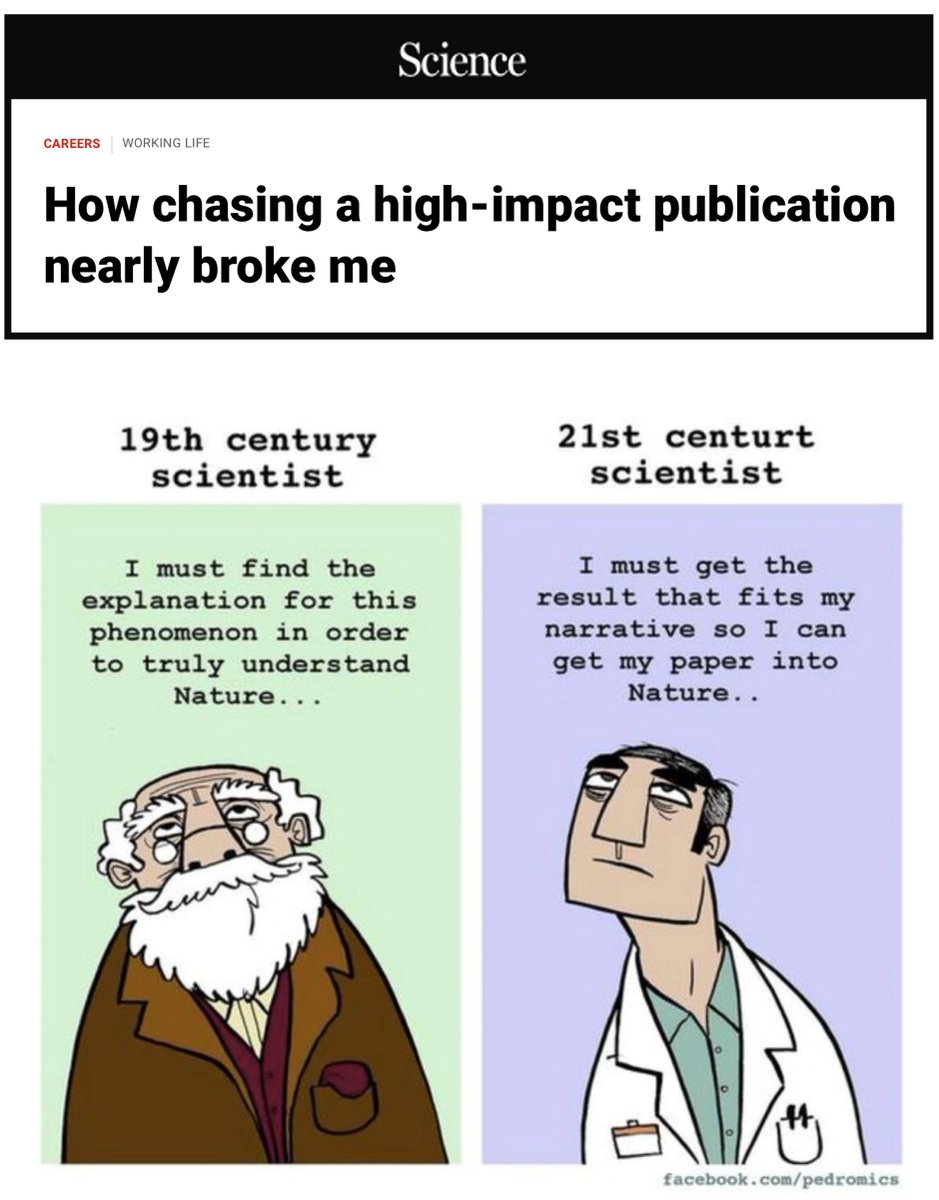
High-impact papers are crucial in academia. Like it or not. As a PhD student, you quickly learn that such papers are cool. They make advisors happy. Everyone admires you. During a postdoc, high-IF papers are not just cool. They are mandatory for a PI job. They give you awards and interviews. During the tenure track, they often become your ticket to a permanent position. Many young PIs are fighting to get their papers published in Nature/Science/Cell. It’s like getting a micro-Nobel prize. Many feel relaxed only when they publish in Nature (their tenure is finally safe!). But: Because such papers require a lot of time (often years), you live in constant uncertainty. You HOPE you will get it. You spend evenings at work, you look for stronger results, and you’re battling through a battalion of failed experiments. Then you submit it… Then: Stage 1. Editors reject 9/10 papers. Yours might be among them. Stage 2. The paper goes to reviewers but they are brutal. For some reason (and you know why!) they just don’t want to see your paper in Nature. Many papers get rejected in the first round. Stage 3. If reviewers can’t come up with reasons to kick you out immediately, they will request a lot of new experiments and changes to your work. Obviously, that will take months (if not years). Of course, some reviewers are great and genuinely help improve your work. But they are not as common as you might hope. Stage 4. After addressing all problems and submitting it again, you will likely see some reviewers still resisting. They can simply reject your paper because they didn’t like how you addressed their requests. Or they will find new flaws and will get you to do another round of revision. (If you’re lucky, they will accept the paper.) Stage 5. If reviewers are divided between “accept” and “reject”, the editors may send your paper to additional reviewers. That will start another cycle of hell with a likely negative outcome. Stage 6. If you are rejected, congratulations - you’ve just wasted months on nothing. But because you need that paper, you resubmit it to another high-IF journal, and it all starts with Stage 1. So, it’s like gambling. You gamble your career on this publication. During those 6–24 months of fighting with reviewers and editors, someone else may publish the same work. Then you’re screwed. Or your paper is likely not accepted in any high-IF journal. After loosing a year or more on trying to push it through, you will have to publish it in a low-IF journal. Is it a healthy game? No. You get exhausted. Anxiety skyrockets. But unfortunately that’s how academia works. I’ve been through this myself. Most of my colleagues have the same experience. We definitely despise it. And the worst part of it? We’ve started to see it as completely normal.
Andrew Akbashev tweet media
English
49
191
1.3K
107.8K
Deepak Bhandari retweetet
Panagiotis Sarris
Panagiotis Sarris@PanosSarris·
Pseudomonas syringae histidine kinase BvgS acts as the sensory receptor of plant-derived putrescine to activate the type III secretion system and enhance bacterial virulence. cell.com/molecular-plan…
English
0
2
11
496
Deepak Bhandari retweetet
Alice Ting
Alice Ting@aliceyting·
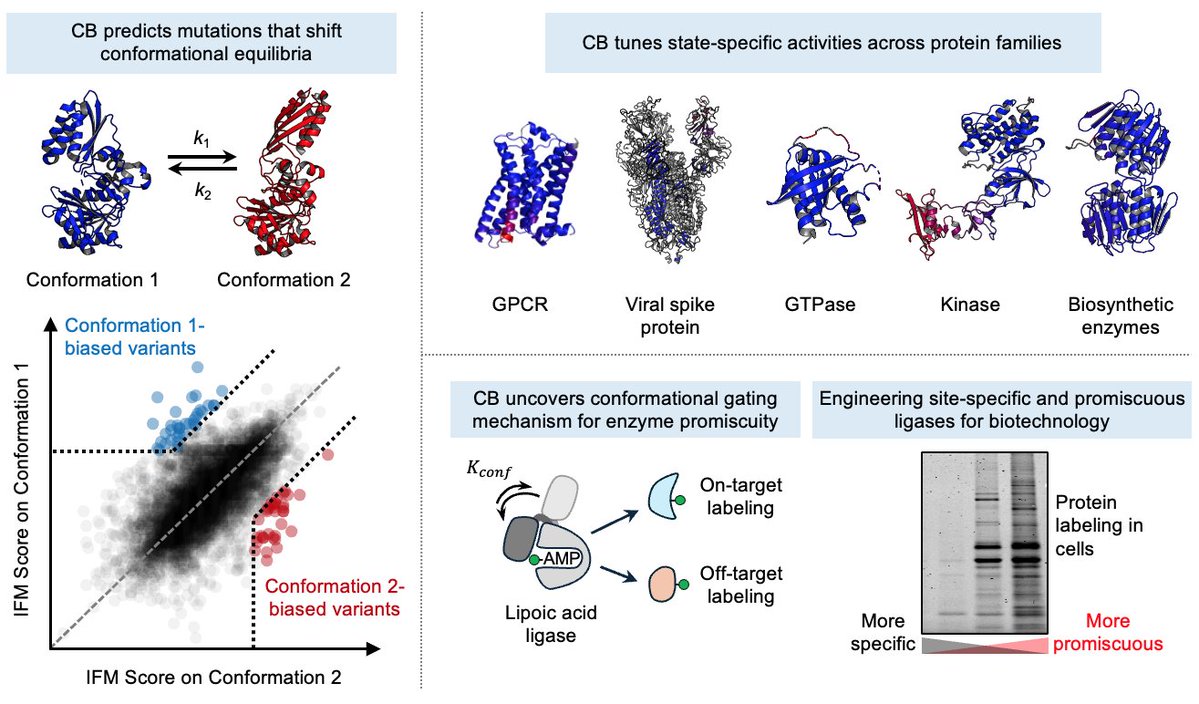
Can we design mutations that predictably bias proteins towards desired conformational states? Today in @ScienceMagazine, we introduce Conformational Biasing (CB), a simple and scalable computational method that uses contrastive scoring by inverse folding models to identify conformation-biasing mutations. science.org/doi/10.1126/sc…
Alice Ting tweet media
English
14
200
859
139.8K
Deepak Bhandari retweetet
Jonathan Pritchard
Jonathan Pritchard@jkpritch·
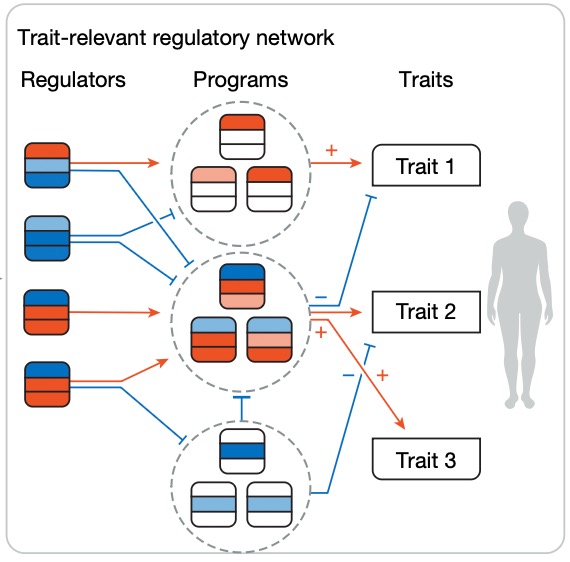
Modern GWAS can identify 1000s of significant hits but it can be hard to turn this into biological insight. I'm excited to share our new work combining genetic associations and Perturb-seq to build interpretable causal graphs, out today in @Nature:
Jonathan Pritchard tweet media
English
12
136
474
49.4K
Deepak Bhandari retweetet
Gurwinder
Gurwinder@G_S_Bhogal·
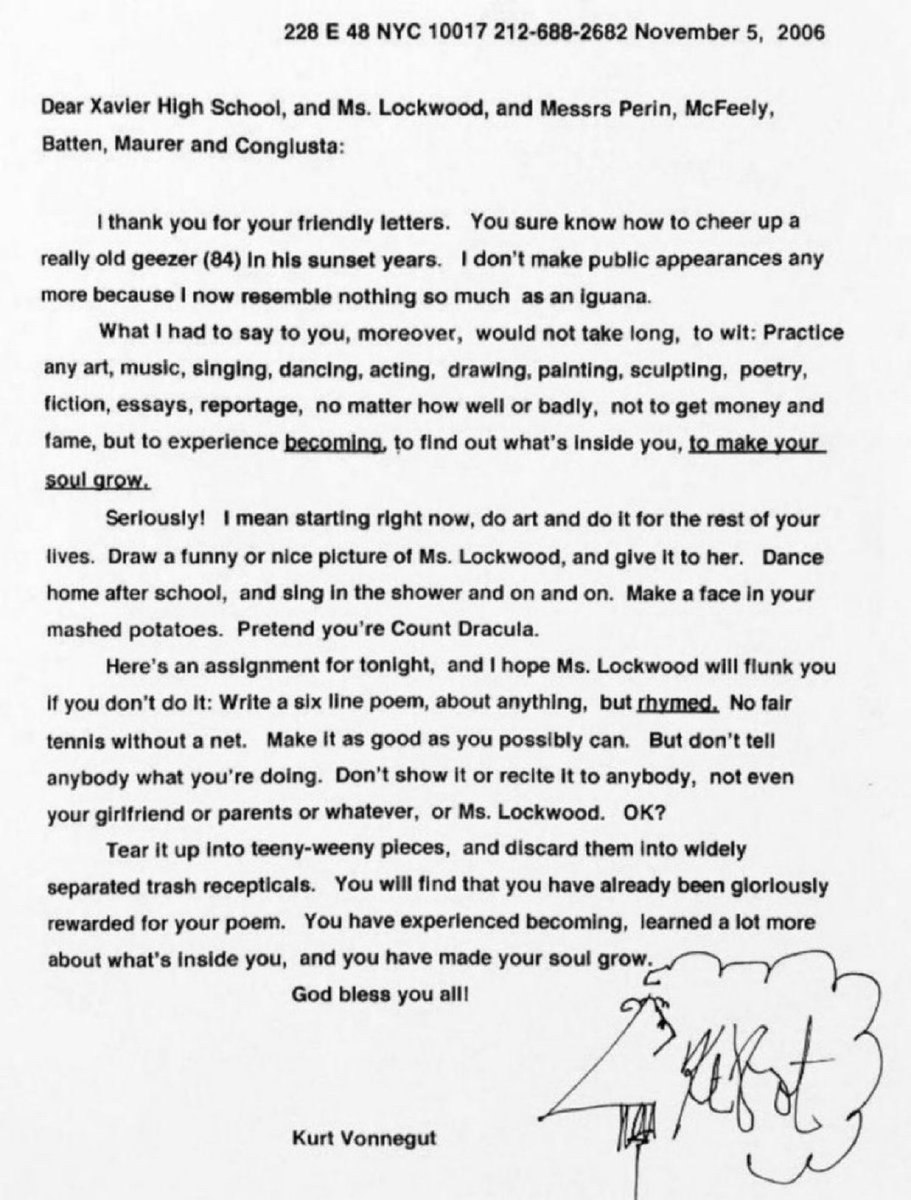
In 2006, a teacher told students to write to a famous author for advice. The only author to respond was Kurt Vonnegut, born 103 years ago today.
Gurwinder tweet media
English
28
171
1.1K
39.8K
Deepak Bhandari retweetet
Parminder Singh
Parminder Singh@parrysingh·
There’s no better proof that life is unfair than the second bhatoora. Think about it - both bhatooras start off as equals. The second could easily have been the first. But fate intervenes. By the time you’re done with the first, three things happen: 1. You’re already full. 2. 300 calories of guilt are whispering in your ear. 3. The second one has gone limp. You still eat it, but half-heartedly. No oohs, no aahs - just quiet resignation. The second bhatoora did nothing wrong. It simply suffered from bad timing - and fades away unappreciated. So next time someone preaches about karma or fairness, ask them - what about the second bhatoora?
Parminder Singh tweet media
English
575
621
5.2K
527.4K
Deepak Bhandari
Deepak Bhandari@Deepak_ddb·
A thought provoking lecture from the chairman of @Somaiya_SVU as part of the verghese kurien memorial lecture organized by @CANRatMSU @michiganstateu Small farm Carbon footprint in not a trade off against farm productivity
English
0
0
0
74
Deepak Bhandari retweetet
Kenichi Tsuda
Kenichi Tsuda@Billion_of_Gods·
Pls RP Gunther and I invite submission to special issue at Phytopathol Res, the flagship journal of The Chinese Society of Plant Pathology. Topic: Plant microbiome and disease resistance Deadline: June 30 2026 Original and review papers are welcome. bit.ly/4hr1vng
English
2
25
26
6.6K
Deepak Bhandari retweetet
nature
nature@Nature·
Scientists long thought the plant cell wall to be dead, but it's an active, even chatty participant in cellular growth, reproduction and responses to infection go.nature.com/4quhVPF
English
3
32
116
19K
Deepak Bhandari
Deepak Bhandari@Deepak_ddb·
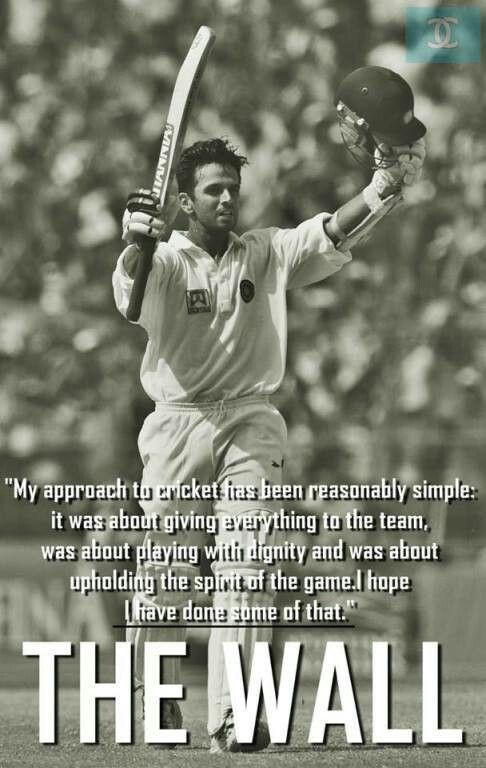
and finally for fellow #cricket enthusiasts here is the original wall
Deepak Bhandari tweet media
English
0
0
1
52
Deepak Bhandari
Deepak Bhandari@Deepak_ddb·
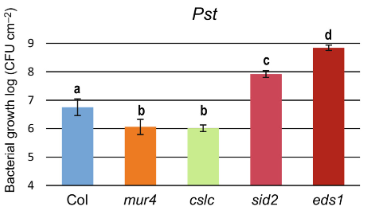
#staytuned on this for our next work on the implications of xyloglucan on immunity !!! here's a teaser
Deepak Bhandari tweet media
English
1
0
0
44