
Earth Touch

20.5K posts

Earth Touch banner
Earth Touch

Earth Touch

@EarthTouch

Earth Touch has a simple philosophy: nature’s stories should be told with passion & imagination.

South Africa/UK/USA Beigetreten Şubat 2009
2.1K Folgt6.1K Follower
Earth Touch retweetet

AFP News Agency
AFP News Agency@AFP·
🇪🇨 158 giant tortoises reintroduced to Galapagos island Footage released by Ecuador's environment ministry shows park rangers releasing more than 150 giant tortoises to Floreana Island in Ecuador's famed Galapagos archipelago where they disappeared more than a century ago
English
18
370
1.5K
49.3K
Earth Touch
Earth Touch@EarthTouch·
We are thrilled to announce that 2 of our productions have been nominated for the 19th annual @SAFTAs_1. Day of the Dragon and Killer Safari - Croc v Hippo are both up for “Best Natural History and Environmental Programme”. Thank you to our incredible team and all our viewers :)
Earth Touch tweet mediaEarth Touch tweet media
English
0
0
0
62
Earth Touch retweetet
Dr. PM Dhakate
Dr. PM Dhakate@paragenetics·
While most cats avoid deep water, tigers are biologically predisposed to an aquatic lifestyle. This footage captures the early development of that instinct, where young cubs, follow their mother into the water. Using their wide, webbed paws as natural paddles, they maintain buoyancy through high muscle density and intuitive coordination. This early proficiency is rooted in maternal imitation and a unique physiology that allows them to regulate body temperature while submerged, turning what is a barrier for other predators into a tactical advantage. VC: Biswajit Mandal #Tiger #Predator #nature #WildIndia #TigerConservation #NatureDocumentary #BigCats #WildlifePhotography
English
8
128
934
20.8K
Earth Touch retweetet
Oceana
Oceana@oceana·
Baby boom continues for critically endangered whales! 🐋 Another North Atlantic right whale mom, “Ghost,” & calf pair has been spotted — bringing this season’s total to 22 calves. Congrats Ghost! 💙 Meet all the mom & calf pairs: oceana.ly/4r54QMd
English
11
196
932
12.2K
Earth Touch retweetet
Voyageurs Wolf Project
Voyageurs Wolf Project@VoyaWolfProject·
This video gives a rare glimpse into the "fishy" proclivities of wolves in our area. The video was taken in spring just a short distance from a creek wolves have fished at for many years. This past spring was the 10th year we have documented wolves hunting and catching fish—a behavior that had not been documented in boreal systems such as ours until our work, in part, because it is a tough behavior to observe. What is particularly fascinating is that this wolf was not only carrying a fish but carrying two of them. This is interesting because when we captured this behavior on video for the first time in 2018, we observed a wolf fishing, drop them on the creek bank, and wade back in to continue fishing. I.e., the wolf was not immediately consuming the fish it caught but rather fishing while the fishing was hot, and then once the fishing cooled down, would consume the fish. And this video seems to provide some additional evidence that it might be a widespread strategy wolves use. Two other interesting tidbits from this video: 1.) The wolf that dropped the fish was a yearling wolf. The wolf that grabbed the fish at the end was a different wolf. More specifically, the breeding female of the Half-Moon Pack and the older sister of the yearling wolf. 2.) Surprisingly, the black bear seemed very perplexed at finding this fish, and just left it alone without even taking a little nibble. We would have expected a bear to readily take a free meal like this but apparently not. We have collected of detailed information on how, when, where, and why wolves hunt fish in our area. You can read all about that in our scientific article (which is freely-available at the link below!): Freund et al. 2023. The ethology of wolves foraging on freshwater fish in a boreal ecosystem. Royal Society Open Science. royalsocietypublishing.org/rsos/article/1…
English
33
174
956
35.9K
Earth Touch retweetet
National Geographic Animals
National Geographic Animals@NatGeoAnimals·
Talk about earning your stripes! 🐯❄️ For thousands of years, Siberian tigers have occupied the southeastern corner of Russia, where winter temperatures of –20 degrees Fahrenheit are not unusual 😳😱 #RussiasWildTiger is streaming on @DisneyPlus.
English
21
349
1.6K
30.6K
Earth Touch retweetet
NOAA Ocean Exploration
NOAA Ocean Exploration@oceanexplorer·
Sea stars aren't always stationary! This little explorer was showing off its moves in the Mariana Trench Marine National Monument. Using tube feet, it’s cruising along the ocean floor like it’s got somewhere to be – Friday, maybe? More ocean imagery: oceanexplorer.noaa.gov/multimedia/
English
4
100
530
10.5K
Earth Touch retweetet
Voyageurs Wolf Project
Voyageurs Wolf Project@VoyaWolfProject·
Some winter moments most never get to see...
English
14
264
1.6K
23.4K
Earth Touch retweetet
AccuWeather
AccuWeather@accuweather·
Two red foxes dash across the frozen edge of Lake Michigan as frigid temperatures allow shelf ice to form along the shoreline.
English
27
355
2.6K
76.7K
Earth Touch retweetet
National Geographic
National Geographic@NatGeo·
This video of a tardigrade ambling around a volvox algae colony was captured at 20x magnification by Penny Fenton and placed fourth in Nikon's Small World In Motion competition in 2025. See more winners: on.natgeo.com/3Z3jCar
English
50
650
3.6K
186K
Earth Touch retweetet
NOAA Ocean Exploration
NOAA Ocean Exploration@oceanexplorer·
Usually, deep-sea lizardfish is the king of "staying grounded" on the seafloor, but this one decided to make a midwater debut. Who knew lurking at an extinct hydrothermal vent in the Mariana region required such graceful swimming skills? More videos: oceanexplorer.noaa.gov/multimedia/
English
4
42
270
9.6K
Earth Touch retweetet
AccuWeather
AccuWeather@accuweather·
Millions of baby red crabs flood the streets of Australia’s Christmas Island during their annual migration - an encouraging surge after years of quieter seasons.
English
11
198
950
49.2K
Earth Touch retweetet
Science Magazine
Science Magazine@ScienceMagazine·
Among the most agile of flying creatures, dragonflies have evolved to perform quick aerial maneuvers—akin to planes in a dogfight—both to attract mates and to catch prey midair. Last year, researchers documented and explained a unique stunt the insects perform so quickly most people never see it. Every few minutes, a dragonfly dives into water and takes off again, turning several forward somersaults as it ascends, a team of biomechanists reported last year at the annual meeting of the Society for Integrative and Comparative Biology. The purpose of the behavior? The quick dip cools the insect down, and the loop-the-loops help it dry off by flicking away the water. Learn more: scim.ag/40BnjWs #ScienceMagArchives
English
12
45
264
38.9K
Earth Touch retweetet
US Department of the Interior
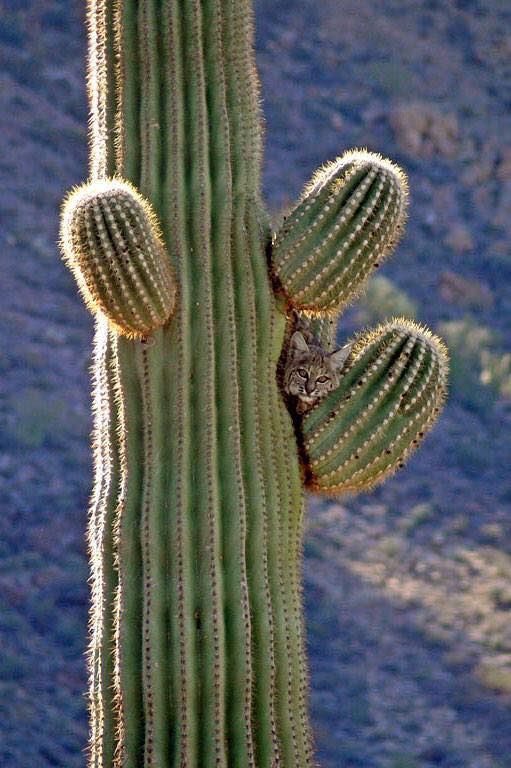
When you've just found the ultimate scratching post… A bobcat is barely noticeable nestled in the spiny situation of a saguaro cactus at Organ Pipe Cactus National Monument. Photo by NPS
US Department of the Interior tweet media
English
55
409
3.7K
97.8K
Earth Touch retweetet
Voyageurs Wolf Project
Voyageurs Wolf Project@VoyaWolfProject·
Probably one of the coolest moments we have had in the field…stumbling upon wolf pups sleeping at the entrance of their den which was a huge old beaver lodge. On this particular day in early May, we were searching clusters of GPS-locations from a collared wolf in this pack to find where it had killed prey. The wolf was a subordinate male wolf and had only spent a few hours on the edge of this beaver meadow so we assumed he was just resting here. I.e., there were no indications, based on the wolf’s movements, that this was a den. We hiked along the meadow edge for a bit and as we got close to where the GPS-locations from the wolf were, an uncollared wolf popped up out of the grass by the lodge about 50 meters away and ran into the forest. That seemed far too coincidental…what are the odds that the GPS-collared wolf had been in this spot a few days ago and now, when we arrive there was a different wolf here. As a result, we immediately started to think the lodge could be a den. We approached the lodge and pulled out our phone to record what we observed. We rounded a side of the lodge, approached the entrance, and we found these 4 pups sounds asleep. What a wild few moments. Of course, we thought this was especially interesting, in part, because the wolves were using a massive beaver lodge—i.e.., the home of one of their primary summer prey—as a den to raise their pups, which then would go onto to hunt and kill beavers as adults.
English
46
451
4.9K
236.3K
Earth Touch retweetet
Science Magazine
Science Magazine@ScienceMagazine·
On #SquirrelAppreciationDay, check out a 2021 Science study that revealed how decision-making and learning capabilities complement the biomechanical adaptations that enable "squirrel parkour." Learn more: scim.ag/4pN2yk2
English
3
14
76
27.4K