Shayan Doroudi

1.3K posts

Shayan Doroudi

Shayan Doroudi

@EdTechMuser

Assistant Professor @UCIEducation Interested in [foundations/history/philosophy/equity] of ed tech, ed data science, and learning sciences

Beigetreten Ağustos 2019
1.2K Folgt965 Follower
Shayan Doroudi
Shayan Doroudi@EdTechMuser·
@barbarikon @arab11__ At a zoomed out level, yes, but you lose a lot of the intricacies that make it what it truly is. Compare with e.g., this image. The attention to detail is an essential part of Islamic architecture and exactly what these AI images don't capture.
Shayan Doroudi tweet media
English
1
0
0
13
beautiful Arab⁦⁦
beautiful Arab⁦⁦@arab11__·
Islamic architecture is unparalleled.
beautiful Arab⁦⁦ tweet media
English
35
1K
8.7K
106.9K
Shayan Doroudi
Shayan Doroudi@EdTechMuser·
@arab11__ Islamic architecture is unparalleled but if we can’t even tell it apart from AI, then do we really have an eye for its beauty? @barbarikon
English
1
0
0
32
Shayan Doroudi
Shayan Doroudi@EdTechMuser·
@arab11__ It’s interesting that this post has 4000 likes and 500 reposts and people are discussing whether it’s Islamic or Persian, but nobody pointed out that it’s neither: it’s an AI rendition of Islamic architecture.
English
1
0
1
325
Shayan Doroudi
Shayan Doroudi@EdTechMuser·
@davidbessis and that "The “Theorem Prover” systems have not been oriented toward making it easy to employ the second and the third kinds of knowledge."
English
0
0
1
25
Shayan Doroudi
Shayan Doroudi@EdTechMuser·
@davidbessis Minsky and Papert (1971) said there are three kinds of knowledge in relation to proofs: "The knowledge exhibited in the proof, The knowledge used to find the proof, and The knowledge required for “understanding” or explaining the proof so that one can put it to other uses"
English
1
0
1
65
David Bessis
David Bessis@davidbessis·
Spot on. The core obstacle is that the objective function of mathematical research isn't theorem proving. The true nature of mathematical breakthrough is fuzzy and unspecified, which makes it hard to benchmark—and hard to automate.
Daniel Litt@littmath

@SebastienBubeck @ChrSzegedy Personally I think trendlines are misleading in various ways; I’ve been saying for quite a while that existing benchmarks could be completely saturated without meaningfully touching many aspects of research math.

English
2
3
73
9.7K
Shayan Doroudi
Shayan Doroudi@EdTechMuser·
@langofmind @an_average_bear My university doesn't require in-class observations. And I'm pretty sure there are many professors out there who are not great teachers who do not lose their jobs—at least in part because they are good researchers.
English
0
0
1
12
Ryan Rhodes ⚙️🧠
Ryan Rhodes ⚙️🧠@langofmind·
@an_average_bear There are also in-class observations from other faculty members, which are required for promotion and reappointment
English
2
0
0
77
Ryan Rhodes ⚙️🧠
Ryan Rhodes ⚙️🧠@langofmind·
None of this is true
Sean McClure@sean_a_mcclure

Professors are hired and promoted based on research output, not teaching ability; Courses rush through content instead of ensuring understanding; Classroom is passive, not participatory; Learning structure is 19th-century industrial instruction; Students cram → forget → move on; Everyone must follow the same learning style despite different backgrounds and cognitive styles; Textbooks present sterile, finished knowledge (students never learn how ideas were discovered, why the structures exist, how concepts evolved, how theory grows); Courses pretend fields are isolated; Students learn procedures instead of understanding (e.g. math = symbol manipulation); Dissent is punished, both socially and academically; Top marks go to those who learn to write what professors want to hear; Success comes from writing papers in the right style and mimicking intellectual fashions; The entire culture encourages imitation; Trains students to speak a dialect, not to express ideas (jargon signals “intelligence”); Genuine intellectual risks are punished; True debate is all but extinct (discussions are status games, signaling and pre-approved opinions); Enforces a narrow moral and political lens on everything (thought policing and intellectual monocultures are the norm); Ratio of administrators to teachers has exploded, shifting priorities to bureaucracy instead of education; Students are treated as customers; Grade inflation; Teaching models do not reflect how people learn; Lectures scale broadcasting, not learning; Topics central to modern understanding are barely taught; Modern developments take 20–30 years to become curricula; System does not produce independent learners, it produces dependent ones; Tuition is predatory; Overproduction of degrees has devalued them; Universities sell prestige, not skill. …………but yes, now that AI is here we have a problem. Give me a break.

English
6
1
18
2K
Shayan Doroudi
Shayan Doroudi@EdTechMuser·
@Replit The history of educational technology is filled with examples of charismatic/technocentric leaders trying and failing to enact large scale reform, including reforms in the Middle East. I hope your team is informed about the literature on this. Happy to chat if that's of interest.
English
1
0
0
41
Replit ⠕
Replit ⠕@Replit·
Big news today: The Government of Jordan is rolling out an AI powered learning assistant Siraj built on Replit to 1.6 million students and 90,000 teachers across Jordan’s public schools. 🔥 Siraj is aimed at improving learning outcomes by providing accurate, curriculum-based answers and trusted, high-quality support for students. The pilot version of Siraj was built in under a month by one person. 🚀
English
30
71
898
497.5K
Shayan Doroudi
Shayan Doroudi@EdTechMuser·
I end by discussing a common inspiration in Papert and von Foerster's work: Warren McCulloch's notion of heterarchy. McCulloch described how a six-node neural network could give rise to a heterarchy of values. 4/4
English
0
0
2
104
Shayan Doroudi
Shayan Doroudi@EdTechMuser·
I do so by turning to historical approaches to AI (broadly conceived), education, and social justice that are largely forgotten. Namely, I briefly touch upon the work of Seymour Papert, Heinz von Foerster, and (even more briefly) Ivan Illich. 3/4
English
1
0
2
138
Shayan Doroudi
Shayan Doroudi@EdTechMuser·
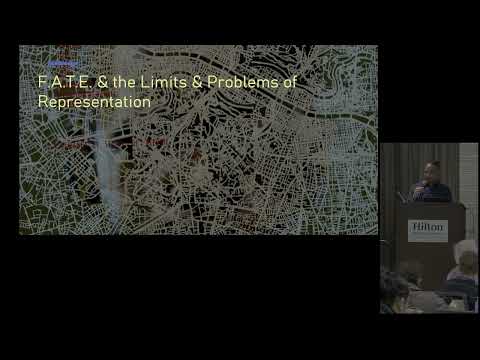
It was an honor to be able to give a talk for this symposium on Justice-Oriented Visions of AI and Education at the Northwestern Symposium on Education, AI, and the Learning Sciences. Talk linked here: youtube.com/watch?feature=… 1/4
YouTube video
YouTube
English
1
1
7
353
Shayan Doroudi retweetet
Yusuf Ahmad
Yusuf Ahmad@shaanmasala·
where have you seen ai / tech used to support this kind of shift? "The alternative to... schools is not the use of public resources for some new device which "makes" people learn; rather it is the creation of a new... relationship between man and his environment."
Yusuf Ahmad tweet media
English
1
2
5
303
Shayan Doroudi
Shayan Doroudi@EdTechMuser·
@garystager I'm confused. The literature review you posted seems to support teaching keyboarding. The last sentence is "Developing an Information Age language arts curriculum with keyboarding as a fundamental skill should be a central focus of our long-range curriculum planning."
English
1
0
1
42
Gary Stager - New Invent To Learn Book!
In infuriates and saddens me that in 2025, I again found the need to share a 1989 literature review about why teaching keyboarding skills is a stupid idea. TLDR: It is a more terrible idea a third of a century later. stager.tv/?p=4028
English
1
0
2
181
Shayan Doroudi
Shayan Doroudi@EdTechMuser·
If you're interested in visual perception, Minsky and Papert's 𝘗𝘦𝘳𝘤𝘦𝘱𝘵𝘳𝘰𝘯𝘴, or how machine learning might give us insights about human cognition check out my poster at #cogsci2025 in this morning's poster session (P2-D-49)—or virtually below!
Shayan Doroudi tweet media
English
0
3
12
1.2K
Shayan Doroudi retweetet
Aaron Maté
Aaron Maté@aaronjmate·
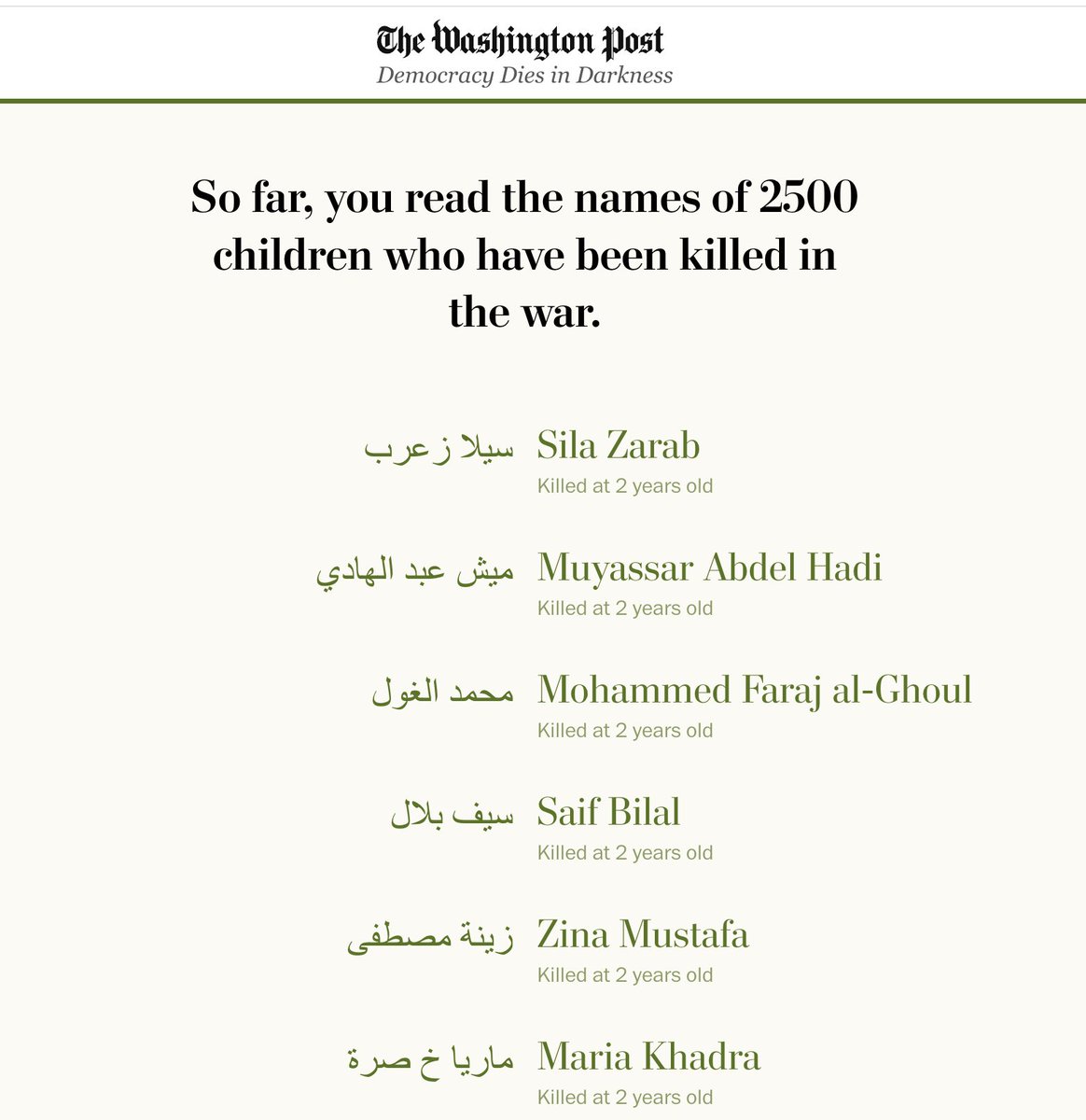
The Washington Post has published the known names of the 18,500 children killed by Israel in Gaza since Oct. 7th. At every 500th child, the Post tells you how many names of dead children you've read. washingtonpost.com/world/interact…
Aaron Maté tweet media
English
452
6.8K
18.1K
624.8K