Sadza neMuriwo

191 posts

Sadza neMuriwo banner
Sadza neMuriwo

Sadza neMuriwo

@FACTSZIM1

KwaSadza ndokwatinibva

ZIMBABWE Beigetreten Ocak 2023
55 Folgt16 Follower
Sadza neMuriwo
Sadza neMuriwo@FACTSZIM1·
Kutingamira imbwasungata
Sadza neMuriwo tweet media
Indonesia
0
0
0
2
King Jay🇿🇼
King Jay🇿🇼@KingJayZim·
The driving on Zimbabwe's highways. Just after Selous toward Harare. 23 April 2026.
Harare, Zimbabwe 🇿🇼 English
113
47
274
52K
Nick Mangwana
Nick Mangwana@nickmangwana·
“The Lancaster House Constitution was amended 20 times. So what is new about wanting to amend a constitution for the 3rd time?” @richardrmahomva #CAB3
English
274
37
102
55.1K
Sadza neMuriwo retweetet
Sipho Nkosi
Sipho Nkosi@SiphoNkosi22·
After carefully going through CA3, it becomes clear why this recognition is well deserved his work speaks for itself. His commitment to constitutional governance, the rule of law, and sound legislative reform shows he is truly delivering. 💪⚖️ #CAB3 #YesTo2030
Sipho Nkosi tweet media
English
0
5
7
124
The Villager
The Villager@fidel960·
Face iyi yawandirwa 🙌
The Villager tweet mediaThe Villager tweet mediaThe Villager tweet media
Indonesia
192
222
2.2K
107.8K
Hon Zivhu
Hon Zivhu@killerzivhu1·
Get well soon, Hon. Minister. I know it’s painful, but next Trade Fair, don’t take chances with the Ama2k. Bring your wife — they’re older but gentle. These young ladies aren’t good for an older man
Hon Zivhu tweet media
English
54
12
150
70.1K
Sadza neMuriwo retweetet
Eng. Bhovungane
Eng. Bhovungane@ny_emman·
The government of Zimbabwe is spearheading the construction of a 560 hectare eco-resort town ~ 4.5km from the Tugwi Mukosi Dam. This will include a golf course, lodges, hotels, botanical gardens & wildlife buffer zones.
Eng. Bhovungane tweet media
English
18
31
100
8.2K
Sadza neMuriwo retweetet
Prof Jonathan Moyo
Prof Jonathan Moyo@ProfJNMoyo·
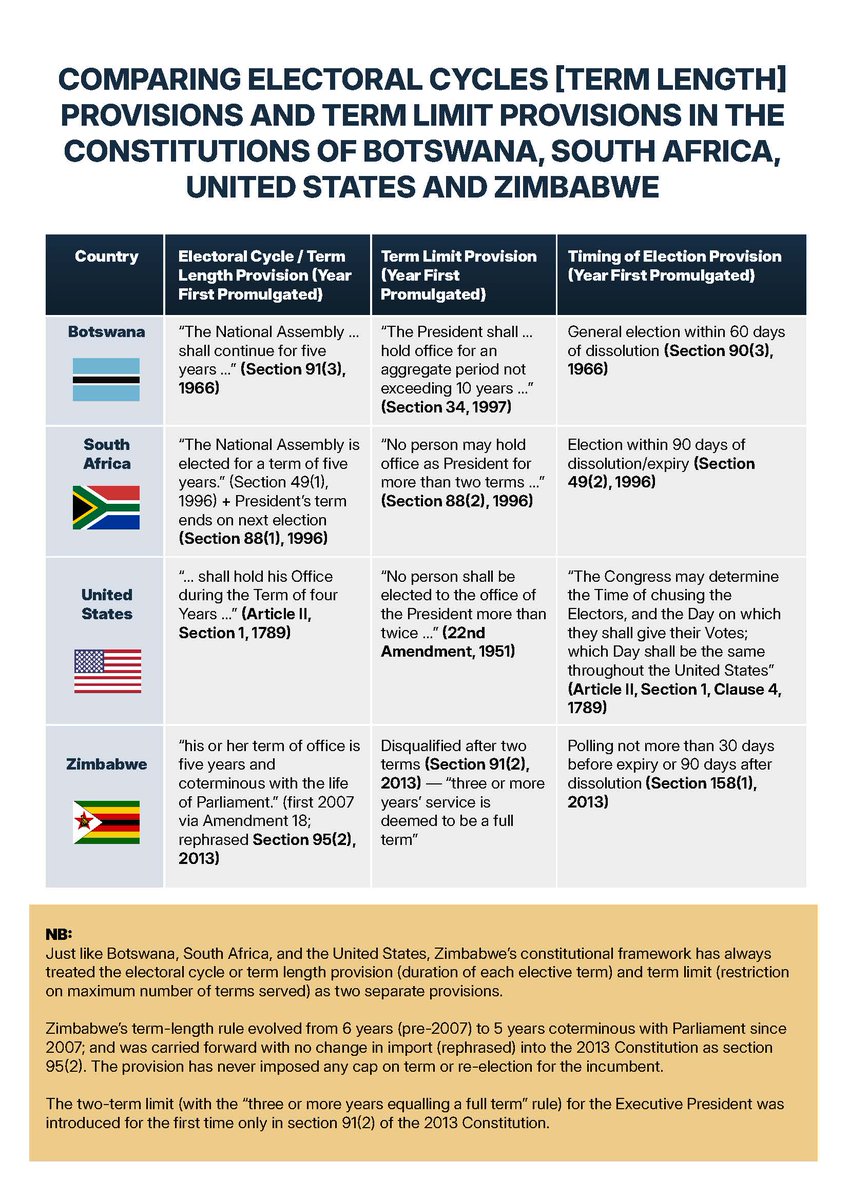
Debunking a Persistent and Dangerous Myth: Zimbabwe’s Constitution Contains Only One Presidential Term Limit Provision: In the intense public debate over the Constitution of Zimbabwe (Amendment No. 3) Bill, an utterly false claim is being repeated relentlessly and without a single shred of evidence: that the Constitution contains two separate presidential term limit provisions—sections 91(2) and 95(2)(b). This assertion is not merely incorrect; it is constitutionally impossible. No constitution anywhere in the world has ever created two distinct term limit provisions for the presidency. Section 95(2)(b) is not—and, according to the Constitution’s own crystal-clear definition in section 328(1), read with section 328(7), cannot possibly be—a term limit provision. A genuine presidential term limit provision restricts the total or maximum length of time any individual may hold or occupy the Office of President. Section 95(2)(b) does nothing of the sort. It simply defines the length of each presidential term as five years, running coterminous with the life of Parliament. In straightforward language, section 95(2)(b) regulates the office itself, not the person who holds it, and says absolutely nothing about how many terms or the length of time any one individual may serve. The Constitution of Zimbabwe (2013) contains only one term limit provision: Section 91(2). This clause is unequivocal and ironclad. It prohibits any person from serving more than two terms as President, with the vital safeguard that three or more years in office counts as a full term. It is only this single provision—and this provision alone—that actually limits the total time any individual can occupy the highest office in the land. Nothing illuminates this fundamental distinction more powerfully than comparative constitutional analysis—the gold standard for both public education and responsible policymaking. As the ancient wisdom has it, there is truly nothing new under the sun. A careful examination of proven global practice, vividly illustrated in the attached infographics, reveals three clear and time-tested approaches that nations around the world have taken when designing presidential term rules: Case 1 – Term length only (unlimited re-election permitted) Constitutions in this category have a single provision that simply defines the length of each presidential term, leaving the number of terms entirely open. This constitutional model operated successfully for decades—for example—in Botswana (31 years, 1966–1997), the United States (163 years, 1789–1951), and Zimbabwe itself (23 years, 1987–2013). Case 2 – Two separate provisions Here constitutions have two separate provisions: one that sets the length of each presidential term; and a second, entirely distinct clause that limits the total time any person may serve as President. This is precisely the framework that has—for example—operated in Botswana since 1997, South Africa since 1996, the United States since 1951, and Zimbabwe since 2013. The first infographic displays this clear separation of the two provisions across all the four countries. Case 3 – Combined in one elegant clause Constitutions in this category have a single constitutional provision that seamlessly merges both term limit concepts—defining term length while simultaneously imposing the limit. This approach has—for example— stood the test of time in Argentina (since 1994), Chile (since 1980), France (since 1958), Mexico (since 1917), the Philippines (since 1987), and South Korea (since 1987), as shown in the second infographic. The historical record is especially telling. Botswana introduced its separate term limit provision only after 31 years of independence, the United States after 163 years, and Zimbabwe after more than two decades of operating under a pure term-length provision. South Africa, by contrast, enshrined both provisions, separately, from the very first day of its democratic Constitution in 1996. These facts drive home an irrefutable truth: a provision that merely defines the length of a term has never been—and can never be—a term limit provision. The distinction is not a technicality; it is the bedrock of constitutional integrity. Recognising it clearly ensures that public discourse and debate on constitutional amendments is anchored in facts, logic, and proven international best practice, rather than convenient fiction to advance nefarious political agendas. Zimbabwe and Zimbabweans deserve nothing less!
Prof Jonathan Moyo tweet mediaProf Jonathan Moyo tweet media
English
176
143
143
59.5K
Sadza neMuriwo
Sadza neMuriwo@FACTSZIM1·
Good Afternoon from Constitutional Amendment Bill 3 😂😂😂
English
0
0
0
4
Sadza neMuriwo
Sadza neMuriwo@FACTSZIM1·
@matinyarare But those with direct presidential voting cause so much chaos, death and suffering compared to parliamentary voting.
English
2
0
1
982
Rutendo Matinyarare
Rutendo Matinyarare@matinyarare·
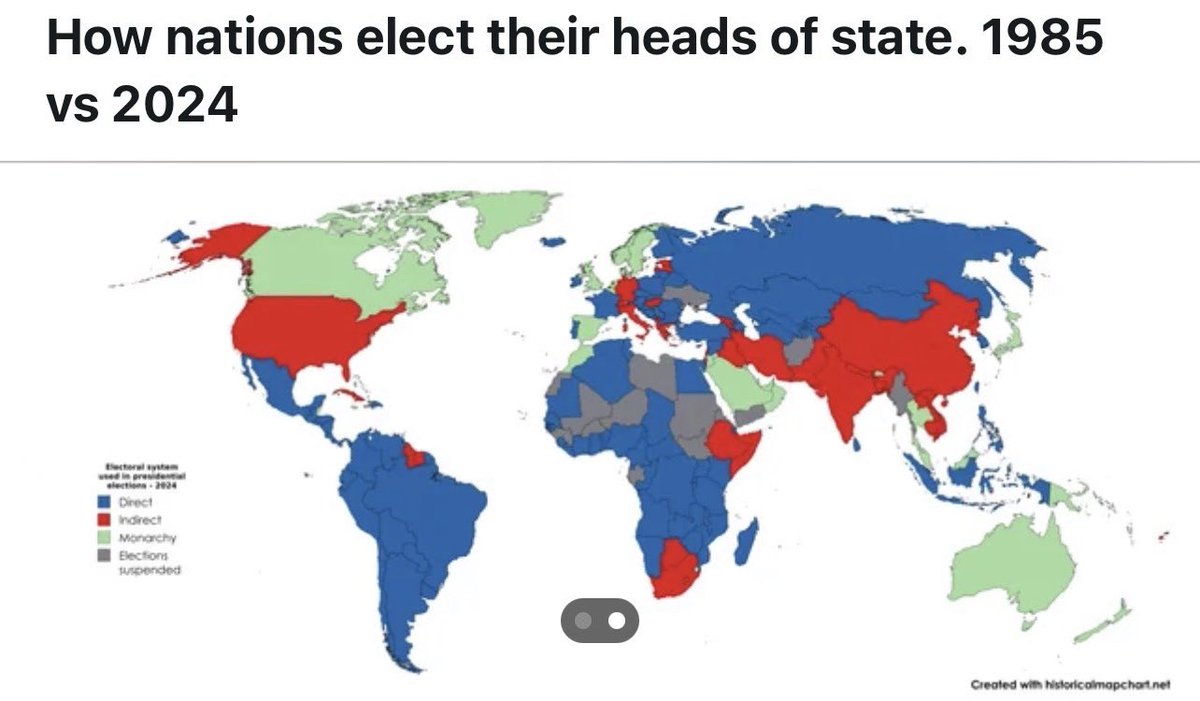
𝗛𝗢𝗪 𝗠𝗔𝗡𝗬 𝗡𝗔𝗧𝗜𝗢𝗡𝗦 𝗗𝗜𝗥𝗘𝗖𝗧𝗟𝗬 𝗘𝗟𝗘𝗖𝗧 𝗧𝗛𝗘𝗜𝗥 𝗣𝗥𝗘𝗦𝗜𝗗𝗘𝗡𝗧? ▪️109 countries directly elect their Presidents. ▪️ 51 chose their leaders by parliament or electoral college. ▪️48 have their leaders chosen my the British Monarchy, the American government or their own royal families. ▪️ 104 countries have five year terms and 85 limit their leaders to two terms. ▪️Only 21 countries have terms above five years. ▪️59 countries have unlimited number of terms. So, contrary to proponents of CAB3 trying to make it sound like parliament appointing a President is the democratic norm, it seems that the democratic norm is direct election of the President for five years and two terms.
Rutendo Matinyarare tweet media
English
22
72
215
50.2K
Sadza neMuriwo
Sadza neMuriwo@FACTSZIM1·
@Knick_RSA Are you insighting , encouraging, applauding so that we screenshot this for future reference?
English
0
0
0
770
knick
knick@Knick_RSA·
Developing 📍in Durban Illegal Foreigners will be removed!!
English
789
1.5K
6.2K
1.7M
Pete Vowles
Pete Vowles@PeteVowles·
Look what I spotted on my morning run from the Bulawayo’s iconic 12th Avenue… profiling the strength of 🇬🇧🇿🇼! (Look carefully, 2nd frame close up with thanks to @ChatGPTapp 😀) #ukinbulawayo
Pete Vowles tweet mediaPete Vowles tweet media
English
86
70
621
231.6K
kerina mujati
kerina mujati@kerinamujati·
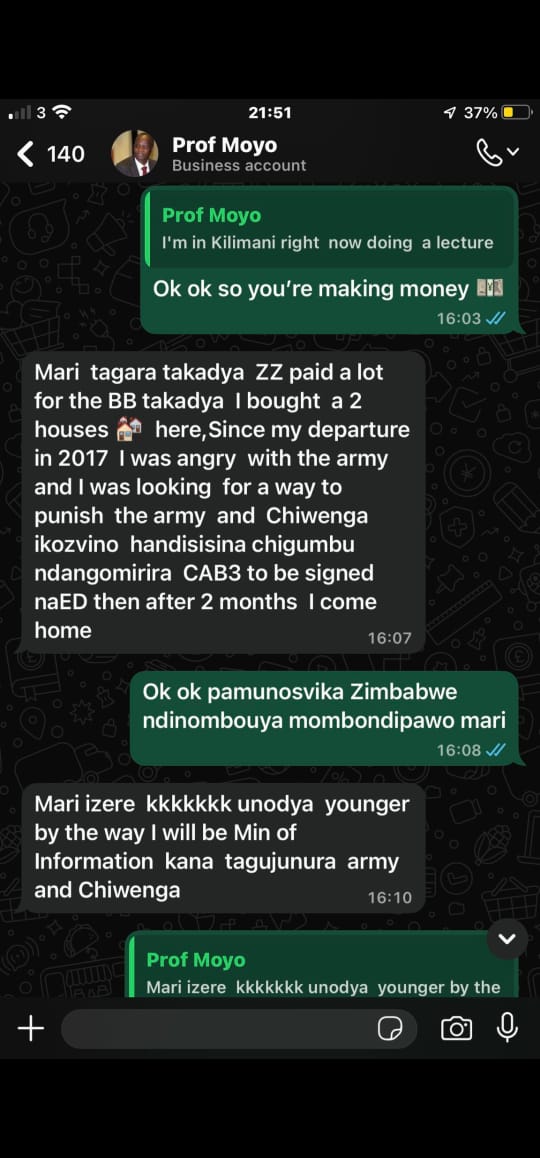
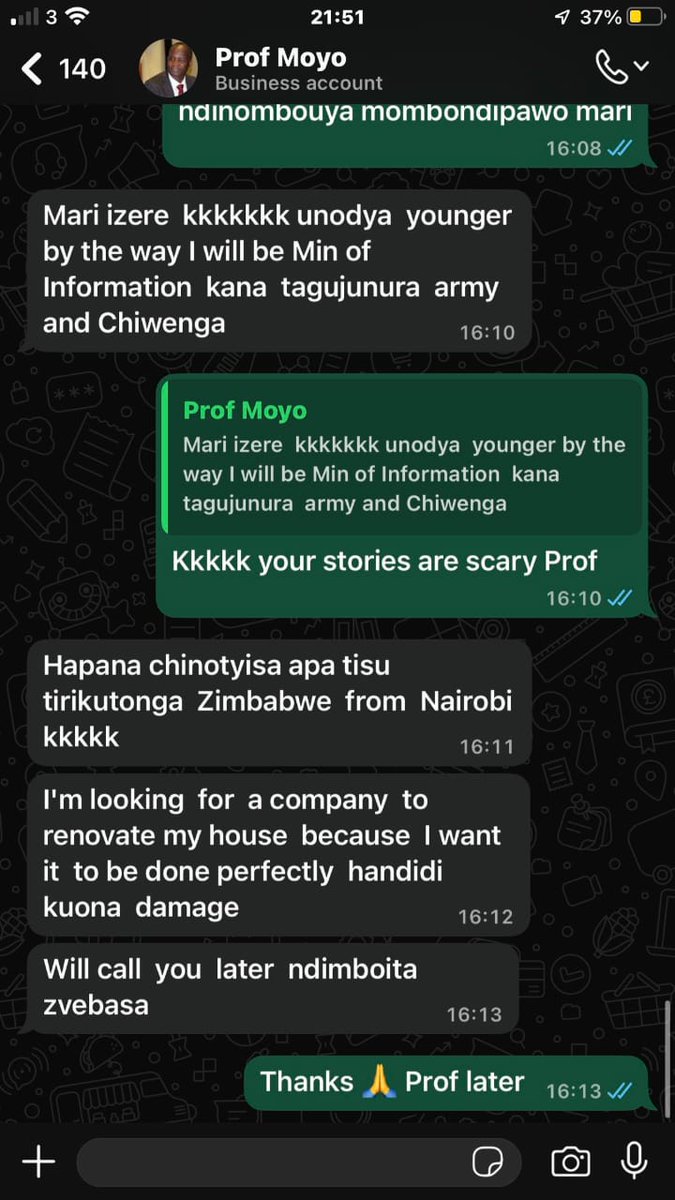
Jonathan Moyo uchafira ku Kenya and you will NEVER be in any Zimbabwean gvt even as a cleaner👇👇
kerina mujati tweet mediakerina mujati tweet mediakerina mujati tweet media
English
12
19
54
14.5K
mawarire mbizvo jealousy
President Mugabe was devastated when the people who prematurely celebrated the demise of Gen Chiwenga started circulating messages that his sickness was unto death. Yes, the old man, sick as he was, wept, shed tears for the man he believed wasn't supposed to die for he had a huge role to play in the governance of the country. In his own words, the old man said, "Gen Chiwenga cannot die now, he has a huge part to play for the good of this country." President Mugabe had trust in Gen Chiwenga taking this country forward and the news that he was very sick and chances of survival were slim devastated him. He cried, shed tears for the General, for a Cde, for an in-law, for a good human being and for a fellow Zimbabwean. We are all glad his prayer, the prayers of many other Zimbabweans who stood with the General, were answered. God had a plan with him, He still has! Time will tell.
mawarire mbizvo jealousy tweet media
Retired Lt General Winston Sigauke Mapuranga@SajeniMapuranga

They Ordered The Coffin. He Came Back In A Suit. I am going to say something today that the political class of Zimbabwe has known for years but has been too afraid, too compromised, or too comfortable to say publicly.Emmerson Mnangagwa and his family thought General Chiwenga was going to come back from China in a coffin. They did not just hope for it. They planned around it. They celebrated prematurely. They made calls. They positioned. They began the quiet architecture of a post-Chiwenga political landscape distributing assurances, managing expectations, preparing the succession mathematics for a Zimbabwe in which the man who made November 2017 possible would no longer be breathing. And then he landed. Midnight. Chinese chartered plane. Unannounced. Not in a coffin. In a suit. Healthy. Glowing. Transformed. And the people who had been counting his days had to look him in the eye. What 2019 Actually Was I will not dress this up. I will not use the language of diplomatic ambiguity that this subject has historically required for the survival of those who dare to touch it. What happened to Vice President Constantino Chiwenga in 2019 was not a natural illness. Men in my position men who have spent careers inside Zimbabwe's security and intelligence architecture do not arrive at that conclusion casually. We arrive at it through the same methodology we have applied to every operational assessment in our professional lives pattern recognition, source corroboration, and the disciplined elimination of coincidence as an explanatory framework.The pattern in 2019 was not subtle. The celebration among those closest to State House when General Chiwenga's health collapsed was not the concern of people watching a colleague suffer. It was the relief of people watching an obstacle dissolve. The calls that went out to party officials, to military contacts, to political allies were not calls of condolence. They were calls of premature victory. The man is gone. Finished. Done and dusted. Spoken with the confidence of people who knew something about the gone-ness that they were not in a position to share publicly. Then came China. Eight months. The full weight of Chinese medical intervention applied to a body that had been brought very low indeed. And then the midnight return. The Resurrection Nobody Planned For.I choose that word deliberately. Resurrection.Because what General Chiwenga's return represented to those who had engineered his departure, who had begun restructuring their political calculations around his permanent absence was not simply a medical recovery. It was the collapse of an operation.We are told that the President and First Lady visited Chiwenga after his return. We are told they appeared dumbfounded. Shocked. In total disbelief. I will tell you what that disbelief looked like from the perspective of someone who understands what it means. It looked like men and women who had ordered a coffin and received instead a soldier. A soldier who had gone into whatever darkness they had sent him into and come back. Not broken. Not diminished. Not the grateful, weakened, compliant figure that a brush with death is sometimes expected to produce in a political opponent.He came back wiser. Harder. Carrying in his body the permanent, unignorable evidence of what had been done to him and carrying in his mind the absolute clarity of a man who now knew, beyond any remaining doubt, exactly who his enemies were. This is not simply Mnangagwa's operation. This is a family project. The First Family's involvement in Zimbabwe's political succession architecture goes beyond the conventional role of a presidential spouse and children. The ambitions operating within State House are not limited to the President himself they extend to a family ecosystem that has developed its own political interests, its own preferred succession outcomes, and its own assessment of who constitutes a threat to those outcomes.

English
65
49
218
72.3K
Sizwe SikaMusi
Sizwe SikaMusi@SizweLo·
Elon Musk has posted 50 times about South Africa in just 7 days, and Zimbabweans are just as angry as he is. This is because they both desperately need South Africa to allow Starlink in. We all know that the Starlink constellation is the largest array of satellites in the world. However, even with all of those satellites, Starlink still needs to connect to internet data centres on the ground. The satellites have to beam the data down to a ground station, which then sends the data across the internet using undersea cables. This is where South Africa comes in as one of the most connected countries on the continent with seven of the major undersea cables landing in Cape Town and Durban. These are the cables connecting Africa’s internet directly to Europe, Asia and the Americas. Because of this, Elon Musk wants to build a Starlink ground station in South Africa because it would ensure he gets fast, stable, high capacity routes straight into the global internet. Beyond the cables, South Africa also has world-class data centres alongside Tier 3+ infrastructure, which means high uptime, power redundancy, cooling and security. NAPAfrica, one of the largest internet exchange points on the continent is also in South Africa, with facilities in Cape Town, Durban, and Johannesburg. So, it should be clear that Starlink in SA is not about selling satellite dishes to households. It’s about plugging into the continent’s internet backbone and using South Africa to build a solid launch pad for a robust infrastructure build. Elon Musk can turn on Starlink in every single country on the continent, but without South Africa, he reaches a dead end and can never get his service to work properly on the continent. This also explains why some Zimbabweans are livid about South Africa not letting Starlink in. The service will just not work well over there without South Africa’s participation. OK, but if this is so important to Starlink why is Elon Musk stubbornly refusing to adhere to straightforward BEE requirements? Well, as pointed above, South Africa’s value to Starlink is mostly as infrastructure backbone, not as a massive retail customer base. We all know he won’t get any meaningful number of customers in SA. There’s simply no market for it. Musk just wants to use South Africa to route through neighbouring countries, and to him, this is not worth giving up a 30% stake in South Africa’s operations. For Musk, the BEE thing is just a strategic business decision. All that racism talk is just a smokescreen for a hard-nosed business choice.
English
188
839
2.4K
187.3K