Fr. Charles Zlock

6.9K posts

Fr. Charles Zlock banner
Fr. Charles Zlock

Fr. Charles Zlock

@FatherZlock

Pastor at Roman Catholic Church of St. Raymond of Penafort in Philadelphia, PA

Philadelphia, PA Beigetreten Mart 2011
67 Folgt651 Follower
Fr. Charles Zlock
Fr. Charles Zlock@FatherZlock·
I’d ask, “What was it about our community that encouraged you to visit us? What was it that encouraged you to stay? How can we make you and your friends feel more welcome? How can we spiritually feed you and your friends?
𝐌𝐚𝐭𝐭 𝐏𝐢𝐧𝐧𝐞𝐫@Matt_Pinner

I saw a guy saying, “This woman should never be allowed in a church.” Personally, I think she should be welcomed. What do you think, would she be welcome in your church?

English
0
0
0
9
Fr. Charles Zlock retweetet
Father V
Father V@father_rmv·
Holy Week is the most solemn and central period in our Catholic liturgical calendar. It commemorates the final week of Our Lord Jesus Christ’s earthly life, from His triumphal entry into Jerusalem through His Passion, Death, and leading into His glorious Resurrection. The observance of Holy Week begins on Palm Sunday and concludes on Holy Saturday, forming the immediate preparation for Easter. Palm Sunday recalls Jesus’ entry into Jerusalem, where crowds welcomed Him with palm branches. During the liturgy, the faithful receive blessed palms, which serve as sacramentals for the year ahead, as a remembrance of the Kingship of Jesus Christ and our duty to proclaim it in our daily living. The days of Holy Monday, Tuesday, and Wednesday, the latter sometimes called Spy Wednesday, focus on the events immediately preceding the Passion. These include the anointing at Bethany and the plotting of Judas’ betrayal. On one of these days, or sometimes on Holy Thursday morning, the bishop celebrates the Chrism Mass, during which the holy oils used in the celebration of the sacraments throughout the year are blessed. Holy Thursday, also known as Maundy Thursday, commemorates the Last Supper. It marks the institution of the Holy Eucharist and the Sacred Priesthood. The principal liturgy is the Mass of the Lord’s Supper, which includes the ritual washing of feet. Following the offering of Holy Mass, the Blessed Sacrament is transferred to a place of repose, and the altars are stripped bare, signifying Christ’s abandonment and suffering. Good Friday is dedicated to the solemn commemoration of Christ’s Passion and Crucifixion. No Mass is celebrated on this day. Instead, the liturgy consists of a service of the Word, the veneration of the Cross, and the distribution of Holy Communion from hosts consecrated the previous day. It is observed as a day of strict fasting and abstinence. Holy Saturday is a day of quiet waiting and reflection, recalling Christ’s descent among the dead. The Church remains in a state of mourning, with no celebration of Mass until the Easter Vigil, which takes place after nightfall. The heart of Holy Week is the Easter Triduum, a single continuous liturgical celebration extending from the evening of Holy Thursday through the evening of Easter Sunday. This encompasses the Paschal Mystery of Christ’s Passion, Death, and Resurrection. The Easter Vigil on Holy Saturday night stands as the liturgical high point of the year. It includes the blessing of the new fire, the proclamation of the Exsultet, extensive readings from the history of salvation, the celebration of baptisms and the reception of converts, with their sacramental initiation. Throughout Holy Week the faithful are invited to participate deeply in these sacred mysteries of our Catholic faith through attentive prayer, fasting, and full engagement with the Church’s liturgies.
Father V tweet media
English
25
961
3K
62.1K
Fr. Charles Zlock retweetet
☩ 𝕁𝕄𝕋 ☩
☩ 𝕁𝕄𝕋 ☩@SecretFire79·
Did you know? Every time the priest prays the Roman Canon at Mass, he mentions these seven courageous women saints by name, right alongside the Apostles and early martyrs. They have been invoked in the Eucharist for over 1,400 years: 1️⃣ St. Felicity and St. Perpetua Felicity was a pregnant slave in Carthage (modern Tunisia). Along with her mistress Perpetua, a young noblewoman and mother, they refused to renounce Christ. Felicity gave birth in prison just days before their martyrdom in 203 AD. They were thrown to wild beasts and then killed by the sword. Their powerful “Passion” account, partly written by Perpetua herself, is one of the earliest Christian writings by a woman. 2️⃣ St. Agatha A beautiful noblewoman from Sicily, Agatha consecrated her virginity to Christ. When she rejected the advances of a Roman official, she suffered brutal tortures including the cutting off of her breasts. She died in prison around 251 AD while praying. She is a powerful patron against volcanic eruptions and for breast cancer patients. 3️⃣ St. Lucy (Lucia) From Syracuse, Sicily, Lucy was a young virgin who gave away her dowry to the poor. Betrayed by a suitor, she was sentenced to a brothel but miraculously could not be moved. She was tortured and finally killed around 304 AD. Her name means “light,” and she is the patron of the blind and those with eye problems. 4️⃣ St. Agnes Only about 12 or 13 years old, this Roman girl refused to marry a pagan and declared herself a bride of Christ. She was condemned to a brothel but protected by a miracle, then beheaded. Her name means “lamb” in Latin, and she is one of the most beloved virgin martyrs and patron of purity and chastity. 5️⃣ St. Cecilia A noble Roman virgin who was forced into marriage but converted her husband and brother-in-law to Christianity. She was martyred around 230 AD, first suffocated in steam, then beheaded. Famous for “singing” hymns to God in her heart even during torture, she is the patroness of music, musicians, and singers. 6️⃣ St. Anastasia A generous Christian widow from Rome (or possibly Sirmium), known for her charity and care for prisoners. She suffered imprisonment and was martyred by burning during the Diocletian persecution around 304 AD. Several early churches in Rome were dedicated to her. Why are they included in the Canon? These women represent the complete witness of the early Church, from different social classes (noble and slave), different regions (Rome, Sicily, North Africa), and different states in life (virgins and mothers). By naming them alongside the Apostles and male martyrs, the Church shows that holiness and martyrdom are for everyone. Their inclusion, which dates back to at least the time of St. Gregory the Great (6th–7th century), reminds us that the Blood of Christ unites all the faithful, men and women alike, in the one Body of Christ. Next time you hear their names, let’s pray: Holy Martyrs of the Canon, Felicity, Perpetua, Agatha, Lucy, Agnes, Cecilia, and Anastasia, pray for us! That we may have your courage, your purity, and your total love for Jesus.
☩ 𝕁𝕄𝕋 ☩ tweet media
English
21
433
1.8K
28.1K
Fr. Charles Zlock retweetet
Fr Matthew P. Schneider, LC
Fr Matthew P. Schneider, LC@FrMatthewLC·
Do you think this is a good policy or not?
Fr Matthew P. Schneider, LC tweet media
English
416
239
2.5K
90.7K
Fr. Charles Zlock retweetet
Jen
Jen@SweetTexanRose·
This is the most beautiful bread I’ve ever seen in my life and I think I need it immediately.
English
227
1.9K
19.2K
1.6M
Fr. Charles Zlock retweetet
Amy Welborn
Amy Welborn@amywelborn2·
A few years ago, I discovered a Catholic etiquette (and more) book from 1891 called "The Correct Thing for Catholics." In (to us) arch, Gilded-Age style language author Lelia Hardin Bugg explains what is "correct" and not - in various situations. You might be tempted to laugh (and yes, it's entertaining), but the truth is, new Catholics often experience discomfort as they enter this strange new world. They've been taught doctrines and prayers but...what about all of those things that the other Catholics just seem to *know* what to do and when?? So, as you prepare for next week - "The Correct Thing during Holy Week" - more at link in comment, of course.
Amy Welborn tweet media
English
15
39
379
21.6K
Fr. Charles Zlock retweetet
Pierre Nerval
Pierre Nerval@PNerval·
Socrate Quand quelqu’un vient vers toi avec une rumeur… rappelle-toi du test des trois filtres de Socrate. Un jour, dans la Grèce antique, un homme s’approcha de Socrate, tout excité : — « Tu veux savoir ce que j’ai entendu sur ton ami ? » Socrate répondit calmement : — « Attends un instant. Avant de parler, faisons passer cela à travers trois filtres. » — « Trois filtres ? » — « Oui. Le premier est la vérité : es-tu certain que ce que tu veux me dire est vrai ? » — « Eh bien… non. On me l’a simplement raconté. » — « Je comprends. Deuxième filtre : la bonté. Ce que tu veux me dire est-il quelque chose de positif ? » — « Non, au contraire… » — « Donc tu veux me dire quelque chose de négatif, sans être sûr que ce soit vrai. Voyons le troisième filtre : l’utilité. Est-ce que cela m’apporte quelque chose de bon de le savoir ? » — « Pour être honnête… non. » Alors Socrate conclut : — « Si ce n’est ni vrai, ni bon, ni utile… pourquoi m’en parler ? » 🌿 Une leçon simple mais puissante. Elle protège les relations, elle allège nos vies et elle rend le monde un peu meilleur.
Pierre Nerval tweet media
Français
86
1.9K
5K
175.6K
Fr. Charles Zlock retweetet
Popes, Saints and Their Sayings
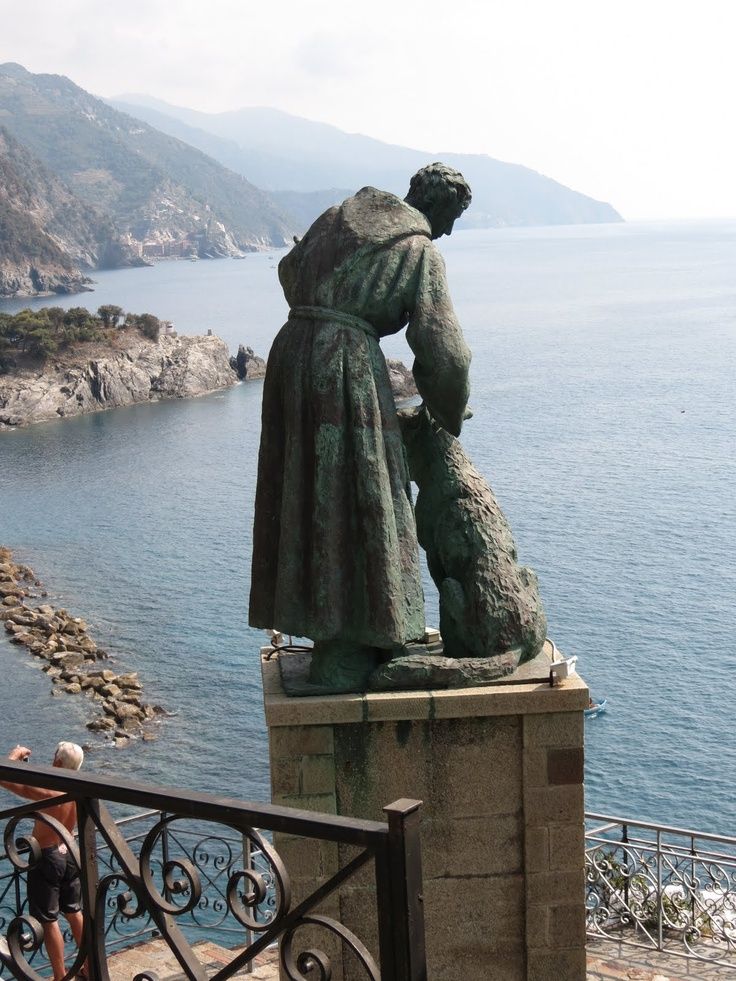
“Start by doing what is necessary; then do what is possible; and suddenly you are doing the impossible.” - St. Francis of Assisi
Popes, Saints and Their Sayings tweet media
English
17
724
3.3K
39.2K
Fr. Charles Zlock retweetet
ROME REPORTS
ROME REPORTS@romereports·
What could Pope Leo XIV have said to his superior? 🤔 Before beginning his greeting from the popemobile in St. Peter’s Square, Leo XIV hit the brakes to salute his superior, the Augustinian Joseph Farrel, who was standing in front of the Bell Arch 🔔 The superior was accompanied by about a dozen Augustinians who didn’t want to miss the General Audience presided over by Pope Leo this Wednesday, March 11 🗣️
English
6
31
262
17.6K
Fr. Charles Zlock retweetet
☩ 𝕁𝕄𝕋 ☩
☩ 𝕁𝕄𝕋 ☩@SecretFire79·
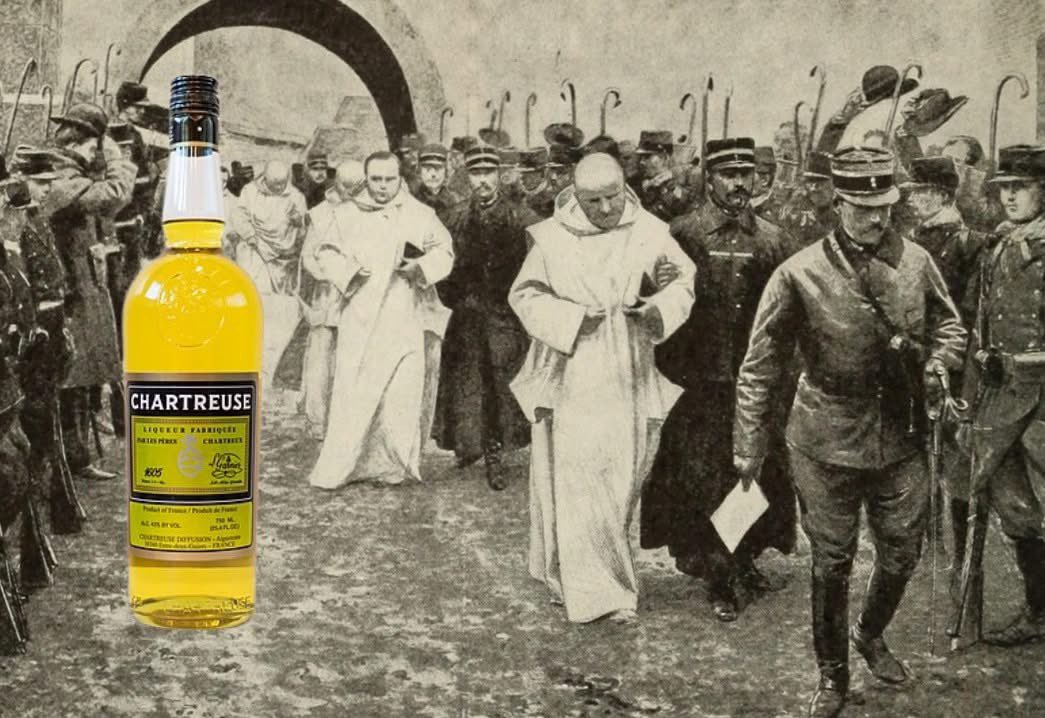
CATHOLICISM: SAVING CULTUE FROM SECULAR ATHEIST SUBVERSIVES SINCE 33 A.D.🇻🇦 In 1903, the French government expelled the Carthusian monks from their monastery in the Alps and seized everything they owned. The monastery. The distillery. The equipment. All of it. There was just one little problem. Only two monks in the entire order knew the recipe for Chartreuse, and they had memorized it. There was nothing written down that the government could take. The French government hired chemists to reverse-engineer it. They analyzed every bottle they could find. They ran every test available to early 20th-century science. They could not replicate it. The liqueur they produced under the Chartreuse name was so inferior that it destroyed the brand almost immediately. Sales collapsed. The company the government set up to produce it went bankrupt in 1929. The monks, meanwhile, had relocated to Tarragona in Spain and were producing the real thing the entire time. In 1929, the same year the French government's operation went under, the monks quietly bought back the rights to their own name and returned to their monastery. The recipe is still known by exactly two monks at any given time. When one dies or becomes too ill to continue, he passes his portion to a successor. The full recipe has never been written down in a form that has left the order. Chartreuse is made from 130 Alpine plants and herbs. The monks tend the distillery themselves. They take no outside employees into the production process. The 1605 manuscript that started all of this is still held in the monastery archive. The French Third Republic lasted from 1870 to 1940. The monks are still there, still making Chartreuse.
☩ 𝕁𝕄𝕋 ☩ tweet media
English
62
651
3.1K
183.1K
Fr. Charles Zlock retweetet
aziel zerath
aziel zerath@azielzer·
looks hard to say sorry in German
English
722
473
3.5K
2.8M
Fr. Charles Zlock
Fr. Charles Zlock@FatherZlock·
in 2024, Professor Jiang predicted 1. Trump would win 2. we would go to war with Iran, 3. we would lose that war. He was right on 1 and 2. His case for 3 is not only frighteningly prescient, it has become stronger in the past 48 hours. youtu.be/4Ql24Z8SIeE?si…
YouTube video
YouTube
English
0
0
0
86
Fr. Charles Zlock
Fr. Charles Zlock@FatherZlock·
The point of departure for the moderator is the Iran war. The implications of Bishop Barron’s ideas are SO much more important, and potentially dire, for our society. youtu.be/5552Q-ju034?si…
YouTube video
YouTube
English
0
0
0
63