@GMRatio 🔺️

2.4K posts

@GMRatio 🔺️ banner
@GMRatio 🔺️

@GMRatio 🔺️

@GoldenMRatio

Crypto project builder/advisor. Crypto is the future and the SOS system is going to be a big part of it! https://t.co/9xP4eW3FZJ

Beigetreten Ekim 2024
3.1K Folgt800 Follower
@GMRatio 🔺️ retweetet
Blunt🚬
Blunt🚬@BluntCap·
Sometimes I think this whole space needs a @_TheReset_ and to build from scratch. Rugs, soulless slop, and lack of community and bagworkers. Open for ideas.
English
19
9
62
2.3K
@GMRatio 🔺️
@GMRatio 🔺️@GoldenMRatio·
@ZiunRep So many options, this is turning into a one stop shop! Amazing work dev
English
0
0
2
8
@GMRatio 🔺️ retweetet
Ziun Rep
Ziun Rep@ZiunRep·
Zuin is the future of trading Come be apart of success If you haven't visited Ziun lately, you’ll notice several new features, one big upgrade being the tokenization of referral accounts. To activate your referral status and begin earning, you are now required to mint your account as an NFT. These accounts are categorized by rarity and are strictly limited to reward our early supporters: Gold (250 NFTs): Earn 0.15% of all swap volume from your referrals. Silver (500 NFTs): Earn 0.10% of all swap volume from your referrals. Bronze (1,000 NFTs): Earn 0.05% of all swap volume from your referrals. Once these tiers are fully minted, no additional referral accounts of this type will be created. As you promote your link and your network begins swapping, these NFTs represent a significant source of recurring revenue. The Power of Volume The math adds up quickly. For example, if 100 referrals perform roughly 12 swaps a day with 1 SOL each, they generate over $100k in daily volume. For a Gold account, that translates to $150 a day in passive earnings. Whether you have one referral swapping $1,000 once or a high-frequency trader swapping multiple times, you collect a percentage of every transaction. Minting Cost: 0.2 SOL. Flexibility: While you can only mint one NFT per Ziun profile, you can purchase other users' referral NFTs on the secondary market to collect revenue from multiple accounts. Urgency: Current users with unminted Gold accounts must act soon. Unminted accounts will eventually be deleted to ensure active supporters have the opportunity to claim these limited spots. Secure your stake in the platform’s growth by minting your referral NFT today.
English
3
4
5
35
@GMRatio 🔺️ retweetet
Massimo
Massimo@Rainmaker1973·
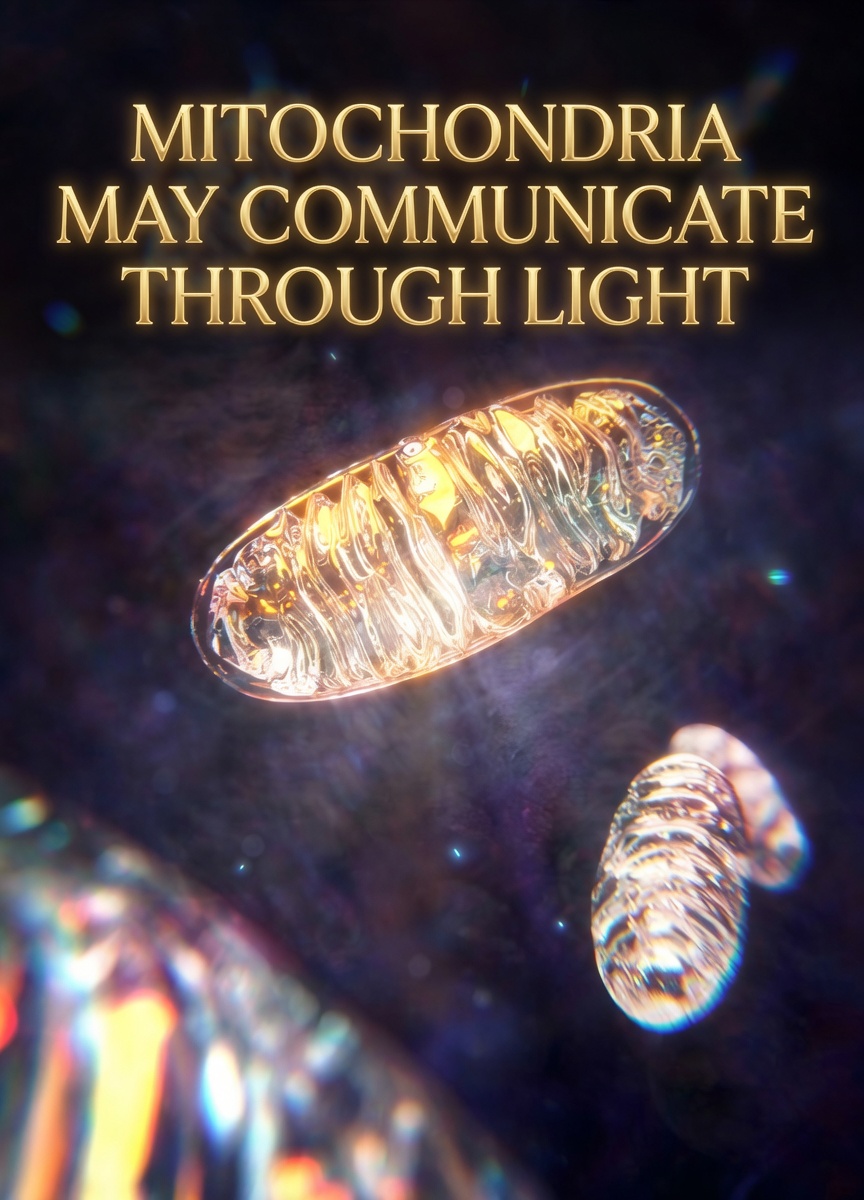
A groundbreaking 2023 study has provided evidence that mitochondria, the tiny powerhouses inside our cells, can influence each other using faint light signals rather than traditional chemical messengers. Researchers isolated mitochondria from human cell lines (cancerous MCF7 and non-cancerous MCF10A) and placed them in separate containers. When one group of mitochondria was stressed using a chemical that inhibits the electron transport chain (antimycin A), the neighboring group — physically and chemically isolated — showed a significant change in its oxygen consumption rate. This effect was strongly dependent on the presence of ambient light and disappeared when the setup was shielded from light. The team, led by Dr. Rhys Mould from the University of Westminster, proposes that this non-chemical communication occurs via ultraweak photon emission (also known as biophotons or metabolic photon emission). These are extremely faint light particles naturally produced during cellular metabolism, particularly in mitochondria due to their high energy activity. Mitochondria appear capable of both emitting and responding to these photons. While the findings are intriguing and statistically robust, the authors emphasize that more research is needed to fully understand the mechanisms and biological significance of this light-based signaling. The study adds to growing interest in biophotonics and how light may play subtle but important roles in cellular coordination, complementing well-established chemical and electrical signaling pathways. [Mould RR, Kalampouka I, Thomas EL, Guy GW, Nunn AVW and Bell JD (2023) Non-chemical signalling between mitochondria. Frontiers in Physiology, 14:1268075. doi: 10.3389/fphys.2023.1268075]
Massimo tweet media
English
23
52
225
19.2K
@GMRatio 🔺️ retweetet
Jesse Morse, M.D.
Jesse Morse, M.D.@DrJesseMorse·
If you can make it 5 more years, then I believe we will have the ability to live to 120-150 years old.
English
485
144
3.8K
981.9K
@GMRatio 🔺️ retweetet
Nastya Egorova
Nastya Egorova@longevitynastya·
Aging is solvable. It must be. But someone needs to solve it first. Not one person—a group of people, a scientific community, a movement, an industry. Become part of it! Help us build it piece by piece. Time is ticking.
Nathan S. Cheng thinks you should work on aging.@realNathanCheng

1/ How long do you want to live? For most of human history, aging was inevitable. It's now solvable. Apply for LBF8 cohort program: longbiofellowship dot org /THREAD🧵


English
8
13
72
2.3K
@GMRatio 🔺️ retweetet
TheNewPhysics
TheNewPhysics@CharlesMullins2·
🚨 Scientists may have found mitochondria didn’t just power complex life but helped invent new parts of the cell itself? A new Nature study suggests ancient mitochondria may have shed outer membrane “sacs” that evolved into specialized cellular compartments. That’s a wild shift. Mitochondria may not have been passive passengers after endosymbiosis but active architects of complexity. It hints evolution may advance not just by mutation… but by structures generating new structures. Life may build itself recursively. And that idea reaches far beyond biology. Follow me I track where physics, life and structure meet.
English
10
73
320
13.8K
@GMRatio 🔺️ retweetet
☣️ Pleb Kruse = BTC foundationalist in exile 🟩🔆
More good news for Savages during the decline. Biological translation: Mitochondria and photosynthetic reaction centers operate with quantum-coherent electron/spin processes in highly 2D-like membrane environments. In a weakening global magnetic field, local nnEMF or chaotic fields act like the usual "destructive" case (disrupting coherence, increasing ROS, deuteration drag). But coherent natural fields (or properly engineered local ones, like electroculture antennas) should mimic the beneficial 2D case, by stabilizing electron flow, proton tunneling, and lattice order in the IMM or thylakoids. This is why Schauberger/Steiner-style vortex + paramagnetic setups, or ancient pyramid flux engineering, make sense at the quantum-bio scale.
TheNewPhysics@CharlesMullins2

🚨 BREAKING Magnetic fields usually destroy superconductivity. But in a new Nature Physics paper, researchers found a 2D crystal where a magnetic field actually helps superconductivity appear. That’s wild. By doping ultrathin LaSb₂ with magnetic Ce impurities, the field suppresses disruptive spin fluctuations allowing a superconducting dome to emerge. So the field isn’t only breaking order. It’s removing the noise that prevents order. That feels like a deeper principle: Sometimes stability appears when the right disturbance cancels the wrong disturbance. Could future superconductors be tuned by controlling magnetic disorder itself? Follow me I track where physics starts breaking its own rules.
English
5
44
222
14.5K
@GMRatio 🔺️ retweetet
Marcos Arrut
Marcos Arrut@MarcosArrut·
Every generation thought they had reached the limit of human knowledge. Every generation was wrong. Scientists who claim that aging is inevitable are no different. That's all.
English
6
10
106
1.6K
@GMRatio 🔺️
@GMRatio 🔺️@GoldenMRatio·
@TheMadHatterOnX @_TheReset_ Haha yeah thus is some crazy AI right here... but I am feeling it won't be for much longer on the disclosure timeline we find ourselves on.
English
0
0
0
24
Hatter
Hatter@TheMadHatterOnX·
For sure they waited till AI was good enough to release the files so now we will never know if its real or not… @_TheReset_
English
5
5
15
308
@GMRatio 🔺️ retweetet
Jordan Crowder
Jordan Crowder@digijordan·
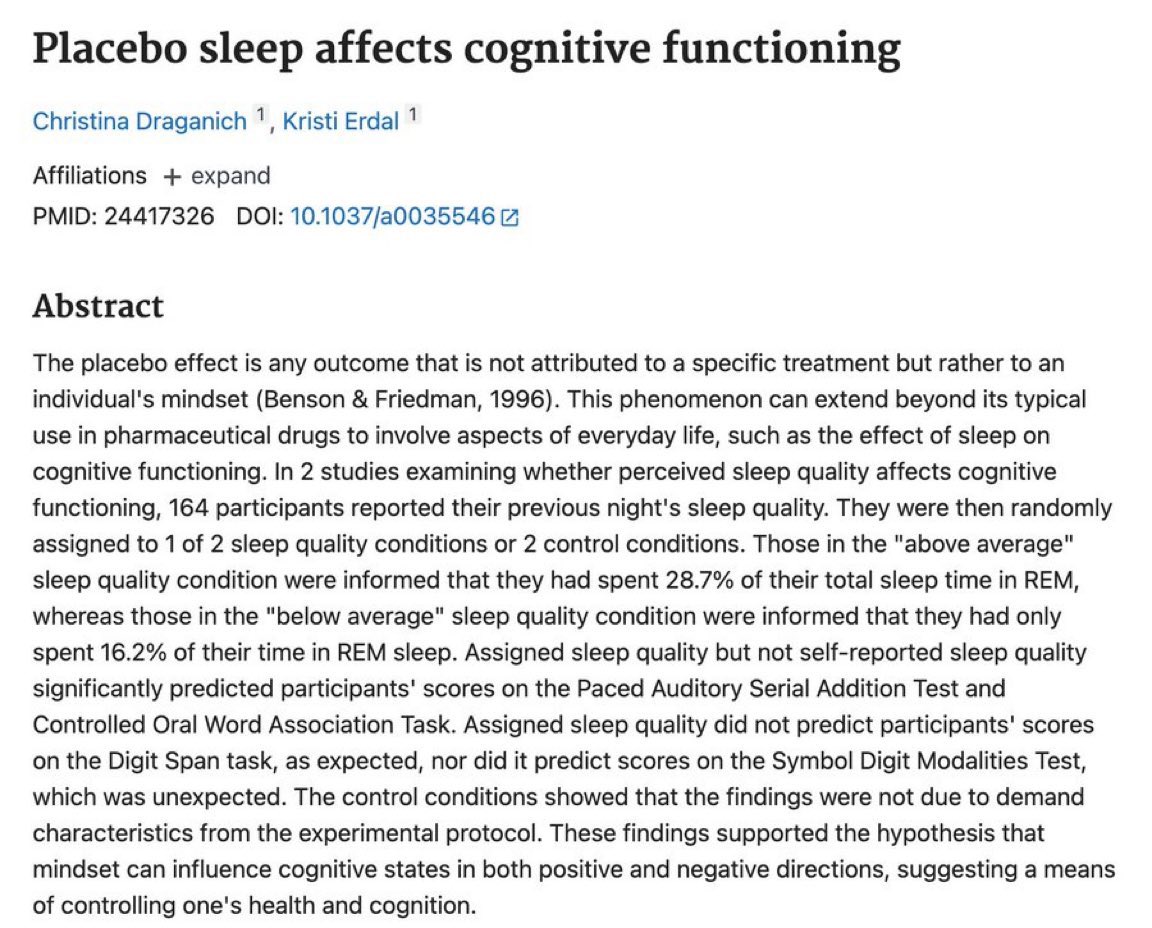
This sleep placebo study is nuts… They told people they either had “great” or “poor” sleep…even though it wasn’t true. What happened: People who believed they slept well performed better on cognitive tests. People who believed they slept poorly performed worse. Actual sleep didn’t matter as much as the belief about sleep. Bottom line: Your brain performs based on expectation, not just biology. It’s ALL mindset 🧠 🔥💪
Jordan Crowder tweet media
English
22
39
334
9.8K
@GMRatio 🔺️ retweetet
Multimillionaire
Multimillionaire@kevinlutsokert·
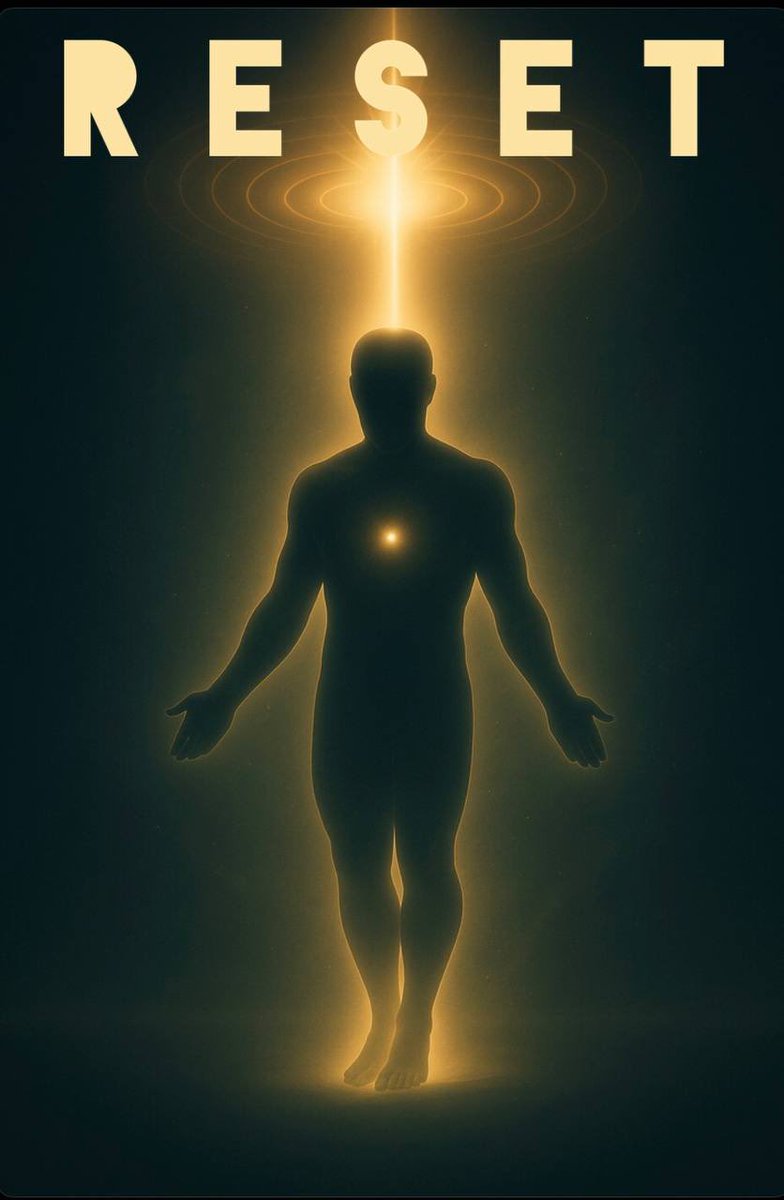
In these chaotic global times, uncertainty is everywhere. The most powerful move you can make is a mindset reset. Stop doom-scrolling.
Stop waiting for the world to calm down. Reset today. The world needs stronger minds, not more anxious ones. @_TheReset_ 👁️
Multimillionaire tweet media
English
4
5
9
61
@GMRatio 🔺️ retweetet
Bryan Johnson
Bryan Johnson@bryan_johnson·
Talent is flowing to longevity
Science girl@sciencegirl

A teenage prodigy in quantum physics is aiming to tackle one of science’s biggest challenges: human aging. Laurent Simons earned his PhD in quantum physics from the University of Antwerp at just 15. Rather than slowing down, he has already begun a second doctorate, this time focusing on medical science and artificial intelligence. His long-term ambition is to better understand aging and disease, with the hope of helping extend healthy human lifespan. He has described death as a complex “puzzle,” made up of many interconnected pieces across biology, physics, and engineering. His strategy is to study these layers together, using AI to analyze biological systems and identify patterns that would be difficult to detect otherwise. Simons’ academic journey has been unusually fast. He completed high school by age 8, finished a bachelor’s degree at 12, and went on to earn both a master’s and PhD in quantum physics years ahead of typical timelines. His doctoral work explored advanced topics like Bose–Einstein condensates, where atoms behave as a single quantum system at extremely low temperatures. Although highly theoretical, this research underpins technologies such as quantum computing and precision measurement. Now, his focus is shifting toward biology and medicine. In AI-driven healthcare, researchers are already using machine learning to improve early disease detection, model protein structures, and accelerate drug development. In the field of aging, scientists are investigating ways to reduce cellular damage, eliminate dysfunctional cells, and better understand how the body changes over time. However, experts stress that “solving aging” is extraordinarily complex. While lifespan extension has been achieved in simple organisms, applying those findings to humans remains a major scientific hurdle. Simons himself acknowledges that meaningful progress could take decades. Even so, his path reflects a broader trend in science—where breakthroughs are increasingly happening at the intersection of disciplines, and younger researchers are setting ambitious, long-term goals. Learn more: "15-year-old genius sets his sights on solving human immortality." Brighter Side.

English
108
99
2.1K
198.3K
@GMRatio 🔺️ retweetet
Marcos Arrut
Marcos Arrut@MarcosArrut·
You will stop aging. Your children will be born without an aging program. Your grandchildren won't even know what aging is. If this were just an idea, there would be no point in mentioning it. But this is a goal. And we won't stop until we achieve it. That's all.
English
12
16
204
2.4K