Angehefteter Tweet

Atkinson's law - if an online debate about science goes on long enough the probability that one party compares the other party to a climate change denier, flat-earther or anti-vaxer increases.
English
Greg Atkinson
62.8K posts

@GregAtkinson_jp
Founder & CTO maritime technology company, Japan. Engineer, scientist, investor, keen gardener. Enjoys Fukuoka, shochu & yakitori. Satirical Australian lad :)
KRRI Successfully Develops #Hydrogen Electric Train. South Korea's Korea Railroad Research Institute (KRRI) has restarted demonstration testing of its hydrogen #fuelcell train after a three-year research gap caused by budget cuts and the COVID-19 pandemic fcw.sh/9XcEAA
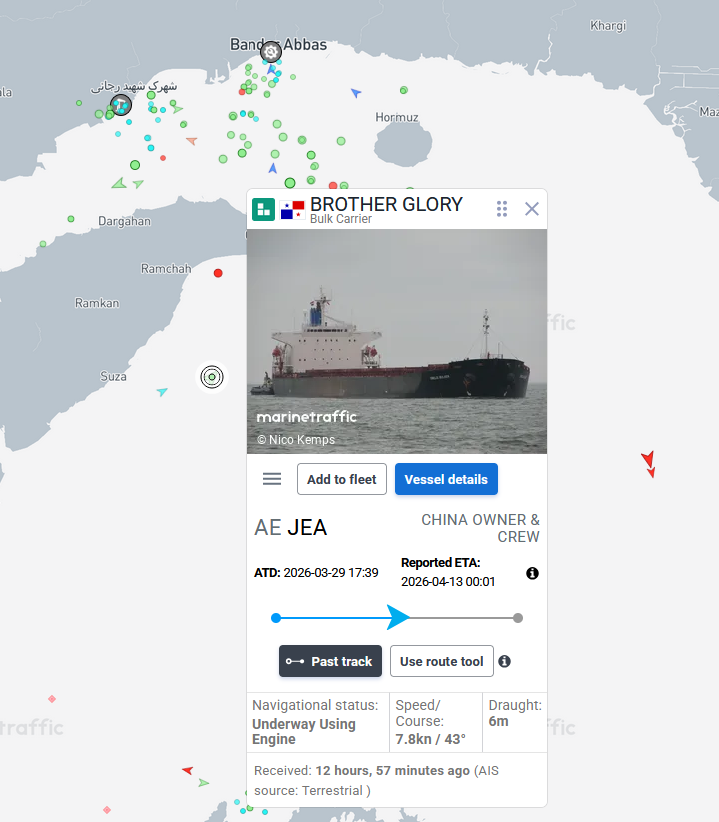
Trump's Hormuz Blockade: How It Backfires, and What Iran Can Do Next After marathon peace talks in Islamabad collapsed Sunday, President Trump announced on Truth Social that the U.S. Navy will "immediately" begin blockading any and all ships entering or leaving the Strait of Hormuz — framing it as a response to Iran's toll regime and its refusal to abandon nuclear ambitions. Trump described the move as "all or none" — meaning no ship passes until Iran relents, targeting the selective access Iran had been granting to friendly nations like China and India while restricting others or charging tolls of up to $2 million per vessel. The logic, on its face, sounds like leverage. Strip Iran of toll revenue, deny it economic benefit, and force capitulation. But the strategic reality is far more complicated — and the blowback, both short and long-term, may prove catastrophic for Washington. SHORT-TERM BACKFIRE: 1. The U.S. Just Did Iran's Job For It Iran's greatest weapon in this war has been the threat of Hormuz closure. It was already choking the strait and collecting tolls. What Trump's blockade does is complete the closure more decisively — and now the world will blame Washington, not Tehran, for the shutdown. Iran wanted a pretext to lock down the strait without appearing as the sole aggressor. Trump handed it to them. 2. Oil Markets Will Detonate As much as 20% of the world's petroleum transits the strait each year. Iran had already caused severe disruption. A full U.S. blockade — interdicting every vessel, including those previously moving under Iranian-granted clearances — means zero flow from the Persian Gulf. Saudi, Emirati, Kuwaiti, Qatari, and Iraqi oil all exit through Hormuz. The U.S. isn't just targeting Iran here. It's cutting off its own allies' export arteries. Brent crude, already elevated from weeks of conflict, will spike to levels that dwarf any prior energy shock. The economic pain lands on Europe, South Asia, and East Asia within days. 3. The Interdiction of Toll-Paying Vessels Is an Act of War Against Third Parties At least two vessels that have traversed the strait paid Iran fees in Chinese yuan to guarantee safe passage. Trump has now ordered the U.S. Navy to intercept those ships. That means American warships boarding or seizing vessels from China, India, and Pakistan — sovereign nations that are not parties to the U.S.-Iran conflict. This is not a blockade of Iran. This is a naval confrontation with the entire Indo-Pacific trading order. 4. The Ceasefire Is Now Dead Hundreds of tankers were still stuck in the Gulf waiting to exit during the two-week ceasefire period — three supertankers had just passed through on Saturday for the first time since the war began. That narrow diplomatic opening, brokered partly through Pakistan, is now effectively closed. By announcing a blockade hours after talks collapsed, Trump has signaled that the U.S. is no longer interested in negotiated outcomes. Tehran now has no incentive to de-escalate. 5. Iran's IRGC Is Already Responding Iran's Revolutionary Guards stated that "all traffic is under the full control of the armed forces" and warned that "the enemy will become trapped in a deadly vortex in the Strait if it makes the wrong move," posting a video showing vessels in crosshairs. The IRGC does not make empty gestures in these announcements. Mine warfare, fast-boat swarms, and anti-ship missile batteries are already pre-positioned. A U.S. mine-clearing operation in contested waters, under live IRGC targeting, is one miscalculation away from open naval engagement.




“Resist it while you still can... the barbarian never take the city until someone holds the gates open for them and it’s your own preachers and multicultural authorities who’ll do it for you...” Christopher Hitchens, born 13th April 1949