

Greg Benage
7.6K posts
Greg Benage
@GregBenage
Combat Systems Analyst CTR NAVSEA. Opinions on sports, games, politics and other things I really don't know anything about.
Atlanta, GA Beigetreten Ocak 2012
155 Folgt197 Follower

@jarvis_best >Didn’t include the seven years war despite the fact that it was fought on four continents and two hemispheres
English

The 11 world wars:
1. Greece (250 BC). Alexander the Great. Owned that planet for a bit.
2. Rome (0 AD) did the same but more biblical. Many statues remain.
3. Middle Ages (800 - 1899 AD). The europoors basically never stopped fighting.
4. Napoleon and Russia (unknown). I haven’t looked at this closely but that’s at least two continents, so.
5. American Revolution (1776 AD). Not just two countries! All the Brits were German hires. The French helped the Americans. That’s a good chunk of the world.
6. The Great War (1914ish). The whole “World War 1” was more of a branding thing for merch than anything else.
7. WW 11, also sometimes called WW II (1939-46 AD). Involved several important nations and also Canada.
8. Cold War (1946 - present). Spilled into Nam, Cambodia, Korea, China, Cuba. Perhaps also Canada I don’t know.
9. Ongoing Middle East F**kery (4000 BC - present).
10. China Pissing Me Off (1953 - present).
11. AI Destroys Humanity Setting Off Every Nuke Simultaneously and Everyone Dies and the Only People Who Survive Are Alexandria Daddario and Me and We Must Repopulate the World (May 2026 - 2085).
English
@amsyar833 @ScottOgden1 @TylerDMcNabb That treats existence as a property or metaphysical “stuff” that must continually be transmitted from some ultimate source and I see no reason at all to believe that’s the case.
English

@GregBenage @ScottOgden1 @TylerDMcNabb The contingency argument—at least Avicenna's—doesn't depend on making claims about the cosmos or universe because it's asking why anything at all exist at this moment (right now) rather than nothing. ✅ Essential causal series ❌Temporal causal series
English

Philosophers when I ask for good responses to the contingency argument
dr. alicia andrzejewski (she/her)@aliciaandrz
academics when they tell me Freud is outdated & irrelevant & I ask them what they’ve read by him.
English
@mattyglesias Does that include the long-term scenario where we become so materially comfortable that we simply stop reproducing?
English

To be clear, in this survey a majority of researchers say the odds of extinction are greater than 10%!
Jay Van Bavel, PhD@jayvanbavel
What is the one thing that most worries you about AI? In a survey of 3,700 AI researchers, only 3% of respondents replied existential risk — despite “the prominence given to these risks in media. Far more researchers are worried aout malicious use, misinformation, job losses, bias, etc. nature.com/articles/d4158…
English
@Fabulous_Corvid @MarkChangizi “Everyone in the world” means something else?
English

@GregBenage @MarkChangizi Blue pushers always run to children which are never a part of the equation in the first place.
English

@SkyTheViking The referent differs between passages: sometimes the divine council, sometimes Israel, sometimes ancient kings, sometimes (NT) Jesus followers.
English

@KR3Wmatic Agnostic, but David Bentley Hart’s “The Experience of God.” Though I understand some professed Christians don’t consider him a Christian.
English

@CptAncapistan Social cohesion in prison is so strong because everyone knows everyone else is a criminal.
English
Okay, thought of another wrinkle.
If red wins by a large margin, then everyone who is alive pressed red. We all know we all pressed red. That actually builds some social cohesion.
But if blue wins, people will spend the rest of their lives suspecting people of pressing red. Admitting to have pressed red will make you a social pariah. There may even be calls to find and punish anyone who pressed red. This would create a highly paranoid society going forward.
A narrow red victory is still a disaster scenario, but a dominant red victory may actually be better than a blue victory.
Captain Ⓐncapistan@CptAncapistan
Alright, one last post about this after having given it a lot of thought and seeing people's reasonings. I'll give my final choice at the end. Firstly, I don't think you're necessarily stupid to pick blue or necessarily immoral to pick red. I think a lot of it just comes down to what your first instinct is, "we have to save everyone" or "why would anyone pick the option where you can die?" I think most people are sticking with their first instinct and finding ways to justify it. People are wired differently. It's good that society has a mix of these instincts as both compassion and self-preservation serve a purpose in our survival as a species. There are bad people and good people on both sides, and there are dumb people and smart people on both sides. I also think framing matters a lot, particularly when it's reframed as action vs inaction. The scenarios of taking a poison pill or jumping into a blender/woodchipper make it easy to choose red because blue is more clearly taking a suicidal action. The scenario of the red party killing everyone who voted for the blue party if they win makes it easy to choose blue because red is more clearly taking a homicidal action. The rules are still effectively the same in all three scenarios, but the framing matters. The button example is so controversial because the framing is as neutral as it can be, which lets both the blue side frame red side as homicidal and the red side frame the blue side as suicidal. The best argument I've seen for blue is that the only scenario where no one dies is if more than half of people press blue because we can safely assume that a non-zero number of people will press the blue button. On top of that, if a slim majority picks red, that's basically a Thanos snap situation, and it would be far worse than what the writers of Avengers: Endgame were able to fathom, with the added bonus of a selection bias that eliminates all the people with compassion instinct and leaves us only with the people with the self-preservation instinct. For those reasons, I would hope that the majority press blue. That being said, I still ultimately come down on pressing the red button. There are some 8 billion people in the world. The chances that my choice is the deciding button press is effectively zero. If I press blue, I'm just leaving my fate up to the results. My button press is meaningless. The only way I have agency in this situation is to press the red button. Also, I know my wife is pressing blue, but I don't know what my kids will do. If one or both of my kids press blue while the majority picks red, I can't save them by pressing blue. But, if one or both of my kids press red while the majority picks red, I can guarantee that they aren't orphaned if I press red. But hey, maybe I'm just finding a way to justify my initial instinct, just like everyone else. x.com/waitbutwhy/sta…
English
@ScottOgden1 @TylerDMcNabb Maybe there are no brute facts *in the world.* But maybe “necessity” and “contingency” are modal categories that apply within a world-model and lose their grip when we try to apply them to the model as a whole.
English

@GregBenage @TylerDMcNabb The thing is tho is there is just brute fact in the world with no cause or explanation then like, it's pretty plain to question literally everything. How do you believe in science, perception, logic, etc. all of it would be absurd. Nietzsche would be right
English
@ZealotesChristi @bttldog @logiboi32 @kaizen000000000 BGV does not entail that there was any first instant of time, that the universe came from “nothing,” that there was a physical singularity, or that all possible cosmological models have a beginning.
English

@GregBenage @bttldog @logiboi32 @kaizen000000000 a beginning just means that the Universe isn’t eternal, the evidence points towards that
Borde-Guth-Vilenking theorem supports this and there has been no quantum model that overturns the BGV, at most, some frameworks circumvent its premises or reframe the “beginning”
English

"If we say God made the universe, then surely the next question is, "Who made God?"
If we say God was always here, why not say the universe was always here?
If we say that the question "Where did God come from?" is too tough for us poor mortals to understand, then why not say that the question of "Where did the universe come from?" is too tough for us mortals?"
~ Carl Sagan
English
@G_S_Bhogal @CosmicSkeptic You can have very good reasons for not believing in the classical theist’s conception of God. Great reasons! They will HAVE to be categorically DIFFERENT reasons from those a Christian has for not believing in Allah or Brahman or vice versa. This is not “muddying the waters.”
English

This is just muddying the waters. Gervais’ implied reason for not believing in the theist’s god is not the problem of evil, it’s a lack of evidence.
Nor does it matter what kind of exegesis a theist uses to derive their beliefs about their god’s nature; their reasoning fundamentally comes down to faith, firstly because exegesis is subjective, secondly because their exegesis assumes the book they’re interpreting has divine origins, and thirdly because it’s not possible for a theist to have given sufficient attention to all other religious texts in existence.
The choice to believe gods have certain natures is made by rationalized faith, just like the decision to believe in gods in the first place.
English

I’m getting a lot of hate for this reel. What do you think?
(P.S.: if you say “but we have evidence for dads I believe you have missed the point.)
English
@ZealotesChristi @bttldog @logiboi32 @kaizen000000000 Just wanted to chime in that you’re wrong. The BB is a boundary condition. We have no evidence that the universe had a beginning. Even the “singularity” is just what you get when you try to solve only with GR. We think it’s wrong and that we need a quantum solution.
English
@bttldog @logiboi32 @kaizen000000000 no, it suggests more than that
it suggests that, based on current physics, the Universe had a finite past, it doesn’t have a past eternity, and the Big Bang is the earliest point our physics can describe
English
@kaizen000000000 If everything in nature depends on something for its existence, the ultimate ground must be something outside nature. That’s why “God” could be the ultimate ground and “the universe” cannot. (I don’t accept the argument, but you do have to understand what it is.)
English
@GregBenage "In the beginning, God created Heaven and Earth". Genesis 1:1. Pretty good prediction, actually. Science eventually caught up.
English
“The non-theist can appeal to what we don't know, an atheism of the gaps, to avoid what we have learned from science. But...the discoveries that have filled the gaps look a lot like what would be predicted by those who believe in the Christian God.” Dr. Michael G. Strauss, CERN.
English
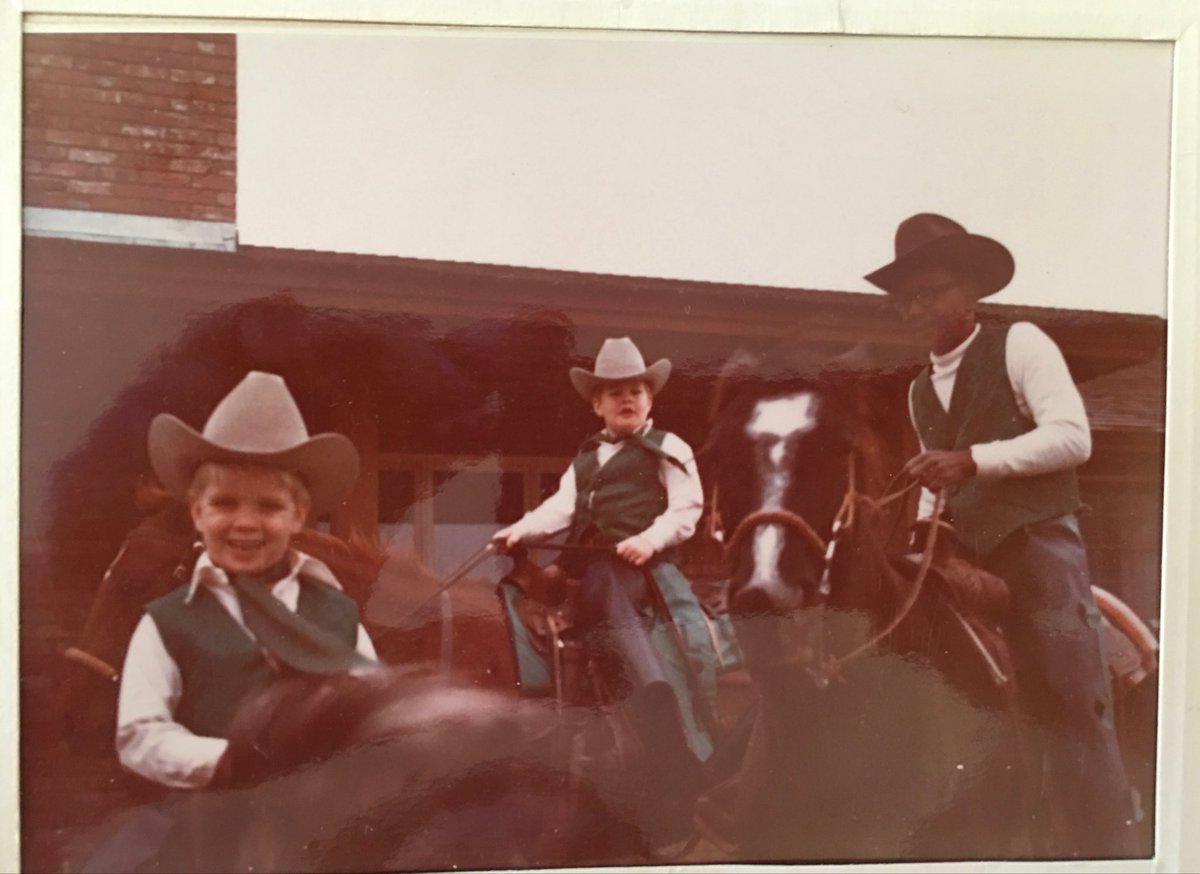
@spencer_askew My brother and I were in an otherwise all-Black riding club and we had a neighbor who would sit on her porch and yell “nigger” and “nigger-lovers” every time we rode by. It happened everywhere. I think you’re lying or you’ve led a sheltered life.
English

I’ve lived in the Deep South my entire life, and never once have I met a member of the KKK.
Never once have I met someone that is openly a White Supremacist.
Never once have I seen a white person harass a black person or call them a slur to their face.
Do with that (admittedly anecdotal) evidence what you will.
The whole world is a stage.
English

What makes him a leftist??? Simply having an education?😭
Gunther Eagleman™@GuntherEagleman
Meet the lunatic leftist who tried to assassinate the President. Cole Allen
English

@PositivFuturist Later, in the afterlife:
Father: Why did you choose blue, baby?
Daughter: I just wanted everyone to live, Daddy.
Father: But don’t you see that red is the dominant utility-maximizing strategy given that—
::trapdoor opens::
English

Best argument for blue is that he said "everyone in the world"
So assuming you don't get to prep your kids - a huge % of kids would die.
Tim Urban@waitbutwhy
Everyone in the world has to take a private vote by pressing a red or blue button. If more than 50% of people press the blue button, everyone survives. If less than 50% of people press the blue button, only people who pressed the red button survive. Which button would you press?
English
@RonnieAdkins I think it’s okay to abandon the “naturalistic look,” however appropriate the scum aesthetic may be for Washington. But we could use a liner that doesn’t make it look like a swimming pool.
English

I…are people actually mad that it will look like that?
Sincerely. What are the issues with it looking like this I don’t understand literally at all.
I live in the DC area and used to eat my lunch there. Looked like a swamp monster was gonna pop out and eat my PB&Hotdog.
Seth Abramson@SethAbramson
I say again... *grotesque*. The Trumpist enshittification of America continues. This is what a formerly beautiful D.C. landmark will soon look like:
English