
Angehefteter Tweet
GARUDA
44.1K posts


GARUDA
@HansahPure
Time and again Time Ancient purity. Modern wellness. Inspired by Sanatana Dharma • Rooted in Nature.
Beigetreten Mayıs 2023
2.8K Folgt934 Follower
GARUDA retweetet

Communists aren’t here to save workers; they’re here to use them.
They hijack public sympathy for labour issues, organise the workforce, and repurpose it as fuel for their political war machine.
Kolkata, Kanpur, Mumbai, the same story repeats every single time.
They poison workers against industry and the state, escalate legitimate demands into open confrontation, and kill production.
The result?
Factories shutter, industries flee, workers are thrown onto the streets, and the state’s economy bleeds.
The only ones laughing all the way to the bank are the political vultures who thrive on chaos.
Now they’re running the exact same playbook in Noida.
A peaceful solution was already in motion: the CM intervened, talks were initiated, and a 24-hour redressal mechanism was assured.
Yet violence still exploded, stone-pelting, arson, and vandalism. That’s not what happens when you genuinely want peace.
That’s what happens when you want fire and disruption.
This is deliberate, coordinated instigation designed to sabotage dialogue and spark unrest.
Just look at mazdoorbigul.net it is openly pushing indefinite strikes, running anti-government cartoons, promoting Naxal-style Marxist-Leninist class warfare, and calling for an “anti-fascist revolution” against labour codes.
Pure ideology, urban Naxal-backed, and suspiciously timed right before elections to undermine UP’s industrial rise.
Despite the provocation, the CM has taken firm and necessary steps.
He has ordered the formation of a high-powered committee, headed by the Industrial Development Commissioner, with the Additional Chief Secretary (MSME) and Principal Secretary (Labour) as key members, plus representatives from labour unions and industry associations.
This hard-hitting committee will investigate the issues thoroughly and deliver swift justice and resolution.Workers deserve fair wages and dignity, but they must not be turned into pawns in a destructive ideological game that ultimately destroys the very jobs and industries it claims to champion.
#TruthofNoidaProtests
English
GARUDA retweetet

GARUDA retweetet

Assam moves Supreme Court against grant of transit bail to Pawan Khera.
How long will Pawan Pera go on hiding ??

English
GARUDA retweetet

Siachen War Memorial.
Let’s remember hero’s who fought well & gave their life on this #SiachenDay
English
GARUDA retweetet
एक गरीब सिर्फ अपनी सोच से ही गरीब होता है
अगर वह अपनी सोच बदले तो भी अमीर बन सकता है
अब यह देखिए नोएडा में यह लोग मारुति के शोरूम को जला रहे हैं जबकि मारुति के शोरूम का इस विवाद से कोई लेना-देना नहीं है
क्या मारुति का शोरूम जलाने से इनका ज्यादा सैलरी मिलेगी ??
योगी जी आपसे निवेदन है इन सभी अराजक तत्वों पर जरा भी दया मत करिए तमाम फुटेज से इनकी पहचान करिए इन पर मकोका और गुजसिटोक और रासुका जैसे धाराएं लगाकर जेल में डालिए
अराजकता कतई बर्दाश्त नहीं की जा सकती
आपकी मांग थी प्रशासन आपसे बात कर रहा था तो अब आप दंगा और आगजनी ही कर लीजिए
और खुलासा यह हो रहा है कि यह लोग यह सारे वीडियो पाकिस्तान अपने आकाओं को भेज कर वहां से पैसे ले रहे हैं और पांच लोग इसमें नमाजवादी पार्टी के नेता गिरफ्तार हुए हैं
हिन्दी
GARUDA retweetet
In Noida, furious workers reached outside India TV building today and sat on the road in protest.
UP Police says the protest was coordinated through late-night WhatsApp groups.
Pure anarchy. Targeting media house offices? How is this even allowed?
English
GARUDA retweetet

insane to try and legislate KEEPING fraud abusing American's tax dollars hidden
this cannot pass
Nancy Pelosi Stock Tracker ♟@pelositracker
Nick Shirley's video exposing $170,000,000 in California fraud got 7.7 million views California Democrats just advanced AB 2624 — a bill that would let the filmed organizations demand his videos be taken down Penalty for non-compliance: up to $10,000 per violation and potential jail time The bill was written by Assemblywoman Mia Bonta Coincidentally, her husband is California's Attorney General He also just announced his own $267,000,000 Medi-Cal fraud bust 4 days before her bill advanced @nickshirleyy
English
GARUDA retweetet

🚨 BIG! Two Congress workers, Asif Shekh and Shahdath Hussain, have been ARRESTED in connection with the Malda violence where judicial officers were attacked, as per media reports.
English
GARUDA retweetet

HR head Nida Khan was playing a key role in the jihadist conspiracy at TCS Nashik.
She helped recruit Hindu women, pushed them to adopt burqas, hijabs, and Islamic customs, and then deliberately suppressed their complaints of sexual exploitation.
In this video, @Keshavmalan93 reveals how jihadist gangs use Muslim women as cover to lure and trap Hindu women.
English
GARUDA retweetet

नोएडा की हिंसा में ऐसे लोग पकड़े गए हैं जो न तो किसी फैक्ट्री में काम करते थे न नोएडा में वे रहते हैं।
आगजनी की प्लानिंग करने वाली एक संस्था है जिसका नाम मजदूर बिगुल दस्ता है। पिछले कई दिनों से एक कामरेड अभिनव सिंहा नोएडा की फैक्ट्री में घूमकर मजदूरों को भड़का रहा था।
आज पुलिस ने कई कामरेड्स जिसमें रूपेश,आकृति सृष्टि, मनीषा है उनको गिरफ्तार किया है। मानेसर में इसी संगठन ने भी वहां की गवर्नमेंट फैक्ट्री में हिंसा करवाई और वहां से शनि सार्थक, श्याम मूर्ति, वीरेंद्र उर्फ प्रिंस गिरफ्तार किए गए हैं, यह सभी कम्युनिस्ट पार्टी से जुड़े हैं।
अब पुलिस छानबीन कर रही है कि इनको फंडिंग कहां से मिली है और यह किसके इशारे पर यह दंगा किए!
योगी जी की सरकार श्रमिकों के साथ हैं, योगी govt में श्रमिकों के साथ अन्याय नहीं हो सकता। कमेटी बनाई गई है और उचित कार्यवाही हो रही है।
हिन्दी
GARUDA retweetet

Gautam Buddh Nagar today is home to
> India’s largest electronics hub
> World’s largest mobile factory
> India’s largest drone manufacturing hub
> India’s largest robotics facility
> North India’s first hyper-scale DC
> One of the largest apparel hub
> One of the largest IT services hub
> North India’s first semiconductor facility
Noida has highest per capita income among large cities ~ >₹10 lakhs
These protests are well thought out conspiracy to destroy all that - should be crushed with iron hand.
English
GARUDA retweetet
"He then killed all their Zoroastrian priests and burned and destroyed their books, until only illiterate people remained who knew nothing of writing: and thus the history of the region was almost entirely forgotten."
Ofer Binshtok - Kafir - עופר בינשטוק@Ofer_binshtok
The Islamic Slaughter of Persian Knowledge in Khwarazm (712 AD): The Brutal Eradication of Iranian Civilization By: Ofer Binshtok During the second Muslim (Umayyad) conquest of Khwarazm, Muslim forces under the command of Qutayba ibn Muslim (governor appointed by al-Hajjaj ibn Yusuf) carried out a systematic campaign against the educated elite. Al-Biruni himself: a prominent scientist and scholar born in Khwarazm (973 to 1048): describes it in his book "Al-Āthār al-Bāqiyah ʿan al-Qurūn al-Khāliyah" (The Remaining Signs of Past Centuries, also known as The Chronology of Ancient Nations): "When Qutayba ibn Muslim was sent to Khwarazm and conquered it for the second time, he promptly killed everyone who could write in the local Khwarezmian language and who knew the region's heritage, history, and culture. He then killed all their Zoroastrian priests and burned and destroyed their books, until only illiterate people remained who knew nothing of writing: and thus the history of the region was almost entirely forgotten." (Accurate translation from Eduard Sachau’s standard edition, 1879). This is direct testimony from a great Muslim historian, not a later polemical tale. It describes a direct outcome of the Muslim conquest: not merely battlefield killing, but the deliberate destruction of knowledge and cultural memory. Full source: Abu Rayhan al-Biruni, Al-Āthār al-Bāqiyah ʿan al-Qurūn al-Khāliyah (pp. 48 to 49 in the standard English translation).
English
GARUDA retweetet

The Hosiery Complex, a major employment generator for lakhs in the garment sector, witnessed deliberate acts of arson on Monday. Sources close to the administration say the timing of the violence - right after government opened channels for discussion - indicates an attempt to tarnish the development story of western Uttar Pradesh.
English
GARUDA retweetet

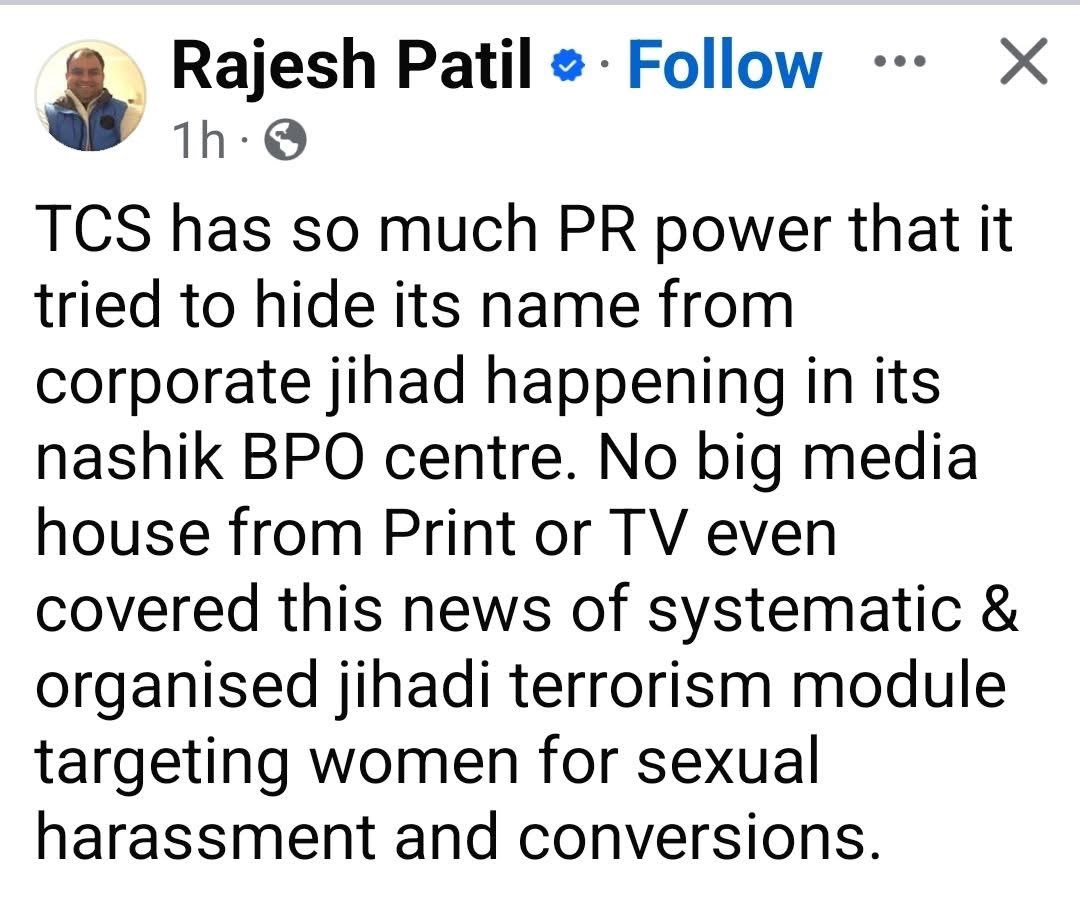
The Tatas need to be exposed for what they truly are -
When @smitadeshmukh 's junior in Times Group who later became the Editor after Smita quit Times Group wrote an article without naming the Late RNT but giving details of his homosexual pedophilia and preference for preteen Nepali boys, hell broke loose on Times Group. Immediately all release orders of Tata Group to Times Group worth more than ₹ 400 crores were cancelled. All Times Group journalists were banned from Tata Group press conferences. Finally both the brothers had to go to Bombay House and prostrate in front of RNT and hear the earful of castigation to bring things back to normal.
Not a single media house and even the government initiated inquiry over this accusation.
Before that Tatas hosted ULFA terrorists in Bombay for treatment at Tata Hospital and nothing happened after a extremely brief media reportage.
This is the power of Tata Group. All their talks of Tata Code of Ethics is bull crap. That's a facade created with small donations bundled with huge PR and deftly using power to suppress truth.
I remember Sri Lankan Defence Secretary who later became the President of Sri Lanka openly telling one of the Tata Group Company's MD that he didn't want to listen sermons on ethics and morality from drug smugglers. Today, their whole history of starting their empire as drug smugglers working for the British is very smartly erased.
Nobody, including leftists, talk about the situation of tribals living in and around Jamshedpur and how their water is diverted to Jamshedpur. Nobody talks about the corporate managed city where there is no democracy.
Let me go overboard to put this point on record that even BJP will not be able to do anything against Tatas. This controversy will die down and people will completely forget it within a couple of months.
This is the power of Tatas.
[ ✍️ @sumeetnmehta ]
English
GARUDA retweetet

Tanishq sold the narrative. TCS operationalized it. Nashik shows how narratives quietly turn into ground truth. Connect the dots.
English
GARUDA retweetet
“After the labourers had dispersed peacefully, a group arrived from outside districts into areas bordering other jurisdictions. They moved around attempting to incite tension and turn the situation violent. Some members of this group have been taken into custody, while efforts are underway to identify the others and take appropriate action against them.”
— Lakshmi Singh, Police Commissioner, Noida
English
GARUDA retweetet

Selling all my TCS shares today.
Not because of incident itself, but due to the vague statement by TCS:
"Suspended pending investigation".
4 years.
No action on complaints by HR.
Not acceptable.
Won't allow even ₹1 of my money to fund Rape & Conversion of Hindu girls.
Yes, I understand my individual stake won’t materially impact a company of this scale in any way.
Yes, I also recognize that TCS employs around 6 lakh people & contributes significantly to the economy.
But as an Investor, if I don’t see the level of accountability & seriousness I expect from a company, the only action I can take is to withdraw my capital.
English
GARUDA retweetet

‼️Another Regime Change attempt sparked using Fake Communist Factory workers.
Violence in Noida has escalated following worker protests over wage disparities, with authorities now probing a potential coordinated pattern across the Delhi-NCR industrial belt.
The "5 Cities, 5 Companies" Pattern: While investigations are ongoing, reports highlight synchronized unrest involving major manufacturing hubs. The pattern of instability includes:
1. Noida: Clashes at the Hosiery Complex (Phase-2) and units near Sector 60.
2. Greater Noida: Protests at the Ecotech industrial area, involving thousands of workers.
3. Manesar: Stir spillovers from automotive and manufacturing units in the Haryana belt.
4. Faridabad: Rising tensions reported across key industrial clusters.
5. Gurugram: Demonstrations centered around wage parity demands following Haryana’s recent salary hike.
The "Hidden Hand": Intelligence agencies are investigating if "outsiders" are infiltrating local garment and manufacturing units to instigate arson and stone-pelting.
Current Status: Heavy police deployment at Delhi-UP borders; Noida DM has set up a control room for worker grievances to prevent further spillover.

English
GARUDA retweetet

Dear Hindus & GenZ
Story didn’t start at Nasik in 2026
It has long past chain
Just read about 👇
Direct Action Day
Partition Horrors Remembrance Day
Kashmiri Pandit Exodus Day
The Kashmir Files
The Kerala Files
The Nasik Files
And it will not end at Nasik …
Wake Up
English
GARUDA retweetet

