Hash Layer

89.8K posts

Hash Layer banner
Hash Layer

Hash Layer

@Hash_Layer

Blockchain is more than crypto, it's coordination tech.

Beigetreten Ekim 2009
3.7K Folgt898 Follower
Hash Layer
Hash Layer@Hash_Layer·
The original #Bitcoin Whitepaper does not mention Layer 2 solutions. Satoshi’s vision was a single, global, peer-to-peer electronic cash system where all transactions settle on-chain. Satoshi imagined Bitcoin as fully on-chain, not relying on secondary networks for scaling.
English
2
0
4
72
Hash Layer
Hash Layer@Hash_Layer·
Most blockchains promise the world, but #BSV actually delivers it. Millions of transactions, tiny fees, smart contracts, and immutable data, all on-chain.
English
0
1
7
95
Hash Layer retweetet
Jorge Pelaez | BSV COL
Jorge Pelaez | BSV COL@BitcoinSVCOL·
This activity in the @3dordi app demonstrates that Ordinals (Bitcoin's NFTs) users do indeed use the function to 'burn' an inscription—a process that renders that specific 'colored satoshi' permanently unlinked and untransferable. The satoshi is effectively returned to the miners and the network for a new purpose; however, the data inscribed on the blockchain remains intact and can be accessed and verified at any time. Why would someone pay for a transaction just to 'lose' a satoshi? It is a matter of wallet organization or part of a cycle of artistic experimentation. If an error occurs on the blockchain, the method for rectifying that mistake is to reinscribe the information, thereby applying the necessary correction. 3dordi.io/activity
Jorge Pelaez | BSV COL tweet media
Jorge Pelaez | BSV COL@BitcoinSVCOL

There’s no reason to worry about protocols that “lock” a satoshi to inscribe data on it (like Ordinals or Runes), because that satoshi is never permanently trapped. In reality, the satoshi remains fully yours and can be recovered at any time. Whenever you no longer need the inscribed data (for example, because the NFT or inscription has lost its purpose), you can simply “burn” the ordinal unlinking the satoshi with the NFT data. By doing so, you completely free the satoshi: it becomes a normal UTXO again, with no inscription attached, and can be spent or reused exactly like any other satoshi in the supply. This creates a virtuous cycle: the same satoshi can be inscribed, used as an NFT or token, burned when it’s no longer useful, and then re-inscribed with fresh data by you or anyone else. Instead of permanently immobilizing value, inscription protocols encourage constant rotation of satoshis. Those carrying valuable data stay “frozen” only while they provide utility (art, tokens, metadata, etc.), and once that utility ends, they are released to serve a new purpose. It’s a far more efficient use of Bitcoin’s scarcest resource: each of the 2.1 quadrillion satoshis can have multiple useful lives over time, rather than lying dormant forever in a forgotten wallet. Far from being a problem, this dynamic makes the system sustainable and ensures satoshis always flow toward wherever they can generate real value at any given moment.

English
1
5
19
685
Hash Layer retweetet
The Figen
The Figen@TheFigen_·
Japanese actor Hiroyuki Sanada spoke about the contradictions of human nature: “Some people dream of having a swimming pool at home, while those who have one hardly ever use it. Those who have lost a loved one feel a profound sense of loss, while others often complain about their living relatives. Those without a partner long for one, while those who have one often don't appreciate it. The hungry would give anything for a meal, while the satiated complain about the taste of their food. Those without a car dream of owning one, while those who have a car are always looking for a better one.” The key to happiness is gratitude: truly seeing and appreciating what we already have, and understanding that somewhere, someone would give anything for what we take for granted.
The Figen tweet mediaThe Figen tweet media
English
1.1K
18.6K
97.8K
3.3M
Hash Layer
Hash Layer@Hash_Layer·
AI is smart, but not inherently accountable. Becky Liggero explains why blockchain can restore trust by recording AI actions immutably, while IPv6 and encryption give us the tools to trace every step. #AI #IPv6 youtube.com/watch?v=UICVVw…
YouTube video
YouTube
English
0
1
4
58
Hash Layer retweetet
Brian Roemmele
Brian Roemmele@BrianRoemmele·
Reporting to work…
English
54
130
715
114.7K
Hash Layer
Hash Layer@Hash_Layer·
BSV’s base layer is enough to handle billions or even trillions of transactions every day, making it a truly global, high-speed network for payments, data, and programmable blockchain applications. #BaseLayer #BitcoinSV
English
0
0
3
36
Hash Layer retweetet
Tera Link
Tera Link@terralink07·
BSV is the king of transactions: massive on-chain capacity, low fees, stable protocol, and combined data-payments let it process billions securely and efficiently, powering real-world financial infrastructure. #BSV #KingOfTransactions
Tera Link tweet media
English
0
3
15
79
Hash Layer retweetet
Tera Link
Tera Link@terralink07·
BSV is a strong choice for agriculture because it brings transparency, efficiency, and trust to farming and supply chains. #BSV #BSVBlockchain
Tera Link tweet media
English
0
1
7
35
Hash Layer
Hash Layer@Hash_Layer·
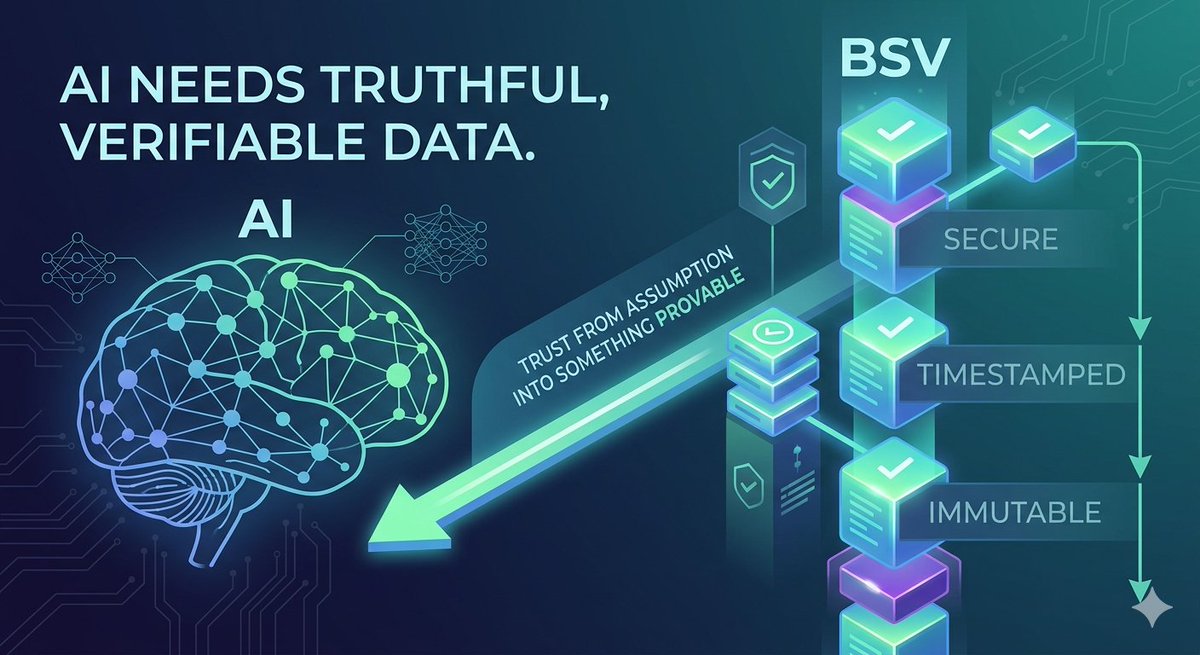
AI needs truthful, verifiable data. BSV provides that by acting as a secure, timestamped, and immutable ledger, turning trust from assumption into something provable.
Hash Layer tweet media
English
0
0
4
143
Hash Layer
Hash Layer@Hash_Layer·
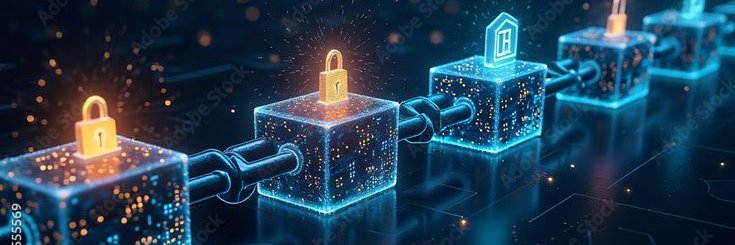
BSV enables on-chain scaling because it removes limits, rewards throughput, and builds infrastructure to handle massive data directly on the blockchain. #OnChainScaling #BSVBlockchain
Hash Layer tweet media
English
0
2
12
111