Hausa Language Hub

15K posts

Hausa Language Hub banner
Hausa Language Hub

Hausa Language Hub

@HausaTranslator

#Hausa Language Localization | Research | Annotation | App testing | Media Consulting | #L10n #LLM #NLP #ML #UX #UI #AI #GenAI | #Ajami #ɓɗƙƴ

Beigetreten Mayıs 2014
8.1K Folgt50.5K Follower
Angehefteter Tweet
Hausa Language Hub
Hausa Language Hub@HausaTranslator·
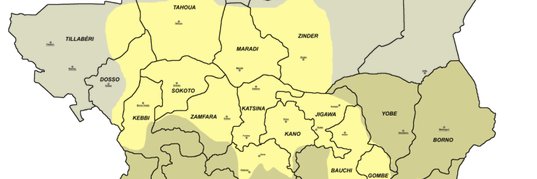
Hausa is world's 19th most spoken language, with 94 million speakers according to Ethnologue 2025 stats.
Hausa Language Hub tweet media
English
3
18
33
6.5K
Hausa Language Hub
Hausa Language Hub@HausaTranslator·
@Alhazanism You can be kind to suggest a better categorization. This isn't meant as a health advisory or something. Hausa people tend to group them under skin conditions, even if to medical eyes they may be symptoms or hardly fit into one pathological genre.
English
1
0
0
30
Yakubu Musa
Yakubu Musa@Alhazanism·
@HausaTranslator But how are these categorised as skin diseases is what I can't fathom
English
1
0
1
48
Hausa Language Hub
Hausa Language Hub@HausaTranslator·
SKIN DISEASES IN #HAUSA Amosani = Dandruff Borin jini = Allergy Bororo =Blister Cin-zanzana = Smallpox scar Farankamar biri = Monkeypox Janbaɗe = Abscess Kakkare = Whitlow Kaluluwa = Bubo Ƙazuwa = Scabies Kurkunu = Guinea worm Kuturta = Leprosy Mageduwa = Ainhum Makero = Ringworm
Hausa Language Hub@HausaTranslator

Administer Gudanar Be in charge Yi iko Command Umarci Conduct Aiwatar Control Sarrafa Direct Ba da umarni Govern Ja ragama Guide Yi jagora Lead Jagoranci Manage Sarrafa Oversee Kula da Preside Shugabanci Rule Mulki Run Tafiyar Shepherd Jagaba Steer Ja linzami Supervise Sa-ido

Filipino
2
4
5
784
Hausa Language Hub
Hausa Language Hub@HausaTranslator·
Administer Gudanar Be in charge Yi iko Command Umarci Conduct Aiwatar Control Sarrafa Direct Ba da umarni Govern Ja ragama Guide Yi jagora Lead Jagoranci Manage Sarrafa Oversee Kula da Preside Shugabanci Rule Mulki Run Tafiyar Shepherd Jagaba Steer Ja linzami Supervise Sa-ido
Indonesia
0
6
5
1.3K
Hausa Language Hub retweetet
Dearly Beloved
Dearly Beloved@sharonibejih·
We have learned that even native language speakers need guidance on what data quality means and why it matters for AI models. This eventually comes down to understanding basic linguistics, that is, how to properly curate and validate datasets, and why accuracy is very critical for African language data. We have been working internally for months to design a well-structured curriculum, which has been reviewed by experienced linguistics and data curators in AfricanNLP. We can't go without saying a big thank you to @HausaTranslator and @aremuadeolajr for their huge contribution in reviewing this. It was a huge honour. So if this program interests you, kindly join our waitlist as we want to first kickoff a pilot within our community.
Tonative@tonative_org

We're launching Tonative Data Academy, our AI Dataset Curation training program for African languages. We have a team of experienced data curators, who can teach you how to design and curate high-quality language datasets, covering data translation, validation, and localization. We offer three specialized tracks: 1. Native Speaker Track – For language speakers with no technical background in AI or datasets 2. Linguist Track – For linguistics graduates pivoting into NLP dataset curation 3. NLP Expert Track – For technical professionals who want to learn linguistics and data curation We will roll out the first cohort internally, to some members in our community. However, if this program interests you, kindly join our waitlist and we shall get back to you before we commence the next cohort, which is tentatively by April. Share your details using this link or by scanning the QR code: forms.gle/ir4QkcxrDhyf5r… For further questions or inquiries, kindly email us at community@tonative.org

English
0
5
9
859
Hausa Language Hub
Hausa Language Hub@HausaTranslator·
A good read on Hausa aboriginal names.
Elnathan John@elnathan_john

This week, we move to less sexy essays. 😅 Perhaps slightly inspired by the current conversation on Twitter about precolonial Igbo names, I am looking at how Hausa culture has changed over time and how we see this in Hausa names and other traditions. Fewer and fewer Hausa people have Hausa names. By this I do not mean names spoken in Hausa, or names borne by Hausa-speaking Muslims, but names that arise from Hausa cultural logics themselves: names that register circumstance, season, bodily memory, family history, social position. What dominates public naming today are Arabic and Qur’anic names, treated as neutral, inevitable, even synonymous with Hausa identity. Ask many Hausa (Muslim) people what a “proper” Hausa name is and the answer often arrives already shaped by Islam. This is not ignorance. It is the outcome of a long process in which public legitimacy became religiously coded. This is why current conversations about Igbo names and Christianity are useful. When people talk about the spread of Chi-prefixed or Chi-suffixed names, they are, I think, pointing to a visible negotiation between indigenous naming systems and Christian theology. The older logic remains legible, even when transformed. In much of Hausaland, the negotiation has gone further. Islamic names did not simply join Hausa naming practices. They rose to dominate the public register. Other Hausa naming traditions retreated into nicknames, private speech, or corners of society where Islamic prestige has less reach. Consider a Hausa name like Bako, given to a boy born under conditions of strangeness or displacement, a name that quietly records the family’s situation at the moment of his arrival. Or Auta, given to a girl who arrives last, a name that fixes birth order into identity and treats family structure as knowledge. These names do not invoke heaven or scripture. They invoke time, circumstance, social memory. Today, such names are more likely to survive as nicknames or private family speech, while the name that appears on documents is far more likely to be Qur’anic. Or among non Muslim Hausa. Religion here operates as more than belief. It functions as infrastructure. Islam reorganised legitimacy: how marriages are validated, how adulthood is recognised, how seriousness is signalled, how respectability is performed. Naming follows prestige. Marriage follows law. Music and dance, always vulnerable because they involve bodies, pleasure, rhythm, public presence, become especially precarious under purist interpretations that frame them as distraction or sin. When dancing becomes suspect and music morally risky, whole aesthetic worlds lose their place in public life. (I made some allusions to this in my essays about kunya, and Bori). (In Salafi and related purist traditions, the claim is that music and dance are haram because they distract from remembrance of god and encourage moral corruption, especially desire, heedlessness, and gender mixing. This position is usually grounded in select hadith reports attributed to the prophet and early companions, combined with a literalist reading that treats most musical instruments and performative movement as bid‘a, even though other Islamic legal traditions have long disagreed.) This is also why, if you want to see Hausa cultural forms less governed by Islam’s public standards, you often find them more easily among non-Muslim Hausa, including communities described as Maguzawa. Scholars looking for older naming logics keep having to go where Islamic naming and moral policing are not the default prestige grammar. So, Hausa-speaking Christian communities can also show departures from Islamic authority, though Christianity comes with its own powerful naming habits and moral reforms, so the point is not purity. The point is visibility. (Just an aside: Every time I use "not x but y", which I have been using for two decades, I think of all the religious AI vigilantes who say aha: that is evidence of AI. Sorry o. We like parallelism here) My argument here goes beyond change. Change is ordinary. The issue is unchosen change, when people lose the language to describe what has shifted and therefore lose the ability to decide what to keep. When culture is mistaken for divine instruction, it becomes harder to recognise it as something humans made and can therefore examine, revise, resist. Names expose this loss of awareness because they sit at the intersection of intimacy and authority. They quietly record which sources of legitimacy a society now trusts. My Substack essay this week will focus on this question in greater detail, using Hausa names, marriage practices, music, and dance to examine how culture changes, what it hides when it does, and what it costs us when we stop noticing.


English
0
0
5
1.2K
Ibrahim Abdullahi, MFR
Ibrahim Abdullahi, MFR@ibrahim_sanata5·
Hello, we are conducting research on a Hausa Text-to-Speech (TTS) system, with a special focus on some certain Hausa consonants We kindly request your feedback on the output so we can evaluate the models. Listen to our videos and score the outputs forms.gle/Qva5dKcdrqmSg6…
Ibrahim Abdullahi, MFR@ibrahim_sanata5

forms.gle/t45ikktELiTKfn… Hello! I am conducting a research on Text to Speech(TTS) on glottalized, palatalized, and labialized velars in Hausa language and I am collecting sentences that includes the respective words, and I would appreaciate your help in filling the form Thank you

English
1
1
0
54
Hausa Language Hub
Hausa Language Hub@HausaTranslator·
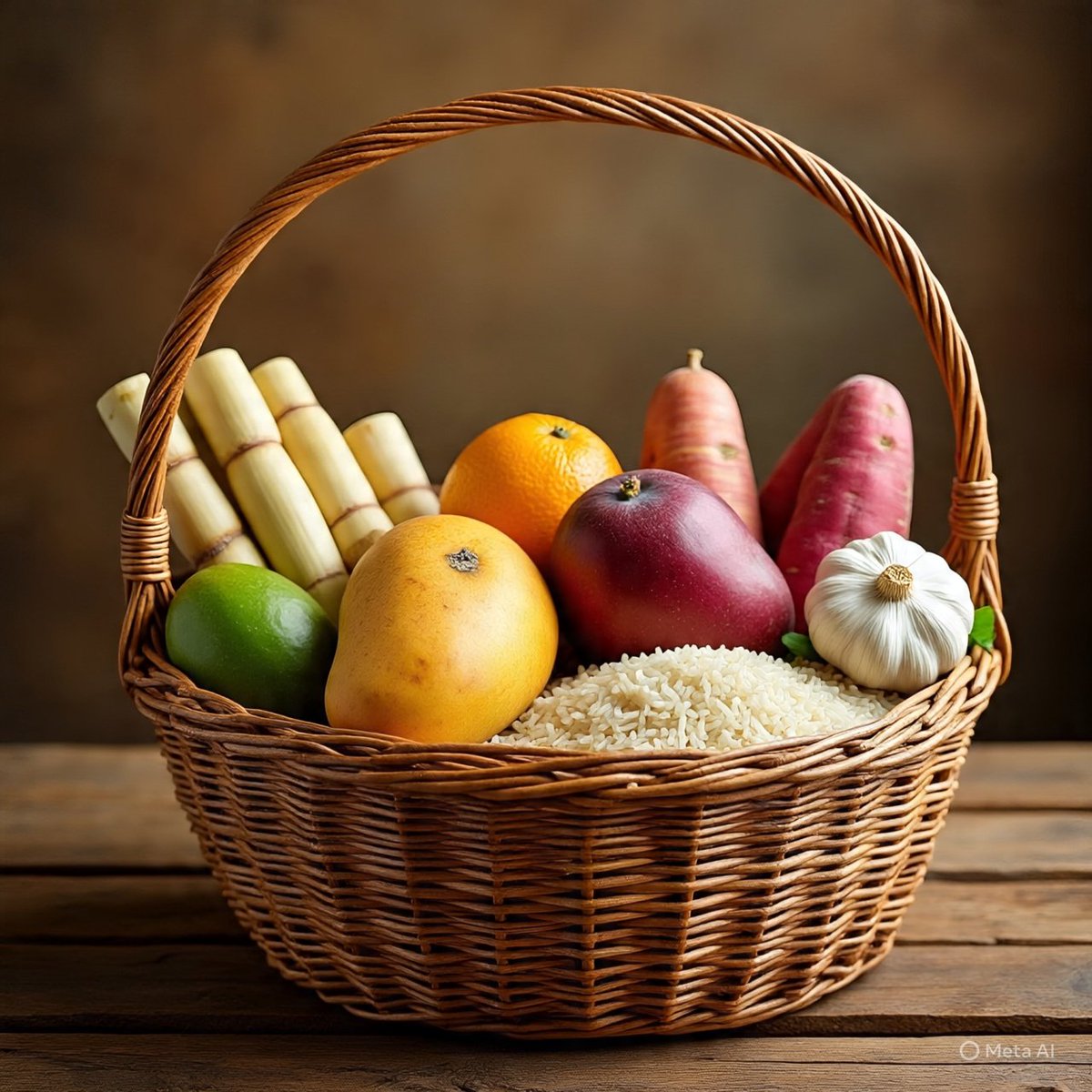
Ƙarasa mana kirarin da ake wa waɗannan kayan abincin, da sunan garuruwan da ake yawan samun su: Agushi ɗan M_ _ _ _ Dankali ɗan J_ _ Lemu ɗan T_ _ _ Mangoro ɗan K_ _ _ Rake ɗan M_ _ _ _ _ _ Shinkafa 'yar K_ _ _ Tafarnuwa 'yar K_ _ _
Hausa Language Hub tweet media
Indonesia
2
1
5
1K
Ibrahim Abdullahi, MFR
Ibrahim Abdullahi, MFR@ibrahim_sanata5·
forms.gle/t45ikktELiTKfn… Hello! I am conducting a research on Text to Speech(TTS) on glottalized, palatalized, and labialized velars in Hausa language and I am collecting sentences that includes the respective words, and I would appreaciate your help in filling the form Thank you
English
2
4
5
212
Hausa Language Hub
Hausa Language Hub@HausaTranslator·
@FahadKano Totally agree with you. I often go with 150 to 200 million as the closest to factual estimate. Except that we are obliged to use de facto "official" figures, even if we've failed to help calibrate these sources towards the right data.
English
0
0
1
29